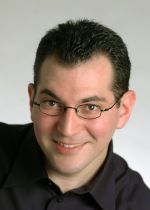
Daniel Klein is a Professor in the Computer Science Division at the University of California at Berkeley , affiliated with the Berkeley Artificial Intelligence Research Lab (BAIR) and the Berkeley Natural Language Processing Group . His research focuses on statistical natural language processing, including unsupervised learning, syntactic parsing, information extraction, and machine translation, with applications in historical linguistics and AI.
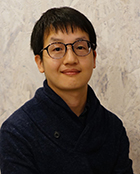
Tengfei Ma is an Assistant Professor in the Department of Biomedical Informatics at Stony Brook University, with affiliations to Computer Science and Applied Mathematics & Statistics. He holds a Ph.D. from The University of Tokyo, M.S. from Peking University, and B.E. from Tsinghua University. Previously, he was a Research Scientist at IBM T.J. Watson Research Center. His research focuses on machine learning, natural language processing (NLP), and biomedical informatics, particularly deep graph learning, scalable graph methods, and healthcare applications. He has contributed to frameworks like EvolveGCN for dynamic graphs and IGB datasets for graph benchmarks. Key awards include ISWC 2021 Best Paper (Research Track) and IBM Outstanding Research Accomplishments (2019, 2022). His work bridges theory and practice, addressing challenges like over-dilution in GNNs and interpretable time series analysis. Collaborations span interdisciplinary areas, such as AI for wound monitoring and code summarization. He teaches BMI530: Software Development for Biomedical Informatics and is open to graduate students from CS, BMI, and AMS departments. Research highlights include: Deep Graph Learning: Scalability (FastGCN, IGB), dynamic graphs (EvolveGCN), and topology-enhanced GNNs. Healthcare: Models for EHR analysis, medication recommendation (GAMENet), and wearable wound monitoring. NLP: Document summarization, code summarization (CP-BCS), and commonsense generation via knowledge graph compression. Recent projects include AI tools like Influencer for promotional content creation and neural-symbolic models for interpretable time series analysis. His lab explores foundational AI for healthcare, code analysis, and graph systems.
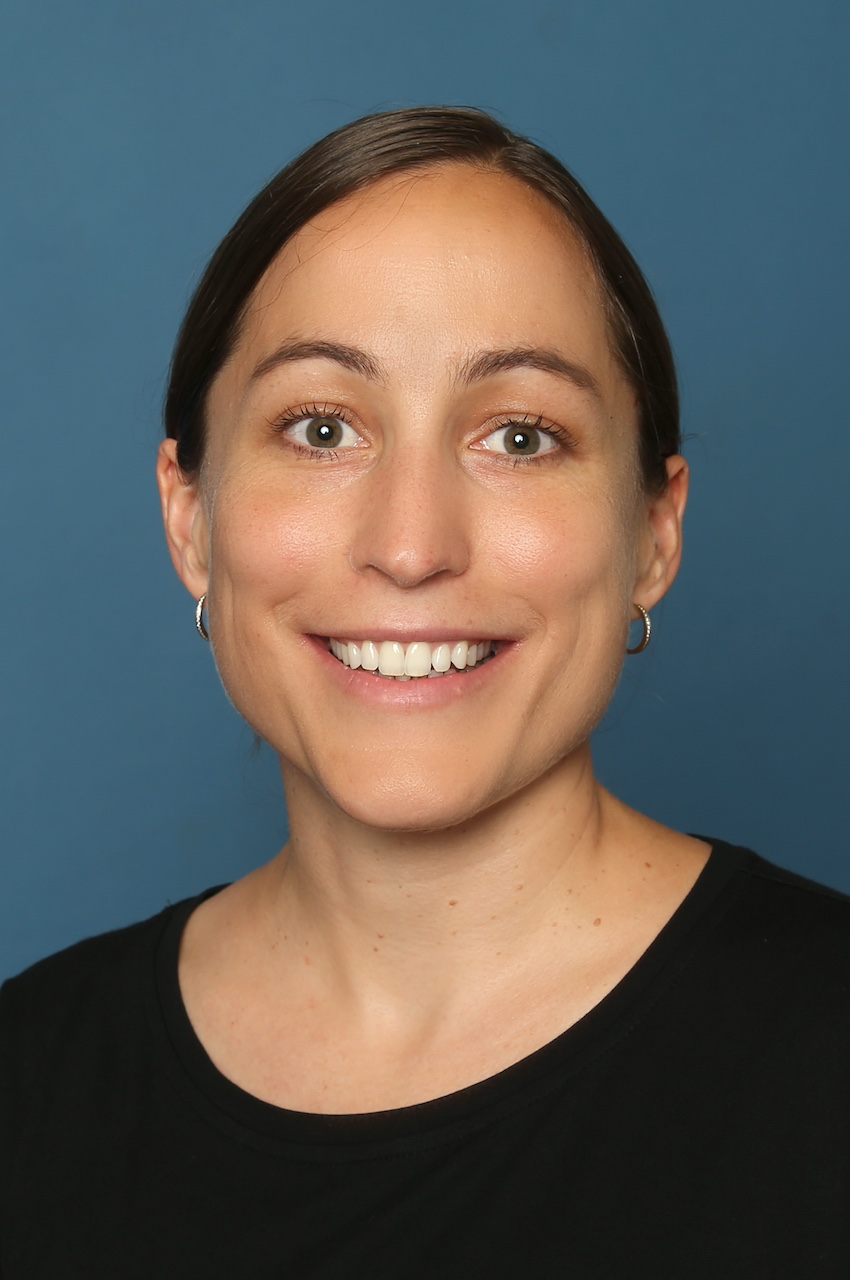
Sarah Ebling is a Full Professor of Language, Technology and Accessibility at the University of Zurich's Faculty of Arts and Social Sciences. She leads the Language, Technology and Accessibility research group within the Institute for Computational Linguistics. Her work focuses on computational linguistics applications for assistive technologies targeting disabilities such as hearing impairments, visual impairments, and cognitive disorders. Key areas include sign language technologies, automatic text simplification, and audio description systems. She directs the large-scale Swiss innovation project 'Inclusive Information and Communication Technologies' (2022-2026, CHF12 million budget) and collaborates on EU H2020 and SNSF Sinergia projects. Education: Holds a doctoral degree (summa cum laude, 2016) from the University of Zurich with research on automatic translation to Swiss German Sign Language. Completed studies in German Linguistics, Computational Linguistics, and English Linguistics at Universities of Zurich and Heidelberg, with research stays in Dublin, Chicago, and Rochester. Research emphasizes multimodal accessibility solutions, including sign language fluency assessment, gesture-based interaction, and AI-driven text adaptation. Current projects explore audio description translation systems (SwissADT), sign language corpus development (SwissSLi), and digital tools for comprehensibility assessment in simplified texts. Her work bridges computational linguistics with ethical considerations in assistive technology deployment. Grants and Leadership: Principal Investigator on major accessibility-focused grants, including the CHF12M Swiss innovation project. Supervises PhD candidates in areas like sign language assessment tools and text simplification algorithms. Active in international collaborations, publishing extensively in computational linguistics and accessibility journals/conferences. Technology Development: Created the 'DigiSpon' benchmark for language sample analysis and developed open-source tools for sign language translation baselines. Her team's innovations include the SignCLIP model connecting text and sign language via contrastive learning, and pose estimation frameworks for sign language recognition.
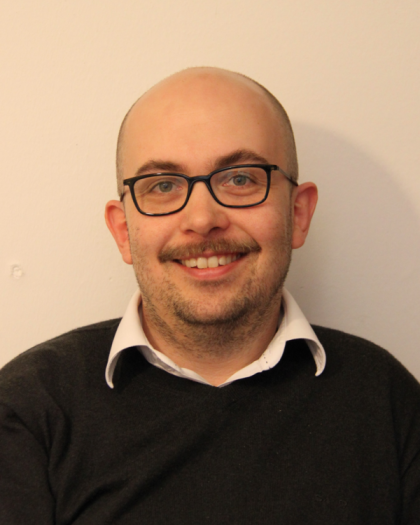
Matthew Stephenson is a Lecturer at Flinders University's College of Science and Engineering, specializing in Artificial Intelligence applications for games. He leads the Data for Decisions initiative within the Factory of the Future Transdisciplinary Hub, focusing on AI-powered scenario generation for smart digital twins. Additionally, he is a member of IRL CROSSING, an international lab studying human-autonomous agent teaming dynamics. PhD in Computer Science (Australian National University, 2019) B.Sc.(Hons) in Computer Science (University of Canterbury, 2015) His research applies AI, Machine Learning, and Data Science to game domains, including intelligent agent development for physics-based environments, procedural content generation, and game analytics. He also investigates deceptive behaviors in multi-agent systems and leverages games as testbeds for real-world AI solutions. Recent publications focus on large language models for game benchmarking, physical reasoning challenges, and evolutionary game generation. Scientific awards include an honourable mention at Foundations of Digital Games (FDG'18). He supervises students in procedural generation, game AI, and physics-based task creation, with teaching roles in computational intelligence and neural networks courses.
Øyvind Gjerstad is an Associate Professor of French Linguistics in the Department of Foreign Languages at the University of Bergen. His academic work focuses on the intersection of language, narrative, and climate change discourse, with particular emphasis on comparative analyses between French and Norwegian contexts. As a core member of the LINGCLIM research group (Language, Climate and Lifestyle), he contributes to interdisciplinary investigations of how linguistic structures shape public understanding of environmental issues. Gjerstad's research interests center on linguistic polyphony, narrative analysis, and discourse structures as applied to climate communication. His work examines how narratives about climate change are constructed linguistically, how different voices are represented in climate discourse, and how narrative frameworks influence public perception and willingness to act. He has developed methodological approaches that combine narrative analysis with polyphonic theory to reveal complex storylines in climate-related texts, particularly focusing on how negation, reported speech, and rhetorical devices function in climate communication. His publication record demonstrates consistent scholarly output examining climate narratives across various text genres including political documents, media coverage, and public surveys. Recent work has increasingly focused on the combination of narrative and polyphonic analysis ('polynarrativity') to uncover intersecting storylines in climate discourse. His research spans both descriptive analyses of existing narratives and explorations of how normative narratives might be constructed to motivate climate action. Gjerstad has supervised graduate students, including Taran Marie Hoel Stabell's Master's thesis on French temporal prepositions. His research has been supported by funding from the Research Council of Norway (projects 220654 and 301103), indicating sustained institutional support for his work on climate discourse analysis. He actively participates in academic conferences across Europe, presenting his findings to both linguistics and climate studies audiences. As part of the LINGCLIM research group, Gjerstad collaborates closely with Kjersti Fløttum and other colleagues on projects examining how language shapes climate perceptions and actions. His work bridges theoretical linguistics with practical applications in climate communication, contributing to interdisciplinary efforts to understand and address the climate crisis through the lens of language and narrative.
Dr Ares Llop Naya serves as an Affiliated Catalan Lecturer in the Department of Spanish and Portuguese within the Faculty of Modern and Medieval Languages and Linguistics at the University of Cambridge, while holding the Batista i Roca Fellowship at Fitzwilliam College. Her academic profile bridges theoretical linguistics with practical language pedagogy, focusing on Romance language structures and their educational applications. Her research centers on microsyntactic variation in Romance languages, particularly examining negation systems and syntactic phenomena in Catalan and Pyrenean varieties through both diachronic and synchronic lenses. She actively integrates theoretical insights into language teaching methodology, specializing in Catalan and Spanish pedagogy for both native and foreign language contexts. This dual focus manifests in her publications spanning syntactic theory, dialectology, and innovative language teaching approaches that address contemporary classroom challenges. Analysis of her publication trajectory reveals consistent thematic concentration on Romance microvariation, with recent work expanding into pedagogical applications. Her scholarship demonstrates methodological diversity—combining linguistic atlas data, corpus analysis, and classroom research—while maintaining core focus on Catalan syntax and its implications for language acquisition theory. The Pyrenean linguistic corridor remains a persistent geographical anchor across her diachronic and synchronic investigations. Dr Llop Naya's scholarly contributions have been recognized through prestigious awards: Joan Solà International Prize in Catalan Philology for her monograph on Romance negation systems Her teaching portfolio encompasses advanced courses in Romance linguistics, historical syntax, and sociolinguistics, with particular emphasis on translating theoretical frameworks into practical classroom resources. While specific grant funding details aren't publicly documented, her work consistently addresses real-world language education challenges through collaborative projects like the Microvariació.cat initiative. She contributes to the Microvariació.cat project—a digital repository documenting syntactic variation across Catalan dialects—which serves as both research infrastructure and pedagogical resource. This initiative exemplifies her commitment to creating practical applications from theoretical linguistic research while preserving endangered dialectal features of the Romance continuum.
Sophie Seita is a London-based artist, researcher, and Lecturer in Fine Art & History of Art at Goldsmiths, University of London, where she also serves as Director of Critical Studies for the BA Fine Art Extension Degree and Deputy Director of Research for the Department of Art. Her interdisciplinary practice spans performance, video, sound, textiles, books, and installations, with language as a central material. Previously, she was a tenure-track Assistant Professor at Boston University (2019-2022) and a Junior Research Fellow at Queens' College, University of Cambridge (2016-2019). Seita's research interests encompass lecture-performances, poetic essays, video essays, practice-based research, queer studies, trans studies, affect theory, disability studies, deaf studies, creative access, experimental captions and audio descriptions, speculative approaches to archives, fictional collectives, concepts of play, difficulty, opacity, absurdity, ornamentation, deep listening, histories of avant-garde group formation, translation studies, multilingualism, queer ecology, decolonial ecology, and experimental pedagogy. Her creative curiosities include opacity, playfulness, difficulty, artifice, queer abstraction, minor genres, ornamentation, materiality beyond objects, the materiality of language, listening beyond hearing, ambiguity, non-linear narratives, and provisional ideas. Her recent publications demonstrate strong trends in examining the intersections of performance, language, and experimental publishing, particularly focusing on lecture-performances as critical knowledge production, the materiality of language, and speculative approaches to archives. Her work consistently engages with queer and feminist perspectives on avant-garde practices while exploring experimental forms of documentation and presentation. Werner Düttmann Fellowship at Akademie der Künste Berlin (2024) Vice-Chancellor's Public Engagement Award (University of Cambridge) Eccles Centre Fellowship (British Library) PEN/Heim Translation Award Wonder Book Prize Dorothea Schlegel Artist in Residence Seita supervises and examines PhD projects at Goldsmiths and has secured numerous research grants, including funding from the British Academy, Arts Council England, Canada Council for the Arts, and the Early Career Research Fund Award from Goldsmiths. She is co-founder of The Hildegard von Bingen Society for Gardening Companions, an ongoing queer collaborative project with musician Naomi Woo that explores speculative archives and queer ecology through sound, performance, and publications. Her artistic practice often involves collaborative work across disciplines, particularly with The Hildegard von Bingen Society for Gardening Companions, which creates experimental pedagogical frameworks and community-based environmental projects.
Grant Weddell is an Associate Professor in the David R. Cheriton School of Computer Science at the University of Waterloo. His research focuses on database technology for real-time applications, including large-scale schema management, information clustering, dependency theory, and query optimization for heterogeneous data sources. He teaches courses such as CS338 (Introductory Databases), CS348 (Advanced Databases), CS446 (Software Engineering), and CS848 (Advanced Database Systems). His research interests emphasize the interplay between description logics and database systems, particularly in optimizing query processing and managing complex schemas. Recent work explores path agreements, functional dependencies, and ontology-mediated querying to enhance data integration and schema management efficiency. Teaching responsibilities include foundational database courses (CS338/348), software engineering (CS446), and advanced topics in information integration (CS848). No scientific awards are explicitly listed, though his contributions to database theory and optimization are extensive.
Prof. Dr. Mehmet Reşit Tolun is a full-time Professor in the Department of Software Engineering at Çankaya University (Turkey) since 2022. Previously held full-time professor positions at Konya Food and Agriculture University (2020-2022), Aksaray University (2013-2017), and TED University (2011-2013), along with a part-time professorship at Başkent University (2017-2020). Specializes in Artificial Intelligence , Machine Learning , and Data Mining , with a focus on deep learning applications in aerospace, biomedical data analysis, and software process improvement. PhD in Computer Science (University of Kent, 1985) MSc in Computer Science (University of Kent, 1982) BSc in Physics and Computer Science (University of Kent, 1981) Research Interests span deep learning frameworks, hybrid expert systems, software engineering methodologies, and biomedical signal processing. Publications emphasize practical implementations in medical diagnostics, robotics, and agricultural pest detection. Scientific Awards include the IEEE Third Millenium Medal (2000). Supervised over 55 graduate students, including Burak Çetin, Uğur Özotuk, and Mahinur Doğan. Collaborated with researchers from Orta Doğu Teknik Üniversitesi , Çankaya University , and Aksaray University .
Prof. dr. Enoch O. Aboh is Professor of Linguistics at the University of Amsterdam , Faculty of Humanities, Department of Literature and Linguistics. His office is located at Spuistraat 134, room 647, and he can be contacted at e.o.aboh@uva.nl . Research Interests: Prof. Aboh’s work lies at the intersection of formal syntax, language contact, and learnability. He investigates creole formation , multilingual ecologies , Gbe and Kwa syntax , cartographic approaches to clause structure , and sign language morphosyntax . A recurring theme is the emergence and evolution of grammatical systems under contact, approached through both descriptive fieldwork and formal theoretical modelling. His publications reveal a methodological breadth spanning experimental studies with kindergarteners on statistical learning, computational detection of loanwords, and fine-grained syntactic analyses of serial verb constructions, predication patterns, and determiner systems. This spectrum underscores his commitment to integrating cognitive, typological, and formal perspectives on language. Awards & Recognition: While no specific prizes are listed in the current material, Prof. Aboh’s extensive editorial and collaborative work—evidenced by numerous co-edited volumes and Festschrift contributions—attests to his standing in the field. Students & Grants: Details on PhD advisees or funded projects are not provided in the source text. Labs & Teams: No dedicated laboratory or research group names are mentioned, yet his affiliation with the Amsterdam Center for Language and Communication (ACLC) can be inferred from the institutional context.
Prof. Dr. Frank Kammerzell is a Professor at the Department of Archaeology and Cultural History of Northeast Africa within Humboldt University of Berlin since May 2003. His academic career includes habilitation at the University of Göttingen (1999) and extensive research collaborations with Hebrew University of Jerusalem and University of Vienna. His educational background encompasses Medieval and Modern History (major 1980), Egyptology (major), Coptic Studies, General and Indo-European Linguistics, and Assyriology. He earned his Dr. phil. from Göttingen with a dissertation on 'Studies on the Language and History of the Carians in Egypt' (1990) and completed habilitation with 'Language contact and language change in ancient Egypt' (1999). Kammerzell's research spans Egyptian phonology, morphology, syntax, lexis, language history, diachronic typology, language contact, writing systems, and Carian history in Egypt. His work integrates linguistic analysis with archaeological contexts, examining language evolution through contact and typological shifts. Notable projects include studies on Egyptian-Akkadian typological developments and classifiers in ancient Egypt. His publications since 2000 demonstrate sustained focus on Egyptian linguistic structures, writing systems, and cross-linguistic influences. Key themes include verb classifiers, glossing rules for Ancient Egyptian, and lexical semantics-pragmatics interfaces, bridging Egyptology with broader linguistic theory. Graduate Scholarship from the State of Lower Saxony (Doctoral Scholarship) 1987-1989 Kammerzell has led significant research projects funded by the DFG, Fritz Thyssen Foundation, and Volkswagen Foundation. His collaborative work with institutions in Jerusalem and Göttingen highlights international partnerships. While specific advisees aren't listed, his editorial roles suggest mentorship in academic publishing. He co-founded research groups on multilingualism and script systems, contributing to journals like Lingua Aegyptia and Ägypten und Levante , underscoring team-based archaeological-linguistic research.
Joyce M. McDonough is a faculty member at the University of Rochester specializing in Linguistics, with a focus on the mental lexicon and complex morphologies in Dene (Athabaskan) languages. She collaborates extensively with the Auditory Neuroscience Lab led by PI Laurel Carney (BME) to model neural representations of speech. Research Interests: Phonetics, Phonology, Morphology, Laboratory Phonology, Dene Linguistics, Neural Coding of Vowels Courses: LING 107, LING 210/410, BME/LING 216/416, LING 227/427, LING 237/437, LING 527, LING 529, LING 537 Her recent work explores the intersection of auditory neuroscience and linguistic theory, particularly in speech coding and vowel representation. She contributes to language documentation through projects like the Dene Speech Atlas (2013, updated 2017), which provides interactive resources for preserving speech patterns in under-resourced communities.
Victor Vianu is a Professor of Computer Science and Engineering at the University of California, San Diego and holds the INRIA International Chair at INRIA-Saclay in Paris. He has maintained continuous faculty status at UC San Diego since 1983 while developing extensive international collaborations, particularly with French research institutions including INRIA, ENST-Paris, ENS-Paris, and the University of Paris. His academic credentials include a Ph.D. in Computer Science from the University of Southern California (1983) and undergraduate studies in Mathematics and Informatics at the University of Bucharest (1974-1977). Professor Vianu's research spans computational logic, database systems and theory, and automatic verification. His work uniquely bridges theoretical foundations with practical applications in XML processing, workflow systems, and data-driven applications. He has made seminal contributions to understanding the theoretical underpinnings of database query languages and their expressive power, particularly in the context of XML technologies and workflow systems. His research demonstrates a consistent trajectory from theoretical computer science to practical database systems applications. His publication record reveals significant contributions to database theory spanning over three decades, with particular emphasis on XML technologies, workflow systems, and formal methods for data-driven applications. His work shows a clear evolution from foundational theoretical work to practical applications in business processes and web technologies. INRIA International Chair (2013) Fellow of the American Association for the Advancement of Science (AAAS) (2013) ACM PODS Alberto O. Mendelzon Test-of-Time Award (2010) Fellow of the Association for Computing Machinery (ACM) (2006) Professor Vianu has held significant leadership roles including Editor-in-Chief of the prestigious Journal of the ACM, numerous program committee chair positions for major database conferences (PODS, ICDT, ASIAN), and General Chair for ACM SIGMOD conferences. He has served on the executive committees of SIGMOD (1998-2000) and PODS (1993-2004), and was a member of the ICDT Council (1997-2007), demonstrating sustained influence in the theoretical database community. His extensive invited talks at major conferences including College de France, ACM PODS, and International Conference on Database Theory highlight his international recognition.
Annette Rios is a Researcher at the University of Zurich within the Language, Technology and Accessibility group. Her work focuses on machine translation , text simplification , and sign language translation , particularly for multilingual and indigenous language contexts. Research highlights include contributions to the European EASIER project on sign language translation, the ZurichNLP consortium, and the development of tools for emotion detection and gender bias reduction in NLP systems. She has published extensively in top-tier venues like ACL and WMT, with a focus on multimodal translation and German language processing . Developed emotion_detection GitHub repository for German emotion analysis Contributed to ContraPro and ContraWSD projects on translation evaluation Created datasets for German text simplification and emotion detection Her publications reveal a strong emphasis on machine translation (7/15 recent works), sign language technology (3/15), and text simplification (2/15). While no formal advising is documented in the provided text, she has mentored GitHub contributors to her repositories. Current research directions include improving multimodal translation systems and expanding emotion detection capabilities beyond English.
National Institute of Oriental Languages and CivilizationsFrance
Szende Thomas is a full Professor at Inalco (Institut National des Langues et Civilisations Orientales). He serves as Director of the EA 4514 Plidam research center and heads the Hungarian Studies section at Inalco. His academic work focuses on language teaching, cultural differences in dictionaries, and applied linguistics. Director, EA 4514 Plidam Research Center Head of Hungarian Studies Section, Inalco Member, UNESCO Chair "Language Policies for Multilingualism" Executive Committee Jury member, Paris University Thesis Prize Member, Inalco Scientific Council His research spans language didactics , applied linguistics , and lexicography . He has published extensively on second culture teaching, bilingual dictionary analysis, and language appropriation dynamics, with recent work on language-culture pedagogy and grammatical instruction methodologies. Key publication themes include: intercultural education , language policy in Central/Eastern Europe , bilingual dictionary design , and Hungarian language didactics . His academic contributions extend to methodological works like the Assimil Hungarian language series and specialized dictionaries.