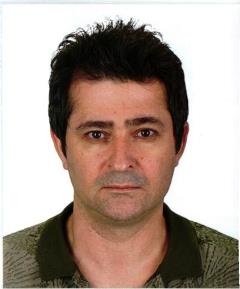
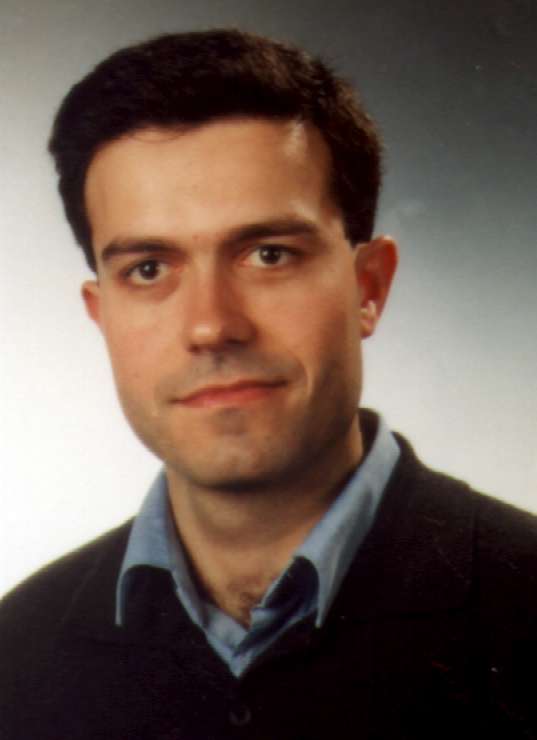
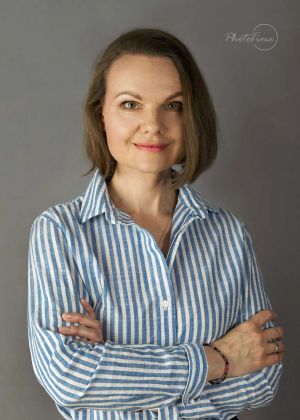
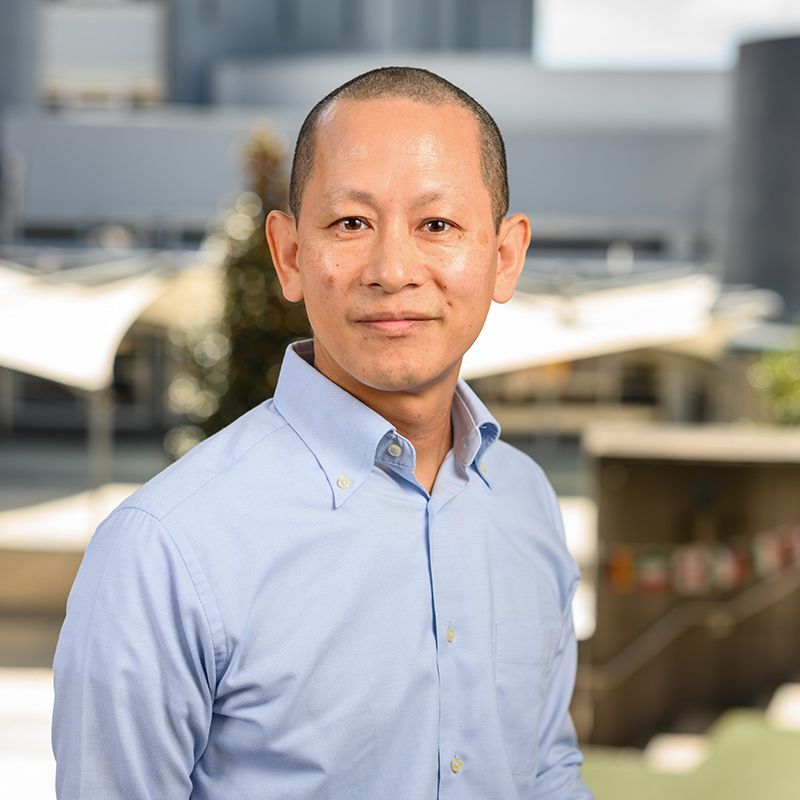
Prof. Dr. Michael Elberfeld is a faculty member at the Technical University of Central Hesse , affiliated with the Department of Mathematics, Natural Sciences and Computer Science . His research focuses on theoretical computer science, particularly in computational and parameterized complexity, logic in computer science, and algorithmic meta-theorems. Education : Doctorate in Theoretical Computer Science from the University of Lübeck (2012); Diploma (MSc) in Computer Science from the University of Lübeck (2007). His work explores the intersection of graph theory , logic , and space-bounded computation , with groundbreaking contributions to problems on bounded tree-width structures and order-invariant logics . He has developed logspace algorithms for graph canonization and studied succinctness tradeoffs in logical formalisms. Key publications include analyses of parameterized space complexity , algorithmic meta-theorems , and applications to bioinformatics like haplotype inference and network orientation. His research is supported by the European Commission through grants 648276 and P 28699 . He collaborates extensively with researchers such as Martin Grohe , Pascal Schweitzer , and Till Tantau , bridging theoretical logic with practical applications in staff rostering and biological network analysis .
Professor ERGÜN HAMZADAYI is a distinguished academic at Gaziantep University's Faculty of Education, Department of Turkish and Social Sciences Education. With a career spanning over two decades, his work focuses on Turkish language education, reading comprehension, speaking strategies, writing skills, and children's literature. He holds a PhD in Turkish Education from Ankara University and has published extensively in national and international journals. PhD: Turkish Education, Ankara University (2010) MA: Turkish Language and Literature, Yuzuncu Yil University (2004) BA: Turkish Language Teaching, Yuzuncu Yil University (2000) His research explores critical areas including reading comprehension models , oral communication anxiety , and peer interaction in writing education . Recent articles analyze topics like PISA-based text types, reflective writing, and socioeconomic impacts on writing skills. Scientific contributions include 10 books/chapters on Turkish education and 27 peer-reviewed articles. He has led the National Project on Reading Circle Effects (2022-2022) and supervised 18 theses. Administrative roles include Department Head and Research Center Director at Gaziantep University.
Luca Spalazzi is an Associate Professor at the Department of Information Engineering , Università Politecnica delle Marche , Italy. His research spans multiple domains including cybersecurity , blockchain technology , machine learning , and telerehabilitation systems for Parkinson's disease. He applies formal methods to software verification and security analysis, with a focus on real-time systems and distributed architectures . Key research areas: Cybersecurity, Blockchain, Machine Learning, IoT, Formal Verification Recent work: Blockchain-based sustainable supply chains, Zero-Knowledge Proofs, Smartphone health monitoring His publications (2013-2025) demonstrate expertise in malware detection , smart contract verification , and AI-driven health solutions . Articles include BRAIN 2024 workshop organization and RAPIDO system for Parkinson's telerehabilitation.
Deborah C. Morton is an Associate Teaching Professor of Linguistics and African Studies at Pennsylvania State University, University Park, where she has worked since 2015 and serves as Director of Undergraduate Studies for the Linguistics Program. She received her PhD in Linguistics from The Ohio State University in August 2014. Her research focuses on African languages, particularly the Anii language spoken in Togo and Benin, West Africa. Her primary interests include fieldwork-based language analysis, formal phonology (especially tonology), formal semantics (particularly tense-aspect-modality), language description and documentation, language contact, and language variation. She is passionate about describing little-studied language varieties and has been involved in language development workers' efforts to promote literacy in the Anii community. Her recent publications primarily examine aspects of the Anii language, with a focus on temporal and aspectual reference, vowel harmony systems, and tonology. These works contribute significantly to the documentation of Ghana-Togo Mountain Languages and under-represented African linguistic systems. Professor Morton teaches a wide range of courses including The Study of Language, Foundations of Linguistics, Introduction to Semantics, Linguistic Fieldwork, Language in Africa, Phonetic Analysis, Anthropological Linguistics, and proseminars in Language Science and Professionalization for graduate students. She is actively involved with the Beninese language development ONG LINGO Bénin (https://www.lingo-benin.org/) and has contributed to the Anii-language magazine (www.revue-gugu.org), including serving as a translator for their proverbs site (https://revue-gugu.org/proverbes/).
François Jacquenet is a Professor of Computer Science at the University of Saint-Etienne, where he is a member of the Machine Learning Team at the Hubert-Curien Laboratory. His research focuses on machine learning and data mining applications for natural language processing, with significant contributions to privacy-preserving systems including Hippocratic Multi-Agent Systems and Automata-Based Sequence Mining. His research interests span Machine Learning , Data Mining , Natural Language Processing , and Privacy-Preserving Systems . Jacquenet has led multiple research projects including the PASCAL II Network of Excellence (2008-2012), the Bingo2 project (2008-2010), and the Web Intelligence project (2006-2008), where he focused on ethical web design and privacy protection techniques. His work bridges theoretical foundations with practical applications in areas like fraud detection, meeting summarization, and video tag correction. Analysis of his recent publications reveals a consistent research trajectory in deep learning applications , privacy-preserving techniques , and cross-modal learning . His work shows a progression from foundational research in grammatical inference and automata theory to contemporary applications in neural networks and self-organizing systems. The publications demonstrate strong interdisciplinary connections between computer science, physics, and security applications. Best AI Paper Award at Conference (2006) Professor Jacquenet has supervised numerous PhD students including Maria Galvan, Hoang-Tung Tran, Ludivine Crépin, and Stéphanie Jacquemont. His research has been supported by significant grants including the French Research Agency (ANR), the Rhône-Alpes region, and international networks like PASCAL. He has organized multiple conferences including Privacy on the Web at the ACM Symposium on Applied Computing and the PASCAL Workshop on Teaching Machine Learning. He is actively involved with the Machine Learning Team at Hubert-Curien Laboratory , contributing to the PASCAL Network of Excellence and the REWERSE Network. His research group focuses on developing practical applications of machine learning while addressing fundamental theoretical questions in pattern mining and language learning.
Francisco Javier Álvarez Bonilla is an Associate Professor in the Department of Education and Social Psychology at Pablo de Olavide University. He has been affiliated with the university since 2009, teaching in Social Education and Social Work programs, as well as in the Master's Degree in Secondary Education, Baccalaureate, Vocational Training, and Language Teaching, and the Master's Degree in Education for Development, Social Awareness, and a Culture of Peace. His educational background includes a PhD in Pedagogy from the University of Seville (2001), with a thesis titled "Support and training advice to teachers: descriptive study of the professional performance of an educational guidance team," supervised by Dr. Víctor Álvarez Rojo. Álvarez Bonilla's research focuses on teacher training, support and advice for professional development, educational innovation and school management. His work emphasizes cooperative learning methodology, particularly through the team notebook approach in teacher education. He actively explores how digital tools and technologies can enhance educational practices and improve teacher-student interactions, with significant contributions to educational guidance in digital contexts and the integration of mobile applications in teaching. His publication record shows a consistent progression from foundational work on teacher guidance to more recent explorations of digital educational tools and innovative assessment methods. The articles reveal a strong emphasis on practical applications of educational theory, particularly Vygotsky's Zone of Proximal Development, to real-world teaching contexts. His research increasingly addresses contemporary challenges in education, including virtual learning scenarios and the development of digital competencies for educators. Álvarez Bonilla serves in several leadership roles, including as the Quality Representative for the Social and Legal Sciences Macro-area at Pablo de Olavide University's Center for Postgraduate Studies (CEDEP) since 2022, and as responsible for Quality of the Master's Degree in Secondary Education since 2018. He has coordinated multiple research projects, including the Andalusian University Volunteering Observatory Project (2021-2024) and the Implementation of the undergraduate tutorial action system at Pablo de Olavide University (2010-2011). He is an active member of several academic networks and research groups, including GEDUPO (Education Research Group), International Teaching Collective INNOVAGOGÍA, Interdisciplinary Academic Network SOPHIA, and the Ibero-American Network of Universities committed to Education in Human Rights and Inclusive Citizenship. Currently, he participates in the "ORIENTA-DIG" project (2024-2026) focused on digital guidance competencies and serves as local project manager for the Erasmus+ "MEDITerraNEW" project (2023).
Toine Bogers is an Associate Professor at the IT University of Copenhagen in Denmark, affiliated with the Department of Computer Science . He also holds a part-time Lecturer position at Aalborg University Copenhagen within the Faculty of Humanities 's Department of Communication and Psychology . Additionally, he serves as Chief Scientific Officer at the AI Pioneer Centre for fundamental AI research. Research Interests : Information access technologies, recommender systems, search engine behavior, human information interaction, personal information management, and algorithmic fairness in HR. Key Research Areas : Algorithmic hiring systems for fair recruitment Complex search/recommendation scenarios Personal information management on handheld devices Interactive information retrieval reproducibility Scientific Contributions : Over 134 publications since 2005, including Google Scholar works on serendipity in recommendation systems, HR information behavior, and cross-domain relevance analysis. His 2022 data storytelling experiments and 2021 CHIIR collaboration manifesto highlight his methodological rigor. Awards : 2021 Best Paper Award 2020 & 2018 Best Reviewer recognitions 2020 Outstanding PC Member honor
Nathalie Hester serves as Giustina Family Associate Professor in the Department of French, Italian, and Romance Languages within the School of Global Studies and Languages at the University of Oregon. Her research bridges Italian Baroque literature with global travel narratives, examining colonial encounters through gendered and cross-cultural lenses. Her scholarly focus centers on Italian travel writing and Baroque epic poetry , particularly investigating how early modern texts construct identity through cross-Mediterranean and transatlantic encounters. Key interests include: Gender dynamics in royal court narratives Representation of Africa and the Americas in European literature Ethnographic discourse in colonial contexts Manuscript circulation across imperial boundaries Female authorship networks in early modern Europe Analysis of her 15 most recent publications reveals a consistent trajectory exploring Mediterranean cultural intersections, with increasing attention to warrior women archetypes and satirical colonial accounts. Her work demonstrates methodological innovation through comparative analysis of French, Spanish, and Italian travel texts. Professor Hester maintains active scholarly engagement through editorial work on critical editions, including her 2021 translation of Letters from Spain: A Seventeenth-Century French Noblewoman at the Spanish Royal Court . Her research methodology combines archival depth with theoretical frameworks from postcolonial and gender studies.
Hanan Hibshi is an Assistant Teaching Professor at Carnegie Mellon University's Information Networking Institute within the College of Engineering. She serves as a core faculty member at CMU's CyLab Security and Privacy Institute and is affiliated with the Societal Computing program. Her work bridges cybersecurity education, usable security, and security requirements engineering with practical applications in mobile and IoT security. Education: Ph.D. in Societal Computing, Carnegie Mellon University (2018) M.S. in Information Security Technology & Management, Information Networking Institute, Carnegie Mellon University (2011) B.S. in Computer Science, King Abdul-Aziz University (2003) Hanan Hibshi's research focuses on the intersection of security, privacy, software engineering, and Human-Computer Interaction. Her work combines theories from psychology, decision science, computer security, information sciences, and AI. She specifically investigates security experts' decision-making processes, cybersecurity education methodologies, usable privacy systems, and applying machine learning to security challenges. Her research has practical applications in developing intelligent tools that better accommodate security experts' needs and improving security requirements engineering through empirical data-driven approaches. Analysis of Hibshi's publication history reveals consistent focus on security decision-making, requirements engineering, and human factors in cybersecurity. Her work demonstrates a progression from foundational studies on expert decision-making to applied research integrating fuzzy logic and AI for security assessment systems. Recent publications emphasize practical applications in cybersecurity education, particularly through platforms like picoCTF, and addressing emerging challenges in IoT security and privacy-enhancing technologies. Scientific Recognition: CMU Provost's Inclusive Teaching Fellows (2021-2022) Featured in prominent media outlets including History.com, WTAE-TV, and Yahoo Finance for cybersecurity expertise Regular reviewer for top security, privacy, and software engineering venues Hiban Hibshi actively contributes to cybersecurity workforce development through her role as a research investigator for CMU's picoCTF educational platform, which has engaged over 18,000 students globally. She has developed significant partnerships with organizations like Cisco to increase women's participation in cybersecurity competitions. Her teaching portfolio includes foundational courses in information security, browser security, and secure coding that have shaped hundreds of students' careers. Through CMU's designation as a National Center for Academic Excellence in Cybersecurity, she contributes to maintaining the highest standards for cybersecurity education and academic excellence. As part of CMU's Secure Blockchain Initiative and Summit, Hibshi collaborates with industry and academic experts to advance blockchain technology within enterprise ecosystems. Her work with the University of Nottingham on adaptive security decision support demonstrates international research collaboration focused on practical security solutions.
José Manuel Torres is an Associate Professor at the Faculty of Science and Technology of Fernando Pessoa University , where he has been teaching since at least 1997. He holds a PhD in Computer Science from Lancaster University (2005) and a MSc in Electrical and Computer Engineering (1997). His research focuses on Visual Information Retrieval , Multimedia Systems , and Database Modeling . PhD Thesis: "Visual Information Retrieval through Interactive Multimedia Queries" (Lancaster University, 2005) Current Research: Investigator at ISUS and LIACC research centers Email: jtorres@ufp.edu.pt Research interests span multiple domains including: Artificial Intelligence applications in multimedia Multimodal Interfaces for information retrieval Object-Oriented Database Systems modeling Computational Semiotics in digital systems MPEG-7 Standard contributions for multimedia description Visual Query Systems with region-based feedback His scholarly work shows trends in: Interactive multimedia query systems Electromagnetic teaching methodologies Database architecture comparisons Information preservation standards Adaptive interface design Visual search algorithms Teaching portfolio includes: PhD-level Artificial Intelligence courses Undergraduate Algorithms and Data Structures sequences Master's Computer Vision instruction Comprehensive Electromagnetism course development
Dr. Iwona Mazur is an Assistant Professor at the Faculty of English, Adam Mickiewicz University (AMU), Poznań, Poland. Her research focuses on audiovisual translation, audio description, and media accessibility for visually impaired audiences. She has coordinated international projects like the Pear Tree Project and led the National Science Center-funded Opus-24 grant (2023-2026) on functional models of audio description. Education: MA in English (2001), PhD in English (2005), both from Poznań. Her work spans translation theory, cultural aspects of translation, and empirical studies using eye-tracking technology. She has served as a peer reviewer for journals like JAT – Journal of Audiovisual Translation and Target. International Journal of Translation Studies , and has reviewed PhD dissertations on audio description strategies and accessibility in virtual reality. Scientific Awards: Adam Mickiewicz University Rector's Award (2016), Rector's Scholarship (2023), and 2024 Scientist of the Future nomination. She has organized international conferences (e.g., INTERMEDIA 2017) and participated in over 30 academic events globally, including the 2023 TRADIT23 conference in Madrid. Her outreach includes workshops at the Poznań Science and Art Festival and talks on language accessibility.
Patrick Leroyer is an Associate Professor at Aarhus University's School of Communication and Culture, where he has been working since August 2003. He is affiliated with both the Department of Business Communication and the Centre for Lexicography. His academic background includes a Master of Arts and PhD, focusing on specialized communication and lexicography. Education: Master of Arts PhD Dr. Leroyer's research spans specialized lexicography, terminography, and terminology within communication and media contexts. He specializes in the intersection of language, knowledge representation, and specialized fields, particularly in gastronomy and wine sectors. His current major project is 'WORDS4WINE,' conducted in collaboration with Laurent Gautier from the University of Burgundy, focusing on wine terminology and communication. He also collaborates with Anne Parizot from the CIMEOS research lab at the University of Franche-Comté on similar projects related to food and wine sector communication. His research interests include specialized translation, text production, business communication, and the role of language in organizational contexts. He has made significant contributions to understanding how digital platforms transform lexicographic practices and how specialized vocabulary shapes organizational communication. Dr. Leroyer's publication record demonstrates a clear trajectory from traditional lexicography toward digital and organizational applications. His recent work increasingly focuses on the power of specialized vocabulary in organizational contexts, digital lexicographic information platforms, and specialized communication in niche sectors like wine and gastronomy. His research bridges theoretical lexicography with practical applications in business and specialized communication fields. Dr. Leroyer actively collaborates with researchers across Europe, particularly in France and Denmark, working on interdisciplinary projects that combine linguistics, communication studies, and domain-specific knowledge. His work with the Oenolex project has established him as a leading researcher in wine terminology and communication.
Charlotte Hommerberg is an Associate Professor and researcher in English Linguistics at Linnaeus University, Faculty of Arts and Humanities. She specializes in discourse analysis, metaphor studies, and English for Academic Purposes, with a focus on luxury consumption (wine, perfume, and chocolate reviews) and healthcare communication in palliative cancer care. Her research includes the interdisciplinary Metaphors in Palliative Cancer Care (MEPAC) project (2015–present), funded by the Kamprad Family Foundation, and the PROFiLE project (Swedish Research Council). She leads collaborations between Linnaeus University, Lund University, and Lancaster University. 2023: Published the book Depicting the Consumer of Experiential Luxury (Palgrave Macmillan). 2020: Two high-impact articles on metaphor patterns in cancer blogs (BMC Palliative Care, Medical Humanities). 2016–2017: Key contributions to metaphor analysis in healthcare and education (CADAAD, ASLAS, RaAM). She supervises bachelor, master, and PhD theses and contributes to pedagogical development for English-medium instruction. Awards include the Royal Swedish Academy of Letters, History and Antiquities prize (2013) and the RaAM best poster award (2016).
Johanna Salomonsson is a researcher at Linnaeus University's Department of Swedish, focusing on discourse analysis, systemic-functional grammar, and language education. She is affiliated with the Centre of Language for Specific Purposes (CLSP), the Educational Linguistics research group, and the Nordic Research Network for Educational Linguistics (NordEdLing). Her work examines how language is conceptualized across migration discourses, online communication, and second language acquisition contexts. Key research areas include discourse analysis , systemic-functional grammar , and computer-mediated communication She investigates language's role in integration, migration policies, and political rhetoric Her publications span analyses of prepositional phrases, narrative structures, and language policy Salomonsson has co-authored studies on EU nurses' integration into Swedish healthcare and contributed to understanding misunderstanding strategies in German forums. She teaches grammar, grading, and writing in Swedish as a second language, with a focus on net-based learning and oral task design.
Päivi Juvonen is a Professor of Swedish as a Second Language at Linnaeus University's Faculty of Arts and Humanities , Department of Swedish. Her research focuses on multilingualism, language development, and social inclusion of newly arrived students in Swedish upper secondary schools. Research Interests include Multilingual education and translanguaging Swedish language instruction for migrants Disciplinary literacy and student heterogeneity Language policy and educational sociology Lexical typology and language contact Publications span topics such as: Language development in heterogeneous classrooms Attitudes toward multilingualism in education Lexical simplification in pidgin languages Pragmatics of determiners in spoken Finnish Scientific Contributions include a Swedish Science Foundation-funded project (2018-2022) analyzing language and academic progress of newly arrived students through ethnographic methods, policy documents, and statistical analysis. She collaborates with institutions like Stockholm University and Dalarna University.