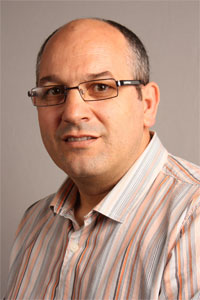
Angelo Corallo is an Associate Professor at the Department of Experimental Medicine, University of Salento, specializing in technologies and methodologies for collaborative processes in industrial systems. His research spans Digital Business Ecosystems , Cybersecurity , and Collaborative Product Design , focusing on the interplay between technology and organizational dynamics. He leads interdisciplinary research divisions in Open Networked Business Management , Learning and Innovation , and Collaborative Product Design . Research Interests : Corallo's work integrates Information and Communication Technologies (ICT) with Business Management, particularly in Digital Twins for healthcare and manufacturing Knowledge Modeling and Ontology Engineering Industry 4.0 and Smart Manufacturing Agri-Food Sustainability through digitalization Scientific Contributions : His recent articles explore trends in Cybersecurity for Industrial IoT Metaverse Applications in business models Traceability Systems in food supply chains Collagen-Based Biomaterials from aquaponics
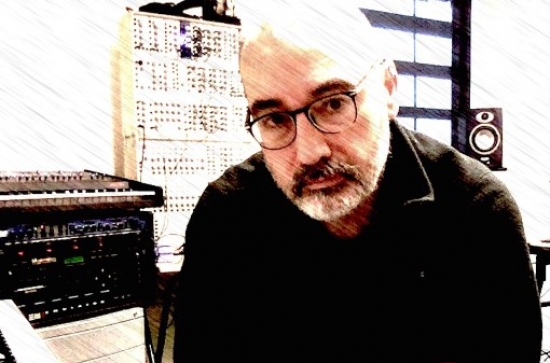
Victor Lazzarini is a Professor of Music at Maynooth University, Ireland, specializing in computer music and audio signal processing. He holds a BMus from Universidade Estadual de Campinas (UNICAMP), Brazil, and an AMusD from the University of Nottingham, UK. His research spans electroacoustic music, digital signal processing, and music technology. He leads the Csound project, a widely used sound and music computing system, and authored libraries like Aulib and Aurora. Education: Bachelor of Music (BMus), UNICAMP, Brazil Advanced Music Degree (AMusD), University of Nottingham, UK His research interests include sound synthesis, computer music languages, and the intersection of music with technology. He has authored over 150 peer-reviewed publications and books such as Spectral Music Design: A Computational Approach (Oxford UP, 2021) and co-edited volumes like Ubiquitous Music Ecologies (Routledge, 2020). His work bridges academic and industrial sectors through projects like the Enterprise-Ireland-funded commercialization initiative. Prof. Lazzarini’s contributions to music technology include pioneering tools like Csound, which enable real-time audio synthesis and processing. His articles span topics from digital filter design to historical computer music archaeology, reflecting his expertise in both theoretical and applied domains. Awards: AIC/IMRO International Composition Prize (2006) He advises on interdisciplinary projects such as the BeatHealth initiative, integrating ubiquitous computing and music. His creative output includes electroacoustic compositions performed globally and released on labels like FarPoint Recordings. Lazzarini actively collaborates with international teams, contributing to conferences like DAFx and ICMC, and leads initiatives like the Ubimus (Ubiquitous Music) research network.
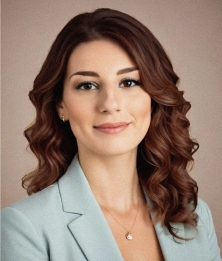
Katherine McKittrick is a Professor in the Department of Gender Studies at Queen's University, affiliated with the Faculty of Arts and Science and the Department of Geography and Planning. She holds the Canada Research Chair in Black Studies. Her research focuses on Black studies, anti-colonial studies, cultural geographies, and gender studies, with a particular emphasis on Sylvia Wynter's work and critical-creative methodologies. McKittrick earned her PhD, MA, and BAH in Women's Studies from York University, alongside a BA in English Literature and History from the University of Ottawa. She is a member of the Royal Society of Canada and the American Academy of Arts and Sciences, and previously served as editor of Antipode: A Radical Journal of Geography . Her research interests span black geographies, postcolonial systems, social oppression, and spatial justice. Recent work explores black methodologies (e.g., Dear Science and Other Stories ) and intersections of race, gender, and place. Her articles critically engage with migration, liberation strategies, and decolonial thought. McKittrick has been recognized with prestigious awards including the Canada Research Chair and the Antipode Graduate Student Scholarship. She teaches courses like Black Feminisms and Black/Geographies/Liberation , advancing interdisciplinary scholarship at Queen's University.
Eylul Ceren Demir serves as an Assistant Professor in the Department of Psychology at Adiyaman University's Faculty of Arts and Sciences, where she also holds the position of Vice Chair of Department since November 2023. She concurrently serves as a Visiting Professor at Middle East Technical University (METU) teaching Qualitative Research in Clinical Psychology (Fall 2023-Spring 2025) and taught Psychological Assessment at Ufuk University in Fall 2023. Her educational background includes an Integrated Doctorate in Clinical Psychology from Middle East Technical University (2018-2023) with a dissertation titled 'When the boundaries exceed: Thematic Analysis of Anorexia Nervosa in Lacanian Psychoanalysis,' a Master's degree in Psychology from Dokuz Eylul University (2016-2018), and a Bachelor's degree in Psychology from Çankaya University with 3.91/4.00 CGPA (2013-2016). Dr. Demir's research focuses primarily on Lacanian psychoanalysis, clinical psychology, and psychopathology, with particular expertise in eating disorders, trauma, suicide prevention, and qualitative research methods. Her work bridges theoretical psychoanalytic concepts with clinical applications, especially in understanding anorexia nervosa, post-disaster psychological trauma, and the therapeutic process. She has developed specialized knowledge in analyzing cinematic characters through psychoanalytic frameworks and examining cultural aspects of mourning and loss. Her publication record demonstrates a clear trajectory from foundational psychoanalytic concepts (2020-2021) toward increasingly specialized clinical applications (2022-2025), with recent work focusing on earthquake trauma, anorexia nervosa from Lacanian perspectives, and therapist development. Her articles consistently integrate psychoanalytic theory with empirical clinical observations, creating a distinctive methodological approach that combines qualitative analysis with Lacanian conceptual frameworks. As an academic leader, Dr. Demir serves as Editor for AYNA Clinical Psychology Journal (since 2022) and Field Editor for Adiyaman Social Sciences Journal (since 2024). She has supervised numerous graduate theses at METU and currently co-advises multiple doctoral students working on topics including neurodivergence in creative industries, OCD experiences, non-suicidal self-injury, and martyr letter analysis. Her clinical work through the AYNA Clinical Psychology Support Unit at METU (2020-2023) involved providing psychotherapy supervision to graduate students and coordinating clinical training processes. She has conducted nearly 1000 hours of therapy sessions with children, adolescents, and adults using psychoanalytic approaches. Dr. Demir remains active in the Freud-Lacan Psychoanalytic Association (since 2018) and serves on Turkey's Science Academy Psychology Terminology Working Group (since 2023).
Yana Meerzon is a Full Professor in the Department of Theatre at the University of Ottawa, affiliated with the Faculty of Arts. Her academic roles include teaching advanced courses such as Performance and Migration , THE 5130 Dramaturgy , and THE 5934 Theatre at the Crossroads of Narratives . She holds additional adjunct roles at institutions like Carleton University’s Cultural Mediations Program and Dalhousie University’s Department of English. Her research focuses on theoretical approaches to performance and migration, including studies on displacement, multilingualism, and identity politics. She has authored four books and co-edited nine collections, with recent works exploring Russian nationalism and migration narratives. Her current SSHRC-funded project examines the intersection of migration and neo-nationalism in European theatre. Meerzon’s academic leadership includes serving as President of the Canadian Association for Theatre Research (2020–2022) and membership in global organizations like IFTR and EASTAP. Her educational background includes a Ph.D. from the University of Toronto and advanced degrees from the Russian Academy of Theatre Arts (GITIS). Her scholarly contributions span over 86 publications, including analyses of Wajdi Mouawad’s work, Michael Chekhov’s pedagogy, and digital performance in crises. She actively engages in public discourse through interviews and media links, emphasizing the ethical and cultural dimensions of migrant theatre practices in Canada and beyond.
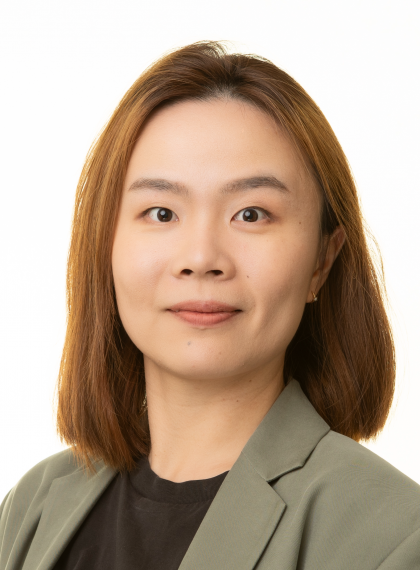
Zhao Zhao is an Assistant Professor at the School of Computer Science, University of Guelph. Her work focuses on wearable systems, human-robot interaction, and gamification for health and education. She holds a PhD from Carleton University (2019) and completed a postdoctoral fellowship at the University of Toronto (2019–2023) before roles at McMaster University and her current position. Education includes a BSc in Computer Science from University of Electronic Science and Technology of China (2011), MSc from Carleton University (2014), and PhD in Electrical and Computer Engineering (2019). Research interests span physiological computing, AI-assisted creativity tools, and adaptive systems leveraging wearable sensors. Key research areas include: 1) Wearable-based gamification for health and education, 2) Emotion sensing via physiological signals, and 3) Human-robot interaction enhanced by wearable data. Her lab uses Empatica EmbracePlus wristbands and Emotiv EEG headsets to analyze real-time physiological responses in diverse interaction scenarios. Recent publications (2020–2025) emphasize personalized exergame systems, child-robot interaction studies, and AI linguistic competency analysis. She actively seeks graduate students and industry partnerships in wearable technology, education tech, and HRI.
Andrew Osborn is an Associate Professor of English at the University of Dallas, serving as Director of the IPS-Literature Doctoral Program and Editor of The Wallace Stevens Journal . He holds a PhD from the University of Texas at Austin and an M.F.A. from the Iowa Writers' Workshop. His research focuses on poetic difficulty, lyric theory, formalism, and modernist/postmodernist studies. Osborn teaches courses ranging from literary traditions to creative writing, emphasizing close reading and interdisciplinary approaches. His scholarly work spans articles in journals like The Wallace Stevens Journal , Philological Review , and Contemporary Literature , exploring themes such as Stevens’s poetics, Keats/Shelley’s legacy, and Wittgenstein’s influence on literary analysis. He has authored poetry, including Plato’s Aviary , and contributed reviews to Chicago Review , Boston Review , and others, engaging with contemporary poets like Jorie Graham and Ann Lauterbach. Osborn’s keynotes, such as “Likings, Likenings, and the Push of Reading” (2014), emphasize the interplay between textual ambiguity and reader engagement. His academic leadership and editorial roles reflect his commitment to advancing interdisciplinary literary studies.
Kimberly Holst is a Clinical Professor of Law at the Sandra Day O'Connor College of Law, Arizona State University, where she teaches Legal Method and Writing and upper-level legal skills courses. She served as the Dean’s Fellow for Innovation (2023–2024) and holds leadership experience as Immediate Past President of the Legal Writing Institute and former Chair of key AALS sections. Her work bridges legal education, rhetoric, and media. Research Interests: Her scholarship centers on legal writing pedagogy , narrative and rhetoric in legal discourse , and the intersection of law with media and popular culture . She explores how storytelling shapes legal advocacy, how media influences public understanding of law, and how legal education can evolve with technology and societal change. Her recent publications reflect a strong focus on legal education innovation , AI and assessment , rhetorical timing (kairos) , and the disciplinary identity of legal writing . The articles span from foundational skills like predictive writing to advanced topics such as burden-shifting in evidence and international legal developments. Scientific Awards: Global Skills Award (2017) Rocky Mountain Legal Writing Award (2022) She actively mentors students through Independent Study (LAW 781) and supervises Teaching Assistants (LAW 735), contributing to the development of future legal professionals. Her research is widely disseminated through ASU’s Faculty Scholarship Repository and SSRN, and she presents regularly to domestic and international audiences on pedagogical techniques. Labs and Teams: While no formal lab is mentioned, Professor Holst is deeply involved in national academic communities, including the Legal Writing Institute and the Association of American Law Schools, where she contributes to shaping legal education policy and practice. She collaborates across disciplines, particularly at the intersection of law, communication, and media studies.
Bernhard Brehmer is a Professor of Slavic Linguistics at the University of Konstanz since 2020, holding a W3-professorship in Slavic Linguistics. He previously held academic positions at the Universities of Greifswald, Hamburg, and Tübingen, including a Juniorprofessur and W2-professorship. His research focuses on multilingualism, language attrition, heritage languages, and sociolinguistic aspects of Slavic languages. He earned his doctorate in Ostslavische Philologie from Eberhard Karls University of Tübingen in 2004 with a dissertation on politeness expressions in Russian. Brehmer has led numerous interdisciplinary research projects, including the DFG-funded 'Russian in Germany across Generations' (2021–2024) and the EU-funded 'Nachbarspracherwerb' initiative. His awards include the 2012 Junior Fellowship at FRIAS and the 2018 Sparkassen-Förderpreis for German-Polish collaboration. His scholarly contributions span monographs, edited volumes, and over 50 peer-reviewed articles. Key works include Politeness between Convention and Creativity (2009) and co-edited collections like Lost in Transmission (2020). He actively participates in academic governance, serving as director of Slavistik institutes and developing interdisciplinary programs like the Baltic Sea Region MA program. His research integrates corpus linguistics, sociolinguistics, and applied language policy, addressing contemporary issues such as minority language maintenance and digital language behavior.
Helena Santos Silva is an Associate Professor at the Department of Education and Psychology, School of Education and Psychology, University of Trás-os-Montes e Alto Douro (UTAD), Portugal. She is also an integrated researcher at the Center for Educational Research and Intervention (CIIE) at the University of Porto. Her academic work spans teaching methodologies, teacher development, and educational innovation. PhD in Education, Teaching of Biology and Geology, UTAD (2001) Her research focuses on cooperative learning , formative assessment , critical and creative thinking , and communities of practice . She emphasizes student autonomy, peer observation, and feedback mechanisms in learning. She has led and participated in significant projects such as FCT’s 'Critical Thinking in Network in Higher Education,' Erasmus+ 'Crithinkedu,' and the OECD initiative on fostering creativity and critical thinking. The analysis of her recent publications reveals a strong trend in evaluating cooperative learning strategies, validating assessment tools, and promoting critical thinking across educational levels, particularly in higher and secondary education. Her interdisciplinary approach integrates psychology, pedagogy, and technology. Scientific awards include: Two pedagogical innovation awards She has co-authored 10 educational books and numerous peer-reviewed articles. She has been involved in national and international projects, serving on scientific and organizing committees of key conferences. She supervises educators and conducts training in cooperative learning and formative assessment. She is a founding member of webPACT and Crithinknet, promoting critical thinking practices in Portugal. She is actively involved in research teams and labs such as LabDERE and CIIE, contributing to digital experimentation and educational intervention. Her work continues to influence teacher training and curriculum development in Portugal and across Europe.
Dr. Lesley Friend is a Lecturer in the School of Education within the Faculty of Creative Industries, Education & Social Justice at Queensland University of Technology. With a PhD completed in 2020 from Australian Catholic University, Friend has established a robust research profile focused on early childhood literacy development, multimodal learning environments, and oral language practices in educational contexts. Friend's research interests center on Early Childhood Education , Literacy Development , and Multimodal Learning , with particular attention to how disruption affects educational practices. The work explores innovative approaches to teaching phonics through children's literature, examines social communication through gaming for children with autism, and investigates the impact of globalization on classroom practices in diverse cultural contexts. Friend's research demonstrates a strong commitment to practical applications in educational settings, particularly in developing substantive oral language skills for young learners. Analysis of Friend's recent publications reveals a clear trajectory toward understanding how multimodal communication, digital technologies, and sociocultural factors intersect in educational environments. The work spans from foundational classroom discourse analysis to cutting-edge research on virtual reality and multisensory makerspaces, showing both depth and breadth in educational research. While specific awards are not documented in the available materials, Friend's consistent publication record in reputable journals demonstrates scholarly impact. The research has been published in journals including International Journal of Science and Mathematics Education , Journal of Language, Identity and Education , and Learning, Media and Technology , reflecting interdisciplinary reach across education, linguistics, and technology fields. Friend has collaborated extensively with colleagues at QUT, particularly with Kathy Mills and Lynn Downes, suggesting active participation in research teams focused on language and literacy education. The work addresses critical contemporary issues in education, including how to maintain quality learning experiences during periods of disruption and how to leverage technology for enhanced educational outcomes.
Rodrigo Lopes De Barros Oliveira is an active Lecturer at the University of the Balearic Islands (UIB), specializing in Spanish Language Education within the Department of Spanish Philology and Language Education. He teaches courses including Teaching Spanish in Primary Education, Language in the Early Childhood Classroom, and Spanish Language Communication Strategies for both Bachelor's and Double Degree programs in Education. His academic career spans teaching activities through the 2025-26 academic year, demonstrating ongoing institutional engagement. His research interests center on Brazilian literature, creative writing, and experimental film production with particular focus on urban cultural studies and representations of social marginalization. Oliveira's creative output reveals a distinctive voice exploring São Paulo's urban landscape, often employing dark social commentary and experimental narrative forms that challenge conventional literary boundaries. His work frequently examines the intersection of Brazilian identity, political resistance, and bodily experience within contemporary society. Oliveira's creative works demonstrate consistent thematic evolution toward increasingly complex explorations of surveillance, urban decay, and cultural resistance. His film projects often blend documentary and experimental techniques while his literary works maintain a strong connection to Brazilian social realities. The academic analysis of his work, such as Milton Francisco's semiotic study of 'A Carne do Metrô,' confirms his significance within contemporary Brazilian literary discourse. Scientific Recognition: Cultural Contest Caderno 2 in the 450 Years of São Paulo (2004) for 'A Carne do Metrô' As an educator, Oliveira guides students through foundational language education courses and supervises Bachelor's Thesis projects in Early Childhood Education. His creative practice informs his pedagogical approach, bringing real-world artistic experience into the classroom. While specific research grants aren't documented in the provided materials, his sustained creative output across multiple media suggests ongoing scholarly engagement. Oliveira is affiliated with the Art and Education - Music and Art Laboratory (GRAiE - Mus&Art Lab), a consolidated experimental R&D&I group at UIB, indicating active participation in interdisciplinary artistic research. His work bridges academic scholarship with creative practice, positioning him at the intersection of education, literature, and visual arts within the university setting.
Professor Francisco Chiclana is a leading academic in Computational Intelligence and Decision Making at the School of Computer Science and Informatics, De Montfort University (UK). As founder of DIGITS (De Montfort University Interdisciplinary Group in Intelligent Transport Systems), he pioneered research in trust-driven decision frameworks and fuzzy systems. PhD and BSc in Mathematics from University of Granada Coordinated DMU's REF 2014 submission in Computer Science and Informatics Co-developed DMU's Doctoral Training Programme in Intelligent Systems His research focuses on fuzzy preference modelling , consensus reaching processes , and social network analysis for decision support systems. Recent work explores AI applications in trust propagation, power-asymmetric conflict resolution, and large-scale group decision frameworks. Key publications include 15+ peer-reviewed articles in journals like IEEE Transactions on Fuzzy Systems and Information Sciences , covering topics from type-2 fuzzy logic to Nash bargaining compensation mechanisms . His Greenfield-Chiclana Collapsing Defuzzifier won third prize at DMU's Creative Thinking Awards 2010. Outstanding PhD Award (University of Granada, 2000) Finalist in DMU-THE OSCAR AWARDS for Research Excellence (2012) As supervisor of 8+ current and completed PhD students, including Sarah Greenfield and Sergio Alonso Burgos, he has shaped next-generation researchers. His £145K EPSRC-funded project (2006-2009) extended fuzzy logic applications in consensus modelling.
Prof. Georg Jäggle is a Professor of Vocational Education at the University College of Teacher Education Vienna (PH Wien), specializing in educational robotics, STEM pedagogy, and sustainability education. He leads the Department of Vocational Education within the Institute for Secondary Level Vocational Education (I:SBB). His work integrates technology-enhanced learning environments, focusing on project-based methodologies to bridge gaps between education and industry needs. Key projects include the Recycling Heroes initiative (2022–2024), which employs citizen science to promote circular economy awareness, and the EU-funded ER4STEM project (2017–2018), fostering STEM engagement through robotics. Prof. Jäggle holds a Dipl.-Ing. (FH) and a Dr. in engineering education, with prior industry experience as an engineer and vocational school teacher. His research emphasizes digital competence development, intergenerational learning, and inclusive education strategies. He has coordinated interdisciplinary teams across 10+ EU and national projects, including RoboCoop (2018–2022) and Makers@school (2017–2019), which implemented robotics and maker culture in schools. His teaching spans applied mathematics, engineering, and automation technology at both academic and vocational levels. Research interests include technology integration in vocational training, lifelong learning frameworks, and the impact of educational robotics on student motivation. Recent publications (2022–2024) explore STEM career self-efficacy, sustainability curriculum innovation, and cross-generational robotics collaboration. He currently serves in the Center for Research Management (Zentrum Forschungsmanagement) at PH Wien, advancing applied research in MINT (STEM) education and educational technology.
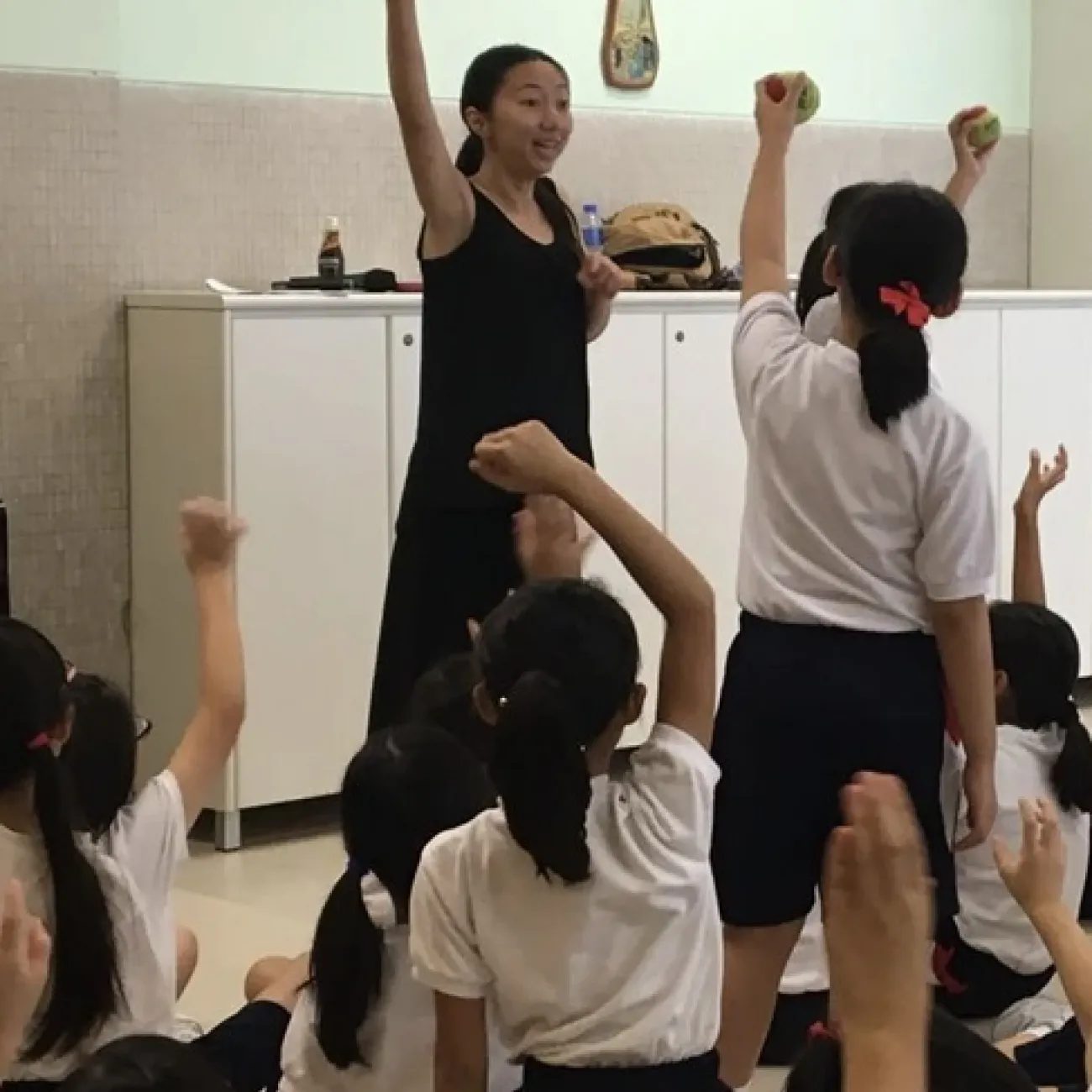
Chiying Lam is a Lecturer in Community Music and Social Justice at the University of Southampton. She holds a BEd (Honours), MA, and PhD from The Education University of Hong Kong and Royal College of Music, London. Her research focuses on post-colonial discourses in music pedagogy, musicians' practices, and inclusive education. She convenes BERA's Social Justice SIG and serves as a Fellow of the Royal Society of Public Health. Lam co-founded Little Bean Theatre to preserve heritage languages and chairs St Mary Magdalene Church's Music Department. Recent projects include 'Harmonies of Home' songbank and AI-driven refugee information initiatives. She supervises six PhD students in music-related disciplines. Awards include UK Young Academy membership (2025) and NIHR reviewer roles. Her teaching spans global music education methods and practical pedagogy.