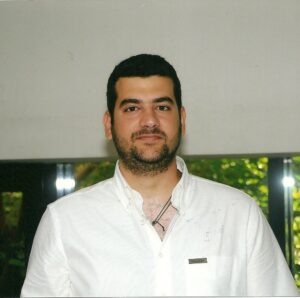
Theodora Varvarigou is a Professor in the Department of Electrical and Computer Engineering at the National Technical University of Athens (NTUA). She holds a B.Eng. from NTUA and M.Eng. and Ph.D. degrees from Stanford University. Her career includes research at AT&T Bell Labs and roles at the Technical University of Crete. From 2008-2012, she served as director of NTUA's 'Technoeconomic Systems' postgraduate program. Her research focuses on Cloud Computing, Multimedia Content Processing, Social Networking Technologies, and emerging areas like blockchain, edge computing, and cybersecurity. She has published over 200 papers and led numerous European research projects, emphasizing scalable systems, data management, and smart infrastructure applications. Her work spans technical innovations such as intrusion detection systems, edge resource optimization, and blockchain-based solutions for IoT, healthcare, and smart cities. Recent publications highlight advancements in AI-driven resource allocation, privacy-preserving blockchain designs, and predictive analytics for edge computing environments. Professor Varvarigou has contributed to interdisciplinary initiatives, including cohort data harmonization in biomedical research and social media analytics for urban planning. Her teaching includes courses on digital systems, network programming, and fault-tolerant systems.
Todd Millstein is a Professor in the Computer Science Department at the University of California, Los Angeles (UCLA). He served as the Computer Science Department Chair from 2022-2025 and is also an Amazon Scholar. His research focuses on making software systems more reliable through programming languages techniques, with significant contributions to network verification and probabilistic programming. Millstein received his Ph.D. from the University of Washington Department of Computer Science, where he was a member of the Cecil group led by Craig Chambers. Prior to that, he completed his undergraduate studies at Brown University under the guidance of Paris Kanellakis and Pascal Van Hentenryck. Millstein's research spans several areas of programming languages and systems with a focus on reliability. He has made significant contributions to network verification, developing the Batfish network configuration analyzer which is now managed by Amazon Web Services and forms the basis of Oracle Cloud's Network Path Analyzer. His work has been recognized with the ACM SIGCOMM Networking Systems Award in 2025. He also works on interactive program verification through lemma synthesis and scalable reasoning methods for probabilistic programming languages. His research bridges programming languages theory with practical systems challenges, as highlighted in his SPLASH/OOPSLA 2024 keynote "Everything is a Program (even if it's not)". Millstein's recent publications demonstrate a consistent focus on verification and reliability across multiple domains. His work shows a progression from foundational programming language techniques to practical applications in networking and probabilistic systems. Key themes include data-driven approaches to program analysis, synthesis of verification artifacts, and applying programming languages techniques to non-traditional domains like network configuration. Millstein's scientific achievements have been recognized with numerous prestigious awards including an NSF CAREER Award, an ACM SIGPLAN Most Influential PLDI Paper Award, an ACM SIGCOMM Networking Systems Award, IEEE Micro Top Picks selection, best-paper awards from PLDI, OOPSLA, and SIGCOMM, a Microsoft Research Outstanding Collaborator Award, an Okawa Foundation Research Grant, an IBM Faculty Award, and a Facebook Research Award. He has also received both the Northrop Grumman Excellence in Teaching Award (for junior faculty) and the Eon Instrumentation Inc. Excellence in Teaching Award (for senior faculty) from UCLA Engineering. Millstein advises several Ph.D. students including Ana Brendel, Poorva Garg (co-advised with Guy Van den Broeck), Rajdeep Mondal (co-advised with George Varghese), and Rathin Singha (co-advised with George Varghese). His research has been supported by various grants including an NSF CAREER Award, Okawa Foundation Research Grant, IBM Faculty Award, and Facebook Research Award. He has also been a Co-Founder and Chief Scientist of Intentionet, which was later acquired by Amazon Web Services. Millstein is actively involved in the Batfish project, an open-source network configuration analyzer that has had significant practical impact. Batfish is now managed by AWS, powers Oracle Cloud's Network Path Analyzer, and is used by dozens of companies. His research group continues to work on network reliability, developing techniques for scalable BGP policy verification and behavioral testing of protocol implementations.
Brandon Lucia is a Full Professor in the Department of Electrical and Computer Engineering at Carnegie Mellon University's College of Engineering. He leads the abstract research group focusing on the intersection of computer architecture, systems, and programming languages. His work bridges theoretical foundations with practical implementations in energy-constrained environments. Lucia's research centers on intermittent computing systems and edge computing in extreme environments. His work on energy-harvesting systems has established fundamental principles for batteryless computing, while his orbital edge computing research pioneers computational intelligence for nanosatellite constellations. These research thrusts address critical challenges in reliability, efficiency, and programmability for systems operating under severe power constraints. His publication record shows a clear evolution from foundational work on intermittent computing models to sophisticated applications in space computing and edge intelligence. Recent publications demonstrate increasing integration of dataflow architectures with energy-harvesting constraints, particularly in satellite constellations where computational resources must be managed across distributed, power-constrained platforms operating in extreme environments. NSF CAREER Award (2017) IEEE TCCA Young Computer Architect Award (2019) Sloan Foundation Fellowship (2021) ASPLOS Best Paper Awards (2018, 2020) OOPSLA Distinguished Paper and Artifact Awards (2015) Lucia actively mentors numerous PhD students including Brad Denby, Zhuo Cheng, and Emily Ruppel, many of whom contribute significantly to his research program. His abstract research group maintains strong industry connections while pursuing fundamental advances in computing systems. The group has developed multiple open-source tools including Legerdemain for program analysis and MultiCacheSim for cache coherence simulation. His laboratory work spans from theoretical foundations of intermittent computing to practical implementations in space systems. Current projects include computational nanosatellite constellations, energy-minimal dataflow architectures, and secure edge computing systems that operate reliably despite frequent power failures.
Gérard Berry (born December 25, 1948) is a distinguished French computer scientist currently serving as Professor at the Collège de France, holding the permanent chair Algorithmes, machines et langages (Algorithms, Machines, and Languages) since 2012. He previously held the Informatique et sciences numériques chair (2009-2010) and the Technological Innovation Liliane Bettencourt chair (2007-2008) at the same institution. Before joining Collège de France full-time, he served as Director of Research at INRIA Sophia Antipolis (2009-2012) and at École des Mines de Paris (1977-2001). His research spans over 30 years in three main fields: lambda calculus and functional programming, parallel and real-time programming languages, and design automation for synchronous digital circuits. He is particularly renowned for developing the Esterel programming language. His work bridges theoretical computer science with practical industrial applications. Berry's research has evolved to include current work in Hop and HipHop for Web programming, formal verification of compilers, and languages for computer music. His publications demonstrate consistent contributions to programming language theory, formal methods, and their applications in hardware and software systems. Gold Medal of CNRS (2014) Chevalier de l'Ordre de la Légion d'Honneur (2012) Member of French Academy of Sciences (2002) Member of Academia Europaea (1993) Monpetit Prize of Académie des sciences (1990) Berry has advised 17 PhD students and reviewed numerous theses. His industrial experience includes serving as Chief Scientist Officer of Esterel Technologies (2000-2009), where he directed the implementation of the Esterel v7 compiler. He has also held significant leadership roles including President of the Scientific Council of IRCAM and membership on the Scientific Council of the National Education. His teaching at Collège de France has covered topics ranging from the foundations of computation to the societal impact of digital technology, with courses including The Informatics of Time and Events and Proving Programs: Why? When? How? His laboratory work has focused on developing practical applications of theoretical computer science concepts.
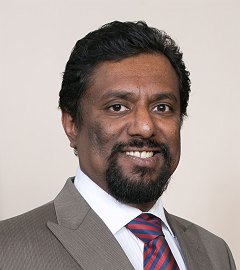
Professor Saman Amarasinghe is a faculty member in the Department of Electrical Engineering and Computer Science at the Massachusetts Institute of Technology (MIT), where he leads the Commit compiler research group at MIT's Computer Science and Artificial Intelligence Laboratory (CSAIL). His research focuses on programming languages and compilers that maximize application performance on modern computing platforms, with a particular emphasis on high-performance domain-specific languages. Professor Amarasinghe received his bachelor's degree in electrical engineering and computer science from Cornell University in 1988, followed by master's and PhD degrees in electrical engineering from Stanford University in 1990 and 1997, respectively. He joined the MIT faculty as an assistant professor in 1997 and has since become a world leader in his field. Professor Amarasinghe's research interests span programming languages, compiler design, and high-performance computing, with a particular focus on domain-specific languages. His group has developed numerous influential languages and compilers including Halide, TACO, Simit, StreamIt, StreamJIT, PetaBricks, MILK, Cimple, and GraphIt, which deliver unprecedented performance for application domains such as image processing, stream computations, and graph analytics. He has also pioneered the application of machine learning for compiler optimizations, from Meta optimization in 2003 to the OpenTuner autotuner framework. Professor Amarasinghe's publication history reveals a consistent research trajectory toward creating specialized language and compiler solutions that address performance challenges in specific domains while hiding complexity from application developers. His recent work focuses heavily on sparse computing, tensor algebra, graph processing, and the integration of machine learning techniques into compiler technology, demonstrating his ability to identify and address emerging computational challenges. ACM Fellow (2019) As an educator, Professor Amarasinghe has developed the popular Performance Engineering of Software Systems (6.172) class with Professor Charles Leiserson and created innovative project-based courses including the Open Source Software Project Lab, the Open Source Entrepreneurship Lab, and the Bring Your Own Software Project Lab. He also serves as the faculty director of MIT Global Startup Labs, which has helped create more than 20 startups across 17 countries. His research has translated into practical applications through startups like Determina, Inc. (acquired by VMware), demonstrating the real-world impact of his academic work. Professor Amarasinghe co-led the Raw architecture project with Professor Anant Agarwal, which did pioneering work on scalable multicores. His entrepreneurial activities include founding Determina, Inc. based on computer security research from his MIT lab and co-founding Lanka Internet Services, Ltd., the first Internet Service Provider in Sri Lanka, showcasing his ability to bridge academic research with commercial applications.
Nick Bassiliades is a Professor at the School of Informatics , Aristotle University of Thessaloniki , Greece. His academic roles include serving as President of the Digital Governance Committee and the Digital Transformation of Greek Universities Committee, as well as Director of the Web, Data, and Knowledge Engineering Sector. Education: B.Sc. in Physics, Aristotle University of Thessaloniki (1991) M.Sc. in Applied Artificial Intelligence, University of Aberdeen (1992) Ph.D. in Parallel Knowledge Base Systems, Aristotle University of Thessaloniki (1998) His research focuses on Semantic Web , Ontologies , Knowledge Graphs , and applications in Artificial Intelligence , eGovernment , and Intelligent Agents . Recent publications emphasize ontological frameworks for requirements engineering, explainable AI, and electric vehicle knowledge graphs. He actively contributes to scientific communities as a Senior Member of IEEE and ACM , and serves as Co-Editor-in-Chief for the International Journal of Artificial Intelligence in Business and Management . His work involves collaborations with the Intelligent Systems laboratory and projects like XR4DRAMA for disaster management.
Emmanouil Z. Psarakis is an Associate Professor at the Department of Computer Engineering & Informatics , University of Patras, Greece. Born in 1963, he has been affiliated with the university since 2005 and is a member of the Signal Processing and Communications Lab . His academic journey includes teaching courses such as Signals and Systems Theory , Digital Signal Processing , and Computer Vision and Graphics . PhD in Computer Engineering and Informatics, University of Patras (1991) Dr. Psarakis is renowned for his research in image processing , computer vision , and signal processing , with applications in biomedical imaging , seismology , and robotics . His work spans deep learning , filter design , and 3D reconstruction , reflecting a multidisciplinary approach. His 15 most recent publications (2020–2025) focus on sign language recognition , adversarial defense , 3D shape analysis , and medical imaging . These works integrate machine learning , stochastic modeling , and computer vision to address challenges in video summarization , image inpainting , and seismic signal analysis . Dr. Psarakis has supervised over 10 PhD students , including Fotini Fotopoulou (2016–2019) and Panagiotis Georgantopoulos (2020–2023). He has participated in EU-funded , Hellenic , and bilateral R&D projects related to biomedical signal processing , robot vision , and forest fire monitoring . He leads the Signal Processing and Communications Lab , which collaborates with institutions like the Computer Technology Institute and international universities. His contributions include filter design , image alignment , and stereopsis techniques , with a focus on practical implementations in telecommunications and medical diagnostics .
Nikolaos Papaspyrou is a Professor at the School of Electrical and Computer Engineering of the National Technical University of Athens (NTUA) and a member of the Software Engineering Laboratory . His research focuses on the theory and implementation of programming languages, including semantics, type systems, compilers, static analysis, and formal verification. Since October 2021, he has been on leave from NTUA, working as a Software Engineer for Google in the memory management team for the V8 JavaScript and WebAssembly engine. He previously served as Director of the Division of Computer Science (2017-2019) and was on sabbatical with Google's compiler group in Munich (2015-2016). His work includes the RELEASE project (EU FP7 STREP) for reliable large-scale server software and uncertainty handling in distributed databases (European Social Fund). Ph.D. and Diploma in Electrical and Computer Engineering from NTUA M.Sc. in Computer Science from Cornell University His research interests span programming languages , software engineering , and formal verification , with recent publications on coinductive proofs in Liquid Haskell, concurrency semantics, and quantum compilation. He has supervised over 50 diploma projects and mentored numerous students now at institutions like MIT, Princeton, and UC Berkeley. Awards include conference organizing and program committee roles, though no formal scientific prizes are listed.
Stefan K. Muller is the Gladwin Development Chair Assistant Professor in the Computer Science Department at Illinois Institute of Technology. He previously served as a Postdoctoral Researcher at Carnegie Mellon University from 2018-2020 following completion of his PhD there under advisor Umut A. Acar. His academic journey began with an AB from Harvard University in 2012 under Stephen Chong. Dr. Muller's research centers on programming language techniques to improve correctness and efficiency of software, particularly in parallel computing domains. His work spans language and type system design, static resource analysis, and parallel computing methodologies. He leads the Responsive Parallelism research project which extends implicit parallelism models to handle features of consumer software like user interaction and responsiveness requirements. His publication record shows consistent output in top-tier venues including PLDI, POPL, ICFP, and SPAA, with recent work focusing on graph types, responsive parallelism, and resource-aware GPU programming. His research has been supported by NSF grant CCF-2107289. Current advisees include Marelle León (BS), Godha Pallavi Bhogadi (MS), and Alex Friedman (PhD) Former students have gone on to positions at Apple, Amazon, Bloomberg, American Express, and PhD programs at UPenn Teaching responsibilities at Illinois Tech include graduate courses CS534 (Types and Programming Languages), CS536 (Science of Programming), CS440 (Programming Languages and Translators), and CS443 (Compiler Construction). Previously at CMU, he taught Principles of Functional Programming.
Professor Diomidis Spinellis is a renowned academic in Software Technology at Athens University of Economics and Business (AUEB). He specializes in software engineering practices, code quality, AI ethics, and system architecture. His work bridges theoretical advancements with practical applications in industry, emphasizing reproducibility and empirical methods. Recipient of the IEEE Computer Society's prestigious 'Distinguished Contributor Recognition,' Spinellis is the sole Greek scientist to achieve this honor. His research spans software evolution, security, and open-source ecosystems, with a focus on methodologies like refactoring, static analysis, and debugging strategies. Key research interests include AI-generated content detection, modular data analytics, and incident management systems. His studies often leverage large-scale datasets (e.g., Unix evolution, Linux supercomputing analysis) to uncover patterns in software behavior and development practices. Publications frequently address emerging technologies' societal impacts, such as energy-efficient computing and ethical AI deployment. He advocates for reproducible research through tools like the Alexandria3k framework and contributes to open-source initiatives.
Markos Anastasopoulos is Associate Professor at the National and Kapodistrian University of Athens, specializing in optical/wireless networks and mobile computing. His research focuses on 5G/6G network convergence, intent-based management, and AI-driven optimization for telecommunications. Recent publications address THz-optical integration, federated learning in transport networks, and semantic-aware radio systems. Applied work includes intelligent asset management for railways and techno-economic analyses of network deployments. Recognized with best dissertation and best paper awards, his research bridges theoretical networking with industrial applications in transportation and cloud infrastructure.
Kotronis Christos serves as an Assistant Professor in the Department of Informatics and Telematics at Harokopio University, Athens, with his office located at Omirou 9, Tavros (17778). His academic career is deeply rooted at this institution where he completed all his formal education. His educational qualifications include: Undergraduate Degree in Informatics and Telematics (2014) Postgraduate Diploma in Informatics and Telematics, Major: "Computer and Internet Technologies and Applications" (2016) PhD in Informatics and Telematics, Dissertation: "Model-Centric Design of Systems with Awareness of the Provided Quality of Service Based on the Systems Modeling Language (SysML)" (2021) His research focuses on model-centered systems design with strong emphasis on quality of service awareness, systems simulation, and human-centric requirements analysis. He bridges theoretical model-based engineering with practical applications in cyber-physical systems and Internet of Medical Things (IoMT), particularly addressing human concerns in healthcare monitoring and transportation systems. His methodologies heavily utilize SysML extensions for integrating non-functional requirements like cost and human factors. Analysis of his 15 most recent publications (2018-2025) reveals a cohesive research trajectory centered on model-based systems engineering with three dominant themes: (1) Human integration in cyber-physical systems design through multi-view approaches, (2) Quality of service and cost optimization in SysML frameworks, and (3) Real-world implementations in healthcare (ECG monitoring, fall detection) and transportation (railway passenger comfort). His work consistently demonstrates progression from foundational modeling to edge-computing implementations. Scientific Awards: No scientific awards mentioned in source materials Regarding academic supervision, the source materials do not specify current advisees though his PhD research and publications suggest involvement in graduate mentoring. His departmental role includes teaching undergraduate courses in Informatics and Telematics. While no specific research grants are documented, his publication pattern indicates participation in collaborative projects focused on cyber-physical systems and healthcare technology. The absence of explicit lab/team information suggests his work may be conducted within broader departmental frameworks rather than dedicated laboratories.
Michael D. Bond is a Professor in the Department of Computer Science & Engineering at Ohio State University's College of Engineering. He leads the Programming Languages and Software Systems (PLaSS) Research Group, which focuses on designing program analyses and software and hardware systems that enhance computing reliability, scalability, and security. His academic service includes general chair for PLDI 2027, program committee membership for multiple top conferences, and committee roles in SIGPLAN Research Highlights (2024-2027). Professor Bond's research spans programming languages, systems, and security, with particular expertise in memory management, concurrency, hardware transactional memory, information flow control, and predictive race detection. His work bridges theoretical foundations with practical implementations, as evidenced by numerous open-source projects accompanying his publications. The PLaSS group has made significant contributions to understanding and improving memory models, developing efficient garbage collection techniques for modern architectures, and creating novel approaches to secure programming in languages like Rust. Analysis of his recent publications reveals a clear trajectory toward addressing security and reliability challenges in modern computing systems, particularly through language-based approaches. His work increasingly focuses on Rust programming language security mechanisms, memory disaggregation for datacenters, and advanced techniques for detecting and preventing concurrency bugs. The research demonstrates strong continuity in exploring memory models and concurrency while adapting to emerging hardware trends and security challenges. Outstanding Teaching Award, Department of Computer Science and Engineering, Ohio State University (2018) Lumley Research Award, College of Engineering, Ohio State University (2016) OOPSLA 2015 Distinguished Paper and Artifact Awards NSF CAREER Award ACM SIGPLAN Outstanding Doctoral Dissertation Award Intel PhD Fellowship Professor Bond actively mentors several PhD students including Chujun Geng, Vincent Beardsley, Chris Xiong, Victor Chen, and Noah Charlton, with external co-advisee Zixian Cai at Australian National University. His research is currently supported by multiple NSF grants including SaTC-2348754 (2024-2027), CyberCorps-2336531 (2024-2029), and CSR-2106117 (2021-2025), reflecting sustained funding for his work in information flow control, security, and systems research. The PLaSS Research Group maintains a strong presence in both academic and industrial communities, with graduated PhD students securing positions at major technology companies like Google, Amazon Web Services, and Huawei, as well as academic positions at institutions like UIUC and IIT Kanpur. The group's work combines theoretical rigor with practical implementation, consistently producing open-source artifacts that enable reproducibility and further research in the systems and programming languages community.
Steve Blackburn is a research scientist at Google DeepMind and professor of computer science at the Australian National University in the College of Engineering and Computer Science. His primary research focus is on programming language implementation, with expertise spanning memory management, virtual machines, and performance analysis. He has served in significant leadership roles including Associate Dean for Diversity and Inclusion (2016-2019) and as Program Chair for PLDI 2015 and General Chair for PLDI 2023. Blackburn's research interests center on making software run faster and more power-efficiently on modern hardware. His primary areas include microarchitectural support for managed languages, fast and efficient garbage collection, and the design and implementation of virtual machines. He maintains a strong interest in sound methodology and infrastructure for successful research innovation. His work bridges theoretical computer science with practical systems implementation, with particular focus on memory management frameworks and performance benchmarking. His publication record reveals a consistent focus on memory management systems, with recent work exploring garbage collection in modern contexts including CRuby, Julia, mobile devices, and memory-disaggregated datacenters. His research shows an evolution from foundational garbage collection algorithms toward practical implementations addressing real-world constraints in contemporary programming languages and hardware platforms. A notable trend is his increasing focus on quantifying and understanding the true costs of garbage collection in production environments. Fellow of the ACM Blackburn has supervised numerous doctoral students including Zhen He, John Zigman, Robin Garner, Ting Cao, and currently advises Wenyu Zhao, Zixian Cai, and others. He has also served on multiple program committees for major conferences including PLDI, ASPLOS, ISMM, and OOPSLA, demonstrating his significant contributions to the programming languages and systems research community. His service includes editorial roles for ACM Transactions on Programming Language Applications and Systems from 2017-2020. He leads two major research infrastructure projects: the MMTk memory management framework and the DaCapo benchmark suite, both of which have become foundational tools for researchers in programming languages and systems. These projects reflect his commitment to shared research infrastructure and reproducible methodology in systems research.
Nikolaos S. Papaspyrou is a Professor at the School of Electrical and Computer Engineering of the National Technical University of Athens (NTUA), affiliated with the Software Engineering Laboratory and the Division of Computer Science. His research focuses on programming languages, compilers, formal verification, and concurrency. Since October 2021, he has been on leave from NTUA while working as a Software Engineer at Google's V8 JavaScript and WebAssembly engine team. Previously, he served as Director of the Division of Computer Science (2017–2019) and held a sabbatical at Google's Munich compiler group (2015–2016). His academic contributions include pioneering work on Erlang/OTP scalability, concolic testing for functional languages, and static analysis techniques. He has authored numerous publications in top venues like ACM Transactions on Programming Languages and Systems and IEEE conferences. Papaspyrou has supervised over 50 diploma students and multiple PhD candidates, contributing to the education of future researchers and engineers. He actively participates in programming competitions, coaching Greek Olympiad teams, and volunteers in the Hellenic Informatics Society. He teaches advanced courses on programming languages, compilers, and software engineering at NTUA, emphasizing practical applications of theoretical concepts. His educational philosophy integrates problem-solving through programming, as highlighted in his FedCSIS 2013 paper on teaching methodologies.