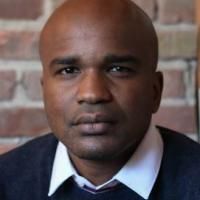
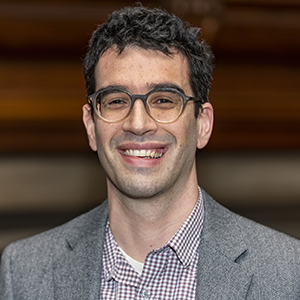
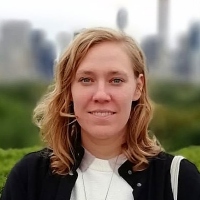
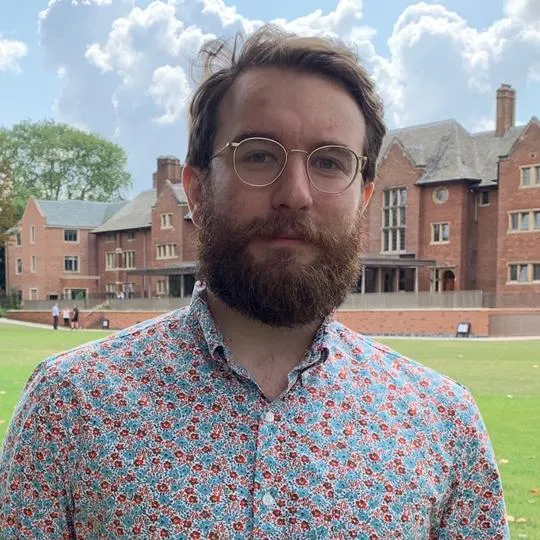
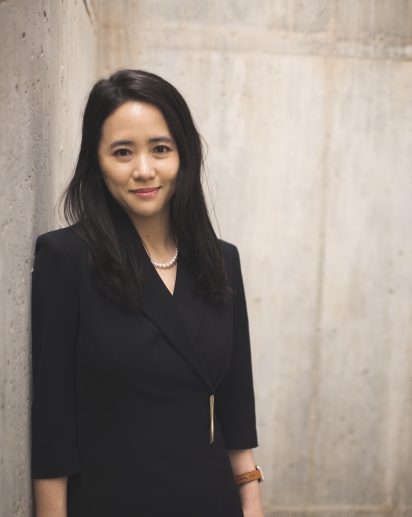
Chisu Teresa Ko is Associate Professor and Department Chair of Modern Languages at Ursinus College. She holds a Ph.D. from Columbia University and teaches Spanish language courses at all levels alongside Latin American Studies courses in English, including SPAN 201 (Conversation and Composition), SPAN 340 (Racial Discourses in Argentina), LAS 200 (Introduction to Latin American Studies), and interdisciplinary offerings like CIE 200 (Common Intellectual Experience). Her research specializes in 19th- and 20th-century Latin American literary and cultural studies, with emphases on: Race, ethnicity, and multicultural identity formation Historical and contemporary racial discourses in Argentina Asian diaspora communities in Latin America Afro-Argentine cultural production Criollo Popular Theater traditions Her scholarship—including the forthcoming book Argentina: Race in a Raceless Nation —consistently examines intersections of national identity, racial representation, and transnational connections, with recent work expanding into Afro-Argentine historical documentation and Korean-Argentine cinematic narratives. Awards and fellowships include: 2020 ACLS Fellowship (American Council of Learned Societies) 2021 UMBC Inclusion Imperative Visiting Faculty Fellowship
Alexandra Cox is an Associate Professor of Criminology at the University of Reading, serving as Programme Director for the BSc in Criminology. She holds a Ph.D. in Criminology from the University of Cambridge and a Yale undergraduate degree. Previously, she was a Senior Lecturer at the University of Essex, Assistant Professor at SUNY New Paltz, and Research Scholar at Yale Law School. Her research focuses on socio-legal dynamics of punitiveness, criminal justice institutions, youth justice, and racial inequities. She has authored/co-edited books like Trapped in a Vice and The Palgrave International Handbook of Youth Imprisonment , and her work has been published in journals such as Punishment and Society and Social & Legal Studies . Dr. Cox collaborates with organizations like Reprieve, the Howard League, and the Centre for Justice Innovation on projects addressing race and criminal justice policy. She has received awards including the American Society of Criminology Book Award and fellowships from the Gates Cambridge Trust and Soros Justice Advocacy. Her research emphasizes intersectional analysis, decarceration strategies, and the impact of systemic racism within criminal justice systems. Her recent publications explore topics such as Black fatherhood in youth justice, probation officer perspectives on systemic legitimacy, and racial disparities in youth diversion programs. She actively advises Ph.D. students researching criminological and socio-legal issues, with a focus on frontline workers, juvenile confinement, and racial justice.
Silvia Donzelli is a Researcher and doctoral student at the Chair of Practical Philosophy at the University of Regensburg. Her roles include serving as the Second Deputy Commissioner for Equal Opportunities for Women in Science and Art at the Faculty of Philosophy, Arts, History and Social Sciences. She holds a Magistra Artium (Philosophy and Art History) from Humboldt University Berlin, with studies at the University of Milan and Humboldt University Berlin. Her research focuses on responsibility ethics, legal philosophy, African and intercultural philosophy, environmental ethics, and Renaissance art history. She critiques colonial legacies in European thought and explores complicity in business practices and digital discourse. Teaching & Academic Contributions: Recent courses include "Language and Violence," "Racism," and "Human Rights" at the University of Regensburg. Publications span philosophy of responsibility, counter-speech strategies, and African environmental ethics. Active in conferences on complicity, democratic debate culture, and decolonizing philosophy. Research Interests: Ethics of complicity in business and digital contexts African critiques of European philosophical history Environmental ethics through an intercultural lens Renaissance portraiture and material culture Grants & Awards: None explicitly listed, but her work is supported through institutional affiliations. Labs/Teams: Engaged with the Chair of Practical Philosophy and interdisciplinary networks on complicity ethics and decolonial thought.
Dr. Olive Nabukeera is a Lecturer in English for Academic Purposes (EAP) at the Language Centre, Faculty of Arts, Humanities and Cultures, University of Leeds, where she has been teaching since September 2023. Her teaching supports foundation year, pre-sessional, and in-sessional students, particularly in the School of Sociology and Social Policy, focusing on academic literacies and writing development. Her research lies at the intersection of race, language, and identity in English language teaching, with a focus on Blackness, critical literacies, and decolonial pedagogies. She critically examines the representation and positioning of Black educators in TESOL and ELT contexts, challenging systemic inequities and native speakerism. Her recent and forthcoming publications (2022–2025) explore themes such as the invisibility of Black educators, teaching while Black, and racial performativity. These works appear in respected outlets including the CATESOL Journal, Patterns of Practice, and a Bloomsbury-published volume on Language Teacher Agency. She is currently writing her first monograph, Race, English and Blackness , to be published by Palgrave Macmillan. Dr. Nabukeera holds a Doctorate in TESOL from Alliant International University (USA), a Master's in TESOL from the University of Bath, a Master's in International Educational Management from the University of Leeds, and a Bachelor's in Education, English & Literature from Makerere University, Uganda. She is an active member of key professional associations: TESOL International Association British Association of Lecturers in English for Academic Purposes (BALEAP) American Association of Applied Linguistics (AAAL) British Association of Applied Linguistics (BAAL) While no formal advisees or grant projects are mentioned, her scholarship demonstrates a strong commitment to equity, inclusion, and transformative pedagogy in language education.
Katy Backes Kozhimannil, Ph.D., is a Professor at the Division of Health Policy and Management in the University of Minnesota School of Public Health . She co-directs the Rural Health Research Center and Rural Health Program at the university, focusing on health policy that affects healthcare delivery during critical life stages like pregnancy and childbirth. She combines research with policy advocacy to advance rural health , maternal and child health , and racial equity . Education : PhD in Health Policy (Harvard, 2009), MPA in Policy and Administration (Princeton, 2003), BA in Spanish and International Relations (University of Minnesota, 1999) Expertise : Health care policy, maternal and child health, rural health, health care quality, policy evaluation Kozhimannil’s research examines how policies impact healthcare access, quality, and outcomes in rural communities, particularly during pregnancy and postpartum. Her work addresses structural racism , geographic disparities , and social determinants of health , with published articles in journals like Science , JAMA , and Health Affairs . She has informed legislative changes in nine states and federal policies to improve maternal health access and reduce inequities. Her teaching emphasizes practical skills for health policy analysis, including legislative communication, policy brief writing, and advocacy. Students have engaged directly with legislators, influencing policy debates and implementation. Kozhimannil’s scientific awards include: Heinz Award for Public Policy (2020) Alice S. Hersh New Investigator Award (2016) Labelle Lectureship in Health Services Research (2015) Health Affairs Top 15 Most-Read Articles (2013) Delta Omega Honorary Society in Public Health (2013) She collaborates with colleagues like Jessica Liddell and Stephanie Leonard on rural maternity care, Hailey Baker on Indigenous maternal health, and Jhumka Gupta on domestic violence research. Her work has been cited extensively and covered by major media outlets including the New York Times and Washington Post .
Bocar A Ba is an Assistant Professor of Economics at Duke University's Trinity College of Arts & Sciences since 2021, with a visiting research scholar appointment at Princeton University School of Public and International Affairs (2025-2026). Holding a PhD from The University of Chicago (2018), his work bridges economics with political science and criminal justice studies. Education: Ph.D. in Economics, The University of Chicago (2018) Research Focus : Analyzes policing practices, media narratives around police violence, temperature-aggression dynamics, and institutional racism. His work employs advanced econometric methods and large-scale data analysis. Article Trends : Recent publications examine media syntactic patterns obscuring police accountability political ideology distribution in police forces climate impacts on police-civilian violence racial disparities in police recognition systems peer effects on police force use Scientific Recognition : Selected for Princeton's Visiting Research Scholar program in public policy analysis. Grants Received : National Science Foundation (2023-2026): Social Movements and Corporate Opportunities Arnold Ventures (2024-2025): Alternatives to Policing research United States Naval Academy (2022-2023): Policing and Criminal Justice impacts Teaching : Instructs courses on criminal justice economics and advanced topics in economics.
Bernard Koch is an Assistant Professor in the Department of Sociology at the University of Chicago. His research focuses on the science of science, culture, cultural evolution, AI ethics, and computational social science. Prior to joining the University of Chicago, he was a Postdoctoral Research Fellow at Northwestern University’s Kellogg School of Management. He earned his Ph.D. in Sociology from UCLA in 2023. His work bridges sociology and computational methods, exploring topics such as machine learning applications in social research, ethical implications of AI, and cultural dynamics. Recent projects include analyzing the role of large language models (LLMs) in social simulations and confronting the misuse of genetics in online contexts. Koch’s articles span themes like data-centric machine learning (DMLR), the historical development of deep learning, and the lifecycle of datasets in research. He also investigates cultural evolution through case studies like music subcultures and material culture diversification. He holds no listed awards but has contributed to interdisciplinary collaborations, including genomics research on the Mnemiopsis leidyi organism. While no formal advisees are listed, his research group likely engages in computational social science projects.
Anne Rawls is a Professor of Sociology and Chair of the Department of Sociology at Bentley University. She also holds roles as Professor for Interaction, Work, and Information at the University of Siegen (Germany), Senior Fellow at Yale University's Urban Ethnography Project, and Director of the Garfinkel Archive, LLC. Her academic career began with a B.A. in Sociology (Summa Cum Laude), M.A. in Philosophy, and Ph.D. in Sociology from Boston University, followed by a Post-Doctoral Fellowship in Psychiatry at the University of Wisconsin-Madison. Her research focuses on ethnomethodology, race relations, workplace studies, and the sociology of information. Notable works include Epistemology and Practice: Durkheim's Elementary Forms of the Religious Life (Cambridge University Press) and editorship of Garfinkel’s Archive . She explores how interactional practices shape social order, race dynamics, and modern democratic systems, emphasizing the role of 'constitutive practices' in creating moral and social facts. Teaching interests span race, gender, globalization, and the ethics of situated practices. Her consulting work addresses workplace studies and computer-mediated work design. Rawls' contributions bridge classical sociological theory (Durkheim, Garfinkel) with contemporary issues like racial justice and technology's societal impact. Her research highlights tacit racism in everyday interactions, the moral foundations of public life, and the interplay between sociology and technology. She has presented globally and contributed to debates on sociological methodology and the legacy of key theorists like Goffman and Garfinkel.
Niina Vuolajärvi is an Assistant Professor in International Migration at the London School of Economics and Political Science's European Institute. Her interdisciplinary research bridges migration studies, feminist theory, and socio-legal analysis with particular focus on sex work, trafficking, and border policies. She holds a Ph.D. in Sociology from Rutgers University (2021) and has previously held research positions at the New School's Zolberg Institute of Migration and Mobility, Rutgers University's Institute for Research on Women, and Princeton University's Program in Gender and Sexuality Studies. Her research expertise spans migration and border studies, sex work and critical trafficking research, law and policy analysis, feminist studies, and qualitative methodologies. Vuolajärvi's work is characterized by its ethnographic depth and policy relevance, particularly examining how the so-called 'Nordic Model' of criminalizing sex work clients intersects with immigration controls. Her current book project, 'Sex Work, Migration and the 'Nordic Model',' draws on extensive three-country research including 210 interviews across Sweden, Norway, and Finland. Vuolajärvi's publications reveal consistent engagement with the lived experiences of migrant sex workers, the unintended consequences of anti-trafficking policies, and the racialized dimensions of border enforcement. Her work demonstrates methodological sophistication through extensive ethnographic fieldwork and innovative approaches combining academic research with artistic and journalistic collaborations, as evidenced by her award-winning 'Deported' project. Scientific Awards: Law and Society Association Article Price Honorable Mention (2020) American Sociological Association Sexualities Section Best Graduate Student Paper Award (2019) Visual Journalism of the Year Award (2017) Mellon/ACLS Dissertation Fellowship Fulbright Foundation support American-Scandinavian Foundation Award Scandinavian Research Council for Criminology award Vuolajärvi has secured significant research funding from foundations including the Kone Foundation (for the 'Deported' project), Mellon/ACLS, and Fulbright Foundation. Her policy-relevant research has been translated into multiple languages (Spanish, German, French, Italian, Swedish, Norwegian, and Finnish) through the LSE Centre for Women, Peace and Security. She maintains strong connections with feminist, migrant, and sex worker rights movements, bringing over a decade of activist experience to her academic work.
Nicholas Courtman is the Alfred Landecker Lecturer in the Department of Languages, Literatures and Cultures at King's College London, with a postdoctoral fellowship funded by the Alfred Landecker Foundation. He holds a PhD from Jesus College, Cambridge, a Master of Studies from the University of Oxford, and a BA from the University of Cambridge. His research focuses on citizenship law and naturalisation practices in post-WWII West Germany, examining legal continuities from National Socialism, racial discrimination in naturalisation, and the treatment of Jewish citizens and Waffen-SS collaborators. He also explores German-language literature post-1945 and migration policy. His work includes analyses of legal archives, policy contributions, and public engagement. Key publications address racial biases in citizenship law, reparative justice, and literary critiques of forced labor. He has advised policy bodies and testified before the German Bundestag on citizenship reforms. Expertise: Post-War German History, Migration Policy, Holocaust Studies Awards: Alfred Landecker Foundation Fellowship He contributes to the Research Centre for German Transnational Relations and Cultures in Motion, addressing contemporary migration and diaspora issues.
Marcas Mag Oireachtaigh is a Lecturer in Social Anthropology at the Department of Anthropology, University College London , and an Affiliate Lecturer at the Sarah Parker Remond Centre for the Study of Racism and Racialisation . His work bridges anthropology, political theory, and historical studies to interrogate legacies of colonialism, genocide, and war in contexts including Rwanda, Palestine, and Ireland. Education: PhD in Anthropology from the University of Chicago (awarded Most Outstanding Dissertation in Social Sciences) Research Interests focus on: Colonialism and decolonization Transitional justice and post-conflict governance Language and identity politics State violence and sovereignty Decolonial pedagogies and curriculum reform Publications highlight ethnographic findings from Rwanda’s Gacaca Courts and critiques of genocide ideology discourses. Scientific awards include fellowships from Wenner-Gren, NSF, and USIP. Teaching includes modules on violent aftermaths, hate speech, and decolonizing universities. He leads the MSc in Politics, Violence and Crime at UCL.
Dr. Olivia Umurerwa Rutazibwa is a Rwandan-Belgian political scientist and Senior Lecturer at the London School of Economics and Political Science (LSE) in the Department of Sociology. Previously, she taught International Development and European Studies at the University of Portsmouth for eight years before joining LSE in 2021. PhD in Political Science/International Relations from Ghent University (2013) Doctoral training at European University Institute (2001-2006) Affiliated Research Fellow at Johannesburg Institute of Advanced Studies (South Africa) Her research focuses on decolonial theory and epistemic Blackness, particularly examining anticolonial solidarity through: Epistemic justice and knowledge decolonization Recovery of postcolonial dignity and repair practices Critical analysis of liberal humanitarianism and development paradigms Narrative methodologies for political science Recent publications explore: Epistemic Blackness as methodological framework (2024) Comparative analysis of postcolonial dignity practices (2024) Critical reflections on inclusion and anticolonial thought (2023) Colonial knowledge production in Rwanda studies (2014) She co-edited: Routledge Handbook of Postcolonial Politics (2018) Decolonization and Feminisms in Global Teaching (2018) Active in academic governance as: Former Associate Editor of International Feminist Journal of Politics Editorial Board member of International Politics Review and Review of International Studies Her work challenges structural whitewashing in commemoration practices while maintaining critical engagement with epistemic violence in global politics.
Eric Le Bourhis is a Senior Lecturer in Latvian language, literature, and civilization at the Institut National des Langues et Civilisations Orientales (INALCO) in Paris. He serves as head of the Latvian curriculum in the Europe department and as INALCO's anti-racism and anti-Semitism representative. As a member of the Centre de recherches Europes-Eurasie (CREE), he conducts research focused on urban history in the Soviet Union and Latvia, France, and Paris, employing a social history approach attentive to spatial dimensions and varying observational scales. Le Bourhis's research centers on three major projects: housing construction and urban planning practices in Riga (1945-1990), the history of Jewish persecution under Nazi occupation through the 'Connus à cette adresse' collective (examining Riga and Paris from a housing perspective), and Soviet trials of local Nazi criminals in Soviet Latvia (1957-1974). His methodological approach emphasizes micro-history with intensive archival research, often conducted collaboratively to enable comparative analysis across different contexts. His work reveals how urban spaces functioned under authoritarian regimes, with particular attention to how ordinary people navigated systems of oppression. Le Bourhis's publications demonstrate a consistent focus on the intersection of urban spaces, housing, and historical trauma, particularly during the Holocaust and Soviet era. His recent work increasingly employs comparative frameworks across geographical and political contexts to identify broader historical patterns. A significant portion of his scholarship examines how housing and urban planning served as tools of social engineering and control, while documenting resistance and adaptation by ordinary citizens. Académie d'Architecture, prix de la recherche, premier prix, 2017 Société française d'histoire urbaine, prix de thèse, prix spécial, 2016 As an educator, Le Bourhis teaches undergraduate courses in Latvian grammar, Latvian culture and literature history, Baltic region history from the Middle Ages to Modern Era, and Estonian/Latvian history (19th-20th centuries). At the graduate level, he co-organizes research seminars on Baltic spaces at EHESS, the liberation of Paris, and Soviet Union history and historiography. His commitment to addressing contemporary social issues is reflected in his institutional role as anti-racism and anti-Semitism representative. Le Bourhis actively participates in the 'Connus à cette adresse' research collective examining everyday Jewish persecution under Nazi occupation through housing perspectives. His institutional affiliation with CREE (Centre de recherches Europes-Eurasie) provides a framework for his interdisciplinary work bridging European and Eurasian studies, with particular focus on the Baltic region's complex historical relationship with both Western Europe and the former Soviet Union.
Sujin Eom serves as an Assistant Professor in the Department of Asian Societies, Cultures, and Languages at Dartmouth College. Her academic journey includes a PhD in Architecture from the University of California, Berkeley, with a Designated Emphasis in Global Metropolitan Studies, complemented by advanced degrees in Architecture from Seoul National University. Ph.D in Architecture, University of California, Berkeley M.S. in Architecture, Seoul National University B. Arch (Bachelor of Architecture), Seoul National University Eom's research program centers on the intersection of race, migration, and the built environment through historical inquiry. Her work interrogates colonial architecture and urbanism, empire studies, migration and diaspora, race and racism, Asian/American architecture, infrastructures, and archives. She approaches race and empire as inherent in contemporary global urbanism, situating East Asia's colonial space within global circuits of urban ideas and forms that circulate race and racism across continents. Her scholarship examines transnational connections of ideas and things that have received little scholarly attention in architectural and urban history. Eom's publications reveal consistent engagement with transnational urban phenomena, particularly focusing on Chinatowns as material and imaginative spaces that connect Asia and the Americas through histories of empire, labor migration, and violence. Her work demonstrates how architectural forms travel across regions while acquiring new meanings, with particular attention to how race shapes urban space. Her articles collectively trace the movement of people and ideas across port cities, treaty ports, shophouses, elevated highways, cemeteries, and mosques as sites where racial imaginings are both reflected and transmitted. Korean Literature Association Article Prize (2025) Alice Ross Carey Fellowship from UC Berkeley College of Environmental Design Society of Architectural Historians IDEAS Research Fellowship Academy of Korean Studies Fellowship International Planning History Society Best Postgraduate Paper Award Eom actively contributes to expanding postcolonial urban studies through her work with the Society of Architectural Historians and Cooper Hewitt Smithsonian Design Museum on the project "Rediscovering Asian American and Pacific Islander Architects & Designers." Her teaching portfolio at Dartmouth College includes courses on Urban Asia, Travel and Migration in the Transpacific Asias, and Asian American Art and Architecture, where she examines how Asian American and diasporic artists define identity and imagine their place in the world through case studies including Japanese internment camps, Chinatown, and the Vietnam Veterans Memorial. Her ongoing research projects include the book manuscript "Traveling Chinatowns: Migration, Proximity, and Violence across the Pacific" which situates Chinatown within the global history of empire and anti-migrant violence, and "Asian American Midcentury Modern," a monograph foregrounding race and racism in modernist discourse by centering American architects of Asian descent in midcentury architecture history.
Catherine E Walsh is a senior professor and director of the doctoral programme in Latin American Cultural Studies at the Andean University Simón Bolívar in Ecuador. Her academic work centers on decolonial theory, critical interculturality, and the political, epistemic and ethical dimensions of knowledge production in Latin America, with particular focus on Indigenous and Black social movements across the region. Walsh's research interests span decolonial studies, Indigenous epistemic traditions, critical pedagogy, race and gender studies, and Latin American political movements. She has developed influential theoretical frameworks including "re-existence" and "cracks" to understand how alternative social practices emerge from below to challenge coloniality and hegemonic neoliberalism. Her work places Indigenous knowledge systems in conversation with feminists of color like M. Jacqui Alexander and Maria Lugones, as well as anticolonial theorists like Frantz Fanon, creating a rich interdisciplinary approach that bridges social movements with academic theory. She examines how communities living in direct relation with the land challenge Western nation-state sovereignty and imagine alternative forms of humanity "after Man." Walsh's publication trajectory reveals a consistent evolution from early work on educational exclusion of Latinos in the United States toward increasingly sophisticated decolonial frameworks. Her recent scholarship demonstrates how decolonial "cracks"—understood as extant and nascent fissures in the dominant order—take form through ground-up theorizing and practice. She argues for moving beyond "pedagogy as justice" toward "pedagogies of and for life" that enable alternative modes of living despite and beyond the capitalist-modern-colonial-racist system. Her work consistently centers Indigenous and Afro-descendant knowledge while critically engaging with Western theoretical frameworks. Among her most significant contributions is the 2023 book "Rising Up, Living On," which provides a comprehensive overview of Indigenous and Black militant social movements in Latin America from the mid-1990s to the present. As an editor, she has made foundational decolonial works accessible to broader audiences through her 2024 editorial work on "Aníbal Quijano: Foundational Essays on the Coloniality of Power." Her conceptual development of "re-existence" has become a powerful framework for understanding resistance that not only opposes domination but actively creates new forms of being and knowing.