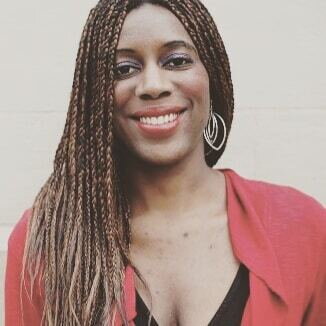
Miriam Jorge is a Professor and the Dr. Allen B. and Helen S. Shopmaker Endowed Professor in Educator Preparation and Leadership at the University of Missouri–St. Louis. She holds a PhD and MA in Applied Linguistics. Previously, she served as Associate Dean for International Affairs at Universidade Federal de Minas Gerais (2014–2017) and worked with Brazil's Ministry of Education. She has been a visiting scholar at UCSB and UNCC, teaching courses on race relations and the African Diaspora in Brazil. Her research focuses on critical pedagogy, race and racism in education, multiculturalism, and internationalization in higher education. Key themes include academic literacies, teacher education, and social justice. Her work bridges applied linguistics with anti-racist and decolonial frameworks, particularly in language education contexts. Her publications analyze post-pandemic educational challenges, anti-racism in applied linguistics, and decolonial approaches to language teaching. No scientific awards are explicitly listed, but her contributions highlight impactful discourse in educational equity and global pedagogical practices.
Kurt Sengul is a Macquarie University Research Fellow (MQRF) in the School of Communication, Society and Culture. He holds a PhD in Media and Communications from the University of Newcastle (2022). His research focuses on media populism, far-right movements, and critical discourse analysis, with projects exploring the nexus between media and far-right politics in Australia. He has taught at the University of Sydney and University of Newcastle, specializing in political communication, social media, and digital cultures. Research interests include far-right communication strategies, media populism's impact on democracy, critical discourse studies, and anti-gender movements. His work examines topics like far-right humor, online radicalization via platforms like X/Twitter Spaces, and the discursive construction of victimhood. He has published in journals such as Critical Discourse Studies , Television & New Media , and Communication Research and Practice . Professional roles include serving as NSW Representative for ANZCA and secretary of APSA’s Queer Caucus. Media engagements include commentary for The New York Times , The Guardian Australia , and The Sydney Morning Herald . His forthcoming monograph Far-Right Populism in Australia (Bloomsbury) explores communication and discourse strategies of Australian far-right groups.
Damani J. Partridge is a Professor of Anthropology and Afroamerican and African Studies at the University of Michigan, with an affiliate appointment in the Department of Germanic Languages and Literatures. His academic work bridges multiple disciplines with a focus on transnational Black studies, citizenship politics, and urban futures. His research interests include citizenship and noncitizen politics, exclusionary incorporation, sovereignty, participation, governance, care, urban futurity, Germany, Detroit, migration, dispossession, Blackness and universality, post-humanism, decoloniality, sexualities and body politics, intersectional, Indigenous, Black, and POC feminisms, corporate formations, supply-chain capitalism, Holocaust memory and memorialization, and film and media production. His scholarship demonstrates how these seemingly disparate topics intersect in the contemporary political landscape. Partridge's publications reveal a consistent focus on how marginalized communities navigate and challenge systems of power. His work examines the ways Blackness operates as a universal claim in contexts like Berlin, how hostility functions as a technique for producing White space in Black cities like Detroit, and the complex relationship between Holocaust memory and contemporary racial politics. His research methodology often incorporates collaborative filmmaking as both a research tool and an intervention. Partridge directs the Filming Future Cities Project in Detroit and Berlin (filmingfuturecities.org), which combines academic research with audio-visual production. His scholarly output includes two major monographs: Hypersexuality and Headscarves: Race, Sex, and Citizenship in the New Germany (2012) and Blackness as a Universal Claim: Holocaust Heritage, Noncitizen Politics, and Black Power in Berlin (2023), along with numerous journal articles in leading anthropology publications. As an educator, Partridge teaches courses including First Year Social Science Seminar (AAS 103), DAAS In Action (AAS 498), First Year Seminar in Anthropology (ANTHRCUL 158), and Topics in Sociocultural and Linguistic Anthropology (ANTHRCUL 458). His teaching reflects his interdisciplinary approach, connecting anthropological theory with contemporary social issues.
Kashif Raza is a Postdoctoral Fellow at the Department of Educational Studies (EDST) within the Faculty of Education at the University of British Columbia (UBC). His research focuses on multilingual education, TESOL (Teaching English to Speakers of Other Languages), language policies, and systemic issues in education, such as racism and immigration integration. He examines topics like racialized voter behavior, institutional racism in educational leadership, and the role of language in immigrant integration. His work often intersects with critical race theory, sociolinguistics, and policy analysis. Raza’s research spans diverse contexts, including Canadian, Gulf, and South Asian educational systems. He has explored challenges faced by immigrant professionals in healthcare, the impact of digital networks on political engagement, and the design of multilingual curricula. His contributions also include practical guidance for scholars, such as advice on publishing and navigating language policies in higher education. While his profile does not explicitly list educational credentials, his articles indicate deep engagement with global educational challenges. He has collaborated on projects addressing pandemic-era language education and climate action through EDST’s initiatives. No awards or grants are mentioned in the provided texts.
Dr. Tajul Islam is a Lecturer in Islamic Studies at the School of Languages, Cultures and Societies , University of Leeds , where he has been a member of staff since 2009. He also holds a visiting position at the University of the Punjab, Lahore. His academic work bridges traditional Islamic scholarship and critical theory, and he is a co-founder of Critical Muslim Studies (CMS) at Leeds, a framework aimed at centering Muslim subjectivity and decolonizing knowledge production in higher education. Education: BA in Arabic and Islamic Studies — University of Leeds PhD in Arab and Islamic Studies — University of Exeter Dr. Islam’s research encompasses a wide range of fields, including Islamic Theology (kalam) , Qur’anic Studies , Hadith , Islamic Law , Islamic Philosophy , Islamism , Islamophobia , antisemitism , racism , Biblical Studies , and Madrasa studies . His teaching emphasizes inclusivity and sensitivity to contemporary issues of identity and prejudice. His recent publications reflect a strong interdisciplinary trend, combining religious studies with food ethics, digital humanities, and decolonial theory. Key themes include theological minimalism , racial justice in early Islam , Islamic reform , and cross-traditional dialogue . He frequently presents at international conferences and public events on topics such as decolonial imagination, fatwa borrowing, and Muslim identity. Scientific Contributions and Recognition: Co-authored a well-cited article on Hanafi fiqh and British Muslims’ views on cultured meat. Published on Qur’anic phonetics and automatic lexis extraction. Contributed to encyclopedias on Ibn Mujahid and the Bible’s use in Islamophobic discourse. Co-founded the Iqbal Centre for Critical Muslim Studies. Dr. Islam supervises a diverse cohort of PhD students on topics ranging from blasphemy laws and translation studies to female religious authority and Qur’anic coherence. He has successfully guided over 15 doctoral candidates to completion. He is also involved in collaborative research and international academic partnerships, particularly with institutions in Pakistan. Labs and Research Groups: Co-Director, Iqbal Centre for Critical Muslim Studies Member of research groups in Arabic Cultural Studies , Conflict , and History
Prof. Dr. phil. Dipl. Psych. Ulrike Kluge is a Professor and Head of the Center of Cross-Cultural Psychiatry and Psychotherapy (ZIPP) at Charité – Universitätsmedizin Berlin. She concurrently leads the Research Division for Intercultural Migration and Care Research within Social Psychiatry and serves as a Senior Researcher at the Berlin Institute for Integration and Migration Research (Humboldt University). Her work focuses on intercultural mental health services and migration-related psychosocial challenges. Research Focus: Kluge specializes in critical migration studies examining psychological impacts of displacement, ethno-psychoanalysis, psychotherapy with cultural interpreters, and group-analytic approaches in transcultural contexts. Her research portfolio includes qualitative investigations into: Mental health consequences of racism and structural discrimination Refugee-host community dynamics Language barriers in healthcare Innovative care models for forced migrants Intercultural opening of mental health systems Key Projects: FOCUS: Forced displacement and refugee-host community solidarity TransVer: Network for intercultural opening of psychosocial care systems reWoven: Refugee women and psychosocial volunteer engagement SeGeMi: Study group on Mental Health and Migration Effectiveness studies on native-language counseling Professional Engagement: She develops training programs for clinicians working with refugees, provides supervision services, and coordinates Berlin-wide networks for refugee mental health care. Her work significantly contributes to professionalizing psychosocial support for asylum seekers through the 'Welcome Culture at Charité' initiative.
Christine Gerhardt is a Full Professor of American Literature and Culture at the University of Bamberg, Faculty of Humanities and Cultural Studies, Department of English and American Studies. She has held this position since October 2010 after serving as Director of the German-American Institute / Carl Schurz House in Freiburg (2008-2010) and as Acting Professor for North American Literature at the University of Freiburg (2008). She declined a W3 professorship at the University of Augsburg in 2017. Her research focuses on 19th and 20th/21st-Century American Literature with specializations in Ecocriticism, Literature of Migration and Mobility, Walt Whitman and Emily Dickinson studies, African American Literature, and Literature of the American South. Her recent publications demonstrate a strong engagement with environmental imagination, mobility studies, and the intersection of nature writing with cultural history. She has edited significant works including The American Novel of the Nineteenth Century (2017) and co-edited the special issue Environmental Imagination on the Move (2017). Professor Gerhardt has received numerous honors including the 2015 CHOICE Award for A Place for Humility: Whitman, Dickinson, and the Natural World and the Harris Distinguished Professorship at Dartmouth College (2015). She holds memberships in several professional associations including the Emily Dickinson International Society, Transnational Walt Whitman Association, and American Studies Association. Her teaching portfolio includes courses on American Literature I & II, Baldwin, The American Civil War, Presidential Elections, Walt Whitman, Toni Morrison, Herman Melville's Moby-Dick , Emily Dickinson, and various seminars on nature, environment, and contemporary American literature. She has organized numerous conferences including the International Conference on 'The Environment and Human Migration' (2016) and the Symposium on 'Nature – Mobility – Literature' (2014).
Paul Franks is the Robert F. and Patricia Weis Professor of Philosophy and Judaic Studies, and holds a concurrent appointment as Professor of Religious Studies at Yale University. As Department Chair, he oversees the Philosophy Department's academic programs and initiatives. His research spans German Idealism, Jewish Philosophy, and the intersections between analytic and continental traditions. His scholarly work focuses on Kant, post-Kantian philosophy, neo-Kantianism, phenomenology, and the philosophy of the human sciences. Key contributions include analyses of Fichte, Hegel, and Schelling, alongside studies of Jewish thinkers like Franz Rosenzweig and Salomon Maimon. Franks' publications address skepticism in German Idealism, the legacy of Kabbalistic thought in modern philosophy, and the philosophical implications of Jewish textual traditions. Franks' recent articles explore topics such as analytic approaches to Hasidic thought, the relationship between German Idealism and Judaism, and the methodology of transcendental arguments. He has edited volumes like International Yearbook of German Idealism and authored influential works such as All or Nothing: Systematicity, Transcendental Arguments, and Skepticism in German Idealism . His work bridges historical and contemporary philosophical debates, emphasizing the interplay between systematic philosophy, religious thought, and epistemological inquiry. Franks is affiliated with Yale's Judaic Studies Program and Religious Studies Department, contributing to interdisciplinary dialogues in humanities and philosophy.
Lillie R. Albert is a Professor and Program Director for Secondary Education at Boston College’s Lynch School of Education, Department of Teaching, Curriculum, and Society. Her work bridges mathematics education, sociocultural contexts, and social justice, focusing on teacher training and equity in high-need schools. Education: Ph.D. (University of Illinois at Urbana-Champaign), M.A. (Xavier University), B.A. (Dillard University) Her research explores the pedagogical implications of writing-to-learn strategies, Vygotskian psychology in mathematical problem-solving, and multicultural education. She leads a $1.78 million NSF-funded project preparing teacher leaders for Boston’s high-need districts and co-authored a book on South Korean elementary math teaching. Recent publications highlight multilingual education, metalinguistic awareness, and textbook analysis. She received the 2023 Drylongso Anti-Racism Leadership Award and has secured multiple NSF and foundation grants for STEM equity initiatives. Scientific Awards: Drylongso Anti-Racism Leadership Award (2023) She has contributed to projects like WGBH Educational Foundation’s Keep Going! Building a Culture of Perseverance in the Math Classroom and developed technology badges for teacher preparation programs.
Melissa Adler is an Associate Professor and Graduate Program Chair in Media Studies and Library and Information Science (Doctoral) at the University of Western Ontario's Faculty of Information and Media Studies (FIMS). She holds a prominent role in shaping interdisciplinary research at the intersection of critical classification studies, gender and sexuality studies, and American studies. Her work critiques systemic inequities in library and archival systems, emphasizing repair and justice in knowledge organization. Her research explores how classification systems perpetuate colonialism, racism, and ableism through projects like Useful + Beautiful , funded by SSHRC, which reimagines inclusive knowledge systems. She has published extensively, including her forthcoming book Peculiar Satisfaction: Thomas Jefferson and the Mastery of Subjects (Fordham UP, 2025) and Cruising the Library (2017), which examines LGBTQ+ representation in Library of Congress classifications. Education: Not explicitly stated in text, but inferred through her academic role. Grants: SSHRC Insight Grant (2019). Projects: Collaborations with Journal of Critical Library and Information Studies and Art Libraries Journal . Dr. Adler's pedagogical work integrates critical theory into LIS education, teaching courses like Informing and Unforming Colonial Imaginaries . She advocates for reparative practices in cataloging and has mentored students such as Greg Nightingale.
Paul V. Kroskrity is a Distinguished Professor of Anthropology and American Indian Studies at the University of California, Los Angeles (UCLA), serving as past and interim Chair of the Department of American Indian Studies. His research bridges linguistic anthropology and Indigenous studies, focusing on language ideologies, multilingualism, and language revitalization in Native American contexts. He holds a Ph.D. from Indiana University (1977). Key research interests include language contact dynamics, covert linguistic racism, and the documentation of Indigenous verbal art. He has contributed to theoretical frameworks like 'Language Ideological Assemblages' (LIA) and emphasized Indigenous agency in language revitalization through collaborative projects such as dictionaries and video documentation. His awards include multiple Faculty Recognition Awards (2006, 2008, 2010) and leadership roles, including President of the Society for Linguistic Anthropology (2013–2015). His work spans North American Indigenous communities, particularly the Pueblo Southwest and Central California, with global applications in language revitalization and critical discourse analysis.
Dr. Esther Prins is a Professor of Education in the Learning and Performance Systems department at Pennsylvania State University's College of Education. She serves as Co-Director of both the Goodling Institute for Research in Family Literacy and the Institute for the Study of Adult Literacy (ISAL). Her research employs critical and sociocultural theories to examine various forms of literacies (adult, family, digital, health), adult basic education, rural adult education, and participatory approaches to education, community development, and research. Her scholarship particularly explores the "wider benefits" of adult education and how it reproduces or mitigates inequities rooted in race/ethnicity, class, gender, and immigration status. Her primary focus is on community-based programs in adult and family literacy, including adult English as a Second Language (ESOL). Dr. Prins has recently expanded her research to explore the influence of White Christian nationalism in public education, school board elections, adult education, and literacy studies. Her work spans numerous disciplines with publications in journals such as Educational Researcher, American Educational Research Journal, Adult Education Quarterly, and Rural Sociology. Her research has been supported by major funding agencies including the National Science Foundation, Institute of Education Sciences, and Spencer Foundation. Selected awards: Exemplary Paper Award, Adult Literacy and Adult Education SIG, AERA (2025) Graduate Faculty Teaching Award, Penn State (2019) Mildred B. and Charles A. Wedemeyer Award for Outstanding Scholar in Distance Education (2013) Outstanding Researcher Award, College of Education, Penn State (2011) Imogene Okes Award for Outstanding Research, AAACE (2010) Outstanding Paper by an Early Career Scholar Award, AERA (2007) Dr. Prins has co-authored the book "Teaching and Learning about Family Literacy and Family Literacy Programs" (Routledge, 2022) and co-edited "Family and Intergenerational Literacy and Learning: International Perspectives" (UNESCO, 2025). She is actively engaged in community outreach, presenting her research on White Christian nationalism to churches and community groups.
Dr. Clara Cheng serves as the Interim Associate Dean of Faculty Professional Development, Director of the Undergraduate Psychology Program, and Professor of Psychology at Carlow University. Her roles include overseeing faculty development, directing the Psychology program, and teaching statistics and social psychology in flipped and online formats. She advises the Carlow chapter of Psi Chi, which she co-founded in 2013, and is a certified therapy team member with her mini labradoodle, Mochi. Dr. Cheng holds an Hon BSc in Psychology (2000) from the University of Toronto and MA (2002) and PhD (2006) in Social Psychology from The Ohio State University. She also earned certificates in American Sign Language and Online Teaching with a focus on accessibility. Her research focuses on social cognition, stereotyping, implicit bias, and culturally informed teaching methods. She contributed to the APA’s college teaching guide and frequently addresses racism and implicit bias in campus workshops. Her awards include the Sisters of Mercy Award for Advising (2020), Center for Digital Learning Fellowship (2017), and multiple teaching honors from Ohio State. Dr. Cheng’s scholarship spans over two decades, with notable contributions to implicit bias measurement, Buddhist coping mechanisms, and cross-cultural identity formation. She actively serves as Vice President for Resources for the Society for the Teaching of Psychology, promoting pedagogical innovation and inclusivity. Her advising and grants include fostering student honor societies and accessibility initiatives. Her 'therapy team' with Mochi underscores her commitment to mental health. Collaborative work with international researchers highlights her global impact in social and cultural psychology.
Selim Nadi is a researcher and educator specializing in European radical left intellectual history, anti-colonialism, and critical theories. He holds qualifications for the Maître de Conférences position (sections 12 and 22) in French academia. His current roles include teaching German in secondary education and serving as a visiting academic. Formerly, he held ATER (teaching/research) positions at Université d’Avignon and Université Lumière Lyon 2, focusing on political science. His research explores intersections between Marxism, race, and decolonial thought, emphasizing figures like Rosa Luxemburg and C.L.R. James. Nadi is affiliated with the Triangle laboratory (UMR 5206) in Lyon, contributing to interdisciplinary studies on political economy and historical materialism. Education includes a PhD from Sciences Po Paris (2019) on European radical movements, with research stays at Oxford University and Freie Universität Berlin. He has published widely in peer-reviewed journals like Lectures and International Journal of Francophone Studies , focusing on colonial counter-revolution strategies, French Communist Party history, and postcolonial theory. Nadi also translates key works in critical theory and participates in international conferences on topics ranging from Algerian revolutionary networks to Adorno’s philosophy. His teaching spans political science, history, and German language education across various institutions. Nadi’s work bridges historical analysis with contemporary political debates, emphasizing the global dimensions of anti-colonial struggles and Marxist thought.
Suzie Telep is an Assistant Professor in the Department of Anthropology and European Union Center at the University of Illinois at Urbana-Champaign. A linguistic and cultural anthropologist, she examines intersections of language, race, and artistic production within the African diaspora in postcolonial France. Educational background includes a PhD in Linguistics from Paris Cité University, a Marie Sklodowska-Curie Postdoctoral Fellowship at the University of Pennsylvania, and affiliations with institutions like Stanford University and University of Angers. Her research focuses on race, gender, and language ideologies in Black diasporic communities, particularly Cameroonian immigrants in Paris, analyzing practices like 'whitisation' (accent mimicry) and Afro-feminist aesthetics in digital media and fashion. Key methodologies blend ethnographic fieldwork with arts-based research , exploring how language and performance negotiate identity in contexts shaped by anti-Black racism and colonial legacies. Scientific awards include the Marie Sklodowska-Curie Fellowship (2021) and the Richard Mille - La Francophonie en Débat prize (2021) . Her creative work includes a multimedia performance-lecture, My Afropean Musical Journey , presented at conferences like the African Studies Association and Unsettling Images, Engaging Fictions.