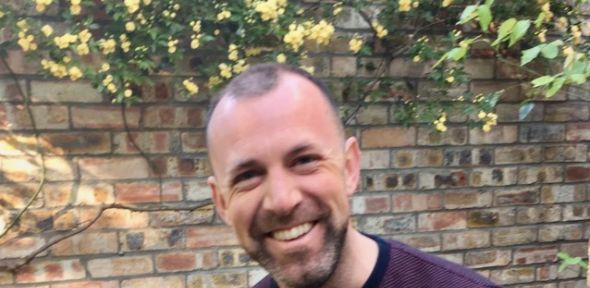
Gaël Thomas is a Senior Researcher at Inria Saclay and a part-time Professor at École Polytechnique. He leads the Benagil team, a joint initiative between Inria and Telecom SudParis/IP Paris. His research focuses on virtualization, operating systems, concurrency, and runtime systems, with an emphasis on improving system performance and safety. He holds a PhD and Habilitation from Sorbonne Université and has extensive academic experience, including roles as a Professor at Telecom SudParis (2014–2023) and an Associate Professor at UPMC (2006–2014). Education: PhD in Computer Science, 2005, UPMC Sorbonne Université Habilitation à Diriger les Recherches (HDR), 2012, UPMC Sorbonne Université MSc in Computer Science, 2001, MIAIF Program Research Interests: Gaël’s work spans virtualization techniques, NUMA architecture optimization, garbage collection scalability, lock-free algorithms, and persistent memory systems. He has pioneered solutions like J-NVM for Java NVMM and NumaGiC for big data systems. Grants & Awards: Principal Investigator of DiVA (PEPR Cloud, 868k€) and Maplurinum (ANR PRC, 184k€) Contributions to VMKit and infra-web-cours development Labs/Teams: Benagil Team (Inria/Telecom SudParis) focuses on systems and runtime optimization.
Sai Praneeth Karimireddy is an Assistant Professor in the Thomas Lord Department of Computer Science at the University of Southern California (USC), with a courtesy appointment in the Ming Hsieh Department of Electrical and Computer Engineering. He previously held an SNSF postdoctoral fellowship at UC Berkeley under Michael I. Jordan and earned his PhD at EPFL advised by Martin Jaggi. He co-leads the Federated Learning and Data Quality working group at MONAI (NVIDIA) and collaborates with researchers at Apple Research. His research lies at the intersection of optimization, machine learning, statistics, and economics, with a strong focus on federated learning, privacy-preserving machine learning, data valuation, and AI for healthcare. He investigates how data quality, privacy, and incentives shape collaborative ML systems, especially in high-stakes domains like medicine. His work has been deployed at companies such as Meta, Google, OpenAI, and Owkin. His recent publications span top-tier venues including NeurIPS, ICML, ICLR, and JMLR, with influential contributions such as the SCAFFOLD algorithm for federated learning. His research shows a consistent trend toward building robust, private, and incentive-compatible collaborative learning systems, with increasing emphasis on real-world deployment in healthcare and decentralized data markets. 2023 SNSF Mobility Fellowship 2022 Patrick Denantes Memorial Prize for best thesis in computer science 2022 EPFL thesis distinction (top 8%) 2021 Chorafas Foundation Prize for exceptional applied research Capitol One Fellow (2025) He is actively mentoring PhD students and leads a research group focused on foundational and applied challenges in federated and privacy-preserving ML. He teaches graduate courses at USC, including CSCI 599 on Optimization for Machine Learning and CSCI 699 on Privacy-Preserving Machine Learning. He serves as an area chair for ICLR 2025 and co-organizes major workshops on incentives in data sharing and federated learning. His lab collaborates with institutions like NVIDIA, Apple, and Argonne National Laboratory, and he is building a research program centered on sustainable, equitable, and trustworthy AI ecosystems.
Shuvendu K. Lahiri is a researcher at Microsoft Research, focusing on formal verification, program synthesis, and software testing. His work bridges artificial intelligence with formal methods, particularly in blockchain security and automated code generation. 2025 : Published LLM-Vectorizer (verified loop vectorizer) and neural synthesis for SMT-assisted proof-oriented programming 2024 : Explored LLM-based test-driven code generation and natural precondition inference 2023 : Developed resource management specifications and contributed to test generation with pre-trained models 2022 : Advanced Solidity type systems and merge conflict resolution using language models His research combines large language models with formal verification tools to improve software correctness. He actively contributes to conferences like ICSE, PLDI, and ISSTA as author and committee member.
Margaret G.K. Parker, MD, MPH is a Professor at UMass Chan Medical School in the Department of Pediatrics and also holds a position in the Department of Population and Quantitative Health Sciences at the T.H. Chan School of Medicine. She practices at UMass Memorial Medical Center in Worcester, Massachusetts, where she focuses on neonatal care, breastfeeding support, and addressing health disparities among vulnerable populations. Dr. Parker received her BS in Biochemistry & Cell Biology from the University of San Diego, her MPH from Harvard University School of Public Health, and her MD from Albert Einstein College of Medicine. Her educational background has prepared her for a career focused on the intersection of clinical care, public health, and health equity. Dr. Parker's research primarily focuses on neonatal care, breastfeeding practices, health disparities, and social determinants of health. She has conducted extensive research on racial and ethnic disparities in mother's milk provision among mothers of preterm infants, communication practices for non-English speaking families in neonatal care units, and interventions to support vulnerable populations including low-income mothers and those with opioid use disorder. Her work often examines how social factors impact infant health outcomes and how healthcare systems can better address these challenges through quality improvement initiatives and policy changes. Her publication trends reveal a consistent focus on health equity in neonatal care, with growing emphasis on social determinants of health screening and intervention in the NICU setting. Recent work shows increased attention to financial support programs for low-income families, communication barriers for non-English speakers, and specialized care approaches for infants exposed to substances prenatally. Dr. Parker has been involved in numerous interdisciplinary research collaborations across pediatrics, public health, and social services to address complex challenges in infant care. Her work has been cited extensively, demonstrating significant impact in her field, particularly in the areas of breastfeeding disparities and safe sleep practices. She leads research teams focused on quality improvement in neonatal care, with particular attention to equity and addressing disparities. Her recent projects include evaluating the CuddleCard protocol for financial support to low-income mothers of preterm infants and developing communication strategies for non-English speaking families in the NICU.
Dr. Shanaaz Mohammed is an Assistant Professor of French and French Program Coordinator at Marist College’s School of Liberal Arts. Originally from Trinidad, she specializes in Francophone Caribbean Studies with a focus on South Asian diaspora representations in literature. She integrates AI tools like ChatGPT to gamify and personalize language learning, emphasizing grammar through cultural context. Education: PhD, MA (Florida State University); BA (University of the West Indies, St. Augustine) Key Research: Coral poetics, Aapravasi Ghat heritage, Coolitude theory, and digital pedagogy Initiatives: Developed the Virtual Exchange Program (VExP) with Université de la Réunion for collaborative language instruction Her recent publications explore Khal Torabully’s poetry and Ernest Moutoussamy’s narratives. She advocates for ethical AI use in education, addressing algorithmic bias and cultural stereotyping, while promoting cautious optimism about technology’s role in enhancing human-centered language learning. Scientific Awards Northeast Modern Language Association (NeMLA) Postcolonial Essay Award (2022) She teaches all levels of French language, literature, and culture courses, emphasizing the global diversity of the French-speaking world beyond France.
Jinze CUI is an Adjunct Professor at the Department of Humanities, University of Catania (Italy), specializing in Chinese Philology. With a PhD candidacy at KU Leuven (Belgium) in Architectural Heritage Conservation and a Master's in Cultural Relic Architecture from Peking University, he bridges architectural history, cultural preservation, and public engagement. His career spans roles as a lecturer, exhibition curator, and advocate for heritage conservation in China. PhD Candidate: KU Leuven (2014–2020) Master's: Peking University (2009–2012) Bachelor's: North China University of Technology (2002–2007) His research focuses on architectural heritage conservation , analyzing wooden structures, adaptive reuse of religious buildings, and controversies in restoration practices. Articles like 'The Totem of Ideal Human Habitat' and 'Inspirations on the Adaptive Reuse of Religious Architecture' highlight his interdisciplinary approach. He actively campaigns for civil-led heritage protection, exemplified by his 2013–2014 campaign to save Chen Baochen’s residence in Beijing. Recent works explore global heritage debates , including Notre Dame de Paris restoration and Dresden’s cultural memory. His articles span journals such as ThePaper.cn and edited volumes like Chinese Heritage in the Making (Amsterdam University Press, 2018). Member: ICOMOS China Member: Beijing Cultural Relic Protection Association CUI leads international cultural relic rescue campaigns and lectures on Beijing’s architectural history, including at the 2012 Walmart China Women in Leadership Forum. He also participated in EU-funded projects like Asia Urbs Chn5-08 in Beijing (2004–2005).
Enrico Maria Ariemma is an Associate Professor at the Department of Humanities (DIPSUM) of the University of Salerno. He specializes in Latin literature with particular focus on Latin epic poetry , Flavian literature , and classical reception studies , working extensively on authors like Silius Italicus, Seneca, and Catullus. His research often explores military narratives , intertextuality , and ethical concepts in antiquity . His academic work features in publications such as Brill's Companion to Silius Italicus , and Lexis , with recent contributions on topics like "Tra vino e fuoco" (2023) analyzing mythological topos in Silius' Punica , and "Contare i baci" (2022) examining Catullus' intersection with mathematical thinking. He has also contributed to conference proceedings on epic-historical synthesis and war representation in Senecan tragedy . Ariemma participates in international academic networks, including co-organizing the 2019 "Ritorno al futuro" conference on Silius Italicus. He maintains an active research agenda with publications in Humanitas , Thaumazein , and Pan , while his teaching focuses on Latin language and literature and Latin didactics . His office is located at the University of Salerno’s Fisciano Campus, Building B, Room 027.
Suzy Kim is an Associate Professor of Korean History in the Department of Asian Languages and Cultures at Rutgers University–New Brunswick, within the School of Arts and Sciences. Her research focuses on modern Korean history, particularly North Korea, with interdisciplinary engagement in gender studies, social and cultural history, oral history, and social theory. She is the author of two major books and serves as senior editor of positions: asia critique and on the editorial boards of Journal of Korean Studies and Yŏsŏng kwa yŏksa (Women and History). She is also an active public scholar and human rights advocate. Ph.D., University of Chicago M.A., University of Chicago B.A., University of California, Los Angeles Her research interests span modern Korean history, the global Cold War, transnational feminisms, gender and sexuality, comparative revolutions, visual cultures, and environmental humanities. She critically examines North Korean society through the lenses of everyday life, mass mobilization, and gendered subject formation. Her work bridges academic rigor with public advocacy, emphasizing social justice and peace in Korea. The 15 most recent publications reflect a sustained scholarly engagement with North Korea’s social and cultural history, particularly focusing on gender, revolution, memory, and transnational connections. Her articles appear in leading journals such as Gender & History , Comparative Studies in Society and History , and positions: asia critique . Thematically, her work explores the intersections of state ideology, personal agency, and global Cold War dynamics, often challenging dominant narratives about North Korea through nuanced historical analysis. Fulbright, 2020-2021 National Endowment for the Humanities, 2016 James B. Palais Book Prize, 2015 Kim has advised and mentored students in Korean studies, gender studies, and history, though specific names are not listed. She has received significant research funding, including from the Fulbright Program and NEH. She previously served as a visiting professor at Boston College and has worked with human rights organizations such as Amnesty International USA, Truth Foundation, and Women Cross DMZ. Her public scholarship emphasizes dialogue, peacebuilding, and ethical representation of North Korea. She is actively involved in academic communities, serving on professional boards including the American Historical Association, Association for Asian Studies, and National Women’s Studies Association. Her editorial leadership in positions: asia critique and other journals underscores her role in shaping critical discourse in Asian studies. She teaches courses such as Global East Asia, Gender and Social Change in Korea, and North Korea in the Socialist and Post-Socialist Worlds.
Elisabeth Oxfeldt is a Professor of Scandinavian Literature at the University of Oslo's Faculty of Humanities, Department of Literature, Area Studies and European Languages. Specializing in Danish and Norwegian literature from the 19th to 21st centuries, she examines cultural narratives through postcolonial and orientalist frameworks with particular focus on guilt discourse in Nordic contexts. Her educational background includes a Ph.D. in Scandinavian Literature from U.C. Berkeley (2002), M.A. in Scandinavian Literature (1996), and B.A. in French Literature (1988). This interdisciplinary foundation informs her transnational approach to Nordic literary studies. Oxfeldt's research centers on Scandinavian narratives of guilt and privilege within globalization, exploring how Orientalism, postcolonialism, and (post)nationalism manifest in literature and visual media. Her work critically engages with Hans Christian Andersen adaptations, war literature, travelogues, and literary activism, revealing tensions between Nordic self-perception as egalitarian societies and historical complicity in colonial structures. She frequently analyzes word-image relationships and adaptation processes across media. Publication trends show sustained engagement with postcolonial critique since her 2005 monograph Nordic Orientalism , evolving toward contemporary analyses of activist voices and guilt narratives. Recent edited volumes address literary rights struggles (2024) and ecological perspectives in Nordic literature (2023), demonstrating expanding interdisciplinary scope while maintaining core focus on representation and power dynamics. Awards and honors: Member of Det Danske Akademi (The Danish Academy) Advising and grants information was not specified in source materials, though her leadership of major research projects suggests significant supervisory and funding acquisition activities. Teaching responsibilities include courses on Nordic literature after 1800, Norwegian world literature, and literary activism. Oxfeldt co-leads the DINO (Diversity in Nordic Literature) research group and previously participated in ECODISTURB. Her current projects include 'Scandinavian Narratives of Guilt and Privilege in an Age of Globalization' (ScanGuilt) and 'Norwegian Romantic Nationalisms' (NORN), examining historical and contemporary constructions of Scandinavian identity through literary lenses.
Ramin Shaghaghi is a Lecturer for Persian language and literature at the Asia-Africa Institute within the Faculty of Humanities at the University of Hamburg, holding this position since the summer semester of 2003. His academic background includes a Magister in Iranistics and Ethnology from Freie Universität Berlin, where he completed his thesis "Der Naqqāl als Träger des kulturellen Gedächtnisses in Iran" (The Naqqāl as Carrier of Cultural Memory in Iran). During his studies, he contributed to the DFG-funded "Digitalization of Turfan Manuscripts" project at the Berlin-Brandenburg Academy of Sciences. Shaghaghi's research spans critical domains of Iranian and Near Eastern studies, with primary focus on: Oral tradition of Iran Cultural memory and remembrance practices in Iran Persian classical and modern literary traditions Historical evolution of Persian grammar Ethnology of the Near East Gender Studies frameworks Broad Iran-related socio-cultural phenomena His scholarly work emphasizes the interplay between oral transmission mechanisms and cultural preservation in Iranian contexts, particularly examining narrative carriers like the Naqqāl tradition. This research intersects with literary analysis, historical linguistics, and ethnographic methodologies to explore identity formation and memory politics. Shaghaghi actively supervises Bachelor's and Master's theses on Persian language, literature, and Iranian cultural studies at the University of Hamburg, though specific student names are not publicly documented. The Asia-Africa Institute hosts his academic activities alongside major research initiatives including Social Contexts of Rebellion in the Early Islamic Period (SCORE), Persian Letters from the "second Iran" manuscript analysis, Evolution of Islamic Societies algorithmic project, InterSaME oral/written transmission study, COBHUNI, FGM-Egypt, Rifaiya-Iraq, and the RomanIslam Center for Comparative Empire Studies, providing collaborative frameworks for his research.
Mohammed J. Zaki is a Professor and Department Head at the Department of Computer Science , Rensselaer Polytechnic Institute . He co-directs the NSF IUCRC Center for Research Towards Advancing Financial Technologies (CRAFT) and has authored the textbook Data Mining and Machine Learning (2nd Ed, Cambridge University Press, 2020). Research Focus : Novel data mining techniques for graph-structured and textual data with applications in bioinformatics, personal health, and financial analytics. Leadership : Co-chair of BIOKDD workshops, Associate Editor for multiple journals, and Program Co-chair for SIGKDD, SDM, ICDM, and other top conferences. Scientific Awards include: EDBT'24 Test of Time Award NSF CAREER Award DOE Early Career Award HP Innovation Research Award Google Faculty Research Award Fellowships: IEEE, ACM, AAAS, SIAM Recent Publications highlight advancements in: Knowledge Graph Completion with Directed Attention Multi-Sense Embeddings for Language Models Financial Trend Prediction via Graph Neural Networks Health-Guided Recipe Recommendation Systems Triplet Interaction in Molecular Graph Learning Temporal Personal Health Data Analysis
Dr Rory O'Bryen is an Associate Professor of Latin American Literature and Culture at the Spanish & Portuguese Department of the Faculty of Modern and Medieval Languages and Linguistics, University of Cambridge. He teaches courses on Latin American cultural studies and literature, with a focus on Colombian history and modern cultural narratives. Department: Spanish & Portuguese College affiliation: King's College Editorial role: One of the editors of the Journal of Latin American Cultural Studies His research interests include: Modern Latin American culture Nineteenth- and twentieth-century Colombian literature Political violence and memory Transnational cultural studies Environmental humanities in Latin America Representation of national identity Dr O'Bryen's publication history reveals strong trends in: Colombian cultural analysis River studies (particularly the Magdalena River) Postconflict narratives Ecological and infrastructural themes Intercultural literary theory Visual culture and political conflict As an academic supervisor, he has guided doctoral research on diverse topics including: Literature and film of the Cuban Revolution Prison writing in Latin America Latin American literary engagements with Nazism Ecological themes in Latin American art Post-1960s Latin American errancy writing Contemporary Latin American horrorism narratives
Emilio J. Castilla is the NTU Professor of Management and Professor of Work and Organization Studies at the MIT Sloan School of Management. He co-directs the MIT Institute for Work and Employment Research and has previously held faculty positions at the Wharton School. Research Focus: Organizational Theory and Behavior Economic Sociology Human Resources Management Workplace Inequality Mechanisms of Meritocracy Social Networks in Employment Scientific Contributions: Identified the "Paradox of Meritocracy" with Stephen Benard Documented systematic racial/gender pay disparities despite formal merit systems Investigated legacy admissions practices and their inequality-reinforcing effects Developed frameworks for longitudinal analysis of employment processes Selected Honors: Richard Beckhard Memorial Prize (2017) Career Trajectory: Joined MIT Sloan in 2005 after Wharton faculty appointment. Serves as Research Fellow at Wharton Financial Institutions Center and Center for Human Resources. His work appears in top journals across sociology, management, and economics.
Karolina Lendák-Kabók is an Associate Professor at the Department of Minority Studies, Faculty of Social Sciences, Eötvös Loránd University (ELTE) in Budapest, Hungary. She simultaneously holds an Assistant Professorship at the Faculty of Philosophy, University of Novi Sad, Serbia. Currently serving as a Marie Skłodowska-Curie Postdoctoral Fellow (2022-2024), her academic journey spans multiple institutions across Europe including visiting researcher positions at Central European University, University of Sydney, Université Paris-Est Créteil, University of Lausanne, Purdue University, and University of Victoria. Her educational background includes a BA (2010) and MA (2012) in Law from the University of Novi Sad, followed by a PhD in Gender Studies (2019) from the Center for Gender Studies at the same institution. Her research focuses on the intersection of ethnicity, gender, and language barriers within academic and social contexts, with particular emphasis on ethnic minorities in Serbia, intermarriage dynamics, and gender disparities in higher education. Dr. Lendák-Kabók's scholarly output reveals a consistent focus on ethnic minority experiences in Central and Eastern Europe, particularly examining how language barriers and gender intersect to create unique challenges for minority communities. Her publications demonstrate expertise in both quantitative and qualitative methodologies, with recurring themes of identity formation, social integration, and the impact of historical conflicts on contemporary interethnic relations. She has made significant contributions to understanding intermarriage patterns across different European contexts, contrasting Western Europe's immigrant-host society dynamics with Central and Eastern Europe's minority-majority relationships. Her scientific recognition includes the ELTE Promising Researcher Award (2023), Anđelka Milić Award for enhancing gender equality (2022), Crystal Ball Award (2017), and the prestigious Bolyai János Research Scholarship (2024). She has received multiple scholarships including the National Excellence scholarship in Hungary (2014) and the Collegium Talentum research scholarship (2013-2016). ELTE Promising Researcher Award (2023) Anđelka Milić Award for gender equality (2022) Crystal Ball Award for outstanding scientific contribution (2017) Bolyai János Research Scholarship (2024) National Excellence scholarship in Hungary (2014) Collegium Talentum research scholarship (2013-2016) As a mentor, she has supervised MA students Nisreen Alsoudi (who received the Best MA Award) and Julia Pecker, and collaborates with PhD student Rebeka Bakos on research related to the Marie Curie Fellowship. Her scholarly work has resulted in over 50 publications including the monograph Ethnic Minorities in Serbian Academia – the Role of Gender and Language Barrier (Palgrave Macmillan, 2022) and the edited volume Üvegplafon? (Glass ceiling?, Forum 2020). She has also established research collaborations across multiple countries, conducting fieldwork in Japan, Australia, France, Switzerland, USA, and Canada.
Lanita Jacobs is a Professor at the University of Southern California , holding joint appointments in the Department of American Studies & Ethnicity and the Department of Anthropology . Her research focuses on language as a mediator of African American culture and identity , utilizing multi-sited ethnographies across hair care communities, hospitals, and standup comedy venues. She earned her Ph.D. in Linguistic Anthropology from the University of California, Los Angeles (1999) , preceded by an M.A. (1996) and B.A. (1993). Her scholarly work spans linguistic anthropology, discourse analysis, and cultural studies , examining topics such as race and humor , language and gender , anthropology of the body , and race, health, and disability . She has published extensively on these themes, including two monographs: From the Kitchen to the Parlor (2006) and Truth and Racial Authenticity in African American Standup Comedy (2022). Her research has been funded by prestigious grants such as the NIH R01 Continuation Grant and the Wenner-Gren Foundation Pre-Doctoral Grant . Jacobs has received numerous honors, including the Fight On Faculty Award (2010), USC Mellon Award for Excellence in Faculty Mentoring Undergraduates (2007-2008), and induction into the USC Chapter of Phi Kappa Phi (2018-2019). She mentors students across disciplines, including Mellon-Mays Scholars , McNair Scholars , and SOAR Scholars , emphasizing interdisciplinary research and cultural representation . Key research areas: Language and Identity in Diasporas , Race and Performance , Ethnographic Methodology Recent article trends: 2022 book on standup comedy, 2015-2006 work on disability narratives , cosmetology ethnography , and post-9/11 discourse