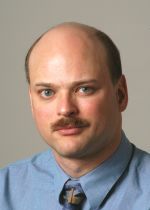
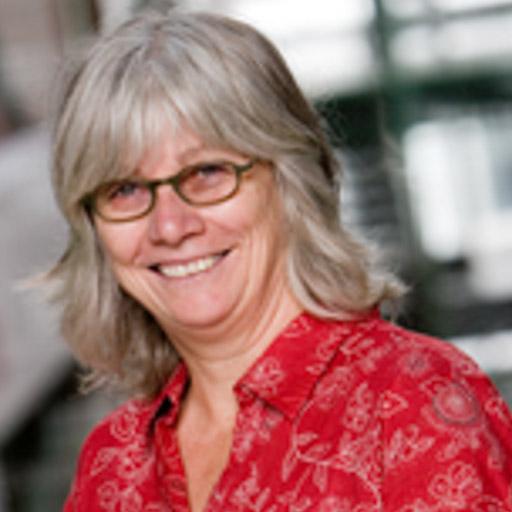
Dr. Guy Westwood is an Associate Professor in Greek Language and Literature at the University of Oxford, affiliated with Lady Margaret Hall as a Fellow and Tutor in Classics. He holds an MA, MSt, and DPhil from Oxford, with academic roles spanning Balliol, Merton, and Birmingham. His research focuses on classical Greek and Roman rhetorical prose, particularly Athenian democratic oratory, exploring how historical narratives shaped political persuasion. He has authored a monograph on Demosthenes and Aeschines and published widely on topics such as Athenian lawcourt rhetoric, intertextuality in poetry, and ancient historiography. Teaching encompasses Greek language, literature, and history at both undergraduate and graduate levels, with supervision in ancient rhetoric and related fields. He encourages graduate applications in Greek rhetoric and comedy. His work bridges rhetoric with drama and historiography, reflecting a broad engagement with fifth and fourth-century Greek studies. Publications highlight themes like legal oratory's performative aspects, intertextual poetic analysis, and the role of memory in persuasion. His career includes fellowships at Merton and teaching roles at Birmingham, showcasing a trajectory of academic leadership in classical studies.
Dr. David Cock is a Senior Lecturer and Senior Researcher at ETH Zürich's Department of Computer Science, affiliated with the Systems Group. He holds a PhD from UNSW (2014) and a B.Sc. (hons) from UNSW (2004). His research focuses on formal verification, trustworthy systems, and hardware-software co-design, with notable contributions to projects like Enzian (a CPU/FPGA platform) and seL4 (formally verified kernel). He teaches Advanced Operating Systems and Informal Methods courses. Key achievements include the ACM Software System Award (2022) for seL4 and leadership in projects addressing hardware complexity and security. Research interests include formal methods for hardware modeling (Sockeye project), runtime verification, and mitigating timing channels. His work bridges theoretical foundations with practical systems, emphasizing secure and reliable computing platforms. Projects like Trustworthy BMC aim to enhance baseboard management systems' assurance. Collaborations span academia and industry, with open-source contributions to hardware designs and formal tools. Publications span formal verification, hardware modeling, and secure systems, with recent focus on heterogeneous computing and declarative hardware specifications. Teaching emphasizes practical formal techniques and OS design, leveraging real-world hardware (e.g., Barrelfish). His lab, the Systems Group, explores cutting-edge challenges in systems software and architecture.
Kevin M. F. Platt is the Edmund J. and Louise W. Kahn Term Professor in the Humanities and Professor of Slavic Languages and Literatures at the University of Pennsylvania, serving as Graduate Chair of the Comparative Literature Program. His research focuses on Russian historiography, post-Soviet cultures, and the interplay between memory, poetry, and political history. Platt holds a B.A. from Amherst College and a Ph.D. from Stanford University, with prior teaching experience at Pomona College. His notable works include Terror and Greatness: Ivan and Peter as Russian Myths (2011) and History in a Grotesque Key (1997/2006), alongside co-edited volumes on Russian historiography and translations of works by Anna Akhmatova and Osip Mandelstam. Current projects explore critical historiography of Russia, contemporary Russian culture in Latvia, and translation initiatives. Platt’s teaching spans Russian and East European cinema, literature, and cultural studies, including courses on Sergei Eisenstein, Andrei Tarkovsky, and post-Soviet cultural dynamics. His scholarship bridges historical analysis with literary critique, emphasizing postcolonial frameworks and diaspora studies. Recent research and publications address decolonization narratives, Latvian-Russian cultural intersections, and the legacy of Soviet imperialism. Platt actively engages with contemporary artistic movements, such as the Orbita Group, and critiques geopolitical identity formations in post-Soviet spaces.
Gaël Thomas is a Senior Researcher at Inria Saclay and a part-time Professor at École Polytechnique. He leads the Benagil team, a joint initiative between Inria and Telecom SudParis/IP Paris. His research focuses on virtualization, operating systems, concurrency, and runtime systems, with an emphasis on improving system performance and safety. He holds a PhD and Habilitation from Sorbonne Université and has extensive academic experience, including roles as a Professor at Telecom SudParis (2014–2023) and an Associate Professor at UPMC (2006–2014). Education: PhD in Computer Science, 2005, UPMC Sorbonne Université Habilitation à Diriger les Recherches (HDR), 2012, UPMC Sorbonne Université MSc in Computer Science, 2001, MIAIF Program Research Interests: Gaël’s work spans virtualization techniques, NUMA architecture optimization, garbage collection scalability, lock-free algorithms, and persistent memory systems. He has pioneered solutions like J-NVM for Java NVMM and NumaGiC for big data systems. Grants & Awards: Principal Investigator of DiVA (PEPR Cloud, 868k€) and Maplurinum (ANR PRC, 184k€) Contributions to VMKit and infra-web-cours development Labs/Teams: Benagil Team (Inria/Telecom SudParis) focuses on systems and runtime optimization.
Vincent Joos is an Associate Professor in the Department of Modern Languages and Linguistics at Florida State University, affiliated with the College of Arts and Sciences. He holds a Ph.D. from the University of North Carolina Chapel Hill and specializes in cultural anthropology with a focus on post-disaster reconstruction, Haitian citizenship dynamics, and migration studies. His research examines the intersections of state policies, international aid, and grassroots resilience in the Caribbean, particularly in Haiti and France. Joos’ work critically engages with disaster capitalism, documenting how marginalized communities creatively transform urban spaces despite exclusion from formal aid systems. His book *Urban Dwellings, Haitian Citizenships* (2021) analyzes vernacular architectures in post-earthquake Port-au-Prince, while his co-edited volume *Migrants Shaping Europe* (2022) explores historical and contemporary migration impacts. He also researches Calais’ border infrastructure and the literary intersections of ethnography. Teaching includes advanced courses like *Caribbean Music and Politics* and *Graduate Seminar in Cultural Anthropology*, emphasizing interdisciplinary approaches. His scholarship spans articles in *Vibrant: Virtual Brazilian Anthropology*, *The Conversation*, and *Southern Quarterly*, addressing topics from Haitian political crises to African American cultural memory in Mississippi. Vincent Joos actively contributes to public discourse through op-eds in *World Politics Review* and *The Globe Post*, critiquing foreign intervention in Haiti and analyzing systemic governance failures. His research bridges academic rigor with urgent social commentary on migration, disaster, and postcolonial identity.
Professor Joshua S. Mostow is a scholar of pre-modern Japanese literature and art, specializing in text-image relationships, Heian-period studies, and gendered cultural constructions. He holds a professorship at the University of British Columbia’s Department of Asian Studies (Faculty of Arts), where he also serves as Acting Director of Language Programs. Mostow earned his doctorate in Comparative Literature and Literary Theory from the University of Pennsylvania, with additional studies at International Christian University (Tokyo), Université de Paris, and Gakushuin University. His career includes visiting roles at institutions like Heidelberg University and the University of California, Berkeley. His research focuses on intersections of literature and visual arts, particularly in Japanese pre-modern contexts. Key interests include the ideological construction of the Heian period, women’s writing traditions, and the role of sexuality in cultural identity. Major works include *Courtly Visions: The Ise Stories and the Politics of Cultural Appropriation* (2014) and *Pictures of the Heart: The Hyakunin Isshu in Word and Image* (1996). He has received prestigious awards such as the Japan Foreign Minister’s Commendation (2017) and induction into the Royal Society of Canada (2015). Mostow has authored/co-authored over 20 books, edited volumes, and numerous articles across Japanese literature, art history, and cultural studies. His work spans medieval commentaries, Edo-period print culture, and modern reception histories. He frequently lectures internationally on topics like gender representation in classical texts and the visual legacy of *The Tale of Genji*. Grants and fellowships include support from the Sainsbury Institute, Japan Foundation, and SSHRC (Canada). His contributions to Japanese studies include co-editing *The Columbia Companion to Modern East Asian Literature* (2003) and curating exhibitions on Rinpa aesthetics and Edo-period shunga. Scholarly activities further include invited lectures at institutions worldwide and participation in major international conferences.
Benjamin Brose is a Professor of Buddhist and Chinese Studies at the University of Michigan's Department of Asian Languages and Cultures, serving as Department Chair. He holds affiliations with the Lieberthal-Rogel Center for Chinese Studies, Center for Japanese Studies, and Nam Center for Korean Studies. His research focuses on the history of Chinese Buddhism, particularly medieval and modern periods, with special attention to Chan/Zen traditions, Buddhist relics, and religious exchanges in East Asia. Education: PhD (2009) and MA (2004) from Stanford University; MA (2002) from UC Berkeley; BA (1996) from UC Santa Cruz. Research Interests: Brose explores Buddhist cultural history, including Xuanzang’s legacy, Song dynasty critiques of Buddhism, and the interplay between religion and politics. His recent publications include Embodying Xuanzang (2023) and Xuanzang: China’s Legendary Pilgrim (2021). He has been supported by prestigious fellowships like the Fulbright Foundation and ACLS. Teaching: Courses include 'Zen Buddhism: History, Culture, & Critique' and 'Buddhism and Death'. He advises on graduate research in Buddhist studies and co-leads initiatives like the Buddhist Studies Group at Michigan. Awards/Grants: Recipient of grants from the Alexander von Humboldt Foundation, Robert H. N. Ho Family Foundation, and others. His work bridges historical scholarship with modern religious practices, emphasizing East Asian religious continuity and transformation.
David Robb is a Professor in Music at Queen's University Belfast's School of Arts, English and Languages. He specializes in political music history, focusing on Germany, Ireland, and Scotland. His research explores the interplay between music, lyrics, and historical contexts, particularly in protest songs and folk traditions. He has conducted extensive work on East German Liedermacher Gerhard Gundermann, including a CD project and a book (Songs of a Revolution). His collaborations include the German Folksong Archive in Freiburg and the Gundermanns Seilschaft association. Robb's research spans political song in 19th-century Germany, the 1848 Revolution, and contemporary issues like post-industrial themes. He has been awarded an AHRC Fellowship (2022–24) and grants from the British Academy and AHRC/DFG. His creative work includes four music albums and international performances, blending academia with artistic practice. Key areas of study include GDR rock music (e.g., Ton Steine Scherben), Scottish folk traditions, and cross-cultural song heritage. His recent activities include presentations on Gundermann's post-industrial themes and media engagements like BBC Radio Ulster.
Andrea Santilli is a Research Scientist at Nous Research and holds a PhD in Computer Science from GLADIA at Sapienza University of Rome. His research focuses on large language models (LLMs), robustness, reliability, and multimodal learning. He previously worked at Apple MLR, Hugging Face’s BigScience, and Pi School. He earned his MSc and BSc in Computer Science from Tor Vergata University and Sapienza. Education: PhD in Computer Science, Sapienza University of Rome (2024) MSc in Computer Science, University of Roma Tor Vergata (2020) BSc in Computer Science, University of Roma Tor Vergata (2018) Research Interests: Santilli’s work spans LLM robustness , mechanistic interpretability , multimodal neural databases , and instruction-tuning . He introduced Parallel Jacobi Decoding and contributed to projects like BLOOM, Camoscio, and Fauno. His research bridges syntax-aware NLP, privacy-preserving LLMs, and cross-modal alignment. Publications: His work includes advancements in 3D-text latent space alignment (CVPR 2025), evolutionary merging (ICML 2025), and efficient decoding (ACL 2023). Over 15+ peer-reviewed papers span venues like ACL, CVPR, and ICLR. Awards: Received the Emanuele Pianta Award for his MSc thesis on continual language learning with syntax-based episodic memory. Grants & Projects: Winner of ‘Machine Learning Algorithms for Translation’ grant (2022), developing Parallel Decoding Co-PI for ‘Multimodal AI for 3D Analysis’ (2021) with Ecole Polytechnique Labs & Teams: Active in GLADIA (Sapienza), Apple MLR, and Hugging Face’s BigScience initiative. Core contributor to open-source projects like PromptSource and BLOOM.
Benjamin Penny is a Senior Research Fellow in the Australian Centre on China in the World at the Australian National University (ANU), within the School of Culture, History & Language. He holds a BA from the University of Sydney, MPhil from the University of Cambridge, and PhD from ANU. His research focuses on religious movements in modern China, Daoist studies, expatriate communities in Treaty Ports, and new religious movements in Taiwan. He has held significant roles including Director of the Australian Centre on China in the World since 2015, and previously Deputy Director of the School of Culture, History & Language. Notable awards include the Harold White Research Fellowship (National Library of Australia) and the Charles Strong Memorial Trust Annual Lectureship. He has overseen major projects such as the construction of the Australian Centre on China in the World building and led research initiatives like the 'Fragments of the Gaodao zhuan' project (2021–2024). His recent research explores contemporary religious dynamics in China, including Falun Gong history, religious Daoism, and cultural control mechanisms. Key publications analyze moral discourse in Xi Jinping's leadership, cultural policies, and religious practices in colonial contexts. He has edited major journals like Humanities Research and East Asian History . Grants include leadership roles in projects examining Chinese labor dynamics and religious innovation in East Asia. His work bridges historical analysis with contemporary socio-political trends in China and its global diaspora.
Professor John D. Kubiatowicz is a faculty member at the University of California at Berkeley in the Department of Electrical Engineering and Computer Sciences since 1998. He holds a PhD in Electrical Engineering and Computer Science (minor in Physics) from MIT (1998), an M.S. in EECS (1993), and a double B.S. in Electrical Engineering and Physics (1987) from MIT. His research interests span Quantum Computing Architectures Distributed Systems and Storage Network Security and Peer-to-Peer Protocols Introspective and Manycore Operating Systems Edge and Fog Computing Hardware-Assisted Security He has pioneered systems like OceanStore , a global-scale distributed file system, and Tessellation , a manycore OS with continuous adaptation. The scientific awards he has received include Presidential Early Career Award (PECASE, 2000) Scientific American 50 (2002) Diane S. McEntyre Teaching Award (2003) IEEE ICRA Best Paper (2025) George M. Sprowls Award for MIT PhD thesis (1998) Okawa Research Grant (1998) Best Paper at International Conference on Supercomputing (1993) His recent publications focus on Quantum Circuit Design and Optimization Edge/Fog Computing Architectures Secure Runtime Systems Distributed Garbage Collection Manycore OS Innovations Hardware-Assisted Security Mechanisms He leads the Quantum Architecture Research Center and co-founded the SWARM Lab at Berkeley, advancing a vision of self-adapting, secure systems from the chip level to internet scale.
Simon Rodway is a Senior Lecturer in the Department of Welsh and Celtic Studies at Aberystwyth University, where he has been a faculty member since 2003. He holds a PhD in Middle Welsh from Aberystwyth University and previously worked at the National University of Ireland, Galway. He is an active researcher, Principal Investigator on multiple externally funded projects, and editor of the Journal of Celtic Linguistics. Research interests: His work focuses on Middle Welsh, medieval Welsh manuscripts, Old and Middle Irish, Celtic philology, personal names, and Celtic mythology. His research explores linguistic, literary, and cultural aspects of early medieval Celtic societies, particularly in Wales and Ireland. The trend in his recent articles reflects a deep engagement with philological analysis, manuscript studies, and the literary traditions of medieval Wales and Ireland. He frequently publishes on topics such as Ogham inscriptions, Welsh poetic genres, personal nomenclature, and the intellectual history of Celtic scholarship. His work bridges linguistics, history, and literature, often contributing to broader discussions on Celtic identity and cultural continuity. Scientific awards: While no formal awards are listed in the provided text, his sustained research output, editorial leadership, and successful acquisition of competitive grants (e.g., from the Leverhulme Trust and Horizon Europe) indicate high recognition within the field. Advising and grants: Rodway supervises postgraduate students, including PhD and MPhil candidates in Welsh and Celtic Studies. He has led several externally funded research projects, including 'MAIRWEN - Mapping Argument Structure in Early Irish and Welsh' (Horizon Discovery), 'A transcript of the Welsh Law manuscript that escaped the 1858 Wynnstay fire' (British Academy), and current projects 'Celtic Britain and Ireland' (Leverhulme Trust) and 'ARWEN: Amatory and Romantic Language in Welsh Panegyric Poetry' (Horizon Europe), demonstrating strong grant-writing success and research leadership. Labs, teams, and collaborations: He collaborates with scholars such as G. R. Isaac on digitizing and analyzing medieval Welsh manuscripts, resulting in multiple datasets. He also works with researchers like Krista Kapphahn on funded projects. His editorial roles with Brepols, Gwasg Carreg Gwalch, and the Modern Humanities Research Association reflect active participation in academic networks and publishing communities.
Laura Collins is an Associate Professor in the Department of Education at Concordia University, specializing in applied linguistics. Her research focuses on input processing in second language acquisition, pedagogical grammar, and cross-linguistic influence among bilingual speakers. She has extensive international teaching experience across diverse age groups and serves as the 2nd VP of the American Association for Applied Linguistics and Chair of the IRIS digital repository advisory board. PhD in Humanities, Concordia University MEd in Second Language Teaching, University of Ottawa BEd in Second Language Teaching, University of Toronto BA in History, York University Collins' current projects examine the use of speech technologies to extend second language classrooms and document longitudinal grammatical development in school programs. Funded by SSHRC Insight Grants, her work bridges cognitive approaches with practical pedagogical applications. Recent publications highlight trends in classroom input optimization, frequency-based phonological learning, and intensive language program efficacy, with subfields spanning morpheme perception, vocabulary distribution, and task-based interaction dynamics. Her academic leadership includes editorial roles in The Modern Language Journal and contributions to major handbooks. She teaches courses ranging from classroom-based SLA research to pedagogical grammar, emphasizing practical applications of theoretical insights.
Matthias Riedl is Associate Professor in the Department of Historical Studies at Central European University (CEU), where he is also a member of the Center for Religious Studies and the Doctoral School of History. He holds affiliations with the Center for Eastern Mediterranean Studies and has taught extensively in comparative political thought and religious history. His academic career includes prior roles as Lecturer in Political Science at the University of Erlangen-Nuremberg, Visiting Assistant Professor at Duke University, and Visiting Lecturer at Tokyo University of Foreign Studies. His educational background includes an M.A. and Ph.D. (summa cum laude) from the University of Erlangen-Nuremberg. His research lies at the intersection of religion and politics, focusing on intellectual history, apocalypticism, and radical religious movements from late antiquity to the early modern period. He has a strong interest in comparative frameworks, including non-Western political thought and religious dissent across cultures. Riedl’s recent publications explore themes such as apocalyptic violence, the political theology of Thomas Müntzer and Joachim of Fiore, and the secularization of religious concepts in modern ideologies. His work bridges historical analysis with philosophical inquiry, often engaging with theorists like Eric Voegelin and Karl Löwith. The articles reflect a consistent focus on millenarian thought, revolutionary agency, and the symbolic continuity of apocalyptic traditions across epochs. Among his scientific contributions are numerous peer-reviewed articles, book chapters, and edited volumes on topics ranging from the ordering of time to the city as a symbolic center. Though no formal awards are listed, his extensive publication record and international academic engagements reflect scholarly recognition. Riedl has supervised numerous doctoral and master’s students on diverse topics including church-state relations, religious violence, and comparative theology. He has directed multiple international summer schools on religion and politics, often in collaboration with institutions like Duke University. His research is supported by long-term projects and interdisciplinary collaborations, particularly through the Eranos Conferences. He is actively involved in research groups and has contributed to collective works on prophets, time, and the secular sphere in theology. His ongoing monograph on Thomas Müntzer underscores his commitment to understanding revolutionary religious thought in historical context.
Suzy Kim is an Associate Professor of Korean History in the Department of Asian Languages and Cultures at Rutgers University–New Brunswick, within the School of Arts and Sciences. Her research focuses on modern Korean history, particularly North Korea, with interdisciplinary engagement in gender studies, social and cultural history, oral history, and social theory. She is the author of two major books and serves as senior editor of positions: asia critique and on the editorial boards of Journal of Korean Studies and Yŏsŏng kwa yŏksa (Women and History). She is also an active public scholar and human rights advocate. Ph.D., University of Chicago M.A., University of Chicago B.A., University of California, Los Angeles Her research interests span modern Korean history, the global Cold War, transnational feminisms, gender and sexuality, comparative revolutions, visual cultures, and environmental humanities. She critically examines North Korean society through the lenses of everyday life, mass mobilization, and gendered subject formation. Her work bridges academic rigor with public advocacy, emphasizing social justice and peace in Korea. The 15 most recent publications reflect a sustained scholarly engagement with North Korea’s social and cultural history, particularly focusing on gender, revolution, memory, and transnational connections. Her articles appear in leading journals such as Gender & History , Comparative Studies in Society and History , and positions: asia critique . Thematically, her work explores the intersections of state ideology, personal agency, and global Cold War dynamics, often challenging dominant narratives about North Korea through nuanced historical analysis. Fulbright, 2020-2021 National Endowment for the Humanities, 2016 James B. Palais Book Prize, 2015 Kim has advised and mentored students in Korean studies, gender studies, and history, though specific names are not listed. She has received significant research funding, including from the Fulbright Program and NEH. She previously served as a visiting professor at Boston College and has worked with human rights organizations such as Amnesty International USA, Truth Foundation, and Women Cross DMZ. Her public scholarship emphasizes dialogue, peacebuilding, and ethical representation of North Korea. She is actively involved in academic communities, serving on professional boards including the American Historical Association, Association for Asian Studies, and National Women’s Studies Association. Her editorial leadership in positions: asia critique and other journals underscores her role in shaping critical discourse in Asian studies. She teaches courses such as Global East Asia, Gender and Social Change in Korea, and North Korea in the Socialist and Post-Socialist Worlds.