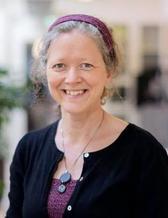
Cecilia Wallerstedt is a Professor at the University of Gothenburg, affiliated with both the Artistic Faculty at the Academy of Music and Drama and the Department of Education, Communication and Learning. As Pro-Dean of the Artistic Faculty, she bridges artistic and educational research, while leading the FILUR project focused on imagination development in early childhood education. Her research explores teaching and learning in music and other aesthetic subjects across educational levels, emphasizing teacher-child interactions and sociocultural theory. Current projects address play-responsive teaching, intergenerational play dynamics, and digital media integration in preschool settings. She supervises PhD students in the PReCEC graduate school and collaborates with Nordic institutions through networks like the Studies of Artistic Vision and the Network for Internship Development. Recent publications highlight play-responsive didaktik, metacognitive strategies, and cultural historical theory applied to music, narrative play, and multilingual engagement. While no scientific awards are mentioned, her work includes EU-funded research and systematic reviews of music education practices.
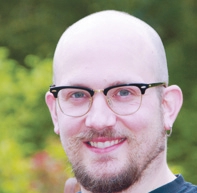
Prof. Dr. Tilman von Brand is a tenured Professor of Didactics of German Language and Literature at the Institute of German Studies within the Faculty of Philosophy at the University of Rostock. His work spans literature, language, and media didactics, with a focus on inclusive education, historical-political learning, and the history of German teaching in the GDR. Research Interests include: Developing inclusive teaching models for literary texts, particularly in mixed-ability classrooms. Historical analysis of pedagogical practices in GDR education. Digital teaching methods and media culture integration in German language instruction. His recent publications address literary writing as cultural practice , digitally enhanced reading pedagogy , and satire as a critical thinking tool . He is co-editor of the journal Praxis Deutsch and leads projects like LLinkL (Literary Learning in Inclusive Learning Groups) and the German Learning Workshop , which explores theory-practice connections in teacher training. The workshop, funded by the BMBF , integrates modern technology and didactic materials to improve inclusive teaching environments. Students under his supervision include Stefanie Granzow , whose dissertation examines text-image combinations (e.g., graphic novels) as inclusive learning tools. His team collaborates with facilities like InFoLaB to simulate and evaluate teaching practices.
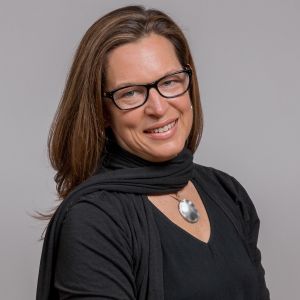
Aras Bozkurt is a faculty member and researcher at Anadolu University's Open Education Faculty in Türkiye, holding a PhD in Distance Education. His work focuses on empirical studies in distance education, online learning, educational technology, and AI integration in education through critical theories like connectivism, rhizomatic learning, and heutagogy. He employs emerging methodologies including social network analysis and sentiment analysis, with a particular emphasis on the implications of generative AI and human-machine interaction. Editorial Leadership : Editor-in-Chief of Open Praxis and Asian Journal of Distance Education, Associate Editor for journals including Higher Education Research and Development and Online Learning Research Contributions : Over 250 Web of Science publications, h-index of 60 on Google Scholar, 47 funded projects, and 7 thesis advisories Bozkurt's research explores critical educational paradigms, with recent publications analyzing generative AI's impact on academic integrity, OER transparency, and the sustainability of open universities. His work bridges theoretical frameworks with practical applications in digital education ecosystems, focusing on ethical AI implementation and algorithmic challenges. Scientific contributions include 15 recent articles (2023-2026) covering generative AI literacy, colonial legacy disruptions in education, AI ethics frameworks through activity theory, and dropout analysis in open distance learning systems. These publications demonstrate a consistent focus on critical AI studies, educational sustainability, and digital transformation.
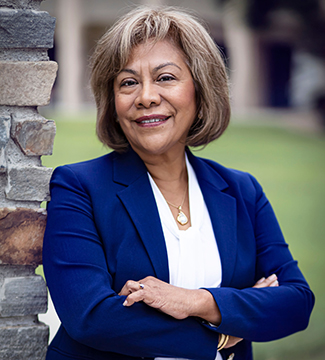
C.J. Pascoe is an Associate Professor of Sociology at the University of Oregon's College of Arts and Sciences. She specializes in studying gender, sexuality, inequality, and educational systems through ethnographic methods. University of Oregon (2006-present) Colorado College (2006-2011) Digital Youth Project (2004-2006) Her research examines how schools perpetuate and address systemic inequalities through: Gender and sexuality dynamics Homophobic discourse in adolescent culture Technology's role in youth socialization "Regime of kindness" critiques Hybrid masculinity analysis Racialized organizational behaviors Recent publications focus on: 2025: Racialized emotions in institutions 2024: Transition from protection to care frameworks 2023: Anti-bullying strategies and digital youth behavior Scientific recognition includes: AERA Book of the Year (2007) ASA Honorable Mention (2007) Public engagement features: Media appearances (Frontline, NY Times, NPR) Advisory roles for Born This Way Foundation, Gay/Straight Alliance Network Books translated into multiple languages
Ana Maria Costa Lopes is a Professor at the Polytechnic Institute of Viseu's School of Education (Escola Superior de Educação de Viseu), where she has been serving as a Coordinating Professor since 2020. She holds leadership positions in the Foreign Languages Department and has previously served as Coordinator of the Foreign Languages Department, Vice-President of the Technical Scientific Council, and Secretary of the Scientific Council. Her educational background includes a PhD in Letters with specialization in American Studies from the University of Beira Interior (2009), a Master's in Anglo-Portuguese Studies from NOVA University Lisbon (1995), and a Bachelor's in Modern Languages and Literatures with a focus on English and German Studies from the University of Coimbra (1981). She is fluent in English (C2 level) and has basic proficiency in French, German, and Italian. Her research spans multiple areas within Humanities, with particular focus on American Studies, Native American subjectivity, identity, oral tradition, subjective space, colonial and post-colonial spaces, borders, geocriticism, heterotopia, translation, imagination/representation, space studies, finitude, and travel literature. Her work demonstrates strong interdisciplinary connections between literature, cultural studies, spatial theory, and language education. Her recent publications reveal a growing interest in the intersection of language education, digital technologies, and pedagogical innovation, with numerous studies on foreign language learning in higher education, multimodal creativity, and storytelling as pedagogical tools. She has also maintained her foundational research in American literature, particularly focusing on spatial representation and identity formation. Active participant in multiple research projects including HARVEST (2023-2024), APSASeG (2022-2024), and others focused on language education and pedagogical innovation Regular member of academic committees including scientific and organizational committees for conferences on language teaching and literary studies Active participant in recruitment and evaluation juries for academic positions Her academic leadership extends to supervising master's theses and participating in examination committees both in Portugal and internationally, including at the Federal University of Goiás in Brazil.
Reyna García-Ramos is a Professor of Education and Chair of the Department of Education and Pedagogy at Pepperdine University's Graduate School of Education and Psychology (GSEP). She directs the Teacher Preparation Program (TPP) and Master of Arts in Teaching (MAT) program, teaching across undergraduate and graduate preservice teacher pathways. PhD, University of California, Santa Barbara BA, University of California, Los Angeles Research Focus: Addressing academic challenges faced by emergent bilinguals in California's public schools through university-school partnerships. Key areas include culturally relevant curricula, English language learner support, and bilingual education frameworks. Publications highlight lifelong learning, parent engagement practices, gender-specific educational approaches, and pedagogical innovations for multilingual learners. Her work emphasizes cross-cultural methodology and educational equity. Professional Affiliations: Secretary, CABTE (California Association for Bilingual Teacher Education) Member, AACTE Programmatic Advisory Committee At-Large Board Member, CCTE (California Council on Teacher Education)
Lucas Northern serves as a Lecturer (Practitioner in Residence) in the Rehabilitation Sciences and Wellness Department at the School of Health Sciences, University of New Haven, where he teaches in the Speech-Language Pathology graduate program and mentors future clinicians. His academic background includes: Master of Science in Communication Sciences and Disorders, Southern Connecticut State University (2017) Bachelor of Arts in English, Kenyon College Specializing in Autism, disability perception frameworks, early childhood language development, Alternative and Augmentative Communication systems, and school-based speech pathology interventions, Lucas champions communication as a fundamental human right for individuals with exceptionalities. His work integrates clinical practice with advocacy to empower nonverbal and neurodiverse populations. With seven years of direct experience in New Haven Public Schools, Lucas develops evidence-based curricula for diverse learners and collaborates with Autism Services and Resources of Connecticut (ASRC) to design social competency programs for young adults on the autism spectrum. He coordinates clinical operations at Sensation Station—a pediatric therapy center in Guilford, CT—where he implements therapeutic frameworks for speech development and coordinates interdisciplinary teams serving children with complex communication needs.
Jennifer C. Mann is a Research Scientist at Duke University's Center for Child and Family Policy and an Adjunct Instructor in the Program in Education. Her work focuses on multilingual learners and equity-centered instructional practices through the BELLA projects, while supporting Duke TeachHouse—a living/learning community for early-career teachers—through program development and funding acquisition. She earned her Ph.D. in Teacher Education and Learning Sciences from North Carolina State University in 2023, specializing in Literacy and English Language Arts. This builds on her 19 years of K-12 teaching experience across high school English, elementary/adult ESL, and pre-service teacher education. Dr. Mann's research centers on multilingual learners , teacher professional learning , and participatory qualitative methodologies . She emphasizes asset-based frameworks for refugee/immigrant students, exploring critical literacy and community partnerships to empower youth and transform instructional practices through culturally responsive approaches. Her 2021-2024 publications reveal consistent focus on amplifying marginalized voices—particularly refugee-background students—through narrative inquiry and community-based research. Key trends include critical literacy interventions, teacher collaboration models, and equity-centered professional development grounded in qualitative methods. Dr. Mann actively mentors Master of Arts in Teaching candidates through course instruction and independent studies while securing funding for BELLA and Duke TeachHouse initiatives. Her work strengthens pathways for equity-minded teacher leadership across North Carolina through strategic capacity building. She collaborates with interdisciplinary teams at the Center for Child and Family Policy and Duke TeachHouse, bridging university resources with community needs to advance educational equity for multilingual learners and early-career educators through sustainable program models.
Dr. Katja Lee is a Lecturer in Media and Communication and Course Coordinator of the Master of Strategic Communication program at The University of Western Australia's School of Social Sciences. Her research examines self-representation through media across historical periods, with particular focus on women's public storytelling from early twentieth-century magazine articles to contemporary social media platforms. Education: SSHRC Postdoctoral Fellow: Simon Fraser University (2015-2017) PhD, McMaster University (2015) J'explore French Language Program, Université Laval (2011) MA, University of British Columbia (2003) BA (Honours), Simon Fraser University (2001) Her research centers on celebrity culture and women's life writing across media forms, investigating how technological and cultural conditions shape women's public self-representation. Current projects include examining life stories of women in Australia's mining and resources sector, while her past work established foundational analysis of celebrity autobiography through her monograph Limelight . Her scholarship bridges persona studies, life writing, and digital media theory with strong emphasis on gendered experiences. Lee's publication portfolio reveals consistent thematic focus on persona construction and autobiographical practices, with increasing attention to Australian contexts in recent years. Her work demonstrates interdisciplinary methodology connecting historical analysis with contemporary digital culture, particularly examining how women navigate public representation across different media ecosystems. The research shows strong engagement with Canadian cultural history evolving toward Australian resource sector narratives. Scientific Awards: Shortlisted for the Gabrielle Roy Prize (2020) for Limelight Recipient of 2024 UWA Citation for Outstanding Contributions to Student Learning Seven-year tenure as Managing Editor of Persona Studies Dr. Lee actively supervises PhD and higher degree research students in women's fame, life writing across media, and representation strategies in the mining sector. Her GenAI literacy framework development demonstrates commitment to innovative pedagogy, particularly in first-year curriculum design. While specific grant details aren't provided, her SSHRC Postdoctoral Fellowship indicates competitive research funding success. Her teaching portfolio spans undergraduate to postgraduate levels with courses including COMM1001, COMM1002, COMM3004, and COMM5701. Though no formal lab structure is mentioned, Lee's research approach integrates creative methodologies and industry-aligned assessment design. Her current work on women in mining represents a significant pivot toward Australian resource sector narratives, building on her established expertise in life writing and persona studies while developing new collaborative frameworks with industry partners.
Mindy Morgan is an Associate Professor in the Department of Anthropology at Michigan State University and an affiliated faculty member of the American Indian Studies Program. Her research centers on language ideologies and literacy practices within Native communities, examining how Indigenous languages (including Assiniboine, Gros Ventre, and Ojibwe) interact with English and how dominant language ideologies impact language transmission. She investigates historical and contemporary strategies for cultural and linguistic revitalization across Native American communities. Her primary publication is the 2009 book 'The Bearer of This Letter', analyzing literacy practices in the Fort Belknap Indian Community. Her scholarly work spans anthropology, linguistics, and ethnohistory with consistent focus on Indigenous language preservation. Dr. Morgan has received the following scientific recognition: Fulbright Scholar (2011-2012) She served as interim director of MSU's American Indian Studies Program (2009) and the CIC-American Indian Studies Graduate Consortium (2010-2011). Her collaborative work includes developing language immersive events with MSU's Ojibwe language program and conducting Fulbright-funded research at Croatia's University of Zadar. Her current projects focus on the Office of Indian Affairs periodical 'Indians At Work' (1933-1945) and university-level Ojibwe language maintenance initiatives.
Stewart Riddle is a Professor in the School of Education at the University of Southern Queensland . His research focuses on the democratisation of schooling systems , increasing access and equity in education , and schooling’s response to critical social issues in complex contemporary times. Research Interests include: Sociology of Education Democratic Education Social Justice and Equity Alternative Schooling Research Methodology English Curriculum and Pedagogy Publications from 2025–2024 examine education policy aporia , relational pedagogy , democratic curriculum design , and critical literacy , with a focus on Australia and Thailand. Key keywords span Education Policy , Relational Teaching , Youth Identity , and Curricular Justice . Teaching : Courses include EDX3270 English Curriculum and Pedagogy in Upper Primary , EDS2210 Junior Secondary English Curriculum and Pedagogy , and EDS4110 Senior Secondary English Curriculum and Pedagogy . He supervises doctoral research on topics like teacher autonomy , student engagement , and alternative education frameworks . Affiliations : Member of the Australian Association for Research in Education and English Teachers' Association of Queensland ; affiliated with the Centre for Heritage and Culture at UniSQ.
J. Elyse Graham is a Professor in the Department of English at Stony Brook University , specializing in Digital Humanities , Media Studies , and the History of the English Language . Her research bridges traditional literary analysis with digital innovation, focusing on textual culture across print and digital media. Ph.D. in English, Yale University (2015) She has authored books for prestigious publishers like Oxford University Press , Stanford University Press , and McGill-Queen's University Press , with a current book project underway for HarperCollins . Her teaching includes courses such as Introduction to Poetry , Science, Technology and Humanities , and graduate seminars on Storytelling With Data and Studies in Language and Linguistics . Graham's research explores the evolution of media, from the Printing Press as Metaphor to contemporary Digital Art and Annotation Practices . Her work on Database Thinking and Deep Description highlights her commitment to developing digital tools for humanities scholarship. She has contributed to debates on Boundary Maintenance and the Origins of Trolling , examining how digital communities shape discourse. Recent publications include Digital Art in Ireland (2023) and Joyce and the Graveyard of Digital Empires (2019).
Monica Carolina Good is an Associate Professor at the Faculty of Creative and Critical Studies, University of British Columbia Okanagan Campus. Her research focuses on Spanish Culture and Literature, Indigenous Literature, and Indigenous Language Reclamation and Revitalization, with a particular emphasis on Mexico. She also investigates Indigenous Peoples' Rights to Court Interpretation, especially in Oaxaca. Bachelor of Arts in Modern Languages from Emporia State University (2009) Masters of Fine Arts in Spanish-American Literature and Linguistics from New Mexico State University (2012) Ph.D. in Interdisciplinary Studies from UBC Okanagan (2019) Her academic work bridges Spanish and Indigenous Studies, highlighting sociopolitical dimensions in literature and the role of magical realism in representing Indigenous narratives. She has contributed to discussions on literacy in Indigenous Mexico, intercultural education, and the challenges of Indigenous knowledge in legal contexts. Monica Good received the Provost Award for Teaching Assistants and Tutors (2016-2017). She is actively involved in professional services, including peer reviewing at The Student Anthropologist and editorial work at Hallazgos Magazine. Her publications and presentations span topics like language revitalization, disaster response, and cultural heritage, with a focus on Indigenous communities in Mexico and cross-cultural collaborations.
Robert Godwin-Jones is a Professor in the Department of Foreign Language at Virginia Commonwealth University's College of Humanities and Sciences, where he has served since 1979. He holds the position of Foreign Language Liaison and maintains active scholarly contributions through his "German Stories" digital repository and "Communicating Across Cultures" blog, focusing on technology-enhanced language pedagogy and intercultural communication. His educational background includes: B.A. in French and German from Franklin and Marshall College (1971) M.A. in Comparative Literature (German, French, and English) (1973) Ph.D. in Comparative Literature from the University of Illinois Urbana-Champaign (1977) Dr. Godwin-Jones specializes in Computer-Assisted Language Learning (CALL), with research spanning artificial intelligence applications, virtual reality environments, and digital literacies for language learners. His work examines how emerging technologies transform second language acquisition through ecological semiotics, distributed agency models, and multimodal communication frameworks. He investigates pedagogical translanguaging strategies for less commonly taught languages and analyzes authenticity in AI-mediated language interactions, particularly in pragmatics and writing development. Analysis of his 2021-2025 publications reveals three dominant trajectories: (1) generative AI integration in language instruction with emphasis on ethical implementation and threat mitigation; (2) extended reality applications creating immersive language spaces in the metaverse; and (3) ecological approaches connecting smart devices, ambient intelligence, and situated learning contexts. His scholarship consistently bridges theoretical frameworks with practical classroom applications across 19th-century German literature studies and contemporary language education. He maintains active professional engagement through memberships in: Delta Phi Alpha German Honorary Society Phi Kappa Phi Honorary Society Modern Language Association American Association of Teachers of German American Association of Teachers of French Foreign Language Association of Virginia As director of the "German Stories" project since 1994, he has curated verified editions of 19th-century German narratives with English translations under Creative Commons licensing, creating what has become a foundational resource for literary study and language acquisition. His blog extends this work through contemporary analyses of intercultural communication challenges, while his scholarly leadership in organizations like CALICO shapes national discourse on technology in language education. His laboratory functions as the "German Stories" digital ecosystem, which has evolved into a comprehensive platform hosting annotated texts, pedagogical resources, and research archives. This environment supports both formal classroom instruction and informal learning communities, demonstrating his commitment to porous classroom models that integrate physical and digital learning spaces.
Dr. Adam Bence Bethlenfalvy is an Associate Professor at the Faculty of Humanities and Social Sciences, Károli Gáspár University of the Reformed Church in Hungary. Born in Delhi, India in 1977, he holds a PhD in Drama Pedagogy (Education) from Birmingham City University (2017) and MA degrees in English Language and Literature from ELTE (2004). He serves as Research Group Leader of the Theatre Pedagogy and Theatre Sociology Research Group and has directed numerous theatre productions while maintaining an active research profile. Bethlenfalvy earned his doctoral degree in 2017 from Birmingham City University with a dissertation titled "Living through extremes: an exploration of integrating a Bondian approach to theatre into 'living through' drama." His educational background includes dual MA degrees from ELTE Budapest in 2004 - one in English Language and Literature and another as an English Language and Literature Teacher. He also obtained professional qualification in drama direction from the Hungarian Drama Pedagogical Society in 1996. His language proficiency includes English (C2), French (A2), and Hindi (A2). Dr. Bethlenfalvy's research focuses on drama pedagogy, theatre education, and Edward Bond's theatre. His work explores the integration of Bondian approaches into living through drama, reflective practice in educational settings, and creative partnerships in theatre education. He has made significant contributions to understanding how fictional contexts can liberate educational and artistic processes, particularly through process drama methodologies. His research also addresses contemporary challenges such as digital media usage, online learning during the pandemic, and code-switching in multilingual drama classrooms. His extensive publication record shows a clear focus on mapping and analyzing educational theatre programs in Hungary and Europe. Recent work examines methodology for national mapping of educational theatre, the big picture of objectives and strategies in Hungarian educational theatre programs, and trends in educational theatre practices. His scholarship consistently connects theory with practical applications in drama education while exploring the intersections between Edward Bond's theatrical approaches and educational drama methodologies. Dr. Bethlenfalvy has supervised doctoral students including Melinda Gemza (University of Debrecen) and Dear Kristina (Babeș–Bolyai University). He has served as an opponent at numerous doctoral defenses, including for Ramona Gecse (2021), Antal Klaudia (2022), Vera Prontvai (2022), Kata Pető (2022), and Prezsmer Boglárka Laura (2023). He leads research projects including "Theatre and society – theatre pedagogy and theatre sociology in Hungary" (2022-2024) and participates in "Victim Roles" and "Code-switching in the arts" projects. As an active practitioner, Bethlenfalvy has directed numerous theatre productions, including "OnLife" at Csokonai National Theatre (2025), "Dragon's Eye" (2024), and several Edward Bond adaptations. He has organized significant conferences such as the Democracy through Drama Summer School (2019) and The GAP conference (2016). His professional activities also include membership in academic societies like IDEA Europe, Hungarian Drama and Theatre in Education Association, and National Association for the Teaching of Drama.