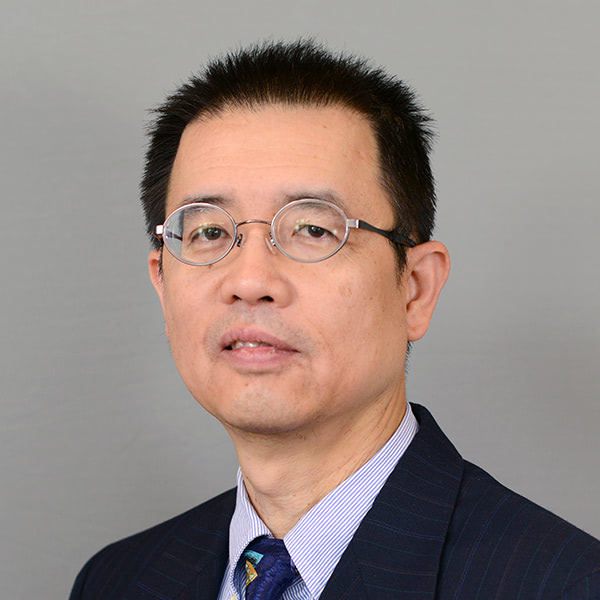
Jacob Eyferth is an Associate Professor at the University of Chicago, jointly appointed in the Department of East Asian Languages and Civilizations, the Department of History, and the College. His research focuses on the social and cultural history of twentieth-century China, particularly rural communities, gender dynamics, and the intersection of technology and everyday life. Key research themes include the impact of industrialization, collectivization, and revolution on non-elite populations, with an emphasis on rural women's labor and cultural resistance. His current project explores cotton production, clothing, and gender during China's socialist era. Eating Rice from Bamboo Roots (2009) How China Works (2006) Rural Development in Transitional China (2004) He received the 2011 Joseph Levenson Prize for his first book. Eyferth has taught courses on topics such as class inequality, everyday life under socialism, and revolutionary China, and has held postdoctoral fellowships at Oxford, Harvard, and Rutgers.
Prof. Konrad Schindler holds the position of Full Professor at the Department of Civil, Environmental and Geomatic Engineering at ETH Zürich. He is also the Head of the Institute of Geodesy and Photogrammetry (IGP), leading research and educational activities in geomatics and computer vision. His career spans roles as a Photogrammetric Engineer, scientific assistant, postdoc researcher, and academic faculty across institutions including Graz University of Technology, Monash University, and TU Darmstadt before joining ETH Zürich in 2010. Education: Undergraduate studies in Geodesy (1992–1995), Graz University of Technology, Austria MEng in Photogrammetry and Geoinformation (1995–1999), Vienna University of Technology, Austria PhD in Computer Science (2001–2003), Graz University of Technology, Austria Research focuses on Photogrammetry , Remote Sensing , Computer Vision , and Image Understanding with interdisciplinary applications in environmental monitoring, geospatial analysis, and disaster response. He develops computational methods for 3D reconstruction, fusion of multi-modal data, and AI-driven solutions for satellite imagery interpretation. His work bridges geomatic engineering and machine learning to address challenges in urban mapping, climate modeling, and biological systems analysis. Publications reflect expertise in geospatial AI, diffusion models, and benchmarking datasets for disaster resilience. Notable works include Marigold (image analysis adaptation) and BRIGHT (building damage assessment). His research emphasizes practicality and scalability, such as affordable depth estimation and global biomass datasets. He has received the 2013 Marr Prize Honourable Mention (IEEE) and the 2012 U.V. Helava Award (ISPRS), alongside several Best Presentation Awards. His contributions span technical leadership, editorial roles (ISPRS Journal), and service to Swiss remote sensing commissions. Advising and grants: While no specific advisee names or grant details are listed, his career trajectory includes mentoring postdocs and junior faculty. He teaches advanced courses in Photogrammetry , Image Interpretation , and Machine Vision , integrating cutting-edge AI techniques into curricula. His research group collaborates on global-scale projects like canopy height mapping and satellite-based climate variable assessments. Labs/Teams: As Institute Head, he oversees the IGP lab at ETH Zürich, with prior affiliations including the Digital Perception Lab (Monash University) and the Computer Vision Lab (ETH Zurich). His work often involves multi-institutional collaborations focused on geospatial AI and environmental science.
Minh Q. Phan is an Associate Professor of Engineering at Dartmouth College's Thayer School of Engineering. His expertise spans system identification, iterative learning control, model predictive control, robotic swarm control, and intelligent control systems. He holds a BS from the University of California, Berkeley, and MS/M.Phil/PhD degrees from Columbia University in Mechanical Engineering. Dr. Phan has contributed to over 50 peer-reviewed publications and serves as an Associate Editor for the Journal of Guidance, Control, and Dynamics. His research focuses on advancing control theory applications in robotics, structural health monitoring, and sustainable construction materials. Key contributions include the development of OKID (Observer/Kalman Filter Identification) methods and bilinear system identification frameworks. Education History: Bachelor of Science in Mechanical Engineering, UC Berkeley, 1985 Master of Science in Mechanical Engineering, Columbia University, 1986 Master of Philosophy in Mechanical Engineering, Columbia University, 1988 Doctor of Philosophy in Mechanical Engineering, Columbia University, 1989 Research Interests: Advanced control methodologies for dynamic systems Model-based predictive control strategies Applications in robotics and aerospace engineering Structural health monitoring via system identification Machine learning for materials science Teaching Responsibilities include courses like ENGG 149 (Systems Identification), ENGS 145 (Modern Control Theory), and ENGG 148 (Structural Mechanics). His work bridges theoretical control systems with practical industrial applications, including automation in food processing and sustainable construction practices. Dr. Phan has collaborated on projects addressing viral epidemiology in Vietnam and coastal erosion mitigation strategies.
Christopher P. Atwood is a Professor of Mongolian and Chinese Frontier and Ethnic History and Department Chair of East Asian Languages and Civilizations at the University of Pennsylvania. He holds a PhD from Indiana University's Central Eurasian Studies Department. His research focuses on the interplay of culture, political power, and historiography in Mongol and Inner Asian contexts. Atwood's work spans topics such as Mongol nationalism, Yuan dynasty historiography, and the socio-economic history of nomadic societies. Education: AB from Harvard University (1986), PhD from Indiana University (1994). He previously taught at Indiana University for two decades, serving in administrative roles. His affiliations include visiting scholar positions at institutions like the Institute for Advanced Study (Princeton) and Peking University. Research interests include environmental history (e.g., marmot-human relations), political dynamics (e.g., Mongol empires and comparative imperial formations), and literary studies (e.g., Mongolian poetry and textual canonization). He has authored works like the Encyclopedia of Mongolia and the Mongol Empire and collaborates on projects such as the Sources of Mongolian Tradition . Teaching includes courses on Inner Asian civilizations, the Mongol Empire, and the Secret History of the Mongols . He emphasizes interdisciplinary approaches, blending philology, environmental history, and cultural analysis to reconstruct nomadic and steppe societies.
Hadi Meidani is a Clinical Associate Professor at the Carle Illinois College of Medicine , specifically within the Department of Biomedical and Translational Sciences at the University of Illinois at Urbana-Champaign . He teaches courses in Civil and Environmental Engineering, including topics like Systems Engineering & Economics , Machine Learning in CEE , and Uncertainty Quantification . Ph.D., Civil Engineering, University of Southern California (2012) M.S., Electrical Engineering, University of Southern California (2012) M.S., Structural Engineering, Sharif University of Technology (2005) B.S., Civil Engineering, K.N. Toosi University of Technology (2002) Dr. Meidani's research focuses on uncertainty quantification , scientific machine learning , and optimization under uncertainty for engineering systems. His work spans stochastic multiscale analysis , physics-informed machine learning , and model reduction techniques. His recent publications emphasize machine learning for infrastructure systems , graph neural networks , physics-informed models , and traffic assignment . Key trends include deep learning , multi-fidelity modeling , and neural operator transformers applied to metamaterial design , seismic reliability , and autonomous freight delivery .
Kenneth Pomeranz is the University Professor of Modern Chinese History at the University of Chicago in the Department of East Asian Languages and Civilizations (EALC). Previously taught at the University of California, Irvine , his research spans late Imperial and twentieth-century China , comparative world history , and global economic systems . Research Focus: Reciprocal influences between state, society, and economy; origins of the world economy through mutual regional influences; comparative studies of labor, family organization, and economic history. Current Projects: A history of Chinese political economy from the seventeenth century to the present; a book titled Why Is China So Big? exploring China's political unity despite its vast size. Scientific Awards and Fellowships: John K. Fairbank Prize (twice) World History Association Book Prize (shared) Guggenheim Fellowship American Academy of Arts and Sciences Fellow Publications: Key works include The Great Divergence , The Making of a Hinterland , and The World that Trade Created . His articles address topics such as labor-intensive industrialization, global environmental history, and Qing state-building.
Ram Rajagopal is an Associate Professor of Civil and Environmental Engineering and Electrical Engineering at Stanford University, and a Senior Fellow at the Precourt Institute for Energy. He leads the Stanford Sustainable Systems Lab (S3L), focusing on large-scale monitoring, data analytics, and stochastic control for infrastructure networks, particularly power systems. His research emphasizes renewable energy integration, smart distribution systems, and demand-side data analytics. Education: PhD in Electrical Engineering and Computer Sciences & MA in Statistics (UC Berkeley), MS in Electrical and Computer Engineering (UT Austin), and BEng in Electrical Engineering (Federal University of Rio de Janeiro). Research interests include power grid optimization, renewable energy systems, and data-driven approaches to infrastructure challenges. He has pioneered work in grid flexibility, distributed energy resources, and machine learning applications for energy systems. His lab develops technologies like Smart Dim Fuses and the EV-EcoSim platform for EV charging infrastructure optimization. Received NSF CAREER Award, Powell Foundation Fellowship, and Berkeley Regents Fellowship Over 30 patents and best paper awards Advises/founded companies in sensor networks, power systems, and data analytics Labs/Teams: Stanford Sustainable Systems Lab (S3L), Powernet Project. His work spans grid resilience, energy equity, and scalable energy solutions.
Cynthia Gabbay is a researcher at the Institute of Cultural History and Theory, Humboldt University of Berlin, and is completing her Habilitation at the University of Orléans, France. She is a multilingual poet, translator, and editor specializing in Jewish and Romance languages with primary affiliations in Jewish studies and Latin American research. Her educational background includes a Ph.D. from the Hebrew University of Jerusalem and ongoing Habilitation research at the University of Orléans. Ph.D.: Hebrew University of Jerusalem Habilitation: Rémélice Laboratory, University of Orléans Gabbay's research explores Jewish diaspora experiences in Latin America through interdisciplinary lenses of translation studies, multilingualism, and historical memory. She investigates how cultural legacies are preserved through literature and bibliographic projects, with particular focus on Argentina's Jewish communities and transnational connections to Iberian history. Her work bridges literary analysis, archival research, and creative practice as a poet and translator. Recent publications demonstrate a trend toward examining traumatic historical events through Jewish cultural frameworks, connecting Argentine Jewish settlements with Spanish Civil War narratives. This reflects growing scholarly interest in comparative diaspora studies and the role of literature in reconstructing fragmented histories. Scientific recognition includes: Maurice Amado Foundation Fellowship at University of Pennsylvania German Research Foundation Project Grant for 'The Jewish Library in Argentina' New Frontiers in Contemporary Jewish Life Fellowship (2025-2026) Gabbay coordinates the Network for the Study of Jewish Translation and Multilingualism and serves on the administrative board of the Latin American Jewish Studies Association (LAJSA). As editor-in-chief of the Latin American Jewish Studies Series (De Gruyter), she oversees scholarly publications while co-editing the journal Lingua Franca: The History of the Book in Translation . Her upcoming event 'Figuring Dystopia in 'Ho! Literary Magazine' (November 2025) continues her exploration of literary responses to historical trauma. She founded and coordinates Simania: Salon Readings, creating platforms for multilingual literary exchange within the Latin American Jewish Studies Association framework.
Mohsen Goudarzi is an Associate Professor of Islamic Studies at Harvard Divinity School (HDS), part of Harvard University. He joined the faculty in 2021 after teaching at the University of Minnesota. His academic background includes a PhD from Harvard University and an MA from Stanford University. His research focuses on the Qur’an and early Islamic history, employing literary, linguistic, comparative, and historical approaches. Key interests include the Qur’an’s role in Late Antique religious developments, Islamic exegetical traditions (tafsīr), and theological frameworks (kalām). His current projects explore the Qur’anic worldview’s interpretation and the significance of Meccan cultic rituals to early Islamic identity. He has received teaching excellence awards, including a certificate from the University of Minnesota’s Center for Educational Innovation and three teaching distinctions from Harvard’s Office of Undergraduate Education. Research outputs include groundbreaking articles on Qur’anic exegesis, cultic practices, and interreligious dynamics. Notable works analyze the Qur’an’s engagement with Abrahamic traditions, ritual practices in Mecca, and the textual history of early Islamic manuscripts. His collaborative work on the Ṣan‘ā’1 codex redefined understandings of early Qur’anic canonization. Teaching spans HDS and Harvard’s Faculty of Arts and Sciences (FAS), covering Islamic studies, Qur’anic studies, and religious history. He advises students in HDS programs and contributes to interdisciplinary initiatives at the intersection of theology, history, and textual criticism.
Steven I-Jy Chien serves as Professor and Director of the Transportation Program within the Department of Civil and Environmental Engineering at the New Jersey Institute of Technology (NJIT). His career spans academia, government, and industry with significant contributions to transportation engineering research and practice. His educational credentials include: Ph.D. in Civil and Environmental Engineering from University of Maryland-College Park (1995) M.S. in Civil and Environmental Engineering from University of Maryland-College Park (1991) B.S. in Civil Engineering from Tamkang University (1983) Professor Chien's research focuses on transportation system resilience, sustainable transit operations, and advanced traffic modeling. His work addresses critical challenges in urban rail networks, demand-responsive transit services, and energy-efficient transportation systems. He employs sophisticated computational methods including genetic algorithms, machine learning, and Bayesian approaches to solve complex transportation problems involving network vulnerability, passenger behavior, and infrastructure optimization under uncertainty. Analysis of his recent publications reveals strong emphasis on transportation resilience against cascading failures, sustainable operations for electric transit systems, and pandemic-responsive aviation scheduling. His research spans diverse geographic contexts including major Chinese metropolitan areas and U.S. transportation networks, demonstrating global applicability of his methodologies. His professional recognition includes: 2024 Keynote Speaker at Union-Tech Lecture, National Taiwan Ocean University 2022 Keynote Speaker at International Conference of Chinese Institute of Transportation 2022 Best Poster Award from New Jersey Department of Transportation Professor Chien has secured research funding from federal agencies including the Federal Highway Administration (FHWA) where he contributed to CORSIM traffic simulation software development. His industry experience with China Engineering Consultants Inc. and Information Dynamic Inc. informs his practical approach to transportation challenges. As Transportation Program Director, he oversees curriculum development and industry partnerships that prepare students for transportation sector careers. He maintains active collaboration with transportation agencies globally, particularly through his leadership in the Transportation Program at NJIT which serves as a hub for innovation in urban mobility solutions.
Blair Hoxby is Professor of English at Stanford University's School of Humanities and Sciences, where he has taught since 2007. Previously, he served as Associate Professor of History and Literature at Harvard University (2005-2007) and Associate Professor of English at Yale University (2003-2005), where he began as Assistant Professor in 1998. His academic journey includes a Ph.D. in English from Yale University (1998), an M.Phil. in English Studies from the University of Oxford (1990), and an A.B. in English and American Literature and Language from Harvard University (1988). Hoxby's research focuses on literature and culture from 1500 to 1800, with particular emphasis on tragedy theory, Milton studies, and the intersection of literature and economics. His notable works include What Was Tragedy? Theory and the Early Modern Canon (2015) and Mammon's Music: Literature and Economics in the Age of Milton (2002). He argues that early modern tragedy differed significantly from contemporary understandings of the genre, with passions rather than deeds or character serving as the keys to early modern tragic performance. Hoxby's recent scholarly output reveals a consistent engagement with early modern theatrical practices, particularly tragedy and opera. His work demonstrates sophisticated interdisciplinary approaches, connecting literary analysis with historical context, economic theory, and performance studies. He has made significant contributions to understanding how commercial culture shaped literary production and how theatrical conventions evolved across national boundaries in Europe. Scientific Awards and Honors Internal Fellow, Stanford Humanities Center (2009-2010) Morse Fellowship, Juilliard School (2001-2002) Samuel and Ronnie Heyman Prize, Yale University (2001) John Addison Porter Prize, Yale University (1999) Rhodes Scholarship, University of Oxford (1988-1990) Hoxby has supervised numerous doctoral students and served in various administrative roles at Stanford, including Director of Undergraduate Studies (2011-2014) and Director of Graduate Admissions (2008-2011). His teaching portfolio includes courses on English poetry from the Renaissance to Romanticism, tragedy and tragic theory from Aristotle to the present, theater history, and performance theory. Currently, he teaches courses such as Court Theater from Shakespeare to Mozart and Introduction to English II: From Milton to the Romantics . Hoxby maintains active scholarly engagement through committee memberships, including the Executive Committee of the Milton Society of America (2009-2013) and service as a referee for major academic presses including Oxford University Press and the University of Pennsylvania Press.
Lucie DE CARVALHO is a Lecturer in British Civilization at the University of Lille, Faculty of Languages, Culture and Societies, Department of English Studies. She is affiliated with ULR 4074 - Center for Studies in Civilizations, Languages and Foreign Literature. Graduated from ENS Cachan Specializes in British Civilization Based at University of Lille (BO.529) Dr. DE CARVALHO's research focuses on contemporary British politics, political discourse studies, British energy policies (particularly nuclear and renewable energy), neoliberalism, historiography of science, and climate governance. Her work demonstrates a consistent engagement with the intersection of political power, energy policy, and media representation in the British context. She has developed a particular expertise in analyzing how the UK state manages controversial technologies like nuclear power within neoliberal frameworks. Her publication record shows a consistent output spanning from 2014 to 2024, with recent work examining twenty-first century UK broadcasting ecology, teaching British history to French students, and contemporary nuclear power policies. The analysis of her articles reveals a strong thematic continuity centered on British governance, energy policy, and the complexities of neoliberal state intervention. Her research employs interdisciplinary approaches drawing from political science, media studies, and science and technology studies. Member of the SAES (Society of Anglicists in Higher Education) Member of CRECIB (Centre for Research on British Civilization) Associate member of the Research Center in British Civilization (CREC) Institute of the Anglophone World, Sorbonne Nouvelle University – Paris 3 Member of the UK Political Studies Association Member of the European Association for the Study of Science and Technology (EASST) Member of UACES Dr. DE CARVALHO has demonstrated sustained research activity across multiple domains related to British studies, with particular emphasis on energy policy and political discourse. Her work bridges academic research with pedagogical practice, as evidenced by publications on teaching British history to French undergraduate students and language learning through television series.
Susan L. Burns is a Professor at the University of Chicago, where she holds appointments in the Department of History, Department of East Asian Languages and Civilizations, and The College. She currently serves as Department Chair and Chair of the Undergraduate Studies Committee. Education: PhD, University of Chicago (1994) Her research focuses on Japan’s nineteenth-century social history, emphasizing intellectual and cultural practices, the intersection of medicine and public health, gender analysis, and legal discourses. She explores continuities between Japan’s early modern and modern eras, particularly how medical and legal frameworks shaped national identity. Recent publications span leprosy’s impact on citizenship, the rise of medical marketplaces, and gendered dimensions of reproductive health. Her digital humanities work on Mapping Medical Tokyo integrates GIS and text mining for historical analysis. Scientific Awards: Fulbright-Hays Fellowship IIE Fulbright Japan Foundation Japan Society for the Promotion of Science National Endowment for the Humanities She has secured grants for research on medical commodities, psychiatric practices, and the spatial dimensions of Meiji-era health policies. Her courses include Gender and Japanese History and Medicine and Culture in East Asia .
Max Cavitch is an Associate Professor of English at the University of Pennsylvania's School of Arts & Sciences, specializing in American literature, psychoanalytic studies, and cinema. He joined Penn in 1999 after earning his B.A. from Yale and Ph.D. from Rutgers. His research spans 19th- and 20th-century literature, African American studies, and interdisciplinary fields like animal studies and gender theory. Cavitch has authored influential works such as *American Elegy* (2007) and co-edited volumes on Whitman and early American studies. He directs Penn's Psychoanalytic Studies program and edits the blog *Psyche on Campus*, honored with the 2022 American Psychoanalytic Association's Excellence in Journalism Award. His teaching includes courses on psychoanalysis, autobiography, and American poetry. Cavitch has held fellowships from the Fulbright Foundation, Newcombe Foundation, and others. His recent projects explore world autobiography, psychoanalysis in academia, and the history of 'ashes' as a conceptual and material symbol. Award-winning scholar and educator, Cavitch's work bridges literary criticism with clinical theory, media studies, and transnational frameworks. He advises doctoral students in American literature and affiliated programs, maintaining active collaborations with institutions like the McNeil Center for Early American Studies and the Psychoanalytic Center of Philadelphia.
Daniel E. Ho holds multiple prestigious positions at Stanford University: William Benjamin Scott and Luna M. Scott Professor of Law Professor of Political Science Professor of Computer Science (by courtesy) Senior Fellow, Stanford Institute for Economic Policy Research Senior Fellow, Stanford Institute for Human-Centered Artificial Intelligence Faculty Fellow, Center for Advanced Study in the Behavioral Sciences He serves on the National Artificial Intelligence Advisory Commission (NAIAC), as Senior Advisor on Responsible AI at the U.S. Department of Labor, and as a Public Member of the Administrative Conference of the United States (ACUS). Ho earned his J.D. from Yale Law School and Ph.D. from Harvard University, completing a clerkship with Judge Stephen F. Williams on the U.S. Court of Appeals for the District of Columbia Circuit. His research bridges artificial intelligence, law, and public policy with emphasis on: Regulatory governance frameworks for AI systems Fairness and bias mitigation in algorithmic decision-making Environmental enforcement using satellite imagery and computer vision Methods for estimating racial disparities without direct demographic data Legal AI reliability and statutory research systems Analysis of his 2025 publications reveals a consistent focus on practical AI governance tools addressing real-world regulatory challenges. Key themes include developing benchmarks for legal applications, mitigating hallucination in legal AI tools, and creating systems for statutory research. His work demonstrates strong integration of technical AI methods with policy implementation, particularly in environmental enforcement and fairness assessment. As Director of the Regulation, Evaluation, and Governance Lab (RegLab), Ho leads interdisciplinary research partnerships with government agencies. While specific grant details aren't provided, RegLab's operational model indicates substantial research funding for policy-relevant AI projects. No student advisees are mentioned in available materials. Ho's leadership extends to national advisory roles where he shapes federal AI policy through evidence-based recommendations, particularly regarding environmental protection and civil rights enforcement mechanisms.