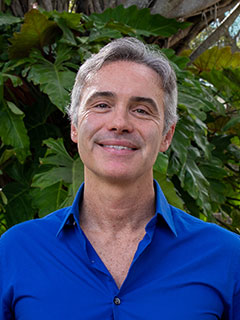
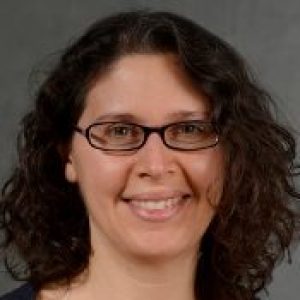
Andrew Lynch serves as Professor and Associate Dean for Program Development in the Department of Modern Languages & Literatures within the College of Arts and Sciences at the University of Miami. His academic leadership extends beyond teaching responsibilities to include significant administrative contributions to program development across the institution. Lynch's research interests center on sociolinguistics with particular focus on Spanish language dynamics in Miami, heritage language socialization, bilingualism, and language ideology. His work examines how language functions within specific social contexts, especially in workplace environments where Spanish heritage speakers navigate linguistic demands. He investigates the complex interplay between language, identity, and social structures in postmodern urban settings, with special attention to the Cuban diaspora experience in South Florida. His publication record reveals consistent scholarly engagement with heritage language education, Spanish language variation, and the sociolinguistic landscape of global cities. Lynch's research demonstrates how language practices in Miami reflect broader patterns of linguistic adaptation and resistance within diasporic communities. His work often addresses the tension between linguistic heritage and social integration, examining how language ideologies shape educational practices and community identity. Lynch's scholarly contributions span multiple formats, including single-authored books, co-authored publications, handbook chapters, and journal articles in both English and Spanish. His work frequently appears in high-impact sociolinguistics and language education journals, reflecting his interdisciplinary approach that bridges theoretical linguistics with practical educational implications.
Dr. Chang Xu is an Associate Professor in Machine Learning and Computer Vision at the University of Sydney's School of Computer Science. He holds a Bachelor of Engineering from Tianjin University and a PhD from Peking University. His research focuses on machine learning, data mining, and their applications in AI and computer vision, including multi-view learning, visual search, and face recognition. He is an ARC Future Fellow and a member of the Sydney Southeast Asia Centre and The Net Zero Institute. Education: B.E. in Engineering (Tianjin University), Ph.D. in Computer Science (Peking University). His research interests emphasize handling heterogeneous data, exploring data variety, and developing algorithms for robust AI systems. His work includes adversarial robustness, neural architecture search, and efficient deep learning models. Research trends in his articles include adversarial robustness in neural architectures, efficient vision transformers, multimodal 3D style transfer, and underwater image restoration. Key contributions span image restoration, video super-resolution, and lightweight network design. He has advised multiple PhD and master's students on topics like diffusion models, radar image synthesis, and graph similarity. Awards: ARC Future Fellow. Collaborations focus on cross-domain data integration and AI applications. His labs and teams explore generative models, robust learning, and scalable robotics policies. Recent work includes diffusion models for action segmentation and robust vision-language systems.
Marlyse Baptista is the President's Distinguished Professor of Linguistics at the University of Pennsylvania, Department of Linguistics. She is affiliated with the School of Arts & Sciences and MindCore initiative. Her research focuses on language contact, creolization processes, bilingualism, and experimental methods in creole studies. Baptista leads the Language Contact and Cognition Lab, previously known as the Cognition, Convergence and Language Emergence (CCLE) group at the University of Michigan. Education includes a PhD in Linguistics (Harvard, 1997), MA degrees from Harvard and the Université de Bordeaux III, and extensive training in multilingual education. Her work bridges generative syntax with experimental approaches, including artificial language learning to study language convergence. Key themes include the cognitive underpinnings of creole formation, bidirectional influences in Cape Verdean Creole, and the role of congruence in language acquisition. Research highlights include studies on Cape Verdean Creole's grammatical properties, genetic-linguistic admixture correlations, and pedagogical resources for creole language education. Recent projects explore experimental validation of creole genesis theories through multilingual acquisition studies. Scientific Awards: President's Distinguished Professorship (University of Pennsylvania) Labs/Teams: Language Contact and Cognition Lab, MindCore Grants/Projects: MULTI Project (creole language educational resources), NSF-funded studies on creole genesis mechanisms Baptista's work emphasizes interdisciplinary approaches, integrating syntax theory, psycholinguistics, and sociolinguistics to address foundational questions in contact linguistics and creolistics.
Laurel MacKenzie is an Associate Professor in the Department of Linguistics at New York University (NYU), affiliated with the Faculty of Arts and Science. She specializes in variationist sociolinguistics, dialectology, and language change, with a focus on English and French varieties. Her work integrates quantitative analysis of speech data to explore intra-speaker variation and language evolution. She co-directs the NYU Sociolinguistics Lab and leads the NSF-funded NYC Individual Differences Corpus project, alongside the Our Dialects initiative, an online atlas of British English dialects. Education: PhD in Linguistics, University of Pennsylvania (2012) BA in Linguistics and French, University of California, Berkeley (2006) Research Interests: Morphological and syntactic variation Regional dialects of English and French Linguistic pedagogy and public engagement Recent Projects: Recent work includes publications on participle leveling in English, sociolinguistic replication studies, and grammatical variation analysis. She has also collaborated on dialect mapping tools and consulted for media projects on language change and accents. Awards: No awards explicitly listed in provided texts. Labs/Teams: NYU Sociolinguistics Lab (Co-Director) Our Dialects Project (Academic Lead)
Mark Post is a Senior Lecturer and Honours Coordinator in the Discipline of Linguistics at the Faculty of Arts and Social Sciences, The University of Sydney. He also serves as Deputy Head of School (Humanities) and is affiliated with the China Studies Centre, Sydney Southeast Asia Centre, and The Vere Gordon Childe Centre. His educational background includes a BA Hons from Wesleyan University, an MA from the University of Oregon, and a PhD from La Trobe University. Dr. Post's research focuses on describing and explaining the typologies and relationships among Greater Mainland Southeast Asian and Himalayan languages. His descriptive work relies exclusively on primary field data, with interests in improving fieldwork methodologies. He approaches linguistic explanation from a functional-diachronic perspective, viewing language as a dynamic process whose structures emerge from patterns of discourse and interaction. His extensive publication record reveals a strong focus on Eastern Himalayan languages, particularly Tani languages, with research spanning linguistic typology, historical linguistics, and language documentation. Key themes include classifiers, deixis, applicatives, and the ethnolinguistic prehistory of the Eastern Himalaya across more than 50 publications since 2004. His notable recognition includes: 2011 Recipient of the Association for Linguistic Typology's Pāṇini Award Dr. Post has supervised research students including Chintan SHETH on ethno-linguistic prehistory in the Eastern Himalaya. His grant history includes significant projects such as 'Pseudo grains and adaptiveness in the Eastern Himalayas' (ARC, 2023), 'Center for Cultural Linguistic Diversity - Eastern Himalayas' (Firebird Foundation, 2022), and 'A Documentation of the Upper Belt variety of Minyong (Adi)' (Endangered Languages Documentation Programme). He is a life member of the Galo Language Development Committee (Arunachal Pradesh, India) and actively participates in the Association for Linguistic Typology, Australian Linguistic Society, and North East Indian Linguistics Society.
Walid Magdy is a Professor at the School of Informatics, The University of Edinburgh, where he is a faculty member at the Institute for Language, Cognition and Computation (ILCC). He holds a PhD from Dublin City University's School of Computing and has been a faculty fellow at The Alan Turing Institute. With substantial industry experience, he has worked for Qatar Computing Research Institute (QCRI), Microsoft, and IBM, where he filed nine patents. His research spans computational social science and natural language processing. In computational social science, he focuses on social content analysis, political bias detection, polarization, and users' behavior analysis/prediction, with particular attention to understudied communities. His natural language processing work centers on social applications including sentiment analysis, sarcasm detection, and hate-speech identification, with specialized expertise in Arabic and its dialects as well as Persian. Professor Magdy's recent publications demonstrate a consistent focus on Arabic language processing and social media analysis, with growing attention to cultural factors in NLP systems. His work bridges computational methods with social science questions, particularly regarding misinformation, cultural differences in online behavior, and the impact of platform policies on diverse linguistic communities. He has expanded his research to include Persian language processing and continues to explore social dynamics across different cultural contexts. His significant contributions have been recognized with multiple awards: Best Demo Award for TwiXplorer at CSCW 2024 Outstanding Paper Award at ACL 2024 Best Paper Award Runner-up at SocInfo 2022 Best Paper Award at WANLP-EMNLP 2022 Best Paper Award at AIRS 2015 Best Dataset Award at ICWSM 2013 Professor Magdy serves as an editor for Springer's Social Network Analysis and Mining journal and has held leadership roles in major conferences including ACL 2023, ArabicNLP 2023, ICWSM 2022, and ASONAM 2022. He has co-organized numerous shared tasks focused on Arabic language processing and social media analysis, contributing significantly to community resources and benchmarks. He founded and directs the Social Media Analysis and Support for Humanity (SMASH) research group at the University of Edinburgh, which has organized the Summer School in Computational Social Science (SICSS-Edinburgh) in 2022, 2023, and 2025, training researchers in computational social science methodologies.
Leigh Oakes is Professor of French and Linguistics in the Department of Modern Languages and Cultures within the School of Languages, Linguistics and Film at Queen Mary University of London. He has held progressive academic positions at the institution since 2000, advancing from Lecturer to his current professorship. His international academic background includes a PhD from the University of Melbourne and research at Stockholm University's Centre for Research on Bilingualism. His educational qualifications include a PhD (2001) and BA (Hons) (1996), both from the University of Melbourne. Oakes specializes in language policy and planning, with particular focus on language and national identity in France, Quebec, and Sweden. His research has expanded into linguistic justice debates in political theory, advocating for normative and interdisciplinary approaches to language policy. Oakes' publication trends reveal a consistent focus on ethical dimensions of language policy, with increasing emphasis on pluricentric justice and linguistic integration since 2016. His work bridges sociolinguistics and political philosophy, demonstrating strong interdisciplinary connections between language attitudes, national identity construction, and policy implementation across Francophone contexts. The 2018 co-authored monograph 'Normative Language Policy' represents a significant theoretical contribution to the field. 2008 Pierre Savard Prize for 'Language, Citizenship and Identity in Quebec' Leverhulme Trust Research Project Grant for 'The Ethics of Linguistic Integration' project Co-editor-in-chief of Sociolinguistica: European Journal of Sociolinguistics Co-editor of Multilingual Matters book series Member of editorial boards for Language Policy and Modern Languages Open Oakes actively supervises PhD candidates in sociolinguistic topics, with current research focusing on linguistic integration in Quebec and adaptation among mobile French speakers. His major Leverhulme-funded project 'The Ethics of Linguistic Integration' examines moral implications of language requirements for immigrants across England, Quebec, and Wales. He serves on several international academic committees including the Association internationale des études québécoises and the British Association of Canadian Studies. He leads the interdisciplinary 'Ethics of Linguistic Integration' research team, which combines expertise from applied linguistics, sociolinguistics, and political theory to investigate language integration policies. His work connects with broader university initiatives through Queen Mary's research highways in social justice and global challenges.
Pranav Anand is a Professor in the Department of Linguistics at the University of California, Santa Cruz (UCSC). He currently serves as the Faculty Director of the Humanities Institute at UCSC since July 2023. His research focuses on the interplay between context, interpretation, and grammatical perspective, particularly in areas like de re/de se contrasts, evaluative predication, and indexical shift. He has contributed to studies on narrative structures, evidential restrictions, and the syntax-semantics interface in sluicing. Dr. Anand has taught a variety of courses including Ling 119: Narratives , Ling 231: Semantics A , and special topics like Invented Languages: From Elvish to Esperanto . His work bridges theoretical linguistics with computational methods, evidenced by collaborations in projects such as the Santa Cruz sluicing dataset and analyses of political discourse in online commentary. His research has been published in journals like Linguistics and Philosophy , Language , and Discourse and Society , with a focus on semantics, pragmatics, and narrative linguistics. He has also contributed to computational linguistics initiatives, including the development of annotated corpora for sentiment analysis and argumentation studies. Dr. Anand's academic contributions span both theoretical exploration and applied computational linguistics, reflecting his interdisciplinary approach to understanding language structure and usage.
Soumya Dutta is an Assistant Professor in the Department of Computer Science and Engineering at the Indian Institute of Technology Kanpur (IITK), where he leads the INSIGHT: Intelligent Scientific and Visual Computing of Big Data Research Group. He joined IIT Kanpur in October 2022 after working as a Scientist II at Los Alamos National Laboratory (LANL) from July 2019 to August 2022, and previously as a Postdoctoral Research Associate at LANL from June 2018 to July 2019. His educational background includes a Ph.D. and M.S. in Computer Science and Engineering from The Ohio State University (2011-2018), where he was part of the GRAVITY research group, and a B.Tech. in Electronics and Communication Engineering from West Bengal University of Technology, India (2005-2009). Research Interests: Dr. Dutta's research focuses on the intersection of machine learning, visual computing, big data, and high-performance computing. His primary research areas include Machine Learning for Visual Computing and Image Analysis, Big Data Visualization and Analytics, Data Science and HPC, Machine Learning for Scientific Computing, and Explainability and Interpretability of AI Models. His work addresses various big data characteristics including the 5 Vs: Volume, Velocity, Variety, Veracity, and Value. He develops techniques that make complex machine learning models more interpretable and explainable, enabling their effective adoption in real-life applications across scientific domains, social media, IoT, healthcare, and industry applications. Dr. Dutta's research group has secured multiple funded projects including: DAVi: An Intelligent Data Analytics and Visualization Framework (funded by ISRO), Intelligent Visual Computing of Extreme-scale Data for Accelerating Scientific Discovery (IIT Kanpur Initiation Grant), Enabling Interactive Big Data Analytics and Visualization at Exascale (SERB), Development of AI-Enabled National Portal for Efficient Search of Missing People (C3iHub), and Proactive and Generalized Deepfake Defense Mechanisms (C3iHub). Best Reviewer, Honorary Mention Award for IEEE Transactions on Visualization & Computer Graphics (TVCG), 2021 Best Paper Award at ISAV 2021, co-located with Supercomputing (SC) LAAP Award at Los Alamos National Laboratory, 2021 Best Paper Award at TopoInVis 2019 Best Paper Award at ISAV 2018, co-located with Supercomputing (SC) Best Poster Award in 12th Annual CSE Student Poster Exhibition, The Ohio State University, 2018 Best Poster Award in 11th Annual CSE Student Poster Exhibition, The Ohio State University, 2017 Best Paper Honorable Mention Award at IEEE Visualization Conference (IEEE VIS) 2016 Dr. Dutta actively mentors a large group of students including Ph.D., M.Tech., and B.Tech. students. His current Ph.D. students include Shanu Saklani, Sankhadeep Bhowmick, Ananya Chaturvedi, Arpita Santra, Anubhav Dixit (co-supervised), and Robin Shah. He has supervised numerous M.Tech. students with thesis topics ranging from uncertainty-aware neural networks to deepfake detection. Dr. Dutta currently teaches courses including CS360 - Introduction to Computer Graphics and CS661 - Big Data Visual Analytics. The INSIGHT research group collaborates internationally with researchers from Meta, Oak Ridge National Laboratory, and National Taiwan Normal University. The group's work focuses on building machine learning and data science-based solutions to analyze large-scale multifaceted data in a scalable way, enabling interactive and interpretable analytics of complex data from scientific simulations, social media, IoT, healthcare, and other application domains.
Ana Celia Zentella is a distinguished Professor in the Department of Ethnic Studies at the University of California, San Diego, renowned for pioneering "anthro-political linguistics" that examines language through sociopolitical and justice-oriented frameworks. Her work centers on U.S. Latin@ language communities, challenging linguistic discrimination and advocating for language rights. Education: Ph.D. in Educational Linguistics, University of Pennsylvania M.A. in Romance Languages and Literatures, Pennsylvania State University B.A. in Spanish, Hunter College (Bronx) Zentella's research critically analyzes U.S. Latin@ varieties of Spanish and English, Spanglish, and language socialization in families, with particular focus on Puerto Rican communities. She exposes how English-only laws and anti-bilingual education policies facilitate linguistic profiling that marginalizes communities. Her scholarship consistently bridges academic rigor and community advocacy, emphasizing "el habla del pueblo" (the people's speech) as resistance against top-down language classifications. Her publications reveal enduring themes: language as a site of political struggle (2018-2023), border linguistics examining Tijuana-San Diego dynamics (2013-2016), and historical analyses of Nuyorican language (2004). She challenges harmful frameworks like the U.S. Census Bureau's "linguistically isolated" category while documenting language revitalization efforts in multilingual urban centers. Scientific Awards: British Association of Applied Linguistics Book Prize (1997) Association of Latina and Latino Anthropologists Book Award (1997) Manhattan's "Doctor Ana Celia Zentella Day" declaration (1997) LASA Public Intellectual of the Year (2014) Society for Linguistic Anthropology Public Outreach Award (2016) American Academy of Arts and Sciences induction (2023) Choice Outstanding Academic Title (2018) Zentella actively mentors through community-engaged scholarship, co-authoring Multilingual San Diego (2008) and Multilingual Philadelphia (2010) with undergraduates. Her public outreach includes challenging linguistic erasure and advising policymakers on language-inclusive practices, demonstrating consistent commitment to translating academic work into tangible community impact.
Rachel Walker is a Professor of Linguistics at the University of California, Santa Cruz (UCSC), affiliated with the Department of Linguistics. Her research focuses on phonology, phonetics, and their intersections with morphology and psycholinguistics, particularly exploring segmental distribution patterns, harmony systems (vowel, consonant, nasal), and the articulatory basis of complex consonants like liquids. She collaborates on documenting the phonetics/phonology of Ladin varieties spoken in the Italian Central-Eastern Alps. Key research themes include: - Long-distance consonantal interactions - Vowel harmony transparency mechanisms - Articulatory phonetics of English liquids - Theoretical phonology (Optimality Theory, Harmonic Serialism) - Language documentation (Ladin, Kinyarwanda, Menominee) Her recent work (2020-2024) emphasizes consonant phonotactics in Ladin, privileged positions in vowel harmony, and articulatory coordination in consonant clusters. Over 80 peer-reviewed publications span journals like Journal of Phonetics , Phonology , and Language , along with influential books such as Vowel Patterns in Language (2011). She holds a PhD in Linguistics and has advised graduate researchers on phonological fieldwork and theoretical analysis.
Karen Livescu is a Professor at the Toyota Technological Institute at Chicago (TTIC), a philanthropically endowed graduate institute for computer science located on the University of Chicago campus. She also serves as a courtesy faculty member in the Department of Computer Science at the University of Chicago and is an Affiliated Scholar at the Data Science Institute there. Her research focuses on advancing speech and language processing through innovative machine learning approaches. Education: PhD in Electrical Engineering and Computer Science from MIT (2005) S.M. from MIT Department of Electrical Engineering and Computer Science (1999) A.B. in Physics from Princeton University (1996) Karen's research spans multiple dimensions of speech and language processing with particular emphasis on speech recognition, spoken language understanding, and multimodal processing. She has made significant contributions to articulatory feature-based speech recognition, self-supervised learning for speech representation, and sign language processing. Her work consistently bridges machine learning techniques with linguistic and speech science knowledge, focusing on creating more robust, interpretable, and inclusive speech processing systems that can handle diverse languages and modalities. Her recent publication trajectory reveals a strong focus on self-supervised learning for speech representation, multilingual speech processing, and sign language understanding. She has been instrumental in developing benchmark frameworks like SUPERB and ML-SUPERB that have become standard evaluation tools in the speech community. Her work increasingly addresses critical challenges in low-resource language scenarios, language disparities in speech technology, and ethical considerations in real-world deployment. Scientific Awards: Best Paper award at EMNLP 2024 for 'Towards robust speech representation learning for thousands of languages' Best Student Paper Award at ASRU 2023 Best Short Paper Award at CRAC 2021 Top system at WMT-SLT 2023 Karen has successfully advised numerous PhD students and postdoctoral researchers who have gone on to faculty positions at institutions like University of Waterloo, University of Edinburgh, and Stellenbosch University, as well as industry roles at major technology companies including Google, Meta, and NVIDIA. Her research group has secured significant funding for projects including the development of the SLUE benchmark for spoken language understanding and the SUPERB framework for evaluating self-supervised speech models. She has been actively involved in organizing workshops and symposia that bring together researchers in speech and language processing. Karen leads the Speech and Language at TTIC (SL@TTIC) research group, which maintains a strong collaborative relationship with researchers at the University of Chicago and other institutions. The group has been particularly active in advancing sign language processing through projects like ChicagoFSWild and OpenASL, while also making significant contributions to spoken language understanding and multilingual speech recognition. Her team regularly participates in community challenges and benchmarks, helping to push the field forward through open science and collaborative evaluation frameworks.
Benjamin Steinberg is a Professor in the Mathematics Department at the City College of New York (CCNY) and the CUNY Graduate Center. He holds a Ph.D. from the University of California, Berkeley (1998) under John Rhodes and has held positions at the University of Porto (Portugal) and Carleton University (Canada). His research focuses on algebra, including semigroups, geometric group theory, algebraic combinatorics, representation theory, and automata theory, with notable work on etale groupoids, inverse semigroups, and ring theory. He is the author of several books, including *The q-theory of Finite Semigroups* and *Representation Theory of Finite Monoids*. Steinberg serves as Managing Editor of the *International Journal of Algebra and Computation* and has organized conferences such as the International Conference on Semigroups and Groups in Honor of John Rhodes. Research interests include the interplay between algebraic structures and their applications, such as in automata theory and Markov chains. His work bridges pure mathematics with combinatorial and geometric approaches, often involving categorical and topological methods. Recent articles explore topics like Nekrashevych algebras, twisted Steinberg algebras, and Lyndon's identity theorem for monoids. He has contributed to the study of profinite groups and their connections to symbolic dynamics. Steinberg’s editorial roles and conference organization reflect his leadership in the mathematical community. Despite his defunct blog, his academic contributions remain prolific, with ongoing editorial work and research in algebraic combinatorics and representation theory.
Prof. Dr. Henning Klöter is Professor of Modern Chinese Languages and Literatures at Humboldt University of Berlin (HU Berlin) and serves as Dean of the Faculty of Culture, Language and Education. He is affiliated with the Institute of Asian and African Studies and the Department of East Asian Studies. He has been a faculty member since 2015 and leads significant research in sociolinguistics, language planning, and Sinophone studies. His educational background includes studies in Sinology, German Studies, and Linguistics at the University of Trier, Capital Normal University (Beijing), Leiden University, and National Taiwan University. He earned his doctorate from Leiden University in 2003 and completed his habilitation at Ruhr University Bochum in 2010. Henning Klöter's research focuses on multilingualism, language planning, the history of Chinese linguistics in Europe—especially missionary and colonial linguistics—historical sociolinguistics, Overseas Chinese communities, and Taiwan Studies, with regional interests spanning the PRC, Hong Kong, Macao, Singapore, the Philippines, and Taiwan. His work often explores the ideological and political dimensions of language standardization and visibility in public space. Since 2023, he has been Chief Editor of the Journal of Asian Pacific Communication. His recent scholarly output reveals a strong trend in historical and sociopolitical aspects of Chinese language use, particularly across Sinophone regions. Themes include language policy divergence between Taiwan and the PRC, linguistic landscape analysis in Taipei, missionary lexicography, and the evolution of Chinese linguistic standards. His publications bridge historical documentation with contemporary sociolinguistic theory, emphasizing pluricentricity and ideological influences on language. Chief Editor, Journal of Asian Pacific Communication (since 2023) Principal Investigator, ChinGram (Erasmus+ project) Principal Investigator, EMHo (DFG Weave project) He has not received any explicitly mentioned scientific awards in the provided texts. Prof. Klöter is actively engaged in major research initiatives and editorial leadership, contributing significantly to the academic understanding of language in Chinese-speaking societies. He is involved in the Mori-Ōgai Memorial and contributes to the academic community through research projects, publications, and institutional leadership. His work often intersects with cultural memory, colonial history, and linguistic identity in East Asia.
Barbara Plank is a full professor and chair for AI and Computational Linguistics at Ludwig Maximilian University of Munich (LMU), where she heads the Munich AI and NLP (MaiNLP) lab and co-directs the Center for Information and Language Processing (CIS). She additionally serves as a visiting full professor at the IT University of Copenhagen, maintaining active dual institutional affiliations in computational linguistics and NLP research. Her research focuses on human-centric natural language processing challenges, particularly learning under sample selection bias (domain adaptation, transfer learning) and annotation bias, learning with limited data through continual/semi-supervised/weakly-supervised methods, multimodal learning at language-vision-speech interfaces, and fortuitous supervision for variety-space aware language understanding. She pioneers methodologies addressing human label variation as a critical factor in model robustness rather than mere noise. Recent publications (2024-2025) reveal dominant trends in modeling human label variation across NLP tasks, especially natural language inference and entity recognition, alongside dialectal language processing and LLM evaluation frameworks. Her work systematically investigates how human disagreement in annotations can be leveraged to build more robust, adaptable systems rather than treated as errors. Scientific recognition includes: ERC Consolidator Grant for the DIALECT project advancing natural language understanding for non-standard languages and dialects ACL 2024 Area Chair Award for the paper 'VariErr NLI: Separating Annotation Error from Human Label Variation' Leading the MaiNLP lab at CIS (LMU), she directs research integrated with MCML (Munich Center for Machine Learning), Munich Intelligent Robotics, ELLIS Unit Munich, UniDive, and COST action. Current projects include ERC-funded DIALECT and KLIMA-MEMES, focusing on human-facing NLP solutions for real-world language diversity challenges. She actively shapes the field through ACL leadership as VP-Elect and numerous keynotes emphasizing human-centric approaches. The MaiNLP lab at Akademiestr. 7, 80799 Munich, drives innovation in computational linguistics through interdisciplinary collaboration, maintaining strong ties with European research networks while developing practical applications for language variation and robust NLP systems. The lab's work directly informs her teaching in LMU's Computational Linguistics programs, bridging research and education in cutting-edge NLP methodologies.