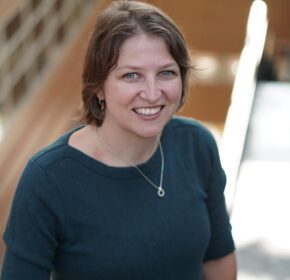
Lydia Esther Bolaños Medina is a full-time Professor at the Department of Modern Philology, Translation and Interpretation within the College of Arts and Humanities at the Universidad de Las Palmas de Gran Canaria . She is affiliated with the GIR IATEXT: Linguistic Variation and Change research group and contributes to the IU of Textual Analysis and Applications . Her research spans English Philology , linguistic variation , and applied linguistics , with a focus on the role of English in tourism terminology , sustainability practices in global hotel chains , and post-Brexit impacts on tourism . She has supervised multiple final degree projects (2014-2019) on topics such as English language needs in hotel reception, corporate sustainability in international trade, and agile web frameworks. She falls under the CNEAI Field of Philosophy, Philology, and Linguistics and holds a Dialnet ID 77908 for academic visibility. No scientific awards or patents are documented in the provided records.
Zeshu Shao is a Lecturer at the School of Psychology, University of Aberdeen, specializing in psycholinguistics with primary interest in individual differences in language psychology. Affiliated with the School of Psychology since 2018, Shao serves as MSc Programme Coordinator, Education Committee Member, School Disability Officer, and International Study Centre link tutor. Education: BSc in Applied Psychology at Nankai University (2004, China) MSc in Psychology at University of Nottingham (2006, UK) PhD at Max Planck Institute for Psycholinguistics (2013, Netherlands) Post-doctoral research fellow at Max Planck Institute for Psycholinguistics (2013-2017) Shao's research centers on cognitive, linguistic, and social factors affecting first and second language communication. Key areas include language production mechanisms, individual differences in lexical access, naming paradigms, and the role of executive control in speech. Current work examines orthographic influences on spoken word production, contextual effects in question answering, and social network impacts on language processing. The research employs experimental paradigms like blocked cyclic naming, picture-word interference, and Stroop tasks with EEG analysis. Publication trends show consistent focus on psycholinguistic mechanisms since 2011, with increasing emphasis on individual differences and neural correlates. Recent work (2020-2023) explores orthographic processing, contextual priming, and frequency effects in noun phrase production, demonstrating methodological evolution toward neurocognitive approaches. Scientific Awards: Shao provides academic leadership as MSc Programme Coordinator and serves on the Education Committee. While specific grants aren't detailed in available materials, research spans multiple international collaborations including Max Planck Institute, University of Nottingham, and Dutch institutions. The work supports Aberdeen's research vision in cognitive psychology and language sciences. Laboratory work appears centered in the School of Psychology's research facilities, with emphasis on experimental psycholinguistics and cognitive testing environments. Current projects continue investigating language production mechanisms and individual variability factors.
Panagiota Nasiopoulou serves as a Lecturer in pedagogy at Södertörn University, specializing in preschool education research and teacher training. Her work investigates structural determinants of preschool quality, including group organization, teacher competence, and curriculum implementation within the Swedish educational context. She earned her PhD in Child and Youth Studies from the University of Gothenburg in 2020, with doctoral research examining preschool teachers' decision-making regarding group division and curriculum content under varying structural conditions. Dr. Nasiopoulou's research program centers on preschool quality assessment through structural lenses, with particular emphasis on quantitative analysis and mixed-methods approaches. Her investigations consistently explore how factors like group size, teacher education levels, and organizational frameworks influence pedagogical practices and child outcomes. She maintains a strong focus on practical applications for improving preschool environments through evidence-based insights. Analysis of her publication record reveals sustained investigation into ECERS-3 quality assessment applications, teacher professional profiles, and curriculum implementation challenges in Swedish preschools. Her work demonstrates methodological diversity through quantitative analyses, observational studies, and policy critiques, consistently linking structural conditions to educational quality outcomes. Her teaching portfolio spans preschool teacher education courses covering historical perspectives on educational ideals, interculturality, educational documentation, and quality development processes. She also contributes to doctoral education through methods instruction in Educational Science Studies, emphasizing rigorous research design applicable to early childhood contexts. While specific laboratory affiliations or research teams aren't documented in available materials, her collaborative publications with researchers like Sheridan, Williams, and Mellgren indicate active participation in interdisciplinary early childhood research networks focused on Swedish preschool systems.
Raffaella Bottini is a Lecturer in Corpus Linguistics at the School of Social Sciences, Lancaster University . She completed her PhD at the ESRC Centre for Corpus Approaches to Social Science (CASS), with prior academic training including an MA in Applied Linguistics (King's College London) and an MA in English Language and Literary Studies (Università degli Studi di Milano, Italy). Research Interests: Her work centers on applying corpus linguistics to language testing and second language acquisition, with a focus on lexical complexity and statistical analysis of learner corpora. She develops quantitative methods and automatic tools for analyzing vocabulary use across proficiency levels in spoken exams (e.g., the Trinity Lancaster Corpus). Her research expands into register analysis, data visualization, and pedagogical applications. Teaching: Bottini leads courses on corpus design, statistics, and vocabulary analysis in Lancaster's distance MA programs in Corpus Linguistics and TESOL. She also contributes to undergraduate modules on corpus-based English studies and summer schools in corpus linguistics. Scientific Awards: PhD Research Award PhD Students: Reem Alojaimi Chris Ott Projects: Includes "Linguistic demands of EMI in Higher Education" (2022-2025), analyzing EMI contexts in China, Italy, and Thailand, and participation in "Culture and Communication: Global Perspectives" and the LAEL-China Network.
Dr Cuong Nguyen is a Lecturer in the Department of Mathematical Sciences at Durham University, specializing in Machine Learning, Artificial Intelligence, and Statistics. His research bridges theoretical foundations with practical applications, with particular expertise in Bayesian methods, transfer learning, and multimodal systems. His educational background includes a PhD in Computer Science or a related field (specific institution not mentioned in provided data), with research focusing on machine learning theory and applications. Nguyen has established himself as a researcher with publications spanning top conferences including NeurIPS, UAI, and ACM Web Conference. Research Interests: Nguyen's work centers on lifelong learning systems that overcome catastrophic forgetting, transferability estimation between tasks, and multimodal learning applications. His research integrates Bayesian principles with deep learning to create more robust and adaptable AI systems. Recent Trends: Analysis of his 15 most recent publications reveals a strong focus on practical applications of theoretical machine learning concepts, particularly in security (CAPTCHA systems), real-world problem solving (fake advertisement detection), and fundamental learning theory (transferability metrics). Dr Nguyen has made significant contributions to understanding the theoretical underpinnings of transfer learning and continual learning, with his work on LEEP providing a practical metric for transferability estimation. His research on CAPTCHA systems demonstrates both theoretical rigor and practical security implications. Advising: While specific students aren't listed in the provided data, his publications show collaborations with researchers across institutions, suggesting active supervision of PhD and Master's students. Research Groups: He is affiliated with the Statistics research center within Durham's Department of Mathematical Sciences, contributing to the university's strength in mathematical and computational research.
Arthemy Kiselev is an Assistant Professor at the University of Groningen's Faculty of Science and Engineering, specifically within the Department of Mathematics at the Johann Bernoulli Institute. He has been working at the Chair of Algebra since January 2011, contributing significantly to mathematical physics research. His educational background includes: (Under)graduate studies at Lomonosov Moscow State University (summa cum laude, 2001) and Independent University of Moscow PhD in mathematical physics (2004) Professor Kiselev's research focuses on the interface of (super)geometry and quantisation, particularly examining the (non)commutative geometry of Kontsevich's deformation and Batalin-Vilkovisky's approaches to quantisation of gauge field models. His work centers on deformation quantisation, BV quantisation, geometry of differential equations, Poisson geometry, and brackets. He has developed algebraic and geometric tools for the mathematical language of fundamental physics, with particular emphasis on the geometry of variations in Batalin-Vilkovisky formalism and Kontsevich's deformation quantization. His fingerprint in research shows strong connections to Cocycle Mathematics (100%), Poisson Bracket Mathematics (95%), Vector Field Mathematics (77%), Manifold Mathematics (65%), Poisson Structure Mathematics (51%), and Partial Differential Equation Mathematics (41%). His recent publications (2023-2024) demonstrate continued exploration of Kontsevich graphs acting on Nambu-Poisson brackets, star-products for affine Poisson brackets, and associativity properties in deformation quantization. These works show a consistent focus on understanding the mathematical structures underlying quantization procedures, with particular attention to graph complexes, cocycles, and their applications to Poisson geometry. His research reveals deep connections between algebraic structures, differential geometry, and theoretical physics. Scientific recognition includes: NWO VENI post-doctoral grant at Mathematical Institute Utrecht (2008-2010) Throughout his career, Kiselev has given 107 international talks at mathematics and theoretical physics research seminars. His collaborative work with PhD and master's students, such as M.S. Jagoe Brown and F. Schipper, has produced significant results in Poisson geometry and deformation quantization. His research has been supported by various institutions including visits to prestigious centers like IHES (France), MPIM (Germany), CRM (Montreal, Canada), and SISSA (Trieste, Italy). He has held positions at institutions including ISPU in Ivanovo, Russia (as docent since 2009). Kiselev is an active member of the Geometry and Quantum Theory (GQT) research group, contributing to the vibrant mathematical physics community at Groningen. His work continues to bridge abstract mathematical structures with fundamental physical theories, particularly through the lens of deformation quantization and Poisson geometry.
Dalina Kallulli is an Associate Professor at the University of Vienna , Department of Linguistics. Since 2012, she has been a leading figure in theoretical and comparative syntax, with a focus on Albanian and Balkan languages . Her work bridges syntax, semantics, and morphology, emphasizing interfaces and universals. Education: PhD in Theoretical Linguistics (University of Durham, 1999), Cand.Philol. in General Linguistics (University of Trondheim, 1995), MA in English (University of Tirana, 1991) Research Interests include grammar theory , comparative syntax , syntax-semantics interfaces , and language cognition . Her publications explore clitic doubling, voice systems, and cross-linguistic morphological phenomena. Notable fellowships include the Hertha Firnberg Fellowship (2004-2007) and APART Fellow (2008-2010). Recent Publications highlight diachronic aspects of voice systems, form copy in wh-dependencies, and the role of diminutives in suppressing root projections. She has been a visiting scholar at institutions like the University of Massachusetts at Amherst and New York University. Awards and Invitations: Hertha Firnberg Fellowship (FWF) APART Fellow (Austrian Academy of Sciences) W3 Professor (acting chair) at Ludwig Maximilian University of Munich Invited talks at major international conferences (GLOW, DGfS, NELS) Teaching encompasses courses in Theory of Grammar , Introductory Linguistics , and seminars on syntactic typology.
Professor Kriszta Eszter Szendröi is a distinguished academic at the University of Vienna, where she serves as Professor of Theoretical and Experimental Linguistics in the Department of Linguistics within the Faculty of Philology and Cultural Studies. Her extensive teaching portfolio includes courses on morphology, syntax, Yiddish language, and information structure across multiple semesters including upcoming 2025W and 2025S terms. Professor Szendröi's primary research interests span theoretical and experimental linguistics with a specialized focus on Yiddish linguistics. Her groundbreaking work documents significant grammatical changes in Contemporary Hasidic Yiddish (CHY), including the complete loss of morphological gender and case marking across global Hasidic communities. She has conducted extensive fieldwork resulting in over 100 hours of recordings with speakers from Israel, New York, Montreal and London, examining both theoretical linguistic analysis and sociolinguistic context. Her scholarly output reveals a consistent focus on the syntax-prosody interface, particularly regarding focus movement and its acquisition across languages. Szendröi has pioneered research on CHY as a distinct linguistic variety, examining innovations in its pronominal system and the Hebrew/Aramaic component within the language. Her work also extends to community engagement, notably translating critical health information during the COVID-19 pandemic for Hasidic communities worldwide. Professor Szendröi has secured significant research funding through an AHRC-funded project on Contemporary Hasidic Yiddish conducted with Lily Kahn. The project involved international collaboration and extensive fieldwork across multiple countries, resulting in numerous publications in top linguistics journals and edited volumes. She has mentored doctoral students including Riccardo Pulicani (on quantifier raising and information structure) and Cecile Larralde (on focus effects on negation-disjunction interactions). Her collaborative research network spans international institutions, working with scholars from the University of Edinburgh, University of Potsdam, and others on language acquisition studies involving children in Hasidic communities. Professor Szendröi leads the YUNG YiDiSH WIEN initiative, a dedicated space for Yiddish language and culture in Vienna that serves both the academic community and local Yiddish-speaking Orthodox populations. Her research team has made significant contributions to documenting and analyzing Contemporary Hasidic Yiddish as a living, evolving language variety, establishing it as a distinct linguistic phenomenon worthy of scholarly attention.
Natalie J Tedford, MD, MSPH, is a Clinical Assistant Professor (CHS) at the University of Wisconsin–Madison's School of Medicine and Public Health, jointly appointed in the Department of Emergency Medicine and Pediatrics. She leads the pediatric emergency team at American Family Children's Hospital, specializing in trauma, infections, and acute illness management for children and adolescents. Education: Undergraduate : Texas A&M University Graduate : MSc in Public Health (Health Promotion), London School of Hygiene & Tropical Medicine Medical School : McGovern Medical School at UTHealth Residency : Pediatrics, University of Wisconsin Hospitals and Clinics (Pediatric Global Health Track) Fellowship : Pediatric Emergency Medicine/Global Health, University of Utah/Primary Children’s Hospital Research Focus: Dr. Tedford investigates social emergency medicine, health equity, and community-based interventions. Her work emphasizes reducing disparities through screening for unmet social needs (e.g., housing, food insecurity) in emergency settings. She also explores global health, simulation training, and prehospital care integration. Publication Trends: Her recent articles (2022–2025) cluster around social care in pediatric emergency contexts, including toolkits for resource referral, racial/ethnic disparities in care, and community partnerships. Secondary themes include febrile infant management and toxicology case studies. Grants & Leadership: She collaborates on an NIH grant examining how community services impact health outcomes and barriers to care. As Director for Medical Student Research, she mentors emerging scholars. Clinical & Team Leadership: Dr. Tedford oversees clinical operations at American Family Children's Hospital's Pediatric Emergency Department, emphasizing family-centered care and innovative solutions for complex cases.
Professor Jaana Kolu works at the University of Eastern Finland within the School of Humanities . Her research focuses on language contact , translanguaging , bilingualism , and youth language in the Tornedalen region along the Swedish-Finnish border. She has contributed extensively to studies on multilingual practices in minority language contexts, particularly through her work on the Meänkieli language and its sociolinguistic dynamics. Key Research Themes Translanguaging in border communities Code-switching among bilingual youth Language policies for minority languages Discourse analysis of identity performance Historical language contact patterns Notable Publications Svenskan i Finland 20 (2024) – comprehensive edited volume Translingual Practices and Identity (2023) – book chapter Meänkieli in the Media (2023) – journal article Kolu's work bridges theoretical sociolinguistics with practical language education initiatives, including early Swedish language integration in teacher training. She actively engages with Meänraatio , a minority language radio channel, to study real-world multilingual communication strategies.
Elise Pizzi is an Associate Professor of Political Science at the University of Iowa, affiliated with the College of Liberal Arts and Sciences. She holds a PhD from the University of Colorado Boulder (2015) and focuses on public goods provision in developing countries, particularly the local politics of drinking water in rural China. Her research also explores ethnic identity, natural resource governance, and civil conflict. She has received prestigious grants including the Fulbright and FLAS awards. Her research interests include analyzing how geographic conditions and ethnic identity influence policy outcomes, with recent work on disaster response in Peru and Syria/Turkey, migration under China’s hukou system, and climate adaptation strategies in the US. She has published widely on topics ranging from conflict dynamics to policy diffusion during global crises like the pandemic. Elise’s awards reflect her commitment to interdisciplinary research, particularly in understudied regions. Her work bridges comparative politics with policy analysis, emphasizing practical implications for governance in resource-scarce environments. She has contributed to debates on how institutions shape migration decisions and disaster recovery effectiveness. Education: PhD in Political Science, University of Colorado Boulder, 2015 Key Research Themes: Natural disaster policy responses and conflict links Ethnic identity’s role in political participation Climate adaptation strategies in rural areas Grants & Awards: Fulbright Grant Foreign Language and Area Studies (FLAS) Grants Her recent publications highlight cross-regional analysis, from Peruvian disaster governance to labor migration in China, demonstrating a global comparative perspective. Elise’s work often integrates spatial analysis and institutional theory to explain disparities in public service delivery and conflict dynamics.
Guillaume Thomas is an Associate Professor in the Department of Linguistics at the University of Toronto. His research focuses on the study of meaning (semantics and pragmatics) in relation to morphosyntactic structures, particularly in Mbyá Guaraní, a Tupí-Guaraní language spoken in Argentina, Brazil, and Paraguay. He combines corpus linguistics and digital methods with fieldwork, developing resources like dependency treebanks and morphological analyzers. His work includes language documentation projects, such as the National Inventory of the Cultural Heritage of the Guaranis in Brazil, which involved community-based documentation of oral traditions. His research interests also encompass usage-based approaches, probabilistic models in language analysis, and the interface between semantics and syntax. Education: PhD in Linguistics from the Massachusetts Institute of Technology (MIT). Research Interests: Cross-linguistic semantics and pragmatics Morphosyntax and its interface with meaning Language documentation and digital linguistics Corpus-based methods and computational tools for endangered languages Funding: Supported by grants from the Social Sciences and Humanities Research Council of Canada and the Connaught Fund. His work integrates theoretical linguistics with practical applications in language preservation and computational modeling. Labs/Teams: He collaborates with the Indigenous Museum of Rio de Janeiro on documentation projects and contributes to the Universal Dependencies project for syntactic annotation.
Gabriele Diewald is a Professor of German Linguistics at the Department of German and Applied Linguistics, Leibniz University Hannover. She holds a habilitation in German linguistics and has held academic positions including Vice President for Teaching and Visiting Professorships at institutions like the University of São Paulo. Her research focuses on grammaticalization, language change, pragmatics, and gender-fair language use, with significant contributions to linguistic theory and public discourse on gendered language norms. Education & Career: PhD in German Linguistics (1990), University of Erlangen-Nuremberg Habilitation (1998), Friedrich-Alexander University Erlangen-Nuremberg Visiting Scholar at Stanford University (1996–1997) Professorships at University of Hamburg (2000–2001) and Leibniz University Hannover (since 2001) Vice President for Teaching, Leibniz University Hannover (2007–2012) Research Interests: Diewald’s work bridges theoretical linguistics and societal applications, particularly in gender-fair language. She analyzes grammaticalization processes, pragmatic functions of language, and the sociopolitical dimensions of linguistic change. Her studies address how language reflects and shapes gender norms, with critiques of traditional linguistic assumptions and advocacy for inclusive language practices. Publications & Impact: Over 50 peer-reviewed articles and books, including co-authored Duden guides on gender-fair language (e.g., Handbuch geschlechtergerechte Sprache ). Her research appears in journals like Linguistische Berichte and Constructions & Frames , addressing topics from modal particles to evidentiality in German. She also engages public debates via media interviews (e.g., NZZ , Tagesspiegel ) and policy consultations on gender-sensitive language in education and governance. Contributions: Editor of volumes on grammaticalization, construction grammar, and gender linguistics. Active in interdisciplinary initiatives like the Leibniz Institute for the German Language’s Empirical Gender Linguistics project. Her work emphasizes the societal role of linguistics, advocating for linguists to address cultural and political challenges.
Astrid Marie Jorde Sandsør is a Professor at the Department of Special Needs Education, Faculty of Education, University of Oslo, and will serve as Vice Dean of Research at the Faculty of Education from January 2025-2029. She maintains strong affiliations with the Nordic Institute for Studies of Innovation, Research and Education (NIFU), where she has worked as a researcher, and serves as a principal investigator at CREATE - Centre for Research on Equality in Education. Her additional institutional roles include membership in the Young Academy of Norway, the Council of The Frisch Centre in Oslo, and affiliations with CESifo Research Network and the Institute for the Study of Labor (IZA). Dr. Sandsør earned her Doctorate in Economics from the University of Oslo in 2016 and her Master in Economics from the same institution in 2010. Her academic trajectory shows a consistent focus on empirical research in education economics, with early work examining small-group instruction effects and evolving toward comprehensive studies of educational inequality, early childhood interventions, and educational policy evaluation. Her research interests center on understanding and addressing educational inequality through rigorous empirical analysis. Sandsør investigates how socioeconomic background, genetic factors, and institutional arrangements interact to shape educational outcomes across the lifespan. Her work on universal early childhood education examines long-term effects on achievement gaps, while her research on admission systems analyzes mechanisms of access to higher education. She has made significant contributions to understanding gender differences in language learning, the impact of teacher density norms, and the effectiveness of interventions for at-risk students. Her methodological approach combines administrative data analysis, randomized field experiments, and causal inference techniques to produce policy-relevant findings. Analyzing her recent publication record reveals a strong focus on the intersection of genetics, environment, and educational outcomes, alongside persistent examination of socioeconomic inequality in education. Her work demonstrates increasing methodological sophistication, moving from descriptive analyses to experimental and quasi-experimental designs that establish causal relationships. The geographic focus remains predominantly Norwegian, leveraging the country's rich administrative data systems while contributing comparative insights to international literature on educational inequality and policy effectiveness. Through her position at NIFU and the University of Oslo, Sandsør has led numerous government-commissioned evaluations of educational policies, including assessments of teacher density norms, the teacher specialist scheme, and admission systems to higher education. Her research has directly informed Norwegian educational policy debates, particularly regarding equitable access to quality education and evidence-based interventions for reducing achievement gaps. She maintains active engagement with policymakers through expert testimony, commissioned reports, and public dissemination of research findings.
Ed Hughes is a Professor of Composition in Music at the University of Sussex's School of Media, Arts and Humanities. His roles include Head of Music (2013-2018), Deputy Head of School, and Associate Dean for Education. He holds a BA from Cambridge University (1987-1990), an MPhil (Cambridge), and a PhD in Composition from Southampton (2000-2004). His research focuses on composition techniques, music technology, and interdisciplinary projects like Syncphonia, a notation system aiding ensemble performance. Notable works include operas like States of Innocence (2024) and orchestral pieces inspired by landscape, such as Music for the South Downs (2022). He has received grants from AHRC, Arts Council England, and the South Downs National Park Authority. Hughes has supervised numerous PhD students in composition and music technology. His awards include the British Composer Award (2014) and commissions from Brighton Festival and the Mahogany Opera Group. Collaborations with psychologists and educators highlight his commitment to music education and accessibility.