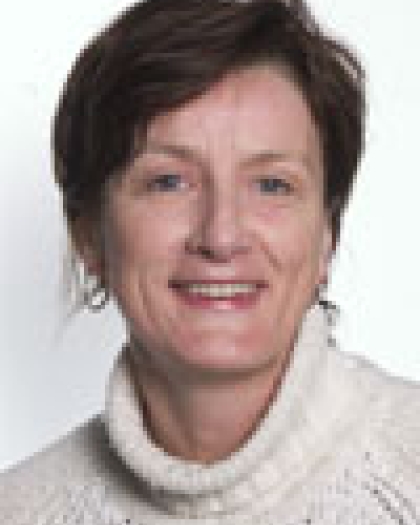
Sara Kosutar is a Research Fellow at the Department of Language and Culture, UiT The Arctic University of Norway, located in Tromsø. She holds affiliations with research groups AcqVA Aurora and C-LaBL, and participates in projects like Multilingual Minds (MuMin) and CLEAR. Her work focuses on language acquisition, bilingualism, and cognitive linguistics, employing methods like eye-tracking and experimental studies. Her research interests include morphological variation in child language, cross-linguistic influence in bilingual children (Croatian-German/Italian), aphasia discourse analysis, and cognitive mechanisms of negation processing. She has contributed to studies on verbal aspect processing, lexical diversity in bilingual speakers, and the role of entrenchment in morphological learning. Recent publications (2023–2025) explore topics such as stem overgeneralizations in Croatian, mental simulations during negation comprehension, and the acquisition of grammatical aspect in heritage bilingual children. She collaborates internationally with institutions in Croatia, Germany, and Slovenia. Professional activities include peer-reviewing for journals like Language and Dialogue and serving on academic committees. Her research bridges theoretical linguistics with experimental and clinical applications, emphasizing language structure and real-time processing.
Allison Louise Wetterlin is a Professor at the Department of Foreign Languages and Translation, University of Agder. She co-leads the Experimental Linguistics research group and serves as Study Program Director for the Master's program in English. Her teaching includes phonology, phonetics, language history, and experimental linguistics at both undergraduate and postgraduate levels. Research Interests: Wetterlin investigates how language is represented in the brain, focusing on psycholinguistic and neurolinguistic mechanisms, bilingualism, aging effects on language processing, and diachronic language change. Her work explores multilingual cognition and its implications for cognitive aging. 2016–Present: Professor, University of Agder 2015–2016: Associate Professor, University of Agder 2015–2021: Associated Researcher, Faculty of Linguistics, University of Oxford Recent Collaborative Articles: Wetterlin has published extensively on bilingual cognition, aging effects on language comprehension, and phonological processing in Bengali and English. Key themes include neurocognitive aspects of multilingualism and experimental interventions.
Carl Börstell is a Professor at the Department of Linguistic, Literary and Aesthetic Studies at the University of Bergen . His research focuses on sign language linguistics, particularly Swedish Sign Language, with interdisciplinary connections to psycholinguistics and corpus analysis. Active in cross-linguistic phonology and syntax studies Develops methodologies for sign language corpus analysis Investigates semantic structures and lexical variation His recent publications (2024-2025) highlight trends in sign language processing, temporal patterns across British/Dutch/Swedish Sign Languages, and computational approaches to lexical variation. Articles span journals like Open Linguistics , Glossa Psycholinguistics , and Linguistics Vanguard . Börstell participates in collaborative projects such as " Whole-entity classifiers: a multiperspective approach " with Vadim Kimmelman and 6 other researchers. No scientific awards or educational details were explicitly mentioned in available records.
Arnstein Hjelde is a Professor at the Department of Languages, Literature and Culture at Østfold University College (HiØ) in Halden, Norway. His research focuses on multilingualism, heritage languages, Norwegian in America, grammar, and dialectology. He holds a Cand. philol. from Trondheim University and has held academic positions since the 1990s, including visiting scholar roles at the University of Wisconsin and research fellowships at NTNU. He has led research projects such as 'American Norwegian and Heritage Linguistics' and 'Multilingual Children in Kindergarten and School (FLEBBS)'. His work explores language change in Norwegian-American communities, dialect evolution, and language attrition. Notable contributions include studies on infinitive markers in American Norwegian and the linguistic repertoires of heritage speakers. He has served as R&D leader at HiØ and held board positions, reflecting his academic and administrative roles.
Karine Stjernholm is an Associate Professor at the Department of Languages, Literature and Culture, Østfold University College. She is a co-project leader for the proposed Center of Excellence in Language Education (EcoLL) collaborating with NTNU. Her research focuses on sociolinguistics, language and identity, multilingualism, and the Oslo dialect. She has led a project exploring language dynamics in Østfold, Norway, emphasizing industrial history's impact on social class distinctions reflected in language use. Stjernholm holds a Ph.D. analyzing how Oslo's linguistic landscape shifted from place-based dialects to lifestyle-indexed language use. Her work uses corpora like TAUS and NoTa, alongside the Oslo-testen survey, applying theories of globalization and urban sociology. Key contributions include comparative linguistic landscape studies and analyses of dialect convergence in Oslo. Her awards include the Alliance Kunnskap Oslo Prize (2013) for Oslo-focused research and a teaching award from the University of Oslo. She has held roles such as Department Leader at the Language Council of Norway and an Erasmus Grant fellowship at the Meertens Institute (Netherlands). Stjernholm teaches courses like NOR403 Language and Society and coordinates the Master's program in Norwegian Language Education. She actively participates in research networks like SONE (Norway’s Sociolinguistics Network) and SLICE (European Standard Language Ideology projects). Her recent work explores multilingualism in education, linguistic landscapes in regional towns, and the interplay between globalization and language variation. She contributes to public outreach through articles in media like Forskning.no and Smaalenenes avis .
Christina Berg Tveitan is an Assistant Professor at the University College of Southeast Norway (HiØ) , affiliated with the Department of Languages, Literature and Culture within the Faculty of Teacher Education and Languages . She joined the institution in September 2019 and holds a Master's degree in Norwegian Language Education / Literacy and linguistic diversity in school. Her research focuses on second language acquisition, children's language development, and multilingualism, with particular emphasis on early childhood education and teacher-student interactions. Recent work examines literature mediation practices in kindergartens and the role of storytelling in fostering literacy. Christina teaches courses such as Norwegian 1 for Teachers Years 1–7 and contributes to the Special Education master’s programme . She collaborates with the Decentralized competence development initiative, emphasizing localized educational strategies. Her publications (2017–2025) span topics including multilingual children's syntax acquisition, kindergarten teacher-student translation judgments, and the sociocultural dimensions of Norwegian dialects. Notable works include a 2025 study on kindergarten staff's roles as literature mediators and a 2024 analysis of computational thinking in early childhood settings. Christina actively engages in research partnerships, such as the Rekomp-partnerskap project exploring knowledge exchange dynamics between institutions. Her work bridges linguistic theory with practical pedagogical applications in multicultural educational contexts.
Ellen Berggreen is a Professor at the Department of Biomedicine, Faculty of Medicine, University of Bergen, Norway. She is actively affiliated with the Cardiovascular Research and Translational Cancer and Vascular Research groups, contributing to interdisciplinary biomedical science. Her work bridges basic science and clinical dentistry, particularly in oral tissue physiology and pathology. Her research focuses on the biology of the dental pulp, lymphatic function in periodontal tissues, and oral wound healing. Key areas include vascular and lymphatic responses in inflammation, interstitial fluid dynamics, and immune interactions in oral diseases. She has contributed extensively to understanding pulp circulation, lymphangiogenesis, and the role of growth factors like VEGF in apical periodontitis. Her recent publications (2023–2025) highlight epidemiological studies on periodontitis in aging populations, microbiome analysis in periodontal pockets, and systemic immune markers in oral health. These works reflect a trend toward population-based research and translational applications in public oral health. Professor, Department of Biomedicine, University of Bergen Contributor to Pathways of the Pulp textbook (2015, 2020 editions) Supervisor of PhD candidates, including Panagiota Papadakou and Anca Virtej Active researcher with continuous publications from 1998 to 2025 Ellen Berggreen has received research funding, including a 40 million NOK grant from the Research Council of Norway, supporting collaborative efforts in vulnerable population oral health. Her work involves interdisciplinary teams across biomedicine, clinical dentistry, and public health. She is a key member of research groups focused on cardiovascular and translational cancer-vascular research, where her expertise in oral microcirculation and lymphatics contributes to broader understanding of tissue fluid balance and inflammatory responses. Her lab employs in vivo models, histology, molecular biology, and clinical cohort studies.
Finn Aarsæther is an Associate Professor in the Department of Primary and Secondary Teacher Education at the Faculty of Education and International Studies, Oslo Metropolitan University (OsloMet). His academic work is centered on linguistic diversity and inclusive education, with a strong emphasis on multilingual classrooms and second language acquisition in Norwegian schools. He serves as Head of Studies in his department, indicating leadership involvement in academic programs. His research interests include: Multilingualism and code-switching Multiethnolectal language practices among urban youth Didactics for linguistically diverse classrooms Inclusion of newly arrived migrant students Teacher education reform Arsæther's recent publications reflect a consistent focus on language, identity, and pedagogy in multicultural contexts. His scholarly output spans textbooks, research reports, and peer-reviewed articles, with notable contributions in journals such as Cogent Education and NOA - Norsk som andrespråk . His work often explores how linguistic practices reflect social identity and how educational systems can better support multilingual learners. He has co-authored key educational resources on multilingual teaching and has contributed to academic volumes published by Cambridge University Press and Gyldendal Akademisk. Scientific contributions and public engagement: Active contributor to public debates on teacher education via platforms like Khrono.no Participant in national policy discussions, including presentations for the Norwegian Ministry of Education Regular speaker at academic conferences such as NOA and NERA Media appearances, including live radio programs on school quality Finn Aarsæther advises on educational programming for reception classes and collaborates with colleagues on research and dissemination. While specific grant details are not listed, his sustained research output and leadership role suggest active involvement in funded projects and curriculum development. He does not appear to lead a formal lab or research center but is embedded in collaborative academic networks focused on language, education, and inclusion.
Geir Kjetil Ferkingstad Sandve is a Professor at the Biomedical Informatics Research Group within the Department of Informatics (UiO), University of Oslo, specializing in machine learning methodology for biomedical applications. His research focuses on Generalization in machine learning models Exploiting mechanistic/causal domain relations Software platforms for domain-adapted ML Multiple-instance learning techniques Historical work in statistical genome analysis and motif discovery His recent publications (2022-2025) demonstrate expertise in Adaptive immune receptor repertoire analysis Antibody-antigen interaction prediction Proteome scoring systems for celiac disease Causal modeling in biomarker generalization Multi-modal single-cell data integration Synthetic dataset generation for immunology He leads a computational research group prioritizing Reproducible codebases and software development Competence-building through strategic research Interdisciplinary collaboration with biomedical teams Training in algorithmic challenges and software design
Timo Roettger is a Professor of General Linguistics at the Department of Linguistics and Scandinavian Studies, University of Oslo, since 2022. Previously, he served as an Associate Professor (2020-2021), Postdoctoral Researcher at the University of Osnabrück (2020), Northwestern University (2018-2019), and the University of Cologne (2016-2017). His academic journey includes a PhD in Phonetics from the University of Cologne in 2016. Core research areas: Cognitive Science, Phonetics, Psycholinguistics Methodological focus: Quantitative methods, statistical modeling, open science practices Leadership role: Chair of the ManyLanguages consortium Roettger's research investigates the relationship between multi-dimensional speech signals and cognitive representations, with emphasis on predictive processing of intonation, analytic flexibility in speech research, and reproducibility. His work bridges phonetics, phonology, and cognitive science through rigorous empirical approaches. Recent publications highlight his methodological contributions to experimental linguistics and his advocacy for transparent research practices. Key projects include the ICONIC study on iconicity in spoken language. Roettger actively promotes diversification of languages, participants, and researchers in the language sciences. He employs interdisciplinary approaches combining phonetic analysis with cognitive theory to address foundational questions about speech production and perception.
Håkon Kaurin Endal is a Research Fellow at the Department of Nursing Science within UiT The Arctic University of Norway . His work focuses on pediatric oncology nursing , child health , and digital tools in healthcare education . Key research areas include: Cancer, Leukemia, Nutrition in Oncology, Health Communication, and Digital Health Tools Email: hakon.endal@uit.no Endal's recent studies analyze seasonal patterns in pediatric leukemia incidence, parental environmental risk factors, and weight changes during treatment. He also explores modern applications like AI integration in nursing education. He contributes to projects such as Growth development in children and adolescents treated for acute lymphoblastic leukemia , collaborating with institutions like the University Hospital of Northern Norway HF .
Tone Skramstad is a Part-Time Lecturer in Nordic language and literature at the University of Oslo, with administrative leadership roles at the Center for Computing in Science Education . She oversees finances, personnel, strategy, and facility management for the center and serves on the MN Faculty Election Board (2024-2028) and the Department of Physics Board (2021-2024). Education : Cand.philol. in Nordic language and literature, University of Oslo (1999) Part-time Master’s in Governance and Leadership, Oslo Met (2013–2016) Part-time Master’s in Cultural Studies, USN (2021–) Her academic interests span sociolinguistics , literacy education , and digital learning materials , reflecting her research on dialectal boundaries (e.g., Oslo-circumference) and language pedagogy. Her publications analyze sociolinguistic methodologies and digital curriculum design. Scientific Contributions : Led assessments of digital literacy tools Examined Oslo dialectal geography Contributed to sociolinguistic theory and practice
Vilde Olsson Lalun is a postdoctoral fellow at the Centre for Ecological and Evolutionary Synthesis (CEES), University of Oslo. She obtained her BSc and MSc in Molecular Biology at UiO in 2013 and 2015, respectively, and completed her PhD in Genetics in 2020 under the supervision of Prof. Melinka Alonso Butenko. Her current research integrates experimental biology and bioinformatics within the interdisciplinary REPEAT project, focusing on how short tandem repeat (STR) variation influences adaptation and gene expression in Arabidopsis thaliana and Atlantic cod. Education 2013 – BSc in Molecular Biology, University of Oslo 2015 – MSc in Molecular Biology (Plant Genetics), University of Oslo 2020 – PhD in Genetics, Department of Biosciences, University of Oslo Thesis: "Molecular investigation of receptor kinase signaling specificity in Arabidopsis thaliana" Research Interests Dr Lalun’s work sits at the intersection of molecular plant biology , evolutionary genomics , and functional genetics . During her PhD she dissected peptide ligand–receptor kinase specificity using the IDA–HAE/HSL2 signalling module as a model. Presently, she investigates how STR length polymorphisms modulate gene expression and organismal fitness under environmental stress, leveraging both Arabidopsis and Atlantic cod as complementary model systems. Core methodological strengths include generation of transgenic lines, advanced live-cell imaging, quantitative microscopy, and integrative bioinformatic analyses. She actively contributes to the REPEAT consortium, an interdisciplinary team that addresses fundamental questions of genome plasticity and climate adaptation. By coupling large-scale comparative genomics with targeted experiments, the project aims to clarify how repetitive DNA elements shape regulatory networks controlling development and immunity. Publication Profile Across 11 peer-reviewed papers (2017-2025) in high-impact journals such as Nature Communications , PNAS , eLife , and Plant Cell , her research spans three major themes: Functional dissection of peptide signalling pathways in plant development and immunity. Comparative genomics of short tandem repeats and their impact on gene regulation. Mechanistic studies of receptor kinase activation and signalling specificity. The 2024-2025 outputs include a lead-author review on plant peptide ligands and multi-omics studies that link STR variation to gene body architecture in eukaryotes. Teaching & Outreach Dr Lalun is a committed educator and science communicator. She instructs two undergraduate courses: BIOS1120 – Physiology BIOS3610 – Molecular Plant Science Beyond the classroom she co-hosts the Norwegian-language podcast BioPodden , produces popular-science YouTube lectures, and gives interviews that demystify plant genetics for the public. Collaborations & Networks She is an active member of the Butenko Group at UiO and collaborates extensively within the CEES and the national REPEAT project network. The lab provides cutting-edge facilities for molecular biology, microscopy and bioinformatics, ensuring a vibrant environment for integrative research.
Eskil Blaaflat Mundal serves as a Doctoral Research Fellow at the Department of Literature, Area Studies and European Languages (ILoS) within the Faculty of Humanities at the University of Oslo, where he conducts specialized research in French linguistics with emphasis on sociophonetic phenomena and language variation in urban contexts. His academic credentials include: Master's degree in French Language from the University of Oslo, focusing on diachronic and sociophonetic analysis of nasal vowel pronunciation in the Paris region Mundal's research program centers on sociolinguistic dynamics in contemporary French speech, particularly examining how social identity intersects with phonetic implementation. His doctoral project investigates fricative epithesis—the fricativization of closed vowels at rhythm group boundaries—in the 17th arrondissement of Paris through sociolinguistic and metalinguistic interviews. Core research domains include: Sociophonetics : Quantitative analysis of vowel fricativization as a social marker Language Variation and Change : Tracking phonological evolution in Parisian French Lexicography-Dialectology Interface : Documenting regional lexical-phonetic correlations Historical Linguistics : Diachronic perspectives on modern phonological patterns Urban Sociolinguistics : Social indexicality in metropolitan speech communities Phonological Theory : Modeling sound change mechanisms in connected speech He actively participates in three institutional research collectives: Language Change research group Linguistic variation research group Phonology research group