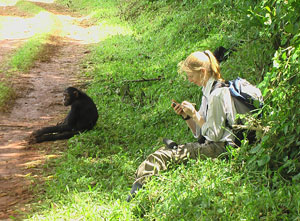
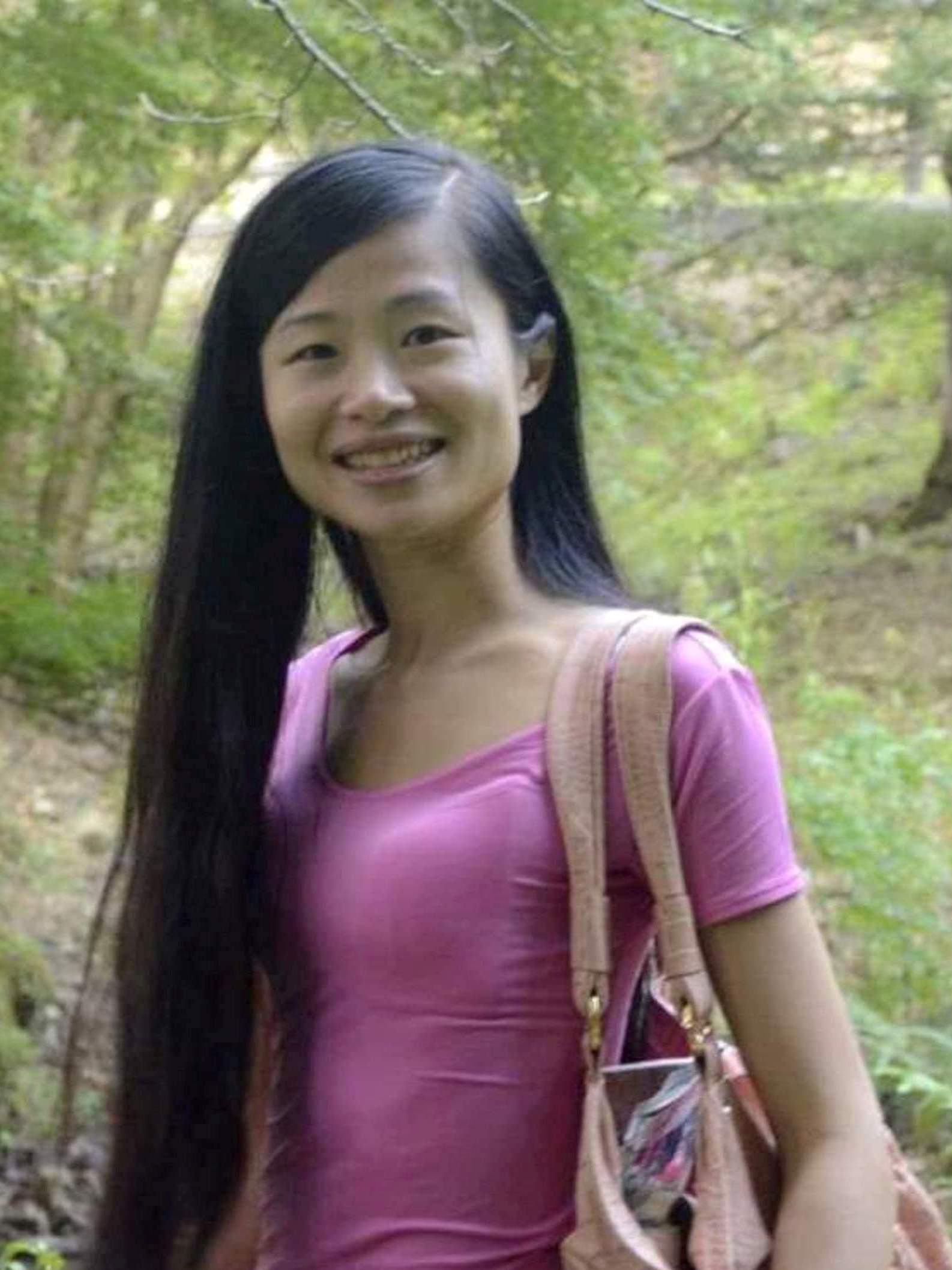
Dr. Catherine Crockford is Research Professor and Director of the Ape Social Mind Lab at the Max Planck Institute for Evolutionary Anthropology, affiliated with the Department of Human Behavior, Ecology and Culture. She co-directs the Tai Chimpanzee Project in Ivory Coast, studying habituated chimpanzee groups and sooty mangabeys. Her research examines primate social cognition, communication evolution, and neuroethology through behavioral observations, hormone sampling, and neuroimaging. Key interests include: Evolution of social bonding and cooperation mechanisms Maternal effects on offspring development Vocal communication and combinatorial signaling Neurobiological bases of social behavior Her publications demonstrate consistent focus on chimpanzee vocal combinatorics, stress physiology, social learning, and comparative neuroanatomy, often integrating field data with endocrine and imaging methodologies. She leads an ERC project investigating early-life influences on social skills and supervises 8 PhD students researching primate communication, social dynamics, and energetics. Laboratory infrastructure supports field endocrinology and collaborative neuroimaging studies.
Prof. Sabine Schulte im Walde is an Associate Professor at the University of Stuttgart's Institute for Natural Language Processing. She holds affiliations with the International Max Planck Research School for Intelligent Systems (IMPRS-IS), ELLIS Society, and CLARIN-D. Her research focuses on computational modeling of lexical-semantic phenomena, including compositionality of noun compounds and particle verbs, abstract/concrete semantics, and diachronic language change. She has contributed to datasets on association norms for German compounds and led projects on multimodal semantic analysis. Research Interests: Her work bridges computational linguistics and cognitive science, emphasizing data-intensive methods. Key areas include semantic classification of verbs, metaphor detection, and evaluating semantic relations using distributional models. She explores how abstractness influences plausibility judgments and investigates semantic shifts in compounds over time. Awards: Nominated for AcademiaNet by the German Research Foundation (DFG). Active in professional societies including ACL, GSCL, and DGfS. Publications span over 50 peer-reviewed articles in venues like Computational Linguistics and ACL. Labs/Teams: Leads research on computational terminology and semantic change analysis at the Stuttgart Research Focus Language and Cognition (SRF). Collaborates internationally on projects like the DURel annotation tool for diachronic semantics.
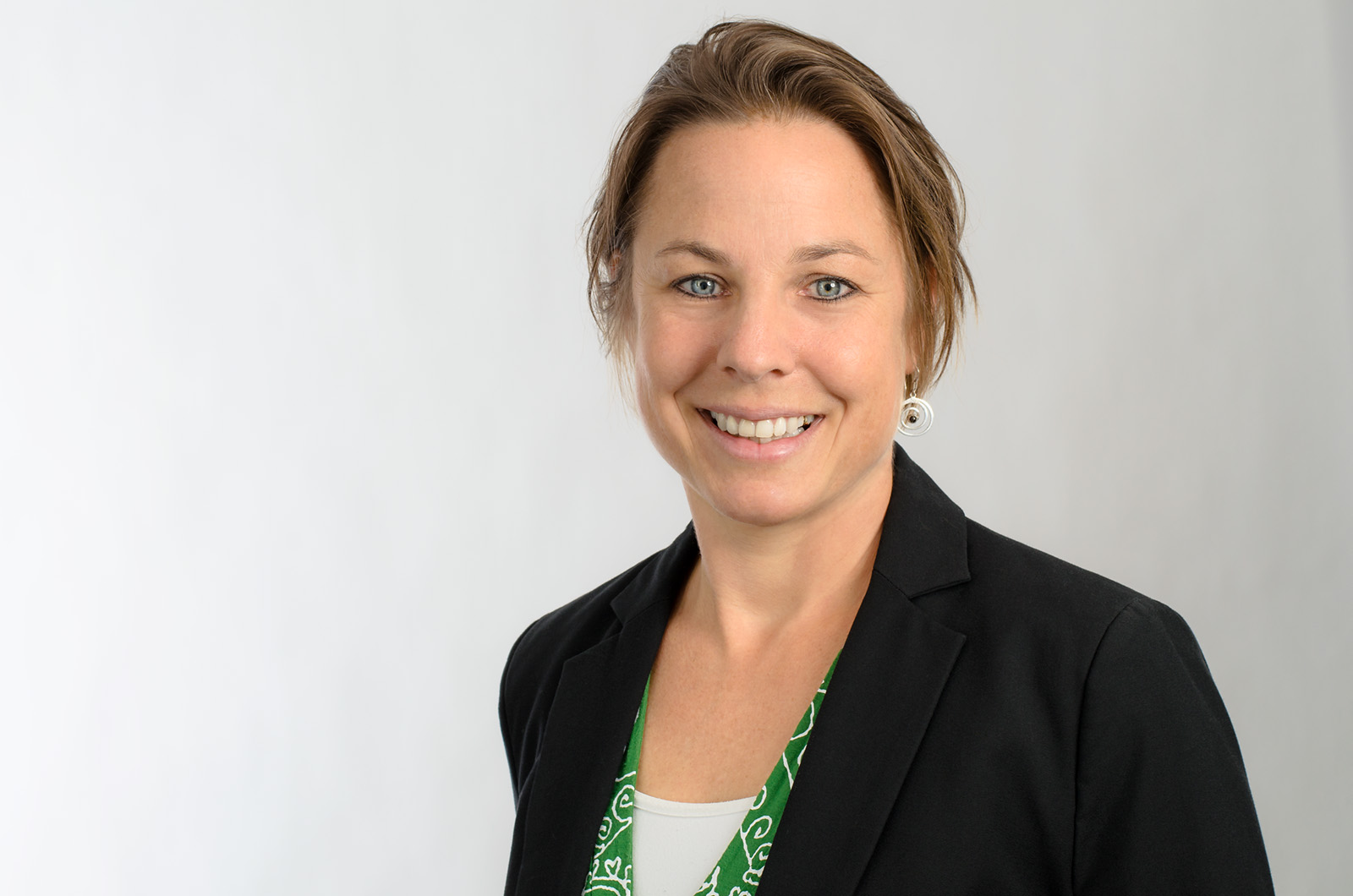
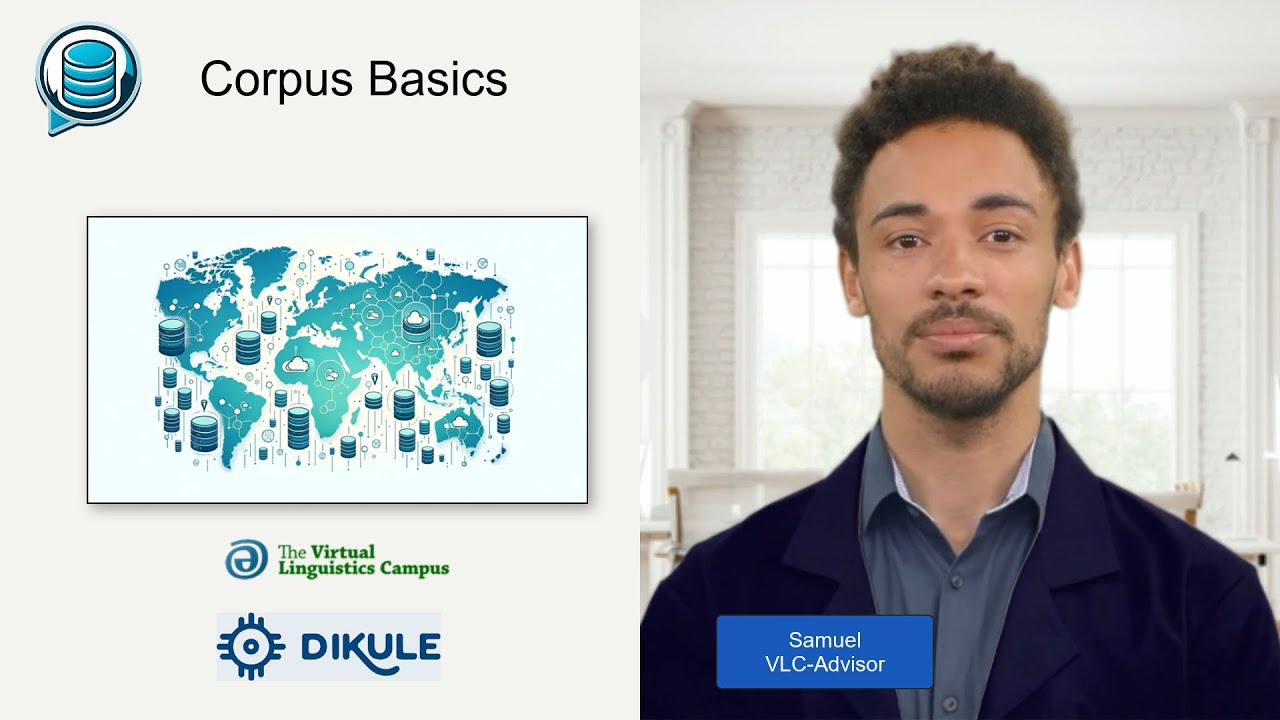
Professor Julia Schlüter is a distinguished academic in the Chair of English Linguistics within the Humanities Faculty at the University of Bamberg, Germany. She has served as Senior Lecturer at the Chair of English Linguistics and Language History under Prof. Manfred Krug since June 2008, holding the title of Professor following her habilitation in 2008. Her institutional profile demonstrates deep commitment to both research and teaching innovation, particularly through her leadership of the KorPLUS project and development of open educational resources for corpus linguistics. Her research interests span corpus linguistics for English language learners, empirical methods for studying language variation and change, and the application of corpus methods to teaching. She specializes in examining grammatical, phonological, and lexical differences between British and American English across historical periods from Middle English to present-day usage. Her work investigates phonological variation (particularly phonotactically controlled alternations), morphological change, and syntactic variation through corpus analysis, with special attention to functional grammar and grammaticalization theory. Professor Schlüter's recent publications (2022-2025) reveal a strategic evolution in her research focus, with increasing emphasis on the intersection of corpus linguistics and digital education. While maintaining her foundational work in historical English linguistics, she has developed significant expertise in applying corpus methods to language teacher education and evaluating AI writing tools. Her work demonstrates consistent methodological innovation, moving from traditional corpus analysis to blended learning approaches and digital educational resource development. Her scientific recognition includes: Winner of the 2025 Teaching Innovation Prize from the International Society for the Linguistics of English for the KorPLUS project University of Bamberg Prize for outstanding habilitation (2009) Lise Meitner Programme post-doctoral scholarship (2005-2006) Rectorate Prize from University of Paderborn for outstanding Ph.D. thesis (2005) Multiple DAAD scholarships for international study Professor Schlüter actively supervises doctoral research, currently guiding three Ph.D. candidates (Katharina Deckert, Aklima Nahar, and Nikolai Beland) while having successfully completed supervision for several others. She leads the KorPLUS project (2021-2025), funded by the Stiftung Innovation in der Hochschullehre, which develops open educational resources for corpus linguistics. Her research has been consistently supported by the German Research Foundation (DFG) and other funding bodies throughout her career. She heads the KorPLUS team (with Carina Großmann and Katharina Deckert) which develops the interactive Open Educational Resource platform for corpus linguistics. Her YouTube channel offers video tutorials on corpus basics, and she has created the Video Podcast Series "How to Update your Grammar" for English teachers. She regularly organizes in-service teacher trainings and collaborates with the Virtual Linguistics Campus at RWTH Aachen University to deliver her educational materials globally.
Sandra Hajek is a researcher at the Department of Romance Philology, University of Göttingen. She works under the chair of Prof. Dr. Guido Mensching and serves as a scientific assistant in the editorial team of the Zeitschrift für französische Sprache und Literatur (ZFSL) . Current research focuses on: Sprachgeographie/Geolinguistik Dialektometrie Sprachgeschichte Varietätenlinguistik Sprachkontakt Romanische Sprachen in hebräischer Graphie Her publications include monographs on Campanian dialect variation and collaborative studies on Hebrew-scripted Romance glosses. Recent work centers on Judeo-French linguistic traditions, medieval botanical terminology, and dialectometrical analyses of Sardinian and Old Occitan elements. Contact: shajek1@gwdg.de
Dr. Jacek Kudera is a post-doctoral researcher in the Department of Phonetics at the University of Trier, coordinator of the LODinG project at the Trier Center for Digital Humanities, and adjunct faculty at WSB Merito University in Wrocław. His work bridges phonetics, Slavic linguistics, digital humanities, and forensic speech science. Education 2022 – PhD, Department of Language Science and Technology, Saarland University, Germany 2019 – MA (Linguistics), Department of Linguistics, Cognitive Science and Semiotics, Aarhus University, Denmark 2015 – Magister (Slavic Philology), Institute of Slavic Studies, University of Wrocław, Poland Research Interests His research focuses on phonetic and prosodic aspects of Slavic languages , cross-linguistic speech perception , forensic automatic speaker recognition , and human-robot interaction . He employs experimental methods such as eye-tracking, articulatory measurements (EMA), and large-scale digital corpora to investigate how speakers of closely related languages understand one another and how machines can replicate or support this process. Publication Trends Across more than 25 peer-reviewed articles (2014-2025), Kudera has consistently explored Slavic intercomprehension , speech technology evaluation , and digital humanities infrastructure . Recent work (2024-2025) targets voice cloning security , linked open data for linguistics , and mismatch conditions in forensic speaker recognition . Scientific Awards & Fellowships Visegrad Fellowship, University of Presov (2025) Erasmus+ Fellowships (Ostrava 2025, Zagreb 2014, Rijeka 2012-2013) NAWA Fellowship, Polish Academy of Sciences (2022) Nordlys Fellowship, University of Eastern Finland (2018-2019) CEEPUS & additional Central-European mobility grants (2014-2018) Projects & Funding Coordinator : “Mismatch conditions in machine speaker identification” (University of Trier Research Fund, 2024-2025) Coordinator : LODinG – Linked Open Data in the Humanities (Trier Center for Digital Humanities, ongoing) Coordinator : “Patterns: Linguistic Creativity and Variation” (Trier Center for Language and Communication, 2022-2024) Member : SFB 1102 “Information Density and Linguistic Encoding” (Saarland University, DFG, 2019-2022) Member : Digital Atlas of Dialects of Bosnia and Herzegovina (2017-2018) Member : CLARIN-PL & European Roadmap for Research Infrastructures (2014-2017) Labs & Teams He conducts research within the Phonetics Team at the University of Trier , collaborates closely with the Trier Center for Digital Humanities , and maintains affiliations with the Phonetics Group at Saarland University and the WSB Merito University in Wrocław.
Kentaro Inui is a distinguished researcher at Tohoku University , specializing in Natural Language Processing , Computational Linguistics , and Machine Learning . His work focuses on advancing language model behavior through rigorous empirical analysis, including mechanisms for detokenization , entity identification , and numerical reasoning . Inui has pioneered methods to rectify spurious beliefs in LLMs via unlearning techniques and explored the dynamics of reasoning strategies in neural models. His research addresses chat translation quality through metrics like MQM-Chat and investigates repetition neurons responsible for text generation patterns. Inui also contributes to argumentation analysis with annotation frameworks like LPAttack and develops resources such as COPA-SSE for commonsense reasoning. His work on universal graph-based relation extraction and cross-stitching architectures has established new benchmarks in NLP task performance. Inui's publications span top-tier conferences including ACL , EMNLP , and LREC , often involving collaborations with researchers like Benjamin Heinzerling and Jun Suzuki. His methodological innovations in semi-structured explanation generation , position embedding (e.g., SHAPE), and zero pronoun resolution demonstrate his focus on both theoretical and practical NLP challenges. While no direct awards or student mentorship data appear in the provided corpus, his extensive publication record (over 20 papers between 2021-2025) underscores significant contributions to NLP education tools , knowledge base integration , and dialogue system consistency . Current projects like ReCall mechanisms and numerical property encoding directions highlight his ongoing impact on model interpretability and reasoning accuracy.
Prof. Dr. Florian Knoll is a full professor in Computational Imaging at the Department of Artificial Intelligence in Biomedical Engineering (AIBE) at Friedrich-Alexander-Universität Erlangen-Nürnberg. He leads the Computational Imaging Lab, focusing on machine learning applications in medical imaging, particularly accelerating MRI through innovative reconstruction algorithms and translating them into clinical practice. His research emphasizes improving MRI speed, artifact robustness, and accessibility, alongside developing quantitative biomarkers for disease processes. Knoll's work is funded by NIH grants, including projects on machine learning for musculoskeletal imaging, MR fingerprinting, and deep learning frameworks for MRI reconstruction. He is a key figure in open science initiatives, co-creating the fastMRI dataset with Facebook AI, providing public access to over 1300 knee and 7000 brain MRI scans. He currently serves as deputy editor of Magnetic Resonance in Medicine and chairs the ISMRM Reproducible Research Study Group. His contributions extend to reproducible research, maintaining GitHub repositories with code for image reconstruction techniques (e.g., AGILE, gpuNUFFT) and educational materials. He teaches medical imaging fundamentals at FAU, integrating theoretical and practical insights for students and researchers. Grants: NIH R01EB024532, R21EB027241, P41EB017183, R01EB029957 Labs/Teams: Computational Imaging Lab, fastMRI initiative Software: GitHub repositories for MRI reconstruction (e.g., github.com/FlorianKnoll )
Dr. Yuko Sugita serves as Lecturer for Japanese language at the Institute of East Asian Studies, University of Duisburg-Essen, where she has been teaching since the winter semester of 2014/15. Holding a Dr. phil. from the University of Duisburg-Essen and an MA in General Linguistics from the University of Tokyo, she maintains an active academic presence with courses scheduled through summer semester 2025. Her academic profile encompasses: Japanese language instruction across multiple proficiency levels Research in conversation analysis with specialized focus on prosody and multimodality Documentation and revitalization efforts for endangered Ryukyuan languages Sociolinguistic studies of Okinawan youth communication Dr. Sugita's scholarly work demonstrates a consistent integration of theoretical linguistics with practical language teaching applications. Her research trajectory shows particular expertise in analyzing communication patterns among Okinawan youth and developing strategies for language preservation. She has made significant contributions to understanding how prosodic features function in conversational contexts and how local media can support language revitalization efforts. Her publication record spans diverse venues including the Journal of Pragmatics, Language and Society, and specialized conference proceedings. She has co-edited the volume "Japanese as Foreign Language in the Age of Globalization" (2008) with Patrick Heinrich, reflecting her engagement with global perspectives on Japanese language education. As an educator, Dr. Sugita emphasizes developing students' autonomous thinking and assertive communication skills. Her current teaching responsibilities include Japanese 4 and Intensive Japanese 2/II for summer semester 2025, continuing her long-standing commitment to Japanese language education in the German academic context.
Robert McColl Millar is a Professor at the University of Aberdeen specializing in historical linguistics and Scots language studies. His research examines language contact phenomena, dialectological variation, and sociolinguistic dynamics within Scottish linguistic communities. His primary research domains include: Historical development of Scots in relation to English and Gaelic Dialectology of Scottish regional varieties (particularly Doric and fishing community dialects) Language policy and standardization efforts for Scots Lexical variation and attrition in endangered dialects Sociolinguistic aspects of language identity and nationalism Historical sociolinguistics of Scotland Language contact-induced change Analysis of Millar's recent publications (2024-2016) reveals three dominant research trajectories: (1) Scots Language Documentation through dialect surveys, lexical studies, and orthographic analysis; (2) Language Contact Mechanisms examining borrowing, interference, and structural change in historical English; (3) Sociopolitical Dimensions exploring Scots' relationship with Scottish identity, nationalism, and language policy. His work consistently bridges theoretical linguistics with practical language planning concerns. No scientific awards are documented in the available sources. While student advising details remain unreported, his publications indicate extensive collaboration with research forums like the Forum for Research on the Languages of Scotland and Ulster. Grant funding specifics are not publicly itemized, though his edited volumes suggest institutional and conference-level support. No dedicated laboratories or research teams are specified in current public materials.
Christian Zimmer is a Professor of German Linguistics at Technische Universität Dortmund, specializing in variational linguistics with a focus on multilingual contexts. His academic journey includes a Habilitation (2021) and PhD (2016) from Freie Universität Berlin, and a state examination in German Studies, Philosophy, and Sport Science (2012) from Johannes Gutenberg University Mainz. He has held substitute professorships at TU Dortmund (2019-2020) and Freie Universität Berlin (2022-2023) and led DFG projects on German in multilingual Southern Africa (2020-2022) and Namibia (2016-2019). His research explores German within multilingual environments, language change, corpus linguistics, and gender linguistics. Key projects include analyzing Namibian German (Namdeutsch) and the dynamics of German in African contexts. He uses corpus-based methods to study morphosyntactic variation, case systems, and sociolinguistic factors influencing language structure. Zimmer’s publications address topics such as genitive case reduction, loanword integration, and gender correlations in phonology. His work bridges theoretical linguistics and applied sociolinguistics, contributing to understanding language vitality and contact dynamics in minority speech communities.
Oliver Winkler, PD Dr., is a German sociologist of education based at Martin Luther University Halle-Wittenberg (MLU). Since 2021 he heads the BMBF-funded junior research group "EDIREG" on the educational integration of refugee children and youth; in 2024 he was awarded the venia legendi and now teaches as a private lecturer in the Institute of Sociology. Parallel to this he works (2025-) as research associate at the Leibniz Institute for Educational Trajectories evaluating the federal "Startchancen" programme. Education 2004-2010: Diploma studies in Sociology, University of Leipzig & Université Pierre-Mendès-France (Grenoble) 2016: Doctorate (Dr. phil.), Martin Luther University Halle-Wittenberg 2016-2019: Fellow, College for Interdisciplinary Educational Research (CIDER) 2024: Habilitation (venia legendi), MLU – Private Lecturer Research interests Winkler investigates how social and spatial contexts produce educational inequality, with a current focus on refugee integration, transitions to vocational education, and the role of regional opportunity structures. His work combines large-scale administrative data with contextual and policy analysis to explain variation in educational participation and attainment. Recent publication trends Between 2018 and 2025 Winkler published extensively on three inter-related themes: (1) educational transitions and aspirations of refugee youth in Germany, (2) social-structural and regional determinants of participation in vocational and higher education, and (3) comparative stratification of higher-education systems. His 2025 monograph Ungleichheit und Raum synthesises findings on spatial inequality in education and labour markets. Scientific awards & honours No specific prizes or medals are mentioned in the supplied material. Advising & grants Winkler currently supervises three early-career researchers (Dr. Melanie Olczyk, Franziska Meyer, Hannah Glinka) within the EDIREG group. He has continuously acquired third-party funding, most notably the BMBF grant for EDIREG (2021-2025) and earlier DFG funding for the Franco-German project on university choice (2015-2018). Labs & teams He leads the Junior Research Group "EDIREG" hosted by the Institute of Sociology at MLU and is an associate member of the Center for School and Educational Research (ZSB) at the same university.
Felicitas Kleber is a Professor of Speech Science at the Department of Language Science and Technology, Saarland University. Her research focuses on experimental phonetics and laboratory phonology, emphasizing the interplay between speech production and perception in sound change processes. Research Areas : experimental phonetics, laboratory phonology, coarticulation dynamics, prosody and intonation, diachronic sound change, German dialects. Projects : Directed DFG-funded research on vowel/consonant quantity typology in Southern German varieties (2016–2024); DAAD-funded study on prosodic structure in Hungarian and German (2015–2016). Collaborations : Key partnerships with Jonathan Harrington (phonetics), Ulrich Reubold (acoustic analysis), and interdisciplinary teams in computational linguistics and sociophonetics. She serves as Associate Editor for the Journal of the Acoustical Society of America , integrating cognitive and social dimensions into sound change models.
Gabriele Bavota is an Associate Professor at the Software Institute of Università della Svizzera Italiana (USI) in Lugano, Switzerland. He leads the SEART (Software Engineering Advanced Research Team) group and serves as Principal Investigator for the DEVINTA ERC starting grant focused on developer intelligence through mining software artifacts. Dr. Bavota's research spans Software Quality, Empirical Software Engineering, and Mining Software Repositories. His work has evolved from foundational studies on code smells and technical debt to cutting-edge research at the intersection of artificial intelligence and software development. He has made significant contributions to understanding API usage patterns, software quality metrics, and developer behavior through empirical studies of large software repositories. His recent publications reveal a strong focus on AI-assisted software development, with extensive research examining code generation, code summarization, and code review automation using large language models. He has also expanded his research to include quality assurance in game development (detecting game stuttering and low engagement events) and voice user interface testing. His work consistently bridges theoretical insights with practical applications for software developers. ACM SIGSOFT Distinguished Paper Award for API compatibility research (MSR 2019) ACM SIGSOFT Distinguished Paper Award for Hugging Face model documentation study (ICPC 2024) ACM SIGSOFT Distinguished Artifact Award for deep learning fault taxonomy (ICSE 2020) As an active member of the software engineering research community, Dr. Bavota serves on program committees for major conferences including ICSE, ASE, FSE, and MSR. He has held leadership roles such as Program Co-Chair for ICSME 2023 and Vision/Reflection Track Co-Chair for ICSE. His SEART research group develops practical tools like the SEART Data Hub that streamline large-scale source code mining and preprocessing for empirical software engineering research.
Shin Yoo is a tenured Full Professor in the School of Computing at Korea Advanced Institute of Science and Technology (KAIST), where he leads the Computational Intelligence for Software Engineering (COINSE) research group. He received his PhD from King's College London in 2009 under the supervision of Prof. Mark Harman. Currently, he serves as the General Chair for ASE 2025, which will be held in Seoul, Korea. Professor Yoo earned his PhD in Computer Science from King's College London (2009), following an MSc in Software Engineering with Distinction from the same institution (2006). His academic journey includes positions as Tenured Associate Professor (2021-2025), Associate Professor (2018-2021), and Assistant Professor (2015-2018) at KAIST, as well as Lecturer and Research Associate positions at University College London and King's College London. His research focuses on the intersection of software engineering and artificial intelligence, particularly in search-based software engineering, software testing, automated debugging, SE4AI (Software Engineering for AI), and AI4SE (AI for Software Engineering). Professor Yoo's work bridges theoretical foundations with practical applications, developing innovative techniques for fault localization, test case generation, and debugging using machine learning and genetic programming approaches. His research has significant implications for improving software reliability and development efficiency in both traditional software systems and AI-powered applications. Professor Yoo's recent publications demonstrate a clear trend toward leveraging large language models and deep learning techniques for software engineering tasks. His work spans fault localization, automated debugging, GUI testing, and program analysis, with increasing focus on the challenges and opportunities presented by AI systems. His research shows a consistent evolution from traditional search-based software engineering to AI/ML-enhanced approaches, reflecting the broader trends in the field. ACM SIGEVO HUMIES Silver Medal (2017) for human competitive application of genetic programming to fault localization research IEEE TCSE Most Influential Paper Award (ICST 2024) for work on mutation-based fault localization Professor Yoo has supervised five PhD students to completion, with his former students now holding positions as assistant professors, post-doctoral researchers, and software engineers at institutions including Kyoungpook National University, Max-Planck Institute Security & Privacy, Università della Svizzera Italiana, Roku Korea, and NUS. He currently serves as an associate editor for the Journal of Empirical Software Engineering and ACM Transactions on Software Engineering and Methodology, and has held significant leadership roles in major software engineering conferences including Program Co-chair for SSBSE (2014), ICST (2018), and ICSE NIER track (2020), General Chair for SSBSE (2022), and Testing & Analysis Area Chair for ICSE (2024). As leader of the Computational Intelligence for Software Engineering (COINSE) group at KAIST, Professor Yoo directs research that combines computational intelligence techniques with software engineering challenges. The group focuses on developing novel approaches to software testing, debugging, and analysis using search-based and AI-driven methods. Their work spans both theoretical foundations and practical implementations, with strong connections to industry challenges and applications.
Dr. Frances Yung is a Postdoctoral Researcher at Saarland University's Department of Language Science and Technology within the Department of Computer Science. She has been affiliated with Prof. Vera Demberg's research group since April 2017 and is currently working on the DFG-funded SFB-1102 project "Information Density and Linguistic Encoding," specifically on project B2 "Cognitive modelling of information density for discourse relations." She is pursuing her habilitation, indicating career progression toward a higher academic position in the German university system. Dr. Yung's research focuses on discourse relations at the intersection of NLP, corpus linguistics, and experimental psycholinguistics. Her work explores how information density affects discourse relation marking through cognitive modeling approaches. She has developed expertise in discourse parsing, resource construction, annotation aggregation, and experimental pragmatics, with particular attention to multilingual aspects of discourse phenomena. Her research combines computational modeling with experimental methods to understand how speakers produce and comprehend discourse relations. Analysis of Dr. Yung's recent publications reveals a strong focus on discourse relation resources, particularly multilingual corpora like DiscoGeM 2.0 covering English, German, French, and Czech. Her work increasingly incorporates crowdsourcing methodologies and examines how large language models can be leveraged for discourse annotation tasks. She has made significant contributions to understanding the challenges of implicit discourse relation annotation and the biases introduced by different task designs in crowdsourcing environments. Active reviewer for major computational linguistics conferences (ACL, EMNLP, NAACL, EACL, COLING, IJCNLP) and workshops since 2016 Served as area chair for Sigdial 2024 Regular service on program committees for discourse-related workshops Dr. Yung has supervised multiple Master's theses on topics related to discourse relations, implicit relation identification, and domain adaptation. Her teaching portfolio includes courses on crowdsourcing linguistic annotations, discourse relations from cognitive and NLP perspectives, and recent advances in discourse processing. She has also served as a teaching assistant for data science and AI courses, demonstrating her commitment to interdisciplinary education at the intersection of computer science and linguistics.