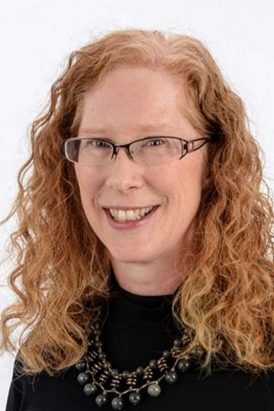
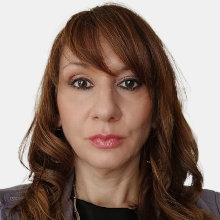
Prof. Sabine Schulte im Walde is an Associate Professor at the University of Stuttgart's Institute for Natural Language Processing. She holds affiliations with the International Max Planck Research School for Intelligent Systems (IMPRS-IS), ELLIS Society, and CLARIN-D. Her research focuses on computational modeling of lexical-semantic phenomena, including compositionality of noun compounds and particle verbs, abstract/concrete semantics, and diachronic language change. She has contributed to datasets on association norms for German compounds and led projects on multimodal semantic analysis. Research Interests: Her work bridges computational linguistics and cognitive science, emphasizing data-intensive methods. Key areas include semantic classification of verbs, metaphor detection, and evaluating semantic relations using distributional models. She explores how abstractness influences plausibility judgments and investigates semantic shifts in compounds over time. Awards: Nominated for AcademiaNet by the German Research Foundation (DFG). Active in professional societies including ACL, GSCL, and DGfS. Publications span over 50 peer-reviewed articles in venues like Computational Linguistics and ACL. Labs/Teams: Leads research on computational terminology and semantic change analysis at the Stuttgart Research Focus Language and Cognition (SRF). Collaborates internationally on projects like the DURel annotation tool for diachronic semantics.
Minerva Maaria Piha is an Associate Professor at Nord University specializing in Southern Sami language and archaeology. She holds a PhD in Finno-Ugric language studies from the University of Turku (2020), with prior degrees including two Master of Philosophy degrees in Archaeology (2011) and Finno-Ugric Language Studies (2016). Her research focuses on interdisciplinary connections between linguistics, archaeology, and history, particularly in the context of Saami peoples and cultures. Her key areas of expertise include Southern Sami history and archaeology, Finno-Ugric linguistics, and the intersection of archaeological terminology with linguistic policies. Notable projects include The Iron Saami (collaborative study on iron production and Saami language diffusion) and analyses of language policies in Saami archaeological research. She has published extensively on topics like Iron Age material culture, Saami linguistic terminology, and prehistoric cultural interactions. Her work bridges archaeological evidence with linguistic insights, addressing questions of cultural identity, migration, and language evolution in Northern Europe. Collaborations with institutions like the University of Helsinki highlight her commitment to multidisciplinary research. Current research trends emphasize critical analysis of academic discourse and the role of language in preserving indigenous heritage.
Dr. Haris Ćatović is a Researcher at the Institute of Language, University of Sarajevo, specializing in dialectology, lexicography, and ethnolinguistics. He has been employed since 2014 and served as a part-time assistant at the Faculty of Political Sciences. PhD in Linguistic Bosnian Studies (2023, University of Sarajevo) Master of Science in Linguistics (2017, Džemal Bijedić University) Bachelor in Bosnian Language and Literature (2013, Džemal Bijedić University) His research focuses on Bosnian dialectology, particularly analyzing jat reflexes, Kunovian script, and Southeast Bosnian speech patterns through historical surveys (1897) and modern dialectal complexes (1975–1986). He contributes to major lexicographic projects like Dževad Jahić's Rječnik bosanskog jezika and the Sandžački rječnik . Key publications include studies on phonological systems, cultural lexicon, and orthoepic norms. He received the 2020 University of Sarajevo award for his chapter in the Bosanski akcenatski priručnik . Active in academic conferences, he presented at events in Budapest, Ljubljana, Skopje, and Sarajevo.
Richard J. Senghas is a Professor of Anthropology at Sonoma State University . His work bridges linguistic anthropology and Deaf studies , focusing on the evolution of Nicaraguan Sign Language (ISN) and sociocultural dynamics in intentional communities. Education BA, University of Massachusetts (Amherst), 1978 MA, University of Rochester, 1994 PhD, University of Rochester, 1997 His research examines how language emergence intersects with identity formation , community development , and political factors . He has published extensively on ISN’s development, sociolinguistic variation in sign languages, and cybernetic models of language change. Key publications include works in The Routledge Handbook of Linguistic Anthropology (2017), Annual Review of Anthropology (2002), and edited volumes on Deaf communities. His 2017 chapter explores communicative practices in sign languages, while older works analyze ISN’s birth and sociolinguistic diversity in ASL. Scientific Awards Edward Sapir Book Prize, Society for Linguistic Anthropology (2001) As a California State University Academic Senate representative, he advocates for academic governance. Collaboratively, he works with his sister Ann Senghas (Barnard College) and other scholars like Judy Pyers and Lorraine Monaghan .
Professor Julia Schlüter is a distinguished academic in the Chair of English Linguistics within the Humanities Faculty at the University of Bamberg, Germany. She has served as Senior Lecturer at the Chair of English Linguistics and Language History under Prof. Manfred Krug since June 2008, holding the title of Professor following her habilitation in 2008. Her institutional profile demonstrates deep commitment to both research and teaching innovation, particularly through her leadership of the KorPLUS project and development of open educational resources for corpus linguistics. Her research interests span corpus linguistics for English language learners, empirical methods for studying language variation and change, and the application of corpus methods to teaching. She specializes in examining grammatical, phonological, and lexical differences between British and American English across historical periods from Middle English to present-day usage. Her work investigates phonological variation (particularly phonotactically controlled alternations), morphological change, and syntactic variation through corpus analysis, with special attention to functional grammar and grammaticalization theory. Professor Schlüter's recent publications (2022-2025) reveal a strategic evolution in her research focus, with increasing emphasis on the intersection of corpus linguistics and digital education. While maintaining her foundational work in historical English linguistics, she has developed significant expertise in applying corpus methods to language teacher education and evaluating AI writing tools. Her work demonstrates consistent methodological innovation, moving from traditional corpus analysis to blended learning approaches and digital educational resource development. Her scientific recognition includes: Winner of the 2025 Teaching Innovation Prize from the International Society for the Linguistics of English for the KorPLUS project University of Bamberg Prize for outstanding habilitation (2009) Lise Meitner Programme post-doctoral scholarship (2005-2006) Rectorate Prize from University of Paderborn for outstanding Ph.D. thesis (2005) Multiple DAAD scholarships for international study Professor Schlüter actively supervises doctoral research, currently guiding three Ph.D. candidates (Katharina Deckert, Aklima Nahar, and Nikolai Beland) while having successfully completed supervision for several others. She leads the KorPLUS project (2021-2025), funded by the Stiftung Innovation in der Hochschullehre, which develops open educational resources for corpus linguistics. Her research has been consistently supported by the German Research Foundation (DFG) and other funding bodies throughout her career. She heads the KorPLUS team (with Carina Großmann and Katharina Deckert) which develops the interactive Open Educational Resource platform for corpus linguistics. Her YouTube channel offers video tutorials on corpus basics, and she has created the Video Podcast Series "How to Update your Grammar" for English teachers. She regularly organizes in-service teacher trainings and collaborates with the Virtual Linguistics Campus at RWTH Aachen University to deliver her educational materials globally.
Haley De Korne is a Professor at the University of Oslo's Institute for Literature, Area Studies and European Languages within the Faculty of Humanities. Her academic work spans the intersections of linguistics, education, and anthropology, focusing on multilingual education contexts with particular attention to minoritized and indigenous languages. Dr. De Korne holds a PhD in Educational Linguistics from the University of Pennsylvania, an MA in Applied Linguistics from the University of Victoria, and a BA (Hons) in Combined Social Sciences from Durham University. Her academic journey reflects a strong foundation across multiple disciplines that inform her interdisciplinary approach to language research. PhD Educational Linguistics, University of Pennsylvania, USA MA Applied Linguistics, University of Victoria, Canada BA Hons Combined Social Sciences, Durham University, UK Her research interests focus on critical language awareness among teachers, social change imaginaries in multilingual regions, and pedagogies for language reclamation. She specializes in minoritized languages in education, multilingual education policy and pedagogy, language politics, indigenous language reclamation & revitalization, and language ideologies, with specific expertise in Isthmus Zapotec (Mexico) and Anishinaabemowin (US & Canada). Her methodological approach combines ethnography and interactional sociolinguistics within linguistic anthropology. Analysis of Dr. De Korne's recent publications reveals a consistent focus on language revitalization, particularly examining how educational contexts can support or hinder minoritized language maintenance. Her work increasingly addresses global North-South perspectives on language education, with attention to place-based pedagogy and critical language awareness. A significant thread throughout her research examines translanguaging practices and how they challenge traditional monolingual approaches to language education. Her scholarship demonstrates strong community engagement, particularly with Zapotec-speaking communities in Mexico. Dr. De Korne serves on the editorial board of Multilingua - Journal of Cross-cultural and Interlanguage Communication (2023-2025) and is an active member of the Norwegian Academy for Young Researchers (2021-2025). She also chairs the American Association of Applied Linguistics Committee for Online Education and Outreach Webinar subcommittee. Member, Norwegian Academy for Young Researchers (2021-2025) Editorial board member, Multilingua Journal (2023-2025) Chair, AAAL Committee for Online Education and Outreach (2023) Partner, Multilingualism in Transitions Research Project (2021-2025) Affiliated researcher, MultiNor Research Group At the University of Oslo, Dr. De Korne teaches courses including MULTI 4150 Project-based research in multilingualism, NOAS 4102 Additional language learning in socio-cognitive and sociocultural perspectives, and several linguistics courses on language acquisition, multilingualism, and research methods. She also leads PhD courses on communication in multilingual workplaces and revitalization of indigenous and minority languages. Her current research projects include FOSTERLANG (Indigenous language resilience), Language and culture maintenance in Wilamowice, and Linguistics and Sustainability.
Dr. Barbara E. Jones serves as an Associate Professor in the Department of Internal Medicine at the University of Utah School of Medicine, with dual appointments in Pulmonary and Critical Care Medicine. Her clinical practice spans diverse healthcare settings within the Veterans Affairs system and academic medical centers, focusing on evidence-based adaptation of care to varied patient populations. Her educational background includes: M.D. from University of Washington School of Medicine B.A. in Philosophy from Dartmouth College Master of Science in Clinical Investigation (M.S.C.I) from University of Utah Postdoctoral Fellowship in Pulmonary and Critical Care Medicine at University of Utah Residency in Internal Medicine at University of Utah Dr. Jones' research centers on decision-making processes in pneumonia diagnosis and treatment, employing a tripartite informatics approach combining population analytics, cognitive behavior analysis, and clinical decision support systems. Her work specifically targets reducing diagnostic uncertainty and treatment variation across healthcare systems, with emphasis on equitable care delivery for diverse patient populations. Current projects investigate diagnostic discordance in community-acquired pneumonia, electronic surveillance for hospital-acquired infections, and machine learning applications for diagnostic error detection. Analysis of her 15 most recent publications reveals consistent focus on pneumonia management systems, with emerging emphasis on pandemic impacts on diagnostic practices and AI-driven quality improvement. Her work predominantly utilizes large VA healthcare datasets spanning 100+ medical centers, featuring mixed-methods approaches that integrate quantitative analytics with qualitative clinician experience assessment. Dr. Jones actively contributes to clinical guideline development and medical education through editorial work in major journals including Chest and Annals of Internal Medicine , where she frequently addresses controversies in pneumonia diagnosis and antibiotic stewardship. Her research program operates at the intersection of the University of Utah Health system and the Veterans Affairs national healthcare network, leveraging electronic clinical decision support implementations across diverse hospital settings including rural and critical access facilities. Current initiatives focus on real-time feedback systems for diagnostic performance improvement and automated surveillance for healthcare-associated infections.
Daniel Ventus is a Project Leader at Åbo Akademi University's Faculty of Education and Welfare Studies, specializing in interdisciplinary research across Psychology, Sexual Health, and Educational Technology. He leads the Experience Lab Health-related solutions and contributes to EU-funded projects like INTAKT and APOLLO2028 , focusing on academic procrastination interventions and healthcare worker resilience. Key research areas: Premature Ejaculation, High-Intensity Interval Training, Resilience Processes, Educational Robotics, and Mental Health interventions Recipient of the 2024 Best Poster Presentation Award at SWESrii for internet interventions His recent publications (2024-2025) examine: HIIT's impact on ejaculation control Real-time resilience assessment tools LLM-powered language learning systems for vulnerable children Physiological and psychological factors in sexual dysfunction As a peer reviewer for journals including Andrology and Scientific Reports , he contributes to multiple disciplines. Media visibility includes coverage in Finland-Swedish educational initiatives and sexual health research outreach (2018-2025).
Alessandro Del Tomba is a Tenure-Track Researcher in Linguistics and Glottology at Sapienza University of Rome, specializing in historical linguistics, Indo-European studies, and Central Asian philology. He holds a PhD in Linguistics from Sapienza and Comparative Indo-European Linguistics from Leiden University. Historical linguistics Indo-European studies Eastern Iranian philology Language contact theories His research focuses on Khotanese and Tocharian languages, with recent publications analyzing manuscript transmission, morphological variation, and phonological developments. He serves as Principal Investigator for the FIS project "Khotanese language and texts in contexts (KhoTxt): A multimodal approach to the classification and periodisation of the Khotanese language and its texts within the cultural and historical framework of medieval Central Asia". He teaches General Linguistics at undergraduate levels and Linguistics courses at the graduate level in Modern Philology. Active in international academic networks, he participates in conferences across Italy, Europe, and Asia.
Felicitas Kleber is a Professor of Speech Science at the Department of Language Science and Technology, Saarland University. Her research focuses on experimental phonetics and laboratory phonology, emphasizing the interplay between speech production and perception in sound change processes. Research Areas : experimental phonetics, laboratory phonology, coarticulation dynamics, prosody and intonation, diachronic sound change, German dialects. Projects : Directed DFG-funded research on vowel/consonant quantity typology in Southern German varieties (2016–2024); DAAD-funded study on prosodic structure in Hungarian and German (2015–2016). Collaborations : Key partnerships with Jonathan Harrington (phonetics), Ulrich Reubold (acoustic analysis), and interdisciplinary teams in computational linguistics and sociophonetics. She serves as Associate Editor for the Journal of the Acoustical Society of America , integrating cognitive and social dimensions into sound change models.
Li Nguyen is an Assistant Professor of Linguistics and Multilingual Studies at Nanyang Technological University (NTU), Singapore . Their work bridges linguistics with computational approaches, focusing on language variation, contact phenomena, and multilingual NLP. Education: PhD in Linguistics (University of Cambridge), Master’s in General and Applied Linguistics (Australian National University) Research interests include: Language variation and change in multilingual/diasporic communities Computational sociolinguistics and NLP for low-resource varieties Syntax-pragmatic interface in bicultural contexts Code-switching and heritage language documentation Recent publications highlight collaborations on Vietnamese-English and other code-switched language pairs, with a focus on NLP applications and corpus-based analysis. Their work has gained recognition through grants like the NTU Start-up Grant and Cambridge Language Sciences funding . Scientific awards: Cambridge International Scholarship, Philological Society Fieldwork Grant Li Nguyen actively collaborates on projects involving sociolinguistically informed NLP and community-driven language documentation. They have contributed to the development of the CanVEC corpus for Vietnamese-English speech research.
Julie Boland is a Professor at the University of Michigan's College of Literature, Science, and the Arts, affiliated with the Psychology and Linguistics departments. She holds a PhD from the University of Rochester and leads the Psycholinguistics Lab, focusing on interdisciplinary language processing research. Her work explores interfaces between word recognition, syntax, semantics, and sociolinguistic variables, with special attention to bilingual processing and executive function roles. Education: PhD, University of Rochester. She teaches research methods and language psychology, advising numerous PhD candidates. Key research themes include sociolinguistic priming, bilingual ambiguity resolution, and language processing in digital contexts. Her findings highlight how dialect variation, cultural background, and technology impact comprehension and production. Research Interests: Psycholinguistics, sentence processing, lexical access, sociolinguistic influences, bilingualism, and cognitive mechanisms. Labs: Director of the Psycholinguistics Lab, promoting interdisciplinary collaboration across Psychology and Linguistics. Teaching: Courses on language psychology and research methods for Psychology undergraduates/graduates. Recent work addresses conversational dynamics in Zoom interactions, cultural differences in visual attention, and L2 structural priming effects. She emphasizes practical applications of psycholinguistic insights for education and technology design.
Hao Chen, Ph.D. is an Associate Professor in the Department of Statistics at the University of California, Davis. His research focuses on statistical methodology for high-dimensional and non-Euclidean data, including anomaly detection, graph-based methods, and change-point analysis. He also explores AI security, multimodal models, and geospatial applications. His work bridges statistical theory and practical machine learning challenges. Education: Ph.D., Graduate Group in Biostatistics, Stanford University Research Interests: Dr. Chen’s expertise spans statistical methods for streaming data, categorical data analysis, and allele-specific copy number variation. He has pioneered work in detecting signals in complex datasets and developing robust AI systems. His recent focus includes mitigating modality interference in LLMs, enhancing model safety via guardrails, and advancing geospatial AI through projects like GeoLM. Publications: His recent work addresses cutting-edge topics such as multimodal model vulnerabilities, unlearning algorithms, and clinical radiology applications. Key themes include improving model robustness, ethical AI design, and interdisciplinary data integration. Labs/Teams: Engages in collaborative projects at UC Davis, though specific lab names are not listed in the provided information.
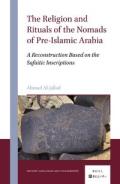
Dr. Ahmad Al-Jallad holds the Sofia Chair in Arabic Studies and is a Professor at Ohio State University, with prior affiliation at Leiden University's Leiden University Centre for Linguistics (LUCL). His research focuses on Arabian epigraphy, pre-Islamic Arabic linguistics, and Semitic philology. He directs the Online Corpus of the Inscriptions of Ancient North Arabia (OCIANA), a central resource for pre-Islamic Arabian epigraphic heritage. Education: Ph.D. in Near Eastern Languages and Civilizations from Harvard University. Key publications include The Religion and Rituals of the Nomads of Pre-Islamic Arabia (2022), An Outline of the Grammar of the Safaitic Inscriptions (2015), and numerous articles on Semitic scripts and pre-Islamic Arabian religious practices. Research interests emphasize deciphering ancient scripts (e.g., Dhofari, Thamudic), reconstructing linguistic histories, and analyzing Safaitic inscriptions for insights into nomadic culture. Recent work includes studies on the pre-Islamic deity Allāh, linguistic divisions between nomadic and sedentary communities, and the decipherment of previously undeciphered scripts. His interdisciplinary approach bridges archaeology, linguistics, and religious studies, often combining epigraphic analysis with textual and paleographic methods.
Bianca Basciano is an Associate Professor at the Department of Asian and North African Studies , Ca' Foscari University of Venice, where she has held the Director's Delegate for Research role since 2023. Her work focuses on Chinese linguistics , particularly Mandarin morphology, syntax, and second language acquisition. Research Areas: Chinese compounding, reduplication, causative constructions, resultative compounds, and language teaching methodologies. Teaching: Offers BA/MA courses in Chinese language and linguistics at Ca' Foscari University. Editorial Roles: Member of the editorial boards for Sinica Venetiana and Lingue e Linguaggio . Research Projects: Principal investigator for the PRIN 2020 project on Italian learners' acquisition of Chinese resultative verbs, with extensive corpus-based analysis. Collaborates with Giorgio Arcodia and other international scholars. Key Themes: Event structure delimitation, Vendlerian verb classes, micro-parametric syntactic variation. Publications: Over 40 works including monographs with Oxford University Press and Bologna University Press. Her methodological approach combines theoretical linguistics with corpus analysis, contributing to the understanding of Chinese as both a linguistic system and a second language acquisition challenge. She has also organized international conferences like the 31st IACL Annual Meeting.