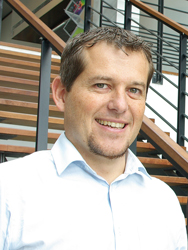
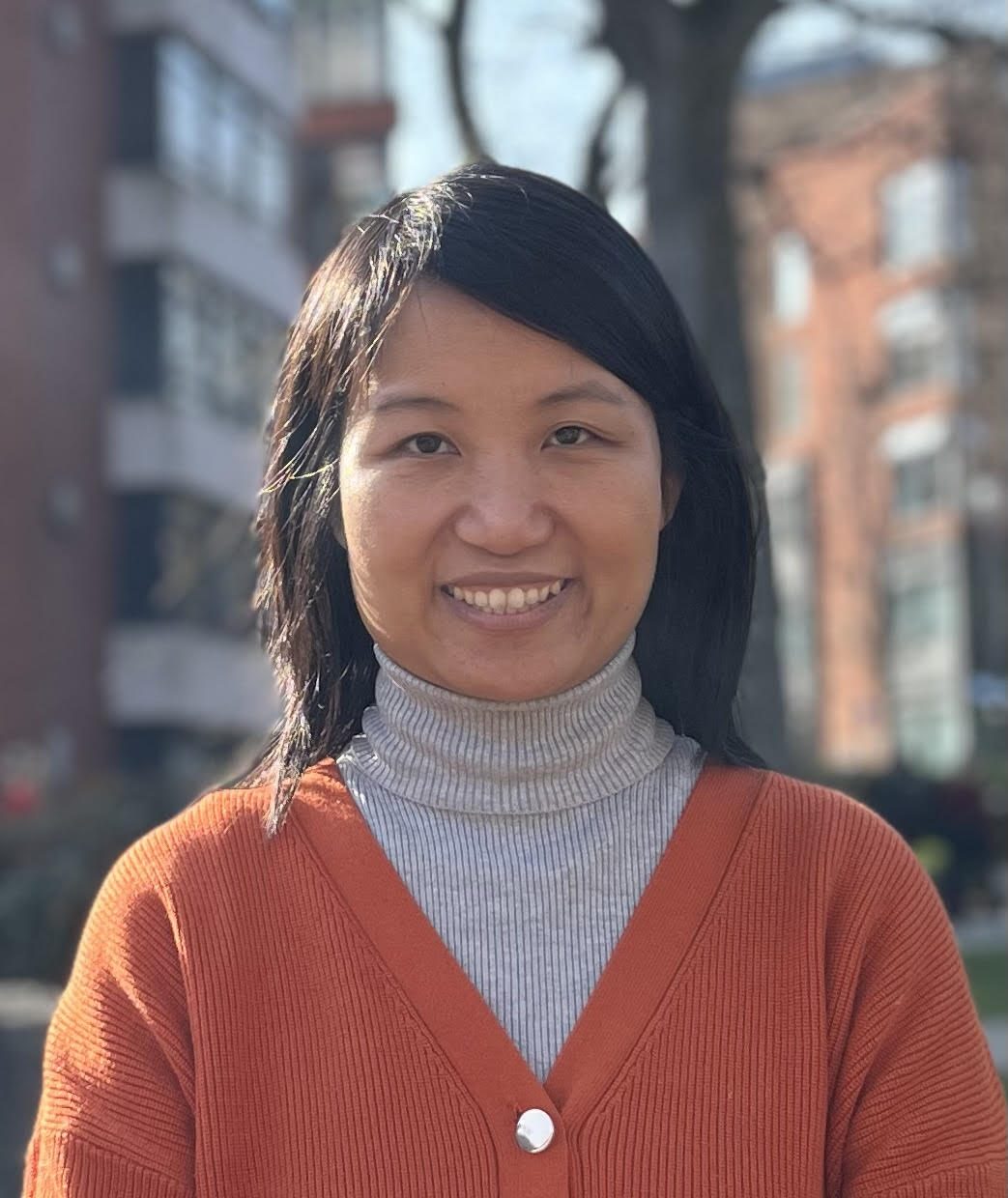
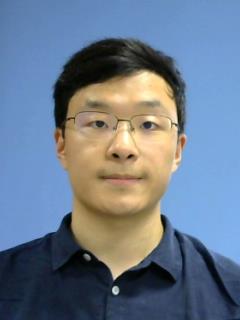
Shueng-Han Gary Chan is a faculty member in the Department of Computer Science and Engineering at the Hong Kong University of Science and Technology (HKUST), within the College of Engineering. He is actively engaged in research and mentoring, with a strong publication record in mobile computing, indoor localization, and AI for pervasive systems. His research focuses on indoor localization using Wi-Fi, geomagnetic, and inertial signals , sensor fusion , crowd counting with deep learning , domain adaptation , and efficient mobile AI systems . His work bridges theoretical innovation with real-world deployment, as seen in systems for missing person search and indoor navigation. Recent publications (2023–2025) show a consistent trend toward self-supervised and domain-agnostic learning , efficient model design for mobile devices , and robust signal fusion in noisy environments . His team leverages transformer architectures, graph neural networks, and novel optimization techniques to solve real-world challenges in urban and indoor spaces. He has advised numerous graduate students, including Jierun Chen, Zhuoxuan Peng, and Tianlang He, who have contributed as first authors to joint publications. His collaborations span institutions and include work on large-scale system deployments and mobile AI. He leads a research group focused on mobile and pervasive computing , with projects involving IoT-based contact tracing, indoor navigation (e.g., DeepNavi, SiFu), and real-time localization systems. The team emphasizes practical deployment and system robustness.
Raphaël Troncy is an Assistant Professor at EURECOM's Data Science Department, specializing in Semantic Web technologies, Knowledge Graphs, and Natural Language Understanding. He teaches courses like 'Human-computer interaction for the Web' and 'Semantic Web technologies.' His research focuses on semantic data integration, knowledge graph applications, and recommender systems. Notable projects include DOREMUS (musical work graph), entity2rec (knowledge graph-based recommendations), and 3cixty (city exploration knowledge bases). He actively contributes to semantic web challenges and conferences, winning multiple awards including the 2018 Best Poster Award at ESWC and 2015 First Prize in the Semantic Web Challenge. Troncy's work spans cultural heritage digitization (e.g., Odeuropa olfactory data modeling), cybersecurity anomaly detection (NORIA-O ontology), and interdisciplinary projects like SILKNOW's silk textile knowledge graph. He leads development of tools like DAGOBAH for semantic table interpretation and KG Explorer for knowledge graph exploration. Education: Not explicitly stated in text Labs/Teams: Active in EURECOM's Data Science group, collaborating on projects involving knowledge graphs, AI, and semantic technologies
Hongxin Hu is a Professor and Associate Chair in the Department of Computer Science and Engineering at the University at Buffalo, State University of New York (SUNY). His research spans security, networking, and machine learning, with publications across top conferences including security (S&P, CCS, USENIX Security, and NDSS), networking (SIGCOMM and NSDI), machine learning (NeurIPS, ICML, and EMNLP), and human-computer interaction (CHI and CSCW). His work has been funded by NSF (SaTC, CNS, IIS, OAC, SOC), USDOT, VMware, Amazon, Google, and Dell. Dr. Hu earned his PhD in Computer Science and Engineering from Arizona State University in 2012. His academic journey has led him to become a prominent researcher in cybersecurity with a strong publication record and significant research impact. Dr. Hu's research interests encompass a wide range of topics at the intersection of security, networking, and artificial intelligence. His work focuses on Emerging Network Technologies and Security (5G/Future-G, NFV, SDN, Edge computing), Machine Learning for Security and Privacy , Security and Privacy in IoT and Cyber-Physical Systems , and AI for Social Good (addressing online abuse, unsafe children's games, and cyberbullying). His interdisciplinary approach has enabled him to tackle complex security challenges through innovative solutions that combine networking expertise with machine learning techniques. His recent publications demonstrate a strong trend toward applying large language models and advanced machine learning techniques to security challenges, particularly in content moderation, vulnerability detection, and privacy protection. The research spans multiple domains including voice assistant security, IoT security, network security, and social media safety, showing a consistent pattern of addressing real-world security problems with cutting-edge technical approaches. IEEE Big Data Security Senior Research Award (2025) ACM SACMAT Test-of-Time Award (2024) NSF CAREER Award (2019) Multiple Best Paper Awards from ACM ASIACCS (2022), ACSAC (2020), IEEE ICC (2020), and ACM SIGCSE (2018) Amazon Faculty Research Award (2022) First Place Award in ACM SIGCOMM 2018 Student Research Competition Dr. Hu has successfully advised multiple PhD students, including Nishant Vishwamitra who joined UT San Antonio as a tenure-track Assistant Professor. His research has been generously funded by major agencies and industry partners. As an active member of the academic community, he serves as Associate Editor for IEEE Transactions on Dependable and Secure Computing and Computers & Security, and has held numerous leadership roles in major security conferences including TPC Co-Chair for ASONAM 2025 and IWSPA 2024/2025. Dr. Hu leads a vibrant research group that has produced significant contributions in network security function virtualization, intrusion detection systems, and privacy-preserving technologies. Current projects include developing LLM-assisted vulnerability detection systems, defenses against jailbreak attacks on large language models, and security mechanisms for emerging networking technologies. His team's work on IoT security, voice assistant applications, and online content moderation has received wide recognition and press coverage.
Jane Qian Liu is Associate Professor of Translation and Chinese Studies at the University of Warwick, where she also serves as Head of Translation and Transcultural Studies and Director of Research for Translation and Transcultural Studies (both since 2024). She earned her DPhil in Oriental Studies from the University of Oxford in 2014, following an MA in Comparative Literature and World Literature from Beijing Normal University (2010) and dual BA degrees in Chinese Language and Literature and English Language and Literature from the same institution (2007). Dr. Liu's research centers on cross-cultural literary exchanges between China and the West, particularly examining translation practices, intertextuality, and reader reception in early twentieth-century China. Her work investigates how Chinese translators creatively adapted Western literary works through processes like pseudotranslation, and how these adaptations shaped modern Chinese literary forms. She has made significant contributions to understanding the role of emotion, lyricism, and transcultural dynamics in literary transmission. Dr. Liu's scholarly output reveals a consistent trajectory toward examining the complex interplay between translated texts and reader experiences. Her research shows increasing sophistication in conceptual frameworks, moving from textual analysis to incorporate reader response theory and metaphysical considerations of literary reception. Key themes across her publications include the adaptation of European literature in China, the creation of alternative romantic spaces through translation, and the cultural significance of reading practices. Among her accolades, Dr. Liu received the 'Good Book Review of the Year' award from China Book Review in 2021. She serves as associate editor of Comparative Literature & World Literature and has conducted interviews with prominent scholars including Henrietta Harrison, Douglas Robinson, and Rebecca L. Walkowitz, which have been published in the same journal. Dr. Liu actively supervises PhD students working on East-West cultural and literary exchanges, with current advisees including Shaoyu Yang, Yuqing Zhang, Xinyao Zhang, Ambra Minoli, and Yaqi Xi. She convenes several postgraduate courses including 'Translation and Transcultural Encounters between China and the West' and 'Dissertation in Translation Studies,' reflecting her commitment to training the next generation of translation scholars. As a practicing translator, Dr. Liu has translated Bob Eckstein's Footnotes from the World's Greatest Bookstores into Chinese (Commercial Press, 2021), which received an 8.0 rating on Douban, as well as scholarly works by Stephen Owen and Andrew Jones for Theories of World Literature, a Reader (Peking University Press, 2013).
Wolfgang Stammer is a PostDoc researcher in the Machine Learning Group at TU Darmstadt's Computer Science Department. His work focuses on making AI models more interpretable and interactive, particularly in explainable AI (XAI), neuro-symbolic architectures, and systematic compositionality challenges in neural networks. He completed his Ph.D. in Machine Learning at TU Darmstadt (2019–2025), an M.Sc. in Computer Science at Goethe University Frankfurt (2016–2018), and a B.Sc. in Cognitive Science at the University of Osnabrück (2011–2015). Research Interests : Stammer's research bridges gaps between human understanding and AI capabilities. Key areas include: Explainable AI (XAI) and interactive machine learning (XIL) Neuro-symbolic integration for logical reasoning and visual concepts Mitigating shortcut learning and confounding factors in datasets Concept discovery and program synthesis for interpretable models Publications : His work spans foundational contributions to AI benchmarks (e.g., V-LoL, SLR-Bench) and frameworks (Neural Concept Binder, Revision Transformers). Recent studies highlight AI's limitations in systematic generalization and propose solutions for aligning reinforcement learning agents with human values. Grants & Labs : He contributes to the Machine Learning Lab at TU Darmstadt and co-organized workshops like the Interactive Machine Learning Workshop @ AAAI 2022. His research bridges theoretical advances with practical applications in healthcare and ethical AI systems.
Xin (Eric) Wang is an Assistant Professor in the Computer Science Department at the University of California, Santa Barbara (UCSB) , and serves as Head of Research at Simular AI. His research focuses on Multimodal and Embodied AI Agents , blending methodologies from machine learning, computer vision, natural language processing, and robotics. Education: Ph.D. in Computer Science, UC Santa Barbara B.Eng. in Computer Science, Zhejiang University Research Interests: Natural Language Processing Computer Vision Multimodal AI Embodied AI Trustworthy AI Systems His work emphasizes agents that collaborate with humans in complex environments, addressing ethical design and generalizable reasoning. Awards: Best Paper Awards at CVPR 2019 and ICLR 2025 Google Faculty Research Award, 2022 eBay & Cisco Faculty Awards (2022–2024) Amazon Alexa Prize Awards (multiple years) Advising & Grants: Supervised students Dr. Xuehai He and Dr. Jing Gu. Secured grants from Microsoft, Adobe, eBay, and Snap. Organized workshops on vision-language research and embodied AI. Labs/Teams: Leads the ERIC Lab at UCSB, focusing on multimodal agent systems and ethical AI design.
Ana Tkalac Verčič, PhD, is a researcher at the Department of Marketing within the Faculty of Economics & Business, University of Zagreb . Her academic work focuses on internal communication strategies, public relations frameworks, and employer branding mechanisms. Email: atkalac@efzg.hr Office Hours: Monday 14:30–16:00 Her research investigates the intersection of digital communication technologies and organizational behavior, with particular emphasis on: Internal communication channel effectiveness Employee engagement through strategic messaging Employer brand development in global contexts Social exchange theory applications Post-pandemic workplace communication Sustainability integration in PR practices Recent publications analyze: Paradoxes in digital vs. in-person communication Psychological factors influencing dining behavior Measurement tools for digital communication acceptance Generational attitudes toward sustainable development Employer branding in cross-cultural environments Her work contributes to understanding how modern communication strategies impact organizational success and employee well-being.
Soukaina Filali Boubrahimi serves as an Assistant Professor in the Computer Science Department within the College of Engineering at Utah State University. Her academic appointment is based in the SER 332 building located at 4205 Old Main Hill, Logan, UT 84322-0001. She maintains a research-active position with a focus on computational methods for complex temporal data analysis. Dr. Filali Boubrahimi's research program centers on time series analysis , machine learning , and space weather prediction , with particular emphasis on solar flare forecasting and counterfactual explanation systems. Her work bridges theoretical machine learning advancements with practical applications in heliophysics, hydrology, and social media analysis. The research portfolio demonstrates significant expertise in handling imbalanced temporal datasets, developing novel data augmentation techniques, and creating interpretable AI systems for critical prediction tasks. Analysis of her recent publication trajectory reveals consistent contributions to counterfactual explanation frameworks for time series data (Info-CELS, M-cels, ACTS), space weather prediction systems (solar flare and energetic particle event forecasting), and generative modeling approaches (AVATAR, ChronoGAN). Her work frequently addresses the challenges of severely imbalanced datasets through contrastive learning and sophisticated preprocessing techniques, demonstrating methodological innovation in handling rare but critical space weather events. While no specific awards are documented in the available information, her research program appears substantial based on the volume and quality of recent publications spanning multiple high-impact domains. The research demonstrates strong interdisciplinary connections between computer science, space physics, and environmental science. Her laboratory activities focus on developing machine learning frameworks for temporal data analysis, with particular attention to space weather prediction systems. The research group appears to specialize in creating robust models for rare event prediction, explainable AI systems for time series classification, and novel data augmentation techniques for imbalanced temporal datasets. Current projects likely include the development of multimodal fusion approaches for solar energetic particle prediction and spatio-temporal modeling for hydrological applications.
PD Dr. phil. Evangelia Kordoni is a research assistant at Humboldt University of Berlin's Faculty of Linguistics and Literary Studies, specifically within the Institute for English and American Studies. Her office is located at Dorotheenstraße 28, Room 3.04, and she can be contacted via email for appointments. She is an active researcher in computational linguistics with a focus on grammar engineering and natural language processing. Kordoni's research primarily explores: Computational linguistics frameworks including HPSG grammar implementation Multiword expression processing and machine translation systems Treebank development for languages including English, German and Bulgarian Lexical acquisition methods for large-scale grammars Semantic parsing and disambiguation techniques Her work bridges theoretical linguistics with practical NLP applications. Kordoni's publication record shows consistent focus on deep linguistic processing, with recent emphasis on: Multiword expression analysis in machine translation systems Parallel treebank development for multilingual applications Verb subcategorization and compound noun disambiguation Dynamic annotation methodologies for Wall Street Journal texts Cross-linguistic studies of Germanic syntax
Johannes Schöning is a Professor of Human-Computer Interaction at the University of St. Gallen, where he leads a research group focused on developing novel user interfaces that empower individuals and communities with data-driven decision capabilities. His work bridges rapidly advancing technologies with human needs across diverse contexts including geographic information science, public health, medical applications, and extreme environments such as space missions. He publishes extensively at premier HCI venues including ACM CHI, MobileHCI, and DIS, as well as in interdisciplinary journals like NATURE and PLOS ONE. Professor Schöning's research interests center on understanding the interplay between technology and human activities through rigorous methods from AI, computer graphics, and cognitive psychology. His work emphasizes user-centered design methodologies and mixed methods approaches to create interfaces that fit both technological possibilities and human requirements. Key focus areas include virtual and augmented reality applications, accessibility solutions, navigation technologies, and the social implications of digital interfaces in everyday life. His research mission prioritizes theoretical and practice-based inquiry to develop disruptive solutions for real-world problems. Analysis of his recent publications reveals strong trends in virtual reality applications for emotional regulation and accessibility, with increasing emphasis on generative AI integration, environmental awareness, and space-related HCI challenges. His work consistently demonstrates interdisciplinary collaboration across computer science, psychology, geography, and medical fields, with publications showing growing interest in social implications of technology, particularly regarding navigation systems and their externalities. His scientific contributions have been recognized with numerous awards including: Best Presentation Award at IEEE VR 2023 Best Paper Award & Accessibility Award at Interact 2019 10 Year Impact Award 2021 Multiple Honorable Mention Awards at top conferences Professor Schöning actively mentors students across bachelor, master, and PhD levels, with his lab seeking candidates interested in the intersection of HCI, geoinformatics, and ubiquitous computing technologies. He emphasizes creating a 'detox-free academic environment' that focuses on meaningful teaching and research outcomes rather than academic pressures. His group frequently collaborates with international researchers and institutions on projects spanning medical applications, space exploration interfaces, and public health technologies. The research laboratory led by Professor Schöning maintains strong interdisciplinary connections across multiple domains. Current projects include developing AI-powered wearables for blind and low vision users, exploring VR applications for emotional regulation, investigating navigation technologies' social impacts, and creating interfaces for space mission contexts. The lab's work on CubeSat control software and plant visualization for space greenhouses demonstrates their unique focus on extreme environment applications, while their research on citizen participation through generative AI shows engagement with contemporary societal challenges.
Professor Kristian Bankov holds a Doctor of Science (DSc) in Semiotics from New Bulgarian University (2023). He serves as Professor in the Southeast European Center for Semiotic Studies at NBU. Director of Southeast European Center for Semiotic Studies since 2007 General Secretary of International Association for Semiotic Studies (2014-2024) Vice-Rector for International Affairs and Public Relations at NBU (2011-2012) Chief Organizer of the annual Early Fall School of Semiotics since 2006 His research spans multiple dimensions of semiotics: Continental philosophy of language and Bergson's philosophy Sociosemiotics and identity studies Consumer society and digital culture Artificial intelligence and new media Semiotics of economic transactions Digital education and technological transformation Recent publications focus on digital culture, economic sign systems, and digital transformation with particular attention to: Digital semiosphere and platfospheres Monetary semiotics and digital currencies Social media analysis and consumer rituals Trust systems and digital experience economy Identity formation in post-truth environments Audiovisual translation in digital culture
Andrés Bruhn is a Professor for Intelligent Systems and Dean of Computer Science Studies at the University of Stuttgart, where he leads research in the Institute for Visualization and Interactive Systems (VIS). His academic career spans over a decade with significant contributions to computer vision, particularly in optical flow, scene flow, and motion estimation. As Dean of Studies, he oversees academic programs while maintaining an active research agenda focused on cutting-edge computer vision problems. Bruhn's research interests center around computer vision with emphasis on optical flow estimation, scene flow, motion analysis, and adversarial machine learning. His work bridges theoretical foundations with practical applications, developing algorithms that address real-world challenges in motion estimation, image processing, and visual understanding. His research group has pioneered approaches that combine variational methods with deep learning, creating robust systems for motion analysis that can withstand adversarial attacks and challenging environmental conditions. The publication record demonstrates a strong focus on advancing the state-of-the-art in motion estimation, with recent work exploring adversarial attacks on optical flow systems, high-resolution datasets for benchmarking, and multi-frame fusion techniques. His research shows consistent innovation, moving from traditional variational methods to modern deep learning approaches while maintaining mathematical rigor. The work spans both theoretical contributions and practical implementations with real-world applicability. Bruhn has mentored numerous researchers who appear as first authors on publications, including Jenny Schmalfuss, Lukas Mehl, and Azin Jahedi, indicating his commitment to developing the next generation of computer vision researchers. His leadership role as Dean of Studies demonstrates institutional recognition of his expertise and administrative capabilities.
Zhongxin Liu is an Assistant Professor at the College of Computer Science and Technology , Zhejiang University , China. He earned his Ph.D. from the same institution in 2021. His research focuses on Intelligent Software Engineering (AI4SE) , leveraging software "big data" to improve code understanding, generation, and security through machine learning techniques. Published in top-tier venues: TSE, TOSEM, ICSE, FSE, ASE, ISSTA Active in academic service: Reviewer for TSE, TOSEM, ASEJ, etc. Visiting Professor at University of Stuttgart (2024-2025) His recent work explores Large Language Models (LLMs) for code intelligence, security hardening, and vulnerability detection. Papers emphasize cross-domain applications, zero-shot learning, and API/code dependency analysis. Scientific awards include: ACM SIGSOFT Distinguished Paper Awards (ASE 2018, 2019, 2020; ISSTA 2025) Zhejiang University Qizhen Scholar (2021) CCF TCSE Doctoral Dissertation Award (2023) Recruiting undergraduate interns, graduate students (MS/Ph.D.), and postdocs for code intelligence research. Contact: liu_zx@zju.edu.cn .
Rui Zhang is an Assistant Professor in Computer Science and Engineering , with research expertise spanning Natural Language Processing , Large Language Models , and Semantic Parsing . His recent work focuses on enhancing multimodal consistency , fairness in summarization , and mathematical reasoning capabilities of LLMs. Key Research Themes: Text-to-SQL and cross-domain semantic parsing Multimodal learning (vision-language models) Fairness and bias mitigation in NLP tasks Efficient model training and prompt optimization Scientific Awards: National Science Foundation CAREER Award (2024) Grants & Projects: CAREER: Trustworthy Human-Centered Summarization (NSF, 2024-2029) addressing LLM trustworthiness through user-centric summarization frameworks. Article Trends: Recent publications emphasize LLM collaboration , compressed reasoning models , and cross-domain knowledge alignment . He explores multi-agent systems , mathematical reasoning , and vision-language limitations , particularly in geometric perception. Applications span bioinformatics (Alzheimer's biomarker discovery) and democratic AI frameworks.
Chia-Jung Tsay is an Associate Professor in the Management and Human Resources Department at the Wisconsin School of Business, University of Wisconsin-Madison, and a Faculty Affiliate at the Institute for Diversity Science. Her research bridges psychological science and business, examining nonconscious biases in professional decision-making processes across music, entrepreneurship, and organizational contexts. Her distinguished educational background includes: Ph.D. in Organizational Behavior and Psychology (secondary field in Music) from Harvard University A.B. in Psychology and A.M. in History of Science from Harvard University (Phi Beta Kappa) Advanced music training at The Juilliard School and Peabody Conservatory of Johns Hopkins University Professor Tsay's research centers on decision-making biases , particularly the naturalness bias where 'naturals' are favored over 'strivers', and the dominance of visual information in evaluations. Her work demonstrates how sight overrides sound in music competitions, how visuals dominate investor decisions in pitches, and how semantic ambiguities around 'talent' affect workplace judgments. This research critically informs diversity, equity, and inclusion initiatives by exposing hidden cognitive mechanisms that undermine meritocratic systems. Her publication trajectory reveals consistent focus on bias mechanisms, evolving from foundational music perception studies (2013) to entrepreneurial funding decisions (2021) and contemporary investigations of gratitude, goal orientation, and talent semantics. The work consistently identifies systematic deviations from rational evaluation across domains, with practical implications for reducing bias in hiring, promotion, and investment decisions. Her major recognitions include: Association for Psychological Science (APS) Rising Star World’s Best 40 Under 40 Business School Professors by Poets&Quants (2021) Best Paper Award from Diversity in Management and Organizations (2023) Professor Tsay mentors graduate students in organizational behavior while leading cutting-edge research. She recently secured competitive seed funding from UW-Madison's Institute for Diversity Science (2024) for projects at the business-diversity science intersection. Her work generates significant real-world impact through frequent media engagement and advisory roles. She actively collaborates within the Management and Human Resources department and Institute for Diversity Science, contributing to interdisciplinary initiatives that translate bias research into organizational practices. Her unique background in both music performance and psychology enables distinctive approaches to understanding human judgment in professional settings.