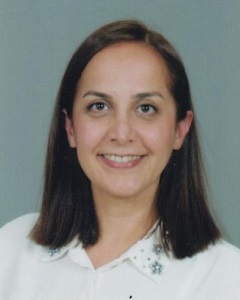
Assoc. Prof. Duygu Koçak is an academic at Alanya Alaaddin Keykubat University's Faculty of Education, specializing in Measurement and Evaluation in Education. She holds a Ph.D. from Ankara University (2016) and conducted postdoctoral research at the University of Toronto (2018-2019). Her roles include Associate Professor, Department Head, and Deputy Head of Department at her current institution. Her research focuses on educational measurement, psychometrics, and statistical methodologies in education. Her academic journey includes positions at Adıyaman University (2014-2016) and lecturing roles since 2016. She has authored/co-authored over 30 peer-reviewed articles on topics like test validity, Monte Carlo simulations, and learning disabilities. Notable works include the 'Academic Jealousy Scale' (2019) and studies on homework impact (2020). Dr. Koçak has contributed to edited volumes on data analysis and measurement tools. She serves as a referee for journals like the Journal of Measurement and Evaluation in Education and Psychology and has presented at international conferences on educational statistics and assessment.
GÜÇLÜ ŞEKERCİOĞLU is an Associate Professor at Akdeniz University, Faculty of Education, Department of Educational Sciences. Currently serving as Director of the Center for Measurement, Evaluation, Certification Research and Application and Director of the Institute of Educational Sciences since 2022, they also hold the position of Vice Dean of the Faculty of Education (2022-2025). Their academic career spans over 15 years at Akdeniz University, progressing from Research Assistant (2010-2011) to Assistant Professor (2011-2019) and currently Associate Professor (2019-present). Academic background includes: Doctorate (2003-2009): Ankara University, Institute of Educational Sciences, Measurement and Evaluation Postgraduate (1998-2001): Ankara University, Institute of Educational Sciences, Measurement and Evaluation Undergraduate (1993-1997): Ankara University, Faculty of Educational Sciences, Psychological Services in Education Dr. Şekercioğlu's research focuses on the intersection of psychometrics, educational measurement, and statistical analysis in educational contexts. Their work demonstrates deep expertise in measurement invariance, differential item functioning, scale development and validation, and advanced statistical methods in education. They have developed specialized knowledge in analyzing international assessments like PISA and TIMSS, with particular attention to cross-cultural measurement equivalence. Their research methodology combines rigorous quantitative approaches with practical applications in educational settings, contributing significantly to the understanding of how psychological constructs can be reliably measured across diverse populations. Analysis of their publication record reveals a strong emphasis on measurement theory and its practical applications in educational contexts. Their work consistently addresses critical issues in cross-cultural assessment, scale adaptation, and the psychometric properties of educational instruments. A notable trend is the application of advanced statistical techniques to solve practical measurement problems in education, particularly focusing on how tests function across different language groups and cultural contexts. They have made significant contributions to understanding measurement invariance in international assessments like PISA, with implications for fair and valid cross-national comparisons. Dr. Şekercioğlu has supervised 8 theses at various levels and serves on numerous doctoral and master's thesis committees. Their research is supported by multiple grants, including several TÜBİTAK projects addressing critical educational issues such as child sexual abuse prevention, nursing education assessment, and language acquisition among immigrant children. They actively contribute to the academic community through peer review activities for journals like Educational Sciences: Theory & Practice and Hacettepe Education Faculty Journal.
Bekir Taner Dincer is a Professor at Muğla Sıtkı Koçman University, Faculty of Engineering, Department of Computer Engineering. He has been actively teaching courses including Web Development and Programming, Artificial Intelligence, Data Mining, Natural Language Processing, and Senior Design Projects for multiple academic years including the upcoming 2025-2026 term. Dr. Dincer earned his Bachelor's degree in Statistics from Middle East Technical University (1988-1993), followed by a Master's degree in Statistics and Computer Science from Muğla Sıtkı Koçman University (1996-1998), and completed his Doctorate in Computer Science from Ege University's International Computer Institute (1998-2004). His research focuses on Information Retrieval, Natural Language Processing (particularly for Turkish language), and related computational linguistics areas. His work addresses challenges in Turkish language processing including morphological analysis, constituent chunking, information retrieval systems, and term weighting methods. He has made significant contributions to adapting information retrieval techniques for agglutinative languages like Turkish, which presents unique challenges compared to Indo-European languages. His publication record shows a consistent research trajectory with recent work (2013-2018) focusing on risk-sensitive evaluation methods, learning to rank, entity recognition in big data, and specialized approaches for Turkish language processing. His research often bridges theoretical information retrieval concepts with practical applications for Turkish text processing. Dr. Dincer has served as editor for prestigious publications including the International ACM SIGIR Conference proceedings and ACM Transactions on Information Systems journal, demonstrating recognition of his expertise by the international research community. He has supervised numerous graduate students, guiding PhD and Master's theses on topics including unsupervised syntactic disambiguation for Turkish, statistical analysis of word roots and affixes, and information retrieval system design. His research has been supported by TÜBİTAK projects including the Design of a Statistics-Driven Selective Information Retrieval System (2015-2018) and the Design of a Statistical Information Access System (2011-2014).
Prof. Dr. Nuri Dogan is a Professor at Hacettepe University, Faculty of Education, Department of Educational Sciences, where he serves as Head of the Department of Educational Sciences since 2021 and previously as Head of the Department of Measurement and Evaluation in Education since 2019. He earned his BA (1996), MA (1999), and PhD (2002) from Hacettepe University's Department of Educational Measurement and Evaluation. After working as a research assistant (1998-2002) and lecturer (2003-2010), he became an Associate Professor in 2011 and a full Professor in 2016. He conducted post-doctoral research at University of Massachusetts-AMHERST under Ronald K. Hambleton in 2014-2015 with a TÜBİTAK scholarship. His research focuses on educational measurement and evaluation, psychometrics, test development, classical test theory, item response theory, and computerized adaptive testing. He teaches courses on measurement and evaluation in education, test development, scaling techniques, classical test theory, psychological foundations of measurement, research techniques, computerized measurement applications, and various other topics related to educational assessment. His extensive body of work demonstrates strong expertise in educational assessment methodologies, with particular emphasis on the technical aspects of measurement and evaluation. Dogan's publication record shows a clear progression from foundational work in classical test theory to more sophisticated applications in computerized adaptive testing and multistage testing. His recent work (2023-2024) reveals a strong focus on practical applications of measurement theory in large-scale assessments like PISA, with increasing integration of data mining and machine learning approaches. His research spans both theoretical psychometrics and practical applications across various educational contexts. Scientific Awards: TÜBİTAK scientist support program (BİDEP) scholarship for post-doctoral research at University of Massachusetts-AMHERST Prof. Dogan has supervised 55 graduate students (28 master's and 27 PhD candidates) whose research spans educational measurement, psychometrics, test development, and various applications of assessment methodology. His research projects include significant work on computerized adaptive testing, multistage testing, measurement invariance, and large-scale international assessments like PISA. He has received multiple research grants from TÜBİTAK and other national and international funding bodies. Prof. Dogan also chairs the Board of Directors of the Association for Measurement and Evaluation in Education and Psychology (EPODDER) and has been actively involved in numerous national and international research projects related to educational assessment and measurement.
Meltem ACAR GÜVENDİR is an Associate Professor in the Department of Educational Sciences at Trakya University's Faculty of Education. She holds a PhD in Measurement and Evaluation in Education from Ankara University (2013) and has conducted postdoctoral research at the University of California, Los Angeles (UCLA). Her research focuses on large-scale educational assessment, including analyses of PISA, TIMSS, and OBBS datasets using hierarchical linear modeling. She specializes in value-added assessment, meta-analyses of study abroad impacts, and psychometric evaluation of educational policies. Academic roles include serving as Head of the Measurement and Evaluation Commission (since 2018) and Deputy Head of the Department of Educational Sciences (2016–2018). She co-edits the International Journal of Assessment Tools in Education and has contributed to over 60 peer-reviewed articles and book chapters. Her work explores student achievement predictors, test anxiety measurement, and international student integration. Key projects include a TÜBİTAK-funded study on scale development processes and participation in the EU-funded CA19103 initiative addressing LGBTI+ inequalities. She has supervised numerous research projects and delivered keynotes on educational measurement methodologies.
Beyza Eken serves as Assistant Professor in the Department of Software Engineering at Sakarya University's Faculty of Computer and Information Sciences, teaching core courses including Software Project Management, Natural Language Processing, and Graduation Projects while maintaining active research in software engineering and AI applications. Her academic credentials include: Doctorate in Computer Engineering from Istanbul Technical University (2015), thesis: "Software Defect Prediction" Master's in Computer Engineering from Istanbul Technical University (2011-2015), thesis: "Entity Name Recognition in Short Texts" Bachelor's in Computer Engineering from Sakarya University (2007-2011) Dr. Eken's research integrates machine learning with software engineering, specializing in defect prediction models that incorporate personalized developer factors and industrial deployment challenges. Her work bridges natural language processing for Turkish social media analysis with software quality assurance, demonstrating expertise in both theoretical modeling and practical implementation in industrial settings. Recent expansions include neuro-symbolic AI for test oracle generation and MLOps frameworks. Publication trends reveal consistent focus on empirical software engineering from 2018-2021 (defect prediction, community smells, industrial deployment), evolving into cutting-edge domains by 2023-2025 (neuro-symbolic testing, employee feedback analysis, MLOps). Her work shows strong industry-academia collaboration patterns with increasing methodological sophistication. Dr. Eken actively contributes to academic service as reviewer for ACM Transactions on Software Engineering and Methodology (2024) and IEEE Transactions on Software Engineering (2023). She leads research projects including "Developer-specific error prediction modeling" (2020) and the Mevlana exchange project with Ryerson University on data mining for defect prediction (2018), while supervising graduation projects and research area courses that develop student expertise in software engineering practices. Her international research engagement includes participation in the ASTERIx project at Università della Svizzera Italiana's Software Testing and Analysis Research Group (2023), demonstrating ongoing commitment to global collaboration in software engineering advancements.
Mehmet Bardakçı is a Professor in the Department of Foreign Languages Education at Gaziantep University's Education Faculty. With a PhD in English Education (2010) and MA in English Teaching (2005) from Turkish universities, he specializes in English Language Teaching (ELT), vocabulary acquisition, and digital pedagogy. His research examines teacher professional development, assessment literacy, and intercultural sensitivity in language learning. Education: PhD (2010), MA (2005), BA (2000) in English Education Leadership: Former Dean Assistant (2018-2020), Department Head (2012-2013), Institute Deputy Director (2015-2018) Research Trends include e-learning models like e-FLIP (2021-2023) and digital education tools. His 21 peer-reviewed articles and 14 book chapters focus on vocabulary depth/breadth, grammar instruction, and teacher-student dynamics. Supervision spans 19 graduate theses on topics ranging from flipped classroom effectiveness to assessment literacy. He collaborates internationally through projects like e-FLIP and ExBEdu , both EU-funded initiatives completed between 2021-2023.
Dr. Servet Altan serves as Assistant Professor in the Department of Guidance and Psychological Counseling at MEF University's Faculty of Education in Istanbul, Turkey. Appointed in July 2022, he concurrently holds administrative roles as IBEC Coordinator and Vice Dean of the Faculty since September 2023. His academic foundation includes Master's and Doctorate degrees from Bilkent University, complemented by 15 years of K-12 international program implementation experience (2007-2022). Dr. Altan's research centers on students' motivation and engagement, Habits of Mind frameworks, diversity and inclusion practices, and international education systems. His scholarship appears in premier journals including the Journal of Teacher Education and Teaching and Teacher Education, reflecting his focus on practical applications in educational settings. As an International Baccalaureate Lead Educator since 2016, he actively trains teachers across national and international schools. Analysis of his 2022-2025 publications reveals three dominant research trajectories: (1) mindfulness applications for reducing test anxiety and enhancing academic achievement, (2) Habits of Mind integration in teacher development and emergency remote teaching contexts, and (3) equity-focused investigations into IB teacher preparation and student psychological needs. His work spans diverse educational environments from Turkish continuum schools to Latina/o/x community college settings, consistently addressing motivation, inclusivity, and international frameworks. Dr. Altan maintains active scholarly engagement through regular presentations at AERA and EARLI conferences. While specific student advisement details and grant information remain unreported in available sources, his leadership roles and publication record indicate significant contributions to educational psychology and international teaching practices.
Ali Bozkurt is a Professor in Mathematics Education at the Gaziantep Education Faculty , Gaziantep University. His academic career spans over two decades, with previous roles including Associate Professor (2013-2019) and Assistant Professor (2008-2013) at the same institution. He holds a PhD (2007), MS (2001), and BS (1999) in Mathematics Education from Selçuk University. Research Focus: Mathematics education, teacher training, algebraic/geometric reasoning, technology integration, STEM education, and educational activity design. Key Projects: Led TÜBİTAK and higher education institution-funded projects on innovative mathematics pedagogy, technology-enhanced classrooms, and quality of mathematics instruction. Publications include 31 books/chapters and 59 articles, emphasizing cognitive demand in textbooks, ethical decision-making in teaching, and activity evaluation frameworks. His work has been presented at international conferences like ICME-15 and ERME. He collaborates with scholars such as Mehmet Fatih Özmantar and Begüm Özmuşul on algebraic habits and geometric reasoning. Scientific Contributions: Developed the Activity Evaluation and Feedback Tool (AEFT) and analyzed mathematics instruction quality in Turkey and Syria. Advising: Mentors graduate students and pre-service teachers, particularly in algebraic/geometric reasoning and classroom practices.
Sezen Arslan is an Associate Professor at Bandirma Onyedi Eylul University, holding roles in the Department of English Translation and Interpreting (Faculty of Humanities and Social Sciences) and the Department of Foreign Languages. She previously served at Van Yuzuncu Yil University as a Doctor Lecturer and Research Assistant. Her academic leadership includes positions as Department Head and Erasmus Coordinator. Her research focuses on sustainable education, EFL pedagogy, teacher training, AI integration, and inclusive practices. Key contributions include work on dialogic teaching, EMI sustainability, and intercultural communication. She has authored over 20 books and 88 articles, with a TÜBİTAK Science Award recognition. Her projects involve national initiatives like TÜBİTAK-funded dialogical teaching workshops and language policy studies. Educationally, she teaches courses like 'Measurement and Evaluation in Foreign Language Teaching' and 'Pedagogical Grammar.' She advises one master’s thesis and has organized conferences like GLOBELT. Her administrative roles include coordinating Erasmus programs and managing academic research projects. Collaborations with institutions like Hacettepe University highlight her network. Her research spans topics from AI in EFL classrooms to sustainable curriculum reforms, reflecting a commitment to innovative and equitable education models.
Professor Okan Topçu is a faculty member in the Department of Computer Engineering at Middle East Technical University, Northern Cyprus Campus (METU NCC), where he serves as Head of the Academic Board of Engineering and Natural Sciences. He holds a Ph.D. and M.S. from Middle East Technical University (Ankara, Turkey, 2007 and 1999 respectively). Education: Ph.D. & M.S. in Computer Engineering from METU Ankara Research Focus: Modeling and simulation, agent-based systems, distributed simulation, cybersecurity, and model-driven engineering
Hüseyin Ataseven is a full-time Lecturer at Karabuk University's School of Foreign Languages, specializing in Foreign Language Education. He earned his PhD in Measurement and Evaluation in Education (2023) from Ankara University, following a Master's degree (2020) and BA (2005) in the same field. PhD: Measurement and Evaluation in Education, Ankara University (2023) MSc: Measurement and Evaluation in Education, Ankara University (2020) BA: Foreign Language Education, Gazi University (2005) His research focuses on educational assessment, language testing, and statistical analysis in education. Recent studies examine configural frequency analysis in test patterns, rubric reliability, and the impact of AI perceptions on career choices. Develops placement test evaluation methodologies Analyzes university branding and institutional identity Investigates inter-rater reliability in assessment Collaborating with scholars from Ankara University and Recep Tayyip Erdoğan University, his work appears in international social sciences conferences (e.g., ICER, EGE, AICHSS). Despite active publication, no scientific awards or citations are recorded in YÖKSİS metrics.
Koray KILIÇ is an Assistant Professor in the Department of Coach Education at Kırşehir Ahi Evran University's Faculty of Sports Sciences. He holds a PhD in Physical Education and Sports from Middle East Technical University (METU), where he also completed his master's and bachelor's degrees. His academic career spans over 15 years, including postdoctoral research at the University of Ottawa's School of Human Kinetics (2021-2022). PhD: Physical Education and Sports (METU, 2019) MA: Physical Education and Sports (METU, 2013) BA: Physical Education and Sports (Ankara University, 2009) Research focuses on Physical Education and Sports Pedagogy , with particular emphasis on coach professional development, teaching styles, and holistic athlete development. His work explores needs-focused learning communities and technology-supported training programs for coaches. Articles analyze teaching methods in youth sports, athlete-initiated learning, and para sport coach education, demonstrating interdisciplinary engagement with sports psychology, pedagogy, and inclusive training frameworks. Design Thinking in Para Sport Coaching Social Learning Spaces for Coach Development Teaching Style Evaluation Tools Relative Age Effects in Team Sports Scientific recognition includes: 2024: Outstanding Journal Publication of the Year (The Spectrum Institute for Teaching and Learning) 2020: ODTÜ Doctoral Thesis Award (2018-2019) Advising highlights: Gamze Saatçi (2025): Social Learning Spaces in Nursing Education Rabia Öztürk Kızılkaya (2024): Coach Development for Para Sport Current projects include TÜBA/TÜBİTAK-supported initiatives on long-term athlete development and technology-enhanced coach training in competitive youth sports (2024). His work has been presented at international venues like CRIC International Coaching Conference (UK, 2013) and SCRI Conference (Canada, 2023).
AYŞEGÜL GÜLEÇ is an Associate Professor at Gaziantep University, Faculty of Dentistry, Department of Clinical Sciences, specializing in Orthodontics. She has been actively involved in academic and clinical work since completing her doctorate in Orthodontics from Marmara University in 2015. Position: Associate Professor Institution: Gaziantep University Faculty: Faculty of Dentistry Department: Department of Clinical Sciences / Orthodontics Email: aysegulgulec@gantep.edu.tr Dr. Güleç completed her dental education at Marmara University (2002-2008), followed by specialization and integrated doctorate in Orthodontics (2010-2015). She further expanded her expertise with an Associate Degree in Health Institutions Management from Anadolu University (2017). Her research spans multiple dimensions of orthodontics, with particular focus on malocclusion treatment protocols, orthodontic biomaterials, and the relationship between dental structures and speech production. She has published extensively on topics including root resorption mechanisms, 3D printing applications in orthodontics, and the effects of various orthodontic appliances on craniofacial structures. Her work often bridges clinical orthodontics with advanced imaging techniques and biological assessments. Analysis of her recent publications reveals a strong emphasis on evidence-based orthodontic treatment approaches, with significant contributions in the areas of Class III malocclusion correction, rapid maxillary expansion techniques, and innovative applications of photobiomodulation in orthodontic practice. Her research frequently employs advanced methodologies including micro-CT imaging, RT-PCR analysis, and cephalometric assessments. Dr. Güleç has successfully supervised numerous graduate students, with 16 dental specialist theses and 2 doctoral dissertations completed under her guidance. She has led and participated in multiple research projects funded by higher education institutions, focusing on areas such as biomaterials testing, orthodontic appliance efficacy, and innovative treatment protocols. Her teaching portfolio includes doctoral, master's, and undergraduate courses covering orthodontic principles, diagnostic methods, and clinical applications.
Celal Aslan is an Assistant Professor at Gaziantep University's Faculty of Arts and Sciences, Department of History. He specializes in General Turkish History, Turkish Cultural History, Central Asian History, and Turkish Steppe Culture, with a focus on pre-Islamic Turkic epics, Khazar studies, and Caspian trade networks. PhD in History from Gaziantep University (2020) Master's in History with thesis (2013) His research explores Turkic interactions with external civilizations, including analyses of: Military systems in Avar and Khazar societies Legal and cultural elements in historical travelogues (e.g., Hitaynâme) Religious movements like Bahâîlik and Nestorian Christianity in Turkic contexts Socio-political dynamics in Qajar Iran and Pahlavi-era Azerbaijan He has supervised two master's theses and contributed to 11 books/chapters, primarily focusing on Turkic heritage and historical continuity.