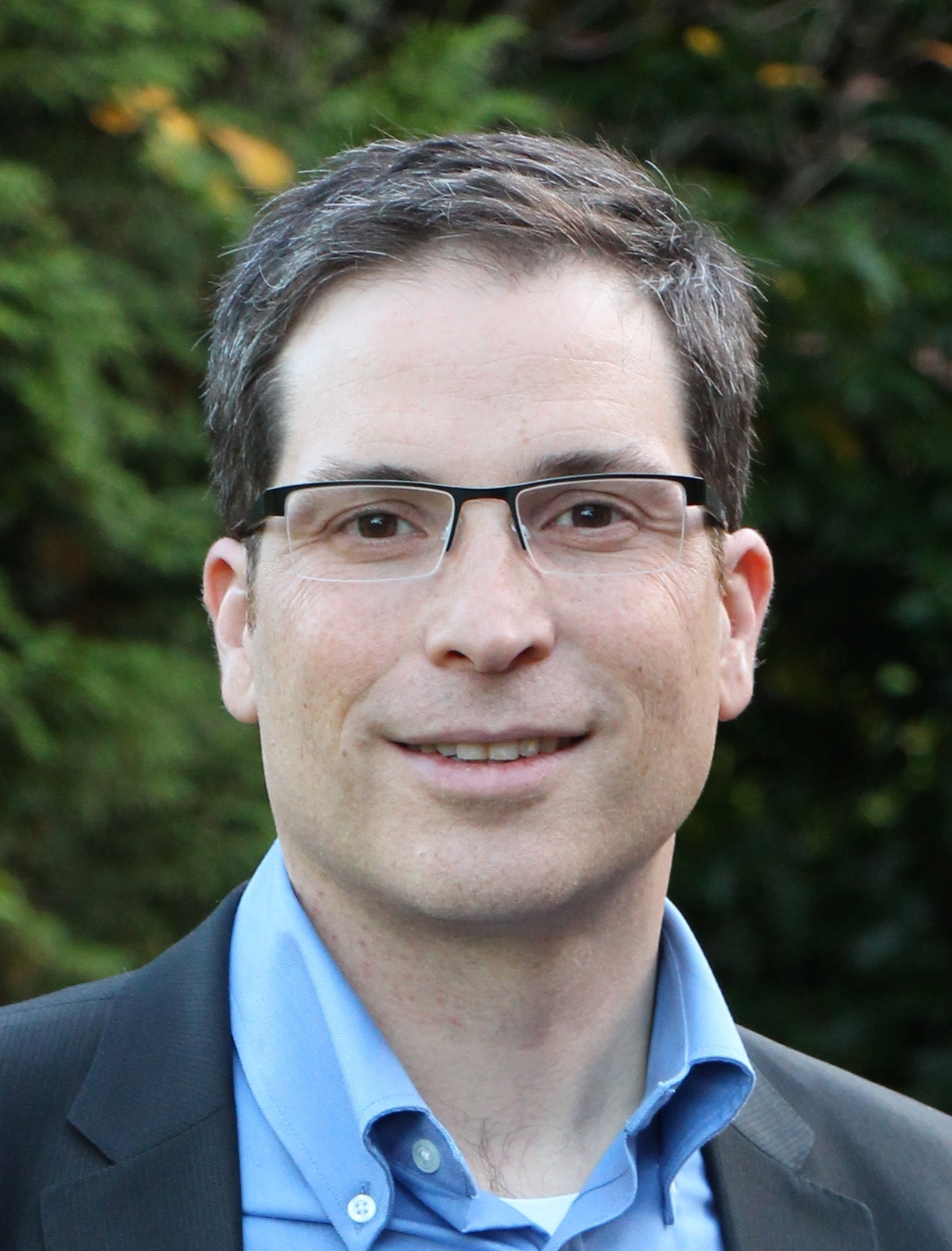
Gabriele Bavota is a Full Professor in the Faculty of Informatics at the Università della Svizzera italiana (USI). He holds a Laurea (cum laude) and PhD in Computer Science from the University of Salerno (2013). Before joining USI in 2016, he was an Assistant Professor at the Free University of Bolzano-Bozen (2014–2016) and a research fellow at the University of Sannio (2013–2014). Research Focus: Software maintenance, mining software repositories, empirical software engineering, and AI-driven code analysis. Awarded the 2018 ACM Sigsoft Early Career Researcher Award and leads the ERC Starting Grant project DEVINTA, exploring deep learning applications in software engineering. Authored over 180 publications in top venues like ICSE, FSE, and TOSEM, with multiple best/distinguished paper awards. His work bridges empirical studies, AI tools, and developer-centric solutions, addressing challenges in code quality, refactoring, and automated testing. He has served as program chair for ICPC 2016, SANER 2017, and ICSME 2023, and holds editorial roles in TSE, EMSE, and JSS. Labs/Teams: Principal Investigator of the DEVINTA project and part of the Software Institute at USI, fostering collaborations in AI, software engineering, and empirical research.
Rudolf Debelak is an Experienced Research Associate and Team Leader at the University of Zurich's Institute of Educational Science, within the Chair of Developmental and Educational Research Methods. He holds a PD Dr. phil. (habilitation) in Psychology from the University of Zurich (2021), granting him the Venia Legendi in Psychological Methods. His career includes roles such as Senior Research Associate (2018–2024) and Postdoctoral Researcher (2016–2018) at the University of Zurich's Department of Psychology. Notably, he temporarily substituted a W2 Professorship at the University of Leipzig's Wilhelm-Wundt-Institut für Psychologie (2021–2022). Prior to academia, he worked as a test and training developer at SCHUHFRIED GmbH (2008–2015). His research focuses on quantitative methodology, including latent variable models, item response theory, and machine learning applications in psychology. He explores the use of large language models in educational and psychological research, alongside advancements in psychological diagnostics. His work integrates mathematical modeling and digital tools to study learning and development processes, often utilizing intensive longitudinal data and collaborating with institutions like the Institute for Educational Evaluation in Zurich. Debelak’s academic education spans Psychology (Diploma, University of Vienna, 2000–2007; Doctoral studies, 2007–2013) and Mathematics (Bachelor's, University of Hagen, 2013–2018; Master's, 2018–2021). He contributes to professional organizations such as the Deutsche Gesellschaft für Psychologie and the Psychometric Society.
Dr. Curtis Gautschi is a Research Fellow at the ZHAW Zurich University of Applied Sciences, affiliated with the School of Applied Linguistics and the Institute of Language Competence. His work focuses on language testing, digital literacy, and English-Medium Instruction (EMI) in higher education. He has led and contributed to projects like CEFR for Sign Languages, Digital German assessment, and Seamless Writing, which examine language competence, automated evaluation, and writing support tools. Research interests include Automated writing evaluation and feedback systems English-Medium Instruction quality assurance Scenario-based literacy education in vocational contexts Integration of natural language processing in language assessment Impact of digitalization on academic writing Development of CEFR-aligned testing frameworks His publications span journals like Reading and Writing and Bulletin suisse de linguistique appliquée , as well as peer-reviewed conference contributions at events such as the EARLI Conference, EATAW, and the International Pragmatics Conference. Recent work explores automated writing feedback, CEFR level prediction, and EMI's role in educational social spheres.
Abraham Bernstein is a Full Professor of Informatics at the University of Zurich (UZH), where he serves as Head of the Dynamic and Distributed Information Systems Group and Director of the UZH Digital Society Initiative. He leads a university-wide initiative with over 180 faculty members investigating the interplay between society and digitalization. His work bridges social science foundations (organizational psychology/sociology/economics) and technical disciplines (computer science, artificial intelligence), creating a unique interdisciplinary approach to digital transformation challenges. Education: Diploma in Computer Science from ETH Zurich Ph.D. in Management with concentration in Information Technologies from MIT's Sloan School of Management Professor Bernstein's research spans the Semantic Web, data mining/machine learning, recommender systems, crowd computing, and collective intelligence. His work uniquely integrates social science perspectives with technical computer science approaches, examining how social and technical elements interact in digital systems. Recent work focuses on explainable AI, ethical decision-making with AI systems, and the societal implications of digital transformation, reflecting his commitment to addressing both technical challenges and their broader societal context. His publication record shows a strong trajectory in multimodal information retrieval, knowledge representation, and human-AI collaboration, with increasing focus on ethical considerations and societal impact of AI technologies. The research demonstrates consistent innovation in bridging technical AI capabilities with human-centered design principles, particularly in areas like explainable recommender systems and democratic applications of AI. Scientific Recognition: Nominated Digital Shaper by Bilanz magazine (2017) Professor Bernstein has supervised over 30 PhD students whose work spans semantic technologies, data mining, recommender systems, and human-AI interaction. His research group has secured significant funding for projects related to digital society, knowledge representation, and AI ethics. As Director of the Digital Society Initiative, he coordinates cross-disciplinary research across UZH's faculties, bringing together scholars from humanities, social sciences, law, economics, and STEM fields to address complex digital transformation challenges. He leads the Dynamic and Distributed Information Systems Group at UZH, which maintains strong international collaborations and contributes significantly to both theoretical advances and practical applications in information systems. The group's work has influenced standards in semantic web technologies and continues to shape discourse on responsible AI development and deployment in society.
Prof. Dr. Kurt Stockinger is a Professor of Computer Science at ZHAW School of Engineering and holds a doctorate at the University of Zurich . He serves as Head of the MAS Data Science program and co-leads the ZHAW Datalab . His research focuses on Intelligent Information Systems , bridging information systems, natural language processing, and machine learning. Affiliated with the University of Zurich, he contributes to Quantum Machine Learning and Open Data Exploration initiatives. Stockinger's educational background includes a PhD in Computer Science (University of Vienna & CERN), a Master in Business Informatics (University of Vienna), and a CAS in Didactics & Methodology (ZHAW). He has taught courses in Quantum Computing , Big Data for Natural Sciences , and Data Science programs at ZHAW and University of Zurich. His research spans Data Science , Big Data , Natural Language Query Processing , Knowledge Graphs , and Quantum Machine Learning . Recent publications focus on quantum autoencoders , hybrid quantum neural networks , and prompt engineering for knowledge graph question answering. He has developed frameworks like ScienceBenchmark for real-world NL-to-SQL evaluation and NQuest for natural language query exploration. Scientific awards include the Best Paper Award at 7th Swiss Conference on Data Science (2020) He leads major projects such as DataGEMS (Data Discovery Platform, Horizon Europe) Digital Health Zurich (Clinical Innovation Lab) INODE4StatBot.swiss (NL-to-SQL Translation) GraphQueryML (Graph Database Optimization) ScienceBenchmark (NL-to-SQL Evaluation) Stockinger's work intersects with computer vision , biomedical data , and industrial applications , demonstrated through collaborations with institutions like Lawrence Berkeley National Laboratory, CERN, and University of Washington. He has contributed to establishing QuantumBasel and ZHAW Datalab as research hubs.
Verena Batt serves as a Lecturer and Project Manager at the Institute for Business and Regional Economics (IBR) within the Business School of Lucerne University of Applied Sciences and Arts (HSLU). Her academic journey began with studies in business administration, French, and Spanish at the University of Mannheim, followed by doctoral research at the University of Basel on "Quality of Internal Brand Management." Prior to joining HSLU, she held positions as a postdoctoral researcher at the University of Basel and junior professor of business administration with a focus on marketing at Leuphana University Lüneburg. Dr. Batt's educational background includes a comprehensive business administration degree complemented by studies in Romance languages. She earned her doctorate from the University of Basel with research focused on internal brand management and employee behavior. Her academic path reflects a strong foundation in both theoretical business concepts and practical applications across multiple industries including consulting, IT, and chemistry. Her research primarily centers on marketing with a specialized focus on employer branding, consumer behavior, and brand management. Batt investigates how employer brand personality influences job application intentions, develops measurement scales for employer branding, and examines the relationship between corporate social responsibility and brand credibility. Her work bridges theoretical marketing concepts with practical applications in business settings, particularly examining how brands can effectively engage both consumers and employees. She has published extensively in marketing journals and presented at major international conferences including EMAC and AMA. Dr. Batt's publication record demonstrates consistent research output with a clear trajectory from foundational work on brand management and consumer behavior toward more specialized topics in employer branding and digital marketing innovations. Her 15 most recent publications reveal a strong emphasis on employer branding measurement and applications, while also exploring emerging areas such as NFTs in luxury branding and generative AI in language education. Teaching Award from the Faculty of Business and Economics at Leuphana University Lüneburg for Communication Management in the Age of Social Media (2018) Most Outstanding Reviewer, Track Services Marketing for Review Conference Papers (2017) Brand Association Science Award for Dissertation (2014) As a reviewer for academic journals including "Die Unternehmung" and the Open Education Platform for Management Schools, and as a member of the European Marketing Academy and the Association of University Professors of Business Administration, Batt contributes significantly to the academic community. Her teaching responsibilities at HSLU span Business Psychology and Business Administration programs, covering marketing, statistics, and methodology courses. She leads multiple research projects including Automated Talent Recruiting, Psychosocial healthcare for refugees, and Time Banks as retirement provision in Switzerland, demonstrating her commitment to both theoretical research and practical applications that address contemporary business challenges.