Jennifer Richardsمشاهده پروفایل
استادیار
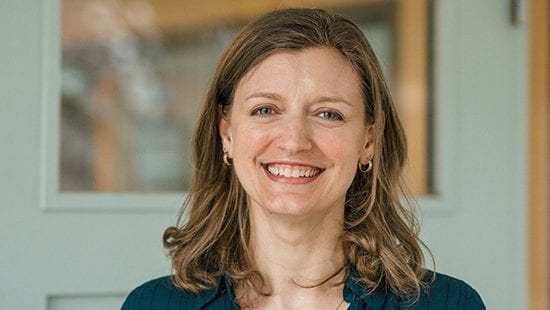
Jennifer Richards serves as a Research Assistant Professor at Northwestern University's School of Education and Social Policy, Evanston, IL. Her work bridges science education research and K-12 classroom practice through research-practice partnerships focused on teacher learning and responsive pedagogy. Her educational background includes: PhD in Science Education, University of Maryland (2013) MEd in Secondary Science Education, University of Maryland (2008) BA in Biology and Political Science, University of Delaware (2006) Richards' research examines responsive learning environments that center students' ideas and experiences, alongside teacher practice dynamics across contexts. She employs discourse analysis and situative perspectives to investigate how teachers develop responsiveness to student thinking, particularly in science education settings. Her collaborative approach involves co-designing professional learning with educators to foster equitable classroom practices. Analysis of her 2020-2025 publications reveals consistent focus on teacher noticing, video-based professional development, and responsiveness mechanisms. Key trends include developing tools for analyzing classroom discourse (e.g., framing analysis lite), examining aesthetic dimensions of teaching, and exploring how teachers learn from self-captured classroom videos across mathematics and science contexts. No scientific awards were documented in the provided materials. Richards actively cultivates research-practice partnerships (RPPs) with school districts, evidenced by projects like expanding understanding of video-mediated teacher learning. While specific grant details are absent, her collaborative publications (e.g., Thompson et al., 2019 on networked PLCs) demonstrate sustained engagement with educational institutions to improve teaching practices. She collaborates extensively with scholars like Miriam G. Sherin in the Learning Sciences community, contributing to professional learning communities and video analysis initiatives. Her current work involves studying mechanisms for teacher learning from classroom video, though no dedicated lab name is specified in the materials.