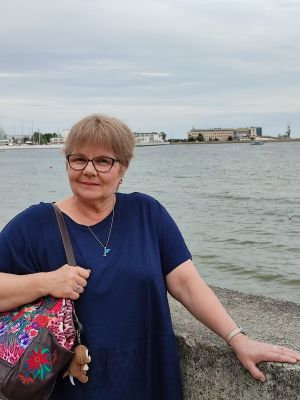
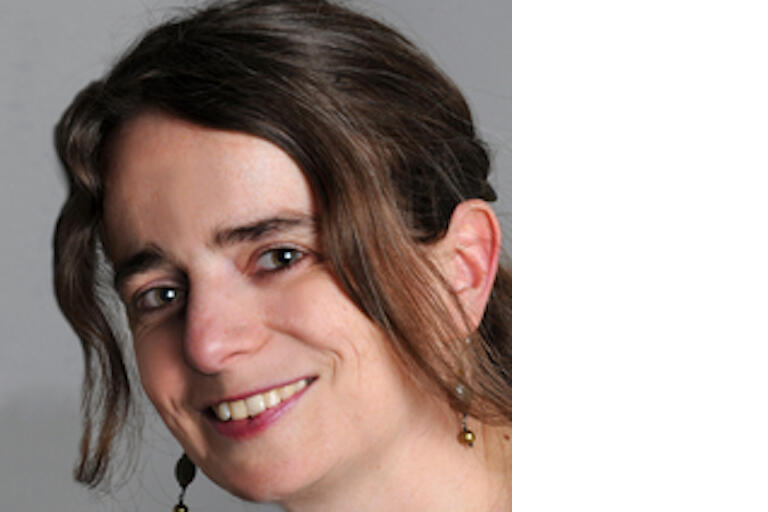
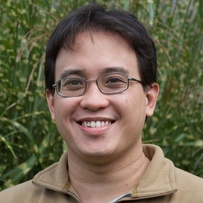
Dr. Iwona Łęska-Drajerczak is a Senior Lecturer at the Faculty of English, Adam Mickiewicz University, Poznań, Poland. With a career spanning over four decades, she has held significant roles such as EFL (PNJA) Coordinator (2006-2021) and grammar coordinator (1990-2006), contributing to curriculum development and teacher training programs. Her work includes organizing 17 in-service teacher training workshops (2003-2009) and serving as a Methodological Advisor for Teacher Training College in Bydgoszcz (2008-2015). Education: MA in English (1981), Ph.D. in English (2006) Professional Qualifications: RSA Cambridge DipTEFLA (1996) Her research focuses on Applied Linguistics , particularly English Language Teaching Methodology , Language Testing , and Teacher Training . She has developed advanced-level phonetics and grammar courses and contributed to EFL course planning frameworks. Her work also explores teacher and learner motivation in Business English contexts. International Collaboration: Language Rich Europe Project (Warsaw, London, Brussels, 2011-2013) Erasmus Staff Mobility: Aveiro (2009), Lyon (2015), Istanbul (2019), Nicosia (2023) Guest Lectures: Teacher Training Colleges in Poznań, Bydgoszcz, Zajączkowo Conference Participation: IATEFL Annual Conferences (Wrocław to Poznań), Poznań Linguistic Meeting Recognized with prestigious awards including the Minister of Science and Higher Education Award for Didactic Achievements (2016, 2022) and the Medal Komisji Edukacji Narodowej (2018), she has also contributed to the TELL project at UAM (2017-2023) and served as a juror for High School Science Lab initiatives.
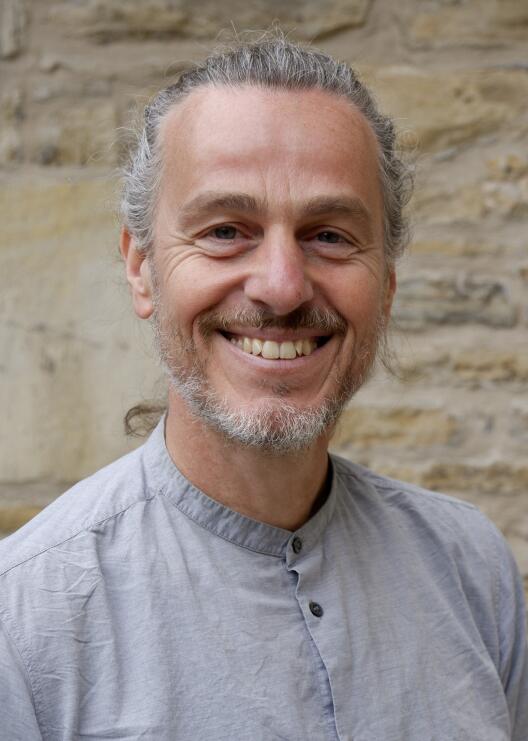
Professor Michael Burke holds a full professorship in Rhetoric at Utrecht University (Faculty of Humanities) and teaches at University College Roosevelt (UCR) in Middelburg. Previously, he served as UU Honours Dean (2016–2021). His research focuses on rhetoric, stylistics, cognitive aspects of language, and education. He earned his Ph.D. in English Language and Literature from the University of Amsterdam, where he also completed his undergraduate studies. Research interests span written, oral, and digital rhetoric, emphasizing pedagogical, cognitive, stylistic, and neuroscientific dimensions. He has held visiting roles at institutions like the University of Cambridge and University of Bologna. Editorial roles include series editor for Routledge’s 'Research Monographs in Linguistics' and board memberships with journals like Language and Literature . Teaching includes undergraduate courses on classical rhetoric, argumentation, and public speaking at UCR, plus leadership and interdisciplinary research modules for Utrecht’s Honours College. He supervises PhD students in the UiL-OTS linguistics research school. Notable publications include The Routledge Handbook of Stylistics (2023) and studies on critical thinking, digital literacy, and cognitive literary science. Professional activities include keynote speaking at conferences like PCST and EARS, and contributions to projects such as ‘Undergraduate Research in the Netherlands’. His work bridges rhetoric, cognitive science, and education, emphasizing practical applications for students and educators.
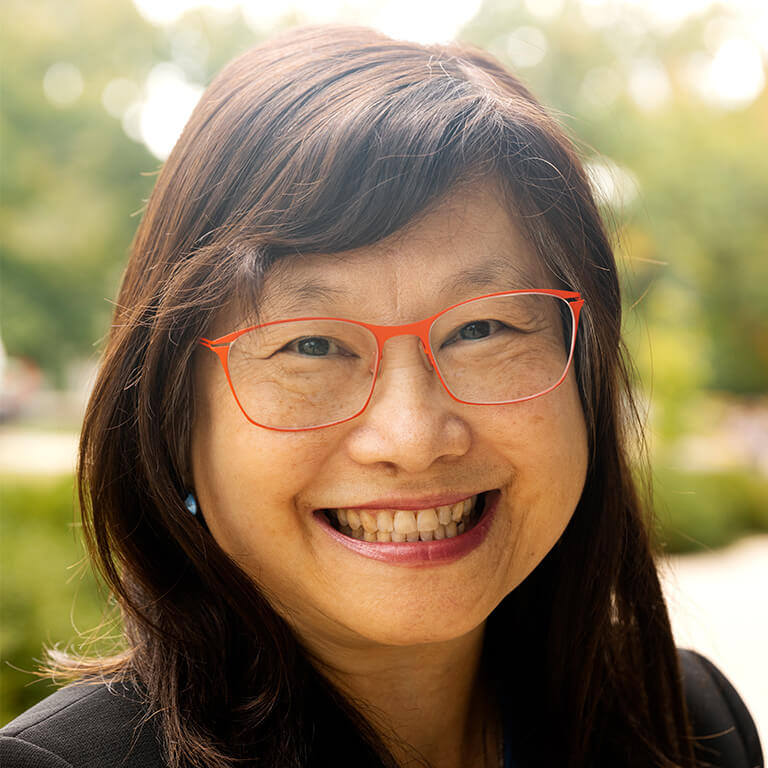
Lily Chen is an Associate Professor at the Research School of Accounting within the ANU College of Business and Economics. She previously held positions at the University of Auckland Business School where she earned her PhD in Accounting (2013). Her research focuses on financial reporting, corporate governance, CSR, machine learning applications in accounting, and integrated reporting frameworks. Her work has been published in top journals like The Accounting Review and widely cited by regulatory bodies. Education: PhD in Accounting from the University of Auckland (2013). Professional Affiliations: Board member of Accounting and Finance Association of Australia and New Zealand, editor for Pacific Accounting Review, and editorial board member for Accounting and Finance and Meditari Accountancy Research. Research Interests: Combines traditional accounting topics with emerging technologies, particularly exploring machine learning applications in financial disclosure analysis. Her studies on institutional investor behavior and CSR governance have received significant industry attention. Awards: Multiple accolades including Research Excellence Awards from University of Auckland (2013), Teaching Excellence Awards, and Best Paper recognitions. Supervised 5 PhD, 8 Masters, and 8 Honours students. Teaching: Leads financial accounting courses for both undergraduate and postgraduate students. Active in curriculum development and postgraduate program administration.
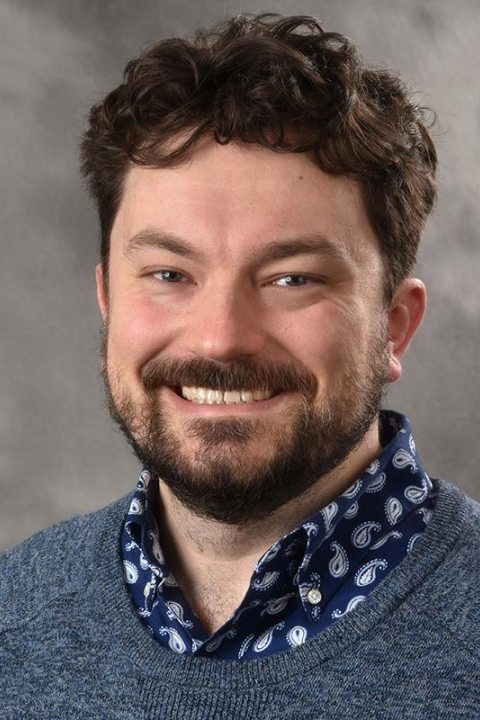
Alis Oancea is Professor of Philosophy of Education and Research Policy at the University of Oxford's Department of Education, part of the Social Sciences Division. She holds additional roles including ESRC Centre for Global Higher Education Deputy Director and Social Sciences Division Advocate for Responsible Engagement. With dual doctoral degrees (DPhil from Oxford and PhD from Bucharest), she also received a Doctor Honoris Causa from University of the West Timisoara. Her research focuses on meta-research, research policy, and higher education governance. Key areas include research assessment frameworks, impact measurement, ethics, open knowledge practices, and teacher education. She co-edited the 2024 Handbook of Meta-Research and leads international studies on research cultures and policies. Education: DPhil (Oxford), PhD (Buc), DipLATHE (Oxford), Dhc (UWT) Roles: Director of Research (2016-20), REF2021 Coordinator, ESRC CGHE Deputy Director Leadership: Over 30 funded projects including the RKEEI initiative and BERA Observatory Her 150+ publications span research policy, impact evaluation, and education systems. Awards include FAcSS Fellowship and numerous international advisory roles across Europe and Norway. Advises on global education reforms and chairs panels for EU, UK, and Nordic research councils. Current doctoral supervision focuses on research policy, higher education systems, and teacher education innovations. Active in editorial roles for Oxford Review of Education and Review of Education .
Sophie Oldfield is Professor and Chair of the Department of City and Regional Planning at Cornell University's College of Architecture, Art, and Planning. She is internationally recognized for her research on cities in the Global South, with a particular focus on African urbanism, informality, governance, and collaborative planning. She previously held a joint professorship at the University of Cape Town and the University of Basel from 2016 to 2021. Ph.D., Geography, University of Minnesota M.A., Geography, Syracuse University Her research interests center on urban studies in the Global South , especially African cities, where she investigates informality, housing struggles, participatory planning, and the epistemologies of urban knowledge production . She is deeply committed to collaborative and community-engaged research, challenging traditional academic boundaries between the university and community. Her work emphasizes fieldwork, theory, and practice, and explores how urban governance shapes everyday life in marginalized settlements. Her recent publications reflect a strong trend toward co-produced knowledge, feminist urban praxis, and critical urban theory from southern perspectives . She frequently examines how urban theory can be reimagined through partnerships with communities, activists, and practitioners. Her scholarship spans interdisciplinary areas including geography, planning, urban studies, and social policy. Society of South African Geographers Fellowship (2020) Distinguished African Scholar, Cornell University (2018) British Academy Newton Advanced Fellow (2015–2018) University of Cape Town Social Responsiveness Award (2014) Mandela Mellon Fellow, Harvard University (2010) She has supervised and collaborated with numerous students, particularly through participatory research projects such as Building Bit-by-Bit , which involved master’s students from the University of Cape Town and the University of Basel. She has secured significant research funding through fellowships and institutional support. Her work is closely tied to initiatives like the African Centre for Cities and the Critical Urbanisms program at the University of Basel . She continues to be an active voice in rethinking urban scholarship through collaboration, equity, and southern epistemologies.
Hakan Özkan is a Privatdozent and Research Associate at the Institute of Arabic and Islamic Studies, Department of Middle Eastern Studies, University of Münster, where he has been working since 2007 in various capacities. He was awarded his Venia Legendi (Habilitation) in November 2019 for Arabic and Islamic Studies with his thesis 'History of Eastern Zajal – Dialectal Arabic Verse Poetry from the East of the Arab World.' His academic background includes a Franco-German doctorate completed in 2006 from Université de Provence and University of Cologne, supervised by Claude Audebert and Monika Gronke, with external reviewers including Wolfhart P. Heinrichs from Harvard University. His educational background includes: 2019: Venia Legendi for Arabic and Islamic Studies, University of Münster 2002-2006: Franco-German Doctorate in Arabic Studies and Narratology (Université de Provence and University of Cologne) 1995-2000: Master of Arts in Islamic Studies, Oriental Languages and Literatures (University of Cologne) 2000-2001: Course program in Modern Standard Arabic and Syrian-Lebanese dialect at Institut Français d'Etudes Arabes de Damas Özkan's research focuses on premodern Arabic dialect poetry, particularly zajal and muwashshaḥ forms, narratology, prosimeter literature, socio-literary history, and diachronic dialectology. His interdisciplinary approach bridges linguistic analysis with literary criticism, examining how dialectal forms evolved within Arabic literary traditions across different historical periods and geographical regions. He has conducted extensive field research in Arab countries including Syria, Egypt, Lebanon, Tunisia, and Morocco, with particular emphasis on the historical development of poetic forms from the Mamluk through Ottoman periods. His publication history demonstrates consistent scholarly contributions to Arabic literary studies, with his 2020 monograph 'History of Eastern Zajal' representing a landmark study in the field. His recent work has expanded to include analyses of religious poetry praising the Prophet Muhammad in zajal form, wine poetry in Arabic literary traditions, and the integration of dialects into Arabic language teaching methodologies. His scholarly output spans monographs, critical editions, encyclopedia entries, journal articles, and book chapters across multiple languages including German, English, French, and Turkish. Among his academic recognitions: 2018: Second place on shortlist for W2 Professorship for Arabic Language and Translation Science, University of Leipzig 2008: Offered Junior Professorship at American University in Cairo (declined) 2007: Second place on shortlist for maître de conférence position at University of Nancy 2007: Official Qualification from National University Council (CNU) for positions as maître de conférence at French universities Özkan has served on numerous academic committees, including appointment committees for professorships in Sinology and Arabic and Islamic Studies at the University of Münster. He has been a juror for the Sheikh Hamad Award for Translation and International Understanding in Doha and has served on the steering committee for the 'Translation for Dialogue' program of the Anna Lindh Foundation. His editorial work includes reviewing for Mamluk Studies Review, Die Welt des Islams, and Middle Eastern Literatures since 2012. His scholarly activities extend to linguistic fieldwork on Pontic Greek dialects in Turkey and organizing significant academic conferences including 'The Race Course of Literature – An-Nawāǧī and His Contemporaries' in 2018 at the University of Münster. His multilingual capabilities (Arabic, Turkish, German, French, English, Persian, Ottoman Turkish, and knowledge of Modern Greek) enable his comparative work across multiple linguistic and cultural traditions in the Mediterranean region.
Dr. Yea-Fen Chen serves as Professor and Director of the Chinese Flagship Center at Indiana University Bloomington within the Hamilton Lugar School of Global and International Studies. A recognized leader in Chinese language pedagogy with over three decades of teaching experience since 1989, she holds a PhD in Foreign Language Education from Indiana University. Her research spans critical areas in language education including foreign language pedagogy, learning strategies, second language acquisition, heritage language learner dynamics, technology-integrated teaching methodologies, and pedagogical applications of Chinese language films. This work directly informs her development of innovative curricula for Mandarin instruction. Dr. Chen has held significant leadership positions including Executive Director of the Chinese Language Teachers Association (U.S.) from 2010-2014 and ongoing service as AP Chinese Course and Exam consultant for the College Board since 2006. She co-authored foundational textbooks such as Integrated Chinese and previously coordinated Chinese and Asian Studies programs at the University of Wisconsin-Milwaukee and National Taiwan Normal University. She directs the Chinese Flagship Center, which operates under the Hamilton Lugar School framework to advance students' Chinese proficiency to professional levels through immersive academic programming.
Professor Jun Zhang is a leading academic in cybersecurity at Swinburne University, Australia, where he directs the Cybersecurity Lab. He has been honored as Australia's top cybersecurity researcher and instrumental in establishing Swinburne as a globally recognized cybersecurity research institution. His work includes high-impact papers and multi-million-dollar R&D projects, culminating in awards like the 2021 'Top Cybersecurity Research Institution' accolade. As course director of the Bachelor of Cyber Security, he pioneered an industry-driven teaching model with Deloitte and CSIRO, significantly boosting course enrollment. His collaborations extend to Adobe's Curriculum Innovation Program and the Australian P-TECH initiative, promoting STEM education and cybersecurity awareness. He supervises doctoral candidates and leads grants focused on AI-driven cybersecurity, smart home security, and blockchain-based edge computing. His research spans vulnerability detection, GAN forensics, IoT security, and privacy preservation in OSNs. Research interests include cybersecurity fundamentals, data science applications, and distributed systems. Notable achievements include the PTFix framework for Java vulnerabilities, the IoTFuzz smart home testing system, and CTI mining methodologies. Awards reflect his mid-career research excellence and industry partnerships. His grants with CSIRO and defense organizations emphasize real-world impact, addressing challenges from malware detection to adversarial machine learning. The Cybersecurity Lab and collaborative projects like Artchain demonstrate his commitment to bridging academia and industry. Professional activities include supervising over 20 HDR students and securing grants totaling millions. His work on blockchain-based edge storage (CSEdge) and SDCCP congestion control highlights innovation in networking. Future directions include advancing AI for design collaboration with CSIRO and enhancing privacy in smart energy technologies. His contributions span technical, educational, and community outreach domains, positioning him as a pivotal figure in cybersecurity's evolution.
Erik Wade is an Assistant Professor in the Department of English and Creative Writing at SUNY Oswego. He holds a PhD from Rutgers University and has taught at Rheinische Friedrich-Wilhelms-Universität Bonn in Germany. His research focuses on race, sexuality, and national identity in early medieval English literature, with a particular emphasis on how these themes intersect with religious texts and cultural narratives. He currently directs the Medieval and Renaissance Studies minor and serves on the advisory board for Exemplaria: Medieval, Early Modern, Theory . Educational Background: PhD in English, Rutgers University (2018) MA in English, University of Oregon (2011) BA in English and History with a minor in Medieval and Renaissance Studies, SUNY Oswego (2009) AA in Humanities, Onondaga Community College (2007) Research Interests: Interrogates racial and sexual discourses in medieval literature Examines how early English texts constructed national identity through contested themes like rape culture and racial hierarchies Investigates global influences (e.g., Byzantine theology) on medieval English thought Challenges Eurocentric narratives in medieval studies Recent Publications Highlight: His work analyzes trans and queer themes in medieval hagiography, the racialized language of 'Anglo-Saxon' terminology, and the intersections between animal studies and gender relations. He co-authored a Smithsonian Magazine article deconstructing the term 'Anglo-Saxon.' Teaching and Advocacy: Teaches courses on medieval global literature, critical theory, and premodern identity. Actively promotes inclusive pedagogy and addresses systemic racism in academic disciplines through published opinion pieces and collaborative projects like the upcoming Race in Early Medieval England (Cambridge UP).
Cassidy R. Sugimoto is the Tom and Marie Patton Professor and School Chair at the Jimmy and Rosalynn Carter School of Public Policy at Georgia Institute of Technology. She previously held a professorship in Informatics at Indiana University Bloomington (2010–2021) and served as Program Director for the Science of Science and Innovation Policy at the National Science Foundation (2018–2020). Her research focuses on knowledge production systems, equity in STEM, scientific collaboration dynamics, and research evaluation metrics. She holds degrees from the University of North Carolina at Chapel Hill including a B.Mus. in Music Performance, M.S. in Library Science, and Ph.D. in Information and Library Science. Research interests include: Structural inequities in science and technology Ethical authorship practices Global scientific collaboration patterns Open science initiatives Gender and diversity in academic careers Notable awards include the 2020 Bicentennial Service Award from Indiana University and 2014 Trustees Teaching Award. Her recent work examines intersectional disparities in science, AI ethics, and systemic barriers to equity in academic publishing. Key contributions include co-authoring Equity for Women in Science (2023) and foundational scholarship on alternative metrics beyond citation counts. She advises on science policy matters related to institutional equity and open access publishing.
Anne-Lise François is an Associate Professor in the Departments of English and Comparative Literature at the University of California, Berkeley. She earned her PhD in Comparative Literature from Princeton University. Her work bridges 18th- and 19th-century British literature with contemporary environmental humanities, focusing on themes of ecological ethics, literary minimalism, and non-productive temporalities. Current research explores pastoral worldliness and commons-based economies in Romantic and modernist texts. Key scholarly contributions include her prize-winning book *Open Secrets: The Literature of Uncounted Experience* (2007), which examines 'affirmative reticence' in works by Jane Austen, Mme de Lafayette, and Emily Dickinson. Her recent projects address climate crisis narratives, food politics, and the intersection of aesthetic theory with ecological urgency. Teaching emphasizes transhistorical literary studies and environmental criticism Active in interdisciplinary collaborations across literature, philosophy, and environmental science Current book project: *Provident Improvisers: Parables of Subsistence from Wordsworth to Benjamin* Her writing synthesizes close textual analysis with broader socio-ecological frameworks, challenging Enlightenment models of productivity and advocating for 'recessive fulfillment' in both art and life.
Mathias Funk is an Associate Professor in the Industrial Design department at Eindhoven University of Technology (TU/e), leading the Things Ecology lab. His research focuses on designing with data and systems behavior, particularly in IoT and medical technology contexts. He co-founded UXsuite GmbH and developed the OOCSI communication framework. With a PhD in Electrical Engineering from TU/e (2011), Funk has held academic roles since 2013, including postdoctoral positions in Electrical Engineering and Industrial Design. He teaches courses like 'Data-enabled design' and supervises projects on AI, data foundry, and OOCSI applications. His work bridges engineering and design, addressing sustainability and human values through systemic design approaches. Education: PhD in Electrical Engineering, TU/e (2011) Computer Science background from RWTH Aachen Postdoc at TU/e's Electrical Engineering and Industrial Design departments Research Interests: Data-driven design methodologies, IoT systems, medical technology innovation, sustainable design practices, and interactive systems for musical expression. Recent work emphasizes telemonitoring efficacy in heart failure care and federated learning applications. Awards: Best Paper Award (2014) Honorable Mention (2021) Grants/Projects: Leading initiatives like MEDICAID (medtech solutions), ACACIA (interpretable AI), and Data-Driven Servitizing in Professional Printing. Active in clinical workflow prototyping and cardiovascular disease detection projects. Lab Activities: Manages the Things Ecology lab, focusing on systemic design challenges in smart ecosystems. Collaborates internationally through spin-offs and visiting lectureships.
Brendan T. O'Connor is an Associate Professor at the College of Information and Computer Sciences, University of Massachusetts Amherst, where he directs the SLANG Lab and serves as Associate Director of the Computational Social Science Institute. His research bridges statistical machine learning and natural language processing with social science applications, particularly using text data from news and social media to understand societal patterns. His work focuses on developing text analysis methods to answer social science questions in domains like political science and sociolinguistics. Current collaborative projects include combating misinformation, analyzing bias in news coverage, and developing tools for clinical discourse assessment using large language models. O'Connor's publications demonstrate a consistent focus on computational social science, with recent work exploring multilingual analysis, legal discourse patterns, and sociolinguistic variation. His methodological contributions span coreference resolution, event extraction, and argument mining. At UMass, he contributes to multiple research centers including the Computational Social Science Institute, UMass NLP group, and Centers for Data Science and Intelligent Information Retrieval. He teaches graduate seminars in natural language processing and maintains active collaborations across disciplines.
Annette Yoshiko Reed is the Krister Stendahl Professor of Divinity and Professor of New Testament and Early Christianity at Harvard Divinity School (HDS). She joined HDS in 2022 after roles at New York University, the University of Pennsylvania, and McMaster University. Her expertise spans Second Temple Judaism, early Christianity, and Jewish-Christian relations, with a focus on how ancient texts shape identity and difference. Key research areas include apocalypses, demonology, and the Old Testament Pseudepigrapha. She has authored or co-authored books such as Fallen Angels and the History of Judaism and Christianity and Demons, Angels, and Writing in Ancient Judaism . Education: BA from McGill University, MTS from Harvard Divinity School, and MA/PhD from Princeton University. Her work integrates Biblical Studies, Patristics, Jewish Studies, and Classics. She serves on the editorial boards of Texts and Studies in Ancient Judaism and Studia in Veteris Testamenti Pseudepigrapha , and chairs the Society of Biblical Literature’s “Jewish Christianity/Christian Judaism” section. A Fellow of the American Academy of Jewish Research, her current project explores the cultural power of forgetting in ancient Jewish history. Her research highlights marginalized writings like 1 Enoch and Pseudo-Clementine literature to bridge Jewish and Christian histories. Recent publications include studies on Enochic reception, rabbinic historiography, and demonology in ancient texts. She teaches at both HDS and Harvard’s Faculty of Arts and Sciences.
Susan Holmes is Professor at the School of Media, Language and Communication Studies at the University of East Anglia (UEA), where she joined as Reader in Television in 2007 and was appointed to Professor in 2018. She is an active member of several research groups including Media Equality, Film, Television and Media, Gender and Its Intersections Steering Committee, and HealthUEA. Her work spans television studies, celebrity culture, and feminist approaches to eating disorders. Professor Holmes received her academic training at the University of Sussex (BA in English and Media Studies), followed by an MA in Film from the University of Southampton, and completed her PhD on British film and television in the 1950s at the same institution. Prior to joining UEA, she taught Media and Cultural Studies at the Southampton Institute (now Southampton Solent University) and television and film at the University of Kent. Her research focuses on several interconnected areas that challenge traditional disciplinary boundaries. In television studies, she has made significant contributions to understanding British television history, particularly through her books 'British TV and Film in the 1950s' and 'Entertaining TV: the BBC and Popular Programme Culture in the 1950s,' where she challenges canonical ideas about early BBC television. Her work on reality TV examines historical development, generic labeling, and celebrity. Since 2014, she has conducted important empirical research on feminist approaches to eating disorders, analyzing media representations and working directly with people with lived experience. A key focus of this research examines how feminist approaches are neglected in contemporary eating disorder treatment, with implications for both clinical practice and cultural understanding. She co-founded the influential Celebrity Studies journal in 2010 and edited it for the first eight years of its publication. Analysis of Professor Holmes' recent publications reveals a clear trajectory where her expertise in media and television studies converges with her feminist scholarship on eating disorders. Her most recent work (2023-2025) increasingly focuses on cross-cultural applications of feminist approaches to eating disorders (including work in China), the use of innovative methodologies like Photovoice, and examinations of therapeutic alliance in treatment settings. Simultaneously, she continues to analyze contemporary media representations, particularly focusing on motherhood, true crime television, and reality TV through feminist lenses. This dual focus demonstrates how media representations shape cultural understandings of both celebrity and health conditions. Professor Holmes' significant contributions to academia have been recognized with several prestigious awards: Senior Fellowship from Advance HE (2024) UEA engagement award (2017) ALPSP award nomination for Celebrity Studies as best new journal (2011) She currently runs the Feminist Media Studies research cluster at UEA and is actively supervising postgraduate research in areas including popular television, television/film history, British TV history, stardom/celebrity, and feminist approaches to eating disorders. Her current major research project is the 'ALLIANCE study' (2024-2026), funded by the National Institute for Health and Care Research, which aims to develop practice and policy recommendations to support effective therapeutic alliance in inpatient treatment for eating disorders. This builds on her earlier British Academy-funded research on 'Entertaining Television: British TV, the BBC and Popular Programme Culture in the 1950s' (2007-2008). Professor Holmes plays a significant role in the academic community through her editorial work, serving on the boards of journals including Archives of Psychology, Big Data & Society, and Critical Studies in Television, and previously as co-founder and editor of Celebrity Studies. She has also been active in media engagement, contributing expert commentary on topics ranging from Netflix's portrayal of eating disorders to Celebrity Big Brother.