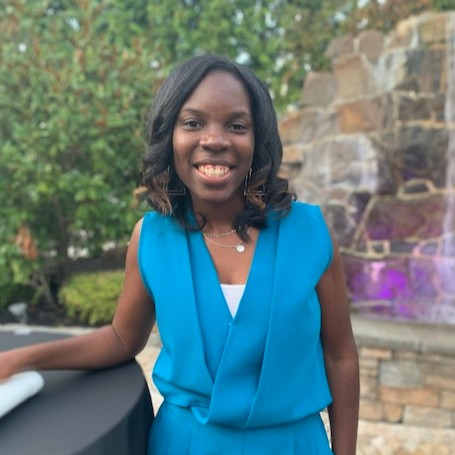
Dr. Jessica Jocelyn is an Assistant Professor and Director of Graduate Studies at George Washington University's Columbian College of Arts and Sciences. She holds a Ph.D. in Communication Sciences and Disorders from Howard University (2022), an M.Ed. from Valdosta State (2015), and a B.A. from the University of Florida (2010). Her research focuses on bilingual language development, sociolinguistics, and global engagement, with a specialization in Haitian Creole speakers. She has conducted interprofessional service-learning projects in Haiti, Ecuador, and Guadeloupe, emphasizing culturally responsive practices. Dr. Jocelyn serves on the executive board of the Haitian Caucus of ASHA and chairs the Global Issues and Practices committee for ASHA's Convention. She teaches courses including Cultural Responsive Practices in Human Communications and Pediatric Language Disorders. Her work bridges clinical practice, education, and global advocacy, addressing language equity for diverse populations.
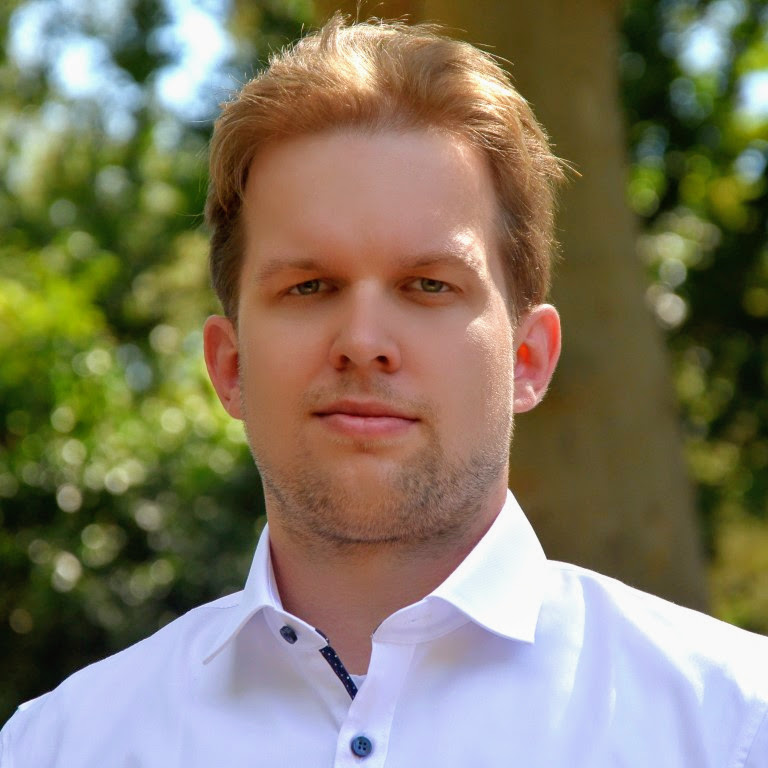
Jiarong Xing is an Assistant Professor of Computer Science at Rice University, starting Fall 2025. Currently a Postdoctoral Scholar at UC Berkeley's Sky Computing Lab under Prof. Ion Stoica, his research focuses on secure, efficient, and scalable networked systems for cloud data centers, ML infrastructure, and 5G networks. He earned his Ph.D. from Rice University in 2024 under Prof. Ang Chen. His expertise spans computer systems, networking, and security. Key contributions include Occam (EuroSys'24), Pipeleon (SIGCOMM'23), and FlexCore (NSDI'22), addressing challenges in network management, SmartNIC optimization, and runtime programmability. His work on NetWarden (USENIX Security'20) mitigates covert channels without performance loss. Education : Ph.D. in Computer Science (Rice University, 2024); B.Sc. in Software Engineering (Shandong University, 2017) Awards : USENIX Security Distinguished Paper (2023), Google PhD Fellowship (2022), Meta Fellowship Finalist (2022), Multiple Rice University Fellowships He has served on program committees for NSDI, EuroSys, ACM SIGCOMM, and USENIX Security, and reviewed for top journals like IEEE Transactions on Networking. His GitHub repositories showcase open-source contributions to systems research, including Occam, Pipeleon, and Ripple.
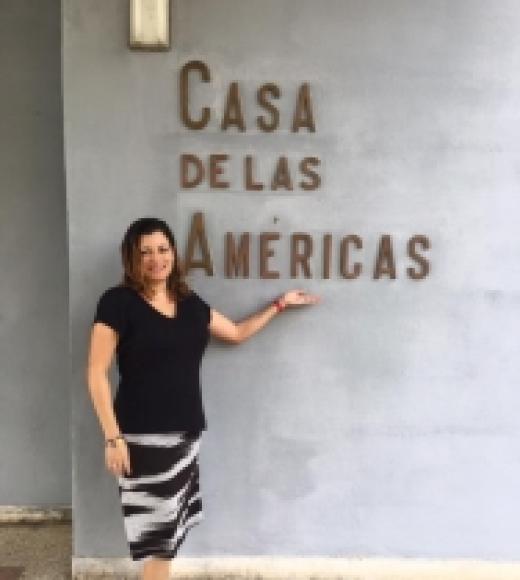
Jesús Rosales is an Associate Professor of Spanish at Arizona State University (ASU), affiliated with the School of International Letters and Cultures. Born in Durango, Mexico, and raised in Santa Barbara, California, he has extensive academic experience across high school, community college, and university levels. His research focuses on Chicano literature and culture, emphasizing Chicano literary history, narratives in Spanish, and the impact of Mexican popular culture on Chicano identity. He co-edits the journal Puentes: Revista México-chicana de literatura, cultura y arte , established in 2003, and founded the Premio Nacional de Narrativa Chicana Escrita en Español to promote Spanish-language Chicano literature. Rosales also engages in creative writing, with a forthcoming collection of short stories titled Play In Dreams and Other testimonios . Education : Ph.D., Stanford University (1995) M.A., Stanford University (1981) B.A., University of California, Los Angeles (1980) Research Interests : Rosales explores Chicano literature's transnational dimensions, including its reception outside the U.S., and collaborates with students on international critical essays. Key themes include Chicano-Mexico cultural intersections, Mexican folk traditions influencing literature, and contemporary narrative forms. Upcoming projects analyze global perspectives on Chicano literature (e.g., Spanish, European, Latin American critiques) and the role of Spanish-language narratives in preserving cultural memory. Grants & Advising : As a mentor, Rosales has guided over 25 Ph.D. and MA students, many of whom pursue academic careers. His current projects include editing volumes on international Chicano literary perspectives and advancing creative scholarship through Puentes . Labs/Teams : Founder and editor of Puentes , a peer-reviewed journal fostering cross-border dialogue through essays, poetry, and art. Also oversees the Premio Nacional literary award to recognize emerging Chicano writers in Spanish.
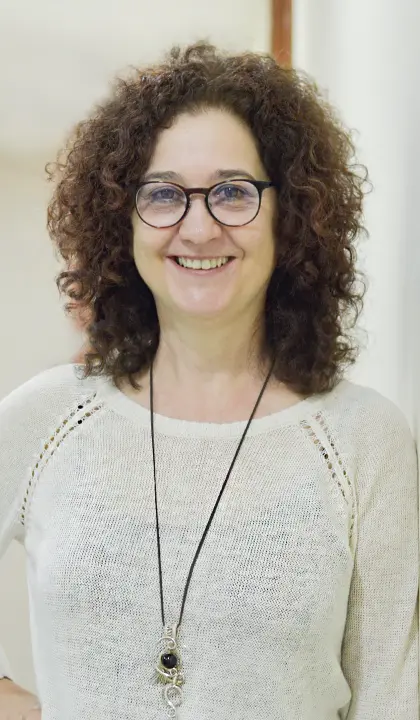
Anjo Vahldiek-Oberwagner is a Research Scientist at Intel Labs and an Adjunct Lecturer at TU Munich, where he contributes to both industrial R&D and academic education in systems and security. His work bridges hardware and software security, focusing on confidential computing, in-process isolation, and secure cloud deployments. PhD in Computer Science, Max Planck Institute for Software Systems & Saarland University, 2019 B.Sc. in Applied Computer Science, Cooperative University State University Baden-Wuertemberg, 2009 His research centers on system security, particularly techniques for protecting data confidentiality and integrity at rest, in-flight, and in-memory. He explores operating systems, distributed systems, and hardware-assisted security mechanisms such as Intel MPK and SGX. His work on ERIM, HFI, Endokernel, and Graphene has advanced secure in-process isolation and trusted execution environments. He has published extensively in top venues like USENIX Security, ASPLOS, and IEEE S&P. His recent publications reflect a strong trend toward practical, deployable security solutions for modern computing environments, including secure AI/ML deployments, efficient in-process isolation, and hardware-accelerated sandboxing. Themes include memory safety, performance optimization, and real-world applicability of security primitives. Scientific awards include: Distinguished Paper Award and Internet Defense Prize, USENIX Security 2019 (ERIM) Distinguished Paper Award, ASPLOS 2023 (HFI) IEEE Micro Top Picks 2024 (HFI) Intel Hardware Security Academic Award (Honorable Mention) DARPA Riser 2022 Intel Labs Gordy Award Honorable Mention He actively mentors and serves on program committees (EuroSys, USENIX Security, ASPLOS), chairs artifact evaluation (USENIX Security, EuroSys, SC), and is an Associate Editor for ACM TOPS. He has advised no formal students listed, but collaborates widely across Intel and academia. His work is supported by Intel and DARPA, and he holds multiple patents in secure computing and TEEs. He leads research on memory-safe architectures and secure cloud deployments at Intel Labs. He is involved in several research projects, including: Secure In-Process Memory Isolation, Shielding Applications in Untrusted Clouds via SGX, Memory-Safe Hardware and Software Architecture, and Research Artifacts and Evaluation. He is also a key contributor to the Graphene Library OS and works on validation and endorsement services for confidential computing.
Venkat Arun is an Assistant Professor in the Department of Electrical and Computer Engineering at The University of Texas at Austin, within the Cockrell School of Engineering. He previously completed his PhD at MIT under the supervision of Hari Balakrishnan and Mohammad Alizadeh, focusing on networking, systems, and formal methods. Education: Bachelor's Degree, IIT Guwahati PhD, Massachusetts Institute of Technology (MIT) Research Interests: Dr. Arun's research bridges the gap between practical heuristics in computer systems and formal proofs of their performance. He specializes in congestion control , formal verification of network protocols , privacy-preserving systems , and wireless networking . His work develops tools to mathematically prove the behavior of real-world algorithms under real-world conditions, ensuring robustness and fairness. Publication Trends: His recent publications, appearing in venues like ACM SIGCOMM, USENIX NSDI, and NDSS, focus on formally analyzing and improving congestion control (e.g., BBR, Copa), developing verification frameworks (CCAC, CCmatic), designing privacy-preserving reporting systems (SAE), and optimizing real-time communication. A recurring theme is using formal methods to uncover hidden flaws in widely deployed heuristics and designing better alternatives. Scientific Awards: Best Student Paper Award, ACM SIGCOMM 2022 Best Paper Award, NDSS 2020 Advising and Grants: As a new faculty member, Dr. Arun is beginning to build his research group and advise graduate students. While specific grant details are not listed in the provided text, his impactful research and industrial adoption (e.g., by Facebook) suggest strong potential for securing research funding in networking and systems. Labs and Teams: During his PhD at MIT, he was part of a prominent networking research group led by Hari Balakrishnan and Mohammad Alizadeh. At UT Austin, he is establishing his own research lab focused on formal methods for systems, likely continuing collaborations with researchers from MIT, CMU, UT Austin, and industry labs like Facebook and Microsoft Research.
Dr. Emily Finer is a Senior Lecturer in the Department of Russian at the University of St Andrews. She specializes in transnational and multilingual interactions between Russian, Ukrainian, Polish, Yiddish, and English cultures. As founder of the Comparative Literature degree program, she bridges language studies across the School of Modern Languages. Her research spans multilingual children’s literature (focused on Ukraine), science fiction’s intersection with exoplanet science, and space policy ethics. She leads a STAIRS grant exploring ethical communication in space colonization and co-directs the St Andrews Centre for Exoplanet Science. Finer’s work appears in journals like Journal of Science Communication and Modern Languages Open . She teaches Honours modules on Russian children’s literature, modernist prose, and Pushkin studies. Notable roles include convening the School Ethics Committee and serving on the British Comparative Literature Association’s executive committee. Research highlights include a collaborative grant with Emory University on Ukrainian multilingual print culture and the Ostroh Academy partnership. Media contributions include BBC Radio features on cultural history and science fiction. Her translation of Bulgakov’s Kiev-town (2023) critically examines colonial attitudes toward Ukrainian identity.
Professor Jeanine Treffers-Daller is a faculty member at the University of Reading, where she specializes in bilingualism, code-switching, and language acquisition. Her research focuses on multilingualism, translanguaging, heritage language attrition, and cognitive effects of bilingualism. She has contributed to studies on motion event construal, language dominance, and educational challenges faced by multilingual learners. Her work includes examining translanguaging practices, the cognitive benefits of bilingualism, and the impact of language education policies in multilingual contexts like India. She has published extensively in journals such as Bilingualism: Language and Cognition and Linguistic Approaches to Bilingualism . Recent research interests include exploring translanguaging beyond theoretical debates, analyzing code-switching dynamics, and investigating how bilingual experiences influence brain structure through neuroplasticity studies involving interpreters and translators. Edited volumes include Language Dominance in Bilinguals (2016) and Lost in Transmission (2020), addressing heritage language development and attrition. Contributions to interdisciplinary projects on multilingual education in India, focusing on reading skills and cognitive development.
Julia Hofweber is a linguist specializing in bilingualism, cognitive linguistics, and language acquisition. She holds a PhD from the University of Reading (2017) and has published extensively on code-switching effects, executive functions in multilingual contexts, and innovative language teaching methods. Her research bridges sociolinguistics, cognitive psychology, and educational practice, with notable contributions to understanding how language use patterns influence cognitive processes. Key Affiliation: University of Reading (PhD institution) Her work examines the interplay between language structure and cognitive mechanisms, particularly in bilingual populations. Recent studies investigate how code-switching modulates executive control and how sociocultural factors influence linguistic behavior in professional settings like corporate communication. She also explores creative pedagogical approaches to enhance second language learning. Hofweber's research spans experimental psychology, corpus linguistics, and educational methodology, making significant contributions to both theoretical and applied linguistics.
Desirée Martín is an Associate Professor in the Department of English at the University of California, Davis, where she has been a faculty member since 2004. Her academic work bridges literary, cultural, and transnational studies with a focus on U.S.-Mexico border dynamics and Chicana/o and Latina/o identities. Education: Ph.D., Duke University, 2004 Graduate Certificate in Latin American Cultural Studies, 2001 B.A., University of California, Berkeley, 1994 Her research centers on U.S.-Mexico border studies, Chicana/o and Latina/o cultural production, transnational American studies, and 19th–20th century Mexican literature. She explores themes of secular sanctity, identity formation, multilingual aesthetics, and cultural translation, often interrogating how marginalized identities are represented and negotiated across borders. The recent publications reflect a strong engagement with religious symbolism, revolutionary rhetoric, multilingual literature, and archival media. Her work spans academic journals, edited volumes, and public-facing media commentary, demonstrating interdisciplinary reach and cultural relevance. Scientific Awards: Outstanding Book Award for 'Borderlands Saints', LASA Latino/a Studies Section, 2014 Ford Foundation Dissertation Fellowship (2001-2002) Ford Foundation Predoctoral Fellowship (1997) Dr. Martín has supervised graduate research through her role in the English Department and continues to mentor emerging scholars in Chicana/o and transnational studies. She is currently developing a book project titled 'Untranslatable,' examining cultural translation and the refusal of fixed identity. Her work is supported by recognition from leading foundations and academic associations. She contributes to academic discourse through publications and media engagement, particularly in reinterpreting historical and cultural narratives from Latinx perspectives. While no formal lab or research team is mentioned, her interdisciplinary approach suggests collaboration across departments and institutions.
Araceli San Martín is a faculty member in the Spanish Department at Saint Louis University-Madrid. She holds degrees in Classical Philology, Italian Philology, German Language and Culture, and a Master's in Literature and Linguistics. She specializes in Spanish as a Foreign Language (ELE) and Spanish for Specific Purposes (EFE), and serves as Coordinator and Head of SIELE exams at SLU-Madrid. Graduate in Classical Philology, Complutense University of Madrid, 1987 Diploma in Italian Philology, Complutense University of Madrid, 1990 Grundstudien in German Language and Culture, University of Heidelberg, Germany, 1996 Master's in Literature and Linguistics, Andrés Bello Seminar, Caro y Cuervo Institute, Bogotá, 1997 Her research interests include Spanish linguistics, syntax, language teaching methodology, cultural representation in literature, and language contact. She has contributed extensively to pedagogical materials and academic discourse on Spanish language education. Her work bridges theoretical linguistics with practical classroom applications, especially in the areas of grammar instruction and cultural integration in language learning. The analysis of her publications reveals a strong focus on the structural and pedagogical dimensions of the Spanish language. Her work spans historical syntax, modern language teaching, and sociolinguistic variation, particularly in Hispanic and transnational contexts. A recurring theme is the interplay between linguistic structure and cultural expression, evident in her studies on Havana’s literary representation and language use in digital environments. She has not been listed with any formal scientific awards in the provided text. She has contributed to national-level research projects funded by Spain’s Ministry of Education and Science, including studies on syntactic evolution in classical Spanish and language contact around the Strait of Gibraltar. She is affiliated with the Bernardo Aldrete Research Group at the University of Cádiz. While no students are listed, her development of official syllabi for secondary education suggests a significant role in curriculum design and academic leadership. She is affiliated with the Bernardo Aldrete Research Group (HUM-195) at the University of Cádiz and has collaborated on large-scale linguistic research projects, indicating active participation in academic networks beyond her primary institution.
Tiffane Levick is a Lecturer in Translation Studies at the University of Toulouse-Jean Jaurès, affiliated with the Center for Anglophone Studies (CAS). She teaches translation (theme and version) at undergraduate and master’s levels and specializes in the translation of urban youth speech, sociolinguistics, gender, and pedagogy. She co-founded the research network 'Translating Minority Voices' and holds a doctorate from Sorbonne Nouvelle University-Paris 3. Education: Doctorate (2018): 'Orality and Universality, in Search of a Global Youth Speech in Translation', Sorbonne Nouvelle University-Paris 3, supervised by Clíona Ní Ríordáin. Research Interests: Her work centers on the translation of non-standard language, particularly urban youth speech, creole, and gender-inclusive forms. She explores how sociolinguistic variation, cultural references, and multimodal elements (such as music and audiovisual media) are rendered across languages. Her research also addresses pedagogical approaches to teaching sensitive topics like non-binary language and marginalized voices in translation. Publications Trends: Her recent scholarly output spans book chapters, journal articles, and conference papers, with a strong focus on the intersection of translation, identity, and cultural representation. Key themes include the translation of slang, creole, rap, and inclusive language, often analyzing contemporary French and Anglophone literature and media. Scientific Awards: 2021 Gulf Coast Prize in Translation (for an excerpt from Sofia Aouine's Rhapsodie des oubliés ) Advising and Grants: While no specific students or grants are listed, she actively mentors through her teaching and co-supervises collaborative translation projects. She has co-edited a volume on teaching translation in Francophone contexts and leads experimental bilingual writing workshops that integrate translation and creative writing. Labs and Teams: She is a core member of the Center for Anglophone Studies (CAS) and co-founded the research network 'Translating Minority Voices' (in collaboration with PRISMES, Sorbonne Nouvelle). She also organizes and participates in interdisciplinary research seminars and conferences on translation, sociolinguistics, and minority representation.
An Vande Casteele is a Researcher at the Vrije Universiteit Brussel (VUB) in the Department of Linguistics and Literary Studies . Active in the Brussels Centre for Language Studies , Vande Casteele's research spans multiple dimensions of Spanish language studies, including pragmatic markers, heritage language varieties, code-switching phenomena, and metaphorical language processing. Institution: Vrije Universiteit Brussel (Belgium) Department: Linguistics and Literary Studies Research Focus: Current projects include Tracing Sibilance (2024-2028) examining Spanish heritage language variation in Brussels, and Bueno, pues... (2023-2027) investigating pragmatic marker usage in L2 Spanish. Their work intersects sociolinguistics, discourse analysis, and psycholinguistics, with particular attention to multilingual interaction patterns and metaphor comprehension in language learners. Publication Trends: Research outputs demonstrate sustained engagement with Spanish language acquisition, discourse structuring, and sociophonetic variation. Recent works (2024-2025) emphasize pragmatic competence development and heritage language maintenance in Brussels' multilingual context. Collaborations: Key collaborations include joint doctoral projects with Universidad de Sevilla and interdisciplinary research with VUB-UGent Alliance. Vande Casteele co-organizes academic events like the CROS International Congress (2024) and chairs symposia on L2 discourse syntax.
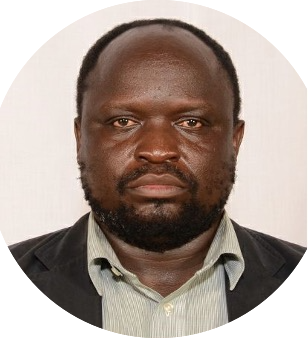
Prof. Daniel Ochieng Orwenjo is a Professor of Applied Linguistics and Director of the Centre for Language and Communication at the Technical University of Kenya. He holds a PhD in African Linguistics from Goethe University Frankfurt. His research focuses on multilingualism, urban youth language, forensic linguistics, and health communication. He previously served as a lecturer at Kenyatta University and chaired the Department of Language and Communication Studies at his current institution. He is affiliated with organizations like UNODC and chairs the Kenya DAAD Scholars Association. Education: Bachelor’s in Education, Kenyatta University MA (Applied Linguistics), Kenyatta University PhD (magna cum laude) in African Linguistics, Goethe University Frankfurt Research Interests: Explores how discourses shape moralities in end-of-life care, multilingual education systems, and linguistic practices among marginalized groups. His work integrates critical discourse analysis to examine power dynamics in health communication and youth language. Professional Roles: Leads initiatives in science communication and policy advising, with a focus on bridging linguistic and cultural gaps in healthcare and education.
Kie Ross Zuraw is a Professor and Vice Chair of Undergraduate Studies in the UCLA Department of Linguistics. Her research focuses on computational phonology, probabilistic grammars, and the interplay between phonological grammar and processing. She actively studies code-mixing, loanword adaptation, and linguistic patterns in Austronesian languages like Tagalog, as well as Korean and French. Dr. Zuraw has advised numerous PhD students and contributed to software tools like maxent.ot for phonological analysis. She teaches advanced courses in phonology, sociolinguistics, and pedagogical practices, emphasizing inclusive teaching methods. Her work bridges theoretical linguistics with empirical research, integrating corpus analysis and experimental methodologies.
Man Ki Theodora Lee is a Researcher at the Department of English Language and Communication within the School of Creative Arts at the University of Hertfordshire. Her academic journey includes a PhD in Linguistics from the University of York (2015), an MA in Psycholinguistics from the same institution (2010), and a BA in Linguistics and Language Technology from City University of Hong Kong (2008). Education: PhD (Linguistics, York, 2015), MA (Psycholinguistics, York, 2010), BA (City University Hong Kong, 2008) Her research focuses on syntax-semantics interface in Cantonese, second language acquisition, bilingualism, and phonetic perception. Her work explores topics like neg-wh quantifiers, comparative grammar of Chinese dialects, and multilingualism in early childhood. She has published extensively on Cantonese syntax, L2 acquisition barriers, and cross-linguistic interference effects. Her articles analyze morphological structures in Hakka and Cantonese, investigate OPC sensitivity in Spanish learners, and examine multilingual vocabulary development. Despite no explicitly listed awards, her prolific output since 2011 demonstrates significant academic contribution to formal linguistics and applied language studies. She has advised no listed students but has conducted research on adult interlanguage in Cantonese-English bilinguals and Korean-Spanish learners. Her work intersects with language policy through studies on multicultural education's impact on multilingualism.