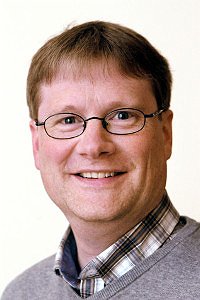
Karasavvidis Stefanos is a Lecturer at the Technical University of Crete (TUC), affiliated with the School of Electrical and Computer Engineering, Department of Electrical and Computer Engineering. He is part of the SoftNet Laboratory (Software Technology and Network Applications Laboratory). His research interests include software engineering, networking, cybersecurity, edge computing, and web technologies. He has contributed technical guides on topics such as handling Greek character encoding in Java JSP applications and configuring Apache Tomcat for proper URI encoding. Teaching: He has taught courses like 'Data Structures and Algorithms' and 'Algorithms and Complexity' since 2018/2019. His technical expertise spans distributed systems, modular design, and edge computing solutions. Projects: He developed the Partial Reconfiguration Cost Calculator (PRCC) for FPGA systems and maintains TYPO3 extensions for GDPR-compliant content delivery. His webpage highlights contributions to software development practices and technical troubleshooting.
Ali Nauman is a researcher affiliated with Yeungnam University in Gyeongsan, South Korea, specializing in wireless communications, machine learning, and IoT systems. His work focuses on cutting-edge technologies for 5G/6G networks, UAVs, and biomedical applications. Co-author in 61+ academic publications (2019–2025) Collaborates extensively with scholars from King Saud University, University of Turku, and Yeungnam University Research Interests span Wireless Sensor Networks , Machine Learning for Communications , and AI-Driven Network Optimization . Key areas include electromagnetic emission management, underwater network topologies, and secure biometric systems. Recent publications highlight AI integration in 6G networks , UAV communication frameworks , and privacy-preserving biometrics . His work bridges theoretical advancements with practical implementations in smart cities and industrial IoT.
**Ahmed Hassan** is a **Professor** and **Canada Research Chair (Tier 2) in Software Analytics** at the **School of Computing**, **Queen's University**, affiliated with the **Faculty of Arts and Science**. He holds the **NSERC/RIM Industrial Research Chair in Software Engineering for Ultra Large Scale Systems**. His research focuses on software systems, data analytics, and mining software repositories (MSR), leading the **Software Analysis and Intelligence Lab (SAIL)**. **Education**: PhD (2005), MMath (2001), BMath (1999) in Computer Science from the University of Waterloo, Canada. **Research Interests**: Software evolution, performance engineering, distributed systems debugging, cybersecurity, and AI-driven software solutions. SAIL explores tools for maintaining large-scale software systems, improving developer productivity, and integrating AI into software workflows. **Awards & Recognition**: ACM and IEEE Fellowships, patents in multiple jurisdictions, and leadership roles in MSR and ICSE conferences. Industrial experience includes RIM/BlackBerry, IBM Research, and Nortel Networks. **Current Projects**: Focus on foundation model-powered software (FMware), AIOps, and ethical AI applications. Teaching courses like CISC322: Software Architecture.
Milan Tair is a researcher at the University of Singidunum, affiliated with the Faculty of Informatics and Computing and the Department of Postgraduate Studies . His academic work spans topics in computer science, web technologies, and optimization algorithms. Doctoral Studies : Electrical Engineering and Computing (2016–2022) Master's Studies : Contemporary Information Technologies (2012–2013) Undergraduate Studies : Programming and Design (2008–2012) His research interests focus on artificial intelligence , web development , cybersecurity , and optimization algorithms , as evidenced by his publications in journals and conference proceedings. Recent publications highlight his work on hybrid metaheuristic algorithms applied to intrusion detection, medical diagnostics, and web quality evaluation. His studies also explore adaptive web technologies, database systems, and mobile computing solutions. Milan has authored or co-authored works on topics including: Optimization of machine learning models (XGBoost tuning, swarm intelligence) Web performance and security (AES encryption, HTTP header licensing) Adaptive web formats (multi-layered image compression) Usability in multilingual web design
El Mahdi El Mhamdi is an Assistant Professor of Mathematics and Data Science at École Polytechnique, where he co-chairs the Master of Science program in Data Science and Machine Learning. His research focuses on the robustness of distributed learning systems and AI safety, with notable contributions to Byzantine-resilient algorithms like Bulyan and Krum. These algorithms are deployed in industrial settings such as WeBank and IBM's Federated Learning Library. He has authored four papers featured in the US NIST 2024 report on Adversarial Machine Learning as state-of-the-art defenses. Education: Grew up in Morocco with a bachelor-level background in physics, mathematics, and philosophy. Pursued studies in France, Germany, and Switzerland through scholarships, including a PhD in Computer Science from EPFL. His thesis on Robust Distributed Learning received the 2020 Best Computer Science PhD distinction and was shortlisted for a cross-departmental award. Research Interests: Robustness of biological networks (e.g., neural, gene-regulatory systems) and distributed machine learning systems under adversarial conditions. Advocates for ethical AI governance and has published a book on AI safety with Lê Nguyên Hoang, translated into multiple languages. His work addresses societal impacts of AI, including misinformation and data poisoning. Awards: Includes France’s top 100 scientific inventors (2025), VentureKick award (2020), and recognition from Global Voices Online, Thomson Reuters, and Google for freedom of speech advocacy. Legal actions ongoing against Moroccan authorities due to threats and harassment. Grants & Service: Co-authored research plans totaling $1.2M in grants. Served as a reviewer/PC member for top conferences (NeurIPS, ICML, ICLR). Supervised multiple master’s theses at EPFL, fostering talent in distributed computing and AI safety. Labs/Teams: Active in collaborative projects like Tournesol (trustworthy human judgments) and Aksel (Byzantine-resilient SGD). Engages in public outreach through podcasts, radio interviews, and science communication initiatives.
Mu-En Wu is an Assistant Professor in the Department of Mathematics at Soochow University (Taiwan) since February 2014. His academic career bridges cryptography, financial engineering, and data science, with significant contributions across both theoretical cryptography and practical financial applications. Previously, he served as a postdoctoral researcher at Academia Sinica's Institute of Information Science (2009-2013, 2013-2014) and as a researcher at the Industrial Technology Research Institute (2013). His educational background includes a PhD in Computer Science from National Tsing Hua University (2004-2009), an MS in Applied Mathematics from National Chiao Tung University (2002-2004), and a BS in Pure Mathematics from National Tsing Hua University (1998-2002). He was recognized with multiple academic honors including the Outstanding Paper Award at Xinmiao Combinatorial Mathematics Workshop (2004) and Best Paper Awards at Information Security conferences (2005, 2009). Wu's research spans two major domains: cryptographic theory (particularly RSA variants and security analysis) and financial data science (algorithmic trading, fund management, and prediction markets). His cryptographic work focuses on improving RSA security through novel factorization techniques and vulnerability analysis, while his financial research emphasizes practical applications of data science in trading strategies, volatility analysis, and risk management. He has developed innovative approaches connecting gambling theory with financial trading, notably through Kelly criterion applications. His publications show a clear evolution from pure cryptography (2005-2010) toward financial applications (2013-present), reflecting his unique interdisciplinary expertise. The most recent work integrates machine learning with financial time series analysis, demonstrating sophisticated approaches to futures market prediction and volatility skew analysis. Bronze Award in University Mathematics Proficiency Test (Calculus) 90 Academic Year Bronze Award in University Mathematics Proficiency Test (Calculus) 91 Academic Year Outstanding Paper Award at Xinmiao Combinatorial Mathematics Workshop 2004 Best Paper Award at Information Security Workshop 2005 NSC Thousand-Mile Horse Scholarship 2007 Honorable Mention Doctoral Dissertation Award 2009 Best Paper Award at Information Security Conference 2009 Wu maintains an active industry presence through his "Biquan Duoli Zhen Yingxiong" column at Coin Chart website since 2013 and extensive teaching engagements with financial institutions. He has delivered over 50 specialized lectures at universities and financial organizations across Taiwan, focusing on R language applications in financial data analysis. His industry collaborations include Taiwan Futures Exchange, Securities and Futures Market Development Foundation, and various commercial banks, where he develops practical trading algorithms and risk management frameworks.
Lennart Beringer is a Researcher at Princeton University's Department of Computer Science, specializing in formal verification and interactive proof assistants. His work bridges theoretical foundations with practical implementations in systems programming and deep learning frameworks. Research Focus: Software verification, concurrent programming, and deep learning theory Conference Roles: Committee member, session chair, and author in POPL, CPP, CoqPL, and DeepSpec tracks His recent publications analyze verification frameworks for C programs and deep learning architectures. Notable contributions include verification of networked servers and Derecio's coordination mechanisms using VST and Coq tools. He actively participates in academic leadership through conference organizing committees and workshop sessions. Article trends show a focus on: Formal verification of low-level systems Concurrency and memory safety Deep learning theoretical analysis Interactive proof techniques Collaborative research frameworks Tool development for verification
V. Dinesh Reddy is affiliated with SRM University Andhra Pradesh, Department of Computer Science and Engineering in Amaravati, India. He maintains an active research career with publications spanning from 2017 to 2025 across multiple prestigious venues including IEEE Access, Energy Informatics, Quantum Information Processing, and Sensors. Dr. Reddy's research interests span cloud computing infrastructure optimization, edge computing, quantum computing applications, image processing, and cybersecurity. His work demonstrates expertise in developing evolutionary algorithms, machine learning approaches, and optimization techniques to solve complex computing problems with practical applications in IoT security, vehicular networks, and medical diagnostics. His publication record shows consistent output with increasing collaboration and expanding research scope over time. The research demonstrates strong interdisciplinary connections between traditional computer science domains and emerging technologies like quantum computing, addressing real-world challenges in computing infrastructure efficiency and security. Dr. Reddy has collaborated extensively with researchers including G. R. Gangadharan, G. Subrahmanya V. R. K. Rao, Marco Aiello, Md. Muzakkir Hussain, and Ashu Abdul. His research appears well-funded given the scope and diversity of projects, with applications spanning sustainable data centers, edge computing for vehicular networks, and quantum computing implementations. His research spans multiple laboratory contexts, particularly in cloud computing infrastructure, quantum computing applications, and image processing. Dr. Reddy's future research directions appear to be expanding into more specialized quantum computing applications and advanced edge computing scenarios for vehicular networks, as evidenced by his most recent publications from 2024-2025.
Dr. Philip Langer is a researcher at TU Wien's Institut für Information Systems Engineering, part of the Faculty of Informatics. His work focuses on model-driven engineering, semantic model differencing, and cloud-based software modernization. He contributed to frameworks like GLSP, ARTIST, and xMOF, emphasizing tool integration and collaboration in modeling environments. Research Areas: Model transformation, UML semantics, cloud migration, and search-based optimization Key Projects: ARTIST (cloud migration), GLSP (web modeling tools), xMOF (formal semantics) Publications highlight advancements in model differencing using execution traces, multi-objective model merging (MOMM), and semantic visualization techniques for web-based IDEs. His work bridges theoretical foundations with practical tool development, addressing challenges in collaborative modeling and legacy system modernization. Awards: No specific prizes mentioned, but recognized through prolific conference contributions and framework development. Grants/Advising: He collaborates extensively with peers like Tanja Mayerhofer and Manuel Wimmer, though specific grants or student advisement details are not explicitly stated. His research impacts both academic and industrial software engineering practices.
Shruti Tople is a Principal Researcher at Microsoft Research in the Azure Research – Security and Privacy group. She holds a Ph.D. from the School of Computing at the National University of Singapore (NUS) , where she received the Dean's Graduate Research Excellence Award . Her work focuses on quantifying and mitigating information leakage in machine learning models while preserving their utility. Key Research Areas include: Systems Security Privacy in Machine Learning Differential Privacy Causal Learning Transfer Learning for Vision & Language Models Recent Publications address challenges such as membership inference attacks, federated backdoor defense, and privacy-enhanced deep learning. Her open-source projects like Analyzing PII Leakage and RobustDG provide practical tools for differential privacy and domain generalization. She collaborates with interns from institutions like NUS , University of Waterloo , and Imperial College London . Scientific Awards : Dean's Graduate Research Excellence Award (NUS)
Thomas Heide Clausen is a Professor at École Polytechnique (France) and leads its computer networking research group. He holds the Cisco Endowed Chair in 'Internet of Everything' and serves as Academic Director for the interdisciplinary Master's program 'IoT: Innovation and Management'. His work focuses on protocols and architectures for maintaining internet connectivity in dynamic environments, particularly through the development of the OLSR and LOADng routing protocols. Education: M.Sc. and PhD from Aalborg University (Denmark) Research: IoT networking, Smart Grid communication, wireless mesh networks, routing protocol design, network load balancing, and security in MANETs Recent Article Trends: Explored machine learning for load balancing (2022), zero-trust architectures (2023), and wireless optimization for IoT/SmarGrid (2016-2022) Scientific Awards: IEEE Senior Member (2016), IEEE Computer Society Distinguished Contributor (2021) Industrial Collaborations: Hitachi (Japan), Fujitsu (USA), Toyota (Japan), Cisco (USA/France), EDF (France), and others
Slavko Žitnik is an Associate Professor and Vice-dean at the Faculty of Computer and Information Science, University of Ljubljana, where he is a member of the Laboratory for Data Technologies. His academic career spans multiple research projects and international collaborations focusing on data technologies and natural language processing. His primary research interests include information retrieval, information extraction, natural language processing, entity extraction, relationship extraction, coreference resolution, data merging, redundancy elimination, and ontologies. Dr. Žitnik's work often bridges theoretical computer science with practical applications in various domains including education, healthcare, and smart city ecosystems. Dr. Žitnik has led and participated in numerous significant research projects including P2-0359 on Ubiquitous Computing (2023-2027), PoVeJMo on Adaptive Natural Language Processing with Large Language Models (2023-2026), and the GOBLIN COST Action for building global networks of large-scale knowledge graphs. His recent work demonstrates a strong focus on adapting natural language processing techniques with large language models and creating practical applications of these technologies. His scientific contributions span multiple domains including: Natural Language Processing and Information Extraction techniques Knowledge graph construction and integration Applications in education, healthcare, and smart city ecosystems Development of practical tools and systems for data processing Dr. Žitnik has established international collaborations with institutions including Harvard University's Department of Biomedical Informatics (where he conducted a research visit from July to October 2022), the University of South Florida, and various European partners through COST Actions and other collaborative frameworks.
Clément Pit-Claudel is an assistant professor at École Polytechnique Fédérale de Lausanne (EPFL) in the School of Computer and Communication Sciences, Department of Computer Science. He leads the SYSTEMF lab which he founded in January 2023. Prior to joining EPFL, he was a PhD candidate at MIT with Adam Chlipala and subsequently worked as a senior applied scientist at Amazon AWS. His academic journey began at École Polytechnique in France, followed by doctoral studies at MIT. Dr. Pit-Claudel's research focuses on programming languages, compilers, and formal verification, with broader interests spanning systems engineering, hardware design languages, security, performance engineering, databases, and type theory. His work centers around three main axes: extensible compilation (teaching compilers domain-specific optimization tricks), hardware design languages and verification, and tooling for proof assistants. He has developed several influential systems including Elk (a linear-time engine for JavaScript regexes), Warblre (a Coq translation of JS regex specification), Fiat (a library for correct-by-construction refinement), Narcissus (for verified binary encoders/decoders), F2F (a program extraction framework), Rupicola (a compiler-construction toolkit), Kôika (a rule-based hardware design language), Cuttlesim (a fast hardware simulator), and Alectryon (a literate programming system for Coq). His publications span top venues including PLDI, POPL, ICFP, ASPLOS, and SLE, with recent work focusing on verified JavaScript regular expressions, foundational integration verification of cryptographic servers, and relational compilation techniques. His research aims to build small, fast, and completely verified components for critical systems through a combination of machine-checked proofs, hardware-software co-design, low-level compiler engineering, and new tools for interactive theorem proving. His notable awards include the Distinguished Artifact award at SLE 2020 for 'Untangling Mechanized Proofs,' the William A. Martin Memorial Thesis Award from MIT in 2016, and the Frederick C. Hennie III Teaching Award from MIT in 2016. He has served on program committees for numerous conferences including PLDI, POPL, ICFP, and SPLASH, and has organized workshops such as the Coq Workshop and Proof Systems. As an educator, he teaches 'Software Construction' (undergraduate level, ~400 students) and 'Interactive Theorem Proving' (graduate level) at EPFL. His teaching philosophy emphasizes hands-on learning, continuous assessment through oral examinations, and designing assignments that lead students to build concrete artifacts they can be proud of. His approach is informed by hundreds of hours of in-class instruction in Europe and the US, resulting in stellar student reviews and multiple teaching awards.
Thorsten Berger is a Professor and Head of the Chair of Software Engineering at Ruhr University Bochum, Germany. His office is located at MC 4.101 on the RUB campus, with contact details including phone (+49 (0) 234 32 25975) and email (thorsten.berger@rub.de). He's an active researcher with extensive service in the software engineering community, serving on program committees for major conferences including ICSE, FSE, ASE, and SPLC. Professor Berger's research primarily focuses on software engineering with specialization in variability management, software product lines, and robotics software engineering. His work bridges theoretical foundations with practical applications, particularly in behavior trees for robotic systems, configuration management, and domain-specific language engineering. His interdisciplinary approach connects software engineering with control theory and machine learning applications. Analysis of his recent publications reveals a strong trend toward robotics software engineering, with increasing focus on behavior trees, test-case specification, and runtime verification for robotic systems. His work also shows growing interest in machine learning integration with traditional software engineering practices, particularly in model integration and asset management for ML-enabled systems. The research demonstrates consistent evolution from foundational work in variability management toward more applied domains. His scientific achievements have been recognized with numerous awards: Multiple Most Influential Paper Awards (SLE 2024, VaMoS 2023, VaMoS 2020) Wallenberg Academy Fellowship VR Starting Grant from Swedish Research Council (2016) Best Paper Awards at Modularity (2015) and CSMR (2013) Distinguished Reviewer Awards from ASE, ICSE, and SPLC conferences ERC Starting Grant finalist (2019, 2020) Professor Berger has secured substantial research funding as Principal Investigator for multiple projects including Novel Techniques for Data-Driven Root-Cause Analysis and Variability Management (Volkswagen Infotainment), Properties and Verification Techniques for Behavior Trees (Phoenix Contact Foundation), and PrivacyE2E framework for AI-enabled systems (Federal Ministry of Education and Research). His Wallenberg Academy Fellowship and VR Starting Grant demonstrate his capacity to attract competitive early-career funding. He leads the Virtual Platform project funded by the Swedish Research Council and participates in EU-funded initiatives like CO4ROBOTS. As Head of the Chair of Software Engineering at Ruhr University Bochum, he leads a research group focused on advanced software engineering techniques with particular emphasis on variability-intensive systems. His team actively participates in international research collaborations including the Wallenberg Autonomous Systems Program (WASP) and has organized significant events like the Dagstuhl seminar 19191 on 'Software Evolution in Time and Space: Unifying Version and Variability Management.'
Nalaka R. Dissanayake serves as a Senior Lecturer in the School of Computer Science and Engineering at the University of Westminster, where he contributes to the Software Systems Engineering Research Group. With 17 years of academic experience since 2007, he progressed from student instructor to his current senior position while completing his doctoral studies. His foundational education includes a B.Sc. in Information Technology from the Sri Lanka Institute of Information Technology (2007), an M.Phil. from the University of Colombo School of Computing (2017), and a Ph.D. from the University of Westminster (2024). Dr. Dissanayake's research centers on rich web-based applications engineering, where he has established significant contributions through architectural style development and design methodology formalization. His work introduces specialized concepts including RiWAArch Style, BAW-MVC, and delta communication principles that address core challenges in web application state management and communication efficiency. Current research frontiers actively explore prompt engineering techniques for integrating AI/ML capabilities into rich web applications, demonstrating adaptation to emerging technological paradigms while maintaining focus on architectural fundamentals. His publication portfolio reveals a clear research trajectory evolving from AJAX application foundations (2013-2014) through architectural pattern specification (2017-2020) toward comprehensive design methodology development (2023-2024). This progression demonstrates increasing theoretical sophistication while maintaining practical implementation relevance, with consistent output across journals like the Journal of Web Engineering and major conferences including FTC and ICTer. As an active academic contributor, Dr. Dissanayake serves as a reviewer for the Journal of Web Engineering and various conferences. His research group membership provides access to collaborative opportunities within the university's software engineering ecosystem, while his extensive teaching experience across multiple institutions offers valuable mentorship perspective for graduate students.