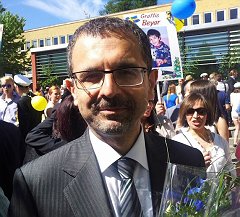
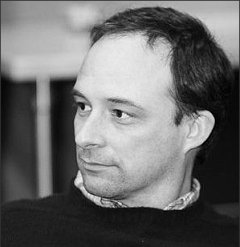
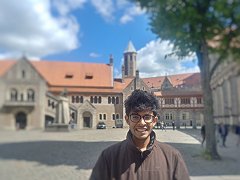
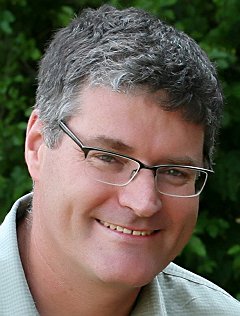
Jialong Li is an Assistant Professor (non-tenure-track) at the Waseda Institute for Advanced Study. His research focuses on dynamic responsibility allocation in human-software collaboration, with applications in autonomous driving, robotics, and adaptive systems. He employs techniques such as discrete controller synthesis and large language models to address runtime environmental changes. Key research themes: human-robot collaboration, self-adaptive software, autonomous systems Technical approaches: Discrete Controller Synthesis, LLM integration, reinforcement learning Recent publications emphasize multimodal human-AI collaboration, prompt engineering for software development, and ethical considerations in adaptive systems. His work bridges theoretical modeling (e.g., requirements analysis, stochastic control) with real-world applications like warehouse robotics and color-blind accessibility tools. While no formal awards are listed, his research has been presented at top conferences in software engineering and autonomous systems.
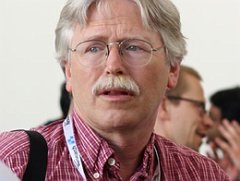
Parosh Aziz Abdulla is a Chaired Professor at the Department of Information Technology, Uppsala University, Sweden. He is a prominent researcher in the field of theoretical computer science with a focus on formal methods, concurrency, and program verification. His work bridges theoretical foundations with practical applications in software and hardware verification. Professor Abdulla's primary research interests include Concurrency, Distributed Systems, Program Verification, Model Checking, Automata, and Logic. His work spans both theoretical aspects of computer science and practical verification techniques for concurrent and distributed systems. He has made significant contributions to the understanding of memory models, particularly in the context of modern architectures like x86 with persistent memory. His research has evolved from foundational work on infinite-state systems to practical verification techniques for concurrent programs and string constraints. Professor Abdulla has served on numerous program committees for top-tier conferences including PLDI, POPL, CAV, CONCUR, and TACAS, demonstrating his standing in the research community. He has been PC co-Chair for TACAS'11 and has contributed to many other conferences over the years. As an advisor, Professor Abdulla has supervised numerous PhD students to completion, with graduates working on topics ranging from verification of networks of communicating processes to caches, transactions, and memory models. His students have gone on to successful careers in academia and industry. Professor Abdulla maintains an active research agenda, with recent work focusing on verification of quantum circuits, efficient linearizability monitoring, and verification under Intel-x86 with persistency. His research continues to address fundamental challenges in program verification while adapting to new computing paradigms and hardware architectures.
Sara Achour is an Assistant Professor jointly appointed in both the Computer Science and Electrical Engineering Departments at Stanford University's School of Engineering. Her work bridges computer science and electrical engineering, focusing on enabling end-users to develop computations for emerging computing platforms with analog behaviors. Dr. Achour received her PhD in Computer Science from the Massachusetts Institute of Technology in 2021. Her academic journey led her to Stanford where she currently teaches courses including Introduction to Essential Software Systems and Tools (CS 104), Software Engineering (CS 295), and Software Techniques for Emerging Hardware Platforms (CS 349H/EE 349). Her research program centers on developing new programming languages, compilers, and runtime systems that address the challenges of emerging computing platforms. She specializes in creating tools that help developers harness the potential of analog and non-traditional hardware systems. Her work spans quantum computing, analog computing paradigms, hyperdimensional computing, and memory systems, with a particular emphasis on compiler techniques and hardware-aware optimization. Analysis of her recent publications reveals a strong focus on bridging the gap between software and emerging hardware platforms. Her work spans quantum computing (qubit/qutrit circuits), analog computing paradigms, hyperdimensional computing, and novel memory systems. A recurring theme is developing compiler techniques that optimize for specific hardware characteristics while maintaining programmer productivity. Dr. Achour actively mentors students across multiple levels of their academic careers. She serves as a Doctoral Dissertation Advisor, Co-Advisor, Reader, and Master's Program Advisor for numerous students working on cutting-edge research in compilers and emerging hardware. Her teaching portfolio includes both foundational courses like Introduction to Essential Software Systems and specialized advanced courses focused on emerging hardware platforms. She appears to be building a research group focused on programming languages and compilers for non-traditional computing architectures, with students working across quantum computing, analog systems, and memory technologies.
Bradford L. Chamberlain is a Distinguished Technologist at Hewlett Packard Enterprise and an Affiliate Professor in the Paul G. Allen School of Computer Science and Engineering at the University of Washington. With over two decades of experience in high-performance computing, he has made significant contributions to parallel programming languages, particularly as the technical lead of the Chapel programming language project since 2006. His educational background includes: Ph.D. in Computer Science & Engineering from the University of Washington (2001) M.S. in Computer Science & Engineering from the University of Washington (1995) B.S. in Computer Science from Stanford University (1992) Chamberlain's research focuses on improving programmer productivity for high-performance computing through innovative language design, compiler techniques, and runtime systems. His work centers around the Chapel programming language, which aims to provide a multiresolution programming model that allows developers to express parallelism at varying levels of abstraction while maintaining performance across diverse architectures from laptops to supercomputers. His research spans parallel language design, compiler optimization, data distribution strategies, locality management, and performance portability. Chapel builds on his earlier work with the ZPL language, where he developed region-based approaches for sparse parallel computing. His publication record over the past fifteen years demonstrates a consistent focus on practical approaches to parallel programming, with recent work emphasizing data locality, heterogeneous architectures, and performance portability. His articles show an evolution from foundational language design concepts to increasingly sophisticated implementations addressing real-world HPC challenges, particularly in the areas of domain mapping, iterator abstractions, and memory management for large-scale systems. As a Distinguished Technologist at HPE, Chamberlain has played a key role in growing the Chapel project from a modest effort to one involving nearly 20 full-time developers. His leadership has positioned Chapel as one of the most promising languages for addressing the challenge of productive parallel programming at scale. He has secured funding, established collaborations with academia and industry, and performed extensive outreach through talks, tutorials, and research visits. At the University of Washington, Chamberlain serves as a liaison between academia and industry, participating in student committees, teaching graduate courses like Parallel Computation, and fostering communication between the department and HPE/Cray. His teaching experience spans from undergraduate data structures to graduate seminars on parallel programming environments. He has also volunteered as a tutor for underrepresented students in computer science.
Saksham Goel serves as an Assistant Professor in the Department of Computer Science and Engineering at the Indian Institute of Technology Bombay, where he conducts research at the intersection of programming languages and systems engineering. His research focuses on advanced memory management techniques, with core expertise in: Garbage collection algorithms and optimizations Compiler design for memory safety Runtime systems for efficient resource utilization Program analysis for liveness domains Dr. Goel's work demonstrates significant contributions to memory management systems, particularly through his ISMM 2020 publication on finite liveness domains. His research addresses critical challenges in reducing memory overhead while maintaining performance in modern programming environments, with applications spanning cloud infrastructure and latency-sensitive applications. He actively participates in premier programming languages conferences including PLDI and its co-located events, contributing to the advancement of compiler technology and runtime systems through both theoretical frameworks and practical implementations.
Tony Hosking serves as Professor and Director of the School of Computing at the Australian National University, with additional research contributions through Data61 (formerly NICTA). Previously, he spent 22 years on the faculty at Purdue University. His leadership extends to major programming languages conferences including serving as General Chair for PPoPP 2026. Education BSc in Computer Science from University of Adelaide MSc in Computer Science from University of Waikato PhD in Computer Science from University of Massachusetts at Amherst Hosking's research centers on programming language implementation with particular expertise in memory management systems. His work bridges theoretical foundations and practical systems, focusing on garbage collection algorithms, virtual machine design, and compiler optimizations for managed runtimes. He investigates how hardware architectures can better support language features through runtime systems. Professional Recognition Named ACM Distinguished Scientist in 2012 ACM Life Member status Active IEEE Member Hosking maintains extensive service to the programming languages community through conference organization and committee work. He has held leadership roles across PLDI, SPLASH, ISMM, and PPoPP conferences since 2013, including program committees, steering committees, and session chair positions. His GitHub activity shows continued technical engagement through 2025.
Doug Lea serves as Professor of Computer Science at the State University of New York at Oswego, where he has established himself as a leading authority in concurrent and parallel systems. His extensive contributions span software library development, standardization efforts, and academic leadership across major programming language conferences. His research focuses on concurrency, parallelism, distributed systems, and reusable software components . Lea's work bridges theoretical foundations with practical implementations, particularly evident in his widely adopted Java concurrency libraries. His research interests stem from deep engagement with object-oriented design principles and implementation techniques for complex computing systems. Lea's scholarly impact is reflected in his designation as an ACM Fellow . His contributions extend beyond publications to significant influence on industry standards and educational practices in concurrent programming. As an active academic leader, Lea has served on program committees for premier conferences including PLDI, SPLASH, ECOOP, and PPoPP since 2014. His ongoing participation through 2026 demonstrates sustained engagement with the programming languages community. His professional website at http://gee.cs.oswego.edu serves as a resource hub for his technical contributions.
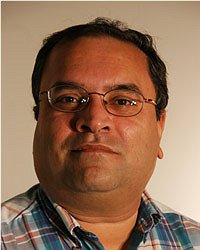
Santosh Pande is a Professor and Associate Chair for Graduate Studies in the School of Computer Science at Georgia Institute of Technology. His research focuses on compiler analysis and optimizations, providing deep insights into software behavior to improve various system properties through automated methods. His research interests include: Program Analysis for Security Compiler Optimizations and security implications Compiler-OS interactions for resource management Real-time software analysis Machine learning systems performance optimization Dr. Pande's recent publications demonstrate a strong focus on security-oriented compiler techniques, particularly in program debloating to reduce attack surfaces. His work addresses the critical intersection between compiler optimizations and security vulnerabilities, as well as innovative approaches to scheduling and resource allocation through compiler-OS collaboration. Research results show significant performance improvements (2x to 4x) for batch-oriented execution of modern workloads in data-center environments. His research has been consistently funded by: National Science Foundation (NSF) Office of Naval Research (ONR) Defense Advanced Research Projects Agency (DARPA) Air Force Industry partners including Sony, Toshiba, IBM, Motorola, and Infineon Dr. Pande holds a patent on smartcards developed in collaboration with Infineon. He actively mentors PhD students and seeks "smart and motivated PhD students" to join his research group. His work has resulted in over 100 publications and open-source software contributions. He is affiliated with multiple research centers at Georgia Tech including the Center for Experimental Research in Computer Systems (CERCS) and contributes to the Online Master of Science in Computer Science (OMSCS) program.
Manuel Serrano is a Research Professor at Inria Sophia-Antipolis, France, affiliated with Université Côte d'Azur. He is a leading researcher in programming languages, specializing in web programming, JavaScript compilation, and synchronous reactive systems. His work bridges theoretical computer science with practical applications, particularly in the development of innovative programming languages and tools. Dr. Serrano's research interests focus on programming language design and implementation, with particular emphasis on web technologies. He is the creator of several influential systems including Hop (a language for multitier web programming), HipHop.js (a synchronous reactive language for JavaScript), and Bigloo (an optimizing Scheme compiler). His work addresses fundamental challenges in making web programming more structured, efficient, and reliable, while maintaining the flexibility required by modern web applications. His publication record reveals a consistent focus on improving JavaScript performance through ahead-of-time compilation techniques, exploring novel concurrency models for web applications, and developing practical tools for real-world programming challenges. His recent work shows increasing interest in applying synchronous reactive programming to interactive music systems and IoT applications, demonstrating the versatility of his language design approaches. Dr. Serrano actively contributes to the academic community through service on program committees for major conferences including PLDI, ICFP, ECOOP, and SPLASH. He has served as General Chair for Programming 2018 and Scheme 2001, and is a member of the steering committees for the Scheme and Functional Programming workshop and the Dynamic Language Symposium. He leads the INDES research team at Inria Sophia-Antipolis, which focuses on innovative programming models for distributed and ubiquitous computing. His team has developed several open-source software projects including Hop, HipHop, Bigloo, and related tools that have influenced both academic research and practical web development.
Cyrille Artho is an Associate Professor at KTH Royal Institute of Technology in the School of Computer Science and Communication, Department of EECS/TCS (Theoretical Computer Science). He joined KTH in August 2016 after working as a Senior Researcher at the National Institute of Advanced Industrial Science and Technology (AIST) in Tokyo and Osaka from April 2007 to July 2016. Prior to that, he was a Postdoctoral Researcher at the National Institute of Informatics in Tokyo. He completed his Ph.D. at ETH Zurich, where his thesis focused on finding multi-threading faults beyond data races. Dr. Artho's research focuses on software verification and engineering, particularly in concurrent and networked software systems. His work spans model-based testing, software model checking, and the development of verification tools. He has made significant contributions to the Java PathFinder ecosystem, developing the net-iocache extension for networked software and the Modbat model-based testing framework. His recent work has expanded into smart contracts, blockchain technology, and formal verification of distributed systems. Dr. Artho has published over 100 papers in top software engineering conferences and journals. His most recent publications demonstrate a continued focus on verification techniques, with increasing attention to smart contracts and formal methods for distributed systems. His work shows a consistent trajectory from foundational research on concurrency verification to practical applications in modern distributed systems. ACM SIGSOFT Distinguished Paper Award (2015) QRS 2015 best paper award Best tool (competition winner) at SBST 2015 Most influential ASWEC paper award (awarded in 2013) Dr. Artho is actively involved in the academic community as a committee member, session chair, and workshop organizer for major conferences including ASE, ICSE, ISSTA, and FM. He is also a member of the management group for the KTH Center for Cyber Defense and Information Security, reflecting his contributions to security-related research.
Corina Pasareanu is a Principal Scientist at Carnegie Mellon University's CyLab Security and Privacy Institute and serves as a Technical Professional Leader for Data Science at NASA Ames Research Center through KBR. She holds a PhD in Computer Science from Kansas State University (2001), an MS (1995) and BS (1994) from the University Politehnica of Bucharest. Her research focuses on formal methods for trustworthy AI , including model checking, symbolic execution, compositional verification, and probabilistic software analysis. She pioneers techniques for verifying autonomous systems, neural networks, and cryptographic applications, with emphasis on safety-critical domains like autonomous vehicles and aerospace systems. Recent publications demonstrate strong focus on AI safety verification , including adversarial robustness of large language models, vision-based autonomous systems, and neural network interpretability. Her work integrates formal methods with machine learning to address security challenges in emerging AI technologies. Awards and honors: ACM Fellow (2023) IEEE ASE Fellow ETAPS Test of Time Award (2021) ASE Most Influential Paper Award (2018) ESEC/FSE Test of Time Award (2018) ISSTA Retrospective Impact Paper Award (2018) She leads major projects funded by DARPA, NSF, AWS, and NASA including: Trinity: Neurosymbolic Learning and Reasoning (DARPA) Proving Timing Side Channel Absence (AWS) Safety of Shared Control in Autonomous Driving (AAIP) Verifiable Federated Learning (CyLab) She advises PhD students at CMU and co-leads the CyLab Security and Privacy Institute's research initiatives.
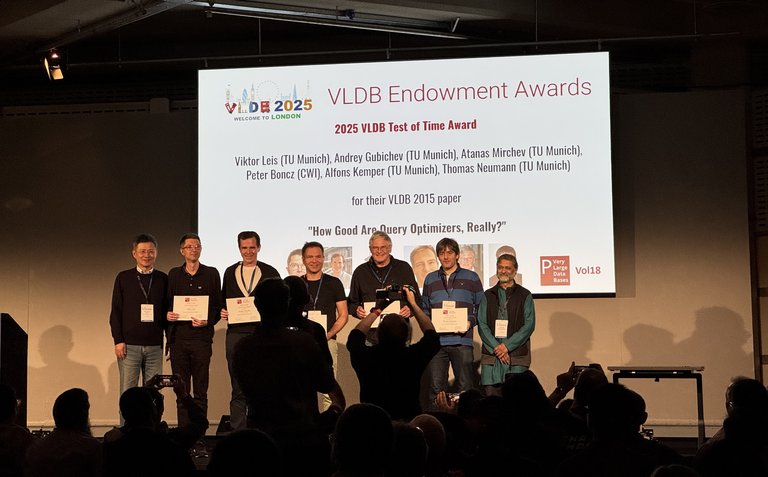
Peter Boncz is a Professor in the special chair of Large Scale Analytical Database Systems at Vrije Universiteit Amsterdam and leads the Database Architectures (DA) research group at CWI (Centrum Wiskunde & Informatica), the Netherlands' national research institute for mathematics and computer science. He serves on the CWI management team and is actively involved in multiple research initiatives and industry collaborations. Professor Boncz is internationally recognized as a pioneer of column-store databases, introduced through his PhD project MonetDB. His research spans database architecture, query processing optimization, and analytical database systems. His work on vectorized query processing with his first PhD student Marcin Zukowski has become foundational in modern analytical databases including BigQuery, Databricks, Snowflake, and DuckDB, which has millions of monthly downloads. Current research focuses include GPU data processing, vector search optimization, confidential computing, and graph data management. Boncz's recent publications reveal strong trends toward optimizing database systems for modern hardware architectures, particularly GPUs and cloud CPUs. His work bridges theoretical database concepts with practical implementation, focusing on performance optimization through innovative data layouts, compression techniques, and hardware-aware processing. The research shows a clear trajectory from foundational database concepts toward specialized optimization for emerging hardware and application requirements. VLDB Test of Time Award 2025 (second time, previously won in 2009) CIDR Test of Time Award 2024 ACM Fellow (2022) Humboldt Research Award (2013) ICTRegie Award (2006) Boncz has co-founded six spin-off companies in data systems, including MonetDB BV, and serves as an advisor to ventures like Databricks Corp. His research is supported by multiple external funding projects including Actian Research Grants, Databricks research agreements, and Motherduck Service Agreements. He has advised numerous students, with Marcin Zukowski being notably mentioned as his first PhD student who co-developed vectorized query processing. As leader of the Database Architectures research group at CWI, Boncz oversees a team focused on pushing the boundaries of database technology. The group maintains close ties with industry through projects with Databricks, Motherduck, and RelationalAI, while continuing to develop open-source technologies like DuckDB. The team is particularly active in GPU acceleration, confidential computing, and graph data management through the Linked Data Benchmark Council (LDBC), which Boncz founded.
Lionel Seinturier is a Professor at the University of Lille, Faculty of Science and Technology, Department of Computer Science. He serves as the Leader of the Spirals research group, a joint project-team between Inria (French National Institute for Research in Digital Science and Technology) and the University of Lille. His academic work bridges theoretical research with practical applications in software engineering and distributed systems. His primary research interests include: Distributed Systems and Middleware Self-Adaptive Software Systems Cloud Computing and Energy Efficiency Aspect-Oriented Programming Software Testing and Maintenance Web Application Understanding Seinturier's publication record spans over two decades, with recent work (2023-2025) focusing on energy efficiency in cloud infrastructures, web page matching algorithms, and automated repair of web automation scripts. His research trajectory shows evolution from foundational work in aspect-oriented programming and middleware to contemporary challenges in sustainable computing and intelligent software systems. A notable pattern is his consistent development of practical tools and frameworks that address real-world software engineering problems. He has supervised numerous PhD students whose research aligns with his expertise: Guillaume Fieni (2022): Energy efficiency of virtualized computing infrastructures Sacha Brisset (2022): Understanding web applications through automatic inference Thomas Durieux (2018): Runtime failure analysis and patch generation Maxime Colmant (2016): Energy consumption analysis in multicore architectures Bo Zhang (2016): Resource optimization in cloud computing infrastructure Seinturier maintains active involvement in the international software engineering community, serving on program committees for major conferences including ECSA (2022-2025), ICSOC (2016-2025), and ICWS (2023-2025). His educational contributions include teaching graduate courses on distributed application design and advanced distributed systems at the University of Lille, as well as participation in a MOOC on Java EE and Spring development. His technical contributions include several significant software frameworks: FraSCAti: A reconfigurable service-oriented middleware platform Juliac: A framework for generating component execution kernels AOKell: An aspect-oriented implementation of the Fractal component model JAC: A framework for dynamic aspect-oriented programming
Marco Vassena is an Assistant Professor at the Department of Information and Computing Sciences, Utrecht University. His research focuses on using programming language techniques like type systems, compilers, and program verification to build secure systems with reliable security guarantees. Affiliation: Utrecht University, Netherlands Research Areas: Language-based security, memory safety, constant-time programming, information flow control, WebAssembly security, and defenses against microarchitectural attacks. His work includes developing frameworks for secure execution environments, such as MSWasm for WebAssembly, and advancing tools like Blade to mitigate speculative leaks in cryptographic code. He has contributed to leading conferences including POPL, PriSC, and PLDI. Scientific Awards: Veni Grant (2023)
Magnus O. Myreen is a Professor at Chalmers University of Technology in the Department of Computer Science and Engineering. His research focuses on formal verification , interactive theorem provers, compilers, machine code, and functional programming. He leads the CakeML project, aiming to create verified compilers and runtime systems. Education: B.A. in Computer Science from University of Oxford, Ph.D. in Program Verification from University of Cambridge. Current Roles: Professor at Chalmers, part-time researcher at Arm Ltd., and steering committee chair for ITP conference. His research integrates decompilation into logic , proof-producing synthesis , and verified stacks that connect software and hardware verification. Recent work includes verified compilers for Scheme and Dafny via CakeML, and end-to-end verification of subgraph-solving algorithms. Key publications highlight verified compiler ecosystems , including bootstrapping CakeML, cross-architecture compilation, and hardware verification. Trends in his work emphasize automated reasoning , compiler optimization , and verified computation for AI/ML . Scientific Awards: BCS Distinguished Dissertation Competition 2010 ACM SIGPLAN Most Influential POPL Paper Award 2024 Amazon Research Award for Compiling Dafny to CakeML (2023) Myreen has supervised PhD students Alejandro Gomez , Oskar Abrahamsson , and Andreas Loow . Funding includes grants from the Swedish Research Council and a Royal Society University Research Fellowship . He also contributes to projects like Milawa and HOL Light verification.