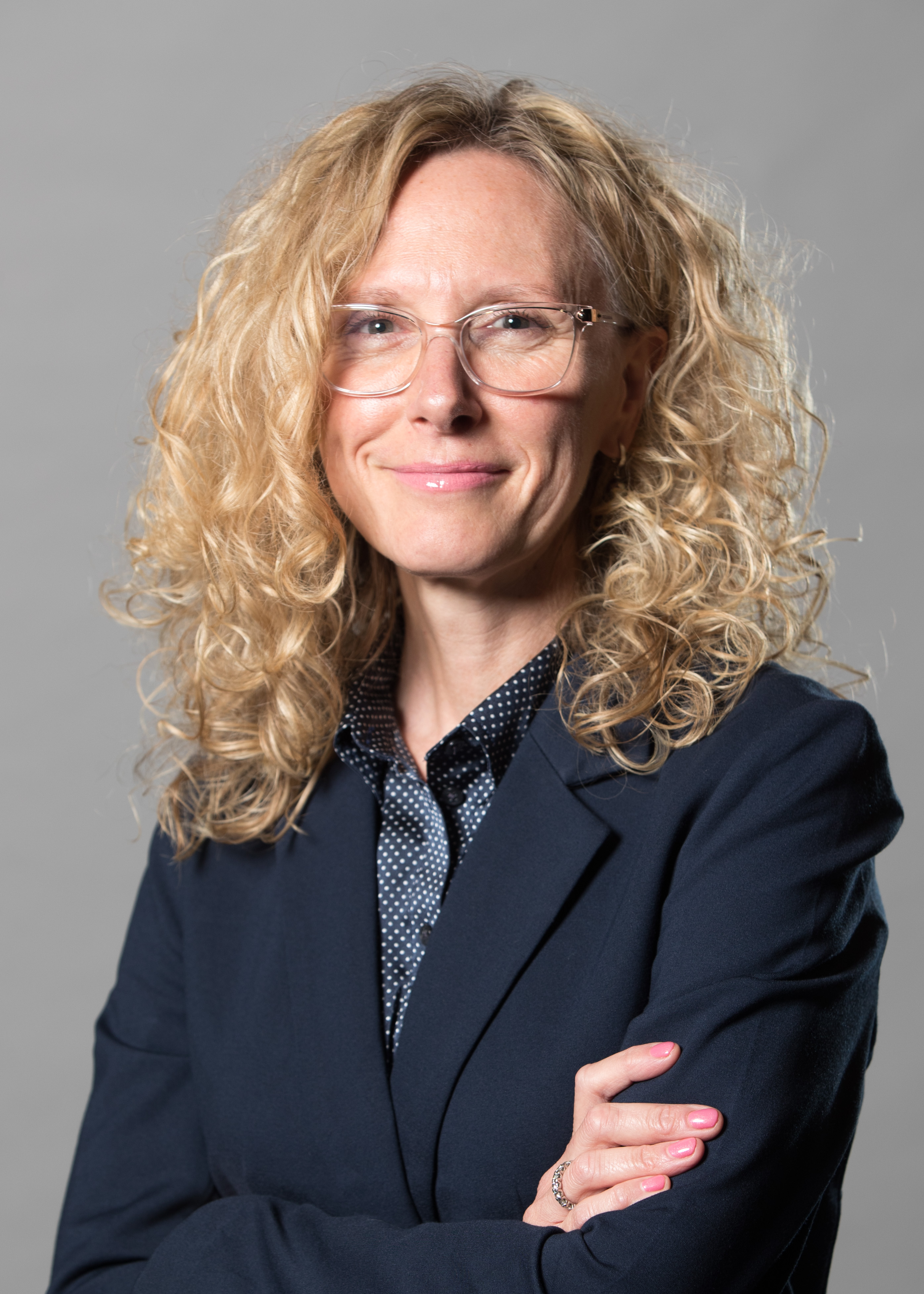
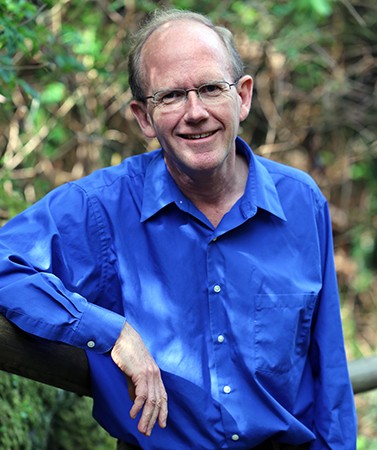
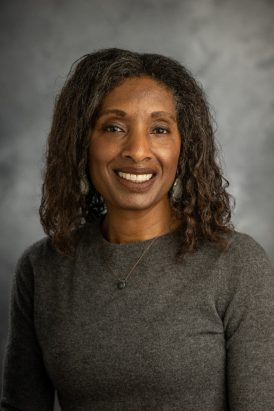
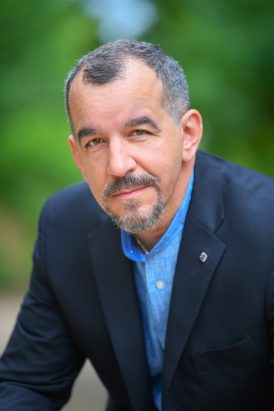
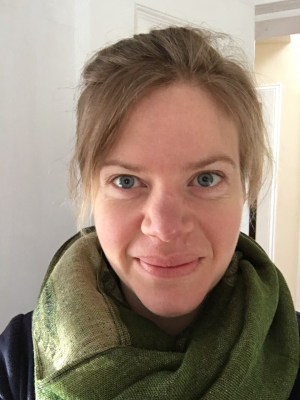
Kari Roberts is Professor and Department Chair of Policy Studies at Mount Royal University. Her research analyzes Russian foreign policy, particularly US-Russia relations and Arctic geopolitics. She investigates structural and agency factors in Russian decision-making, focusing on presidential influence in US relations and Arctic governance. Recent publications examine Russia's role in contemporary great power competition and Canada-Russia Arctic cooperation possibilities. Teaching includes International Relations, Comparative Politics, American Government, and Foreign Policy. Her scholarship demonstrates consistent focus on Russian strategic behavior through discourse analysis, identity politics, and institutional frameworks.
Dr. Angelica Galante is an Associate Professor at McGill University's Faculty of Education, Department of Integrated Studies in Education (DISE). She holds the William Dawson Scholar title and directs the McGill Plurilingual Lab. Her expertise spans plurilingual and multilingual education, translanguaging pedagogies, and sociolinguistic research on linguistic discrimination. Dr. Galante has held faculty roles at multiple Canadian institutions and completed graduate studies in Applied Linguistics and Language Education in Brazil, Canada, and the US. Educational Background: Ph.D. Language Literacies and Education, OISE/University of Toronto M.A. Applied Linguistics (TESL), Brock University B.A. English Literature and Linguistics (Honours), Universidade de São Paulo B.Ed. Second Language Education, Universidade de São Paulo Research Focus: Dr. Galante's work challenges monolingual educational norms, emphasizing plurilingual and pluricultural competence (PPC), translanguaging in classrooms, and leveraging drama/theatre for language learning. She advocates for linguistically inclusive pedagogies that validate learners' diverse linguistic repertoires, particularly in superdiverse educational settings. Grants & Projects: Principal Investigator: SSHRC-funded projects on undocumented immigrants' digital language education and plurilingual pedagogy FRQ-SC grant exploring monolingual-to-plurilingual teaching shifts Awards: 2024 McGill President’s Prize for Emerging Research 2021 Heather Reisman Excellence in Teaching Award 2018 Multilingual Matters Award (AAAL) Labs & Leadership: Director of the McGill Plurilingual Lab, Co-chair of AILA 2027, and past President of Canadian Association of Applied Linguistics (CAAL).
Dr. Janine Metallic is an Assistant Professor in McGill University's Department of Integrated Studies in Education (DISE), affiliated with the Faculty of Education. Her work centers Indigenous educational studies, language revitalization, and culturally responsive pedagogy. She holds a PhD in Educational Studies and has been recognized with awards including the 2024 Faculty of Education's Award for Distinguished Teaching. Education: PhD (Educational Studies) Her research focuses on Indigenous methodologies, language maintenance, and knowledge systems. She emphasizes relational accountability and community-based approaches, particularly with the Listuguj Mi’gmaq First Nation. Current projects include building Indigenous research capacity through graduate student training and developing community-driven educational initiatives. Teaching includes courses like EDEC 203 (Communication in Education), EDEC 233 (Indigenous Education), and specialized graduate seminars on Indigenous research methodologies. She actively supervises graduate students focused on Indigenous-centered research. Awards: 2024 Distinguished Teaching Award; 2019 McGill Equity and Community Building Award Her work bridges academic and community contexts, addressing language preservation, culturally grounded education, and decolonizing research practices.
Dr. Sheryl Smith-Gilman is a Faculty Lecturer and Associate Director of the Daniel and Monica Gold Centre for Early Childhood Development at McGill University's Faculty of Education. She holds a PhD, MA in Educational Leadership, and B.Ed. in Early Childhood from McGill. Her research focuses on early childhood education, Indigenous pedagogy, museum education, and the Reggio Emilia approach. She emphasizes integrating Indigenous knowledge and cultural practices into educational frameworks, particularly through arts-based methods and play. Her professional activities include consulting for the Quebec Ministry of Education on preschool curricula and advocating for Truth and Reconciliation Commission (TRC) principles in education. She has published extensively on topics such as cultural identity development, museum mindfulness, and Indigenous knowledge systems in early childhood contexts. Current roles include leadership in McGill's Gold Centre, advancing interdisciplinary early childhood initiatives. Research trends in her publications highlight decolonizing methodologies, Indigenous knowledge preservation, and innovative pedagogical frameworks. Her work bridges theory and practice, emphasizing community engagement and culturally responsive teaching strategies. Advising and grants sections reflect her focus on collaborative research projects with Indigenous communities. She is affiliated with the Arts, Languages & Literacy Education and Diversity, Identity & Indigenous Topics research groups within DISE. Her professional development contributions include teacher training programs that integrate Reggio Emilia principles and bilingual education strategies. She currently oversees initiatives at the Gold Centre aimed at fostering early childhood development through culturally sustaining practices.
Patrick Moore is an Associate Professor in the Department of Anthropology at the University of British Columbia, affiliated with the Faculty of Arts. His research focuses on linguistic anthropology, Indigenous knowledge systems, and the revitalization of Dene (Athabaskan) languages and cultures. He holds degrees in anthropology, linguistics, and education, and has extensive field experience working with First Nations communities in northern Alberta, the Yukon, and British Columbia. Moore has led major language documentation projects, including work with the Dane-zaa Záágéʔ (Beaver) and Dene Tha peoples, and has developed language curricula and digital exhibits such as the Dane Wajich Virtual Museum exhibit. His research interests span digital media’s role in cultural preservation, oral traditions, codeswitching, and the anthropology of gender and Indigenous activism. He has contributed to projects funded by the Volkswagen Foundation and the Social Sciences and Humanities Research Council of Canada. Moore teaches courses in linguistic anthropology, field methods, and contemporary anthropological theory. His advising focuses on Indigenous media practices, technology in language revitalization, and land rights discourses. Moore has authored books such as Dene Gudeji: Kaska Narratives and Wolverine: Myths and Visions , and his work bridges historical ethnography with contemporary issues in Indigenous self-representation.
Lisa Gotthard is a Lecturer in English Language at the University of Edinburgh, affiliated with the School of Philosophy, Psychology and Language Sciences. She specializes in syntactic variation and change in Early Modern English and Scots, leveraging parsed corpora for linguistic analysis. Her work focuses on anglicisation processes, language contact, and historical sociolinguistics. Education: B.A. (Hons) in Linguistics, University of York (2013-2016) M.Sc. (Distinction) in English Language, University of Edinburgh (2016-2017) Ph.D. in Linguistics and English Language, University of Edinburgh (2018-2022), supervised by Bettelou Los, Rob Truswell, and others Research interests include syntactic change mechanisms, corpus methodologies, and cross-Germanic comparisons. She co-leads the project 'Modelling lexical diffusion in syntax: non-finite complementation in Modern English' (SILPAC Research Unit) and collaborates internationally with institutions like the University of Konstanz. Her teaching includes courses on Scots morphosyntax and language variation. She is actively involved in PhD supervision and maintains affiliations with the Angus McIntosh Centre for Historical Linguistics.
Professor Teresa Satterfield is a faculty member in the Department of Romance Languages & Literatures at the University of Michigan, with courtesy appointments in the Combined Program of Education and Psychology (CPEP) and Linguistics. She holds a B.A. and B.S. from Iowa State University (1985), an M.A. from the University of Illinois-Chicago (1990), and a Ph.D. from the University of Iowa (1995). Her research focuses on bilingualism, first language acquisition, syntactic theory, and language contact phenomena, particularly in the context of Afro-Latinx communities. She uses fNIRS neuroimaging to study bilingual children's syntactic development and literacy, and founded the community program En Nuestra Lengua (ENL) for Spanish-speaking children. She received the 2022 LSA award for contributions to race and ethnicity instruction. Research Highlights: Satterfield explores how psycholinguistic and sociolinguistic factors shape grammatical development in bilingual children, including studies on object clitics in heritage Spanish speakers and Afro-Spanish language varieties in the U.S. She also models language as a Complex Adaptive System, integrating computational approaches with empirical data. Awards: 2022 Individual Award for Outstanding Contributions to Race & Ethnicity Instruction (College of LSA) Advising & Outreach: Directs ENL, a Saturday academic program for Spanish-speaking children, and collaborates on service-learning curricula. Teaches courses on bilingualism, Spanish morphosyntax, and Afro-Hispanic languages. Labs/Teams: Leads neuroimaging research collaborations with institutions like the University of Michigan's CPEP program, focusing on bilingual brain development and literacy.
Scott Richard Lyons is an Associate Professor in the Department of English Language and Literature at the University of Michigan’s College of Literature, Science, and the Arts. He specializes in Native American literature and culture, with affiliations to the Kateri Institute for Catholic Studies and the Academic Freedom Alliance. His research integrates global perspectives with Indigenous studies, emphasizing transnational dimensions of Native American literary production. Lyons holds a PhD from Miami University (2000), MA from University of North Dakota (1993), and BA from Concordia College (1991). His academic honors include the Henry Russel Award (University of Michigan’s highest midcareer award) and the Beatrice Medicine Award for distinguished scholarship. He also received a journalism award from the Wordcraft Circle of Native Writers and Storytellers for his work in Indian Country Today . His research interests span Native American literature, Catholic literature, and René Girard’s mimetic theory. Notable works include X-Marks: Native Signatures of Assent (2010) and The World, the Text, and the Indian (2017), which reframe Indigenous narratives within global contexts. Lyons advocates for academic freedom and serves as a Faculty Fellow for the Inklings Project at Notre Dame’s McGrath Institute (2024–25). Lyons’ academic service includes directing Native American studies programs and founding the Kateri Institute for Catholic Studies. His personal background as a member of the Mississippi Ojibwe and Mdewakanton Dakota tribes influences his scholarship and pedagogy. He is also an avid motorcyclist and family man.
Tessa Paneth-Pollak serves as Director of the LookOut! Gallery and other Exhibition Spaces in the Residential College in Arts & Humanities (RCAH) at Michigan State University and is a Core Faculty Member in the Center for Gender in a Global Context at MSU. Previously, she taught for three years in the Art, Art History, & Design department at MSU, bringing extensive experience in both academic and curatorial contexts. Dr. Paneth-Pollak earned her Ph.D. in Modern and Contemporary Art from Princeton University and completed her undergraduate studies with a B.A. in Art History and English from Barnard College. Her academic journey reflects a deep commitment to interdisciplinary approaches at the intersection of art history, gender studies, and cultural criticism. Her research centers on modern and contemporary art and theory, with particular expertise in prewar European modernism. Dr. Paneth-Pollak is currently completing a book titled Definite Means: Modernism's Cut-Outs , which explores the under-acknowledged device of the cut-out in twentieth-century European art, distinguishing it from the more celebrated innovation of collage. Her second book project, Cuts From Below , investigates how cutting can serve as a gesture of intervention in social and power relations, focusing on contemporary American artists Kara Walker, Mark Bradford, and Robert Hodge. Dr. Paneth-Pollak's scholarly output spans academic journals like Art History and the Journal of the Society of Architectural Historians alongside accessible cultural criticism for local publications. Her writing demonstrates remarkable range from rigorous analysis of modernist artists to community-focused journalism, reflecting her commitment to making art historical knowledge accessible beyond traditional academic circles. Princeton University Fellowship Stiftung Arp Fellowship As a founding member of the Feminist Art & Architecture Collaborative (FAAC), Dr. Paneth-Pollak has developed feminist pedagogical approaches through collaborative scholarship. She has curated numerous exhibitions including "Nancy Plum: Studio Potter" and "Michael Darough: The Talk," demonstrating her commitment to showcasing diverse artistic voices and social justice issues. Her work at the RCAH LookOut Gallery provides vital exhibition space for emerging artists while her role in the Center for Gender in a Global Context allows her to contribute to interdisciplinary conversations about gender across cultural contexts.
Alison Phipps is a Professor of Languages and Intercultural Studies at the University of Glasgow and holds the UNESCO Chair in Refugee Integration through Languages and the Arts. She is based in the School of Education, where her research focuses on decolonizing methodologies, refugee studies, multilingual education, and intercultural practices. Phipps has held visiting professorships at institutions such as Otago University and Auckland University of Technology, and has advised governmental and non-governmental bodies on migration and language policy. Her work bridges academia and activism, emphasizing creative and participatory approaches to social justice. Education: Extensive academic training in languages, cultural studies, and ethnography. Research Interests: Refugee integration, multilingualism, decolonial frameworks, and cultural justice. Awards: OBE (2012), D.Litt honoris causa (2023), and Fellowships with the Royal Society of Edinburgh and others. Her research spans global contexts, including work in Palestine, Ghana, and New Zealand, with projects funded by major grants like the AHRC and EU. She co-edits book series on tourism and intercultural communication and has authored poetry collections alongside academic works. Key contributions include leadership in the MiDEQ Research Hub (Migration, Inequality, and Development) and the New Scots Refugee Integration Strategy. Phipps advocates for linguistic and cultural equity through creative methods, blending scholarly rigor with public engagement.
Dr. Irene Pollock is an Associate Tutor in the Department of Educational Leadership & Policy at the University of Glasgow . Her work focuses on early childhood education, Gaelic language revitalization, and social-emotional development in educational settings. She contributes to research on bilingual education, particularly Gaelic-medium programs, and has evaluated national initiatives like the Bookbug Antenatal Pilot Programme. Her key publications include studies on language immersion models, Gaelic education policy, and play-based learning. She collaborates with institutions such as the University of Stirling and Scottish Government on projects addressing Gaelic cultural preservation and early years pedagogy. While no awards are listed, her research consistently engages with minority language education and policy, reflecting her commitment to cultural and linguistic equity in Scotland's educational landscape.
Dr. Te Hurinui Karaka-Clarke is a Senior Lecturer in the School of Teacher Education at the University of Canterbury, College of Education. He affiliates to Tūhourangi/Ngāti Wāhiao, Ngāti Pikiao, Ngāti Rangiwewehi, Waitaha ki Te Arawa, and Kāi Te Ruahikihiki. His research focuses on enhancing engagement in synchronous online teaching and learning of te reo Māori at the tertiary level, improving retention of students in senior te reo Māori programmes in English medium secondary schools in Aotearoa/New Zealand, and advancing culturally responsive practices within the education system. Affiliations: Member of NZARE, AARE, FLANZ, Kaiako Māori ki Waitaha. Labs/Teams: Co-director of Te Rū Rangahau Māori Research Lab at the University of Canterbury. He has supervised and examined multiple Master’s theses and collaborates with scholars such as Professor Angus Macfarlane. His work bridges educational technology, Māori language revitalization, and systemic cultural responsiveness.
Jason Gibson is a Senior Research Fellow at Alfred Deakin Institute for Citizenship and Globalisation, Deakin University, specializing in anthropology, museum studies, and Indigenous cultural heritage. With 20 years of fieldwork experience in Central Australia, he collaborates with Aboriginal communities on repatriation, heritage, and ethnographic research projects. Previously, he served as Repatriation Curator at Melbourne Museum and taught Indigenous Studies at Monash University. Education: Doctor of Philosophy, Monash University Research Interests: Gibson's interdisciplinary work spans museum studies, repatriation ethics, Indigenous knowledge systems, and historical anthropology. His research examines intercultural dynamics in ethnographic collections, the revitalization of Anmatyerr ceremonial traditions, and the application of collaborative methodologies in 21st-century anthropology. Current projects focus on digital repatriation and the reactivation of cultural heritage in Aboriginal communities. Publications: Gibson's extensive publications primarily explore the intersection of museum practices and Indigenous knowledge systems. Recent works demonstrate methodological innovation in digital heritage access and critical analyses of colonial anthropological archives. His scholarship increasingly engages with decolonizing approaches to collection management and community-led research paradigms. Awards & Honors: 2023 Mid Career Researcher Award (Alfred Deakin Institute) 2022 W.K. Hancock Book Prize (Australian Historical Association) 2021 Prime Minister's Literary Award Shortlist 2021 Vice-Chancellor's Early Career Researcher Award 2021 Council of Museum Anthropology Book Award 2017 Monash University PhD Prize 2017 Alpha Prize (Archaeological and Anthropological Society of Victoria) Supervision & Projects: Actively supervises doctoral students in Indigenous heritage and museum studies. Leads major research initiatives including: ARC DECRA project 'After the return: Understanding Re-engagements with Aboriginal Collections' ($434,605) Indigenous Languages and Arts project 'Anmatyerr Shields, Songs and Ceremonies' ($98,200) AIATSIS-funded research on poorly provenanced international Indigenous collections ($400,034) Professional Engagement: Serves as honorary research associate at Museums Victoria and University of Western Australia. Coordinates large-scale digitization initiatives facilitating Indigenous community access to cultural heritage materials across institutional collections.
Dr. Michael Franjieh is a Research Fellow at the Surrey Morphology Group and a Sustainability Fellow at the Institute for Sustainability, University of Surrey. He holds a PhD from SOAS, University of London, and specializes in the documentation and description of Oceanic languages, particularly those of Vanuatu. His research focuses on nominal categorization, morphology, and grammaticalization, with an interdisciplinary approach investigating the emergence of grammatical gender from classifiers in Oceanic languages. Current projects include the ESRC-funded 'Optimal Categorisation' project and the 'Sustainable Endangered Language Maintenance in the South Pacific.' His educational background includes a BA (Hons), MA, and PhD from SOAS, University of London, with expertise in psycholinguistics and language policy. His work bridges theoretical linguistics with practical applications, such as vernacular language teaching and literacy development in Vanuatu communities. Collaborations with Prof. Greville Corbett and Dr. Alexandra Grandison further emphasize cognitive and diachronic perspectives in language structure. Publications highlight classifier systems, possessive constructions, and language documentation, often involving community engagement. His research trends emphasize interdisciplinary methods, combining experimental psychology with traditional linguistic analysis to explore nominal classification origins. Projects like the Fanbyak DoReCo dataset and free-listing techniques reflect a strong commitment to semantic fieldwork and endangered language preservation. No scientific awards are explicitly mentioned. He contributes to academic teams and projects without listed advisees, focusing on collaborative research and institutional sustainability initiatives. His affiliation with the Surrey Morphology Group and Institute for Sustainability underscores interdisciplinary work at the intersection of language structure, culture, and environmental stewardship.
Kristian Roncero is a Researcher in Slavic Philology at Ludwig-Maximilians-Universität München. He holds a BA in Translation and Interpreting, and two MAs in Applied Linguistics and Linguistics. His research focuses on the morphosyntax of understudied Slavic varieties, particularly West Polesian, combining fieldwork and corpus-based approaches. Roncero has conducted extensive linguistic documentation in Belarus, Poland, and Ukraine, emphasizing typological and sociolinguistic aspects of small Slavic languages. Key research interests include inflectional morphology, suppletion patterns, and the grammaticalization of future tense forms in Eastern Slavonic dialects. He has contributed to language documentation projects, such as studies on Gakvarian Chamalal and Fa d'Ambô, and developed methodologies for replicable fieldwork practices. His recent publications address adnumerative forms in Slavic languages, access criteria for linguistic archives, and corpus analyses of suppletion in West Polesian. Roncero’s work bridges theoretical linguistics with applied fieldwork, aiming to preserve endangered language structures and advance comparative Slavic studies. Notably, he has collaborated with institutions like the University of Surrey and conducted fieldwork in remote Polesie regions, engaging with local communities to document endangered dialects. His interdisciplinary approach integrates sociolinguistic insights with morphosyntactic analysis, offering new perspectives on language contact and historical change.