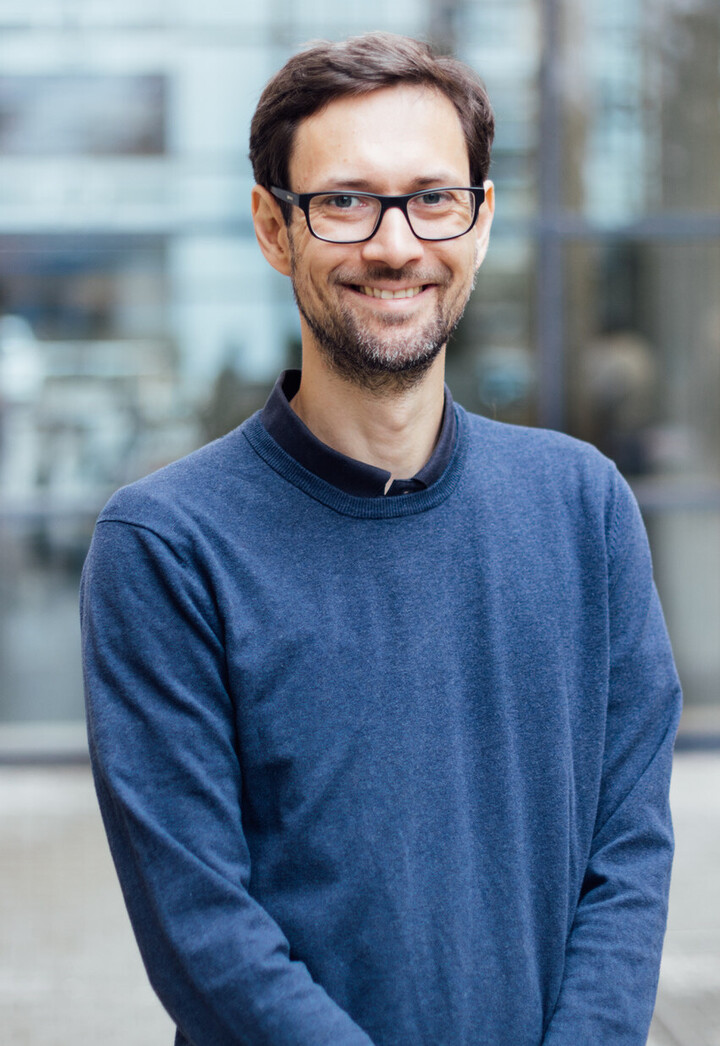
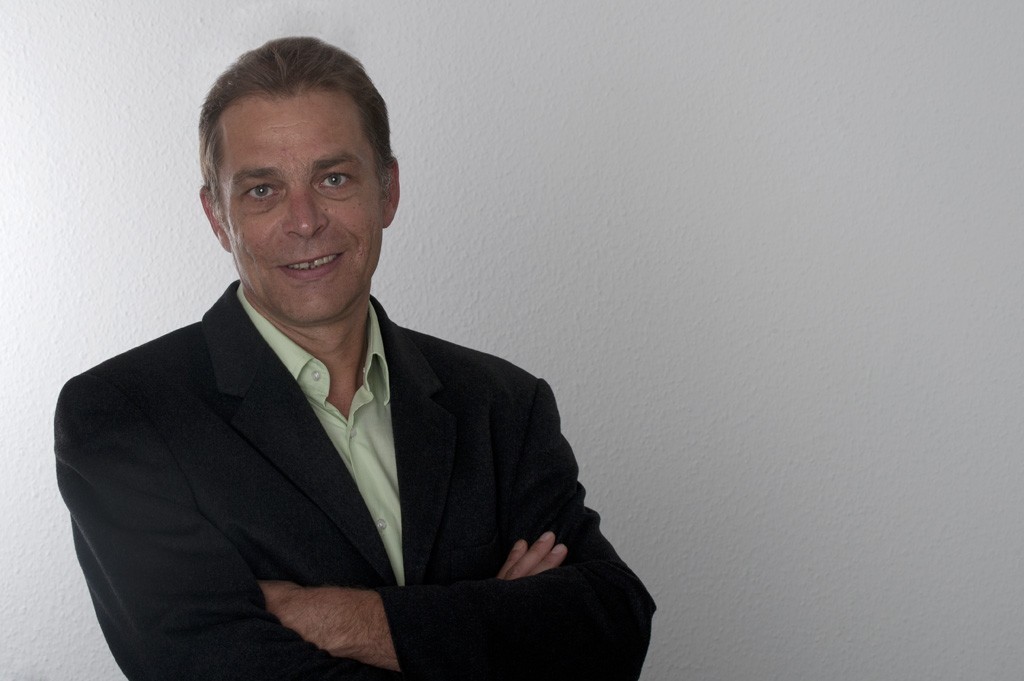
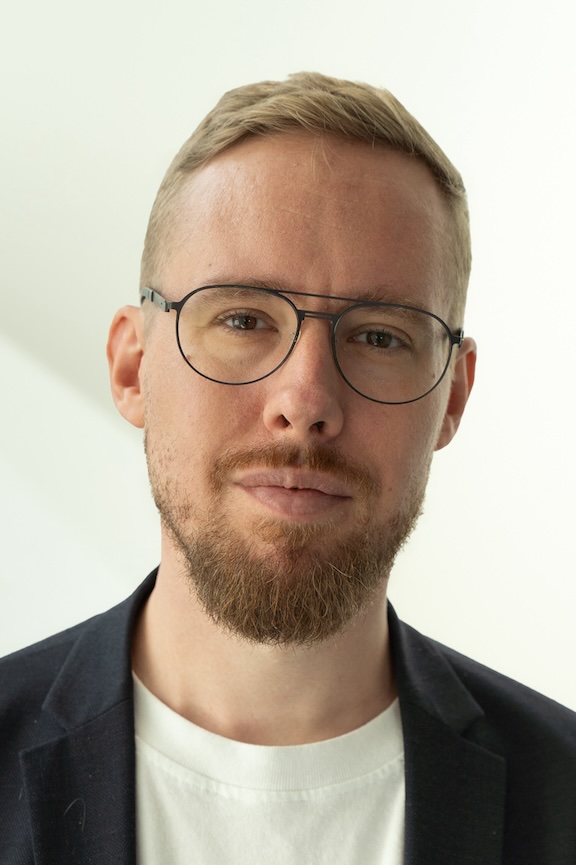
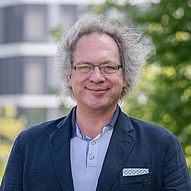
Michael Pradel is a full professor at the University of Stuttgart, specializing in software engineering, programming languages, and machine learning. He will join CISPA as a faculty member from September 2025 while retaining his Stuttgart position. His research focuses on: Neuro-symbolic software analysis Web application analysis Dynamic analysis and test generation Quantum software testing Machine learning for code Recent publications address: LLM-based program repair (RepairAgent, Treefix) WebAssembly analysis (Wasm-R3, LintQ) Python security and analysis (DyLin, DyPyBench) Quantum program analysis (LintQ) Scientific awards: Ernst-Denert Software Engineering Award Emmy Noether grant (1.3M Euro) ERC Starting Grant (1.5M Euro) 3x ACM SIGSOFT Distinguished Paper Award at FSE ACM Distinguished Member Best Paper/Distinguished Paper Awards at ISSTA, ASE, ASPLOS, MSR Key contributions include: DeepBugs for name-based bug detection Getafix for automated bug fixing LintQ for quantum program analysis DyLin for Python dynamic analysis Neuro-symbolic developer tools
Prof. Dr. Jonas Schützeneder is a Professor of Digital Journalism at the University of the Bundeswehr Munich, where he serves as Deputy Chair of the Examination Board. He holds a doctorate in Sports Journalism and Sports Communication and completed his habilitation in Innovation Communication. His academic responsibilities include teaching digital journalism in the Management and Media program (BA/MA), with a focus on data journalism, social media strategies, and online formats. Schützeneder's research explores transformative trends in journalism, with core interests in: Artificial intelligence applications in newsrooms Social media's impact on journalism practices Innovation communication and media evolution Podcast formats and audio storytelling strategies Ethical dimensions of digital journalism His publications demonstrate a consistent focus on journalism's digital transformation, particularly examining how emerging technologies like AI and social platforms are reshaping content production, distribution, and ethical frameworks across European media landscapes. His scientific recognitions include: University Teaching Award from Catholic University of Eichstätt-Ingolstadt (awarded twice) Multiple nominations for Teaching Award at Magdeburg-Stendal University of Applied Sciences Schützeneder leads the podcast project 'Held:innen von Magdeburg' where students research and produce content about contemporary and historical figures. Since 2018, he has served on the editorial board of Communicatio Socialis, an academic journal on media ethics, where he manages peer review processes. Since 2024, he co-heads the DGPuK Journalism Section, a 400-member organization within the German Society for Journalism and Communication Studies.
Rainer Gemulla is a Professor of Practical Computer Science I: Data Analytics at the University of Mannheim, heading the Data and Web Science Group within the School of Business Informatics and Mathematics. He has been a W3-Professor at the University since 2014, following positions as a senior researcher at Max-Planck-Institut für Informatik (2010-2014) and postdoctoral researcher at IBM Almaden Research Center (2008-2010). His research focuses on machine learning with structured and semi-structured data, particularly knowledge graphs, and developing efficient systems for data-intensive processing. Professor Gemulla's research spans multiple areas including machine learning with structured data (relational data), machine learning with semi-structured data (multi-relational graphs), combining these approaches with unstructured knowledge (text), and developing efficient, scalable methods for data-intensive processing. His work bridges theoretical foundations with practical implementations, as evidenced by numerous open-source software projects including LibKGE, DistKGE, and AdaPM. His recent publications show a strong trend toward knowledge graph embeddings, parameter server architectures, and efficient training methods. The research demonstrates increasing focus on scalability challenges in graph learning, with particular attention to hyperparameter optimization, dynamic resource allocation, and benchmarking methodologies. His work consistently addresses the practical challenges of implementing machine learning systems at scale. Distinguished Reviewer Award at SIGMOD, 2025 Distinguished PC Member Award at EDBT, 2023 Outstanding Reviewer Award at NeurIPS, 2021 Junior-Fellow of the Gesellschaft für Informatik (GI), 2013 IBM's 2011 Pat Goldberg Memorial best paper award Best paper of NIPS 2011 Biglearn workshop Professor Gemulla actively mentors PhD students and has supervised numerous successful doctoral candidates. His leadership extends to administrative roles including Head of examination board for MSc Business Informatics since 2017, and previously serving as Study dean of the WIM faculty (2016-2019) and CIO of University of Mannheim (2022-2024). His research is supported by grants including AWS in Education Research Grant Award (2013) and Google Focused Research Award (2011). The Data and Web Science Group develops multiple open-source software projects including LibKGE (knowledge graph embedding library), DistKGE (multi-GPU training), AdaPM (adaptive parameter manager), Lapse (parameter server), and various tools for information extraction and sequence mining. The group maintains active collaborations with industry partners and academic institutions worldwide, particularly in the areas of knowledge graph research and scalable machine learning systems.
Chris Steyaert is a Professor and Director at the University of St. Gallen's Business Administration Department in Switzerland. His work focuses on organizational psychology, entrepreneurship, and human resource management, with a particular emphasis on qualitative and narrative approaches. Research Interests: Organizational Psychology Entrepreneurship Studies Human Resource Management Qualitative Research Methodologies Social Constructionism Narrative Analysis His research explores how entrepreneurial activities are socially constructed and how organizations manage diversity and change through dialogical and narrative processes. His work often challenges traditional management paradigms by emphasizing the creative and performative aspects of organizing. Scientific Awards: Best Paper Award at RENT X Conference, Brussels 1996 Selected paper in EFER competition, Ghent 1995 Second best paper at 7th RENT workshop, Budapest 1993 Publications and Contributions: Steyaert has published extensively in top-tier journals and books, focusing on entrepreneurship, organizational psychology, and human resource management. His work includes both theoretical contributions and empirical studies, often employing qualitative methodologies.
Univ.-Prof. Dr. Michaela Sambanis is a Professor of English Didactics at the Institute of English Philology within the Department of Philosophy and Humanities at Freie Universität Berlin. She has held this position since 2011 and previously served as the managing director of the Institute from Winter semester 2017/2018 to October 2019. Her academic journey includes research work at the Transfer Center for Neuroscience and Learning at the University of Ulm (2008-2011), completion of her habilitation in 2006, and her promotion in 2001. Professor Sambanis's research centers on the innovative intersection of educational neuroscience and language teaching methodology. Her work pioneers the field of Positive Foreign Language Didactics, connecting positive psychology with language education. She investigates embodied cognition approaches, particularly movement-based learning, and explores theater methods and arts integration in language instruction. Her research also addresses teacher well-being and health, multilingualism in educational settings, and the application of neuroscience findings to practical classroom situations. The k2teach project represents her current focus on teaching-learning labs in English teacher education. Her scholarly output demonstrates a consistent trajectory toward integrating neuroscience with language pedagogy, with recent publications increasingly addressing mental health, digital transformation in education, and positive psychology applications. The evolution of her work shows a progression from practical teaching methods to increasingly sophisticated neurodidactic frameworks that bridge scientific evidence with classroom practice. Professor Sambanis serves on multiple scientific advisory boards including the Goethe Institut in Munich, the Transfer Center for Neuroscience and Learning at the University of Ulm, and the Schlözer Program for Teacher Education. She is also the founding chair of the cross-state E&M Berlin-Brandenburg section and a member of the German Society for Foreign Language Research (DGFF). Her editorial work includes the SELT book series on English Language Teaching. Her teaching responsibilities include supervising master's theses in English teaching, and she has developed numerous teaching-learning laboratories that connect theoretical knowledge with practical application in teacher education. Her work demonstrates a strong commitment to evidence-based foreign language didactics that incorporates insights from neuroscience, psychology, and educational research.
Dr. Lothar Lemnitzer serves as a Researcher at the Berlin-Brandenburg Academy of Sciences and Humanities, affiliated with the Center for Digital Lexicography of the German Language in Berlin. His office is located at Jägerstrasse 22/23, Space 18, with contact details including phone +49 (0)30 20370 538 and email lemnitzer@bbaw.de. His research spans critical areas in linguistic technology: Lexicography Digital Humanities German Language Processing Computational Linguistics Natural Language Processing Language Technology Dr. Lemnitzer's work focuses on developing digital infrastructure for German language resources, contributing to modern lexicographic methodologies through computational approaches. His publications reflect ongoing advancements in creating structured lexical databases for academic and public use. No scientific awards are documented in the available profile information. While the text references publications and a curriculum vitae, specific details regarding student supervision, grant funding, or collaborative projects remain unlisted. The Center for Digital Lexicography operates as a dedicated unit within the academy, driving innovation in digital dictionary creation and language resource management for the German-speaking academic community.
Markus König is a Professor of Informatics in Civil Engineering at Ruhr University Bochum, where he has been researching and teaching since October 2009. His work focuses on Building Information Modeling (BIM), digital construction technologies, and civil engineering informatics, with significant contributions to the development and implementation of digital methods in German construction industry. Dr. König earned his degree in civil engineering with a focus on applied computer science at Leibniz University Hannover, where he also completed his doctorate on cooperative building planning at the Institute for Building Informatics. He subsequently held a junior professorship for Theoretical Methods of Project Management at Bauhaus University Weimar before joining Ruhr University Bochum. His research spans multiple cutting-edge areas including Building Information Modeling (BIM), construction process simulation, tunneling informatics, infrastructure asset management, and the application of artificial intelligence and computer vision in civil engineering. As chair of the Building Informatics Working Group from 2012-2016, he played a key role in developing the first national BIM curriculum for German universities and serves as editor of the book 'Building Information Modeling: Technological Foundations and Industrial Practice.' Analysis of his recent publications reveals a strong trend toward semantic technologies, digital twins, automated compliance checking, and the integration of AI in construction processes. His work increasingly focuses on information containers, ontology development, and the application of large language models to infrastructure data, reflecting the evolving landscape of digital construction. Dr. König's significant contributions to digital construction have been recognized with prestigious awards: Lower Saxony-Bremen Construction Industry Award (2017) for 'services in the development and introduction of digital construction in Germany' Konrad Zuse Medal (2020) While specific details about his advising and grant activities aren't explicitly mentioned in the provided text, his extensive publication record with numerous co-authors suggests active supervision of doctoral students and research staff. His involvement in multiple collaborative research projects is evident from his publication history. At Ruhr University Bochum, Professor König leads a research group focused on civil engineering informatics, with particular emphasis on BIM, digital construction technologies, and their application across the building lifecycle. His team appears to work at the intersection of computer science and civil engineering, developing innovative solutions for construction process optimization, infrastructure management, and digital transformation of the AEC industry.
Prof. Dr. Christian Rathmann is a Professor for Sign Language Interpreting at the Institute of Rehabilitation Sciences , Humboldt University of Berlin. His academic journey includes prior roles at the University of Hamburg, University of Bristol, and The Ohio State University. PhD in Linguistics (2005), University of Texas at Austin MA in Linguistics (2000), University of Texas at Austin Research Interests : Rathmann specializes in sign language linguistics , focusing on morphosyntactic processes, semantics, and pragmatics. His work explores L1/L2 acquisition , multilingualism, language contact, and the implementation of the CEFR for sign languages . He also investigates Deaf Studies , discourse analysis, and language rights within international contexts. Scientific Contributions include publications on verb agreement, language standardization, and bilingual co-activation. His 2024 work on Signbank 2.0 and VisuoLab emphasizes digital resources for sign languages. Alexander von Humboldt Polish Honorary Research Scholarship (2016-2020) Professional Engagement : Rathmann serves on editorial boards (e.g., Frontiers in Psychology ) and scientific committees, including the SignON Project and the German Deaf Association . He advocates for early sign language access and language rights for deaf children.
Dr. Brigitta Mittmann is a Senior Lecturer at the Department of English and American Studies, Friedrich-Alexander University Erlangen-Nuremberg (FAU), holding the Alexander von Humboldt Professorship for Language and Cognition. Her work focuses on lexicography, phraseology, and comparative analysis of spoken English varieties.
Dr. Silvana Deilen is a Researcher at the Institute for Translation Studies & Technical Communication within the Faculty of Language and Information Sciences at the University of Hildesheim. She joined the university in 2023 after working as a Research Associate at Johannes Gutenberg University Mainz from 2018-2024. Her primary research focus centers on accessible communication, particularly in the areas of Easy Language and Plain Language translation, with special emphasis on cognitive aspects of translation processes and AI-assisted translation technologies. Dr. Deilen earned her B.A. in Multilingual Communication from Cologne University of Applied Sciences (2012-2015), followed by an M.A. in Specialized Translation from the same institution (2015-2018). She completed her doctoral studies (Dr. phil.) in Translation Studies at Johannes Gutenberg University Mainz (2018-2021) with summa cum laude distinction, supervised by Prof. Dr. Silvia Hansen-Schirra and Prof. Dr. Arne Nagels. Her research interests span multiple interconnected domains within translation and communication accessibility. A significant portion of her work examines the cognitive processing of compound words in Easy Language, utilizing eye-tracking methodologies to investigate how visual segmentation affects reading behavior and cognitive load. She has pioneered research on AI-assisted translation for health communication, particularly focusing on how large language models can support the creation of accessible health information. Her work bridges theoretical translation studies with practical applications in healthcare, government communication, and digital accessibility. Dr. Deilen's publication record reveals a clear trajectory toward increasingly sophisticated integration of technology and accessibility. Her recent work shows strong emphasis on evaluating AI systems like ChatGPT for translation tasks, developing editorial workflows for AI-assisted translation of health information, and investigating cognitive aspects of compound translation. The interdisciplinary nature of her research connects linguistics, cognitive science, health communication, and artificial intelligence, demonstrating how translation studies can address real-world accessibility challenges. 2014 & 2016: PROMOS Scholarships 2018-2021: Doctoral Scholarship from Gutenberg Young Researchers College 2020: Best Student Paper Award at Swiss Conference on Barrier-free Communication 2023: Award for Outstanding Dissertation from Johannes Gutenberg University Mainz 2023: Multiple research grants from University of Hildesheim, Wort & Bild Verlag, and Niedersachsen Zukunftsdiskurse 2025: DAAD Postdoctoral Research Grant Dr. Deilen actively collaborates on significant research projects including the KI-GesKom project (AI-Supported Health Communication in Plain Language), which receives funding from the state of Niedersachsen. She works closely with Prof. Dr. Ekaterina Lapshinova-Koltunski, Prof. Dr. Christiane Maaß, and Sergio Hernández Garrido as part of the Research Center for Easy Language. Her work with the Apotheken Umschau demonstrates practical application of research, translating health information into accessible formats for people with communication limitations. Dr. Deilen also contributes to the academic community as a program chair and scientific committee member for international conferences including UCCTS 2025 and Translation in Transition 2024.
Prof. Dr. Axel Mecklinger is a leading cognitive neuroscientist at Saarland University , specializing in the neurocognition of memory and language through spatiotemporal brain imaging (EEG/MEG/fMRI). His career spans over three decades, with significant contributions to understanding visual working memory , associative recognition , and memory development . Key research areas: Memory binding, ERP subsequent memory effects, novelty detection, and cognitive aging Major grants: DFG Research Groups, Collaborative Research Centers, and international collaborations with the Chinese Academy of Sciences Scientific leadership: Organized conferences, edited journals, and served as speaker for research training groups His recent work explores unitization in memory formation , cross-cultural differences in memory processing , and theta neurofeedback interventions . Awards include the Early Career Award of the German Psychophysiology Society (1992) and the European Federation of Psychophysiology Societies' Federation Prize (1994). Current projects investigate the neural mechanisms of semantic surprisal and memory plasticity in aging populations.
Kevin Baum is a computer scientist currently serving as the deputy head of the Neuro-Mechanistic Modelling (NMM) department at the German Research Center for Artificial Intelligence (DFKI) since January 2023, and head of the Centre for European Research in Trusted AI (CERTAIN) at DFKI since December 2023. Based at the Saarland Informatics Campus in Saarbrücken, Germany, he completed his doctorate in philosophy in March 2024, combining technical expertise with philosophical depth. His work bridges computer science with ethics, focusing on making AI systems transparent and accountable to human users. Dr. Baum's research program centers on interdisciplinary questions concerning the explainability and transparency of AI systems. His work spans multiple significant projects including the Explainable Intelligent System (EIS) initiative and project E7 of the Transregional Collaborative Research Centre 248 "Foundations of Perspicuous Software Systems" (CPEC). He has developed frameworks for understanding stakeholder perspectives on explainable AI and investigated how different information types about automated systems affect user perceptions of fairness and justice. His approach consistently combines theoretical foundations with practical implementations across diverse contexts. Analysis of his publication trends reveals a clear trajectory from theoretical foundations in machine ethics toward practical implementations of explainability requirements in real-world contexts. His work demonstrates increasing focus on human oversight effectiveness, fairness monitoring, and ethical considerations across various AI applications. He has made significant contributions to both academic discourse and practical AI development guidelines, with publications spanning computer science, philosophy, psychology, and human-computer interaction venues. Award for Ethics for Nerds lecture series As a research leader, Dr. Baum contributes to shaping AI development practices through his departmental leadership and interdisciplinary collaborations. His current work with CERTAIN focuses on establishing European research standards for trusted AI development and deployment, emphasizing the practical implementation of ethical requirements in AI systems. He maintains active collaborations across multiple institutions and disciplines, reflecting his commitment to bridging technical and philosophical considerations in AI development. At DFKI, he leads research that combines neuroscientific insights with AI development to create more interpretable systems. The NMM department focuses on both theoretical research on explainable AI foundations and practical applications in various domains, with particular attention to how different stakeholders understand and require explanations from AI systems.
PD Dr. Lutz Rzehak is an academic staff member at the Institute for Asian and African Studies (IAAW) within the Faculty of Humanities at Humboldt University of Berlin, serving as a Teacher for special tasks specializing in Modern Iranian languages and the ethnography and cultural history of Afghanistan and Central Asia. His educational background includes: Oriental Studies/History from the State University of Leningrad (1985) Doctorate in Iranian Studies, Humboldt University of Berlin (1991) Habilitation in Central Asian Studies / Iranian Studies, Humboldt University of Berlin (2001) Dr. Rzehak's research spans Central Asian Studies , Iranian Studies , Ethnography , and Linguistics , with fieldwork focusing on Baloch, Pashtun, and Tajik communities. His work examines language evolution, social structures, and cultural practices through historical and contemporary lenses, particularly regarding Soviet influence and post-Taliban Afghanistan. Key contributions include grammatical analyses of Iranian languages and ethnographic studies of religious rituals and tribal systems. His recent publications (2016-2021) reveal consistent focus on Iranian language dynamics (especially Dari and Pashto), ethnic identity politics in Afghanistan, and cultural history of Central Asia. These works address language change mechanisms, ethnic consolidation strategies, and the interplay between tradition and modernity, often utilizing comparative linguistic and ethnographic methodologies. His scientific awards include: Heisenberg Fellow of the German Research Foundation Dr. Rzehak has held significant research positions including Research Associate in the Crossroads Asia Competence Network (2011-2016) and Heisenberg Fellow (2002-2011). While his CV does not list formal PhD advisees, his language lecturing and research supervision have mentored numerous students in Central Asian and Iranian studies through course instruction and fieldwork guidance. He has been actively involved in the Crossroads Asia Competence Network, a major interdisciplinary research initiative examining transregional connections and historical trajectories across Central, South, and West Asia.
Xin Peng is a Professor and Deputy Dean at the School of Computer Science, Fudan University, China. He leads the CodeWisdom research team focusing on intelligent software engineering techniques for development, maintenance, and operation of software systems. His educational background includes a PhD in Computer Science (2001-2006) and Bachelor's degree in Computer Science (1997-2001), both from Fudan University. He progressed through the academic ranks from Assistant Professor (2006-2010) to Associate Professor (2010-2015) and finally to Professor (2015-present). Professor Peng's research interests span Software Analytics, Intelligent Software Development, Microservice systems, and AIOps. His work leverages AI technologies including deep learning and knowledge graphs to develop intelligent software engineering techniques. A significant portion of his recent work focuses on applying Large Language Models to various software engineering tasks, including vulnerability detection, API usage analysis, and test automation. His publication record shows a clear trend toward increasingly sophisticated applications of AI in software engineering, with recent work heavily featuring LLMs for tasks ranging from vulnerability patch porting to resource leak detection. The research spans multiple domains including microservice systems, automotive software, and Web of Things security. Best Paper Award of ICSM 2011 ACM SIGSOFT Distinguished Paper Award of ASE 2018 and 2021 IEEE TCSE Distinguished Paper Award of ICSME 2018, 2019, and 2020 IEEE Transactions on Software Engineering Best Paper award for 2018 Professor Peng serves in numerous leadership roles including Deputy Director of CCF Technical Committee on Software Engineering, Co-Editor-in-Chief of Journal of Software: Evolution and Process, and Associate Editor for ACM Transactions on Software Engineering and Methodology. He has been actively involved in program committees for major software engineering conferences including ICSE, ASE, ESEC/FSE, and ICSME. He leads the CodeWisdom research team at Fudan University, which has developed several benchmark systems including TrainTicket for microservice research. The team's work bridges academic research with industrial applications, particularly in microservice systems analysis and intelligent software development tools.
Christian Wolff is a University Professor and Chair of Media Informatics at the Institute for Information and Media, Language and Culture at the University of Regensburg. Since April 2022, he has served as the founding Dean of the Faculty of Computer Science and Data Science, while maintaining secondary membership in the Faculty of Languages, Literature and Cultural Studies (SLK). His academic career spans over three decades with significant contributions to multiple disciplines at the intersection of computer science and humanities. Wolff's research interests center around multimedia and multimodal information systems, electronic publishing, and text technology, particularly text mining. His work bridges computer science with digital humanities, legal informatics, and social media analysis. Recent publications demonstrate a strong focus on large language models, sentiment analysis applications across various domains, legal technology innovations, and virtual reality research for cognitive studies. His interdisciplinary approach has produced significant contributions in both technical and humanities domains. His recent publication trends reveal a strategic shift toward applied AI research, particularly in legal technology (LegalTech), social media analysis, and sentiment analysis using large language models. The publications show increasing collaboration across disciplines, connecting computer science with law, political science, literature, and psychology. His work on the digital basis document for legal proceedings represents a major practical application of his research in the German justice system. East Bavarian Cultural Prize Doctoral Award of the University of Regensburg Wolff has led numerous interdisciplinary research projects connecting computer science with humanities and legal studies. His leadership extends to institutional roles including Dean of Research, Vice Dean, and Dean of Faculty positions. He has been instrumental in establishing the new Faculty of Computer Science and Data Science at the University of Regensburg, demonstrating significant impact on institutional development and research infrastructure. Wolff directs research initiatives focused on text technology, digital humanities, and legal informatics. His work with the INDIGO - Internet and Digitization Eastern Bavaria initiative and the TRIO project demonstrates commitment to regional technology transfer and innovation. The interdisciplinary nature of his research groups connects computer scientists with legal scholars, linguists, and social scientists to address complex digital transformation challenges.