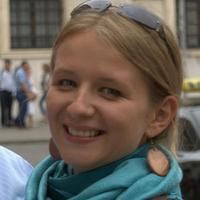
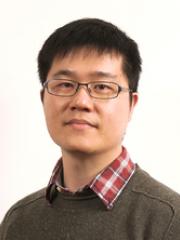
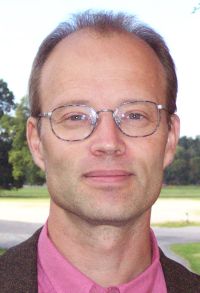
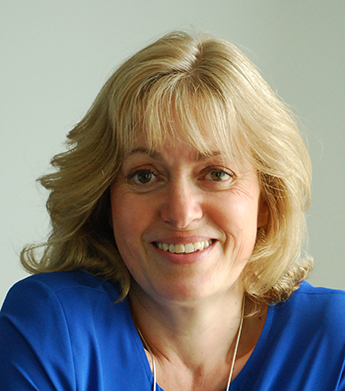
Saana Svärd is a Professor at the University of Helsinki in the Faculty of Arts, Department of Languages. She specializes in ancient Near Eastern studies with a focus on gender analysis, digital humanities, and emotional history in Mesopotamian texts. Academic Affiliation: University of Helsinki (Faculty of Arts, Department of Languages) Research Themes: Neo-Assyrian Empire, gender studies, digital approaches to cuneiform texts Her recent research explores emotional semantics through computational methods and bodily mapping in ancient texts. She directs the Centre of Excellence in Ancient Near Eastern Empires (2018-2025) and leads the 'Embodied Emotions' project (2022-2026). Notable awards include the 2021 Helsinki Science Award and 2023 honorary mention for co-editing Muinaisen Lähi-idän imperiumit . Key projects include: Digital Humanities approaches to Akkadian texts Quantitative analysis of Neo-Assyrian religious affiliation Gender roles in ancient Mesopotamian societies
Marta Kajzer-Wietrzny is an Assistant Professor at the Faculty of English, Adam Mickiewicz University in Poznań, Poland. She specializes in Translation and Interpreting Studies with a focus on corpus linguistics approaches. Her research utilizes data from the European Parliament to compare different modes of language mediation, including translation, interpreting, and non-native communication. Her educational background includes: Ph.D in English, Poznań, 2012 M.A. in English, Poznań, 2008 B.A. in English, Poznań, 2006 Birmingham Statistics for Linguists Summer School, 2019 Translation Research Summer School, Edinburgh, 2009 Zentrum für Translationswissenschaft der Universität Wien, 2007-2008 Dr. Kajzer-Wietrzny's research focuses on cognitive aspects of interpreting, particularly cognitive load, number rendition, and lexical frequency effects. She investigates cohesion patterns, formulaicity, and lexical diversity across different language mediation modes. Her work bridges corpus linguistics with translation and interpreting studies, examining how professional mediators process language under constraints. She has developed methodologies for analyzing naturalistic interpreting data and comparing it with translated and non-native language. Her publication output shows a clear trend toward empirical, corpus-based investigations of language mediation phenomena, with particular emphasis on the European Parliament data. Her research consistently explores the intersection of cognitive processing, linguistic features, and professional practice in translation and interpreting. Dr. Kajzer-Wietrzny serves as a peer reviewer for multiple academic journals including: Target Perspectives Poznan Studies in Contemporary Linguistics Studia Anglica Posnaniensia Across Languages and Cultures Intralinea Journal of Audiovisual Translation Languages in Contrast Prace Filologiczne She has secured multiple research grants including the TRINFO project at the University of Bologna (2018-2019), a PhD project grant on 'Interpreting Universals and Interpreting Style' (2010), and an ESSE Bursary (2010). She has been involved in major research projects such as 'Extreme language control' (2019-2024), ParaTrans (2013-2016), EVIVA (2013-2014), and IVY (2012-2013). Her work often involves collaboration with international research teams across Europe. She regularly presents at international conferences including the American Translation and Interpreting Studies Association, European Society for Translation Studies Congress, and Poznań Linguistic Meeting, demonstrating her active engagement with the international academic community in translation and interpreting studies.
María Aurora García Ruiz is a PhD holder in Hispanic Philology from the University of Zaragoza (2021) and a Doctor from the University of Jaén (2016). She is affiliated with the Faculty of Philosophy and Letters at the University of Zaragoza and has contributed extensively to chivalric literature studies, academic writing pedagogy, and digital humanities. Education: PhD in Hispanic Philology (University of Zaragoza, 2021); Doctorado en Filología Hispánica (University of Jaén, 2016). Research Themes: Medieval/Renaissance Spanish literature, chivalric codes, gender roles in Golden Age texts, academic writing challenges, digital educational tools. Her publications focus on the Amadisian saga, particularly Florisando (1510), analyzing paratextual ideologies, theological arguments, and gender dynamics. She explores how digital platforms like Instagram can disseminate literary knowledge and how neurolinguistic studies inform textbook design. Key collaborations include projects with Alberto Montaner Frutos and José Julio Martín Romero. Her work bridges textual studies with modern pedagogical practices.
Dr. hab. Martyna Król-Kumor serves as a Professor at the Institute of Russian Studies, Jan Kochanowski University in Kielce. She has been continuously employed at the university since 2002, progressing from assistant to assistant professor before achieving full professorship in 2018. She currently manages academic operations and serves as editor of the scientific journal Studia Rusycystyczne UJK since 2017. Graduate of Russian Philology, Holy Cross Academy in Kielce (2002) Doctor of Humanities in Linguistics (2005): Polish-Russian Lexical Quasi-Analogy. Functional-Pragmatic Analysis Habilitation in Linguistics (2015): Typology of linguistic homonymy in the onomasiological and discursive aspect Her research spans theoretical linguistics with specialized focus on lexicology, discourse structures, and Polish-Russian contrastive semantics. She examines lexical quasi-analogy, linguistic homonymy typologies, and cross-linguistic discourse patterns through both onomasiological and pragmatic lenses. Her work reveals how semantic transformations reflect cultural worldviews, particularly in Russian-Polish comparative contexts. Analysis of her 15 most recent publications shows consistent exploration of lexical semantics across multiple dimensions: homonymy patterns (40% of works), discourse structures (30%), and contrastive Polish-Russian analysis (30%). Key methodological approaches include functional-pragmatic analysis, typological classification, and cognitive-semiotic frameworks applied to specialized domains like tourism business discourse and academic writing. No scientific awards or fellowships are documented in the available materials. Professor Król-Kumor provides academic supervision and consultations as evidenced by her listed contact information for "Credits/exams/consultations." While specific grant projects aren't detailed, her extensive monograph publications and journal editorship indicate sustained research activity. She contributes significantly to the Language Clinic at the university, supporting linguistic diagnostics and interventions. The Language Clinic and Russian Studies Institute represent her primary operational environments, where she integrates research with practical language applications including discourse analysis training and contrastive semantics instruction.
Dr. Sheng-hsun Lee is a Lecturer at the School of Languages and Cultures, University of Queensland, specializing in intercultural and public health communication. As a core member of the Centre for Community Health and Wellbeing, their research employs multimodal discourse analysis to explore how language, gestures, and material objects co-construct meaning in social contexts. Key research areas include: Public health crisis communication Intercultural communication during study abroad Language learning in classroom and naturalistic settings Recent publications analyze pandemic communication strategies through 600+ hours of press conferences and 2M+ online comments, culminating in the 2025 monograph Health Crisis Communication: Multimodal Classification for Pandemic Preparedness . Current work examines food safety crises like Taiwan's rice noodle poisoning incident in the upcoming Numbers Talk in Health Crisis Discourse . Award highlights: 2021 Australian Academy of the Humanities Traveling Fellowship 2025 North America Taiwanese Professors' Association Young Scholar Research Award Actively supervising PhD/MPhil/Honours projects on health discourses, intercultural communication, and language pedagogy, Dr. Lee's work bridges applied linguistics with practical communication strategy development for policymakers and health professionals.
Bengt Jonsson is a Professor at the Division of Computer Systems, Department of Information Technology, Uppsala University. His research focuses on formal methods, real-time and distributed systems, semantics and verification of concurrent systems, and IoT security. Current Projects: UPMARC (Software Technology for Multicore Programming), aSSIsT (Secure Software for IoT), and Designed for UPDATE (Safe Embedded Software Updates) Past Projects: CoDeR-MP (Multicore Real-Time Applications), ProFun (Wireless Sensor Networks), CONNECT (Networked Component Synthesis) His work includes automated verification, model checking, and symbolic execution for concurrent systems. Recent publications address dynamic partial order reduction, IoT protocol testing, and lock-free data structures. Scientific Awards : CAV Award 2017 He advises PhD students and teaches courses like Model-Based Development of Embedded Systems and graduate-level symbolic execution. Personal interests include piano playing and orienteering.
Professor Ringolds Balodis is a distinguished legal scholar at the University of Latvia's Faculty of Law, where he serves as Chairman of the Academic Arbitration Court. He teaches Constitutional Law and Foreign Constitutional Law courses, contributing significantly to legal education in Latvia. His affiliation with the University of Latvia extends to his role as Senator and Deputy Chairman of the Strategy Commission, demonstrating his deep institutional involvement. Professor Balodis' research focuses primarily on constitutional law issues, particularly current problems of Latvian state law. His expertise encompasses the work of the Saeima (Latvian parliament) and the President of the Republic, state-church relations, and freedom of religion. His scholarly work consistently addresses the constitutional framework of Latvia, examining constitutional amendments, legal restrictions, and the practical application of constitutional principles in contemporary governance. His publication record reveals a strong thematic consistency over the past decade, with constitutional law and church-state relations forming the core of his scholarly contributions. Balodis has produced significant work on religious freedom in various contexts including public education, workplace settings, and for religious minorities. His publications in prestigious outlets like Springer and Brill | Nijhoff demonstrate international recognition of his expertise in comparative constitutional law and religious law. Judicial System Honorary Badge, 2nd Class Latvian Academy of Sciences, Corresponding Member Professor Balodis holds multiple influential positions beyond his academic role, including Chairman of the Board of the Legal Sciences Research Institute and membership on the Latvian Academy of Sciences Supervisory Board. His practical legal experience as an individually practicing sworn attorney complements his academic work. He has served in significant national roles including Member of the Central Election Commission, Secretary of the National Security Commission in the 12th Saeima (2014-2018), Chief Public Notary and Head of the Register of Enterprises (2008-2013), and Head of the Department of Religious Affairs (2000-2004). As the independent representative of Latvia in the European Consortium for Church and State Research, he maintains important international scholarly connections.
Prof. Heike Wiese holds the chair of German in Multilingual Contexts at Humboldt University of Berlin within the Faculty of Language, Literature and Humanities, Department of German Studies and Linguistics. Previously, she was a professor at University of Potsdam and held visiting positions at Yale University and Brandeis University. She is a distinguished member of the Academia Europaea and of the German Council for Migration, as well as the speaker of the Centre 'Language in Urban Diversity'. Her research focuses on the dynamics of multilingual settings, with particular attention to grammatical developments, monolingual ideologies, linguistic discrimination, and empowerment. Her primary research interests include: Urban contact dialects (including 'Kiezdeutsch' in Germany) Linguistic practices of heritage speakers Turkish-German language contact phenomena Grammatical-pragmatic interfaces and linguistic architecture (V2 and V3 word order in Germanic) Mass and count nouns, numeral constructions, and focus particles Discourse markers and emoji as linguistic elements Linguistic discrimination and empowerment in society and education Prof. Wiese's recent scholarly work demonstrates a sophisticated integration of theoretical linguistics with sociolinguistic and educational perspectives. Her publications from 2021-2025 reveal a consistent focus on language variation in multilingual contexts, particularly examining how linguistic systems interact across language boundaries. She has made significant contributions to understanding urban contact dialects, especially Kiezdeutsch in Berlin, and German-speaking communities in postcolonial settings like Namibia and Australia. Her research challenges monolingual ideologies and advocates for linguistic diversity through both theoretical analysis and practical applications. Her scientific recognition includes: Membership in the prestigious Academia Europaea Leadership role as speaker of the Centre 'Language in Urban Diversity' Through extensive outreach activities, Prof. Wiese collaborates with multilingual communities, kindergartens, schools, educational policymakers, and museums. She has developed practical materials for teachers to address linguistic diversity in classrooms and challenge linguistic discrimination. Her research methodology emphasizes 'language situations' - a technique to elicit comparable, naturalistic data across registers, languages, and speakers, recognizing the complexity of multilingual repertoires. Prof. Wiese leads research in the Multilingualism, Interculturality and Language Lab (CU.mil), where her team investigates language variation in urban contexts and develops methodologies for studying linguistic diversity. Her work bridges theoretical syntax with sociolinguistics, psycholinguistics, and educational linguistics, with important implications for language policy, teacher education, and public understanding of linguistic diversity in increasingly multicultural societies.
Anna Rogers is an Associate Professor of Data Science at the IT-University of Copenhagen , affiliated with the NLPnorth research group. Her work focuses on Natural Language Processing (NLP) , Artificial Intelligence , and Large Language Models (LLMs) , with a particular emphasis on ethical data use, peer review innovation, and transformer model analysis. She leads projects addressing AI transparency, medical QA hallucinations, and generative AI applications. Her research explores topics including: LLM behavior and evaluation Data governance in NLP Peer review systems optimization Transformer model robustness Medical AI applications Key Projects : PlagAIrism : Tracking LLM training data origins Pioneer Centre for AI : Pre-registered replication studies TinyGPT : Efficient NLP models AIInterviewer : Large-scale qualitative data collection Publications span ACL , EMNLP , and specialized NLP workshops, addressing topics from BERT analysis to AI content farms.
Prof. Dr. Mingya Liu is a W1-Professor for Empirical English Linguistics (EEL) at the Department of English and American Studies, Humboldt-Universität zu Berlin. Her research focuses on the intersection of lexicon, syntax, semantics, and pragmatics, with applications to language processing, acquisition, and sociolinguistic variation. Key projects include investigations into polarity sensitivity, modality, negation, and register effects in language use. Her work employs experimental, cross-linguistic, and socio- and psycholinguistic methods. Notable contributions include studies on modal concord (e.g., 'must certainly'), negative concord variation, and the social meanings of linguistic constructions in English, German, and Chinese. She is a core member of the CRC 1412 'Register: Language Users’ Knowledge of Situational-Functional Variation,' contributing to interdisciplinary research on language variation and cognitive modeling. Publications emphasize experimental findings on linguistic and social meaning correlations, register sensitivity in language use, and the role of interlocutor relations in formality perception. Collaborative efforts with institutions like HU Berlin and international scholars further highlight her commitment to advancing theoretical and experimental linguistics.
Sarah Harris is Professor and Undergraduate Coordinator in the Department of Electrical and Computer Engineering at University of Nevada, Las Vegas. Her research focuses on computer architecture education, FPGA-based systems, and hardware implementations of neural networks. Research areas include: RISC-V architecture education tools FPGA-based hardware design Embedded AI systems Computer engineering pedagogy Her publication portfolio shows strong focus on educational innovation with 7 publications (2021-2024) on RISC-V teaching tools and MOOCs, alongside hardware implementations of neural networks and contributions to bioinformatics tools. Earlier work includes digital design fundamentals and memory systems.
Mariarosaria Provenzano is an Associate Professor in the Department of Humanities at the University of Salento. Her research focuses on specialized discourse analysis, particularly in legal, economic, and Islamic finance contexts, using frameworks like Critical Discourse Analysis (CDA) and genre analysis. She holds a PhD in English Language and Translation from the University of Salento and completed postdoctoral studies at University College London (UCL). Her work explores hybridization strategies in academic registers, emphasizing accessibility and intercultural communication. She participates in the ELF-Ren network and serves on the editorial board of Lingue e Linguaggi . Teaching includes courses on English for Legal and Technical Translation, and Legal English for law students. Publications span analyses of EU legal texts related to migration, financial discourse in Islamic contexts, and pedagogical approaches to ELF. Her research highlights the interplay between language, culture, and institutional practices in specialized communication.
David Butt is an Associate Professor in the Department of Linguistics at Macquarie University . His research focuses on Systemic Functional Linguistics , exploring grammatical evidence in social, institutional, literary, and medical contexts. He investigates latent textual patterning, including self-construction in psychotherapy and scientific discourse. Current Supervisions : Cohesion in psychotherapy, Vygotsky’s developmental theories, multilingual studies, political bias in New Caledonia debates. Research Trends : Analysis of grammatical cohesion, semiotic modeling, cross-linguistic studies, and institutional discourse robustness.
Juan Manuel Hernández-Campoy is a Full Professor in Sociolinguistics at the Department of English Philology, Faculty of Arts and Humanities, University of Murcia, Spain. He teaches courses on English Sociolinguistics, Varieties of English, and the History of the English Language, as well as research methods at the postgraduate level. He has held numerous academic leadership roles, including Head of Department (2005–2008) and currently serves as Director of the International Doctoral School of the University of Murcia (EIDUM). Education: PhD in English Philology, University of Murcia, 1996 (Extraordinary Doctorate Prize, 1997) Bachelor’s in Philosophy and Literature (Modern Philology, English), University of Murcia, 1991 Erasmus Studies, University of Essex, UK His research centers on sociolinguistics, dialectology, and the historical development of the English language. He explores stylistic variation, language change, and sociolinguistic methodology, with a strong emphasis on both synchronic and diachronic analysis. His work bridges theoretical and applied perspectives, often using corpus-based and geolinguistic approaches. The 15 most recent publications reflect a consistent trajectory in historical sociolinguistics, stylistic variation, and dialectology, with major reference works such as encyclopedias, handbooks, and dictionaries published by Wiley-Blackwell, John Benjamins, and Gredos. These works synthesize broad disciplinary knowledge and are widely used in academic settings. Scientific Awards: Extraordinary Doctorate Prize in Letters, University of Murcia, 1997 He has secured significant research funding as Principal Investigator on projects like Sociolinguistic Models of Stylistic Variation (FFI2014-56084-P) and Speaker Design as a Model of Stylistic Variation (Fundación Séneca). He has advised numerous postgraduate students and coordinated multiple master's and doctoral programs. He has also served as editor for major journals including International Journal of English Studies and Cuadernos de Filología Inglesa . He leads the research group Linguistic Variation: Phonetics, Lexicon and Styles and has been instrumental in organizing international conferences such as the Sociolinguistics Symposium 21 and HiSoN-2022. He maintains active Erasmus partnerships with the University of Essex and University of Bern, promoting academic exchange and collaboration.
Sarah Bown is a Senior Lecturer in the School of Social, Historical and Political Studies at the University of Wolverhampton, where she leads the professionally accredited MA and BA (Hons) British Sign Language/English Interpreting programmes. She has over 30 years of experience in interpreter education, professional practice, and service development, and has played a key role in advancing national and international standards in interpreter training. Research Interests: British Sign Language / English Interpreting Pedagogy Critical and Reflective Practice in Interpreter Education Sight Translation and Cognitive Processes Work-Based and Placement Learning Deaf Access to Healthcare, particularly around menopause and sexual health Employability and Transferable Skills for Interpreting Students Interpreter-Mediated Job Interviews and Employment Equity Publication Trends: Her recent scholarly output focuses on deaf women's health, interpreter influence in job interviews, reflective practice, and curriculum innovation. Her work bridges academic research and practical application, with strong emphasis on equity, access, and professional development across national and European contexts. Scientific Awards and Recognition: Vice Chancellor's Award for ‘Teacher of the Year’ Senior Fellow of the Higher Education Academy Academic Associate of the Higher Education Academy Professional Leadership and Advising: Sarah Bown has supervised numerous placement modules and founded the International Research Interpreting Seminars (IRIS). She has advised on national standards through NRCPD and contributed to European guidelines on interpreter education. She has led curriculum development, secured professional accreditation, and fostered partnerships with NHS, Social Services, and Deaf organizations to enhance student opportunities and service quality. Professional Affiliations and Leadership: She is a Registered Sign Language Interpreter (RSLI), Professional Standards Advisor, and Supervisor with NRCPD; a full member of ASLI; a Senior Fellow and Academic Associate of the HEA; and a member of the EFSLI Committee of Experts. She chairs the University's Interpreting & Deaf Studies Subject Advisory Board and serves on the ASLI editorial board.