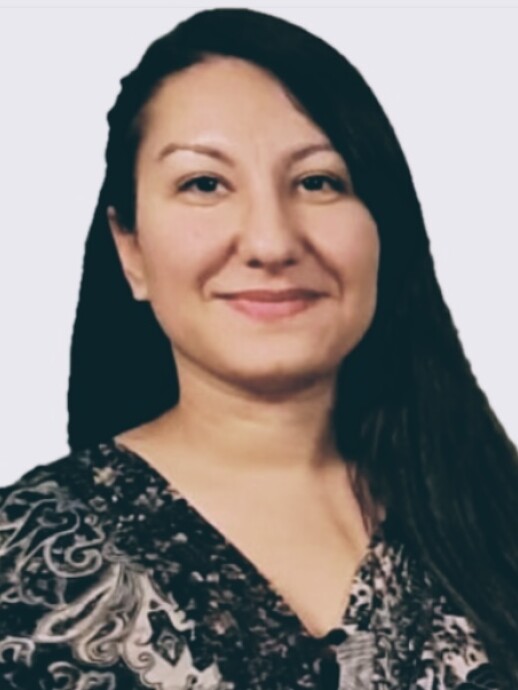
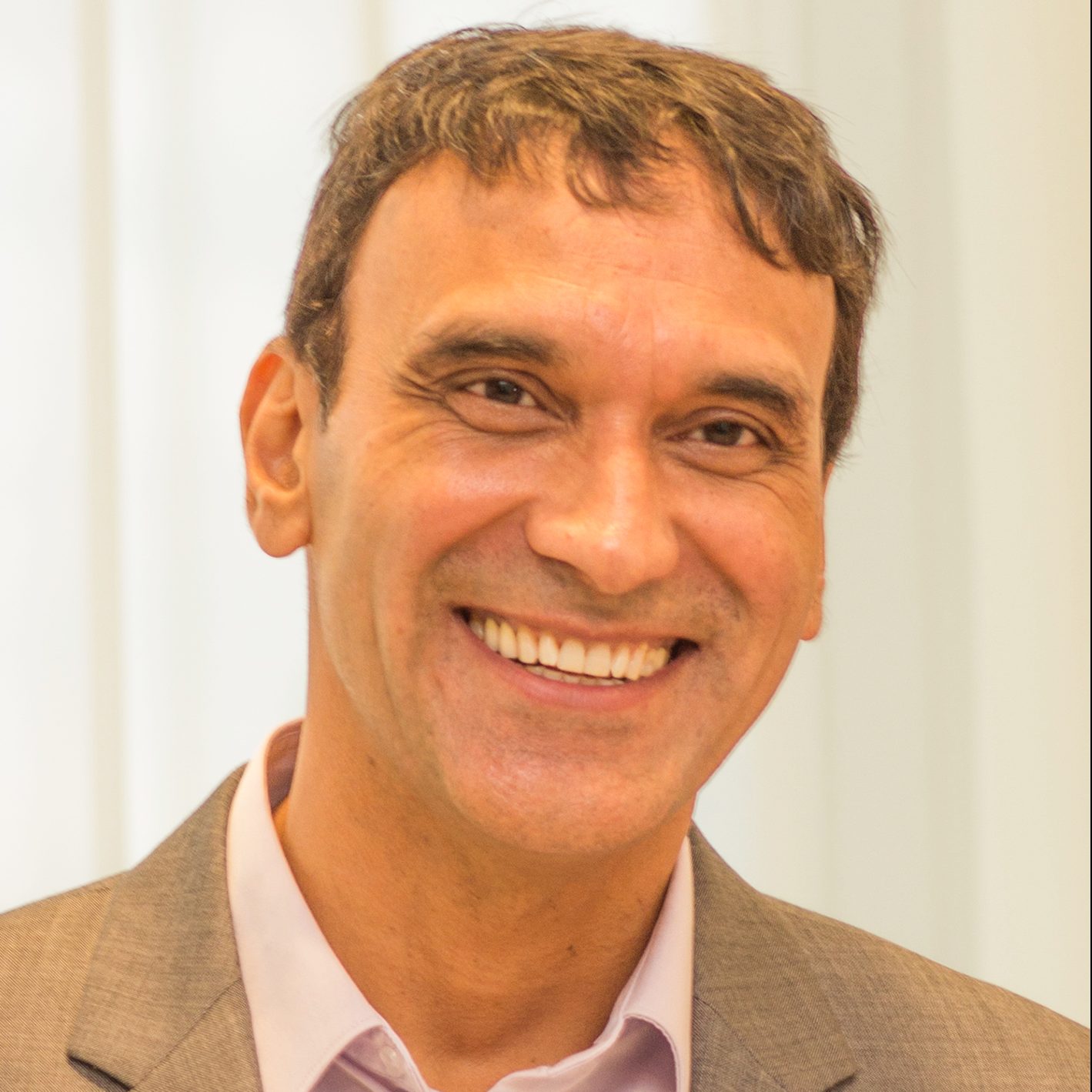
Marina Vazanova is an Associate Professor at the Department of Romance and Slavic Languages, Faculty of Applied Languages, University of Economics in Bratislava, where she has worked since February 2021. Her career spans multiple institutions, including Comenius University in Bratislava (2016–2020), Chuvash State Pedagogical University in Russia (2006–2016), and Johannes Gutenberg University of Mainz (research internship in 2014). Current Position: Associate Professor (University of Economics in Bratislava) Past Roles: Lecturer, Head of Program, Department Chair Her research focuses on linguistic and cultural aspects of Russian language teaching , including componential analysis , political discourse , and cross-cultural communication . She has published extensively on topics such as address forms in political contexts , propaganda in media , and corpus-based linguistic expertise . Key trends in her recent publications (2019–2023) emphasize media linguistics , political communication , and language pedagogy . She has participated in international collaborations and organized conferences on Russian language education and bi/polylingualism. Vazanova has delivered 4 invited lectures at international/national levels and contributed to the Web of Science/Scopus database with 1 registered research output. Her organizational experience includes leadership roles in academic conferences and examination commissions.
Associate Professor Judi Parson is a pediatric-qualified Registered Nurse and Registered Play Therapist - Supervisor at Deakin University's School of Health and Social Development, Faculty of Health. She leads the Play Therapy discipline at the university and is recognized internationally for her work in Medical Play Therapy and the integration of digital technologies in therapeutic practice. Her career spans clinical practice, research, teaching, and leadership in the field of play therapy. Education Doctor of Philosophy, Central Queensland University Master of Health Science (Nursing), Charles Sturt University Master of Arts in Play Therapy with Distinction, Roehampton University, UK Graduate Diploma of Nursing, Australian Catholic University Graduate Certificate of Higher Education, Deakin University Bachelor of Nursing, Australian Catholic University Research Interests Professor Parson's research focuses on Play Therapy as an emerging profession to support biopsychosocial health and development for children and their families. Her work explores thematic expression of humanistic skills within play therapy and supervision sessions, pediatric (hospital, medical and procedural) play therapy techniques, and digital tele-health including therapeutic apps and virtual reality. She employs qualitative research methods such as Phenomenology and Autoethnography to investigate optimal therapeutic effects for diverse populations including war-affected children, those experiencing natural disasters, Aboriginal communities, children of incarcerated parents, and children with autism. Her research bridges theory and practice while addressing cultural responsiveness and technological innovation in play therapy. Research Output Trends Professor Parson's recent publications reveal a strong focus on expanding play therapy applications across diverse contexts and populations. Her work increasingly addresses cultural responsiveness, particularly with Aboriginal communities, and the adaptation of play therapy for crisis situations including natural disasters and war. There's a notable trend toward integrating digital technologies, with several publications on tele-play therapy, virtual reality applications, and online supervision. Her research also demonstrates growing attention to specific populations such as children of incarcerated parents and those with autism, while maintaining her foundational work in medical play therapy for pediatric healthcare settings. Scientific Awards Australian Postgraduate Award (2003-2008) for PhD research on "Integration of procedural play for children undergoing Cystic Fibrosis treatment: A nursing perspective" Highest Academic Achievement Award (1996) for Graduate Diploma in Nursing (Child and Adolescent health - Advanced paediatrics) Supervision and Grants Professor Parson actively supervises multiple doctoral and master's students across various play therapy research topics. Her current doctoral supervision includes research on psychosocial interactions in parent-child play relationships, therapeutic play for developmental trauma, and children's coping with vaccinations. She recently secured a significant grant from The Rotary Club of Sydney Inc for "Tele Play Therapy" research (2024-2026, $36,721.28), demonstrating continued funding support for her innovative work in digital play therapy applications. Professional Leadership Professor Parson is a co-founder of the Australasia Pacific Play Therapy Association (APPTA) and the International Consortium of Play Therapy Associations (IC-PTA), playing a key role in shaping the field globally. She serves on the Editorial Board of the British Journal of Play Therapy and maintains professional registrations with multiple play therapy associations worldwide, including as a Registered Play Therapist/Supervisor with APPTA. Her leadership extends to developing the Master of Child Play Therapy program at Deakin University, where she teaches multiple courses including Foundations of Play Therapy, Humanistic Play Therapy, and Systemic Play Therapy.
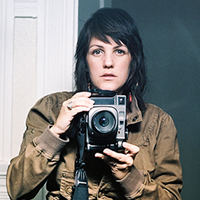
Dr. Heather M. O'Brien-Takahashi is a multidisciplinary artist and academic currently serving as Assistant Professor of Cinema within the School of Media Arts at Southern Illinois University Carbondale. With an MFA from California Institute of the Arts, her artistic practice spans film/video, photography, and installation art that critically examines familial archives, nationhood constructs, and memory accuracy illusions. Educational background Teaching experience across four continents International exhibition history Research focus areas Her creative research explores intersections between expanded cinema, psychoanalysis, and decolonial theory through experimental formats. Recent projects like like the delayed rays of a star (2024) investigate Lebanese temporal politics while older works such as Where this photograph was found (2017) interrogate WWII legacy through family archives. Funded by organizations including The Mellon Foundation, European Commission ERASMUS+, and American University of Beirut Research Board, her practice incorporates diverse methodologies like FLOATS' maritime anthropology and Byrdcliffe Guild's ecological engagement. Collaborations with artist Jonathan Takahashi and scholars like Juli Carson demonstrate her interdisciplinary approach.
Selcen Erten Johansson is a Doctoral Researcher in Digital Language Studies at the University of Turku, focusing on corpus linguistics and media discourse analysis. Her research examines Turkish web registers in the context of political events, such as Finland's NATO membership process in Turkish media. Supported by the Eino Jutikkala Fund (2024–2026), her work bridges computational methods with sociolinguistic inquiry. She holds a Master's in Linguistics from Mersin University (2019) and has been a Fulbright scholar in the U.S. Her teaching spans corpus linguistics, language technology, and Turkish as a foreign language at institutions including Turun Suomenkielinen Työväenopisto and Toros University. Education: PhD Candidate in Digital Linguistics, University of Turku (2021–present) Master's in Linguistics, Mersin University, Türkiye (2019) Fulbright Scholarship, Michigan State University (2015–2016) Research Interests: Selcen explores language variation in digital contexts, particularly Turkish web-based discourse. She combines corpus linguistics with computational tools to analyze political media narratives and multilingual web registers. Her work emphasizes the intersection of technology and sociolinguistics, including projects like TurCORE and collaborations with the TurkuNLP research team. She also investigates pedagogical approaches for teaching Turkish and Finnish as foreign languages. Grants & Support: Eino Jutikkala Fund Grant (2024–2026), Finnish Academy of Science and Letters Teaching & Outreach: She has taught courses on corpus linguistics, automatic text processing, and Turkish language instruction across multiple institutions. Her teaching philosophy integrates digital tools with traditional language pedagogy. Labs & Teams: Active member of the TurkuNLP research team, focusing on NLP applications in digital humanities and multilingual corpora analysis.
Ingemar Johansson Cox serves as a Professor within the Machine Learning section at the Department of Computer Science, University of Copenhagen. His research bridges theoretical machine learning foundations with practical applications across medical data analysis, information retrieval, remote sensing, and sustainability initiatives. His research portfolio emphasizes machine learning applications in high-impact domains, particularly medical data analysis (e.g., early detection of gynecological malignancy using online search activity) and sustainability (e.g., reducing AI's carbon footprint). The Machine Learning section actively contributes to the university's SCIENCE AI Centre, focusing on both algorithmic innovation and real-world problem-solving in biological modeling and environmental monitoring. Recent publication trends reveal expanding work in quantum computing applications for biomolecular modeling, sustainable AI frameworks, and cross-cultural NLP systems. His 2024-2025 output demonstrates strong interdisciplinary collaboration, especially in medical informatics and climate-related AI research. Professor Cox operates within the Department of Computer Science's robust research ecosystem, which includes dedicated compute clusters and specialized initiatives like TreeSense for global tree resource monitoring through remote sensing and deep learning. The department's infrastructure supports large-scale machine learning projects requiring significant computational resources.
Mikel Labiano is a Professor of Greek Philology at the University of Valencia since 2003, affiliated with the Faculty of Philology, Translation and Communication and the Department of Classical Philology. He is actively involved in the GRATUV research group and has published extensively on ancient Greek drama and medical texts. PhD in Classical Philology (University of Salamanca, 1999) Specializes in Aristophanic comedy and Corpus Hippocraticum His research focuses on: Linguistic features of Attic drama Conversational analysis in ancient texts Pseudepigraphic documents and authorship attribution Dialectal variation in Greek texts Imperative constructions in tragedy Stylistic parody mechanisms Recent publications analyze: Particle combinations in Platonic dialogues Comparative suffixes in Aristophanic comedy Imperial decrees in Hippocratic corpus Technical language parody in drama He teaches courses in Greek language and classical philology at multiple levels.
Professor Jang Yoon is a faculty member in the Department of Computer Engineering at Sejong University, South Korea. He currently holds the position of Daeyang Distinguished Professor and leads the Data Visualization Lab. His academic journey includes postdoctoral research at the Swiss National Supercomputing Center (2007-2009), ETH Zurich (2009-2011), and Purdue University (2011-2012). His educational background includes a Bachelor's degree from Seoul National University in Electrical Engineering (2000), and Master's and Doctoral degrees from Purdue University in Electrical and Computer Engineering (2002 and 2007). His academic progression at Sejong University shows his appointment as Assistant Professor (2012-2016), Associate Professor (2016-2022), and Professor (2022-present). Professor Jang's research spans multiple domains within data science and visualization, with primary focus on data visualization, visual analytics, and their applications in various domains. His work bridges theoretical computer science with practical applications in traffic analysis, healthcare, and smart city infrastructure. He has developed innovative techniques for spatiotemporal data visualization, volume rendering, and causal analysis in complex datasets. His recent publications (2023-2025) demonstrate a strong focus on integrating deep learning with visualization techniques, particularly in traffic analysis, volume rendering, and large language model interpretability. His work shows a clear trajectory toward combining causal inference with visual analytics, applying these methods to urban traffic systems, structural health monitoring, and public relations analysis. Professor Jang has served in numerous leadership roles in major visualization conferences including IEEE VIS, IEEE PacificVis (as General Chair in 2023), EuroVis, and HCI Korea conferences. His service contributions include program committee memberships and chair positions across multiple prestigious conferences in the visualization field. His laboratory work focuses on practical applications of visualization techniques with numerous patents registered in Korea. His research has resulted in multiple practical systems for traffic analysis, VR sickness detection, data quality improvement, and eye-tracking applications. The lab maintains strong industry connections through applied research projects addressing real-world problems.
Cristina Guardiano is a Full Professor at the University of Modena and Reggio Emilia, Department of Communication and Economics. Her research focuses on syntax, historical linguistics, and the Parametric Comparison Method (PCM), exploring syntactic variation across languages to reconstruct linguistic phylogenies. She specializes in formal syntax, differential object marking, and the intersection of syntax with computational and genetic data analysis. Key Affiliations: Dipartimento di Comunicazione ed Economia, University of Modena and Reggio Emilia Research Themes: Syntactic parameters, language evolution, Romance dialectology, genetic-linguistic correlations Guardiano's work integrates theoretical linguistics with interdisciplinary approaches, including collaborations with geneticists and computational linguists. Notable contributions include studies on the syntax of Italiot Greek, Sicilian dialects, and the application of parametric syntax to historical language classification. She leads initiatives like the TerraLing database to systematize cross-linguistic syntactic data. Her teaching includes advanced courses on linguistics, parametric syntax, and the analysis of language evolution. She emphasizes critical evaluation of Large Language Models (LLMs) and their implications for linguistic theory.
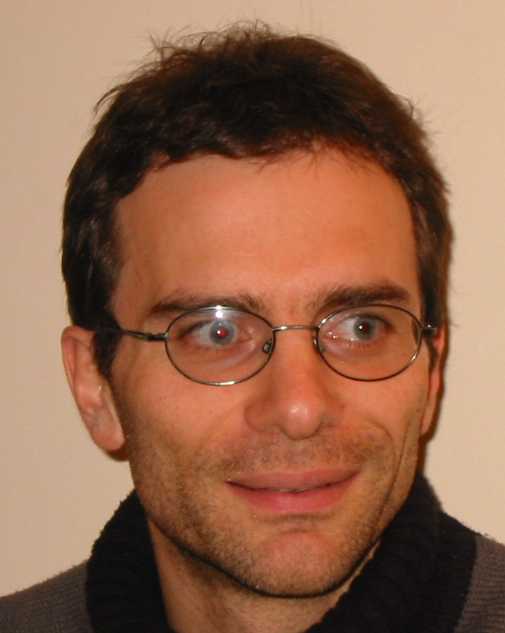
Luc Segoufin is a Research Professor at INRIA (French National Institute for Research in Computer Science and Automation), affiliated with the Department of Computer Science at École Normale Supérieure (ENS) in Paris. He leads the VALDA research team, focusing on theoretical computer science foundations. His research spans: Database theory: Query answering, consistency, and enumeration complexity Logic and automata: Finite model theory, automata over data structures Computational complexity: Fine-grained analysis and lower bounds Formal methods: Verification and logic-based modeling His recent publications (2022–2024) concentrate on: Dichotomy theorems for query answering under constraints Constant-delay enumeration algorithms for structured data Decidability in logic fragments over trees and graphs Connections between automata, algebra, and complexity No scientific awards are mentioned in available sources. He collaborates extensively within the VALDA team and international researchers on projects involving database theory, logic, and automata. No student advising details are provided.
Rosa Weber is a PartTime Lecturer at the Department of Sociology, Stockholm University, and a Principal Investigator for the Segregation Across Domains project funded by the Swedish Research Council for Health, Working Life and Welfare (4.8m SEK, 2023). She holds a PhD in Sociology from Stockholm University (2020) and has conducted postdoctoral research at the French Institute for Demographic Studies (3GEN project) and Sweden’s social sciences sector. Education: PhD in Sociology (2020) Stockholm University MSc in Sociology (2014) London School of Economics BA in Serbian/Croatian and Eastern European Studies (2013) University College London Her research examines social stratification, ethnic inequalities, and migration dynamics across Sweden, Finland, and France. Using administrative data and surveys like Trajectories and Origins 2 (TeO2) and CILS4EU, she analyzes: Workplace and neighborhood segregation impacts on refugee integration Gender-specific labor market barriers for migrants Education-occupation mismatch across migrant generations Circular migration patterns in Nordic free-mobility frameworks Deportation policy effects on migrant financial behavior Key findings include: Male migrants benefit more from social contacts than women in labor markets Refugee children show consistent integration patterns across life domains Increased deportations shift Mexican migrant financial strategies toward remittances Swedish 'Ghetto' policies worsen socio-demographic outcomes Education-occupation vertical mismatch declines across generations in France Her work appears in Demography , Research in Social Stratification and Mobility , and European Journal of Population . She actively participates in migration research networks and policy discussions, maintaining collaborations with institutions like Sciences Po and CREST.
Dr Gavin Brookes is Reader in Linguistics at Lancaster University’s School of Social Sciences and a UKRI Future Leaders Fellow. He is also Associate Editor of the International Journal of Corpus Linguistics , Co-Editor of the Corpus and Discourse series (Bloomsbury) and Critical Discourse Studies (Cambridge University Press), Fellow of the Royal Society of Arts, and sits on the editorial boards of more than ten leading journals. Education: The text does not list specific degrees, but given his rank and fellowships, he clearly holds a doctorate in linguistics or applied linguistics. Research interests revolve around corpus linguistics , discourse analysis and health communication . He leads the £1 million UKRI project Public Discourses of Dementia: Challenging Stigma and Promoting Personhood , and in 2024 holds a Fulbright award at Northern Arizona University investigating dementia representations in US media. Recent publications (2024-2025) cluster along four main lines: health and dementia discourse (e.g., framing dementia stigma, visual representations of ageing), gender and masculinity (vegan masculinities, men’s health), AI and multimodality (critical analysis of AI-generated dementia imagery), and methodological innovation (corpus ethics, GenAI alignment in applied linguistics). These works collectively advance critical, corpus-assisted approaches to pressing social issues. Awards & Honours UKRI Future Leaders Fellowship (2022-2026, £1 million) Fulbright All Disciplines Award (2023-2024) Fellow, Royal Society for Arts, Manufactures and Commerce Member, ESRC Grant Assessment Panel Member, AHRC Advisory Board & Peer Review College PhD Supervision & Grants He currently supervises three doctoral researchers: Qin Fan, Poppy Plumb, and Christopher Sanderson. Funding sources include the UKRI Future Leaders Fellowship, Fulbright Commission, ESRC IAA, and prior ESRC and AHRC small grants. Professional Service & Networks Dr Brookes convenes the British Association for Applied Linguistics (BAAL) Corpus Linguistics SIG, sits on the executive committees of BAAL and ICAME, and reviews for Research Foundation-Flanders, ESRC and AHRC.
William Henrich Due serves as a Lecturer at the Department of Computer Science (DIKU), University of Copenhagen, within the Machine Learning section. His work intersects with the SCIENCE AI Centre and leverages the department's high-performance compute cluster for research in quantum computing, sustainable AI, and medical applications. Research focuses span quantum machine learning (biomolecular simulations, photonic processors), sustainable AI systems (energy efficiency, climate impact), and clinical applications (EEG analysis, medical imaging). His recent publications reveal strong activity in quantum-classical hybrid systems, with 8/15 recent papers addressing quantum computing challenges. The work emphasizes practical implementations in medical imaging and resource-constrained environments. His research aligns with DIKU's Machine Learning section priorities including medical imaging biomarkers and sustainable computing. Key infrastructure includes TreeSense for remote sensing and the department's dedicated compute cluster. No scientific awards were explicitly documented in the provided materials. Due contributes to DIKU's teaching mission as a Lecturer while engaging with the SCIENCE AI Centre's interdisciplinary initiatives. His work connects with medical imaging applications and quantum computing infrastructure development. Active in the Machine Learning section's research ecosystem, his work intersects with medical imaging analysis and quantum computing applications, utilizing specialized resources like TreeSense for environmental monitoring.
Sunil Bhatt is an Associate Professor of Teaching specializing in Hindi-Urdu language instruction within the Department of Asian Studies at the University of British Columbia's Faculty of Arts. With a background in Comparative Linguistics and experience teaching South Asian languages across multiple continents, he brings a unique perspective to language education. His research focuses on linguistics, particularly Hindi-Urdu language teaching, sociolinguistics, and language acquisition. He has published extensively on topics including honorifics in Hindi, bilingual situations in India, and the integration of Bollywood culture in language instruction. His work demonstrates a commitment to understanding the complex sociopolitical dimensions of language teaching in South Asian contexts. Bhatt's recent publications reveal a consistent focus on pedagogical approaches to Hindi-Urdu instruction, with emphasis on heritage learners, pandemic-era teaching adaptations, and the relationship between language and cultural identity. His research spans theoretical linguistics, applied language teaching, and sociolinguistic analysis of language communities. As an educator, he teaches foundational and advanced courses including Introductory Hindi-Urdu, Sufi and Bhakti Devotional Literatures, and Introduction to Hindi Film, demonstrating his integration of language instruction with cultural studies. His scholarly contributions extend beyond traditional publications to include textbooks, edited volumes, and digital learning resources that have significantly impacted Hindi-Urdu language pedagogy internationally.
Silke Unverzagt is a researcher at Humboldt-Universität zu Berlin's Institut für deutsche Sprache und Linguistik, focusing on register emergence and change in Germanic languages. She contributes to Project B04, investigating variation in writings by Martin Luther and Johannes Bretke. Her work emphasizes historical sociolinguistics, particularly in Old High German and Old Swedish texts. Her research involves creating and analyzing the Birgitta-Notker-Korpus (BiNoKo), a comparative corpus of historical registers. This includes Notker III's Old High German Psalms and Birgitta of Sweden's Old Swedish Revelations, annotated for sociolinguistic and functional parameters. Unverzagt's publications address intra-writer variation, corpus design, and the impact of social roles on language use. She collaborates with researchers like Phil Beier and Gohar Schnelle, focusing on methodological frameworks for historical linguistic analysis. No scientific awards are listed, but her work highlights contributions to digital humanities and historical corpus linguistics. She has not listed advisees or grants in the provided texts.
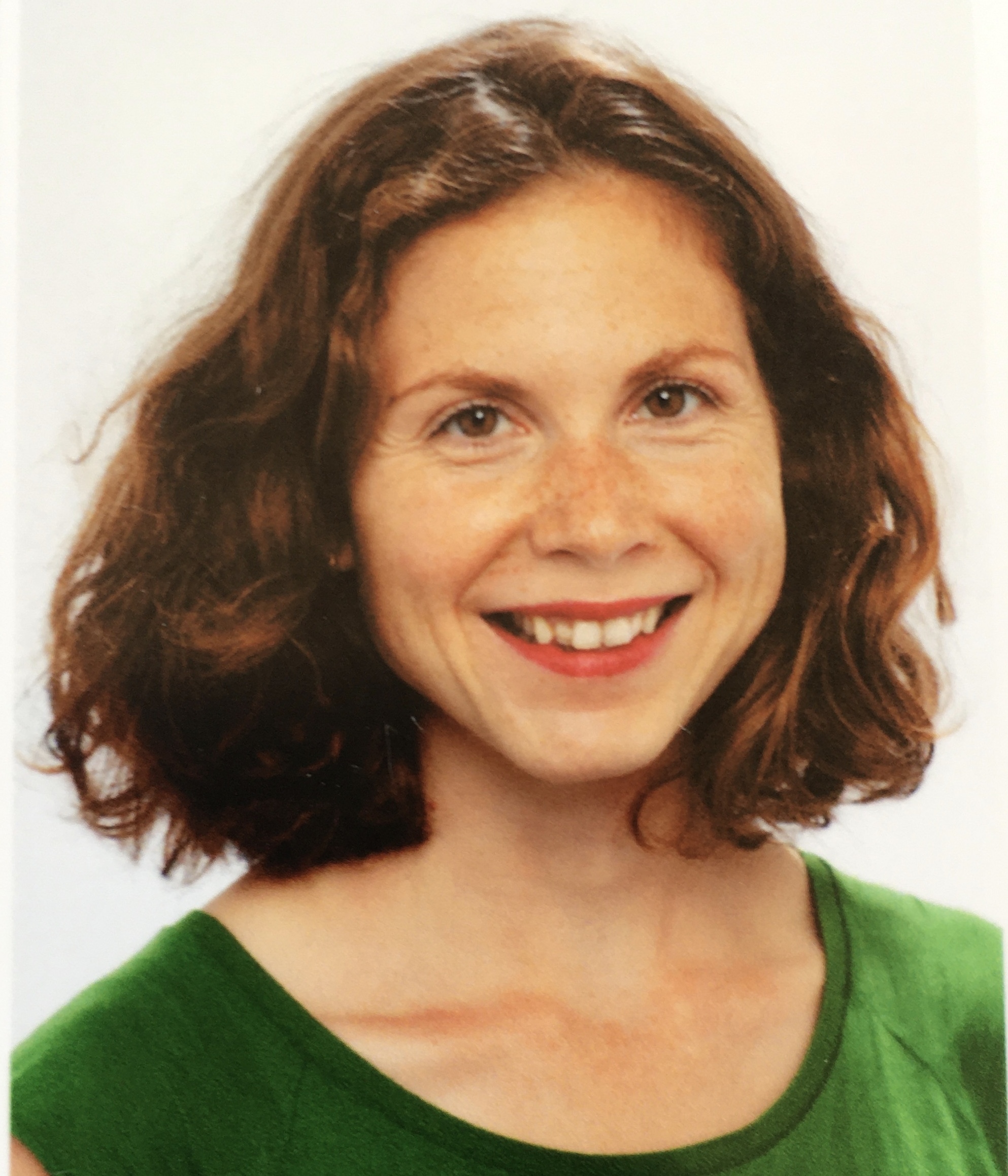
Ana Belén Llopis Cardona is an Associate Professor in the Department of Spanish Philology at the Faculty of Philology, Translation and Communication, University of Valencia. She is a member of the Val.Es.Co. research group, dedicated to the study of colloquial Spanish. Her academic work centers on discourse analysis, pragmatics, and the functional roles of discourse markers in spoken and written Spanish. PhD in Spanish Linguistics, University of Valencia, 2011 Supervised by Dr. Salvador Pons Bordería and Dr. Antonio Briz Gómez Her research explores the evolution and usage of discourse markers such as "eso sí," "por su parte," "en definitiva," and "igual/lo mismo," analyzing their semantic-pragmatic cycles, grammaticalization processes, and sociolinguistic functions. She investigates how colloquial language functions as a rhetorical strategy in media genres like radio commentary. Her methodological approach integrates corpus analysis, construction grammar, and functional linguistics. Her recent publications span topics including evidentiality (e.g., "según"), politeness in dialogic literary gatherings, and prosodic variation in discourse particles. The body of her work reveals a consistent focus on the dynamic interplay between form, function, and context in Spanish discourse. Discourse Markers Pragmatics Grammaticalization Spanish Linguistics Evidentiality Colloquial Register Ana Belén Llopis Cardona actively contributes to academic discourse through publications in international journals and participation in research collaborations. While specific grant details are not listed, her sustained scholarly output indicates ongoing research activity and academic engagement.