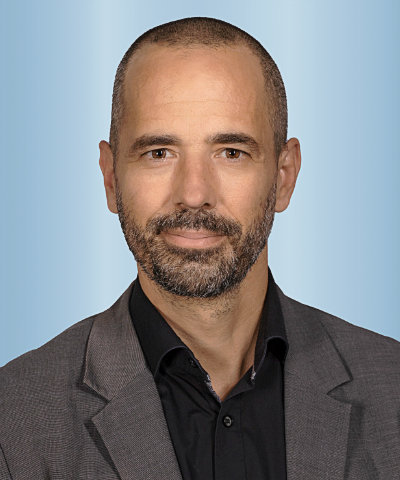
Philip Garner is a Lecturer at the L'IDIAP Laboratory , a research institution specializing in artificial intelligence, signal processing, and human-computer interaction. His role involves teaching and research activities within this interdisciplinary environment. Dr. Garner's research interests span artificial intelligence , machine learning , and language technology , with applications in signal processing and interactive systems. While no specific awards or publications are listed in the available information, his position at L'IDIAP suggests active contributions to these domains.
Luca Verginer is a Lecturer at the Department of Management, Technology, and Economics within ETH Zurich. His work bridges empirical economics and network science, focusing on pharmaceutical supply chains, patent dynamics, and social network impacts. Current affiliation: ETH Zurich (School of Management and Social Sciences) Academic rank: Lecturer His research integrates causal inference, advanced econometrics, and deep learning methods like Graph Neural Networks (GNN) and Natural Language Processing (NLP) to address policy and strategic challenges in healthcare and innovation. Key trends in his publications include: Quantifying supply chain resilience through reroute flexibility Analyzing scientist mobility networks and global cities' dominance Studying social dynamics in online radicalization and migration Methodologically, he employs agent-based modeling, big data analytics, and empirical validation across diverse domains from opioid distribution to academic collaboration. His work demonstrates strong interdisciplinary focus, combining economics, computational methods, and policy analysis to tackle real-world challenges in healthcare systems and knowledge production networks.
Tobias Wekhof is a Lecturer at the Department of Management, Technology, and Economics at ETH Zurich. His research focuses on environmental economics, sustainable finance, and applied microeconomics, utilizing advanced methodologies such as econometrics, natural language processing (NLP), and machine learning. He is actively engaged in promoting sustainability in economic and financial practices.
Ruth Harriet Brown is a Postdoctoral Research Fellow at the University of Edinburgh's Department of Clinical Psychology, affiliated with the Fetal Alcohol Advisory and Support Team (FAAST) and the zIReN network. Her research investigates the interplay between mental health difficulties, focusing on ADHD, autism, alexithymia, and adverse childhood experiences. BSc in Biological Sciences with Psychology (2014) MSc in Psychological Research (2015) PhD in Psychology (2019) Her work utilizes ecological momentary assessment (EMA) to study moment-to-moment dynamics in mental health, including stress-aggression relationships in ADHD and the impact of maternal adversity on fetal development. Publications highlight her expertise in advanced statistical modeling and cross-population health research. Ruth's collaborations span global institutions, emphasizing intergenerational mental health transmission and psychometric tool adaptation. Current projects include prenatal alcohol exposure interventions (2025) and cross-cultural EMA studies on mental health compliance.
Lena Jaeger is an Associate Professor of Digital Linguistics at the University of Zurich, where she leads research at the intersection of linguistics, computational cognitive science, and machine learning. She joined the Chair of Computational Linguistics at UZH in July 2020 after establishing a Machine Learning Junior Research Group at the University of Potsdam, funded by the German Federal Ministry of Education and Research. Her educational background spans multiple disciplines: she earned an MA in Chinese Language and Culture (Sinology) from the University of Freiburg im Breisgau, Tongji University Shanghai, Beijing Language and Culture University, and Université Paris 7 Denis-Diderot; followed by an MSc in Experimental and Clinical Linguistics at the University of Potsdam; and completed her doctorate in cognitive science at the same institution. Notably, she also earned a bachelor's degree in computer science during or after her doctoral studies. Professor Jaeger's research focuses on investigating cognitive mechanisms underlying human language processing using experimental psycholinguistics, computational modeling, and machine learning methods. Her current work develops machine learning techniques for analyzing eye-tracking data to understand cognitive processes reflected in eye movement behavior. This interdisciplinary approach combines insights from linguistics, cognitive science, and artificial intelligence to create models that bridge human and machine language understanding. Her recent publications reveal a strong trend toward developing eye-tracking methodologies, creating multilingual corpora, and applying machine learning to understand reading behavior and language processing. Her work spans from fundamental research on cognitive mechanisms to practical applications in educational technology, medical diagnostics, and AI development. Best student late breaking work award for Reporting Eye-Tracking Data Quality: Towards a New Standard Best short paper award for Bridging the Gap: Gaze Events as Interpretable Concepts to Explain Deep Neural Sequence Models Professor Jaeger actively supervises multiple PhD students across computational linguistics, machine learning, and phonetics disciplines. Her research group collaborates extensively on large-scale projects like the MultiplEYE initiative, which establishes standards for multilingual eye-tracking data collection. She has secured significant research funding, including a Machine Learning Junior Research Group grant from the German Federal Ministry of Education and Research before moving to UZH. Her laboratory work centers on eye-tracking methodologies, developing tools like pymovements for eye movement data processing, and creating comprehensive corpora such as MECO (Multilingual Eye-Movement Corpus), MultiplEYE, and CoLAGaze. These resources support cross-linguistic research on reading behavior and language processing across diverse populations.
Denis Ribeaud serves as Senior Research Associate and Co-Project Director of the Zurich Project on the Social Development from Childhood to Adulthood (z-proso) at the University of Zurich's Faculty of Arts and Social Sciences. Since 2006, he has directed the Zurich Youth Surveys (ZYS), which track youth violence trends in Zurich canton using representative student samples. The z-proso project, ongoing since 2003 with over 1,300 participants, examines longitudinal development of violence and problem behaviors through repeated surveys. His educational background includes: Sociology and Social Psychology studies at the University of Zurich PhD in Criminology from the University of Lausanne, where he worked at the Criminological Institute for several years Ribeaud's research focuses on criminology and developmental psychology, specifically investigating how peer victimization, parenting behaviors, socio-emotional skills, and harsh environments influence violence perpetration, mental health, and substance use across adolescence. His work integrates biological measures (e.g., hair cortisol analysis), ecological momentary assessment, and advanced statistical modeling to map causal pathways in youth development. Key specialties include longitudinal cohort design, transdiagnostic mental health analysis, and validation of behavioral instruments. Recent publications reveal heavy emphasis on multi-method approaches combining biological data with psychological assessments. He explores gene expression changes from victimization, hormonal correlates of aggression, and machine learning applications in EMA data, while consistently addressing Zurich-specific youth cohorts. His articles highlight Switzerland-focused violence research, substance use patterns in immigrant vs. native adolescents, and pandemic impacts on young adult coping mechanisms. No scientific awards were documented in the provided materials. Ribeaud's project leadership implies grant management and student supervision, though specific advisees or funding details are absent. His z-proso role involves coordinating cross-disciplinary teams across 13+ years of data collection, suggesting substantial advisory responsibilities in research design and execution. He directs the z-proso project and Zurich Youth Surveys (ZYS), major longitudinal initiatives based at the University of Zurich. These projects maintain archives of data collections from 2004-2022 and employ interdisciplinary teams for analyzing youth violence, mental health, and social decision-making through combined survey and biomarker approaches.
Eleanor Chodroff is an SNF Assistant Professor in the Department of Computational Linguistics at the University of Zürich . She leads the Phonetics and Cognitive Science Lab (PaCSci Lab) within the broader Phonetics & Speech Sciences Group . Her research spans the phonetics–phonology interface , cross-talker and cross-linguistic phonetic variation , speech prosody , and morphophonology . A central theme involves leveraging large spoken corpora to advance linguistic theory, with applications in speech recognition and phonetic analysis . Former roles include Lecturer in Phonetics and Phonology at the University of York and postdoctoral researcher in the Prosody & Speech Dynamics Lab at Northwestern University . She holds a PhD in Cognitive Science from Johns Hopkins University and a BA in German and Linguistics from New York University . Recent collaborative projects include the CorpusPhon workshop (co-organized with Morgan Sonderegger), computational studies on temporal anticipation in speech , and methodological investigations of speaker heterogeneity in datasets like Common Voice. Her work intersects acoustic phonetics with machine learning frameworks, particularly in low-resource language contexts.
Stefan Elmer is a Senior Researcher at ETH Zurich specializing in computational neuroscience of speech and hearing. His work investigates neural mechanisms of language processing, bilingualism, and music cognition, with emphasis on how musical expertise influences speech perception and word learning across the lifespan using EEG and neuroimaging techniques. Dr. Elmer's research spans speech neuroscience, hearing neuroscience, and bilingualism, focusing on neural plasticity in interpreters and musicians. Key studies examine cognitive load during simultaneous interpretation, neural correlates of absolute pitch, and age-related changes in temporal speech processing. His work demonstrates how experience in music or language reshapes brain connectivity in dorsal/ventral streams. Analysis of his 2019-2023 publications reveals consistent themes: neural adaptations in simultaneous interpreters, music-language interactions in word learning, and clinical applications for tinnitus/hearing loss. His research highlights EEG-based biomarkers for individual cognitive profiles and lifespan effects of expertise on auditory processing. Dr. Elmer contributes to ETH Zurich's Computational Neuroscience of Speech & Hearing group, which employs interdisciplinary approaches to unravel auditory processing mechanisms through collaborative projects bridging neuroscience, linguistics, and clinical audiology.
Dr. Srikanth Madikeri is a Lecturer and Senior Researcher at the University of Zurich's Department of Computational Linguistics. He holds a Ph.D. in Computer Science from IIT Madras (2013) and a Bachelor of Engineering from Anna University (2008). Before joining UZH, he spent 11 years at Idiap Research Institute as a Postdoctoral Researcher and Research Associate. His research focuses on low-resource speech technologies, including Automatic Speech Recognition (ASR), Speaker Diarization, Language Recognition, and Spoken Dialog Systems. He specializes in adapting models for challenging domains like air traffic control and criminal investigations. Recent publications demonstrate strong trends in multimodal systems, domain adaptation for ASR, and efficient data selection techniques. His work frequently integrates speech processing with NLP tasks and criminal network analysis. Awards: Best Paper Award in Signal Processing Track (NCC 2011) International Create Challenge 2017 Winner He teaches Speech Technology and Machine Learning for Computational Linguistics at UZH. Professional activities include serving as Area Chair for Interspeech (2021-2022) and developing open-source toolkits like pkwrap for LF-MMI training.
Mathias Müller is a postdoctoral researcher at the University of Zurich, where he works on sign language translation and natural language processing (NLP) with a focus on scientific integrity and accessibility. He collaborates with Sarah Ebling , Annette Rios , and others as part of the EU-funded project EASIER . His research interests span Sign language processing Scientific reproducibility Robustness of NMT systems Teaching neural machine translation (NMT) Markup technologies (XML, XSLT, etc.) Phonetics and acoustics His recent publications highlight trends in sign language translation, including multimodal approaches, gloss-based translation, and Signwriting integration. These works emphasize evaluation protocols and addressing bias in NLP systems. Scientific awards include Outstanding Paper Award at ACL 2023 Best Paper Award at AfricaNLP 2023 Best Poster Award at Swisstext 2023 He advises students like Shester and collaborates with teams on NMT system development. His work is supported by a 4-year Bridge Postdoc grant funded by the University of Zurich's Digital Society Initiative (DSI).
Dr. Anna Graff is a Postdoctoral Researcher at the Distributional Linguistics Lab in the Department of Comparative Language Science at the University of Zurich, Switzerland. With an interdisciplinary background spanning biological anthropology and linguistics, her research focuses on the relationship between structural linguistic diversity patterns and molecular genetic diversity distributions across global populations. Dr. Graff completed her PhD in Linguistics at the University of Zurich (2020-2024), following specialized training in Human Evolutionary Studies at the University of Cambridge (2019-2020) and undergraduate studies in Biology and General Linguistics at the University of Zurich (2016-2019). Her academic path includes research assistant positions at the University of Zurich's Paleontology Institute and Mathematics Institute, demonstrating her broad interdisciplinary foundation. Her research interests prominently feature linguistic typology , evolutionary linguistics , and molecular anthropology , with specialized focus on linguistic diversity hotspots and their emergence through contact and isolation processes. Dr. Graff employs innovative methodological approaches that bridge linguistic analysis with population genetics, using genetic admixture as a proxy for historical population contact to study linguistic borrowing patterns globally. Dr. Graff's publication record demonstrates significant contributions to interdisciplinary research, with recent publications in high-impact journals including Science Advances and Scientific Data. Her work spans linguistic database development (ATLAs database), methodological innovation (Densify R package), cultural evolution of musical instruments, and paleoparasitology, reflecting her commitment to cross-disciplinary scholarship. Her scientific contributions include: Groundbreaking research on genetic-linguistic correlations in language contact scenarios Development of the Areal Typology of Languages of the Americas (ATLAs) database Creation of computational tools for linguistic data processing Studies on cultural evolution across diverse domains Innovative approaches to interdisciplinary data integration As a postdoctoral researcher, Dr. Graff continues to advance interdisciplinary methodologies that connect linguistic patterns with genetic and anthropological data, contributing to our understanding of human cultural and biological evolution through innovative research approaches that transcend traditional disciplinary boundaries.
Chiara Barbieri is an Independent Group Leader at the Department of Evolutionary Biology and Environmental Studies, University of Zurich, Switzerland, since 2020. Her research bridges molecular anthropology, population genetics, and human prehistory with a focus on South American populations. Education: PhD in Molecular Anthropology (2013, University of Bologna & Max Planck Institute for Evolutionary Anthropology) Prior Positions: Postdoctoral roles at University of Zurich (2018-2020), Max Planck Institute for the Science of Human History (2015-2017), Max Planck Institute for Evolutionary Anthropology (2014-2015), and University of Bologna (2013-2014) Barbieri's research explores: Congruence between genetic and linguistic transmission Human migration patterns in the Andes and Amazonia Population contact zones and diffusion processes Genetic structure of pre-Columbian societies mtDNA lineage analysis in southern Africa Impact of historical empires on genetic diversity Her work combines paleogenomic data with linguistic and archaeological evidence to reconstruct population prehistory, particularly in western South America. While no specific awards are listed, her publications in top journals like PNAS and Cell indicate significant academic contributions.
Abraham Bernstein is a Full Professor of Informatics at the University of Zurich (UZH), where he serves as Head of the Dynamic and Distributed Information Systems Group and Director of the UZH Digital Society Initiative. He leads a university-wide initiative with over 180 faculty members investigating the interplay between society and digitalization. His work bridges social science foundations (organizational psychology/sociology/economics) and technical disciplines (computer science, artificial intelligence), creating a unique interdisciplinary approach to digital transformation challenges. Education: Diploma in Computer Science from ETH Zurich Ph.D. in Management with concentration in Information Technologies from MIT's Sloan School of Management Professor Bernstein's research spans the Semantic Web, data mining/machine learning, recommender systems, crowd computing, and collective intelligence. His work uniquely integrates social science perspectives with technical computer science approaches, examining how social and technical elements interact in digital systems. Recent work focuses on explainable AI, ethical decision-making with AI systems, and the societal implications of digital transformation, reflecting his commitment to addressing both technical challenges and their broader societal context. His publication record shows a strong trajectory in multimodal information retrieval, knowledge representation, and human-AI collaboration, with increasing focus on ethical considerations and societal impact of AI technologies. The research demonstrates consistent innovation in bridging technical AI capabilities with human-centered design principles, particularly in areas like explainable recommender systems and democratic applications of AI. Scientific Recognition: Nominated Digital Shaper by Bilanz magazine (2017) Professor Bernstein has supervised over 30 PhD students whose work spans semantic technologies, data mining, recommender systems, and human-AI interaction. His research group has secured significant funding for projects related to digital society, knowledge representation, and AI ethics. As Director of the Digital Society Initiative, he coordinates cross-disciplinary research across UZH's faculties, bringing together scholars from humanities, social sciences, law, economics, and STEM fields to address complex digital transformation challenges. He leads the Dynamic and Distributed Information Systems Group at UZH, which maintains strong international collaborations and contributes significantly to both theoretical advances and practical applications in information systems. The group's work has influenced standards in semantic web technologies and continues to shape discourse on responsible AI development and deployment in society.
Vincent Jung is a PhD Student at EPFL (LTS4) and IDIAP, with a visiting researcher role at the University of Italian Switzerland (USI). He is affiliated with the Faculty of Communication, Culture and Society and the Institute of Argumentation, Linguistics and Semiotics (IALS). His research focuses on RNA Language Models (RNA-LMs), bridging methodologies from natural language processing and computational biology to address challenges in RNA sequence analysis, structure prediction, and interaction modeling. Supervised by Prof. Lonneke van der Plas, Prof. Pascal Frossard, and Prof. Raphaëlle Luisier Vincent's work emphasizes adapting and developing AI/ML techniques for biological applications, particularly in understanding RNA functionalities. He is based at USI's Lugano campus.
Prof. Dr. Moritz Daum is the Director of the Jacobs Center and holds the Professorship of Developmental Psychology at the Department of Psychology, University of Zurich . His academic career includes a Licentiate Degree (2001) and PhD (2005) in Psychology from the University of Zurich, and a Habilitation (2011) from the University of Leipzig. Previously, he led the Infant Cognition and Action Research Group at the Max Planck Institute and worked as a Senior Researcher in Munich/Leipzig.