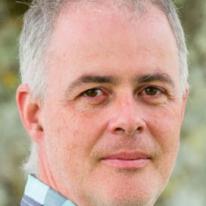
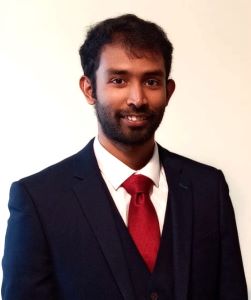
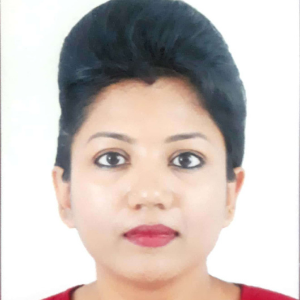
Professor Paul Buitelaar is a leading academic at the University of Galway , where he serves as the Vice-Director of the Data Science Institute and leads a team focused on Natural Language Processing (NLP). He co-directs the SFI Centre for Research Training in AI and contributes as a co-PI to the Insight SFI Research Centre for Data Analytics. His research centers on advancing NLP methods for knowledge extraction and semantic-based information access . He has spearheaded significant EU-funded projects such as Monnet (ontology-based lexicons), MixedEmotions (multilingual emotion analysis), and Pret-a-LLOD (LingHub linguistic data repository). He also pioneered the Saffron framework for text-based knowledge extraction.
Jim Buckley is a Professor in the Computer Science and Information Systems Department at the University of Limerick, Ireland, and a Principal Investigator in Lero. He leads the ARC research group focused on software evolution and legacy system modernization, with significant industry collaborations including Huawei, IBM, and Fidelity. Education: BSc in Biochemistry, University of Galway (1989) MSc in Computer Science, University of Limerick (1994) PhD in Computer Science, University of Limerick (2002) Research Focus: His work centers on AI-enhanced software engineering (AI4SE/SE4AI), featuring breakthroughs in clone detection, software architecture evaluation, and feature location. He has developed industry-adopted tools for software comprehension and evolution, with recent emphasis on explainable AI (XAI) and scalable neural network applications for industrial codebases. His research consistently bridges academic rigor with industrial implementation. Publication Trends: Recent articles (2022-2025) reveal a dominant shift toward AI-driven software engineering solutions, particularly in clone detection and architecture recovery. Key themes include industrial scalability, developer experience optimization, and responsible AI integration, with strong representation in top-tier venues like IEEE Transactions and ACM Computing Surveys. Scientific Awards: No awards specified in source material. Grants & Industry Impact: Leads the Huawei-funded TREES Programme and maintains active partnerships with 9+ companies. His research has yielded licensed tools (e.g., for legacy system evolution), two IP assignments from LLM-based clone detection work, and practical frameworks adopted by seven Irish enterprises. Research Infrastructure: Directs the ARC group within Lero, which combines academic researchers and industry practitioners to address real-world software maintenance challenges through empirical studies and tool prototyping.
Dr. Andrew Butterfield is a Professor in the School of Computer Science and Statistics at Trinity College Dublin. He serves as Head of the Foundations and Methods Group and is actively involved with Lero: the Irish Software Research Centre. His academic work spans formal methods, functional programming, and theoretical computer science with applications in safety-critical systems. Butterfield's research primarily focuses on the Unifying Theories of Programming (UTP) paradigm, with specializations in shared-variable concurrency, formal verification of medical device software, and spacecraft operating systems. His work explores composition and local denotational semantics for concurrency, UTP theories for rely/guarantee reasoning, and implementations of proof assistance tools written in Haskell. Current projects include RTEMS-SMP (formal verification of multicore real-time scheduling funded by ESA) and FMHIDA (formal techniques for medical device software development funded by SFI through Lero). His recent publications reveal a strong emphasis on applying formal methods to real-world problems, with particular attention to concurrency models, medical systems verification, and tool development for UTP. The research shows consistent progression from theoretical foundations toward practical applications in safety-critical domains. Butterfield has developed several Haskell-based tools including the Theorem Proving Assistant for UTP, UTP Calculator, and Equational Reasoning Support. He has served on numerous program committees including TASE 2019, IWFM, FMICS, and FM, and is on the Editorial Board of Formal Aspects of Computing. He teaches courses including CS3016: Introduction to Functional Programming and CS2016/3D4 Concurrency and Operating Systems. Previously, he has taught Formal Methods, Functional Programming, Concurrency Theory, and various other computer science subjects. He also serves as School Disability Liaison Officer and Course Director for Creative and Cultural Entrepreneurship. Butterfield leads the Foundations & Methods Group at Trinity and has been involved in significant research projects including Formalising Interfaces between Software and Hardware (FISH) funded by SFI, Unifying Synchronous Systems, and ESA-funded activities on OS kernel formal verification. His work with the Irish School of VDM has produced LaTeX macros and Haskell implementations for formal method applications.
Kashif Ahmad serves as an Assistant Lecturer in the Department of Computer Science at Munster Technological University (MTU), Cork, Ireland, and holds an Associate Investigator position with the CONNECT research centre. His academic career includes prior postdoctoral research roles at Hamad Bin Khalifa University in Doha, Qatar, and Trinity College Dublin, Ireland. Education: BSc in Computer Systems Engineering, University of Engineering and Technology, Peshawar, Pakistan (2010) MSc in Computer Systems Engineering, University of Engineering and Technology, Peshawar, Pakistan (2013) PhD, University of Trento, Italy (2017) His research centers on Social Network Analysis and Multimedia Analytics, with specialized focus on Artificial Intelligence and Natural Language Processing applications for Smart Cities. He investigates data-driven methodologies to optimize urban infrastructure, transportation systems, and public service delivery through advanced computational techniques. His work bridges theoretical AI frameworks with practical urban challenges, emphasizing scalable solutions for modern metropolitan environments. As a CONNECT Associate Investigator, Ahmad contributes to Ireland's national telecommunications research initiative, collaborating on next-generation network technologies and cross-institutional projects focused on digital urban transformation.
Dr. Derek Greene is an Assistant Professor at the School of Computer Science, University College Dublin, and a Funded Investigator at the Insight Centre for Data Analytics and the VistaMilk Research Centre. His research spans machine learning, natural language processing, and network analysis, with a focus on interdisciplinary applications in cultural analytics, smart agriculture, and political science. Dr. Greene has published over 60 research papers at international conferences and journals. His work includes developing methods for natural language processing , network analysis , and deep learning applied to diverse domains such as literary text mining, dairy industry monitoring, and political communication analysis. He leads projects integrating machine learning into cultural analytics, enhancing agricultural practices, and modeling policy agendas. The articles in his Google Scholar profile highlight a trend toward explainable AI , synthetic data generation , and network-based modeling . Key sub-fields include counterfactual explanations , transformer-based frameworks , temporal analysis of historical texts , and interdisciplinary knowledge transfer . His work bridges machine learning with applications in cultural studies , agriculture , and political science . Dr. Greene collaborates with institutions like the Insight Centre for Data Analytics and the VistaMilk Research Centre , integrating academic research with industry and policy needs. His funded investigator roles reflect ongoing support for applied research in data analytics and agricultural technology.
Dr. Bharathi Raja Chakravarthi is a funded investigator at the Insight SFI Research Centre for Data Analytics and a permanent Lecturer at the School of Computer Science, University of Galway, Ireland. His research focuses on multimodal machine learning, abusive/offensive language detection, bias in NLP tasks, inclusive language detection, and multilingualism. Multimodal Data Analysis Abusive Language Detection NLP Bias Mitigation Dravidian Language Processing He has supervised 33 MSc students and is currently advising 6 MSc and 3 PhD students. His editorial roles include Associate Editor for Expert System with Application (Elsevier) and Editorial Board Member for Computer Speech & Language (Elsevier) . He has served as Area Chair and General Chair for multiple international conferences. Best Application Paper Award at DSAA 2020
Suchana Datta is a Research Fellow at the Insight Centre for Data Analytics . Her work bridges Information Retrieval and Artificial Intelligence , with a focus on query performance prediction (QPP) and causality-driven retrieval . She has contributed extensively to improving neural ranking models through relevance feedback and reproducibility studies. Research Highlights Developing novel frameworks for supervised and unsupervised QPP using deep learning and hybrid feature integration Advancing causality modeling in information retrieval systems Exploring temporal trends in 19th-century literature through computational analysis Pioneering work in cloud forensics with dynamic forensic frameworks Publication Trends Her recent work (2022-2025) emphasizes neural QPP models , reproducibility in IR experiments, and causality detection in query events. Earlier contributions (2016-2020) focus on cloud forensic frameworks like DCF and causal analysis in retrieval systems.
Dr. Saritha Unnikrishnan serves as a Lecturer in Computing and Principal Investigator in AI-driven Computer Vision at Atlantic Technological University (ATU) Sligo, Ireland. She maintains multiple research affiliations across the institution, including the Health and Biomedical Research Centre (HEAL) , the Mathematical Modelling and Intelligent Systems for Health and Environment (MISHE) , and the Precision Engineering Materials and Manufacturing Research Centre (PEM Research Centre) . Dr. Unnikrishnan's research spans computer vision , medical imaging , and artificial intelligence applications with significant focus on healthcare and industrial quality assessment. Her work demonstrates strong interdisciplinary connections between computer science, biomedical engineering, and pharmaceutical sciences, particularly in the areas of micrograph analysis , brain tumor characterization , and AI-driven diagnostic solutions . Analysis of her recent publications reveals a clear trajectory toward applying AI techniques to solve complex problems in medical imaging and industrial applications. Her work increasingly focuses on deep learning approaches for image analysis, with notable contributions in glioma characterization , emulsion stability assessment , and educational technology solutions . Ireland's National AI Challenge 2024 award recipient Dr. Unnikrishnan has demonstrated exceptional grant acquisition capabilities, securing over €2 million in research funding to lead multiple national and EU projects. She has led major enterprise-funded AI research initiatives, including an AI-enabled computer vision solution licensed to GSK . Her collaborative work extends to European COST Actions and cross-border AI initiatives, highlighting her significant impact in the European research landscape. As Principal Investigator across multiple research centers at ATU Sligo, Dr. Unnikrishnan directs work in the Health and Biomedical Research Centre, the Mathematical Modelling and Intelligent Systems for Health and Environment initiative, and the Precision Engineering Materials and Manufacturing Research Centre, where she bridges computer science with practical healthcare and industrial applications.
JIA Xibin serves as a full Professor and doctoral/master's thesis supervisor at Beijing University of Technology's Faculty of Information Technology and Dublin International College. She holds editorial responsibilities for the TIIS journal and maintains active memberships in the China Computer Federation (CCF) and China Society of Image and Graphics (CSIG), including specialized committees for Machine Vision and Big Video Data. Her educational foundation spans a B.S. in Wireless Technology from Chongqing University (1991), M.S. in Measuring and Testing Technology from North University of China (1996), and Ph.D. in Computer Application Technology from Beijing University of Technology (2007). International experience includes visiting scholar positions at University of California Riverside (2015) and Flinders University (2009). Research focuses on intelligent medical imaging for liver disease diagnosis, affective computing in educational contexts, and cognitive behavior modeling through multimodal fusion techniques. Her methodology integrates representation learning with transfer and few-shot learning paradigms to address data scarcity in medical applications. Current publications demonstrate consistent focus on domain adaptation and medical image analysis , with significant contributions to multimodal MRI interpretation for non-alcoholic fatty liver disease and hepatocellular carcinoma. Her work bridges theoretical machine learning with clinical applications through deep neural network architectures. Active research leadership includes principal investigator roles for: National Natural Science Foundation grant on non-invasive liver disease assessment (2019-2022) Beijing Natural Science Foundation project on campus safety risk prediction (2020-2022) These projects emphasize big data analytics for healthcare and educational safety systems, reflecting her dual expertise in technical innovation and practical implementation.