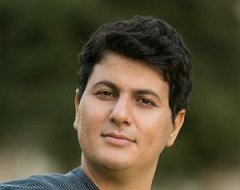
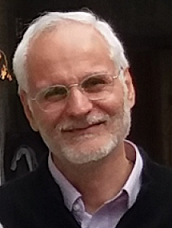
Dr. George Stamou is a Professor at the School of Electrical and Computer Engineering of the National Technical University of Athens (NTUA), serving as Director of the Artificial Intelligence and Learning Systems Laboratory (AILS). His expertise spans knowledge representation, machine learning, neural networks, and semantic technologies. He leads interdisciplinary initiatives such as the postgraduate program 'Data Science and Machine Learning' (2018–2022). Research Interests: Focuses on knowledge graphs, interpretable AI, semantic web applications, and multimodal learning. His work integrates formal logic systems (e.g., description logics) with modern deep learning techniques, addressing challenges in explainability, bias detection, and ethical AI applications. Publications: Over 150 articles in AI journals/conferences with an h-index of 34 (Google Scholar). Notable contributions include datasets like CHORDONOMICON (music analysis), GOSt-MT (gender bias in MT), and methodologies for counterfactual explanations in machine learning. Awards & Committees: Active in W3C and RuleML standardization bodies. Co-organized major AI conferences. Recognized for contributions to semantic interoperability and knowledge-based systems. Labs & Teams: Directs AILS-NTUA lab and collaborates with CISRI (Computer & Information Systems Research Institute). Engages in EU projects like CultureLabs (cultural heritage digitalization) andsmarty4covid (health data analysis).
John Psarras is a Professor at the National Technical University of Athens (NTUA) in the School of Electrical and Computer Engineering, specifically within the Division of Industrial Electric Devices and Decision Systems. He serves as the Director of the Decision Support Systems Laboratory (DSSlab) and the University Research Institute of Communication and Computer Systems. He holds a Diploma in Mechanical Engineering (1982) and a Ph.D. in Electrical and Computer Engineering (1989), both from NTUA. His research specializes in decision support systems with applications in energy management, environmental analysis, and information systems. Key areas include: Multi-criteria analysis for energy policy and renewable integration AI-driven optimization of smart grids and building efficiency Sustainable finance mechanisms for green projects Blockchain applications in education and data security His recent publications (2023–2025) demonstrate a strong focus on AI-enhanced decision tools for energy transitions, smart infrastructure, healthcare diagnostics, and cross-border renewable cooperation, reflecting interdisciplinary innovation. He has supervised 22 PhD theses and coordinates EU-funded projects in energy policy, clean technology, and capacity building. No scientific awards are listed in available sources. He leads the Decision Support Systems Laboratory (DSSlab), advancing research in energy analytics, and directs the University Research Institute of Communication and Computer Systems, facilitating large-scale interdisciplinary collaborations.
Mohsen Lesani is an Associate Professor in the Computer Science and Engineering Department at the University of California, Santa Cruz's Baskin School of Engineering. His research focuses on reliability and security of software systems, particularly concurrent and distributed systems, with recent emphasis on secure replicated systems and distributed machine learning. Dr. Lesani received his PhD from UCLA, MS in artificial intelligence from Sharif University of Technology, and BS in software engineering from University of Tehran. He was previously a postdoc at MIT. His educational background provides a strong foundation for his interdisciplinary research spanning programming languages, distributed systems, and security. His research interests center on creating reliable and secure distributed systems. Current projects include resilient and secure distributed systems, heterogeneous and reconfigurable secure distributed systems, automatic analysis and synthesis of replicated objects, verification of distributed systems, data analytics, secure exchange across blockchains, machine learning for performance models, domain-specific languages and type systems, and automatic fence insertion for concurrent systems. His work bridges theoretical foundations with practical implementations to address real-world challenges in distributed computing. Lesani's research has been recognized with several prestigious awards including the NSF CAREER award in 2020 and DARPA YFA award in 2022. His work has also received the SIGPLAN Research Highlight in 2019, a distinguished paper award at OOPSLA 2018, and a best paper award at ISSRE 2015. These accolades reflect the impact and quality of his contributions to the field. He actively mentors PhD students in the Safe and Secure Software (S3) lab, including Xiao Li, Eric Chan, Javad Saber-Latibari, and Tejas Mane. His research has been supported by multiple NSF grants, demonstrating sustained funding for his innovative work. Lesani serves on program committees for major conferences including POPL, PLDI, OOPSLA, and DISC, contributing to the academic community. Lesani leads the Safe and Secure Software (S3) lab at UC Santa Cruz, where his team works on cutting-edge research in distributed systems, programming languages, and security. The lab fosters a collaborative environment where theoretical insights are translated into practical systems that address real-world challenges in reliability and security of distributed applications.
Athanasios Rontogiannis is an Associate Professor at the School of Electrical and Computer Engineering of the National Technical University of Athens (NTUA). He holds a PhD in Signal Processing from the National University of Athens (1997) and has held roles including Research Director at the National Observatory of Athens (2017–2021). His research focuses on signal processing, machine learning, and hyperspectral image analysis. Education: MEng (Electrical Engineering, NTUA, 1991), M.A.Sc. (University of Victoria, Canada, 1993), PhD (Signal Processing, National University of Athens, 1997). Research interests include adaptive algorithms, sparse representations, and tensor models. He has served on editorial boards of IEEE Transactions on Signal Processing and EURASIP journals, receiving an honorary distinction in 2020. He is a Senior Member of IEEE and affiliated with EURASIP and the Technical Chamber of Greece. Key contributions span hyperspectral unmixing, Bayesian algorithms, and space data exploitation. His work integrates machine learning for applications in space science and signal processing.
Timothy M. Jones is a Professor of Computer Architecture and Compilation at the University of Cambridge Computer Laboratory, where he leads research in systems-level computing. He is also a Fellow at Gonville and Caius College, contributing to academic leadership and student mentorship within the collegiate system. His primary affiliation with the Computer Laboratory positions him at the forefront of systems research within the university. Dr. Jones's research focuses on extracting various forms of parallelism (thread-level, data-level, memory-level) to enhance computational performance while addressing energy efficiency and reliability challenges. His work spans compiler design, binary translation, and microarchitecture optimization, with specific interest areas including: Compiler technologies for functional and parallel programming Hardware reliability and fault tolerance mechanisms Binary analysis and instrumentation frameworks Memory system optimization and virtual memory management Security enhancements through binary modification Runtime systems for heterogeneous architectures Analysis of his recent publications reveals strong emphasis on systems-level innovation, particularly in fault tolerance techniques, binary analysis tools, memory optimization, and parallel execution frameworks. His work consistently bridges theoretical computer science with practical hardware implementation challenges. Dr. Jones maintains active participation in the academic community through conference leadership roles, including serving as Program Co-Chair for CGO 2026 and committee positions at premier venues including ISMM, CGO, and ECOOP. He contributes to open-source academic resources through GitHub and maintains professional engagement via Twitter.
Theodora Varvarigou is a Professor in the Department of Electrical and Computer Engineering at the National Technical University of Athens (NTUA). She holds a B.Eng. from NTUA and M.Eng. and Ph.D. degrees from Stanford University. Her career includes research at AT&T Bell Labs and roles at the Technical University of Crete. From 2008-2012, she served as director of NTUA's 'Technoeconomic Systems' postgraduate program. Her research focuses on Cloud Computing, Multimedia Content Processing, Social Networking Technologies, and emerging areas like blockchain, edge computing, and cybersecurity. She has published over 200 papers and led numerous European research projects, emphasizing scalable systems, data management, and smart infrastructure applications. Her work spans technical innovations such as intrusion detection systems, edge resource optimization, and blockchain-based solutions for IoT, healthcare, and smart cities. Recent publications highlight advancements in AI-driven resource allocation, privacy-preserving blockchain designs, and predictive analytics for edge computing environments. Professor Varvarigou has contributed to interdisciplinary initiatives, including cohort data harmonization in biomedical research and social media analytics for urban planning. Her teaching includes courses on digital systems, network programming, and fault-tolerant systems.
Ion Androutsopoulos is a Professor of Artificial Intelligence in the Department of Informatics at Athens University of Economics and Business (AUEB), where he also serves as Head of Department. He is founder and co-director of AUEB's Natural Language Processing Group and an Adjunct Researcher at the Digital Curation Unit and "Archimedes" Research Unit of the Research Centre "Athena". His research spans multiple dimensions of Artificial Intelligence with a focus on Natural Language Processing. Key interests include: Machine learning in NLP, particularly deep learning and large language models Question answering and retrieval augmented generation for document collections Dialog systems for new languages and knowledge domains Sentiment analysis and emotion recognition from text and speech Detecting toxic posts and disinformation online Image-to-text generation for medical diagnostics NLP applications in biomedical, legal, and financial domains His recent publications demonstrate strong activity across medical AI (particularly ImageCLEFmed Caption competitions where his group consistently ranks 1st-2nd), legal NLP (LexGLUE benchmark), financial NLP (EDGAR-CRAWLER), and multilingual challenges. His work shows increasing emphasis on large language models, explainability, and practical applications. Notable awards include: Top 2% scientist worldwide (Stanford University database, 2023) Multiple AUEB Excellent Teaching Awards (2017-18, 2021-22, 2023-24) Three consecutive BioASQ awards (2018-2020) Multiple 1st/2nd place rankings in ImageCLEFmed Caption competitions (2021-2025) He actively organizes major events including the Athens Natural Language Processing Summer School (AthNLP) and SemEval tasks. His group maintains strong industry and research collaborations, particularly in medical AI applications where they've developed systems that generate diagnostic captions from medical images with state-of-the-art performance.
Manos Kapritsos is an Associate Professor in the Department of Computer Science and Engineering at the University of Michigan's College of Engineering. He leads the GLaDOS research group focusing on reliability of distributed systems through formal verification and fault-tolerant replication techniques. His research spans: Formal verification of concurrent and distributed systems Fault-tolerant replication protocols beyond client-server models Automation of verification processes for complex systems Performance verification including latency properties Reliable cryptographic code implementation Analysis of his publications reveals strong emphasis on: developing automated verification tools (Armada, Vale, IronFleet), creating novel replication protocols (Aegean), verifying performance characteristics (Performal), and improving specification reliability (IronSpec). His work consistently bridges theoretical formal methods with practical systems implementation. Awards and honors include: Jay Lepreau Best Paper Award at OSDI 2025 Jon R. and Beverly S. Holt Award for Excellence in Teaching (2022) NSF CAREER Award (2021) Distinguished Paper Award at PLDI 2020 Google Faculty Award (2017) Distinguished Paper Award at USENIX Security 2017 Grant support includes NSF FMitF grants (2020, 2023), NSF Large grant (2021), DARPA grant (2020), and Google Faculty Award (2017). He advises PhD students through the GLaDOS group, focusing on distributed systems verification. He directs the GLaDOS lab at University of Michigan, developing verification frameworks and reliable distributed systems. Current projects include automated proof generation (Basilisk) and efficient communication protocols (Scrooge).
Pavel Panchekha is an Assistant Professor in the School of Computing at the University of Utah, where he holds the Warnock Chair for Junior Faculty. His research spans programming languages, web browsers, and numerical analysis, with a focus on developing programming language techniques to address challenges across computer science. Dr. Panchekha received his educational training at prestigious institutions: PhD in Computer Science from the Paul G. Allen School for Computer Science and Engineering at the University of Washington, advised by Michael D. Ernst and Zachary Tatlock BS in Mathematics from MIT Panchekha's research program has two major thrusts. First, he works on web browser internals , with projects including fuzzing layout invalidation, multi-tenant garbage collection, and optimizing 2D graphics. He is also authoring a textbook on web browsers that informs much of this research. Second, he focuses on automatic numerical analysis , with projects such as automatic accuracy improvement, synthesis via term rewriting, scalable static accuracy analysis, and math library implementation. He leads the FPBench and Herbie projects, which are major deployments of his research. His scholarly output demonstrates consistent contributions across programming languages, verification, and numerical methods. Recent work shows a growing emphasis on bidirectional typing systems, layout invalidation in browsers, and robust floating-point error analysis. His publications reveal a trajectory from foundational work on floating-point accuracy (notably the Herbie tool that won a Distinguished Paper Award at PLDI 2015) toward more comprehensive systems for program synthesis, verification, and browser optimization. Panchekha has received significant recognition for his research contributions: NSF Fellowship ARCS Foundation Fellowship Adobe Research Fellowship Wissner-Slivka Foundation Fellowship 2015 PLDI Distinguished Paper Award for work on the Herbie numerical analysis and repair tool As an advisor, Panchekha mentors a substantial group of students across multiple levels. He currently advises six students: Marisa Kirisame (PhD), Bhargav Kulkarni (PhD), Yumeng He (PhD), Artem Yadrov (MS), Jesus Ponce (BS), and Jonas Regehr (BS). Previously, he has advised over twenty students including PhD candidates like Ian Briggs and numerous MS and BS students. His advising spans theoretical topics in programming languages and practical applications in web browsers and numerical computing. Panchekha leads research groups focused on programming languages applications to web browsers and numerical analysis. His work on the Herbie tool for floating-point accuracy improvement has become influential in the programming languages community, and his more recent work on browser internals is shaping how researchers understand and optimize modern web rendering engines. He is currently developing a textbook on web browsers that aims to synthesize knowledge about browser architecture and implementation.
Full Professor at the School of Informatics, Aristotle University of Thessaloniki (AUTh), Greece. Previously served as Associate Professor (2015-2020), Assistant Professor (2008-2015), and Lecturer (2002-2008) at the same institution. Also worked as an Informatics Teacher in Greek Secondary Education from 1989-2002. His research focuses on Learning Technologies with emphasis on Conversational Agents in Education, Learning Analytics, Computer-Supported Collaborative Learning, Computational Thinking, Teaching Machine Learning at School, and Massive Open Online Courses (MOOCs). His recent work heavily investigates the application of AI, particularly conversational agents and large language models, in educational contexts. His publications show a strong trend toward AI applications in education, particularly focusing on conversational agents, learning analytics, and automated grading systems. The research spans multiple educational contexts from K-12 to higher education, with particular attention to student self-regulation, collaborative learning, and ethical considerations in AI implementation. 3 Best paper awards at international conferences Interview by Educational Technology Magazine (2013) Cubes Coding project - Winners of Open Education Challenge 2014 Cubes Coding project - Winners of NUMA Competition 2014 Has supervised 5 completed PhD theses, 4 ongoing PhD theses, over 60 Master's theses, and over 120 undergraduate theses. Led the colMOOC project (2018-2020), a €999,000 EU-funded project on integrating conversational agents and Learning Analytics in MOOCs. Also coordinated the T4E project (2020-2022) on Teachers' Fast-paced Distance Training on Tele-education and a MOOC in Greek on Introduction to Programming with Python. Previously served as Director of the Software and Interactive Technologies Laboratory (SWITCH Lab) until 2020, Member of AUTH Educational Policy Committee until 2020, and Chair of the Scientific Supervisory Board of the 2nd Experimental Junior High School in Thessaloniki until 2020.
Sarah E. Chasins is an Assistant Professor in the Electrical Engineering and Computer Sciences (EECS) department at the University of California, Berkeley, with research spanning programming languages and human-computer interaction. She leads the PLAIT Lab (Programming Languages for Approachable and Inclusive Tools) and serves as a faculty affiliate at the Berkeley Institute for Data Science (BIDS). Her work bridges computer science with social sciences, climate reporting, legal systems, and biological research through extensive collaborations. Dr. Chasins' research focuses on democratizing programming for non-traditional programmers including scientists, social scientists, journalists, and data scientists. Her work emphasizes creating approachable programming tools that help practitioners reach correct programs while understanding, extending, and trusting those programs. She specifically investigates program synthesis, programming tools for scientific domains, and human-centered programming language design. Her research mission aims to make programming a path to a more informed and evidence-driven society rather than just a way to get wrong answers faster. Her recent publications demonstrate a clear trajectory toward making programming more accessible and understandable. The work spans code search techniques, program synthesis approaches, refactoring tools, and studies of how domain experts interact with programming languages. A consistent theme across her research is placing human needs at the center of programming language design and implementation. Dr. Chasins actively mentors PhD students including Justin Lubin, Eric Rawn, Parker Ziegler, Sarah "Slim" Lim, Hellina Hailu Nigatu, David Minh-Duy Cao, and Marlena Preigh. She has previously advised numerous master's and undergraduate students who have gone on to work in both academia and industry. Her teaching includes core courses like CS164 (Programming Languages and Compilers) and specialized courses like CS294-184 (Building User-Centered Programming Tools) and CS39-001 (Technology, Society, and Power). She maintains an active service record in the programming languages community, having served on program committees for major conferences including PLDI, POPL, OOPSLA, and SPLASH. Notably, she co-chaired the Student Research Competition at PLDI 2020 and 2021 and has been involved in organizing workshops focused on programming languages and human-computer interaction.
George Vouros is a Professor in the Department of Digital Systems at the University of Piraeus, Greece. He is the head of the AI Lab (http://ai-group.ds.unipi.gr/ai-group/) and director of the MSc in Artificial Intelligence program in collaboration with the Institute of Informatics and Telecommunications at NCSR Demokritos. He completed his BSc in Mathematics (1986) and PhD in Artificial Intelligence (1992) at the University of Athens. His research focuses on Expert Systems, Knowledge Management, Multi-Agent Systems, Reinforcement Learning, and Mobility Analytics. He has served as program chair and committee member for major conferences (AAMAS, AAAI, IJCAI) and editorial roles in journals like Discover Artificial Intelligence (Springer Nature) and Information (MDPI). He has supervised 13 PhD students and currently oversees 4. His work spans EU-funded projects and national initiatives, emphasizing scalable mobility analytics, air traffic management automation, and ontology engineering. He is also President of the Hellenic A.I. Society and actively promotes interdisciplinary applications of AI in healthcare, transportation, and environmental monitoring. Recent research highlights include deep reinforcement learning for tactical air traffic conflict resolution, LLM-integrated ontology engineering, and multimodal generative adversarial imitation learning for flight trajectory modeling. His work bridges theoretical advancements with real-world applications in critical infrastructure systems.
Maria Virvou serves as Professor and Chair of the Department of Informatics at the University of Piraeus, where she also directs the Graduate Program in Informatics and leads the Research Laboratory 'Software Technology'. She holds significant institutional leadership roles including membership in the University Senate and has chaired the Department of Informatics for multiple terms. As Editor-in-Chief of Springer book series 'Learning and Analytics in Intelligent Systems' and 'Artificial Intelligence-Enhanced Software and Systems Engineering', she maintains substantial academic influence across international scholarly platforms. Dr. Virvou earned her PhD in Computer Science and Artificial Intelligence from the University of Sussex with a scholarship from the State Scholarships Foundation, a Master of Science in Computer Science from University College London, and her undergraduate degree from the Department of Mathematics at the National and Kapodistrian University of Athens. Her educational background in both mathematics and computer science has provided a strong foundation for her interdisciplinary research approach. Professor Virvou's research spans Software Technology, Artificial Intelligence, Educational Software and Games, User Modeling, and Human-Computer Interaction. She has pioneered work in personalized interactive software systems, applying fuzzy logic and machine learning techniques to create adaptive educational environments. Her recent work demonstrates a strategic expansion into AI applications for healthcare, with significant contributions to medical diagnostics using large language models and multimodal AI systems. She has also made notable advances in smart tourism applications through personalization techniques. With over 400 publications to her name, Professor Virvou's scholarly output shows a clear progression from foundational work in user modeling toward increasingly sophisticated AI applications across multiple domains. Her publication trends reveal a strategic focus on explainable AI, multimodal systems, and practical implementations that bridge theoretical advances with real-world applications, particularly in healthcare and education sectors. Ranked #1 worldwide in 'User Modelling' publications (147,450 total publications) according to Scopus Ranked #1 worldwide in 'Educational Software' publications according to both Scopus and Microsoft Academic Search Recognized among the top 2% of most influential Artificial Intelligence scientists worldwide by Stanford University General Co-Chair at the 14th IISA Conference 2023 Invited Keynote Speaker at the 35th IEEE International Conference on Software Engineering Education and Training (CSEE&T 2023) As Director of the Research Laboratory 'Software Technology', Professor Virvou has built a robust research team focused on AI applications across multiple domains. She co-founded and co-chairs the IEEE Intelligent Information Systems and Applications international conference series, creating a significant platform for scholarly exchange. Her leadership extends to editorial roles with major academic publishers and active participation in international research collaborations that have secured substantial funding for innovative projects in AI and software engineering.
Fei He is an Associate Professor at Tsinghua University's School of Software, where he leads the THUFV research lab focused on formal verification and program analysis. His research spans formal methods, automated reasoning, and program verification, with applications in concurrent systems, networking (P4 programs), and probabilistic systems. Education & Employment: PhD from Tsinghua University (2008) Visiting Scholar at Carnegie Mellon University (2010-2011) and Politecnico di Milano (2006-2007) Faculty positions at Tsinghua since 2008 (Assistant Professor 2008-2011, Associate Professor 2011-present) Research: He's developed innovative techniques in SMT solving for concurrency verification, termination analysis, and regression verification. His tools like Deagle have won gold medals at SV-COMP. Current work focuses on probabilistic program verification and network program analysis. Publications: His 80+ publications demonstrate consistent contributions across formal methods (PLDI, OOPSLA, ICSE), networking (NSDI, INFOCOM), and software engineering (TSE, TOSEM), with recent emphasis on data-driven verification and automated invariant inference. Awards: Gold Medals in SV-COMP ConcurrencySafety (2022, 2023, 2025) Best Paper Awards at PPoPP 2022 and SETTA 2022 Advising: Mentors 13 PhD/Master's students in THUFV lab, with graduates joining Huawei, MPI-SP, and research institutions. Secured multiple NSF China grants for trustworthy software research. Service: Associate Editor for Theory of Computing Systems, program committees for PLDI/ICSE/OOPSLA, and former Local Chair for ISSTA 2019.
Jovan Stojkovic is an incoming Assistant Professor at the Department of Computer Science at the University of Texas at Austin, set to join in Fall 2026. Prior to his appointment at UT Austin, he will spend a year at Meta working with the AI and Systems Co-design group. His research focuses on cloud computing and datacenters, with particular emphasis on cloud-native workloads and machine learning inference. Education: PhD in Computer Science from the University of Illinois at Urbana-Champaign, advised by Professor Josep Torrellas Undergraduate studies at the School of Electrical Engineering, University of Belgrade, Serbia, where he was recognized as the best student of the Computer Engineering and Information Theory Department every year from 2017-2020 Research Interests: Jovan's research focuses on cloud computing and datacenters , with two primary domains: Cloud-native workloads , such as microservices and serverless computing. He investigates how to co-design novel hardware platforms and software systems that deliver orders-of-magnitude improvements in performance, energy efficiency, and resource utilization for these emerging workloads. Machine Learning (ML) inference , particularly large language models (LLMs). His work addresses the challenges of ML inference through smart scheduling, workload placement, and system-level configuration tuning to reduce energy, power, and thermal overheads while maintaining performance and accuracy guarantees. Publication Trends: Jovan's publications demonstrate a strong focus on optimizing cloud infrastructure for emerging workloads. His research spans across serverless computing, microservices, and large language model inference. A clear trend emerges in his work: addressing the performance, energy efficiency, and resource utilization challenges of modern cloud workloads through innovative hardware-software co-design approaches. His most recent work shows increasing focus on LLM inference optimization, particularly in the areas of thermal management, power efficiency, and scheduling for many-adapter environments. Awards and Honors: HPCA Best Paper Award (2025) IEEE MICRO Top Picks Honorable Mention (2024) 6 patents with IBM and Microsoft on: Serverless systems, Processor overclocking in the cloud, and Energy-efficient LLM inference W. J. Poppelbaum Memorial Award (2025) for hardware and architecture innovation Mavis Future Faculty Fellowship (2024–2025) Invited to present at 11th Heidelberg Laureate Forum (2024) Kenichi Miura Award (2022) for excellence in High Performance Computing Multiple student travel grants to ISCA, MICRO, ASPLOS, and HPCA Advising and Grants: Jovan is actively seeking prospective PhD students for his research group at UT Austin. His research has been supported through collaborations with major tech companies including IBM, Microsoft, and Meta. His six patents with IBM and Microsoft demonstrate the practical impact of his research in serverless systems, processor overclocking, and energy-efficient LLM inference. His work on serverless computing (MXFaaS, EcoFaaS) and LLM inference optimization has received significant recognition in top-tier computer architecture conferences. Research Groups: During his PhD at UIUC, Jovan worked with Professor Josep Torrellas on cloud infrastructure research. He has collaborated extensively with researchers at IBM Research (particularly Hubertus Franke) and Microsoft (particularly Íñigo Goiri and Ricardo Bianchini). His upcoming position at UT Austin will establish his independent research group focused on cloud computing and datacenter systems. His year at Meta working with the AI and Systems Co-design group will further strengthen his expertise in AI infrastructure.