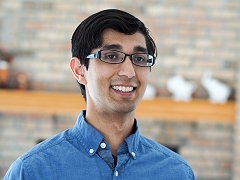
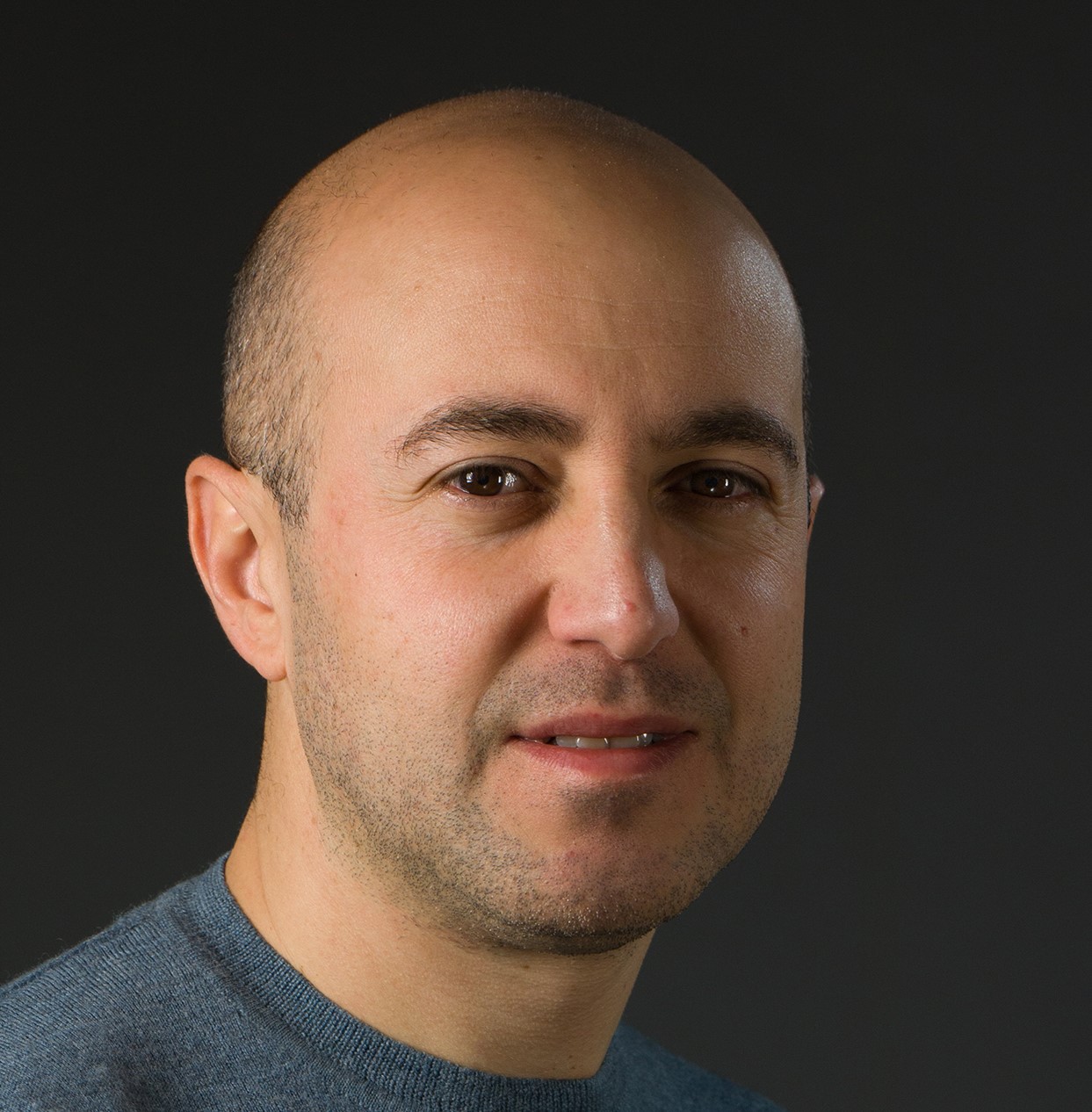
Tej Chajed is an Assistant Professor in the Department of Computer Sciences at the University of Wisconsin-Madison, focusing on formal verification of systems software. His research bridges theoretical foundations and practical implementations to ensure software correctness in concurrent and crash-safe systems. Research interests include formal verification, concurrency, crash safety, and programming languages, particularly using Coq, Perennial, and Goose frameworks. He has contributed to systems like DaisyNFS, a verified file system with sequential reasoning, and Verus, a foundation for systems verification. His work appears in top venues like SOSP, OSDI, and PLDI. 2025: Dafny PC Member 2024: PLDI Committee Member, CoqPL Co-chair 2023: CoqPL Co-chair, POPL Program Committee He actively mentors students and develops tools for systems verification education, including extensive Coq-based course materials.
Slim Essid is a Full Professor at Télécom Paris, leading the Audio Data Analysis and Signal Processing (ADASP) group. He holds a Doctorat (Ph.D.) and Habilitation from Université Pierre et Marie Curie (UPMC). With 15+ years of research experience, he has advised 15 PhD graduates and currently co-advises 10 others. His work focuses on machine learning, signal processing, and multimodal systems, publishing over 150 peer-reviewed papers. He serves as a reviewer for top journals/conferences (e.g., IEEE Transactions) and research funding agencies. Education: State Engineering Degree, École Nationale d’Ingénieurs de Tunis (2001) M.Sc. (D.E.A.) in Digital Communication Systems, École Nationale Supérieure des Télécommunications, Paris (2002) Ph.D., Université Pierre et Marie Curie (2005) Habilitation (HDR), UPMC (2015) Research Interests: Multimodal learning, self-supervised representations, audio-visual segmentation, music structure analysis, domain generalization, and speech enhancement. Recent publications highlight innovations like TACO (training-free sound-prompted segmentation) and CLOUDS (domain-generalized semantic segmentation framework using foundation models). His work bridges audio processing with vision and language models, emphasizing unsupervised/zero-shot approaches. Key achievements include state-of-the-art methods in sound event detection, speaker diarization, and music segmentation. He collaborates with 14 post-docs and leads projects funded by French/EU agencies.
Nicholas Evans is a Professor in the Digital Security department at EURECOM, where he teaches mathematical methods for engineers and speech and audio processing. He has been affiliated with EURECOM since October 2007 and leads research in speaker recognition, anti-spoofing, and biometric security. Previously, he was a Professor at the University of Wales Swansea (2002–2006) and taught at the University of Avignon (2006–2007). Research Interests: His work centers on biometric security, particularly in detecting spoofing and deepfake attacks in automatic speaker verification systems. Key areas include presentation attack detection, privacy-preserving voice technologies, and robust speech processing under real-world conditions. He actively contributes to advancing anti-spoofing countermeasures through large-scale datasets and challenge evaluations. The recent publications reflect a strong trend in developing and evaluating spoofing detection mechanisms, with a focus on real-world applicability, adversarial robustness, and multimodal analysis. His work spans from foundational feature engineering (e.g., Constant Q cepstral coefficients) to large-scale datasets like SpoofCeleb and ASVspoof, influencing both academic research and practical security systems. NeurIPS 2023 Scholar Award for 'StressID: a multimodal dataset for stress identification' Best Paper Award at IBERSPEECH 2022 Best System Award at IberSpeech 2018 Multiple Best Paper Awards (2016, 2017) Student Paper Award at WIFS 2013 Elected to IEEE Speech and Language Technical Committee (2013) Nicholas Evans has supervised numerous students and early-career researchers, many of whom are co-authors on his publications. He leads significant research initiatives such as the ASVspoof and SpoofCeleb challenges, which are supported by collaborative grants and institutional funding. His lab focuses on developing secure, privacy-preserving speech technologies with applications in biometrics and cybersecurity. He is a key member of international research teams and contributes to major challenges in voice privacy and spoofing detection, including the Voice Privacy Challenge and BIOSIG. His work involves close collaboration with institutions across Europe and Asia, and he maintains active profiles on Google Scholar, ResearchGate, and IEEE Xplore.
Stéphanie Caillies is a Professor of Cognitive Psychology at the University of Reims Champagne-Ardenne and serves as Deputy Director of the C2S Laboratory (Cognition, Santé, Socialisation EA 6291). Her research focuses on social cognition, language processing, and theory of mind from developmental, neuropsychological, and psychopathological perspectives. Research Interests: Pragmatic language comprehension and figurative language processing Neural correlates of social cognition in clinical populations (schizophrenia, bipolar disorder) Developmental trajectories of theory of mind in neurotypical and at-risk children Neurocognitive mechanisms of irony and metaphor understanding Parent-child interactions in premature infants Her recent publications demonstrate strong emphasis on neuroimaging approaches (fMRI, ERP) to study social cognition, with recurring themes in clinical populations and developmental disorders. Research frequently bridges psycholinguistics, clinical psychology, and cognitive neuroscience. Current Research Projects: POSTURE (2023-2027): Psychologie et réalité virtuelle - ANR-funded project on dynamic posture recognition EDIRE (2022-2025): Horizon Europe project on educational development PHRC CALIN: Hospital clinical research on sensory-tonic stimulation for premature infants Teaching Activities: Regularly teaches courses in Statistics, Language Development, Academic Learning, and Social Cognition Disorders. Organized multiple scientific conferences including the 59th Congress of the French Society of Psychology. Doctoral Supervision: Currently supervising theses on executive functions in premature children and parent-child interactions. Previously supervised dissertations on pragmatic language in reading comprehension and neurofunctional correlates of theory of mind in schizophrenia.
Jayneel Parekh is a Postdoctoral Researcher in the MLIA (Machine Learning and Artificial Intelligence) team at ISIR (Institut des Sciences et Industries du Réel), Faculty of Science, Sorbonne University, working with Prof. Matthieu Cord. His research focuses on understanding and enhancing large multimodal models, with applications across audio, visual, and multimodal domains. Parekh completed his PhD at LTCI, Telecom Paris under Prof. Florence d'Alche and Prof. Pavlo Mozharovskyi, researching neural network interpretability applied to image and audio data. He earned his undergraduate degree in Electrical Engineering from IIT Bombay, where he worked with Prof. Preeti Rao and Prof. Yi-Hsuan Yang on Speech-to-Singing conversion. His research spans neural network interpretability, audio processing, computer vision, and multimodal models, with emphasis on explainable AI. His work demonstrates a consistent trajectory from foundational audio/image interpretability methods to cutting-edge large multimodal model analysis, showing increasing complexity and impact across NeurIPS, ICML, and ICCV publications. L2I paper awarded 2nd prize for STIC Best Scientific Contribution 2023 Top Reviewer at NeurIPS 2023 Parekh actively contributes to the academic community through workshop organization (ICCV on Explainable Computer Vision, ELLIS Unconference on Robustness/Fairness/Explainability) and presentations at institutions including IIT Jodhpur, Deezer Research, and IBM Research. His collaborative network spans MPI Informatics, TU Darmstadt, TU Munich, and Télécom Paris.
Dr. Yves Le Traon is a Full Professor of Computer Science at the University of Luxembourg, where he serves as Vice-Director of the Interdisciplinary Centre for Security, Reliability and Trust (SnT). He leads the 25-member SerVal research group (SEcurity, Reasoning and VALidation), focusing on software testing, security, and data-intensive systems. Previously, he chaired the CSC Research Unit (2013-2016) and pioneered model-driven engineering at INRIA. PhD and engineering degree in Computer Science from Institut National Polytechnique, Grenoble (1997) Former Associate Professor at University of Rennes (1998-2004) His research spans three main areas: innovative software testing and repair , Android security through static analysis and machine learning , and robust machine learning system design . Collaborations include industry leaders like PayPal, CREOS, and Cebi in fintech, smartgrid, and industry 4.0 domains. Awarded IEEE Fellow (2022) and Facebook Testing & Verification Research Award (2019) , he chairs editorial boards for STVR, SoSym, and IEEE Transactions on Reliability. His team has produced 20+ PhD graduates including Li Li (Monash University), Donia El Kateb (European Investment Bank), and Alexandre Bartel (SnT Research Associate). Commercial impact includes co-founding Datathings for runtime AI decision systems.
David Serfass is a Lecturer at the National Institute of Oriental Languages and Civilizations (INALCO) specializing in Chinese studies. He serves as Co-manager of international mobility, Tutoring Manager, and Referent to the Cross-functional Commission at the institution. His teaching portfolio includes courses on the History of East Asia (19th-20th centuries), Communication and Media in East Asia, Introduction to Ancient Chinese History, Sinological Culture and Practice, Republican China through Texts and Media, and History of Taiwan. Dr. Serfass's research focuses on the History of the Japanese Occupation of China (1931-1945), the History of the Modern Chinese State, Sino-Japanese Relations, and the History of the Sino-Japanese War. His work examines state-building processes during wartime, particularly through the lens of the Wang Jingwei regime and collaboration governments in occupied China. He approaches these topics through spatial history, bureaucratic documentation, and memory studies, revealing how territorial control, administrative practices, and historical narratives shaped wartime China. His scholarly contributions demonstrate a consistent focus on the complexities of political authority during periods of fragmentation and occupation. Rather than viewing the Wang Jingwei regime as merely a Japanese puppet government, Serfass's research reveals the regime's internal dynamics, state-building efforts, and complex negotiations of sovereignty. His work challenges teleological narratives of central state formation in Republican China, highlighting instead the fragmented and contested nature of political authority during this period. Member of editorial board, Études chinoises (2014-2024) Member of editorial board, Terrains de Taiwan Member, ERC project Elites, Networks and Power in Modern China Member, French Taiwan Studies Project Member, Occupation Studies Research Network Dr. Serfass is an active contributor to academic discourse through conference presentations, editorial work, and collaborative research projects. His approach combines traditional historical research with spatial analysis and attention to bureaucratic practices, drawing on Chinese, Japanese, and Western archival sources to provide multi-perspective understanding of wartime China. His work has established him as a significant voice in the field of modern Chinese history, particularly regarding the complex dynamics of occupation, collaboration, and state formation during the Sino-Japanese War period.
Antoine Miech is a Researcher at DeepMind's Vision Group , with prior affiliations at Inria and Ecole Normale Supérieure where he completed his computer vision Ph.D. under Ivan Laptev and Josef Sivic . He has collaborated with researchers from Facebook AI and Google during his academic career. Research Interests span video understanding, weakly-supervised machine learning, and multimodal analysis. His work focuses on: Text-video embedding Self-supervised video representation Action localization Anticipatory video modeling Scalable multimodal learning Scientific Contributions include: HowTo100M - A massive dataset of narrated instructional videos MIL-NCE - A novel loss function for video-text alignment MEE - A model for handling heterogeneous data Context Gating - Learnable pooling architecture Awards & Recognition : Google Ph.D. Fellowship (2018) Technical Leadership : Created the LOUPE TensorFlow toolbox for feature pooling and maintained annotated video dataset catalogs. Organized the Data Science Game competition (2016-2017).
Adrian Barragan Diaz is an Assistant Professor at IÉSEG School of Management, specializing in International Negotiation and Human Resource Management. His research examines psychological factors in negotiation dynamics and recruitment processes. Recent publications explore language effects in negotiations, stress impacts on outcomes, and cognitive biases in hiring. Awards or student mentoring details are not specified.
Maryam Mehri Dehnavi is an Associate Professor in the Department of Computer Science at the University of Toronto and a Principal Research Scientist at NVIDIA. She holds the Canada Research Chair in Parallel and Distributed Computing and leads the ParaMathics research group. Research focuses on high-performance computing , machine learning , sparse matrix optimizations , and compiler design for heterogeneous systems. Her work develops domain-specific languages , scalable numerical libraries , and auto-vectorization techniques for cloud and GPU platforms. Recent publications address LLM compression , sparse code translation , GPU kernel synchronization , and control flow optimization . Scientific recognition: Ontario Early Researcher Award (2021), NSF CRII Grant, NSERC New Frontiers in Research Fund. Current students: Mushegh Shahinyan , Martin Phan , Maryam Haghifam , and others. Former advisees: Kazem Cheshmi (NJIT), Zachary Blanco (MIT Lincoln Lab), Yuanxi Li (Amazon).
Raphaël Troncy is an Assistant Professor at EURECOM's Data Science Department, specializing in Semantic Web technologies, Knowledge Graphs, and Natural Language Understanding. He teaches courses like 'Human-computer interaction for the Web' and 'Semantic Web technologies.' His research focuses on semantic data integration, knowledge graph applications, and recommender systems. Notable projects include DOREMUS (musical work graph), entity2rec (knowledge graph-based recommendations), and 3cixty (city exploration knowledge bases). He actively contributes to semantic web challenges and conferences, winning multiple awards including the 2018 Best Poster Award at ESWC and 2015 First Prize in the Semantic Web Challenge. Troncy's work spans cultural heritage digitization (e.g., Odeuropa olfactory data modeling), cybersecurity anomaly detection (NORIA-O ontology), and interdisciplinary projects like SILKNOW's silk textile knowledge graph. He leads development of tools like DAGOBAH for semantic table interpretation and KG Explorer for knowledge graph exploration. Education: Not explicitly stated in text Labs/Teams: Active in EURECOM's Data Science group, collaborating on projects involving knowledge graphs, AI, and semantic technologies
Yasmine Bouagga is a CNRS Research Officer affiliated with UMR 5206 Triangle (École Normale Supérieure de Lyon). Her work focuses on the sociology of law, state institutions, migrations, and penal systems. She has conducted ethnographic research in prisons and migrant camps, particularly in Tunisia and France. Affiliations: UMR 5206 Triangle (CNRS), ENS Lyon Research Interests: Prison reform, border politics, asylum policies, migrant camp dynamics, penal institutions, and state power Her research explores how language shapes penal and asylum practices, analyzing migrant tactics at Calais and Tunisia's post-2011 penal system. She co-authored studies on refugee camps and led projects like MINA93 (care for migrant minors). Notable publications include works on prison reform in Tunisia, border resistance in Calais, and the anthropology of penal systems. She collaborates with ANR programs like LIMINAL and BABELS, focusing on migration and language mediation. Her work bridges sociology, anthropology, and policy analysis, addressing urgent issues like asylum processes and carceral inequality.
Alex 'Sandy' Pentland is a Professor of Media Arts and Sciences at the MIT Media Lab, where he helped create and direct both the MIT Media Lab and Media Lab Asia in India. He also serves as a HAI Fellow at Stanford University. Pentland is one of the most-cited computational scientists globally and was named by Forbes as one of the '7 most powerful data scientists in the world.' Pentland's educational background includes undergraduate studies at the University of Michigan and a Ph.D. in artificial intelligence and psychology from MIT. His research spans computational social science, organizational engineering, wearable computing (including Google Glass), image understanding, and modern biometrics. His recent publications reveal a strong focus on the intersection of AI and social systems, with emphasis on human-AI coevolution, data ethics, network science, and the societal implications of digital technologies. His work increasingly addresses critical issues in data privacy, tokenized asset networks, and the social contract in the age of big data, demonstrating his continued leadership in shaping how society understands and manages digital transformation. MIT's Toshiba endowed chair Election to the U.S. Academy of Engineering McKinsey Award from Harvard Business Review 40th Anniversary of the Internet from DARPA Brandeis Award for work in privacy Pentland has advised over 80 PhD students, with nearly half now tenured faculty at leading institutions, a quarter leading industry research groups, and the remainder founding their own companies. His research has attracted significant funding, evidenced by projects like the DARPA Network Challenge where his team won by applying data-driven approaches to crowd coordination. His work on 'reality mining' has led to practical applications in call centers, mental health services, and urban planning. As director of the Human Dynamics group at MIT, Pentland has pioneered sociometric sensors and reality mining techniques. His lab has incubated numerous companies including Ginger.io (mental health services), CogitoCorp.com (AI coaching), Wise Systems (delivery optimization), Sila Money (financial technology), and several others focused on data privacy and AI applications across various sectors.
Bruno Vallespir is a Professor at Universite de Bordeaux, affiliated with the Production Engineering research group and MEI team. His work focuses on lean manufacturing, industry 4.0 integration, and enterprise interoperability using simulation frameworks. Key research themes: Lean techniques evaluation Co-simulation for manufacturing systems Organizational interoperability Safe work activity design His recent publications address: Combining lean methods with Industry 4.0 technologies Human-machine interaction in production environments Verification of collaborative processes Performance metrics for dynamic industrial contexts Collaborations include institutions like IMS Bordeaux , INCOSE , and industrial partners such as STMicroelectronics , Thales , and Stellantis .
Vinkle Srivastav is a Research Scientist (Chargé de recherche R&D) at the CAMMA group, a collaborative research team between IHU Strasbourg and the University of Strasbourg, where he focuses on advancing surgical data science through novel computer vision and machine learning approaches. His work bridges the gap between clinical practice and artificial intelligence, developing methods for surgical video analysis, 3D medical imaging, and surgical workflow understanding. Education PhD in Computer Science (2018-2021) from University of Strasbourg, France. Thesis: "Unsupervised Domain Adaptation Approaches for Person Localization in the Operating Rooms." Master of Science in Computer Science (2014-2017) from Indian Institute of Technology, Delhi, India. Thesis: "Computerized evaluation of neurosurgery skills using image processing and computer vision techniques." Bachelor of Technology in Electronics and Communication (2007-2011) from Punjab Technical University, Jalandhar, India. Research Interests Vinkle's research spans surgical data science, with particular focus on multi-modal learning approaches for surgical computer vision. His work addresses fundamental challenges in medical AI including domain adaptation, self-supervised learning, and privacy preservation in clinical environments. He develops methods for 3D medical image analysis, multi-view human pose estimation in operating rooms, and surgical activity recognition. His recent work emphasizes multi-modal pretraining frameworks that leverage both visual and textual information to improve surgical workflow understanding. He also investigates scientific simulation techniques, particularly for therapeutic ultrasound applications, where physics-aware deep learning models can accelerate computational processes while maintaining accuracy. Publication Trends Vinkle's recent publications demonstrate a strong trajectory toward multi-modal surgical AI systems that integrate vision, language, and physics-based modeling. His work increasingly focuses on few-shot and zero-shot adaptation techniques to address the data scarcity problem in surgical AI. The publications reveal a progression from basic pose estimation to holistic surgical scene understanding, incorporating team communication analysis and surgical safety protocols. Scientific Awards IPCAI 2024 Best paper award (co-author) IPCAI 2019 Runner-up award in the bench-to-bedside category (co-author) Joint winner for the best paper award in the machine learning for CAI track, IPCAI 2025 Advising and Grants Vinkle actively mentors multiple PhD students and research interns at various levels, supervising thesis work on topics including large-scale multi-modality learning, holistic surgical scene analysis, and self-supervised video representation learning. He serves as Co-PI on two ITI-HealthTech projects: one focused on multi-modality learning for 3D medical imaging (2023), and another on physics-aware deep-learning approaches for therapeutic ultrasound simulation (2024). Laboratories and Teams Vinkle is a key member of the CAMMA research group at IHU Strasbourg, a collaborative team focused on computer-assisted medical modeling and analytics. He co-organizes the Surgical Data Science Summer School, an interdisciplinary program that brings together clinicians and computer scientists to develop AI-driven solutions with clinical impact. His work involves close collaboration with surgical teams at University Hospitals of Strasbourg and international partners including Johns Hopkins University and Technical University of Munich.