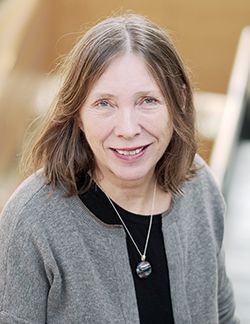
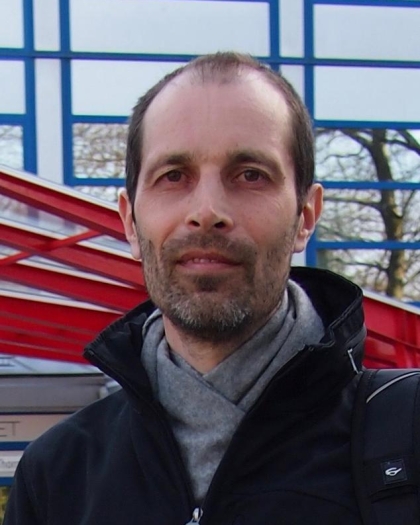
Monika Abels is an Associate Professor at UiT The Arctic University of Norway , affiliated with the Child development research group. Her work focuses on cross-cultural child development, infant socialization, emotion regulation, and the impact of digital technology on parental responsiveness. Research Interests : Child development, cross-cultural parenting, emotion understanding, hunter-gatherer societies, and fieldwork ethics. Labs/Teams : Member of the Barns utvikling (Child Development) research group at UiT. Recent Research Trends : Her publications highlight comparative studies across Norway, Tanzania, India, and sub-Saharan Africa, examining infant sleep, parental phone use, triadic interactions, and cultural differences in hidden emotion understanding. Collaborative work with African communities (San, Hadza) explores regulatory and ethical fieldwork challenges. Email : m.abels@uit.no
Özlem Özgöbek is an Associate Professor at the Department of Computer Technology and Informatics, Norwegian University of Science and Technology (NTNU). Her research spans artificial intelligence, machine learning, and recommender systems with a focus on privacy, fake news detection, and educational technology. NTNU - Department of Computer Technology and Informatics Her work explores multimodal fake news detection, privacy implications in recommender systems, and technology-enhanced classroom interaction. Recent publications analyze digital education trends and classroom tools. Özgöbek collaborates with international researchers and contributes to news recommendation workshops. Her projects address ethical AI, environmental sustainability, and real-time information processing.
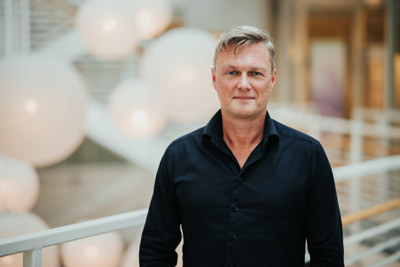
Stefan Gänzle serves as Head of Department at the Department of Political Science and Management, University of Agder. His research focuses on European Union political systems, international relations, regional integration, global governance, and multilevel policy dynamics. Current affiliation: Department of Political Science and Management, University of Agder Previous academic roles: Assistant Professor at University of British Columbia (2004–2008), Research Fellow at University of Jena (1999–2004) Research Interests EU political system and international relations Comparative regionalism in European and African contexts Global governance and multilevel policy frameworks EU external action and macro-regional strategies Recent Project : Rethinking Co-Creation of Digital and Environmental Policy in Multilevel Governance (RECODE-MLG) Research Groups : CeDiT (Centre for Digital Transformation), European integration and transnational governance
Vibeke Grøver is a Professor at the Department of Pedagogical Research, University of Oslo. Her work focuses on language and reading comprehension development for language minority children, with a emphasis on bilingual education, shared book reading interventions, and sociolinguistic factors influencing literacy. Education: Dr.polit., University of Oslo (1992) Master in Educational Psychology, University of Oslo (1982) Elementary School Teacher, University of Oslo (1977) Research Interests include second-language acquisition, early literacy for dual-language learners, home literacy environments, and teacher talk features in preschool settings. She leads projects like Teaching for text comprehension and has contributed to the DEAL (Development, Equality, and Literacy in Learning Contexts) research group. Article Trends show longitudinal studies on bilingual profiles, shared reading interventions, code-switching dynamics, and neighborhood demographic impacts on vocabulary. Key themes include scaffolding language minority students, cross-cultural comparisons (e.g., Chinese-Norwegian families), and teacher-student interaction patterns in multilingual preschools. Leadership Roles include Dean of the Faculty of Educational Sciences (2009–2012) and advisory positions for the Peder Sather Center at UC Berkeley (2012–2014). Research visits span Harvard, UC Berkeley, NYU, and East China Normal University.
Jarmila Bubikova-Moan is an Associate Professor at Oslo Metropolitan University, affiliated with the Faculty of Education and International Studies and the Department of Primary and Secondary Teacher Education. She holds teaching and supervising responsibilities in pedagogy and serves as Head of Studies in her area of responsibility. Prior to her current role, she was an Associate Professor and Head of Studies at Kristiania University College and a Senior Researcher at NIFU. Her educational background includes a PhD in Educational Sciences from the University of Oslo, an MA in Applied Linguistics from the University of Melbourne, and an MPhil in European Literature from the University of Cambridge. Her research centers on discourse-analytic approaches to early childhood education, with a strong focus on multilingualism, argumentation, and critical thinking. She is actively involved in research groups such as Cultural Diversity and Multilingualism in a Global Perspective and Language and Learning Environment in Early Years - ECEC to Primary School (SAMBA) . Her work explores how children develop argumentative competence, engage in critical thinking through literature and news, and how multilingual learners are supported in early education. The recent publications highlight a consistent trend in early childhood argumentation, critical thinking development, and multilingual education. Her work spans qualitative, discourse-based, and systematic review methodologies, often with interdisciplinary applications in environmental education, teacher training, and family engagement. She has contributed significantly to educational research through numerous scientific publications, research reports, and dissemination activities. Notable projects include Critical thinking in primary education (KriT) , which develops models using children’s literature and news, and evaluations of national strategies such as Språkløyper and Ungdomstrinn i utvikling . Jarmila Bubikova-Moan has supervised students and collaborated widely with researchers across Norway and internationally. She has also been involved in policy-related research and advisory roles in the Norwegian state administration, particularly in education and integration policy. Her lab and team affiliations are embedded within her research groups at OsloMet, where she leads and contributes to collaborative, interdisciplinary projects aimed at improving early educational practices and equity.
Jon Andoni Duñabeitia is a Full Professor at the School of Languages and Education of Universidad Nebrija in Madrid. He serves as Director of the Centro de Investigación Nebrija en Cognición (CINC) and the International Chair in Cognitive Health . With an h-index of 43 (Scopus), he has published 170+ articles across psycholinguistics, multilingualism, cognitive training, and virtual reality applications in education. His research examines how language processing interacts with cognitive load, emotional modulation, and technological innovation. Principal Investigator for 8+ projects funded by Spanish Government, Basque Government, BBVA Foundation Associate Editor and Editorial Board Member of high-impact journals Recognized among Spain's top 3% scientists across all disciplines Recent publications span topics including: Second-language reading dynamics in VR environments Multilingual cognitive interactions in neurological conditions Emoji/typographic effects on word processing Computerized cognitive assessment and training systems He actively contributes to scientific meetings as invited speaker across Europe, Asia, and Americas. His work bridges basic research in psycholinguistics with applied technologies for cognitive health.
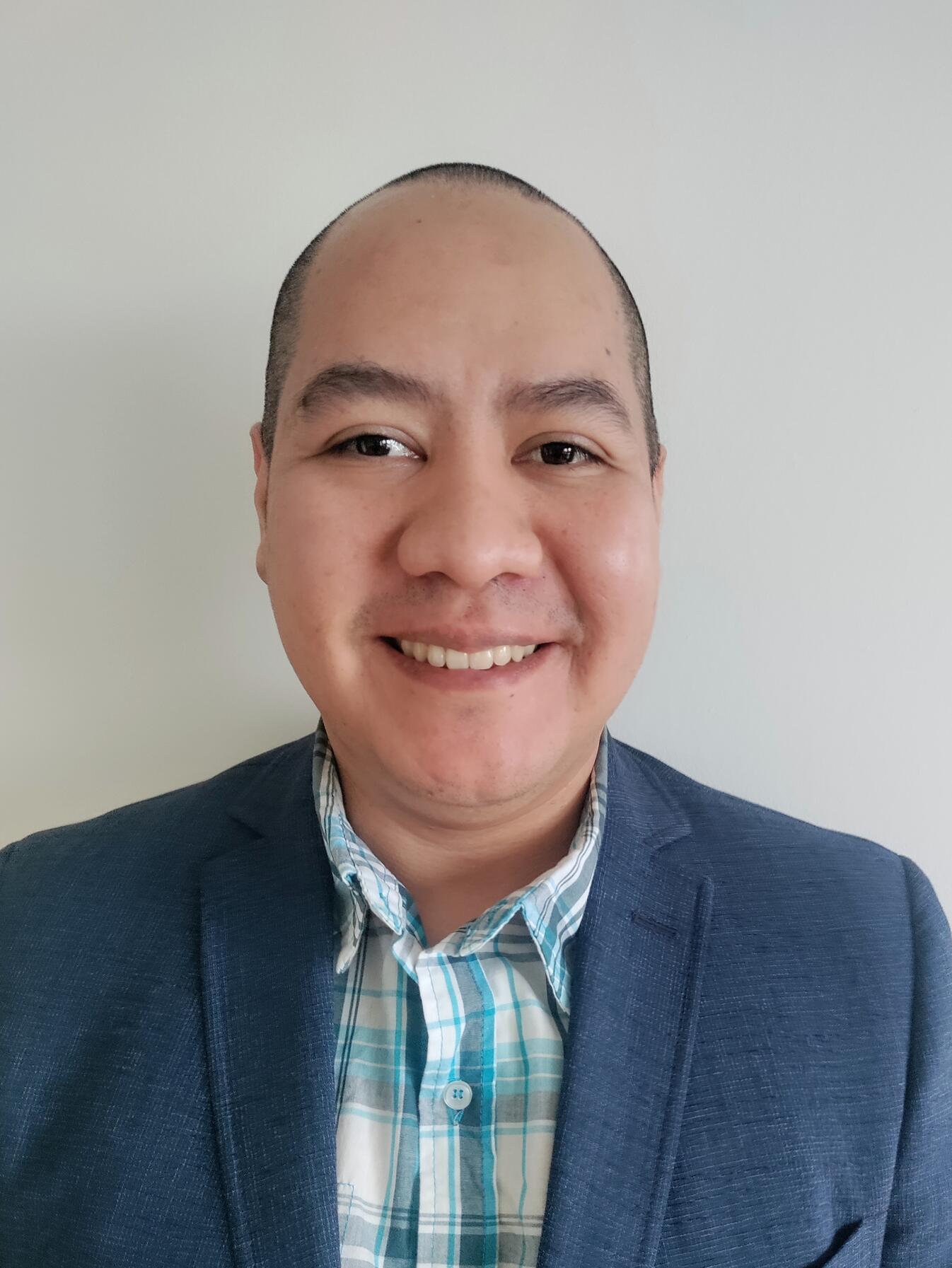
Adín Ramírez Rivera is a Professor in the Digital Signal Processing and Image Analysis (DSB) group at the Department of Informatics, University of Oslo. His research focuses on representation learning and computer vision, particularly exploring machine learning methods to describe and understand visual data. He is a Senior Member of the IEEE and a member of the ELLIS Society. Education : PhD from Kyung Hee University's Image Processing Lab, South Korea; Bachelor's degree in Engineering from Universidad de San Carlos de Guatemala, majoring in Computer Science and Systems Engineering. Ramírez Rivera's research spans diverse computer vision tasks including facial analysis, object detection, image enhancement, and vision transformers. His work emphasizes self-supervised learning, fair representation learning, and novel neural network architectures for image segmentation and classification. Recent publications highlight trends in vision transformers, crowd counting, facial expression recognition, and fair representation learning. His articles frequently address statistical modeling, feature extraction, and deep learning techniques for visual tasks. Scientific Awards : Senior Member of the IEEE, Member of the ELLIS Society. He collaborates with researchers across institutions, contributing to projects involving anomaly detection, multilingual translation, and astrophysical modeling. His lab affiliations include the Digital Signal Processing and Image Analysis group and the Section for Machine Learning at the University of Oslo.
Laila Berg is an Associate Professor at the Department of Language, Literature and Culture, Oslo Metropolitan University (HiOA). Her research focuses on British culture and society, Scottish studies, national identity, and nationalism. She holds a Master's degree (2016) and Bachelor's degree (2014) in Social Anthropology from the University of Oslo and University of Bergen respectively. Her work examines cultural perceptions of Nordic models in Scotland, exploring themes like utopian narratives and socio-political identity formation. Recent publications include analyses of Nordic-Swedish influences on Scottish cultural discourse. She teaches courses such as ENG104 at the Halden campus. Laila Berg has conducted ethnographic research on Nordic utopias and published in edited volumes like Nordic Utopias and Dystopias . Her 2021 doctoral thesis investigated popular perceptions of Nordic systems in Scotland.
Faltin Karlsen is a Professor and Pro-Dean at the School of Communication, Leadership and Marketing at Kristiania University of Applied Sciences. His work focuses on media studies, game research, and digital culture, with particular emphasis on ethical implications of digital media, gaming controversies, and digital detox practices. He has contributed extensively to understanding the societal impact of online gaming, media consumption patterns, and the interplay between technology and human behavior. His research interests span digital culture, media ethics, and the psychological and sociological dimensions of gaming. Notable themes include the disconnection movement, dark design patterns in dating apps, and the ethical challenges of game monetization. He has also analyzed historical moral panics around games and their representation in media. Recent publications highlight trends in digital detox practices, the paradoxes of disconnection, and critical discourse analysis of digital platforms. His work often bridges theoretical frameworks with empirical studies, addressing topics such as online dating dynamics, productivity tools, and the cultural significance of gaming in modern society. While no scientific awards are explicitly mentioned, his contributions to media and game studies have shaped academic discourse on digital media’s societal role. He advises on research projects and engages in interdisciplinary collaborations, reflecting his commitment to understanding technology’s multifaceted impact.
Erlend Lavik is Professor at the Department of Information Science and Media Studies, University of Bergen, Norway. Specialising in television studies, film history, and digital criticism, he leads research on cinematic television, narrative complexity, and the scholarly video essay. He is a key figure in the study of HBO’s The Wire , which he frames as emblematic of the medium’s “third golden age.” Education 2008 – PhD, Changing Narratives. Five Essays on Hollywood History , University of Bergen 2001 – MA (hovedoppgave), Kjærlighet i seriemonogamiets tidsalder. Romantiske komedier i Hollywood , University of Bergen Research Interests Lavik’s work interrogates the intersection of aesthetics, narrative theory, and media policy. Core themes include: Serial television and long-form storytelling Film and television authorship (showrunner model, copyright aesthetics) Digital criticism and the video essay as scholarly genre Hollywood historiography from classical to post-classical cinema Documentary ethics and truth claims in factual media Publication Trends Across more than 60 publications, Lavik moves fluidly between peer-reviewed journals, academic monographs, trade-press essays, and experimental video essays. Recurrent case studies include The Wire , The Sopranos , Succession , and blockbuster cinema, examined through lenses of narrative complexity, intertextuality, and cultural memory. Selected Public Engagement & Service Chairman of the jury, Best Norwegian Documentary, Bergen International Film Festival 2012 Keynote speaker, Nordic Media Conference, Akureiri 2011; NTNU seminar on video essays 2012 Public lectures at NRK Drama, University of Tromsø, Bergen Public Library, and numerous film clubs Labs, Teams, Collaborations Lavik is affiliated with the research group Film, Television, and Visual Culture at the University of Bergen, where he collaborates on projects concerning production studies, visual aesthetics, and digital distribution. While specific grant numbers are not listed, his sustained output and conference presence indicate ongoing funded research within Norwegian and European media-studies networks.
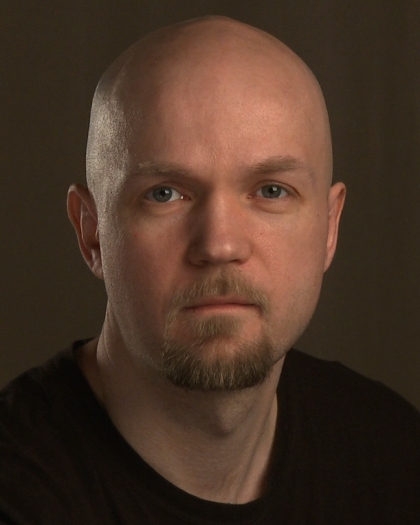
Jaakko Timo Henrik Järvi is a Professor in the Department of Informatics at the University of Bergen, Norway, with additional affiliations at the University of Turku, Finland. His research focuses on programming language design, generic programming, and human-computer interaction, particularly in GUI frameworks and software reuse. His research interests include generic programming, programming language design (especially the Magnolia language), high-performance computing, array programming, and GUI engineering. He emphasizes formal methods and algebraic specifications to build reusable and efficient software systems. His work bridges theoretical foundations with practical applications in software development and education. The recent publications highlight a strong trend in declarative GUI frameworks, multi-selection models, and generic programming. His work explores domain-specific languages for GUI structure manipulation, reusable selection semantics across platforms, and optimizing array computations using the Mathematics of Arrays. These efforts reflect a consistent focus on software abstraction, correctness, and reusability. Jaakko Järvi has supervised doctoral students, including Tetiana Yarygina, whose dissertation explored microservice security. While no specific grants are detailed, his work on VisAST was supported by the Research Council of Norway (Project 250683), indicating active external funding. He frequently collaborates with researchers like Magne Haveraaen, Knut Anders Stokke, and Sean Parent. He contributes to tools and frameworks such as the MultiselectJS library and the VisAST educational tool. These are outcomes of collaborative research teams focused on improving software development practices and computer science education.
Pouria Akbarighatar is a PhD Research Fellow in Responsible Data Science at the Department of Information Systems , University of Agder, Norway, and a visiting PhD researcher at the Centre for Information Resilience (CIRES) , University of Queensland Business School. He holds a BSc in Industrial Engineering and an MSc in Information Systems from the University of Tehran. His research focuses on Responsible AI , including maturity models , fairness frameworks , and ethical implementation in sociotechnical systems. His work combines Fuzzy mathematics , decision science , and data science to address uncertainty and complexity in AI systems. Recent publications explore responsible AI principles in practitioner contexts, operationalizing AI ethics , and credibility assessment in online reviews . He contributes to journals like AI and Ethics , IEEE Access , and Expert Systems with Applications , alongside conferences such as ECIS , AMCIS , and PACIS . He teaches courses in Data Science Applications , Algorithmic and Data Structures , and Data Science Applications II . He is affiliated with the Human-Centered AI (HCAI) research group.
Roar Bakken Stovner is an Associate Professor at the Department of Primary and Secondary Teacher Education within the Faculty of Education and International Studies at Oslo Metropolitan University (OsloMet), where he also serves as Head of Studies - Area of Responsibility 2. His academic career at OsloMet began as an Assistant Professor (2021-2023) before his promotion to Associate Professor in 2023. Prior to his university position, he worked as a teacher in lower and upper secondary schools in Oslo (2012-2018) and completed his PhD at the University of Oslo (2016-2020). He holds a Master of Science and Technology from NTNU (2007-2012) with a thesis on applied computational topology. Stovner's research spans several interconnected domains within educational science: Developing methodologies for describing and measuring teaching quality across multiple classrooms, with special emphasis on mathematics education Metascience research examining how citation practices distort findings and confer unwarranted authority to claims in educational research Creating programming tools for educational research, including the gptworkr package for text analysis in R using ChatGPT His scholarly work focuses on classroom research, mathematics education, mathematical competencies, metascience, and citation analysis. He actively participates in research groups focused on Classroom Research and Task Design in Mathematics Education, and leads significant involvement in the Teacher Education Panel Study (TEPS), a comprehensive longitudinal study examining teacher education implementation in Norway. Stovner's recent publications demonstrate substantial engagement with contemporary issues in educational research methodology, AI applications in education, and critical examination of scientific practices. His work on the EDUCATE project has produced influential reports on algorithmic thinking in mathematics education across different grade levels and exploratory teaching approaches in upper secondary education. His contributions to educational discourse include conference presentations, book chapters, and practical resources for teacher education, such as "Bedre masterskriving – en bok for lærerstudenter" (Better Master's Writing - A Book for Teacher Students), which supports academic writing development among future educators.
Yulia Rodina is a Professor of Linguistics and Language Acquisition at UiT The Arctic University of Norway, affiliated with the Department of Language and Culture. She leads the AcqVA-Nor research group and directs the Flere språk til flere initiative. As Deputy Chair of the HSL Faculty Research Ethics Committee, she oversees ethical standards in research. Her research focuses on multilingualism, second/third language acquisition, and language attrition using experimental psycholinguistic methods. Key themes include grammatical gender, morphosyntax, and cross-linguistic influence in languages like Russian, Norwegian, Bosnian, and Serbian. She investigates heritage language development in children across Norway, Germany, and the UK, and explores language variation and change in Norwegian dialects. Rodina teaches courses in Second Language Acquisition, Multilingualism, and Varieties of English. She supervises MA theses on topics such as gaming's role in vocabulary acquisition and syntactic development in bilingual children. Her work is supported by projects funded through the Arctic MSCA, RCN, and EU initiatives like AcqVA Aurora and MultiGender. She collaborates with international teams on studies like the MAP project (Heritage Russian in Spain) and CLIMAD (cross-linguistic influence in multilingualism). Her labs include AcqVA, PoLaR, and C-LaBL, focusing on acquisition, variation, and attrition processes.
Rune Johan Krumsvik is a Professor of Education at the University of Bergen (UiB) and Professor II at Volda University College. He founded the Digital Learning Communities (DLC) research group (2007) and the Western Norway Graduate School of Educational Research II (WNGER II). His affiliations include editorial roles at the Nordic Journal of Digital Literacy (Editor-in-Chief) and Frontiers in Pediatrics (Associate Editor). Professor, Department of Education, UiB (2010–) Professor II, Volda University College (2003–) Honorary Research Fellow, University of Bristol His research spans artificial intelligence , doctoral education , ICT in schools , formative assessment , and classroom management in technology-dense environments. He explores connections between AI, social media, mental health, and digital competence, with recent work focusing on large language models (LLMs) in education and healthcare. Scientific publications show a focus on AI applications ( 76 peer-reviewed articles , h-index 31). Key trends include: EdTech implementation in Norwegian primary/secondary schools AI in formative/summative assessment Digital competence frameworks Classroom technology management Teacher education digital skills Mental health impacts of screen time Scientific awards: Teaching Award , UiB Faculty of Psychology (2012) Excellent Teaching Practitioner accreditation (2020) Supervision includes: Main supervisor for 12 PhD candidates (11 completed) Co-supervisor for 6 PhD candidates Supervisor for 14 master’s and 12 bachelor’s students He leads the Digital Learning Communities Artificial Intelligence Centre (DLCAIC), focusing on AI research in education/healthcare, societal impacts of AI, and digital competence development.