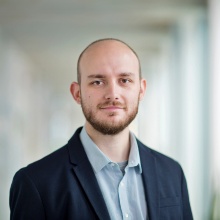
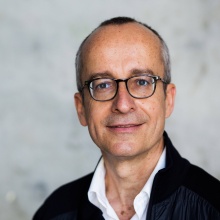
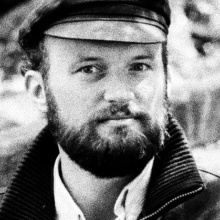
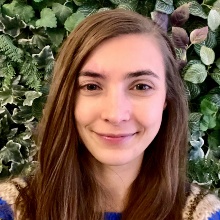
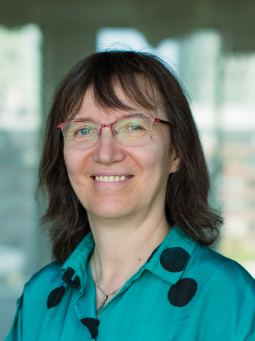
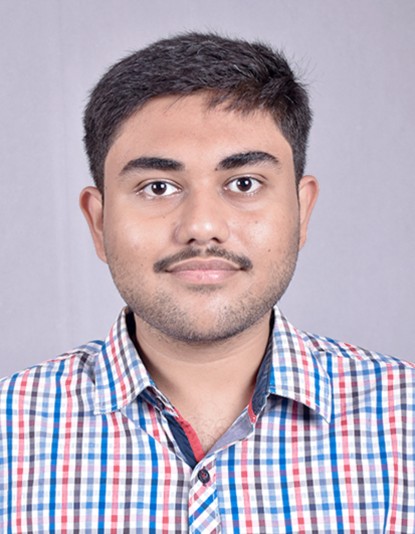
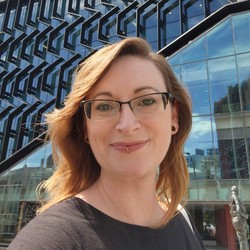
Prof. Dr. Ingo Plag is a faculty member at the Institute of English and American Studies , Heinrich-Heine-University Düsseldorf, specializing in English Language and Linguistics . His research focuses on Phonetics, Phonology, Morphology, Syntax, Creole languages, and English as a second language . Current Projects : DFG Project 'Form and meaning in English compounds' (2023-2026), CRC Project C08/DFG Project 'The semantics of derivational morphology' (2015-2026) Research Themes : Polysemy in derivation, compositionality of word-formation, semantic mechanisms, role of world knowledge, discriminative analysis of nominalizations His recent publications explore derivational morphology through distributional semantics , frame semantics , and quantitative methods , addressing topics like English prefixation, suffix competition (-ity vs. -ness), and nominalization semantics. He has presented at conferences including the International Cognitive Linguistics Conference and the German Linguistic Society. Contact: ingo.plag@uni-duesseldorf.de
Floriment Klinaku is a Researcher and Doctoral Researcher at the University of Stuttgart , affiliated with the Software Quality and Architecture Group . His work focuses on elasticity modeling , cloud-native systems , and performance optimization for modern software architectures. He contributes to projects like the Slingshot Simulator , which addresses autoscaling and resource management challenges in containerized environments. Research Interests include: Autoscaling mechanisms for cloud applications Elasticity and resilience in microservices Data stream processing in cloud environments Performance prototyping for containerized systems DevOps practices for automotive software His publications emphasize architectural solutions for scalability, resilience, and explainability in cloud-native ecosystems. Current trends in his work involve model-driven engineering approaches to coordinate autoscaling policies and quantify impact of design decisions on system behavior. No scientific awards are explicitly listed, and no advising/grant information is provided. He is part of the Software Quality and Architecture Group , contributing to research on cloud performance and elastic systems.
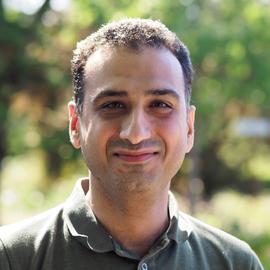
Achim Stein holds the position of Professor of Romance Linguistics at the Division of Romance Linguistics within the Institute of Linguistics at the University of Stuttgart, Germany, a role he has maintained since 2000. His academic focus centers on French and Italian linguistics through computational and corpus-based methodologies. His educational foundation includes studies in French, English, and Italian at the University of Erlangen/Nürnberg, followed by doctoral research at the University of Stuttgart and habilitation at the University of Cologne. This trajectory established his expertise in Romance language structures and historical development. Stein's research specializes in lexical semantics and language contact phenomena across synchronic and diachronic frameworks. He has pioneered computational resources for Medieval/Modern French, Italian, and Medieval Sardinian, with current work in the SILPAC Research Unit advancing "psycho-historical" linguistics—examining intersections between language change, acquisition, and cognitive processing. His methodology integrates corpus analysis with computational modeling to decode historical language evolution. Analysis of his recent publications reveals concentrated exploration of Old French-Middle English contact scenarios, particularly verb argument structure transformations and syntactic borrowing mechanisms. Key patterns include recipient passive development, cleft sentence pragmatics, and dynamic modeling of bilingual medieval contexts using diachronic corpora. Stein actively contributes to collaborative research infrastructure through the SILPAC unit and development of critical linguistic resources like the Syntactic Reference Corpus of Medieval French (SRCMF). His work bridges historical linguistics with digital humanities, creating annotation frameworks that enable cross-temporal syntactic analysis.
Titus von der Malsburg is a tenure-track Junior Professor of Psycholinguistics and Cognitive Modeling at the Institute of Linguistics, University of Stuttgart . His research focuses on incremental sentence comprehension, implicit gender biases, scanpath analysis, and computational modeling of language processing. He employs experimental methods like eye-tracking, ERP, and Bayesian statistics to investigate how humans integrate linguistic and cognitive cues during reading. Education : PhD in Cognitive Science (University of Potsdam), with postdoctoral positions at UC San Diego, University of Oxford, and University of Potsdam. His work spans psycholinguistics, cognitive science, and natural language processing, with a strong emphasis on reproducibility and open-source software development. He has contributed to debates on agreement attraction, semantic parsing, and the role of conversational principles in cognitive biases. His lab uses advanced eye-tracking equipment and promotes technical rigor in research practices. Recent publications highlight his contributions to understanding memory decay in syntactic dependencies, semantic attraction effects, and scanpath regularity as a predictor of reading comprehension. The lab actively seeks collaborators aligned with its focus on technical quality and open science. Notably, he clarifies his name’s correct formatting to avoid common misattributions.
Lisa Hofmann is a postdoctoral researcher at the University of Stuttgart in the Department of English Linguistics , working with Judith Tonhauser’s group. Her research focuses on how humans interpret language meaning by integrating information from multiple sources, blending formal semantics, pragmatics, syntax, and psycholinguistics. University: University of Stuttgart Department: Department of English Linguistics Her work addresses projective content (e.g., presupposition, anaphora, ellipsis) in counterfactual and hypothetical discourse, combining theoretical rigor with experimental methods. Recent projects include collaborations on at-issueness diagnostics and dynamic approaches to presupposition projection. Lisa’s publications span topics like anaphoric accessibility in counterfactuals and the semantics of anaphora, with a focus on connecting theoretical frameworks to psycholinguistic evidence. She actively participates in workshops and conferences, such as XPRAG FEST 2025 and the workshop on (a)symmetries in presupposition projection.
Manfred Herrmann is a Full Professor (C4) and Chair of the Department of Neuropsychology and Behavioral Neurobiology at the University of Bremen, affiliated with the Center for Cognitive Sciences (ZKW). He holds a dual background in medicine (M.D. 1992) and psychology (Ph.D. 1988), with habilitation in 1994. His academic career includes roles as Associate Professor at Magdeburg University and Visiting Professor at Berlin Free University. He leads the high-profile 'Minds.Media.Machines' initiative at Bremen. Education : - Diplom Psychology (1985, Freiburg University) - Ph.D. Psychology (1988, Freiburg University) - M.D. (1992, Freiburg University) - Ph.D. Philosophy (1993, Freiburg University) - Habilitation (1994). Research Interests : Focuses on neuropsychological mechanisms of decision-making, stress impact on cognition, neuroimaging (fMRI/ERP), and neurobiological underpinnings of addiction/obesity. Active in clinical neuropsychology, particularly stroke recovery and neuroprotection strategies. Articles Trends : Recent work examines brain activation patterns in food choice (dorsolateral prefrontal cortex), stress effects on decision-making, and neurobiological correlates of robotic agent design. His studies often bridge clinical and computational neuroscience. Awards : - Honorary Membership, Society for Neuropsychology (2023) - Honorary Research Associate, University of Sydney (1998). Labs & Teams : Directs the Department’s research group, collaborating with international institutions like the DFG Cluster of Excellence 'Languages of Emotion'. Engages in interdisciplinary projects merging cognitive science with robotics (e.g., 'Minds.Media.Machines').
Prof. Maria Bielikova is a Full Professor and former Dean of the Faculty of Informatics and Information Technologies (FIIT STU), now leading research at the Kempelen Institute of Intelligent Technologies (KInIT). Her work focuses on AI ethics, user modeling, and combating disinformation. She has held leadership roles in EU initiatives like the High-Level Expert Group on AI and chairs Slovakia's Permanent Committee for AI Ethics. Education: BSc/PhD in Electronic Computers from Slovak University of Technology Over 30 years at STU, including 15 years as Full Professor and 5 years as Dean Research interests span personalized systems, trustworthy AI, and low-resource machine learning. Authored/co-authored over 280 publications with 4,500+ citations (h-index 30). Secured EU funding for projects like vera.ai and VIGILANT. Supervised 90+ bachelor, 70+ master, and numerous doctoral students. Recognized with national/international awards including Slovakia IT Personality 2016 and Ľudovít Štúr Order 2024. Key contributions include founding the Slovak.AI research center, establishing the PeWe research group, and leading the User eXperience and Interaction Research Centre. Her work bridges academia-industry collaboration through KInIT's international projects with 69+ global partners.
Prof. Dr. Benjamin Lucas Meisnitzer holds the Chair of Romance Linguistics with a Focus on Hispanic and Lusitanian Studies at the University of Leipzig since 2018. He previously held academic positions at Johannes Gutenberg University Mainz (Assistant Professor, 2014-2018) and Ludwig Maximilian University Munich (Lecturer, 2010-2014). As Vice Dean for Studies (since 2023) and President of the German Lusitanists Association (since 2021) , he bridges institutional leadership with research excellence. Education : LMU Munich (Magister Artium in Romance Philology/German Linguistics, 2006) and Universidade Nova Lisbon (2001-2006). Research Interests span multiple dimensions of Romance languages, including: Language Change & Grammaticalization (e.g., temporal semantics, modality, diachronic morphosyntax) Language Contact & Variation (e.g., Spanish/Portuguese in Latin America/Africa, Catalan/Galician/Basque) Applied Linguistics (e.g., L3 acquisition, phraseology in teaching, digital media) Pluricentricity (e.g., standardization processes, non-dominant varieties) Theoretical Syntax & Pragmatics (e.g., modal particles, clitics, tense-aspect-modality interactions) Article Trends reflect his expertise in: Comparative analysis of Ibero-Romance varieties in diachrony and contact scenarios Grammaticalization of modality and evidentiality markers Standardization challenges in African Portuguese and Lusophone contexts Digital media’s impact on language acquisition and variation Creole languages and typological hybridity Academic Leadership : Co-Director of the DFG-AHRC CrossMoGram project (with University of Central Lancashire) Chairman of the Doctoral Committee for Linguistics at Leipzig Visiting professorships in Brazil (UFRN, USP, UFFS) and Mozambique (Universidade Rovuma) Teaching emphasizes: Contrastive grammar (Spanish-Portuguese-German) Sociolinguistics and language policy Multilingualism in educational contexts Historical development of Romance languages
Reza Salkhordeh is a Lecturer and Postdoctoral Researcher at Johannes Gutenberg University Mainz, Germany, where he leads the Efficient Computing and Storage Group. He holds a Ph.D. in Computer Engineering from Sharif University of Technology (2018) and has been affiliated with Ferdowsi University of Mashhad and Sharif University of Technology. His research focuses on operating systems, storage systems, and non-volatile memory technologies, with a particular emphasis on high-performance computing and I/O optimization. He has taught courses such as Storage Systems and Advanced Topics in Operating Systems since 2020. His academic journey includes a B.Sc. from Ferdowsi University (2011), M.Sc. and Ph.D. from Sharif University (2013, 2018). He has held roles such as Technical Lead for the High-Performance Data Storage System (HPDS) project in Tehran, Iran, and has mentored 4 M.Sc. and 6 B.Sc. students. His work spans patented technologies like Reconfigurable Cache Architectures and Load Balancers for I/O caching systems. Research interests include heterogeneous memory management, storage system design, and optimizing I/O performance in distributed environments. His recent publications address challenges in NVMM utilization, garbage collection in SSDs, and I/O tracing for HPC systems. He is actively involved in conference committees (e.g., FAST, ARCS, SC) and has reviewed for top journals like IEEE TPDS and ACM Transactions on Storage. Notable recognitions include membership in Iran’s National Elites Foundation (2012–2015) and top rankings in national exams (3rd in PhD, 35th in MSc). His contributions to storage systems have advanced enterprise-grade architectures and decentralized file systems, with a focus on practical implementations for modern computing challenges.
Dr. Jens Lechtenbörger is a Faculty member and Lecturer at the Chair of Machine Learning and Data Engineering at the University of Münster's School of Business and Economics. He holds a Doctoral degree (2001) and a diploma in Computer Science (1997) from the University of Münster and Oldenburg, respectively. His roles include serving as Akademischer Oberrat since 2006, Acting Professor (2016), and Fellow for innovation in digital university teaching (2016–2017). He leads projects like Tutor.AI and OER infrastructure development, focusing on Open Educational Resources (OER), data warehousing, and educational technology. Research interests span OER creation, data integration, business intelligence, and machine learning applications in education. He has published extensively on data warehouse design, database systems, and educational technologies. Notable awards include the Best Evolutionary & Swarm Computation Paper Award (2019) and the Dissertation Prize 2003. Teaching responsibilities include courses on data structures, operating systems, and management information systems. He supervises theses on topics like AI-driven learning systems, data privacy, and business logic vulnerabilities. Active in academic service, he chairs committees on digital teaching and curriculum reform at the University of Münster.
Michael Grossniklaus is a Professor at the University of Konstanz, Germany, specializing in database systems, data management, and information systems. His research focuses on query optimization, social media data streams, and object-oriented databases. He has contributed to the development of C-SPARQL for RDF stream processing and frameworks for adaptive data management. Grossniklaus has collaborated extensively with researchers in areas such as trajectory data modeling, cloud database optimization, and context-aware systems. His work emphasizes practical applications in education technology, mobile computing, and semantic web technologies. Affiliation: University of Konstanz, Germany Key Research Areas: Database Systems, Data Mining, Social Media Analysis, Query Optimization Notable Projects: C-SPARQL, Sahara (cloud database optimization), LPLM (neural cardinality estimation) Recent publications highlight advancements in neural models for cardinality estimation, trajectory data models, and memory optimization in cloud databases. His interdisciplinary approach bridges theoretical foundations with real-world applications in education, social media, and mobile systems.
Prof. Dr. Daniel Roth is a Professor of Machine Intelligence in Orthopedics at the TUM School of Medicine and Health at Technical University of Munich (TUM), appointed in September 2023. His research focuses on human-machine interfaces in medicine, including AI, virtual/augmented reality (XR) technologies for surgical assistance systems, disease diagnosis, and rehabilitation. Previously, he held a junior professorship in Human-Centered Computing and Extended Reality at Friedrich-Alexander-Universität Erlangen-Nürnberg (FAU). Education: Bachelor's/Master's in Media and Imaging Technology (TH Köln) PhD in Computer Science (Julius-Maximilians-Universität Würzburg) Research Interests: Roth’s work integrates AI and extended reality to solve healthcare challenges. Key areas include: XR-based surgical training and teleconsultation systems AI-driven analysis of surgical workflows Embodiment in virtual environments for medical applications Accessibility technologies for visually impaired users Publications: Recent work emphasizes immersive medical visualization, telemedicine systems, and user embodiment in VR. Key themes include: XR applications in surgery and patient care 3D teleconsultation for emergency scenarios AI-enhanced anatomy visualization Awards: Best Demo Honorable Mention (IEEE VR, 2021) Best Poster Award (ISMAR, 2020) IEEE TVCG Best Journal Paper (2018) Grants & Teams: Active in interdisciplinary projects at Klinikum rechts der Isar. Collaborates with industry partners on AR/VR healthcare solutions. No formal advisee list is provided, but his work involves multi-disciplinary teams. Labs/Teams: Leads machine intelligence initiatives in TUM’s medical school, focusing on translational research between engineering and clinical practice.
Thomas Arnold is a Postdoctoral researcher at Technische Universität Darmstadt, specializing in Digital Responsibility, Natural Language Processing, and Machine Learning. His work focuses on developing automated tools for measuring corporate digital responsibility activities and detecting machine-generated text across multiple domains and languages. He actively participates in initiatives like Semeval tasks and has contributed to frameworks like M4 and M4gt-bench for evaluating black-box text generation systems. His research spans advanced motif analysis in text-induced networks, hierarchical data summarization, and privacy-preserving text rewriting (DP-rewrite). Notable projects include QUEST, an educational tool leveraging engaging storytelling for interactive quizzes, and EmpiriST, a robust tokenization and POS-tagging system for diverse text genres. Publications highlight trends in ethical AI, corporate strategy evaluation, and cross-domain NLP challenges. Recent work emphasizes transparency in AI systems and the intersection of digital ethics with corporate governance. He is affiliated with TU Darmstadt's Department of Computer Science (implied through research focus) and maintains professional profiles on LinkedIn. No specific awards or grants are listed in the provided data.
Aishik Mandal is an ELLIS PhD student at UKP Lab, Technical University of Darmstadt, supervised by Prof. Iryna Gurevych and co-supervised by Prof. Aurélien Bellet. He completed his Master's in Artificial Intelligence, Machine Learning and Applications and Bachelor's in Electronics and Electrical Communication Engineering at IIT Kharagpur, where he received the Silver Medal for best academic performance in his department. His research focuses on Dialogue Systems, Multimodality, and Privacy , with significant contributions to mental health AI applications, depression detection, and culturally diverse multilingual visual question answering. His work combines advanced machine learning techniques with practical applications for healthcare and human-computer interaction. Mandal's research output shows a clear progression from foundational work in dialogue understanding and representation learning to more specialized applications in mental health and privacy-aware AI systems. His recent publications demonstrate expertise in multimodal fusion techniques, ordinal classification for depression severity prediction, and developing culturally sensitive AI benchmarks. Silver Medal from Electronics and Electrical Communication Engineering department at IIT Kharagpur DAAD WISE scholarship for internship at TU Munich Charpak Lab scholarship for internship at INRIA Paris GKF International Internship scholarship for INRIA Paris Mandal has been actively involved in research collaborations across multiple institutions, including IIT Kharagpur's Centre of Excellence in AI, Complex Network Research Group, Technical University of Munich, and INRIA Paris. His academic journey shows a strong foundation in both theoretical computer science and practical AI applications, with increasing specialization in multimodal dialogue systems and privacy-conscious AI development.
Katherine Storrs is a Senior Lecturer in the School of Psychology at the University of Auckland, New Zealand. She leads the Computational Perception Lab, where she combines computational modeling and psychophysical experiments to study visual perception. Her research is supported by a Marsden Fast Start grant, and she is actively involved in teaching and academic service. She earned her PhD in Psychological Science from the University of Queensland in 2015 and has held postdoctoral positions at Justus-Liebig University (Germany) and the MRC Cognition and Brain Sciences Unit (Cambridge, UK). She also worked as a Data Scientist at Twitter in London. Dr. Storrs' research focuses on how the visual system interprets material properties such as gloss, shape, and reflectance. She uses unsupervised deep learning models to simulate and predict human perception, particularly in ambiguous or complex visual environments. Her work bridges cognitive science, neuroscience, and artificial intelligence. Her most recent publications explore topics such as gloss perception, mental rotation, face similarity, and the role of statistical learning in shape encoding. These works frequently appear in high-impact journals like Nature Human Behaviour , PNAS , and Current Biology , demonstrating a strong trend toward using computational models to explain perceptual phenomena. Marsden Fast Start Grant (2021) Humboldt Research Fellowship (2019) UK National Finalist, FameLab (2017) Editorial Board Member, Nature Communications Psychology (2023–) Editorial Board Member, OpenMind (2022–) Social Media Editor, Perception and i-Perception (2020–) She supervises graduate students and teaches courses including PSYCH 306 (Research Methods), PSYCH 775 (Visual Perception in Brains and Machines), and PSYCH 109. She also mentors students in honours, master's, and PhD programs. Her lab is actively involved in interdisciplinary collaborations, particularly with researchers in machine learning and computational neuroscience. The lab is funded by the Marsden Fund and supported by access to high-performance computing resources for training deep neural networks.