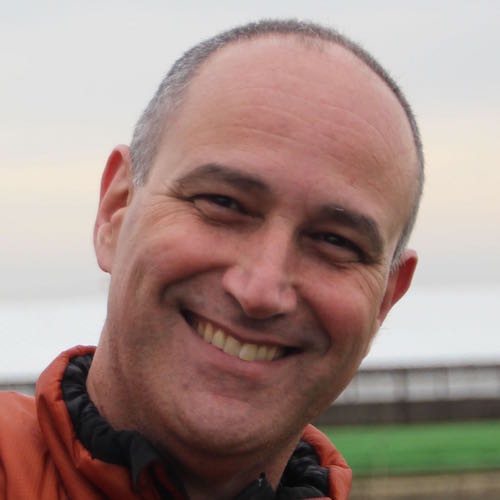
Erez Petrank is a Professor at the Department of Computer Science , Technion - Israel Institute of Technology , where he holds the Andrew and Erna Viterbi Chair. His research focuses on concurrent computing , programming languages , and systems with an emphasis on memory management . Additional interests include parallelism , cryptography , data structures , approximation algorithms , and distributed computing . Research Trends Recent publications highlight his work on safe memory reclamation (ERA Theorem, VBR), lock-free data structures (queues, stacks, B+ Trees), and persistent memory algorithms (NVTraverse, Mirror). These works span concurrent computing , distributed systems , and memory efficiency in multi-threaded environments. Scientific Awards Distinguished Paper Award at Euro-Par 2015 Contact Information Email: erez@cs.technion.ac.il Office: Taub 528, Technion Phone: +972-73-378-4942
Oren Tsur is an Assistant Professor in the Department of Software & Information Systems Engineering (SISE) at Ben Gurion University of the Negev, where he heads the NLP and Social Dynamics Lab (NAS-LAB) and directs the Center for the Study of Digital Politics and Strategy (DPS@BGU). He joined the university in September 2017 and teaches core courses including Natural Language Processing, Social Network Analysis, and Introduction to NLP at both undergraduate and graduate levels. His research focuses on computational modeling of social dynamics through language and network analysis. Key interests include social contagion, language evolution, political network analysis, and sentiment analysis. He employs methodologies from exponential random graph models (ERGM), machine learning, and natural language processing to study how language shapes and is shaped by social interactions, particularly in political contexts and online communities. His publication trends reveal strong interdisciplinary work spanning computational linguistics, political science, and social network analysis. Recent research emphasizes hate speech detection in platforms like Parler, suicide risk identification in counseling services, and modeling semantic drift in emoji usage. His work consistently bridges technical NLP innovations with real-world social applications, particularly in political discourse and community dynamics. NSF Political Network Fellowship (2014, 2015, 2016) TIME Magazine's 50 Best Inventions of 2010 for sarcasm detection research Work featured in Science Magazine, BBC, The Atlantic, CNET, and Politico Best Paper award at HICSS 2020 Tsur actively mentors prospective students through his lab, emphasizing excellence in candidates through academic transcripts and research interest statements. His grants include multiple NSF Political Network Fellowships supporting computational social science research. He serves as Director of BGU's Cyber Politics and Policy Research Center and organizes major NLP workshops including the Natural Language Processing and Computational Social Science series at top conferences. His NAS-LAB focuses on data-driven modeling of social coordination and influence, with applications in sentiment analysis, dialogue systems, and digital forensics. The lab maintains strong industry connections through past collaborations with IBM Research (Watson Debater project), Yahoo! Research, and startup consulting.
Associate Professor Tamir Hazan is a faculty member at Technion - Israel Institute of Technology, where he joined in 2015. His research focuses on theoretical and practical aspects of machine learning, with applications spanning computer vision, natural language processing, and computational biology. His work bridges mathematical foundations with real-world problem solving in complex systems. Professor Hazan received his Ph.D. from the Hebrew University in 2009. His academic trajectory has established him as a leading researcher in machine learning theory and its applications, with a particular emphasis on developing mathematically rigorous approaches to modern AI challenges. Professor Hazan's research centers on mathematically founded solutions to problems demonstrating non-traditional statistical behavior. His work encompasses perturbation models for efficient learning of high-dimensional statistics, deep learning of infinite networks, and primal-dual optimization for high-dimensional inference problems. His research program spans three major interconnected areas: attention models that improve prediction interpretability, perturbation frameworks that integrate optimization and sampling through extreme value statistics, and convex duality approaches to message-passing in graphical models. His work demonstrates both theoretical depth and practical relevance across multiple domains. Analysis of Professor Hazan's recent publications reveals an evolving research trajectory with increasing emphasis on interpretable machine learning, causal modeling, and applications in medical imaging and behavioral science. His work consistently bridges theoretical foundations with practical implementations, with recent publications showing strong connections between perturbation theory, attention mechanisms, and optimization frameworks. The interdisciplinary nature of his research is evident in applications ranging from pedestrian navigation using smartphone sensors to video-text matching systems and medical image analysis. Professor Hazan has mentored numerous students throughout his career, including: Alex Schwing, now Assistant Professor at UIUC Alon Cohen, now Associate Professor at Tel Aviv University Idan Schwartz, currently Postdoc at Tel Aviv University Current Ph.D. students: Guy Lorberbom, Itai Gat, and Hedda Cohen Multiple M.Sc. students including Adi Manos, Ram Yazdi, and others Professor Hazan's research group maintains an active program with several key focus areas: Attention models for interpretable and improved prediction processes in visual question answering and multimodal applications Perturbation models that enable efficient statistical reasoning in complex systems with exponential configuration spaces Markov random fields, convex duality, and message-passing algorithms for structured prediction and distributed computing
Yoav Goldberg is a Professor in the Department of Computer Science at Bar Ilan University and serves as the Research Director of the Israeli branch of the Allen Institute for Artificial Intelligence. Previously, he was a Research Scientist at Google Research New York. He completed his PhD at Ben-Gurion University in 2011 under the supervision of Prof. Michael Elhadad. His research focuses on Natural Language Processing and Machine Learning, with specific expertise in: Syntactic parsing and structural analysis Development of structured-prediction models Algorithms for greedy decoding optimization Cross-lingual and multilingual understanding Domain adaptation techniques Neural network architectures for NLP tasks He has authored a book on neural network methods for NLP and maintains active contributions through publications, open-source software, and curated datasets.
Prof. Ayelet Landau is an Associate Professor in the Departments of Cognitive Sciences and Psychology at the Hebrew University of Jerusalem, leading the Landau Lab. Her academic journey includes a B.A. and M.A. in Psychology and Philosophy/Neuropsychology from Hebrew University, a Ph.D. in Cognition Brain and Behavior from UC Berkeley, and postdoctoral research at the Ernst Strüngmann Institute (ESI) in Frankfurt. Her research focuses on the Cognitive Neuroscience of Attention and Time Perception, investigating neural oscillations' role in temporal processing and attentional mechanisms. She explores how the brain encodes time perception, visual attention distribution over time, and neural oscillations' cognitive functions. Key funding sources include the European Research Council, James S. McDonnell Foundation, and Israeli Science Foundation. Her lab integrates psychophysical methods with EEG/MEG to study temporal perception, attention sampling, and neural rhythms. Notable work includes modeling temporal generalization, uncovering neural correlates of decision-making, and exploring crossmodal effects in sensory processing. Education: B.A. Psychology and Philosophy, Hebrew University of Jerusalem M.A. Neuropsychology, Hebrew University of Jerusalem Ph.D. Cognition Brain and Behavior, UC Berkeley Research Themes: Temporal Perception: How the brain encodes time perception and integrates sensory information over time Attentional Rhythms: Rhythmic sampling mechanisms in visual and auditory attention Neural Oscillations: Role of alpha, theta, and gamma rhythms in temporal and attentional processing Lab & Funding: Landau Lab at Mount Scopus campus. Supported by grants from ERC, McDonnell Foundation, and ISF.
Dr. Carolin Müller serves as a Research Fellow at the Buber Society, The Hebrew University of Jerusalem since October 2021, where she investigates performance and aesthetic forms as expressions of belonging and identity within migration contexts. Her interdisciplinary work bridges Cultural Studies and Performance Studies, with current projects examining brass music culture in Windhoek through innovative "brass-sound-walking" methodology and the role of the body as a drawing tool in communicating sexuality. Her educational background demonstrates deep interdisciplinary training: Ph.D. in Germanic Languages and Literatures (2020), The Ohio State University: Dissertation on musical activism opposing anti-immigrant policies in Dresden M.A. in Germanic Languages and Literatures (Film Studies, 2016) M.Ed. in Art Education and EFL (2015), Technische Universität Dresden B.Ed. in Art Education and EFL (2013), Technische Universität Dresden Müller's research explores the nexus of art, performance, and politics in migration issues, with particular focus on how musical activism functions as civic engagement. Her work reveals how brass bands in protest movements create community spaces while challenging dominant migration narratives, and how transcultural musical practices become radical political tools in left-wing social movements. This research trajectory demonstrates consistent attention to embodied resistance and sonic warfare as mechanisms for marginalized communities to claim citizenship. Analysis of her 8 most recent publications (2014-2021) reveals strong thematic continuity across Social Sciences, Musicology, and Migration Studies. Her work consistently examines border politics through cultural production, with particular emphasis on Germany's migration landscape. Key methodological approaches include performance ethnography and critical discourse analysis, while substantive contributions focus on how musical practices negotiate integration policies, challenge racialization, and create alternative citizenship models. Her scientific recognition includes: 3 major teaching/service awards from Ohio State University (2017-2018) 11 competitive research fellowships including Ohio State Presidential Fellowship (2019-2020) and TU Dresden Flexible Funding (2021) Specialized grants for migration studies, music research, and international security Müller actively contributes to academic community building as co-founder of the Migration Studies Working Group at Ohio State University and through managing international artist residencies connecting Germany, Burkina Faso, and the United States. Her coordination of doctoral programs at TU Dresden included designing hybrid participation formats and managing an international summer school, while her curation of the Migrants Music Manifesto in Cologne addressed sustainability challenges for transnational migrant artists. Current advisory roles include social media management for migration research platforms and workshop leadership for IMISCOE conferences. She maintains active research collectives through the brass-sound-walking methodology developed with the University of Namibia, and leads workshops like "Questioning Celebratory Migranticization" examining racialization in arts production. Her ongoing projects at the Hebrew University focus on Windhoek's brass music culture and the relationship between aesthetic forms and identity construction, supported by her extensive network of international collaborators across Germany, Israel, Namibia, and the UK.
Eyal Zamir is the Augusto Levi Professor of Commercial Law at Hebrew University of Jerusalem, where he previously served as Dean of the Faculty of Law. He founded the Aharon Barak Center for Interdisciplinary Legal Studies and co-founded the Center for Empirical Studies of Decision-Making and the Law. His visiting appointments include Harvard Law School, Yale Law School, NYU School of Law, and other leading global institutions. Professor Zamir's research integrates behavioral economics, empirical analysis, and normative ethics to examine legal systems. Key domains include: Behavioral law and economics, particularly cognitive biases in litigation and contracting Empirical studies of judicial decision-making and policy effectiveness Contract theory and enforcement mechanisms across legal traditions Normative frameworks for regulatory design and ethical constraints His publication trends reflect sustained focus on experimental jurisprudence, with recent work analyzing mandatory rules, legal reasoning biases, climate policy inertia, and comparative contract enforcement. Articles frequently employ behavioral experiments and large-scale doctrinal comparisons. Major scientific recognitions include: Fulbright Researcher Award Zeltner Prize for Senior Scholar Hebrew University President’s Prize for Excellent Young Scholar Justice Shneor Zalman Cheshin Prize for Academic Excellence Professor Zamir leads the Aharon Barak Center, which fosters interdisciplinary collaborations between law, economics, and psychology. His work has influenced global legal scholarship through translations of books into Chinese and Serbian.
Prof. Ram Frost is a Professor in the Department of Psychology at the Faculty of Social Sciences, The Hebrew University of Jerusalem, with office location in the Social Sciences Building (fifth floor, room 26509). He maintains active research fellowships at Haskins Laboratories in New Haven and the Basque Center for Cognition, Brain and Language (BCBL), underscoring his international collaborative networks. His research centers on cognitive mechanisms of visual word recognition across languages and statistical learning as an individual capacity for detecting environmental regularities. He investigates universal versus language-specific aspects of reading processes and individual differences in second language acquisition, with current work focusing on the behavioral and neurobiological underpinnings of statistical learning through an ERC Advanced grant. Recent publications reveal a concentrated research trajectory examining brain signatures of reading proficiency (including beta-band neural activity), theoretical integration of statistical learning into cognitive frameworks, and clinical applications for understanding language impairments. His work bridges cognitive neuroscience, psycholinguistics, and information theory to address fundamental questions about learning mechanisms. Prof. Frost leads an ERC Advanced grant-funded research program examining statistical learning from multidisciplinary perspectives. His laboratory maintains strong collaborative ties with Haskins Laboratories and BCBL, facilitating cross-institutional research on learning mechanisms and their implications for language processing and acquisition.