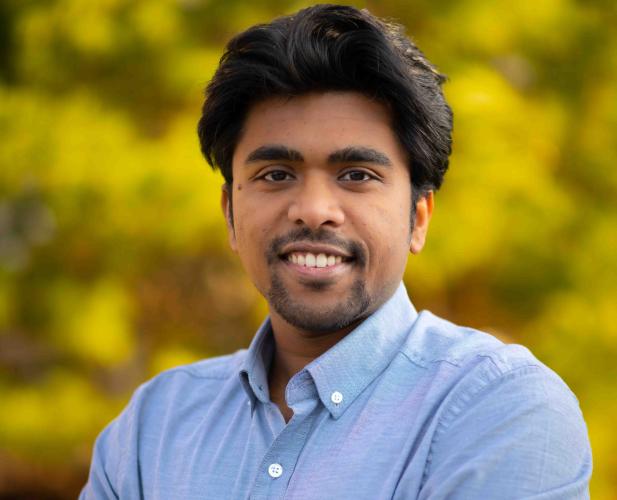
David Blakesley is Professor of Rhetorics, Communication, and Information Design and Campbell Chair in Technical Communication at Clemson University's College of Arts and Humanities, Department of Interdisciplinary Studies. He currently serves as President of the Faculty Senate for 2023-2024. His academic career spans over three decades with significant contributions to rhetorical theory, digital publishing, and technical communication. Blakesley earned his PhD in Rhetoric, Linguistics, and Literature from the University of Southern California (1990), an MA in English from San Diego State University (1986), and a BA in English from the same institution (1983). His research spans multiple interconnected fields including rhetorical theory, history of rhetoric, digital and visual rhetorics, print and digital publishing, film theory and production, technical communication, and digital humanities. He has focused particularly on Kenneth Burke's rhetorical theory and its applications across various media. His scholarly work demonstrates a consistent trajectory from traditional rhetorical theory toward digital applications and publishing innovations. Over the past decade, his research has increasingly focused on the intersection of digital technologies with rhetorical practices, particularly examining how digital platforms transform scholarly communication and publishing. His 2022 TUGboat article on production versus distribution in publishing exemplifies his ongoing interest in how technological shifts impact academic and professional communication. Fellow, Rhetoric Society of America George Yoos Distinguished Service Award (RSA) Charles Moran Award for Distinguished Contributions to the Field of Computers and Composition Blakesley has secured significant funding including the $11 million Clemson-Adobe Partnership for Campus-Wide Creative Cloud implementation. He serves as Editor of KB Journal, Co-Editor of WAC Journal, and General Editor of The Writing Instructor. His editorial work has been instrumental in shaping scholarly communication in rhetoric and composition studies, particularly through his leadership in digital publishing initiatives.