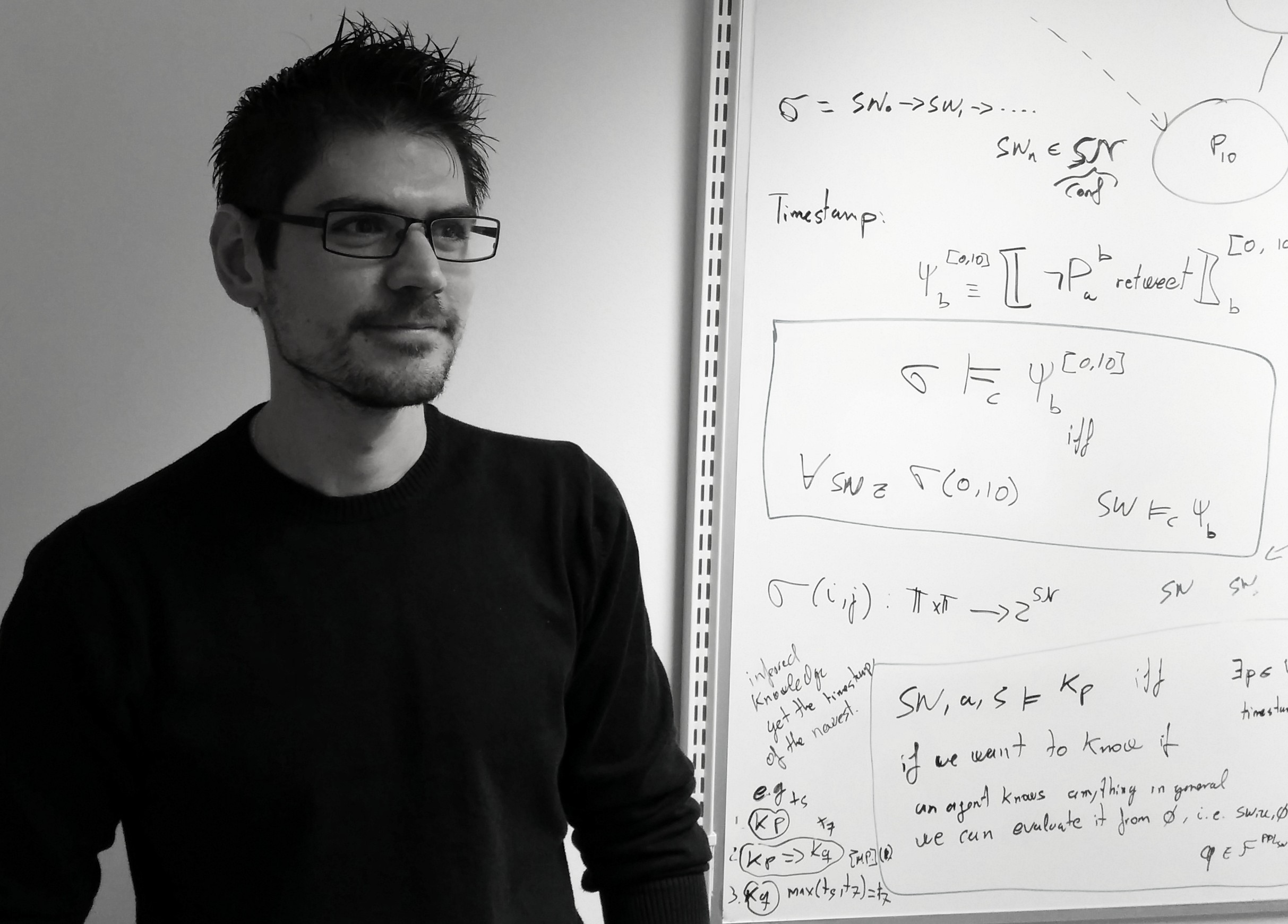
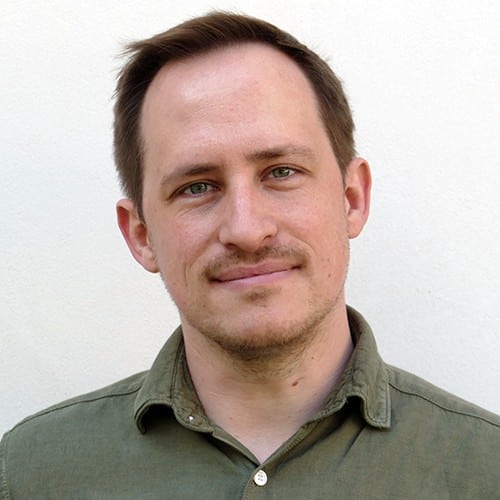
Andrzej Filinski is an Associate Professor at the Programming Languages and Theory of Computation section within the Department of Computer Science at the University of Copenhagen. His research focuses on applied programming-language semantics, particularly computational effects and machine-verifiable reasoning about programs. University: University of Copenhagen Department: Department of Computer Science Research Interests: Operational semantics of monadic effects, game-theoretic program contracts, formal verification, concurrency, distributed systems, and code certification. Recent Publications include work on information flow logic using partial equivalence relations (2024), functional approaches to regular expression matching (2021), and streaming nested data parallelism on multicore systems (2016). His research spans theoretical foundations and practical applications in programming languages and computational theory.
Torben Ægidius Mogensen is an Associate Professor at the Department of Computer Science, University of Copenhagen, where he leads research in the Programming Languages and Theory of Computation section. His office is located at Universitetsparken 5, Copenhagen. His primary research focuses on: Automatic program analysis and transformation (especially partial evaluation and semi-inversion) Compiler technology for functional languages Domain-specific language design Reversible computing systems and languages Algorithms, complexity theory, and automata theory Applications in graphics and fractal generation His recent publications demonstrate a strong focus on reversible computation systems, including specialized programming languages like Hermes for encryption, reversible processor architectures, and functional programming extensions. His textbook publications on compiler design (2024) and programming language implementation (2022) indicate significant contributions to computer science education and foundational knowledge. He teaches courses on compilers, programming language technology, and game development, and maintains active research collaborations internationally. He is fluent in Danish and English, with working knowledge of German and Romanian.
Ana Alina Tudoran is an Associate Professor at Aarhus University, specializing in quantitative methods within business intelligence. Her academic work bridges machine learning, data mining, and consumer behavior analysis. Primary affiliation: Department of Economics Research focus areas: Artificial Intelligence, Customer Lifetime Value modeling, and Hybrid Intelligence systems Notable projects include pandemic-era consumer behavior studies and IoT privacy reviews Her recent publications span supply chain optimization, organizational text analytics, and responsible AI deployment. Tudoran actively contributes to methodological advancements through hybrid PLS-SEM/machine learning frameworks and is a frequent speaker at management conferences.
Flemming Stassen is an Associate Professor at the Department of Applied Mathematics and Computer Science, Technical University of Denmark (DTU). He specializes in integrated systems design with a focus on test methodologies and fault-tolerant circuits. Since 1999, he has served on the appeal board for patents and trademarks under Denmark's Ministry of Business and Growth. His research interests span CMOS technology (including 90nm and 0.25 micron processes), high-speed low-power design, and curriculum development for engineering programs. He has contributed to CDIO-based curricula at DTU and authored textbooks on semiconductor design principles. Recent work emphasizes merging interdisciplinary educational programs and advancing low-power circuit techniques. His publications reflect a 40-year career in electronics innovation, from transistor history to modern nanometer-scale design. Projects: SecClo Master's Program in Security and Cloud Computing (2021–2026), UAV Ground Control System (2015–2016) Awards: DTU International Faculty of the Year (2001) Professional Activities: Peer reviewer for SecClo Network Meetings, organizer of computer arithmetic conferences He leads educational initiatives in embedded systems engineering and collaborates on security-focused graduate programs.
Raúl Pardo Jimenez is an Associate Professor in the Department of Software Engineering at the IT University of Copenhagen, affiliated with the Software Quality Research (SQUARE) group. His research focuses on formal methods and privacy engineering, with particular emphasis on probabilistic programming and privacy risk quantification in data analytics. His research spans three interconnected domains: Formal verification of privacy compliance systems like GDPR implementation Probabilistic modeling for quantitative privacy risk assessment Open source sustainability impacts on software quality metrics Recent publications demonstrate a consistent focus on developing rigorous computational methods for privacy preservation, with works appearing in Springer's Lecture Notes in Computer Science and Empirical Software Engineering journals. He leads the REIDENT project (2018-2022), funded by Villum Fonden, which developed Bayesian probabilistic programming approaches for reidentification risk assessment in sensitive datasets.
Dr. Ahmad Salim Al-Sibahi is an Assistant Professor in the Programming Language and Theory of Computation Section at the University of Copenhagen's Department of Computer Science. He is a core member of the Aleatory Science Team, focusing on probabilistic programming applications in protein folding and inference algorithm optimization. His work combines formal methods with practical machine learning frameworks like Pyro. Educational Background: PhD in Computer Science (2014-2017), IT University of Copenhagen MSc in Computer Science (2014), IT University of Copenhagen Postdoctoral Researcher at University of Copenhagen (2017-2019) Research Interests: His primary focus lies at the intersection of probabilistic programming and computational biology. He develops efficient inference algorithms for probabilistic models, particularly in protein structure prediction and voucher scanning applications. His earlier work includes formal verification of program transformations using inductive refinement types and static analysis techniques. Awards: Best Paper Award at GPCE 2018 Contributions: He contributed to dependently-typed language Idris and co-developed family-based model checking techniques. His research bridges theoretical programming language constructs with applied problems in bioinformatics and software modernization.
Asbjørn Mohr Drewes is a Clinical Professor at Aalborg University's Department of Gastroenterology and Hepatology, affiliated with the Faculty of Medicine. He leads the Center for Sensory-Motor Interaction and chairs multiple pancreatic disease initiatives. His work integrates clinical practice with research in chronic pancreatitis, gastrointestinal pain, and brain-gut interactions. He has authored over 1,067 publications and holds an H-index of 85. Drewes has secured €16.5 million in grants and received prestigious awards like the Hagedorn Prize and Dannebrog Order. He oversees 20+ researchers, including 8 PhD students, and has supervised 57 doctoral candidates. His leadership spans roles in international societies and multi-center studies. Education: MD, Aarhus University (1983) Specialist in Internal Medicine/Gastroenterology (1997) PhD, Aalborg University (1998) DMSc, Aarhus University (1999) Research interests focus on chronic pancreatitis, gastrointestinal pain mechanisms, and technology-driven diagnostics. He co-founded Mech-Sense, a multidisciplinary center advancing sensory and motor research. His studies span analgesic pharmacology, imaging innovations, and clinical trial design. Drewes has pioneered cross-cultural validation of pain assessment tools and AI-driven radiomics for pancreatic disease staging. His grants include major funding from the Novo Nordisk Foundation and EU programs. Awards reflect his contributions to gastroenterology and pain management. Drewes actively engages in media and policy discussions, advocating for healthcare research investment and ethical clinical practices. Key Roles: Director, Mech-Sense Research Center Leader, Centre for Pancreatic Diseases President, Scandinavian Association for Neurogastroenterology and Motility Editorial Board Member, multiple journals Collaborations span 50+ clinical trials and international networks, including the International Pancreatic Pain Consortium. His work bridges basic science, clinical care, and technological innovation to address unmet needs in gastrointestinal and pancreatic disorders.
Raúl Pardo is an Associate Professor in Computer Science at the IT University of Copenhagen (ITU). He previously held postdoctoral positions at ITU's SQUARE group and Inria's Privatics team. He earned his PhD from Chalmers University of Technology, focusing on formalizing privacy policies for social networks under Gerardo Schneider's supervision. His research integrates formal methods with privacy and security, addressing topics such as privacy risk analysis, probabilistic programming, and GDPR compliance. Key domains include genetic data, IoT, and social networks. Publications highlight contributions to privacy quantification, formal verification of consent mechanisms, and probabilistic systems analysis. He actively participates in conferences like SEFM, SOSYM, and ETAPS, and has organized tracks on verification and learning for autonomous systems. Pardo teaches courses on probabilistic programming, formal methods, and security at ITU, INSA Lyon, and Chalmers. Notable students include Rasmus Carl Rønneberg (SEFM'23) and Ivana Kellyérová (TIME'16). His work has been recognized, including a nomination for the Danish MSc thesis award. He leads the SQUARE research group at ITU, focusing on privacy-preserving software systems and probabilistic modeling.
Wolfgang Klas is a Professor in the Faculty of Computer Science, leading the Research Group Multimedia Information Systems. His research focuses on multimedia systems, artificial intelligence, and blockchain technology. He has been actively involved in research projects such as TP2 PRECIOUS (2013-2016), SciLink (2011-2014), and OptFI (2010-2013). Key research interests include multimedia content management, MPEG7 standards, object-oriented databases, and schema definition. He has also contributed to cybersecurity topics like fake review detection and blockchain applications. Publications span from multimedia systems to sentiment analysis, with recent work emphasizing AI-driven solutions. He is a frequent speaker on topics like blockchain innovation and data security, including presentations at SMAP 2020 and the IT4S Forum 2024. Media engagements include discussions on blockchain technology’s role in business and education reforms, such as lifelong study record systems. His work bridges academic research with real-world applications through industry collaborations and public outreach.
Bente Meyer is an Associate Professor in the Department of Culture and Learning at Aalborg University, Faculty of Humanities and Social Sciences. Her research integrates digital technology, language instruction, and innovative teaching practices, with a focus on dramatization, material culture, and AI in education. She is affiliated with ILD-Lab: Research Lab IT and Learning Design and The Center for Applied Game Research. Her research interests include: Language instruction and foreign language didactics Digitalization and educational technology (e.g., iPads, telepresence, AI) Playful and dramatized learning approaches Materiality and practical thinking in school Blended and informal learning environments Recent publications highlight a strong trend toward integrating generative AI in language education, critical pedagogy, and creative methods like dramatization in teaching German and French. Her work emphasizes student perspectives, teacher competence, and the material conditions of learning. She also explores how digital tools reshape teaching identities and classroom dynamics. Scientific recognition includes: Videos and learning strategies - Screencasts as Participatory Tools in Study (Conference Prize, 2017) Bente Meyer actively supervises PhD work and leads significant research projects, such as Critical use of artificial intelligence in language subjects (2024) and Digital dramatizations as playful approaches to foreign language teaching (2022–2023). She has secured research funding across multiple years and contributes to academic governance through peer review for journals like Sprogforum and leadership in the Swedish Research Council (from 2025). Her projects often involve interdisciplinary collaboration and practical school development. She is a key member of: ILD-Lab: Research Lab IT and Learning Design The Center for Applied Game Research Networks promoting digital and practical learning innovations
Johannes Wachs is an Associate Professor at the Institute of Data Analytics and Information Science, Corvinus University of Budapest, and a Research Fellow at the Centre for Economic and Regional Studies. He is affiliated with the Complexity Science Hub Vienna, where he has been a faculty member since April 2020. His interdisciplinary research bridges data science, network science, and complexity to study digital economies, open source software, and societal challenges. PhD in Network Science, Central European University (2019) MS in Applied Mathematics, Central European University (2012) BS in Mathematics and Economics, Tulane University (2009) His research focuses on the application of network and data science to understand social, economic, and technical systems. Key interests include open source software ecosystems, AI’s impact on knowledge sharing, corruption detection, urban inequality, and digital innovation. He uses large-scale digital trace data to model complex behaviors in online communities, software development, and public policy. His recent publications reveal a strong trend in analyzing digital platforms such as GitHub and Stack Overflow, studying brain drain in tech, and assessing climate and health risks in Austria. His work combines network modeling, machine learning, and empirical analysis to uncover patterns in human behavior and systemic risk. IMF Anti-Corruption Challenge Winner (2020) Principal Investigator, CRISP Project (2021–2024), funded by FFG Grants from Hungarian Research Funding Agency (OTKA), City of Vienna, and WU Projects Johannes Wachs actively supervises PhD and Master’s students, including Hannah Schuster and Brigi Németh. He has taught courses in computational social science, social networks, and data mining at institutions including RWTH Aachen, CEU, and WU Vienna. He is launching a new MSc in Social Data Science at Corvinus in 2025. He leads the CRISP project, which builds semantic data pools for real-time crisis response and intervention, integrating heterogeneous data sources for impact forecasting and policy transparency.
Christian Graugaard is a Professor of Sexology at Aalborg University, affiliated with the Faculty of Medicine and the Department of Clinical Medicine. He is a key member of the Center for Sexology Research and leads Project SEXUS, aiming to study Danish sexual behavior comprehensively. His work emphasizes the intersection of biological, psychological, and cultural factors in human sexuality, challenging simplistic gender-based stereotypes. Research interests include gender differences in sexual behavior, societal norms influencing sexual health, and the cultural dimensions of human sexuality. He actively participates in public discourse, as seen in his DR-podcast interview on 'Ramt af kærlighed,' where he discussed the complex interplay between biology and culture in shaping sexual identities. Though no specific awards or grants are detailed here, his publications span advanced technical domains like spatiotemporal data analysis, federated learning, and trajectory modeling, suggesting interdisciplinary research collaborations. His work on systems like OneDB and SWASH highlights contributions to distributed computing and data science, which may underpin his methodologies in large-scale sexual behavior studies. He currently holds no listed students or formal advisees in the provided texts, and his involvement in labs/teams is limited to the Center for Sexology Research and Project SEXUS.
Bas Spitters is an Associate Professor in the Department of Computer Science at Aarhus University, Denmark, specializing in the rigorous intersection of programming languages, formal methods, and cryptography. His work prioritizes mathematical precision in software verification, particularly for security-critical systems like cryptographic protocols and blockchain applications. His research focuses on Programming Languages , Formal Verification , and Cryptology , with deep expertise in Type Theory , Homotopy Type Theory , and Blockchain . Key themes include verified compiler backends (e.g., WebAssembly), formal security analysis of Rust implementations, and foundational verification of cryptographic primitives. His fingerprint reveals dominant associations with Smart Contracts (100%), Type Theory (99%), and Blockchain (47%), reflecting his commitment to eliminating vulnerabilities through formal proofs. Analysis of his 15 most recent publications (2022-2025) shows a consistent trajectory toward end-to-end verification of high-assurance systems. He bridges theoretical foundations (e.g., homotopy type theory) with practical implementations in Rust, targeting real-world problems in blockchain consensus, zero-knowledge proofs, and side-channel-resistant cryptography. His work increasingly integrates multiple verification tools (e.g., Coq, hax) to address complex security properties. Scientific awards: None documented in available sources. Dr. Spitters has supervised 2 PhD students and led the project Verifiable Cryptographic Software (2019-2023), developing foundational tools for verifying cryptographic implementations. His research group collaborates globally on formalizing decentralized exchanges, optimizing verified cryptographic libraries, and advancing proof automation for security protocols. Current efforts focus on Rust-based verified pipelines and formal specifications for zero-knowledge protocols like halo2, with implications for blockchain scalability and security.
Marco Carbone is a Professor of Theoretical Computer Science at IT University of Copenhagen. His research focuses on session types , concurrency theory , structured communication , and formal verification of distributed systems. He leads the Center for Information Security and Trust and serves as Head of Education for the Master of Science in Computer Science program. Research Areas: Session Types, Concurrency, Security Protocols, Trust Management, Programming Logic Projects: GAINER (2023-2024), MECHANIST (2021-2025), PROBABILIST (2025-2028), BeHApi (2018-2023) Scientific Awards: International Prize (2018) His recent work explores probabilistic choreographies, asynchronous session subtyping, and mechanized proofs for session type systems. He has published extensively in venues like Logical Methods in Computer Science and Lecture Notes in Computer Science .
René Rydhof Hansen is an Associate Professor at the Department of Computer Science , Aalborg University , affiliated with the Technical Faculty of IT and Design . His research focuses on cybersecurity , formal methods , and program analysis . Academic Rank: Associate Professor Institution: Aalborg University Department: Computer Science Research Interests: He specializes in security modeling , embedded systems security , and formal verification . His work includes analyzing side-channel vulnerabilities, secure resource sharing, and full-stack cybersecurity frameworks for defense. Recent Publications (2024): Focus on Datalog program verification , DTLS protocol attacks , bit-flip impacts , and security modeling using tools like Isabelle and formal methods. Scientific Awards: EuroSys Test of Time Award (2018) Projects: Leads initiatives like Foundations of Secure Resource Sharing and contributes to Full-Stack Cybersecurity for Defense and Security by Design in Digital Denmark .