
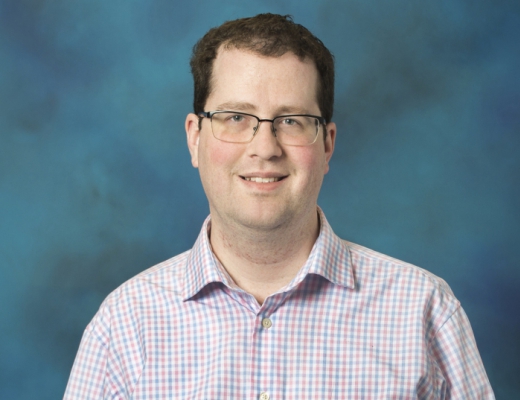
Scott Fraundorf is an Associate Professor in the Department of Psychology at the University of Pittsburgh , where he leads the MAPLE (Memory And Psycholinguistics in Learning & Education) Lab . He combines cognitive science and data science to study human behavior prediction, educational program evaluation, and psycholinguistics . His research focuses on student learning and metacognition language processing and educational technology interventions statistical modeling using regression , machine learning , and mixed-effects models as well as open-source tool development for cognitive science. Key technical skills include Python , R , and SQL programming, with 3 patents for intelligent tutoring systems in English grammar. He has mentored over 70 graduate students and faculty in quantitative methods.
جستوجوی استاد و پژوهشگر
استاد راهنما، استاد دانشگاه یا پژوهشگر مناسب برای مسیر پژوهشیتان را پیدا کنید و با او ارتباط بگیرید.
نمایش ۷۳۶-۷۵۰ از ۱۱٬۸۶۷ استاد راهنما
اطلاعات این پروفایلها از صفحات عمومی دانشگاهها جمعآوری شده و ممکن است بهروز نباشد.

Prof. Dr. phil. Dipl. Psych. Ulrike Kluge is a Professor and Head of the Center of Cross-Cultural Psychiatry and Psychotherapy (ZIPP) at Charité – Universitätsmedizin Berlin. She concurrently leads the Research Division for Intercultural Migration and Care Research within Social Psychiatry and serves as a Senior Researcher at the Berlin Institute for Integration and Migration Research (Humboldt University). Her work focuses on intercultural mental health services and migration-related psychosocial challenges. Research Focus: Kluge specializes in critical migration studies examining psychological impacts of displacement, ethno-psychoanalysis, psychotherapy with cultural interpreters, and group-analytic approaches in transcultural contexts. Her research portfolio includes qualitative investigations into: Mental health consequences of racism and structural discrimination Refugee-host community dynamics Language barriers in healthcare Innovative care models for forced migrants Intercultural opening of mental health systems Key Projects: FOCUS: Forced displacement and refugee-host community solidarity TransVer: Network for intercultural opening of psychosocial care systems reWoven: Refugee women and psychosocial volunteer engagement SeGeMi: Study group on Mental Health and Migration Effectiveness studies on native-language counseling Professional Engagement: She develops training programs for clinicians working with refugees, provides supervision services, and coordinates Berlin-wide networks for refugee mental health care. Her work significantly contributes to professionalizing psychosocial support for asylum seekers through the 'Welcome Culture at Charité' initiative.

Stefania Degaetano-Ortlieb is an Associate Professor of English Linguistics and Corpus Linguistics at Saarland University's Department of Language Science and Technology. She serves as Principal Investigator for the Collaborative Research Center (SFB 1102) 'Information Density and Linguistic Encoding,' leading Project B1 on diachronic information density in English scientific writing (17th century-present). Her interdisciplinary work bridges computational methods with sociolinguistics, focusing on register variation, language change, and digital humanities. Research interests center on text mining, data analytics, and probabilistic modeling of language variation. Key areas include: Diachronic evolution of scientific registers and linguistic densification Information-theoretic approaches to language efficiency Computational sociolinguistics and register diversification AI applications in humanities education (e.g., ChatGPT integration) Her publications show a strong trend toward quantitative diachronic analysis, with recent work emphasizing: interpretable AI models for linguistic change detection; propagandistic narrative analysis in conflict zones; and multi-word expression dynamics in scientific discourse. Cross-disciplinary collaborations frequently intersect with history, psychology, and media studies. Awards include the Fellowship Excellence Program for Young Female Scientists (2015-2018). Current grants: EU Horizon MSCA Doctoral Network 'CASCADE' (€521K to UdS, 2024-2027) Data-Pin Project for AI in education (€50K, 2023-2024) SFB 1102 Project B1 (€595K, 2022-2026) Advises PhD candidates in the EU CASCADE project on computational semantic change. Leads a research team exploring Russian media narratives, personality modeling in LLMs, and multi-word expressions. Directs teaching modules integrating AI tools for humanities students.
- Machine Learning
- Data Processing
- Knowledge Graphs
- +۳ مورد دیگر
Rainer Gemulla is a Professor of Practical Computer Science I: Data Analytics at the University of Mannheim, heading the Data and Web Science Group within the School of Business Informatics and Mathematics. He has been a W3-Professor at the University since 2014, following positions as a senior researcher at Max-Planck-Institut für Informatik (2010-2014) and postdoctoral researcher at IBM Almaden Research Center (2008-2010). His research focuses on machine learning with structured and semi-structured data, particularly knowledge graphs, and developing efficient systems for data-intensive processing. Professor Gemulla's research spans multiple areas including machine learning with structured data (relational data), machine learning with semi-structured data (multi-relational graphs), combining these approaches with unstructured knowledge (text), and developing efficient, scalable methods for data-intensive processing. His work bridges theoretical foundations with practical implementations, as evidenced by numerous open-source software projects including LibKGE, DistKGE, and AdaPM. His recent publications show a strong trend toward knowledge graph embeddings, parameter server architectures, and efficient training methods. The research demonstrates increasing focus on scalability challenges in graph learning, with particular attention to hyperparameter optimization, dynamic resource allocation, and benchmarking methodologies. His work consistently addresses the practical challenges of implementing machine learning systems at scale. Distinguished Reviewer Award at SIGMOD, 2025 Distinguished PC Member Award at EDBT, 2023 Outstanding Reviewer Award at NeurIPS, 2021 Junior-Fellow of the Gesellschaft für Informatik (GI), 2013 IBM's 2011 Pat Goldberg Memorial best paper award Best paper of NIPS 2011 Biglearn workshop Professor Gemulla actively mentors PhD students and has supervised numerous successful doctoral candidates. His leadership extends to administrative roles including Head of examination board for MSc Business Informatics since 2017, and previously serving as Study dean of the WIM faculty (2016-2019) and CIO of University of Mannheim (2022-2024). His research is supported by grants including AWS in Education Research Grant Award (2013) and Google Focused Research Award (2011). The Data and Web Science Group develops multiple open-source software projects including LibKGE (knowledge graph embedding library), DistKGE (multi-GPU training), AdaPM (adaptive parameter manager), Lapse (parameter server), and various tools for information extraction and sequence mining. The group maintains active collaborations with industry partners and academic institutions worldwide, particularly in the areas of knowledge graph research and scalable machine learning systems.
Véronique Hoste is Senior Full Professor of Computational Linguistics at Ghent University's Faculty of Arts and Philosophy, where she serves as Department Head of Translation, Interpreting and Communication and Director of the LT3 language technology research team. She also holds the position of Research Director for the Faculty of Arts and Philosophy. Her educational background includes a PhD in Computational Linguistics from the University of Antwerp (2005) focused on optimization in machine learning for coreference resolution. Key research areas encompass machine learning for natural language processing, semantic and discourse modeling, including specialized work in event detection, entity/event coreference resolution, irony detection, and emotion analysis. Hoste's publication trends reveal strong interdisciplinary focus, with recent work bridging NLP with crisis communication, digital humanities, and ethical AI. Her team develops high-quality datasets (e.g., EmoTwiCS for emotion trajectories) and collaborates extensively with commercial partners on projects like SentEMO for aspect-based sentiment analysis. Current research emphasizes multimodal emotion analysis, fuzzy rough set methods for sentiment detection, and cross-document event coreference. Elected member of the Royal Flemish Academy of Belgium for Science and the Arts (KVAB) Francqui Chair appointment by Université Libre de Bruxelles (2023-2024) Co-founded LT3 spin-off AlfaSent (2024) for customer feedback analysis Authored first Dutch-language book on NLP: "Taaltechnologie ontrafeld" She actively supervises multiple PhD students on projects including Common-sense knowledge in irony detection (Common-sense), cross-document event coreference (Encore), and empathy modeling in conversational agents (FlandersAI). Her team secures funding through interdisciplinary collaborations like NewsDNA for news recommendation and METRICS for emotion trajectory analysis. Hoste also engages in public outreach through the "AI at school" initiative and advises on language technology integration in high school curricula. The LT3 laboratory under her leadership maintains strong industry partnerships and develops practical NLP tools including EmotioNL and Automatic Term Extraction systems, while advancing core research through projects like CLARIAH-VL for data curation.
Paolo Papottiمشاهده پروفایل
دانشیار
- Data Management
- Data Integration
- Data Cleaning
- +۳ مورد دیگر
Paolo Papotti is an Associate Professor of Computer Science at EURECOM (France) since 2017, affiliated with the Data Science department. Previously, he was a senior scientist at QCRI (Qatar) and an assistant professor at Arizona State University (USA). He earned his PhD in Computer Science from the University of Roma Tre (Italy) in 2007, following an MEng in Computer Engineering from the same institution in 2003. His research focuses on scalable data management, data integration, data cleaning, and computational fact-checking. Notable contributions include work on knowledge graph rule discovery (Rudik), fact-checking frameworks (Scrutinizer), and data quality systems. His research has been supported by awards such as the 2020 Google Faculty Research Fellowship. Key publications include advancements in table representation learning, LLM-based data querying, and crowdsourced fact-checking validation. His work spans theoretical foundations and practical tools for improving data quality and information trustworthiness.

Emanuel Sallinger is a Full Professor at TU Wien's Databases and Artificial Intelligence Group and Vice Dean of Academic Affairs for Business Informatics and Data Science. He leads the Knowledge Graph Lab, focusing on scalable knowledge-based systems, reasoning in knowledge graphs, and AI integration. His research spans computational logic, database theory, and blockchain applications. Education: PhD in Computer Science (awarded 'sub auspiciis praesidentis rei publicae'), Master's degrees in Computational Intelligence and Informatics Management, and a Bachelor's in Software and Information Engineering. Research Interests: Knowledge graphs (construction, reasoning, scalability), logic-based systems, AI/ML integration with databases, enterprise architecture modeling, and financial knowledge systems. His work emphasizes practical applications like enterprise modeling, sustainable waste management, and regulatory compliance. Grants & Projects: Lead Vienna Science and Technology Fund (WWTF)-funded Knowledge Graph Lab. Involved in projects like 'Knowledge Graph-driven Tour Management' (sustainability), 'SustainGraph' (waste processing), and 'Enterprise Architecture Knowledge Graphs'. Teaching: Offers courses on Knowledge Graphs, Generative AI, Database Systems, and research methodology. Supervises doctoral and master's students in AI, databases, and knowledge representation. Labs/Teams: Knowledge Graph Lab at TU Wien, collaborating with industry on blockchain-based systems, financial AI, and enterprise architecture frameworks.

Sarath Chandar is an Associate Professor at Polytechnique Montréal and Core Faculty Member at Mila, the Quebec AI Institute. He holds a Canada CIFAR AI Chair and Canada Research Chair in Lifelong Machine Learning. His research focuses on developing interactive learning algorithms for continual and lifelong learning, with expertise in deep learning, reinforcement learning, and natural language processing. Education: Ph.D. in Computer Science, University of Montreal (advisor: Yoshua Bengio) M.S. in Computer Science, Indian Institute of Technology Madras (advisor: Balaraman Ravindran) Research Themes: Continual Learning and Lifelong Learning Deep Reinforcement Learning Optimization for Deep Networks Natural Language Processing AI for Scientific Discovery Notable Contributions: Founder of the Conference on Lifelong Learning Agents (CoLLAs) Developed Chandar Research Lab (CRL), focusing on adaptive learning algorithms Contributions to model-based reinforcement learning and bias mitigation in AI systems Awards & Grants: Canada CIFAR AI Chair Canada Research Chair Tier 2 MITACS-funded projects on reinforcement learning applications Lab & Collaboration: CRL collaborates with academic/industrial partners (e.g., IBM, Samsung) Hosts annual symposium showcasing research in AI, optimization, and multi-agent systems

Patrick Wu is a Professor in the Department of Computer Science at American University, with additional affiliations as Faculty Fellow at the Center for Data Science and Faculty Affiliate at the Center for Security, Innovation, and New Technology. He holds a PhD in Political Science and Scientific Computing from the University of Michigan, an MA in Statistics from Michigan, and a BA in Political Science and Statistics from the University of Chicago. His research develops AI/ML and natural language processing approaches for computational social science, focusing on: Political elite and non-elite ideology measurement Affective polarization on social media platforms Detection of hateful/abusive speech and memes Application of large language models to political science research Recent work explores innovative methods for political attitude measurement using LLMs, in-context learning techniques for social media analysis, and frameworks for multimodal representation learning. His publications demonstrate consistent innovation in applying NLP and machine learning to political discourse analysis, with emerging focus on generative AI's impact on political science education and methodology. Wu teaches courses including Object-Oriented Programming and topics in Natural Language Processing/Text as Data.
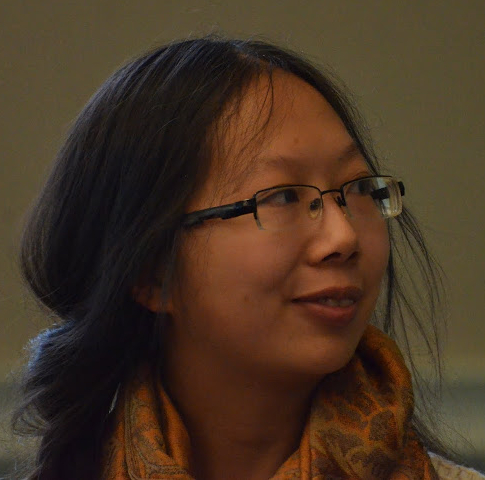
Mai Ha Vuمشاهده پروفایل
استادیار
Mai Ha Vu is an Assistant Professor at the University of Toronto Mississauga , split between the Department of Language Studies and the Department of Mathematics, Computer Science, and Statistics . Her work bridges theoretical linguistics, computational methods, and biological data modeling. Ph.D. in Linguistics, University of Delaware (2020) M.A. in Linguistics, University of Delaware (2014) B.A. in Psychology and Linguistics, Grinnell College (2013) Research focuses on applying formal language theory to understand human language patterns and train biologically reliable language models . Recent work includes antibody language modeling (Nature Computational Sciences 2022) and syntax-prosody mapping via logical transductions (SIGMORPHON 2022). Key research trends in publications: interdisciplinary applications of computational linguistics to immunology, psycholinguistic modeling of neural language models, and formal syntactic analysis of negation and wh-questions across languages.
María da Alba Nogueira López is a Professor of Administrative Law at the University of Santiago de Compostela, affiliated with the Faculty of Law and Department of Public Law and Theory of the State. She holds a European Doctorate in Law (1997) and has conducted extensive research in Environmental Law, Administrative Economic Law, Social Rights, Linguistic Law, and Autonomous Public Law. She leads the ARMELA research network on equality, rights, and the social state and is part of the Center for Interdisciplinary Research in Environmental Technologies (CRETUS). Her work emphasizes sustainable governance, circular economy policies, and language rights in public administration. She has authored over 40 articles, 78 book chapters, and 13 books, focusing on legal frameworks and social equity. Doctorate: University of Santiago de Compostela (1997) Licence in European and International Law from Université Catholique de Louvain (1992-1993) Research Projects: Principal Investigator (PI) on 6 state/autonomous projects and contributor to 25+ others Her research interests include critical analysis of EU environmental policies, administrative practices in social vulnerability, and linguistic normalization in Galicia. She has contributed to legal reforms promoting equity, such as administrative transparency and housing rights. Her recent work highlights the limitations of voluntary approaches in circular economy policies and advocates for stronger regulatory frameworks. Member of the Real Academia Galega since 2012 Contributed to policy documents like “Una Administración para el 99%” (2023) Her legal expertise spans legislative critiques, such as analyzing Galicia’s legislative inaction on language policies and environmental protection. She also engages in public debates on migration policy and social welfare, reflecting her commitment to democratic governance and social justice.

Huaizu Jiangمشاهده پروفایل
استادیار
Huaizu Jiang is an Assistant Professor at Khoury College of Computer Sciences, Northeastern University. His research bridges computer vision, graphics, and natural language processing to develop AI systems that understand and reconstruct 3D visual environments. Prior to joining Northeastern, he was a Postdoc Researcher at Caltech and Visiting Researcher at NVIDIA. He holds a Ph.D. from UMass Amherst (advised by Prof. Erik Learned-Miller), and M.E./B.E. degrees from Xi'an Jiaotong University. His research focuses on fundamental challenges in 3D scene understanding, including geometry reconstruction, semantic interpretation, novel view synthesis, motion generation, and optical flow estimation. Core interests span video processing, human-object interactions, multimodal reasoning, and efficient edge-device implementations. Recent publications emphasize diffusion models for motion/scene generation, transformer-based 3D perception, and video interpolation. Key trends include multi-view consistency techniques, text-to-3D synthesis, and efficient real-time algorithms for robotics applications. Awards & Honors: Winner of the VQA Challenge 2020 He advises 15+ graduate students on projects spanning 3D reconstruction, motion synthesis, and vision-language models. His group collaborates with institutions like NVIDIA and Caltech, focusing on generative AI for dynamic scene understanding.
Johannes Zimmermann is Professor of Differential and Personality Psychology at the Institute of Psychology, University of Kassel, Germany. His work integrates personality science, psychopathology research, and advanced assessment methods, with particular expertise in dimensional models of personality disorders and the Hierarchical Taxonomy of Psychopathology (HiTOP). Education and Career Diploma in Psychology, University of Koblenz-Landau (2007) Doctorate, University of Heidelberg (2011) Post-doctoral fellow, German-Chilean Graduate School, Heidelberg University (2007–2010) Research Associate, University of Kassel (2010–2015) Professor for Methodology and Psychological Diagnostics, Berlin School of Psychology (2015–2018) Professor of Differential and Personality Psychology, University of Kassel (since 2018) Research Interests Prof. Zimmermann's research centers on personality assessment , psychopathology , and psychotherapy outcomes . He develops and validates instruments for measuring personality functioning and maladaptive traits, advances the Hierarchical Taxonomy of Psychopathology (HiTOP) framework, and employs ambulatory assessment to capture dynamic processes in daily life. Key themes include: Dimensional classification of personality disorders and psychopathology Ecological momentary assessment of affect and behavior Validation of German-language assessment tools (e.g., LPFS-BF, PID-5, HiTOP-SR) Long-term effectiveness of psychodynamic and cognitive-behavioral therapies Digital mental health and smartphone-based data collection Scientific Awards ISSPD Young Investigator Award (2019) – International Society for the Study of Personality Disorders SITAR Jerry Wiggins Student Award (2010) – Society for Interpersonal Theory and Research Advising & Collaborative Networks Prof. Zimmermann mentors doctoral and post-doctoral researchers through his roles in the German-speaking psychological community. He collaborates with international consortia including the HiTOP consortium, the PsyChange Network, and the London Personality and Mood Disorder Research Consortium, serving as principal investigator or co-investigator on projects funded by the German Research Foundation (DFG) and other bodies. Labs & Teams He leads the Differential Psychology Research Group at the University of Kassel, which focuses on measurement development, ambulatory assessment, and applied psychopathology research. The group maintains active collaborations with clinical centers across Germany and Europe for data collection and intervention studies.
Yingying Wangمشاهده پروفایل
استادیار
Yingying Wang is an Assistant Professor in the Computing and Software department at McMaster University , where she joined in January 2022. Her research focuses on generating expressive animations for AR/VR applications and games through interdisciplinary approaches combining Computer Graphics , Artificial Intelligence , and Human Behavior Analysis . Education : Bachelor and Master degrees from Nanjing University , Ph.D. from University of California, Davis (2017) Her research explores: Generative models for human motion style transfer Physics-based motion simulation Audio-driven character synthesis Dance choreography for virtual characters Cartoon animation perception Conversational character gesture synthesis Markerless hand motion capture Recent publications focus on 3D hand pose estimation , motion style transfer , gesture-locomotion coordination , and personality perception in virtual agents . Key methodologies include deep learning , multimodal data analysis , and real-time animation systems . Scientific contributions recognized through: $240,000 Labarge Catalyst Grant in Mobility in Aging (interdisciplinary team award) US Patent 10,796,482 (3D hand pose estimation) US Patent 9,811,937 (gesture-locomotion coordination) Teaching includes graduate and undergraduate courses in Computer Animation (CAS 737), Computer Graphics (COMPSCI 3GC3/SFWRENG 3GC3), and Software Development (COMPSCI 2ME3). Research group actively recruits Ph.D. and Master's students in graphics + deep learning domains.
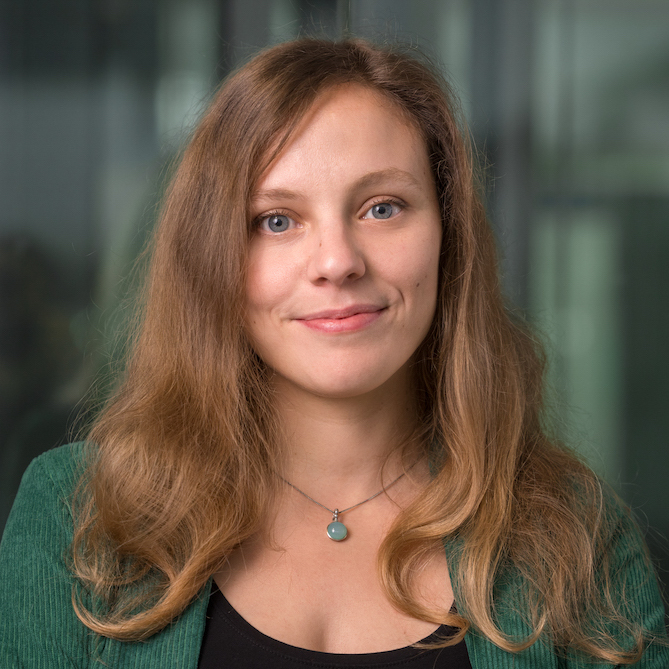
Eva Cetinicمشاهده پروفایل
پژوهشگر
- Deep Learning
- Explainable AI
- Digital Art
- +۵ مورد دیگر
Dr. Eva Cetinic is a DSI Bridge Postdoc Fellow at the University of Zurich, conducting research at the intersection of deep learning, explainable AI, and digital art and humanities. Previously, she held postdoctoral positions at Durham University and the Center for Digital Visual Studies at the University of Zurich, and worked as a Professional Associate and Postdoc at the Rudjer Boskovic Institute in Croatia from 2015 to 2021. Her educational background includes: PhD in Computer Science, University of Zagreb (2019) Dr. Cetinic's research focuses on computational image understanding and multimodal learning for visual art and culture, investigating how text-image models encode socio-cultural patterns and impact artistic creation. Her work critically examines ethical and societal implications of AI while bridging computer science, digital humanities, and art history through interdisciplinary methodologies. Her publication trends (2019-2025) reveal concentrated analysis of generative AI's cultural impact, particularly text-to-image systems. She systematically investigates bias propagation (gender, cultural), user interaction dynamics, and creative processes while developing technical frameworks for art analysis - moving beyond technical capabilities to address real-world implications in artistic and cultural contexts. She currently leads the UZH-funded project 'From Hype to Reality: Artificial Intelligence in the Study of Art and Culture' in collaboration with the University of Cambridge, establishing cross-institutional frameworks for responsible AI adoption. Her research methodology emphasizes practical implementation within humanities workflows through international networks like DARIAH. As a DSI Bridge Postdoc Fellow, Dr. Cetinic operates within the University of Zurich's Digital Society Initiative ecosystem, connecting computational research with the Center for Digital Visual Studies and global digital humanities infrastructures to examine AI's transformative role in cultural production and interpretation.
فقط ۷۵۰ نتیجه اول نمایش داده میشود. برای رسیدن به نتایج دقیقتر، جستوجو را با فیلترها محدودتر کنید.