Özlem Özgöbek is an Associate Professor at the Department of Computer Technology and Informatics, Norwegian University of Science and Technology (NTNU). Her research spans artificial intelligence, machine learning, and recommender systems with a focus on privacy, fake news detection, and educational technology. NTNU - Department of Computer Technology and Informatics Her work explores multimodal fake news detection, privacy implications in recommender systems, and technology-enhanced classroom interaction. Recent publications analyze digital education trends and classroom tools. Özgöbek collaborates with international researchers and contributes to news recommendation workshops. Her projects address ethical AI, environmental sustainability, and real-time information processing.
Vibeke Grøver is a Professor at the Department of Pedagogical Research, University of Oslo. Her work focuses on language and reading comprehension development for language minority children, with a emphasis on bilingual education, shared book reading interventions, and sociolinguistic factors influencing literacy. Education: Dr.polit., University of Oslo (1992) Master in Educational Psychology, University of Oslo (1982) Elementary School Teacher, University of Oslo (1977) Research Interests include second-language acquisition, early literacy for dual-language learners, home literacy environments, and teacher talk features in preschool settings. She leads projects like Teaching for text comprehension and has contributed to the DEAL (Development, Equality, and Literacy in Learning Contexts) research group. Article Trends show longitudinal studies on bilingual profiles, shared reading interventions, code-switching dynamics, and neighborhood demographic impacts on vocabulary. Key themes include scaffolding language minority students, cross-cultural comparisons (e.g., Chinese-Norwegian families), and teacher-student interaction patterns in multilingual preschools. Leadership Roles include Dean of the Faculty of Educational Sciences (2009–2012) and advisory positions for the Peder Sather Center at UC Berkeley (2012–2014). Research visits span Harvard, UC Berkeley, NYU, and East China Normal University.
Jarmila Bubikova-Moan is an Associate Professor at Oslo Metropolitan University, affiliated with the Faculty of Education and International Studies and the Department of Primary and Secondary Teacher Education. She holds teaching and supervising responsibilities in pedagogy and serves as Head of Studies in her area of responsibility. Prior to her current role, she was an Associate Professor and Head of Studies at Kristiania University College and a Senior Researcher at NIFU. Her educational background includes a PhD in Educational Sciences from the University of Oslo, an MA in Applied Linguistics from the University of Melbourne, and an MPhil in European Literature from the University of Cambridge. Her research centers on discourse-analytic approaches to early childhood education, with a strong focus on multilingualism, argumentation, and critical thinking. She is actively involved in research groups such as Cultural Diversity and Multilingualism in a Global Perspective and Language and Learning Environment in Early Years - ECEC to Primary School (SAMBA) . Her work explores how children develop argumentative competence, engage in critical thinking through literature and news, and how multilingual learners are supported in early education. The recent publications highlight a consistent trend in early childhood argumentation, critical thinking development, and multilingual education. Her work spans qualitative, discourse-based, and systematic review methodologies, often with interdisciplinary applications in environmental education, teacher training, and family engagement. She has contributed significantly to educational research through numerous scientific publications, research reports, and dissemination activities. Notable projects include Critical thinking in primary education (KriT) , which develops models using children’s literature and news, and evaluations of national strategies such as Språkløyper and Ungdomstrinn i utvikling . Jarmila Bubikova-Moan has supervised students and collaborated widely with researchers across Norway and internationally. She has also been involved in policy-related research and advisory roles in the Norwegian state administration, particularly in education and integration policy. Her lab and team affiliations are embedded within her research groups at OsloMet, where she leads and contributes to collaborative, interdisciplinary projects aimed at improving early educational practices and equity.
Adín Ramírez Rivera is a Professor in the Digital Signal Processing and Image Analysis (DSB) group at the Department of Informatics, University of Oslo. His research focuses on representation learning and computer vision, particularly exploring machine learning methods to describe and understand visual data. He is a Senior Member of the IEEE and a member of the ELLIS Society. Education : PhD from Kyung Hee University's Image Processing Lab, South Korea; Bachelor's degree in Engineering from Universidad de San Carlos de Guatemala, majoring in Computer Science and Systems Engineering. Ramírez Rivera's research spans diverse computer vision tasks including facial analysis, object detection, image enhancement, and vision transformers. His work emphasizes self-supervised learning, fair representation learning, and novel neural network architectures for image segmentation and classification. Recent publications highlight trends in vision transformers, crowd counting, facial expression recognition, and fair representation learning. His articles frequently address statistical modeling, feature extraction, and deep learning techniques for visual tasks. Scientific Awards : Senior Member of the IEEE, Member of the ELLIS Society. He collaborates with researchers across institutions, contributing to projects involving anomaly detection, multilingual translation, and astrophysical modeling. His lab affiliations include the Digital Signal Processing and Image Analysis group and the Section for Machine Learning at the University of Oslo.
Jonas Bakken is a Professor of Norwegian Didactics at the Department of Teacher Education and School Research, University of Oslo. His work bridges rhetoric, children's literature, and sustainable development education through innovative didactic approaches. As academic director of the Associate Professorship Program, he shapes teacher education and curriculum design. Research Interests: Norwegian language arts, rhetoric integration in education, ecocriticism, multicultural narratives, and bilingual pedagogy. Projects: Evaluation of bilingual education (ETOS), Linking Instruction and Student Experiences (LISE), Scandinavian Narratives of Guilt and Privilege (Scanguilt), Minority Literary Voices in Scandinavia. Publications span textbook analysis, rhetorical strategies in Sámi literature, CLIL education equity, and oral creativity pedagogy. His recent works focus on task culture conflicts and curriculum renewal in Norwegian language arts.
May Britt Drugli is a Professor at the Regional Centre for Child and Youth Mental Health and Child Welfare, affiliated with NTNU's Faculty of Medicine and Health Sciences and Department of Mental Health. Her research focuses on early childhood care, student-teacher relationships, child mental health, and intervention research. She has contributed to numerous publications addressing childcare quality, child well-being, and developmental outcomes. Her work includes studies on cortisol levels in toddlers in childcare, the impact of professional development programs like 'Thrive by Three,' and the importance of play-based learning in educational policies. She frequently collaborates with educators and policymakers to translate research into practical pedagogical strategies. Key areas of exploration include transition processes for young children entering childcare, the role of teacher-child interactions, and addressing socioeconomic disparities in early education. Her research emphasizes evidence-based practices to enhance child development and mental health.
Arild Michel Bakken is an Associate Professor at the National Centre for Reading Education and Research, Faculty of Arts and Education, University of Stavanger, Norway, a position he has held since 2018. Previously, he taught French and Norwegian in Belgium (2016–2018) and was a Research Fellow in French Literature at the University of Oslo (2015–2016). Education: PhD in French Literature (co-tutelle), University of Paris-Sorbonne and University of Oslo (2015) MA in French Literature, University of Paris-Sorbonne (2010) BA in Modern Literature, Paul Valéry University (2006) His research spans literacy education, AI applications in learning, and reading assessment technologies. He leads major projects including the Erasmus+-funded AILIT (developing AI platforms for literacy) and the NRC-supported Adaptvurder (adaptive reading tests). His work integrates recommender systems, machine translation, and psychometric modeling to enhance educational outcomes. Bakken’s publications transition from early expertise in Mallarmé’s poetry (using hermeneutic/rhetorical frameworks) to contemporary focus on literacy technology. Recent articles emphasize adaptive assessments, AI-driven pedagogy, and equitable educational tools. He contributes to national education initiatives as a developer of reading screening tests for Norway’s Directorate of Education and is active in Stavanger AI Lab . He also edits the Nordic Journal of Literacy Research and conducts professional workshops for teachers.
Anis Yazidi is a Professor at Oslo Metropolitan University, affiliated with the Faculty of Technology, Art and Design and the Department of Information Technology. His research focuses on Artificial Intelligence, Machine Learning, Medical Technology, and IoT Security, with a particular emphasis on Applications of AI in Healthcare, EEG Signal Processing, and Digital Transformation. Active research projects include AI Mind (dementia diagnostics), Glycopathology in dry eyes, and Pain and mental distress analysis Completed projects: Digital hate speech analysis, AI in reproductive technology, Nano-antibiotics development His recent publications (2023-2025) demonstrate expertise in: Tsetlin Automaton algorithms for concept learning EEG classification using visibility graphs and vision transformers AI ethics frameworks for medical practice Deepfake detection methodologies Collaborative work spans institutions in Norway, Czech Republic, and international AI research communities.
Gaute Barlindhaug serves as an Assistant Professor in the Department of Language and Culture at UiT The Arctic University of Norway, within the Faculty of Humanities, Social Sciences and Teacher Education. His academic work bridges artistic practice with scholarly research in sonic arts and cultural documentation. His research interests span Sonic Arts , Sound Studies , Music Technology , and Digital Humanities , with particular focus on the ontological status of sound recordings, the intersection of traditional and digital sound technologies, and the preservation of cultural heritage through both artistic and technological approaches. His work often examines how sonic mediations transform aesthetic experiences and cultural expressions. Analysis of his publications reveals a consistent trajectory exploring the relationship between technology and sonic expression, with recent work incorporating artificial intelligence applications in document preservation. His research demonstrates an interdisciplinary approach that combines artistic practice with scholarly inquiry, particularly evident in his contributions to the Journal for Artistic Research. Barlindhaug is actively involved in multiple research initiatives: Engaging Conflicts in a Digital Era (ENCODE) Worlding Northern Art LAMCOM – Libraries, archives, and museums in the community His scholarly output includes both traditional academic publications and creative works, reflecting his position at the intersection of artistic practice and academic research. His contact information is available through the university directory at gaute.barlindhaug@uit.no.
Annika Mörte Alling is an Associate Professor of French Literature at Østfold University College. She holds a PhD (2003) and Docent/Habilitation (2015) from Lund University, Sweden. Her research focuses on 19th-century French novels, particularly Stendhal, Balzac, and Flaubert, emphasizing themes like space, emotions, and literature’s role in education. She co-edited Literature and the Making of the World (2022) and led the Literature in Context project within ELLA (Education Literature Language). Education: PhD in French Literature (Lund, 2003), Master of Philosophy (Lund, 1995), studies at Université de Provence (1993-1994) and University of Sussex (1989-1991). Research Interests: 19th-century French novels, literary space, emotions in literature and teaching, comparative literature, and reception studies. Current projects include analyzing student readings of Modiano and Vargas through narrative theory and coordinating a volume for Revue Stendhal . Publications include over 20 articles and book chapters on topics like narrative endings, mimetic desire, and the reception of French literature in Scandinavia. Awards include the Vetenskapssocieteten doctoral thesis prize and the Uno Lindgrens Prize. Affiliations: Scientific committee member of Revue Stendhal and Modern Språk , representative for Østfold in the National Romance Languages & Literature Organization.
Faltin Karlsen is a Professor and Pro-Dean at the School of Communication, Leadership and Marketing at Kristiania University of Applied Sciences. His work focuses on media studies, game research, and digital culture, with particular emphasis on ethical implications of digital media, gaming controversies, and digital detox practices. He has contributed extensively to understanding the societal impact of online gaming, media consumption patterns, and the interplay between technology and human behavior. His research interests span digital culture, media ethics, and the psychological and sociological dimensions of gaming. Notable themes include the disconnection movement, dark design patterns in dating apps, and the ethical challenges of game monetization. He has also analyzed historical moral panics around games and their representation in media. Recent publications highlight trends in digital detox practices, the paradoxes of disconnection, and critical discourse analysis of digital platforms. His work often bridges theoretical frameworks with empirical studies, addressing topics such as online dating dynamics, productivity tools, and the cultural significance of gaming in modern society. While no scientific awards are explicitly mentioned, his contributions to media and game studies have shaped academic discourse on digital media’s societal role. He advises on research projects and engages in interdisciplinary collaborations, reflecting his commitment to understanding technology’s multifaceted impact.
Erlend Lavik is Professor at the Department of Information Science and Media Studies, University of Bergen, Norway. Specialising in television studies, film history, and digital criticism, he leads research on cinematic television, narrative complexity, and the scholarly video essay. He is a key figure in the study of HBO’s The Wire , which he frames as emblematic of the medium’s “third golden age.” Education 2008 – PhD, Changing Narratives. Five Essays on Hollywood History , University of Bergen 2001 – MA (hovedoppgave), Kjærlighet i seriemonogamiets tidsalder. Romantiske komedier i Hollywood , University of Bergen Research Interests Lavik’s work interrogates the intersection of aesthetics, narrative theory, and media policy. Core themes include: Serial television and long-form storytelling Film and television authorship (showrunner model, copyright aesthetics) Digital criticism and the video essay as scholarly genre Hollywood historiography from classical to post-classical cinema Documentary ethics and truth claims in factual media Publication Trends Across more than 60 publications, Lavik moves fluidly between peer-reviewed journals, academic monographs, trade-press essays, and experimental video essays. Recurrent case studies include The Wire , The Sopranos , Succession , and blockbuster cinema, examined through lenses of narrative complexity, intertextuality, and cultural memory. Selected Public Engagement & Service Chairman of the jury, Best Norwegian Documentary, Bergen International Film Festival 2012 Keynote speaker, Nordic Media Conference, Akureiri 2011; NTNU seminar on video essays 2012 Public lectures at NRK Drama, University of Tromsø, Bergen Public Library, and numerous film clubs Labs, Teams, Collaborations Lavik is affiliated with the research group Film, Television, and Visual Culture at the University of Bergen, where he collaborates on projects concerning production studies, visual aesthetics, and digital distribution. While specific grant numbers are not listed, his sustained output and conference presence indicate ongoing funded research within Norwegian and European media-studies networks.
Jaakko Timo Henrik Järvi is a Professor in the Department of Informatics at the University of Bergen, Norway, with additional affiliations at the University of Turku, Finland. His research focuses on programming language design, generic programming, and human-computer interaction, particularly in GUI frameworks and software reuse. His research interests include generic programming, programming language design (especially the Magnolia language), high-performance computing, array programming, and GUI engineering. He emphasizes formal methods and algebraic specifications to build reusable and efficient software systems. His work bridges theoretical foundations with practical applications in software development and education. The recent publications highlight a strong trend in declarative GUI frameworks, multi-selection models, and generic programming. His work explores domain-specific languages for GUI structure manipulation, reusable selection semantics across platforms, and optimizing array computations using the Mathematics of Arrays. These efforts reflect a consistent focus on software abstraction, correctness, and reusability. Jaakko Järvi has supervised doctoral students, including Tetiana Yarygina, whose dissertation explored microservice security. While no specific grants are detailed, his work on VisAST was supported by the Research Council of Norway (Project 250683), indicating active external funding. He frequently collaborates with researchers like Magne Haveraaen, Knut Anders Stokke, and Sean Parent. He contributes to tools and frameworks such as the MultiselectJS library and the VisAST educational tool. These are outcomes of collaborative research teams focused on improving software development practices and computer science education.
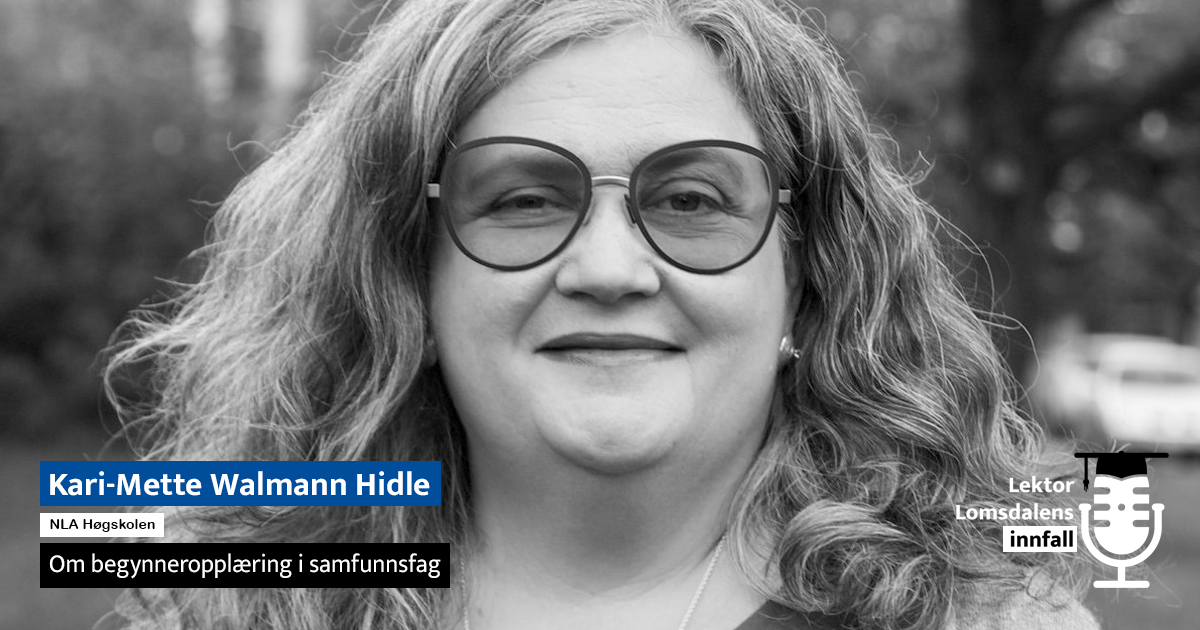
Kari-Mette Walmann Hidle is a Professor of Social Studies Education at NLA University College , Oslo. Her work focuses on curriculum development , human rights education , and sustainability in early childhood and primary education. She leads the social sciences research group at NLA and has published extensively on topics like democratic education , intercultural pedagogy , and transitions between kindergarten and school . Her research explores educational policy , subject didactics , and the integration of diversity and social justice into Norwegian curricula. Recent publications analyze sustainability and human rights in primary education , emphasizing curriculum design and pedagogical strategies. She actively disseminates her work through podcasts , keynote lectures , and Nordic conferences . Her articles reveal a focus on educational reform , environmental curriculum , and methodological innovation in social studies . She collaborates with researchers like Espen Helgesen and Ove Skarpenes , contributing to journals such as Policy Futures in Education and Acta Didactica Norden . While no explicit scientific awards are mentioned, her leadership in research groups and editorial contributions underscores her academic impact.
Marion Elisenberg is an Assistant Professor in the Department of Language, Literature and Culture at Østfold University College's Faculty of Education. She teaches Norwegian subjects across multiple teacher education programs including primary school teacher training, kindergarten teacher training, master's in special education, and continuing education for teachers within competence for quality development. Her educational background includes: University Pedagogy (2011) - Østfold University College Master in Nordic Didactics (2009) - University of Oslo Norwegian 3 (2005) - Østfold University College Norwegian 2 (2004) - Østfold University College Special Education 2 (2002) - Østfold University College Counseling and Social Education (1997) - Oslo University College General teacher education (1981) - Hamar Teacher Training College Ex. Phil. (1973) - University of Bergen Dr. Elisenberg's research focuses on language and literature didactics, with particular emphasis on sustainable development in literature education, transitions between educational levels, multilingual classroom practices, and digitalization in elementary education. Her work explores how literary texts, especially children's literature and graphic novels, can serve as tools for identity development, environmental awareness, and social understanding. She investigates pedagogical approaches that bridge the gap between primary and secondary education, examining how literature instruction can be made more continuous across these transitions. Her recent publications demonstrate a strong focus on sustainability in literature education, with multiple articles examining how teachers incorporate sustainable development goals into their literature work. She also has significant work on class analysis in contemporary literature, particularly through Maria Navarro Skaranger's novel "Emily Forever." Another key thread in her research involves the use of graphic novels, especially Nora Dåsnes' "Ti kniver i hjertet," to explore identity formation and the relationship between form and content in visual storytelling. Her scholarship consistently addresses practical classroom applications while engaging with theoretical frameworks in literary studies and education. Dr. Elisenberg is actively involved in research groups focusing on Literature and Narrativity, Multilingual upbringing and education, and Young children and early childhood education. Her collaborative work, particularly with Camilla Häbler, has produced numerous publications addressing key challenges in contemporary literature education.