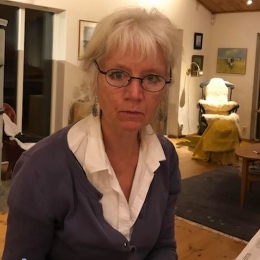
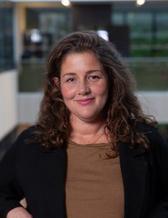
Elzbieta Strzelecka serves as a Senior Lecturer in the Department of Humanities and Social Sciences at Mid Sweden University in Sundsvall, specializing in Swedish language didactics and linguistic research. Her academic career spans decades with significant contributions to cognitive linguistics and grammar pedagogy, particularly for Swedish as a second language. Her research centers on cognitive linguistics frameworks applied to Swedish grammar instruction, with emphasis on particle verb semantics, container metaphors, and cross-linguistic comparisons between Swedish and Polish. She pioneered phenomenographic analyses of students' grammar histories, revealing emotional and cognitive dimensions of language learning. Her work bridges theoretical linguistics with practical classroom applications, focusing on spatial language concepts and teacher strategy development. Analysis of her publication trajectory shows consistent evolution from foundational cognitive linguistic studies of particle verbs toward contemporary grammar pedagogy innovation. Recent work emphasizes teacher training methodologies and student-centered approaches, with strong collaboration patterns particularly with Lena Boström. Her publications demonstrate interdisciplinary reach spanning cognitive science, educational psychology, and contrastive linguistics while maintaining focus on practical Swedish language instruction.
Daniel Varro is a Professor and Head of Unit at the Department of Computer Science (IDA) of Linköping University, Sweden. He leads the Software and Systems (SAS) department, focusing on AI, software engineering, and cyber-physical systems. His research is supported by major grants like the Vinnova 5.6 million SEK project for AI-generated software quality assurance. Affiliation: Department of Computer Science (IDA), Linköping University Department: Software and Systems (SAS) Research Focus: Model-based systems, large language models for code analysis, reinforcement learning, and cyber-physical safety verification. His recent work includes empirical studies on machine learning notebooks, infrastructure code smells, and data leakage in large language models. He collaborates extensively within the Wallenberg Autonomous Systems Program (WASP) and trains doctoral students in software engineering.
Katarina Rejman serves as a Lecturer in Swedish Language Teaching at Stockholm University's Department of Subject Didactics. She has been in this position since autumn 2014, focusing primarily on Swedish subject didactics with special emphasis on literature didactics. Her academic work spans both teacher education programs for younger and older age groups. Dr. Rejman defended her thesis in 2014 at Åbo Akademi University, which focused on literature teaching in secondary schools. Prior to her appointment at Stockholm University, she accumulated extensive practical experience in Finland where she worked as a Swedish teacher (L1) at a junior high school, served as a school principal, worked as a teaching advisor at the National Board of Education, and trained teachers at Åbo Akademi. Her research interests center on literature reading in school environments, various forms of the Swedish subject curriculum, reading and writing instruction methodologies, and broader issues related to teaching and learning within Swedish language education. She has developed particular expertise in how literary texts can be used as springboards for students' writing development and literacy enhancement. Analysis of her publications reveals a consistent focus on practical classroom applications, with particular attention to how teachers make pedagogical decisions when working with narrative texts. Her work demonstrates how multimodal activities and literary instruction can be designed to enhance literacy development, especially in diverse classroom settings. Dr. Rejman actively supervises and examines students' independent works and serves as course responsible for Swedish II in grades F-3 and the standalone course Children's Literature in School. Ongoing Research Projects: LäST (Read Write Speak) - investigating reading (primarily fiction) in school Writing Support - examining effective writing instruction design DISKO - studying digitalization's impact on teaching DiGiLi - researching subject didactics, literacy development, digitalization and equality QUINT - Nordic Centre of Excellence for Quality in Nordic Teaching (associated researcher since spring 2021) Her collaborative research approach involves working with colleagues from Stockholm University, Åbo Akademi, Helsinki University, and other Nordic institutions, reflecting the strong regional cooperation in educational research across Scandinavia.
Camilla Björn is a doctoral student and teacher at the Department of Theoretical Computer Science, School of Electrical Engineering and Computer Science, Royal Institute of Technology (KTH). She is pursuing a PhD in Computer and Engineering Education, focusing on program design with built-in progression from both conceptual and student perspectives to enhance expertise development. PhD in Computer and Engineering Education, ongoing MSc in Information and Communication Technology, KTH (with exchanges at Trinity College Dublin and TU Darmstadt) Student at Department of Mathematics, Stockholm University Her research addresses curriculum design for intentional progression in computer science education, blending subject logic with student experiences. She teaches courses like Applied Programming and Computer Science (DD1321) and contributes to teacher training programs. Her publications center on student collaboration, feedback mechanisms, and progression in programming education, with keywords spanning Computer Science Education, Comparative Judgement, and Academic Integrity.
Joel Brynielsson serves as an Associate Professor at KTH Royal Institute of Technology within the Division of Theoretical Computer Science, School of Electrical Engineering and Computer Science, while simultaneously holding the position of Research Director at the Swedish Defence Research Agency (FOI) since 2008. His academic credentials include a Ph.D. in Computer Science (2006) and M.Sc. in Computer Science and Engineering (2000), both from KTH, followed by achieving Docent (Habilitation) status in Computer Science in 2015. Dr. Brynielsson's research spans uncertainty management, information fusion, probabilistic expert systems, command and control systems, operations research, game theory applications, web mining, privacy-preserving data mining, and cyber security. His work bridges theoretical computer science with practical security applications, particularly in national defense contexts. His recent publication record shows consistent scholarly output through 2024, with research focusing on cybersecurity practices in Swedish administrative authorities, cyber-threat perception in the financial sector, and social media applications for crisis management. The interdisciplinary nature of his work is evident in collaborations across security, defense, and emergency management domains. Associate editor for Springer Security Informatics journal Technical program chair for IEEE EISIC conferences (2013-2019) Regular reviewer for security and informatics journals Research funding from EU, Swedish Armed Forces, and public authorities Through his dual appointments, Dr. Brynielsson maintains a vital connection between academic research and practical defense applications, contributing significantly to both scholarly knowledge and real-world security solutions.
Viggo Kann is a Professor of Computer Science at the Royal Institute of Technology (KTH) in Stockholm, Sweden, holding this position since 2000. He serves as Director of Studies in the Theoretical Computer Science department at KTH's School of Electrical Engineering and Computer Science, a role he has maintained since 1998 with a brief interruption from 2012-2015. One-fifth of his time is dedicated to the Department of Learning, where he teaches courses on examinership and developing learning with grading criteria. He also chairs KTH's Language Committee and coordinates the director of studies network, PA network, PriU groups, and major institutional events. Professor Kann's research spans language technology and computer didactics, with current projects focusing on examination quality and diversity, cheating prevention, examiner training, and program-coordinating courses. His work bridges theoretical computer science with practical educational applications, particularly in assessment methodologies and educational technology. His recent publications reveal a strong emphasis on educational aspects of computer science, examining student behavior, programming fluency, and the impact of emerging technologies like ChatGPT on academic integrity. He has also published extensively on language technology, including grammar checking systems and natural language processing tools for Swedish language processing. As examiner and course coordinator, Professor Kann oversees multiple courses including Algorithms, Data Structures and Complexity (DD2350), Ethics in Introduction to Computer Science (DD1348), and various specialized degree projects across industrial economics, machine learning, systems engineering, robotics, and communication systems. His leadership in educational development initiatives at KTH demonstrates significant institutional influence in shaping educational policies and practices.
Morten Fjeld is a Professor at Chalmers University of Technology in the Department of Interaction Design and Software Engineering . His research focuses on Human-Computer Interaction (HCI) , Augmented Reality (AR) , and Virtual Reality (VR) , with applications in industrial tomography, drone interaction, and multimodal systems. He has co-authored 152 publications and leads projects connecting immersive technologies with user experience, robotics, and collaborative tools. His recent articles explore gaze cues in climate data visualization, emotion-aware voice assistants, and haptic feedback in VR door-opening techniques. Themes span AR/VR design , human-drone interaction , and multimodal feedback systems . He actively collaborates with researchers in Sweden, Germany, and Japan, focusing on user-centric technology development. Contact: fjeld@chalmers.se .
Fredrik Nilsson is Full Professor of Architectural Theory at Chalmers University of Technology, Sweden, and concurrently serves as the university’s Vice President for Campus Development. An architect by training, he combines extensive academic leadership—Head of the Department of Architecture 2013-2017 and Head of the merged Department of Architecture and Civil Engineering 2018-2021—with deep professional experience as Partner and Head of Research & Development at White Arkitekter (2000-2017). Education & Academic Formation Doctoral thesis: Konstruerandet av verkligheter: Gilles Deleuze, tänkande och arkitektur (2002) Professional architectural education (Royal Institute of Technology / Chalmers, details not specified in text) Research Interests Nilsson’s research interrogates the epistemology of architecture, focusing on how theoretical, conceptual, and practical modes of knowledge interact within contemporary design culture. Core themes include: Research-by-design and practice-based research methodologies Architectural theory and its translation into design practice Doctoral education and assessment cultures in creative disciplines The integration of transdisciplinary knowledge in architecture and urbanism Tectonics, materiality, and digital form-generation Across 159 publications and six major research projects, he advances frameworks that strengthen the exchange between academia, profession, and society. Research Funding & Projects Digital Twin Cities Centre (2020-2024, VINNOVA) – interdisciplinary centre developing digital-twin technologies for sustainable urban development. Mapping, Reflecting and Developing PhD-by-Design Programmes (2018-2021, EC) – comparative study of design-led doctoral education across Europe. SABRE – Strengthening Architecture and Built Environment Research (2018-2020, EC) – capacity-building for research excellence. Architectural Convertibles (2016-2019, VR) – artistic research on interactive architectural environments. Nordic Built – Sustainable Transformation and Environmental Design (STED) (2015-2017, Nordic Innovation) – environmental design strategies. Architecture in the Making: Architecture as a Making Discipline and Material Practice (2011-2017, Formas) – foundational investigation into architectural knowledge production. Professional & Academic Leadership Roles Chalmers Vice President, Campus Development (current) Head of Department, Architecture and Civil Engineering, Chalmers (2018-2021) Head of Department, Architecture, Chalmers (2013-2017) Head of Research in Practice, Älvstranden Utveckling AB (2017-2018) Partner & Head of Research and Development, White Arkitekter (2000-2017) Laboratories & Collaborative Teams Nilsson co-directs research environments that span Chalmers’ Department of Architecture and Civil Engineering, the Digital Twin Cities Centre, and cross-faculty collaborations with Computer Science, Urban Planning, and Civil Engineering. These teams integrate digital simulation, urban analytics, and architectural prototyping to generate new knowledge for both academia and practice.
Patrik Hernvall serves as an Associate Professor at Stockholm University's Department of Computer and Systems Sciences, holding dual expertise in pedagogics and media technology. His academic work spans teaching Human Sciences within MDI, Scientific Methodology and Communication in Computer and Systems Sciences, and Empirical Research Methodology for Computer and Systems Sciences, while supervising Bachelor's and Master's level students. His research interests focus on children's conditions in technology-dense environments, technology-supported learning, and school development opportunities, with particular emphasis on norm-critical theory and children's perspectives in research. Hernvall actively contributes to two major research groups: the Learning Analytics and AI for Education Group, which investigates data-driven methods to strengthen education, and the ReVisE Research Group, which explores how emerging technologies like IoT, AI, VR, and MR can enhance educational practice. Hernvall's recent publications reveal significant trends in educational technology research, with particular focus on emergency remote teaching during the pandemic, work-life boundary experiences in technology-mediated workplaces, assessment of multimodal texts, and children's understanding of digital economics. His work consistently bridges theoretical frameworks with practical educational applications, often employing design-based research methodologies. National research school in visual pedagogy and craft pedagogy (FoBoS) [2020 ff] Teacher movement patterns project [2022] IoT Hub School project [2018-2021] Children and the Digital Economy (BoDE) project [2016-2018] His advisory work includes supervision at Bachelor's and Master's levels, with research collaborations spanning schools and industry partners across Sweden. Hernvall's lab work centers around the ReVisE group's exploration of emergent technologies in educational contexts, with particular focus on innovative visualizations and real-world applications that enhance teaching and learning experiences.
Eva Eliasson is a Senior Lecturer at the Department of Education, Stockholm University, specializing in vocational education and training (VET), pedagogy, and health education. Her research explores vocational teacher identity, healthcare pedagogy, migrant integration through education, and 21st-century skills in vocational programs. Research Groups: Pedagogy and Health; Vocational and Educational Training (VET/YL) Key Themes: Vocational knowledge, gender dynamics in education, language development, and policy implementation Her recent publications focus on skilled migrants' access to professions, healthcare teacher practices, and vocational teacher identity conflicts. She employs sociocultural and social constructionist frameworks in her studies.
Katarina Lagercrantz All is a Senior Lecturer at the Department of Education , Stockholm University , specializing in vocational education and training within health and social care sectors. She contributes to the research community of Vocational Skills and Learning and participates in the research groups Pedagogy and Health and Vocational and Educational Training (VET/YL) . Her research focuses on: Sociocultural perspectives on health and illness Participatory processes in adult vocational education Knowledge development through pedagogical assignments Language integration in professional training Key findings from her work include: Complex interplay between vocational knowledge and pedagogical frameworks Critical role of mediating artefacts in distance education settings Three-dimensional tensions in educational projects (individual vs. organizational vs. societal)
Christine Fredriksson is a Senior Lecturer in German linguistics and language learning at the Department of Languages and Literatures, University of Gothenburg. She has previously held a similar position at Dalarna University (2010-2015) and worked as a high school teacher in German. Her academic work bridges theoretical research in language acquisition with practical applications in digital education and writing instruction. Current affiliation: University of Gothenburg Academic rank: Senior Lecturer Research focus: Language learning, linguistics, digital education Research Interests include cognitive aspects of bilingualism and multilingualism, language processing mechanisms, and digital media's role in language instruction. She investigates interaction patterns in text-based student chats (CMCL) and explores imitation strategies for lexical/morphological/syntactic learning. Recent projects analyze ChatGPT's application for developing linguistic awareness and syntactic complexity in student writing. Teaching encompasses German grammar, linguistics, and language didactics at basic and advanced levels, with supervision of bachelor's and master's theses. She also serves as assistant supervisor for a doctoral student in English. Publishing Trends reflect her work in three key areas: (1) multilingual education and cognitive processes in language learning, (2) digital language learning (CMCL) focusing on interaction patterns, and (3) writing instruction innovations including AI-generated model texts and feedback mechanisms. Projects include the Erasmus+ initiative 'E-LearnScene' (2020-2023) and coordination of the 'Written production and interaction' module for Sweden's National Agency for Education. Her research combines empirical studies with educational technology integration.
Ewa Jacquet is a Senior Lecturer at Stockholm University in the Department of Teaching and Learning . She is affiliated with the Drama for Learning research group, Sweden's leading environment for drama research in educational contexts. Research Focus: Literacy development in middle schools, transmedia practices in education, and the role of drama in pedagogical innovation. Projects: Currently exploring playful multimodal activities for literature teaching and social writing in Swedish education. Publications emphasize digital literacy, creative writing instruction, and ethnographic approaches to classroom learning. Her work bridges technology, drama, and language education to foster student engagement and autonomy.
Carina Hermansson is a Professor of Swedish in Education at Stockholm University and a Professor of Language Teaching and Learning at University of Borås . She works at the intersection of language didactics, digitalization, and artificial intelligence. Research Focus: Her work centers on Designing teaching methods for early literacy in digitized societies Integrating AI into writing instruction Supporting reading/writing development through interdisciplinary approaches Equitable participation in educational technology Research Group: Active member of the Early literacy in a digitized society group, which investigates how diverse resources and teaching design can support children's literacy development.
Malin Blix is a doctoral student at the Department of Literature, History of Ideas, and Religion, University of Gothenburg. Her research focuses on innovative teaching methods in multilingual literature classrooms. Research Interests : Literary education in multilingual settings Pedagogical interventions for student engagement Curriculum development for diverse classrooms Publications highlight her work on teacher perceptions and student-centered approaches in literature teaching across linguistic and cultural boundaries.