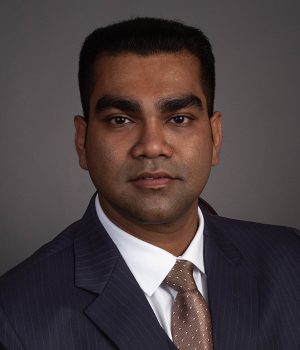
Edward Flemming is a Professor of Linguistics at the Massachusetts Institute of Technology (MIT), affiliated with the Department of Linguistics and Philosophy. His research focuses on the intersection of phonetics and phonology, particularly the Dispersion Theory of Contrast and phonetic realization as an optimization problem. He explores how phonological systems are shaped by communicative efficiency and shared human perceptual and articulatory capabilities. Research Interests: Phonology, Phonetics, Speech Perception, Optimization in Speech Production, Language Typology Recent Work: Advances in probabilistic phonology, Mandarin intonation modeling, and statistical learnability of phonological constraints. His theoretical framework unifies phonetic and phonological analysis, emphasizing constraints driven by perceptual distinctiveness and articulatory efficiency. Key contributions include studies on vowel inventories, consonant markedness, and the phonetic specification of contour tones.
Antoine Miech is a Researcher at DeepMind's Vision Group , with prior affiliations at Inria and Ecole Normale Supérieure where he completed his computer vision Ph.D. under Ivan Laptev and Josef Sivic . He has collaborated with researchers from Facebook AI and Google during his academic career. Research Interests span video understanding, weakly-supervised machine learning, and multimodal analysis. His work focuses on: Text-video embedding Self-supervised video representation Action localization Anticipatory video modeling Scalable multimodal learning Scientific Contributions include: HowTo100M - A massive dataset of narrated instructional videos MIL-NCE - A novel loss function for video-text alignment MEE - A model for handling heterogeneous data Context Gating - Learnable pooling architecture Awards & Recognition : Google Ph.D. Fellowship (2018) Technical Leadership : Created the LOUPE TensorFlow toolbox for feature pooling and maintained annotated video dataset catalogs. Organized the Data Science Game competition (2016-2017).
Dr. George Fitzmaurice is a Research Fellow at Autodesk, leading the Human Computer Interaction and Visualization Research group. With over 120 publications and 95 patents, his work spans 25 years of innovation in interactive systems, focusing on technology-assisted learning , 3D visualization , and novel input techniques . His notable contributions include the Maya 1.0 UI and SketchBook Pro design, as well as pioneering Graspable UIs and Spatially-Aware Displays . Education : MIT (B.Sc. Math/CS), Brown (M.Sc. CS), Toronto (Ph.D. CS) His research explores immersive visualization and generative AI applications in design workflows, with recent work focusing on VR/AR tools like TimeTunnel for motion editing and WhatIF for AI-assisted narrative design. Current projects examine the intersection of large language models , 3D design systems , and collaborative environments . Key article themes include: Generative AI integration (3DALL-E, WorldSmith) Immersive motion analysis (AvatAR, VideoPoseVR) Creative workflow optimization (MoodCubes, Immersive Sampling) Privacy-aware VR systems (Vice VRsa) Scientific Recognition: 2019 - Inducted into ACM CHI Academy 2024 - Awarded ACM Fellow for computing contributions He has developed foundational interaction techniques like ViewCube™ and SteeringWheels™ , and his work continues to shape modern 3D UI paradigms and spatial computing approaches through projects like DreamSketch and Tesseract.
Professor Danielle Matthews is a Professor of Psychology at the University of Sheffield's School of Psychology and an academic at the Interdisciplinary Centre of the Social Sciences (ICOSS). Her research focuses on how children learn language, particularly pragmatic development (e.g., communicative repair, referential adaptation) and the impact of deafness and socio-economic factors on language acquisition. She has pioneered interventions to support communication in deaf infants and families from disadvantaged backgrounds, collaborating with organizations like the BBC’s Tiny Happy People initiative. Research Interests: Pragmatic abilities in communication, language development in deaf children, socio-economic influences on language, and word learning mechanisms. Grants: Nuffield Foundation, BBC Education, Leverhulme Trust, and UKRI GCRF grants for projects on language interventions and communication development. Teaching: Undergraduate courses on Developmental Psychology and Pragmatic Development; postgraduate supervision and ethics training. Her work emphasizes practical interventions, such as video-based communication strategies for parents of deaf infants and randomized controlled trials to improve caregiver responsiveness. She has also explored how conversational experience shapes pragmatic skills and mitigates disparities linked to hearing loss or socio-economic status. Recent studies include investigations into the cognitive underpinnings of conversational skills in autistic children and the long-term mental health implications of early language delays. Her research bridges theory and practice, aiming to inform educational and clinical practices globally.
Sandra Zilles is a Professor and Canada Research Chair (Tier 1) in Computational Learning Theory at the University of Regina's Department of Computer Science. She holds adjunct appointments at the University of Waterloo and collaborates with the Alberta Machine Intelligence Institute (Amii). Her research focuses on theoretical computer science and artificial intelligence, particularly interactive learning models, formal language theory, and heuristic search algorithms. Her research integrates computational learning theory, formal language theory, and discrete artificial intelligence structures. Key interests include: Machine teaching with limited data Learnability of pattern languages and automata Graph-theoretic approaches in AI Her work bridges theoretical frameworks with applications in medical imaging, bioinformatics, and game theory. Zilles has received numerous honors including: NSERC Canada Research Chair (Tier 1, 2022-2029) Royal Society of Canada College membership Best Paper Awards (KI 2012, ALT 2003, COLT 2002) She mentors over 50 students and postdocs through her research group. Current projects explore symbolic automata, collaborative learning, and geometric teaching models. Her lab maintains international collaborations with institutions in Germany, Canada, and the US.
Jeffrey Heinz is a Professor at Stony Brook University , holding a joint appointment in the Department of Linguistics and the Institute for Advanced Computational Science . He has been at Stony Brook since 2017, following a decade at the University of Delaware. His research focuses on computational linguistics, formal language theory, grammatical inference, and phonology, with applications to robotics and artificial intelligence. He earned his Ph.D. in Linguistics from UCLA in 2007. Heinz’s work bridges theoretical linguistics and computational methods, emphasizing the learnability of linguistic patterns through formal models. He has contributed to understanding phonological typology, reduplication, and the mathematical foundations of language learning. His research has been published in Science , Phonology , and Machine Learning , among others. He was honored with the 2017 Early Career Award from the Linguistic Society of America for his contributions to computational learning theory in linguistics. He teaches advanced courses in computational phonology and linguistics, including a course at the LSA Summer Institute. He actively organizes academic sessions and serves on steering committees for conferences like ICGI. His interdisciplinary approach integrates linguistics with computer science, robotics, and mathematical logic. Award highlights include: 2017 Early Career Award (Linguistic Society of America) He advises students in linguistics and computational fields, though specific names are not listed here. His research labs and collaborations involve computational linguistics and robotics projects, such as stress pattern databases and grammatical inference benchmarks.
Joanna McGrenere is a Professor in the Department of Computer Science at the University of British Columbia . Her research focuses on Human-Computer Interaction , Personalized User Interfaces , and Universal Usability , particularly for older adults and users with aphasia . She has extensively published on cross-device learnability , collaborative environments , and adaptive interface design . Research Interests: Human-Computer Interaction Personalized User Interfaces Universal Usability Interactive Technologies for Aging Populations Recent Publications address: real-time feedback in online meetings (2025), AI support for interviews (2025), financial technology for older adults (2025), ambient social systems (2025), computer-mediated self-disclosure (2025), digital home health assessments (2024), and intergenerational VR communication (2024). Key trends show increasing focus on age-inclusive design , context-aware interfaces , and interruption management . Collaborations include: Leah Findlater (University of Washington), Andrea Bunt (University of Manitoba), Karyn Moffatt (McGill University), and Kellogg S. Booth (University of British Columbia). Her work appears in journals like ACM Transactions on Accessible Computing and International Journal of Human-Computer Studies .
Cristina Guardiano is a Full Professor at the University of Modena and Reggio Emilia, Department of Communication and Economics. Her research focuses on syntax, historical linguistics, and the Parametric Comparison Method (PCM), exploring syntactic variation across languages to reconstruct linguistic phylogenies. She specializes in formal syntax, differential object marking, and the intersection of syntax with computational and genetic data analysis. Key Affiliations: Dipartimento di Comunicazione ed Economia, University of Modena and Reggio Emilia Research Themes: Syntactic parameters, language evolution, Romance dialectology, genetic-linguistic correlations Guardiano's work integrates theoretical linguistics with interdisciplinary approaches, including collaborations with geneticists and computational linguists. Notable contributions include studies on the syntax of Italiot Greek, Sicilian dialects, and the application of parametric syntax to historical language classification. She leads initiatives like the TerraLing database to systematize cross-linguistic syntactic data. Her teaching includes advanced courses on linguistics, parametric syntax, and the analysis of language evolution. She emphasizes critical evaluation of Large Language Models (LLMs) and their implications for linguistic theory.
Ezer Rasin is a Senior Lecturer in the Department of Linguistics at Tel Aviv University (TAU), where he also leads the TAU Phonological Computation Lab. He holds a PhD in Linguistics from MIT (2018), an MA and BSc in Linguistics and Mathematics from TAU (both prior to his PhD). Before joining TAU, he was a postdoctoral researcher in Leipzig University's IGRA program. His research focuses on theoretical and computational phonology, learnability, and formal linguistics. Key areas include phonological opacity, optimality theory, and the interaction between phonology and morphosyntax. His work bridges empirical phonology with computational modeling, addressing questions about language acquisition and formal grammatical architecture. Recent publications examine challenges to size-based parallel analyses in Hebrew vowel deletion, opacity phenomena in Gua and Akan, and computational approaches to phonological learning. He has contributed to journals like Linguistic Inquiry and Journal of Language Modelling , and co-edited proceedings for NELS and other conferences. Rasin teaches courses on phonological opacity, computational phonology, and the phonology-morphology interface at TAU. His research also involves developing audio databases for endangered languages like Judeo-Baghdadi Arabic, reflecting his commitment to computational methods in linguistic documentation.
Josien Pluim is a Full Professor of Medical Image Analysis at Eindhoven University of Technology (TU/e), where she leads the Medical Image Analysis group and serves as vice-dean of the Department of Biomedical Engineering. She also holds a part-time professorship at the University Medical Center Utrecht. Her research is centered at the intersection of artificial intelligence and clinical medicine, with strong affiliations to EAISI (Eindhoven Artificial Intelligence Systems Institute) and the EAISI Health initiative. Her academic background includes a Master's in Computer Science from the University of Groningen (1996), specializing in Scientific Computing and Imaging, followed by a PhD (2001) from the Image Sciences Institute at UMC Utrecht on multimodality image registration using mutual information. She advanced from assistant to associate professor at UMC Utrecht before joining TU/e as a Full Professor in 2014, with a concurrent part-time appointment at UMC Utrecht since 2015. Pluim’s research interests span medical image analysis, including image registration, segmentation, detection, and deep learning, with clinical applications in neurology and oncology. She investigates both methodological development and real-world clinical translation. Recent work emphasizes generative AI for synthetic data, robustness in deep learning models, and super-resolution techniques for brain MRI. Her publications reveal a strong trend toward addressing data scarcity, generalization, and evaluation in medical AI, particularly through simulation and diffusion models. She has co-authored over 250 peer-reviewed papers and is recognized with prestigious fellowships: Fellow of the MICCAI Society IEEE Fellow Pluim has served in leadership roles across the academic community, including Associate Editor for journals such as IEEE Transactions on Medical Imaging , IEEE TBME , and Medical Image Analysis . She has chaired major conferences like WBIR 2006 and MICCAI 2010, and served on the Executive Board of the MICCAI Society. She actively supervises research and educational projects, including team challenges and capstone courses in medical image analysis. Her group is involved in significant collaborative research, such as the EU-funded openGTN project, which supports PhD training in generative models for medical imaging. She also contributes to scientific advisory boards, including the Hanarth Fonds.
Jiří Šíma is a senior scientist at the Department of Theoretical Computer Science, Institute of Computer Science, Czech Academy of Sciences. He holds the academic title of Research Professor (DrSc.) and has been a key researcher at ICS CAS since 1994. He has also served as head of the department (2010–2012, 2021–2023) and has held external lecturing positions at Charles University, Masaryk University, and Czech Technical University. His educational achievements include a CSc. (Ph.D.) in 1993, an Associate Professor qualification (doc.) and RNDr. in 2000, and a DrSc. in 2009 from the Slovak University of Technology. These qualifications reflect his deep expertise in theoretical computer science and neural networks. Šíma's research focuses on the theoretical foundations of neural computation, including the computational power of analog and spiking neural networks, energy complexity in deep learning models, formal language recognition by neural automata, and complexity theory. His work bridges theoretical computer science and artificial intelligence, with a strong emphasis on mathematical rigor and computational models. The 15 most recent publications highlight a consistent trend in analyzing the computational capabilities and energy efficiency of neural networks. His recent work (2020–2024) centers on energy complexity in fully-connected and convolutional networks, while earlier work explores analog neuron hierarchies, hitting sets for branching programs, and the limitations of spiking neurons. The research spans subfields such as formal languages, computational complexity, dynamical systems, and neurocomputing, demonstrating a cohesive and long-term research trajectory in theoretical machine learning. Best ICS Paper Award (2024) Best ICS Paper Award (2021) Second/Third Best ICS Paper Award (2019) Best ICS Paper Award (2018) Otto Wichterle Award (2003) Award of the CAS for young scientists (1998) Šíma has been principal investigator on multiple Czech Science Foundation grants, including LEDNeCo (2025–2027), AppNeCo (2022–2024), and FoNeCo (2019–2021). He has also served on grant evaluation panels and scientific councils, including at the Czech Science Foundation and Charles University. Although no formal students are listed, he has collaborated extensively with researchers such as J. Cabessa, P. Vidnerová, S. Žák, and P. Orponen. He is actively involved in the academic community, serving on program committees for major conferences such as ICANN, ICONIP, SOFSEM, and MFCS. His work is primarily conducted within the Department of Theoretical Computer Science at ICS CAS, a leading research group in theoretical computer science in the Czech Republic.
Aritra Dutta is an Assistant Professor at the AI Initiative of the University of Central Florida (UCF), primarily affiliated with the Department of Mathematics and secondarily with the Department of Computer Science. He also holds an affiliation with the Pioneer Centre for AI (P1), Denmark. His research focuses on optimization (stochastic/nonconvex), distributed computing (including federated learning), numerical linear algebra, machine learning, low-rank approximation, and computer vision applications such as image/video analysis and object detection/tracking. Dr. Dutta’s work emphasizes interdisciplinary approaches, blending mathematical rigor with computational efficiency. He actively seeks Ph.D. students and postdocs with strong foundations in mathematics (optimization, linear algebra) or computer science (ML, distributed systems), prioritizing candidates with publication records in top-tier venues. His teaching includes courses in applied mathematics and computational methods. His research outputs span communication-efficient distributed learning frameworks, convergence analysis of optimization algorithms, and vision transformer architectures. Notable projects include GAEA (geolocation-aware conversational models) and MAVREC (multi-view aerial visual recognition). Postdoc opportunities: Open for exceptional candidates. Labs/Initiatives: UCF AI Initiative (UCF Aii), UCF Center for Research in Computer Vision (CRCV). Grants: Competitive research assistantships with tuition support.
Marta Arias is an Associate Professor in the Computer Science Department at Universitat Politècnica de Catalunya (UPC), Barcelona, and a member of the LARCA research group. She has held academic positions since 2007, including roles at Columbia University and the University of Edinburgh. Her research focuses on Machine Learning, Data Mining, Algorithm Design, and Logic in Computer Science. She teaches advanced courses in Machine Learning, Information Retrieval, and Complex Networks at undergraduate and master's levels, including the Erasmus Mundus program in Data Mining and Knowledge Management. Educations: PhD in Computer Science from Tufts University (2000-2004), Postgraduate Studies at University of Edinburgh (1999-2000), B.Sc. in Computer Science from UPC (1992-1997). Professional experience includes software engineering and research roles in New York and Barcelona. Research highlights include developing algorithms for real-time ranking systems, Twitter-based financial forecasting, and causal network analysis. Notable contributions include the 'Best Paper Award' at AIPESW@ECAI 2020 and a 3rd place award in football performance research. Her work spans theoretical foundations (e.g., Horn clause learning) and applied domains like cybersecurity, healthcare analytics, and energy systems. Teaching responsibilities include labs and lectures on Machine Learning, Information Retrieval, and Programming, with active involvement in curriculum design and pedagogical innovation. Ongoing projects include enterprise risk analysis, synthetic data generation, and network modeling.
Susana Béjar is an Associate Professor in the Department of Linguistics at the University of Toronto, Faculty of Arts and Science. Her research focuses on syntax, morphology, and linguistic theory, particularly exploring topics like DP recursion, phi-features, copular clauses, and language acquisition. She holds a PhD, MA, and BA from the University of Toronto. Her work examines syntactic structures, formal feature theory, and the acquisition of complex NPs in child language. Béjar has collaborated on numerous projects, including studies on Inuttitut corpus development and split ergativity in Kurdish varieties. She actively participates in research networks and has presented at conferences such as NWAV and LSA. Research Interests: Syntax, Morphology, Linguistic Theory, Language Acquisition, Phi-Features, Copular Clauses, DP Recursion. Recent Work Trends: Her publications emphasize syntactic recursion, feature-driven operations, and cross-linguistic agreement patterns. Notable contributions include analyses of copular clauses and the role of phi-features in syntactic dependencies. Grants: Over 30 grants secured from SSHRC and other agencies, including projects on case agreement in Laki, possessive extraction in English, and corpus development for Inuttitut. Labs/Teams: Collaborates with the Department of Linguistics research groups at U of T and participates in international research networks on syntax and language acquisition.
John Archibald is a Professor at the School of Languages, Linguistics and Cultures, University of Victoria, specializing in second and third language phonology. His work bridges phonological theory with empirical studies on multilingual acquisition, focusing on feature mapping, transfer effects, and input processing. PhD, University of Toronto Fellow of the Royal Society of Canada (2020) Research interests include L2/L3 phonology , language learnability , and multilingual mental representation . His theoretical work addresses Plato’s Problem (input poverty), Orwell’s Problem (input resistance), and Escher’s Problem (illusory phonological perception). Recent publications analyze Contrastive Hierarchy applications, pitch accent acquisition , feature dependency , and phonological redeployment . Awards include the Canadian Linguistic Association Lifetime Achievement Award (2021) and SSHRC-funded L3 phonology research . He co-edits Contemporary Linguistic Analysis and teaches courses on linguistics, child language acquisition, and advanced L2/L3 research.