
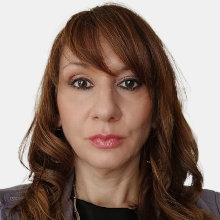
Bianca Basciano is an Associate Professor at the Department of Asian and North African Studies , Ca' Foscari University of Venice, where she has held the Director's Delegate for Research role since 2023. Her work focuses on Chinese linguistics , particularly Mandarin morphology, syntax, and second language acquisition. Research Areas: Chinese compounding, reduplication, causative constructions, resultative compounds, and language teaching methodologies. Teaching: Offers BA/MA courses in Chinese language and linguistics at Ca' Foscari University. Editorial Roles: Member of the editorial boards for Sinica Venetiana and Lingue e Linguaggio . Research Projects: Principal investigator for the PRIN 2020 project on Italian learners' acquisition of Chinese resultative verbs, with extensive corpus-based analysis. Collaborates with Giorgio Arcodia and other international scholars. Key Themes: Event structure delimitation, Vendlerian verb classes, micro-parametric syntactic variation. Publications: Over 40 works including monographs with Oxford University Press and Bologna University Press. Her methodological approach combines theoretical linguistics with corpus analysis, contributing to the understanding of Chinese as both a linguistic system and a second language acquisition challenge. She has also organized international conferences like the 31st IACL Annual Meeting.
جستجوی استاد راهنمای دانشگاهی
برای مسیر پژوهشیتان، استاد راهنما، استاد دانشگاه و پژوهشگر مناسب را پیدا کنید و با آنها ارتباط بگیرید.
نمایش ۱-۱۵ از ۹۱ استاد راهنما
اطلاعات پروفایلها از صفحات عمومی دانشگاهها گرفته شده و ممکن است بهروز نباشد.
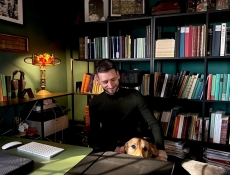
Alessandro Del Tomba is a Tenure-Track Researcher in Linguistics and Glottology at Sapienza University of Rome, specializing in historical linguistics, Indo-European studies, and Central Asian philology. He holds a PhD in Linguistics from Sapienza and Comparative Indo-European Linguistics from Leiden University. Historical linguistics Indo-European studies Eastern Iranian philology Language contact theories His research focuses on Khotanese and Tocharian languages, with recent publications analyzing manuscript transmission, morphological variation, and phonological developments. He serves as Principal Investigator for the FIS project "Khotanese language and texts in contexts (KhoTxt): A multimodal approach to the classification and periodisation of the Khotanese language and its texts within the cultural and historical framework of medieval Central Asia". He teaches General Linguistics at undergraduate levels and Linguistics courses at the graduate level in Modern Philology. Active in international academic networks, he participates in conferences across Italy, Europe, and Asia.
Francisco Matte Bon is a full Professor of Spanish and Translation at the Faculty of Interpreting and Translation, Free University of International Studies of Rome (UNINT), where he has served as Dean and Rector. Previously, he held academic roles at the University of Salerno (2002-2007), the University of Bologna (as Associate Professor from 2000), and institutions in Germany, France, and Spain. His research focuses on communicative grammar, language teaching, and contrastive analysis, with a particular emphasis on the relationship between linguistic systems and real-world usage. Education: Studied Modern Languages and Linguistics in Paris His work includes foundational texts like Gramática comunicativa del español and co-authorship of the Uno and Due communicative Italian courses. He has directed university language centers and organized international conferences, leading a research group on utterance grammar. His recent publications explore metalinguistic operations, cyclicity principles, and pragmatic strategies in Spanish-Italian interactions. Scientific awards and honors are not explicitly mentioned in the provided text. Matte Bon has conducted over 150 seminars and conferences across 18 countries, contributing extensively to teacher training and communicative language methodologies.
Giorgio Satta is a Full Professor at the Department of Information Engineering , University of Padua, Italy. He received his Ph.D. in Computer Science from the University of Padua in 1990. His career includes research positions at Fondazione Bruno Kessler (Trento) and the University of Pennsylvania (IRCS). Research Focus : His work centers on computational linguistics and formal language theory , with emphasis on: Parsing algorithms (CCG, TAG, LCFRS) Computational complexity of grammar formalisms Probabilistic language modeling Dependency parsing and synchronization techniques Professional Service : He chaired the European Chapter of the ACL (2009-10), served on editorial boards for Computational Linguistics , Transactions of the ACL , and co-chaired ACL-2001/IWPT-2001. Teaching : Current courses include Automata, Languages, and Computation and Natural Language Processing (2024-25).
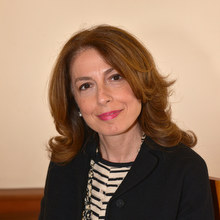
Carolina NEGRIمشاهده پروفایل
دانشیار
Carolina NEGRI is an Associate Professor in the Department of Asian and North African Studies at Ca' Foscari University of Venice, where she has held a permanent faculty position since 2015. She is also the Director's Delegate for Quality Assurance of the Department and has served in various institutional roles including scientific coordinator of the Erasmus+ ICM program with Waseda University and member of the Doctoral College. She holds a PhD in Oriental Studies from the Oriental University Institute of Naples and advanced degrees from Ochanomizu University in Tokyo and the University of Naples 'L’Orientale'. PhD in Oriental Studies (Far Eastern Asian Civilizations), Oriental University Institute of Naples, 2000 MA in Japanese Literature and Philology, Ochanomizu University, Tokyo, 1996 Laurea in Japanese Language and Literature, University of Naples 'L’Orientale', 1991 Her research focuses on pre-modern and modern Japanese literature, Japanese philology, literary translation, and gender studies. She specializes in classical Japanese texts, the role of women in medieval Japanese society, intertextuality, and the literary contributions of female authors such as Murasaki Shikibu and the nun Abutsu. Her work bridges philological rigor with cultural and gender analysis. Her recent research outputs demonstrate a strong trajectory in the study of Japanese literary history, classical grammar, and the socio-religious roles of women. Key themes include the development of a comprehensive history of Japanese literature, intertextuality in premodern works, and the literary production of medieval nuns. She has led externally funded projects such as 'Images from the Past' (Japan Foundation, 2019–2021) and multiple Erasmus+ and National Institute of Japanese Literature research stays. Premio Guglielmo e Mario Scalise per la traduzione letteraria (2007) Japan Foundation Japanese Studies Fellowship (2011) National Scientific Qualification for Full-Time Professor (2021) National Scientific Qualification for Associate Professor (2014) Carolina NEGRI has supervised numerous academic programs and mentored students through her teaching and research leadership. She has secured multiple international research grants, particularly from the Japan Foundation and Erasmus+, supporting collaborative projects with Waseda University, Gakushūin Women’s University, and the National Institute of Japanese Literature. She has been a visiting scholar at institutions in Japan, the United States, and Europe, reflecting her active international engagement. She is a member of the research group working on the history of Japanese literature alongside Luisa Bienati, Edoardo Gerlini, and Pierantonio Zanotti, and has collaborated with Paolo Calvetti on medieval Japanese literature. Her work contributes significantly to the global understanding of Japanese literary and cultural history.
- Linguistics
- Syntax
- Historical Linguistics
- +۶ مورد دیگر
Cristina Guardiano is a Full Professor at the University of Modena and Reggio Emilia, Department of Communication and Economics. Her research focuses on syntax, historical linguistics, and the Parametric Comparison Method (PCM), exploring syntactic variation across languages to reconstruct linguistic phylogenies. She specializes in formal syntax, differential object marking, and the intersection of syntax with computational and genetic data analysis. Key Affiliations: Dipartimento di Comunicazione ed Economia, University of Modena and Reggio Emilia Research Themes: Syntactic parameters, language evolution, Romance dialectology, genetic-linguistic correlations Guardiano's work integrates theoretical linguistics with interdisciplinary approaches, including collaborations with geneticists and computational linguists. Notable contributions include studies on the syntax of Italiot Greek, Sicilian dialects, and the application of parametric syntax to historical language classification. She leads initiatives like the TerraLing database to systematize cross-linguistic syntactic data. Her teaching includes advanced courses on linguistics, parametric syntax, and the analysis of language evolution. She emphasizes critical evaluation of Large Language Models (LLMs) and their implications for linguistic theory.
- Chinese Linguistics
- Linguistic Typology
- Morphology
- +۱۲ مورد دیگر
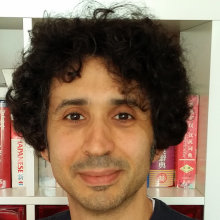
Giorgio Francesco ARCODIA is a Full Professor in the Department of Asian and North African Studies at Ca' Foscari University of Venice, where he also serves as Director's Delegate for Interdepartmental Agreements and a member of the University Quality Assurance Office (PQA). His academic expertise lies in Chinese linguistics, linguistic typology, morphology, dialectology, and second language acquisition. He has held previous academic positions at the University of Milano-Bicocca, progressing from researcher to associate professor before joining Ca' Foscari as a full professor. His research is deeply interdisciplinary, focusing on Sinitic languages, grammaticalization, and cross-linguistic comparison. Education: PhD in Theoretical and Applied Linguistics, University of Pavia (2008) MA in Theoretical and Applied Linguistics, University of Pavia (2005) BA/MA in Foreign Languages, University of Bologna (2003) Language studies at Renmin University of China, Beijing (2005–2006) Advanced training in Chinese, Russian, Japanese, and linguistics across institutions in Italy, Germany, the Netherlands, and Taiwan His research interests include Chinese morphology, linguistic typology, dialectology, grammaticalization, and the acquisition of Chinese as a second language. He has conducted extensive research on reduplication, compounding, derivational morphology, object marking, tense, and aspect in Sinitic languages, as well as on contact phenomena in Macanese and Sino-Vietnamese. His work often combines corpus-based, experimental, and typological methodologies. The recent publications reflect a strong focus on morphosyntactic and typological features of Sinitic languages, with recurring themes such as nonconcatenative morphology, prosody, grammaticalization of tense and aspect, structural particles, and cross-dialectal convergence. His work increasingly bridges theoretical linguistics with pedagogical implications, especially in teaching Chinese to Italian speakers. Scientific Engagement: Section Editor, Open Linguistics (2024–present) Member, Scientific Board, Linguistic Typology at the Crossroads (2021–present) Member, Editorial Board, Cahiers de Linguistique Asie Orientale (2024–present) Peer reviewer for major journals including Linguistics , Morphology , Journal of Linguistics , and Language and Linguistics Project evaluator for Swiss National Science Foundation, ANR (France), and Research Grants Council of Hong Kong He actively supervises and collaborates with researchers, particularly on projects related to Chinese linguistics and second language acquisition. He has coordinated international research initiatives and double degree programs, notably with the Higher School of Economics in Saint Petersburg. His institutional service includes membership in PhD committees, research councils, quality assurance bodies, and departmental governance at Ca' Foscari. He is a member of leading academic associations including the International Association of Chinese Linguistics (IACL), European Association of Chinese Linguistics (EACL), and Società di Linguistica Italiana (SLI), and has held leadership roles in AILC, EACL, and CASLAR. He has organized major international conferences such as IACL-31 and EACL-10, and workshops on Chinese dialect grammar and prosodic grammar.
Ilaria Graziani is a Contract Lecturer in the Department of Asian and North African Studies at Ca' Foscari University of Venice, where she teaches Urdu Language 1 and Urdu Language 2 within the Bachelor’s program in Languages, Cultures, and Societies of Asia and Mediterranean Africa. She has been actively involved in teaching Urdu language and literature since 2007 and continues to contribute to academic instruction as of the 2024/2025 academic year. Her educational background includes a degree with honors in Oriental Languages and Civilizations from Ca' Foscari University, with a specialization in Hindi language, literature, and culture from a philosophical-religious perspective. She also completed a research stay at the Bodleian Library, Oxford University, in 2005–2006, and has conducted multiple study visits to the Indian subcontinent for linguistic and cultural research. Her research interests span Urdu and Hindi linguistics, South Asian literature (particularly Partition literature), and cultural studies of the Indian subcontinent. She has also developed a strong parallel expertise in holistic child wellness, naturopathy, and flower essence therapy. The available publications reflect a focus on Urdu grammar, literary analysis of Partition narratives, and translations of modern Indian poets such as Ali Sardar Ja'fri and Rabindranath Tagore. These works demonstrate a consistent engagement with South Asian literary and cultural expression, combining linguistic rigor with humanistic insight. She has been a member of the scientific committee for the journal Smerilliana - I poeti di Smerilliana since 2011 and has presented at seminars on Bach flower remedies and child wellness. Her professional experience includes intercultural education projects in Italian middle schools and linguistic consultancy for cultural mediators. Ilaria Graziani also teaches naturopathy and flower essence courses at the Rudy Lanza Institute and has organized creative and wellness workshops for children and families. Her interdisciplinary profile bridges academic scholarship in South Asian studies with practical applications in natural education and child development.
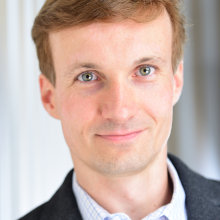
Thomas Strobelمشاهده پروفایل
استاد مدعو
- Linguistics
- Syntax
- Dialectology
- +۳ مورد دیگر
Thomas Strobel is an Adjunct Professor at Ca' Foscari University of Venice's Department of Linguistics and Comparative Cultural Studies. His academic career includes roles as a research assistant and fellow in multiple institutions, including Goethe University Frankfurt and the German Language Association. He holds a PhD in General Linguistics from Goethe University Frankfurt, focusing on pronominal partitivity in German dialects. Strobel's research focuses on syntax, dialectology, and morphosyntactic variation in Germanic languages. Key areas include partitive constructions, grammatical gaps, and the intersection of formal and functional approaches in linguistic variation. His recent work explores syntactic changes in German dialects and cross-linguistic partitive phenomena. He has published extensively in journals like Linguistische Berichte and Zeitschrift für Sprachwissenschaft , and edited volumes on topics like grammatical gaps and partitive constructions. His teaching spans German language courses at undergraduate and graduate levels, contributing to programs in linguistics and cultural studies. Strobel has been involved in DFG-funded projects such as the 'Syntax of Hessian Dialects' and has held postdoctoral roles at leading institutions. His work bridges theoretical syntax and empirical dialectology, emphasizing microvariation and areal linguistics.
- Linguistics
- Glottology
- Lexicography
- +۱۳ مورد دیگر
Valentina Piunno is an Associate Professor in the Department of Foreign Languages, Literatures and Cultures at the University of Bergamo, Italy. She specializes in Glottology and Linguistics (sector GLOT-01/A, equivalent to L-LIN/01), with a strong focus on phraseology, lexicography, lexical semantics, and Italian linguistic structures. She teaches courses such as Digital Linguistics, Descriptive and Historical Linguistics, and Text Linguistics at both undergraduate and graduate levels. Her research interests include evaluative phraseological constructions, intensifying structures, color terminology, fixed syntactic schemas, and partially lexically specified constructions in Italian, often with comparative perspectives involving Spanish and French. She also investigates dialectal varieties of Italian from theoretical and lexicographic viewpoints. The most recent publications highlight a consistent focus on meaning patterns at the syntax-lexicon interface, lexicographic practices, and the formal analysis of Italian phraseology. Her work combines qualitative and quantitative methodologies, contributing significantly to the understanding of Italian linguistic structures and their representation in reference works. Expression of patient and caregiver uncertainty in online health communities (2025) Analysis of evaluative phraseologisms in Italian vs. Spanish and French (2025) Color terms and intensifiers in Italian (2024) Fixed-schema constructions in Italian dialects (2024) Lexicographic and lexicological meaning patterns (2024) Schematic phraseologisms and analytical methods (2024) Dr. Piunno has authored numerous book chapters and articles, including editorial contributions, and has published with academic presses such as Walter de Gruyter, Aracne, and Frank & Timme. While no scientific awards or student advisement details are listed, her publication record indicates active scholarly engagement. She is involved in current teaching activities for the 2025–2026 academic year and maintains an office for student reception by appointment.
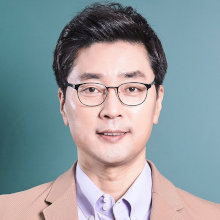
Soon Haeng KANG is an Associate Professor in the Department of Asian and North African Studies at Ca' Foscari University of Venice, where he has held a permanent position since 2018. His academic work centers on Korean and Italian linguistics, with a focus on syntax, morphology, and comparative analysis between the two languages. He is actively involved in teaching, research, and expanding Korean language education in Italy. PhD in General Linguistics, Ca' Foscari University of Venice (2007–2007) Master's Degree in Italian Linguistics, Hankuk University of Foreign Studies (2000–2003) Bachelor's Degree in Italian Studies, Hankuk University of Foreign Studies (1993–2000) Visiting Student, Ca' Foscari University of Venice (2001–2002) Dr. Kang's research focuses on the structural aspects of Korean and Italian languages, particularly in adjective syntax, genitive constructions, plural markers, and noun phrase organization. He employs comparative and contrastive methodologies to analyze grammatical phenomena across Korean and Italian, contributing to both theoretical linguistics and applied language teaching. His work bridges East Asian and European linguistic traditions. His recent publications show a strong trend in Korean linguistic theory and pedagogy, with major 2024 monographs on Korean morphology and the verbal system. He has also published extensively on the expansion of Korean language education in Italy and the adaptation of teaching methods during the pandemic. His articles span topics from syntactic movement in Italian to the educational implications of Korean grammar, reflecting a dual expertise in both languages. Dr. Kang has received research funding from the National Research Foundation of Korea for multiple projects related to Italian syntax and Korean-Italian contrastive analysis. These grants supported postdoctoral research and academic development activities in South Korea. Post-doctoral fellow, Hankuk University of Foreign Studies (2009–2010, 2012–2013) Contract Professor of Italian, Hankuk University of Foreign Studies (2007–2018) Contract Professor of Italian, Sejong University (2008–2012) Collaborator and linguistic expert, Ca' Foscari University (2003–2005) He has contributed to the development of Korean studies in Italy through curriculum design, vocabulary textbooks, and institutional leadership. His work helps shape the academic landscape for Korean language education in Europe, particularly in Italy.
Giovanni Garofalo is a Full Professor of Spanish Language and Translation at the Department of Foreign Languages, Literatures, and Cultures at the University of Bergamo. He held previous positions as Associate Professor (2014–2020) and Assistant Professor at the University of Trieste (2004–2008) and the University of Bergamo (2008–2014). His research focuses on corpus-assisted discourse analysis , legal and political communication , and the discursive construction of gender in Spanish . University of Bergamo Department of Foreign Languages, Literatures, and Cultures Garofalo’s research explores specialized fields, including Spanish legal communication in criminal law, legislative language, and terminography. He has authored monographs on these topics and investigates argumentation across business , medicine , and politics . His recent publications analyze textual complexity, hate speech, and urban heritage discourses. Key trends in his work include the intersection of corpus linguistics with legal/political discourse, gender representation in Spanish media, and interdisciplinary collaborations with Spanish universities. Garofalo is a member of the Center for Research on Specialized Languages (CERLIS) and associations like AISPI and AELINCO . His teaching emphasizes Spanish discourse analysis , textual genres, and argumentation frameworks. Students engage with real-world texts and are trained in pragmatic and metadiscursive skills at C1+ proficiency. Garofalo’s methodological approach combines theoretical lectures with practical analysis via e-learning platforms.
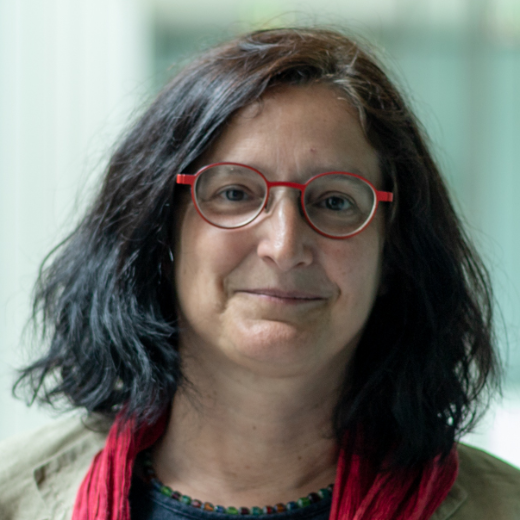
Silvia Dal Negro is a Full Professor of Linguistics at the Free University of Bolzano's Faculty of Education . She earned her PhD in Linguistics from the University of Pavia and previously worked as a researcher at the University of Eastern Piedmont. Research Focus: Language education, contact linguistics, linguistic minorities in Alpine regions, spoken Italian, and grammar teaching. Academic Contributions: Key projects include KONTATTO (language contact in South Tyrol) and GRASS (grammar teaching research). Her work bridges theoretical and applied linguistics, emphasizing practical implications for teacher training and minority language preservation. She leads interdisciplinary initiatives like the DIALOG project, which explores spoken language variation. Article Trends: Recent publications analyze phonetic reduction in spoken Italian (e.g., cioè vs. cè ), language contact in Walser German, and metalinguistic awareness in education. These studies reveal her focus on pragmatic markers, syntactic variation, and sociolinguistic dynamics. Honors: President of the Italian Association of Applied Linguistics , advancing research and policy for minority languages. Labs & Teams: Collaborates with the DIALOG project team and contributes to the GISCEL network, fostering Italian language education reforms.
Artemij Keidanمشاهده پروفایل
دانشیار
Artemij Keidan is an Associate Professor at the Department of Linguistics and Glottology, Institute of Oriental Studies, Sapienza University of Rome. His academic focus spans linguistics, historical linguistics, and Indo-European studies, with a strong emphasis on Sanskrit and Gothic philology. His research explores morphological typology, comparative linguistics, and interdisciplinary collaborations. Primary Research Areas: Linguistics, Historical Linguistics, Indo-European Languages, Philology Key Collaborations: Coffee Break Conference, South Asian Studies Teaching: Courses on Linguistics and Glottology, with materials via Google Classroom His publications analyze morphosyntactic isoglosses, Sanskrit grammatical traditions, Gothic translations, and typological frameworks. Articles span 2006–2025, reflecting long-term engagement with comparative methods and theoretical linguistics. Contact: artemij.keidan@uniroma1.it
- Chinese Language and Literature
- Chinese Television Production
- Political and Cultural Dynamics in Chinese Media
- +۵ مورد دیگر
Valeria Varriano is an Associate Professor of Chinese Language and Literature at the Department of Asia, Africa and the Mediterranean, University of Naples "L'Orientale". She serves as Director of the Italian part of the Confucius Institute of Naples and Director of the Second Level Master's Degree in Chinese Language Teaching at the same university. She is also a member of the Asia, Africa and the Mediterranean Doctoral School. Her research focuses on Chinese television production, particularly analyzing political and cultural dynamics underlying successful television products from the 1990s onward. She employs multimodal analysis of television programs to describe emotional narratives and has developed semantic descriptions of Chinese emotional speech. Her work extends to Chinese language teaching methodology, creating specialized materials for Italian-speaking students at various proficiency levels. Her recent publications demonstrate a clear trajectory from media analysis to practical language teaching applications. Early work focused on television series analysis and historical narratives in Chinese media, while more recent publications emphasize language pedagogy, with multiple editions of the "Shangke le" series for different learning levels. Her research bridges academic analysis of Chinese media with practical applications in language education, particularly for Italian learners. Professor Varriano actively participates in academic networks including the Italian Association of Chinese Linguistics (AILC), the European Association of Chinese Studies (E.A.C.S.), and the Italian Association for Chinese Studies. She co-leads a research network studying Liang Shuming's philosophical language and is involved with YZMT-MediumItaliaCina, focusing on Chinese media systems and Italy-China communication relations. She teaches multiple Chinese language courses across various programs including Archaeology: Asia, Africa and Mediterranean; Languages and Cultures of Asia and Africa; Humanistic Knowledge and Digital Technologies; and Comparative Literature and Cultures. Her teaching spans from introductory Chinese language to specialized courses like Chinese for Digital Humanities.