John Mazziotta, M.D., Ph.D., is a Professor at the David Geffen School of Medicine, UCLA , where he serves as Vice Chancellor of UCLA Health Sciences and CEO of UCLA Health System . He is Director of the Ahmanson-Lovelace Brain Mapping Center , a hub for neuroimaging research and innovation. His research focuses on brain mapping , neuroimaging , and cerebral metabolism , particularly in neurological and psychiatric disorders. He has pioneered applications of PET , fMRI , and diffusion tensor imaging to study conditions like Alzheimer's disease , epilepsy , schizophrenia , and developmental cognitive processes . Over his career, Mazziotta has co-authored over 150 peer-reviewed publications, with recent work emphasizing adolescent social cognition , white matter architecture , and neurodevelopmental trajectories . His studies often integrate machine learning and multimodal imaging to decode brain-behavior relationships. He collaborates extensively with teams at UCLA and International Consortium for Brain Mapping (ICBM) , contributing to standardized atlas-based image registration and neuroinformatics frameworks. His leadership roles in academic medicine complement his scientific contributions, driving institutional advancements in health sciences and clinical trials .
Jennifer J. Vannest is a cognitive neuroscientist at the University of Cincinnati, specializing in functional MRI (fMRI) studies of language, memory, and neurodevelopmental disorders. Her research focuses on brain connectivity, epilepsy, and developmental conditions like speech sound disorders and Down syndrome. Education : PhD from Ohio State University, postdoctoral training at University of Michigan and University of Rochester Affiliation : University of Cincinnati (via email domain) Research Interests : Cognitive Neuroscience of Language and Memory Epilepsy and Neurodevelopmental Disorders fMRI and Brain Connectivity Analysis Article Trends : Her recent publications examine language outcomes in preterm children, white matter organization in epilepsy, neural changes post-stroke, and neuroimaging in opioid-exposed infants. Topics include neurodevelopmental impacts, rehabilitation strategies, and cognitive deficits in chronic conditions. Collaborations : She works with experts in neurology, speech pathology, and pediatric neuroimaging across institutions like University of Michigan, Ohio State University, and Cincinnati Children's Hospital.
Maria Larsson is a Professor in Perception and Psychophysics at the Department of Psychology, Stockholm University. She directs Gösta Ekman's Laboratory and contributes to boards including the Stockholm Brain Imaging Centre (SUBIC) and Stockholm University Psychological Clinic (SUPK) , as well as Stiftelsen Natur och Kultur since 2019. Ph.D. from Karolinska Institute (1997) Research focuses on olfactory-cognitive links, aging, dementia, and training interventions Recipient of Riksbankens Jubileumsfond funding (2015-2020) Her research explores how olfactory dysfunction predicts dementia and mortality, age-related olfactory decline mechanisms, and cross-sensory interactions. Recent work examines odor-related memory training and its cognitive transfer effects, as well as linguistic analysis of odor descriptors. Key trends in her 2024-2025 publications include: Correlations between olfactory decline and dementia progression Neuroimaging studies of odor identification and hippocampal asymmetry Investigations of linguistic factors in odor naming accuracy Population-based analyses of vascular and genetic risk factors She has contributed to developing standardized olfactory assessment tools like TOM-32 and investigates how body odor disgust relates to social biases through the behavioral immune system framework.
Ken Soderstrom is an Associate Professor in the Department of Pharmacology & Toxicology at the Brody School of Medicine, East Carolina University. His research utilizes zebra finches to investigate persistent neural and behavioral effects of CNS-active drugs during developmental critical periods and trauma recovery. Dr. Soderstrom's work centers on how drug exposures during sensitive developmental windows alter learning- and memory-related neural circuitry, leading to long-term behavioral impairments. His laboratory employs songbirds—which naturally develop complex vocalizations during a critical period—to study cannabinoid impacts on sensorimotor skill acquisition and recovery from neural damage. This research has direct relevance to human conditions including learning disabilities, traumatic brain injury, neuroinflammation, and neurodegenerative disorders. Analysis of his recent publications reveals a dominant focus on cannabinoid pharmacology, particularly contrasting effects of THC versus CBD on neuroinflammation, synaptic integrity, and vocal motor recovery. His work demonstrates how developmental cannabinoid exposure persistently modifies neural structure (dendritic spines, gene expression) and function (reward processing, vocal learning), while identifying CBD's therapeutic potential for neural repair. Dr. Soderstrom mentors graduate student Mark Tripson and collaborates with Research Specialist Saina Gao. His laboratory investigates mechanisms of neural plasticity and pharmacological interventions to mitigate developmental drug impacts and promote post-injury recovery, with implications for neuroprotective strategies in clinical contexts.
Dr. Radoslaw Martin Cichy serves as Professor in the Department of Education and Psychology at Freie Universität Berlin, leading the Neural Dynamics of Visual Cognition Group. His research investigates the neural mechanisms of visual object recognition and its interactions with higher cognitive functions using multimodal neuroimaging and computational approaches. His primary research interests encompass visual cognition, object recognition dynamics, brain plasticity in blindness, developmental vision trajectories, and the integration of visual processing with attention and language systems. Methodologically, he employs fMRI, M/EEG, deep neural networks, and machine learning to decode spatiotemporal brain activity during visual perception, with particular focus on recurrent processing and representational geometry in the ventral visual stream. Analysis of his 2025 publications reveals dominant trends in modeling visual cortex through deep learning frameworks, investigating recurrence in object recognition, and exploring experience-dependent plasticity in visual representations. Key thematic clusters include computational neuroscience of vision, multimodal integration (vision-language), neural dynamics of naturalistic perception, and applications in artificial intelligence and neurodevelopmental conditions. No scientific awards were documented in the provided materials. Information regarding student advising and research grant funding was not specified in the source text. The Neural Dynamics of Visual Cognition Group operates at the intersection of experimental and computational neuroscience, conducting advanced research on visual processing in both typical and atypical populations through collaborative projects involving fMRI, EEG, behavioral paradigms, and deep learning model comparisons.
Naroa Ibarretxe Bilbao is a Professor in the Department of Psychology at the Faculty of Health Sciences, University of Deusto. She serves as Director of the University Master's Degree in Clinical Neuropsychology and is Principal Investigator of the Neuropsychology of Severe Medical Disorders research group. Her work focuses on neuroimaging and neuropsychology related to Parkinson's disease, multiple sclerosis, and cognitive rehabilitation. Dr. Ibarretxe Bilbao earned her Psychology degree from the University of Deusto in 2005 and her Doctor of Medicine from the University of Barcelona in 2009. During her doctoral studies, she conducted research at the Oxford Centre for Functional Magnetic Resonance Imaging of the Brain (FMRIB) at the University of Oxford in 2007. Her doctoral thesis examined limbic brain changes and their consequences on emotional, olfactory, and memory dysfunctions in Parkinson's disease patients using magnetic resonance imaging, for which she received the Lluis Barraquer i Bordas award in 2010. Psychology Degree: University of Deusto (2005) Doctor of Medicine: University of Barcelona (2009) Research Stay: Oxford Centre for Functional Magnetic Resonance Imaging of the Brain, University of Oxford (2007) Dr. Ibarretxe Bilbao's research primarily focuses on neuropsychological assessment and neuroimaging in neurodegenerative disorders. Her work investigates brain structural and functional changes associated with cognitive, emotional, and sensory dysfunctions in Parkinson's disease and multiple sclerosis. She has made significant contributions to understanding how cognitive rehabilitation can improve outcomes for patients with neurological disorders. Her recent work has expanded to include studies on preterm birth outcomes and the application of non-invasive brain stimulation techniques for cognitive enhancement. Analysis of Dr. Ibarretxe Bilbao's recent publications reveals a strong focus on multimodal neuroimaging approaches to understand brain structure-function relationships in neurological disorders. Her work frequently examines Parkinson's disease from multiple angles including cognitive decline, fatigue, emotional processing, and quality of life impacts. There's also a growing interest in the application of transcranial stimulation techniques for cognitive enhancement and rehabilitation. Her research increasingly incorporates longitudinal designs and multi-site collaborations to enhance the robustness of findings. Lluis Barraquer i Bordas 2010 award for best doctoral thesis Dr. Ibarretxe Bilbao has supervised multiple doctoral theses focused on cognitive rehabilitation in Parkinson's disease, multiple sclerosis, and schizophrenia. She has been involved in numerous research projects investigating brain-behavior relationships in neurological conditions. Her work often involves interdisciplinary collaborations with neurologists, psychiatrists, and neuroscience researchers across Spain. She has contributed to the standardization of neuropsychological assessment tools for Spanish-speaking populations, including the Montreal Cognitive Assessment and Wisconsin Card Sorting Test. As principal investigator of the Neuropsychology of Severe Medical Disorders research group at the University of Deusto, Dr. Ibarretxe Bilbao leads a team employing various methodologies including structural and functional MRI, cognitive assessment, and non-invasive brain stimulation techniques. Current research directions include understanding the neural mechanisms of cognitive rehabilitation, identifying biomarkers for cognitive decline in Parkinson's disease, and developing interventions to improve quality of life for patients with neurological disorders.
Natalia Ojeda Del Pozo is a Researcher at the Faculty of Health Sciences of the University of Deusto , specializing in cognitive rehabilitation, neurodegenerative disorders, and developmental psychology. She collaborates extensively with multidisciplinary teams across Spain and internationally. Institutions : University of Deusto, Hospital Universitario Donostia, Universidad del País Vasco Key Collaborators : Javier Peña Lasa, Naroa Ibarretxe Bilbao, Leire Zubiaurre Elorza Research Themes : Her work focuses on cognitive interventions in Parkinson's disease and schizophrenia, brain connectivity, and neuropsychological outcomes in preterm children. She explores brain imaging, transcranial stimulation, and rehabilitation strategies. Publication Trends : Recent articles address cortical thickness, functional connectivity, cognitive remediation efficacy, and neurodegenerative biomarkers. Subfields include brain stimulation, preterm development, and cognitive aging. Supervisory Roles : She has guided doctoral theses on cognitive rehabilitation in schizophrenia, neuropsychological standardization, and social cognition assessment.
Aurélie Calabrese is a Researcher and Co-Responsable of the Sens-Mouvement-Perception team at Université Côte d'Azur, affiliated with Inria Sophia Antipolis - Méditerranée. Her work bridges fundamental and applied research in visual neuroscience with strong clinical applications for visually impaired individuals. Her research interests focus on understanding how eye disorders affect visual information processing and brain plasticity across the lifespan. She investigates interactions between low-level visual impairments and higher-level perceptual functions using psychophysics, eye tracking, fMRI, computational linguistics, and modeling. Key areas include visual plasticity mechanisms, factors limiting visual performance in impaired vision, and developing rehabilitative methods to improve quality of life for visually impaired individuals, particularly regarding written communication. Analysis of her recent publications reveals a strong interdisciplinary trajectory combining vision science with computational approaches. Her work increasingly integrates artificial intelligence and constrained text generation techniques to address reading challenges in low vision. The research shows progression from fundamental studies of eye movements in macular disease toward practical applications in virtual reality environments and adaptive reading technologies, with growing emphasis on accessibility solutions for real-world reading tasks. As Co-Responsable of the Sens-Mouvement-Perception team, Calabrese leads collaborative research involving cognitive scientists, computer scientists, and clinicians. Her work receives support through institutional affiliations with Inria and Université Côte d'Azur, with publications spanning ophthalmology journals, vision science publications, and computer science conferences, demonstrating the translational nature of her research program. Her laboratory work focuses on developing innovative methods for assessing and improving reading performance in visually impaired populations, particularly those with central field loss. Current projects include virtual reality toolboxes for accessible news reading, automated text simplification techniques, and novel approaches to estimate fovea position in maculopathies, all aimed at creating practical solutions for maintaining functional vision and literacy.
Yufen Chen, PhD, serves as a Research Associate Professor in the Department of Radiology at the Feinberg School of Medicine, Northwestern University. Her academic appointment resides within the Basic and Translational Radiology Research division, where she conducts pioneering work in neuroimaging and cerebrovascular health. Dr. Chen maintains active affiliation with the Northwestern University Clinical and Translational Sciences Institute (NUCATS), leveraging its resources for translational research that bridges laboratory discoveries with clinical applications in neurological disorders. Her academic foundation includes a Bachelor of Science from Washington University in St. Louis (2001), followed by a PhD from Northwestern University (2008). She completed specialized postdoctoral training in Neurology at the University of Pennsylvania (2011), establishing her expertise in brain imaging and vascular physiology. Dr. Chen's research program centers on cerebral vascular health using advanced quantitative MRI methodologies, with arterial spin labeling (ASL), cerebral vascular reactivity (CVR), and dynamic susceptibility contrast (DSC) imaging forming the core of her investigative toolkit. Her work spans critical neurological domains including stroke recovery mechanisms, traumatic brain injury pathophysiology, hypoxia-induced vascular changes, and neurologic complications in systemic diseases. She has developed particular expertise in studying vascular dynamics in stroke-induced aphasia, mild traumatic brain injury in athletic populations, and genetic-hormonal interactions affecting cerebral perfusion. Analysis of her recent publications (2021-2025) reveals a cohesive research trajectory focused on cerebral perfusion dynamics across diverse clinical populations. Her studies consistently integrate advanced neuroimaging with behavioral and physiological outcomes, demonstrating how vascular function mediates responses to interventions ranging from behavioral therapy for aphasia to hormonal treatments for stress symptoms post-concussion. The work shows increasing sophistication in correlating imaging biomarkers with genetic factors and environmental exposures. Dr. Chen holds significant professional service roles as an Editorial Board Member for Frontiers in Neuroscience and Frontiers in Neuroimaging (2022-present). She maintains longstanding membership in the International Society for Magnetic Resonance in Medicine (2002-present) and previously contributed to the American Congress of Rehabilitation Medicine (2019-2020). No major scientific awards are documented in her current profile. While specific student mentorship details are not enumerated, her position as Research Associate Professor indicates active involvement in training graduate students and postdoctoral fellows. Her research is institutionally supported through NUCATS infrastructure and departmental resources, though specific grant awards are not detailed in the available information. Dr. Chen operates within Northwestern's Basic and Translational Radiology Research ecosystem, collaborating with multidisciplinary teams across neurology, rehabilitation medicine, and sports science. Her work contributes significantly to NUCATS' mission of accelerating clinical translation, with current projects examining vascular biomarkers for brain injury recovery and personalized intervention strategies based on neuroimaging phenotypes.
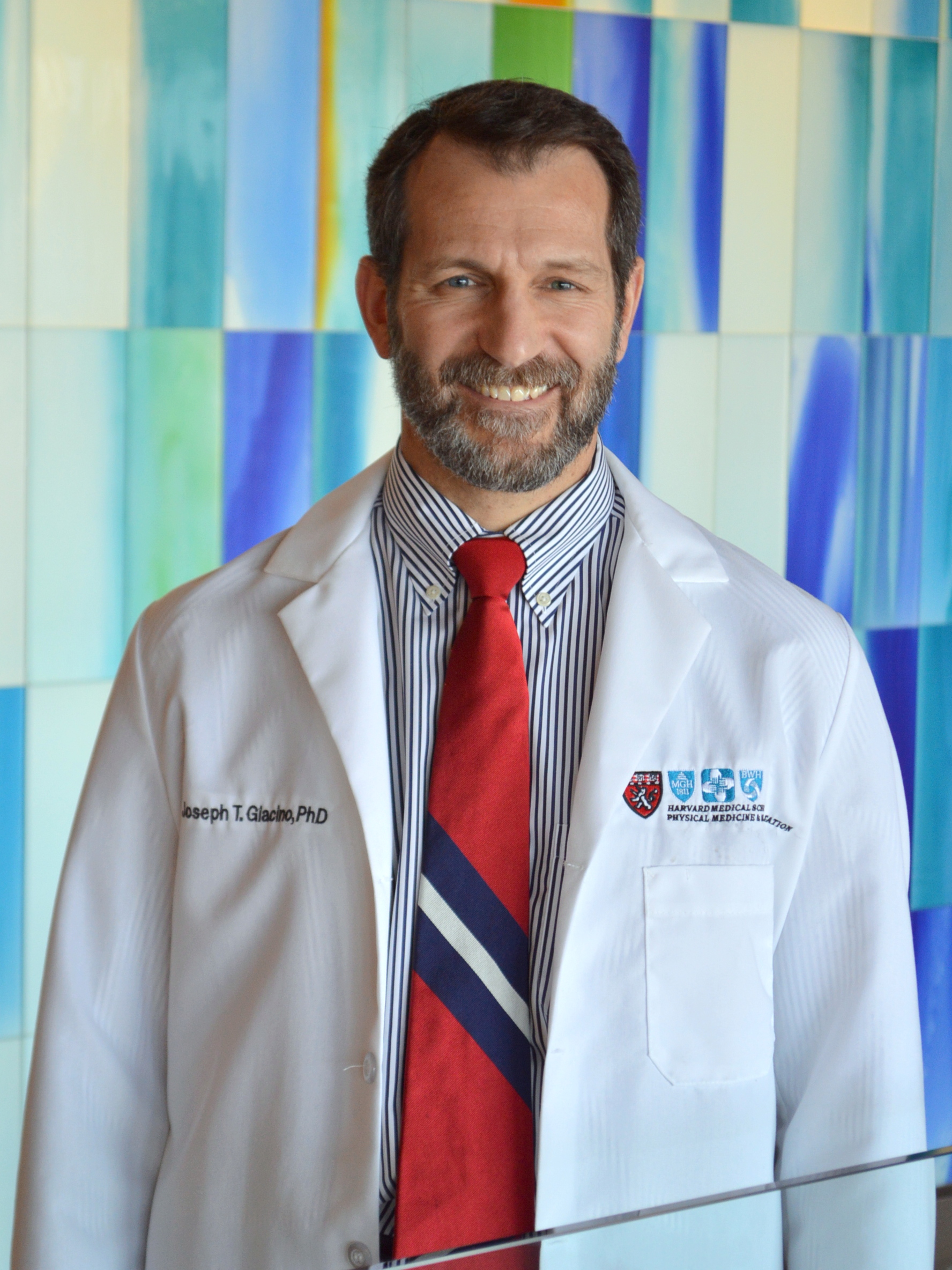
Joseph T. Giacino, PhD is Professor of Physical Medicine and Rehabilitation at Harvard Medical School, Director of Rehabilitation Neuropsychology at Spaulding Rehabilitation Hospital, and Consulting Neuropsychologist in the Department of Psychiatry at Massachusetts General Hospital. His research centers on developing novel assessment and treatment methods for severe acquired brain injury (ABI) and disorders of consciousness (DOC). Key contributions include co-chairing the Aspen Workgroup that established diagnostic criteria for the minimally conscious state (MCS) and co-leading the Congressionally-sponsored Mohonk Report for lifelong DOC care. He currently chairs the American Academy of Neurology's VS/MCS Guideline Development Panel. Dr. Giacino leads multiple NIDRR-funded initiatives: as Principal Investigator developing fMRI paradigms to assess language/visual processing in DOC, Project Director of a 12-site clinical trial testing amantadine hydrochloride for functional recovery in prolonged DOC, and Co-Principal Investigator of an FDA-approved deep brain stimulation pilot study for speech/motor recovery in chronic post-traumatic MCS.
Dr. hab. Magdalena Senderecka is a Professor at the Jagiellonian University, Faculty of Philosophy, Department of Cognitive Science in Krakow, Poland. She leads the Laboratory of Neurocognitive Processes, which she established through a significant grant from the Ministry of Science and Higher Education. Her work focuses on the intersection of cognitive neuroscience, clinical psychology, and neurophysiological methods. Professor Senderecka's research spans multiple areas of cognitive neuroscience with particular emphasis on response inhibition, error monitoring, and cognitive control mechanisms. Her work investigates how emotional and motivational factors influence these processes, with special attention to individual differences and clinical populations, particularly ADHD. She employs advanced neuroimaging techniques including EEG, fNIRS, and eye-tracking in her research. Her recent publications reveal a strong focus on temporal aspects of cognitive control, individual differences in neurophysiological responses, and the application of machine learning approaches to understand complex cognitive processes. She has made significant contributions to understanding how temporal predictability affects impulse control, particularly in children with ADHD, and how emotional factors modulate error monitoring processes. Award of the Rector of the Jagiellonian University for scientific work (multiple times) Best Young Presentation Award at the 17th World Congress of Psychophysiology (2014) Copernicus Center Scholarship for Postdoctoral Researchers (2012/2013) Andrzej Malewski Award of the Committee of Psychology of the Polish Academy of Sciences (2012) Award of Professor Jerzy Perzanowski (2011) Society for Psychophysiological Research Travel Grant Award (2009, 2011) Professor Senderecka has secured multiple competitive research grants, including as Principal Investigator for an NCN Sonata Bis grant (2021-2026) on "Multidimensionality of indecision and its impact on cognitive control" and an NCN Opus grant (2016-2021) on "The influence of emotions on perceptual processes, reaction inhibition, and error monitoring." She has served as a reviewer for numerous prestigious journals including NeuroImage, Cortex, and Neuropsychologia. She established and leads the Laboratory of Neurocognitive Processes at the Faculty of Philosophy, equipped with advanced neuroimaging technology including a 64-channel EEG system, fNIRS, and eye-tracking equipment. Her research group investigates the neural basis of cognitive control mechanisms through multiple ongoing projects examining decision-making, response inhibition, and error monitoring processes.
Todd Constable is the Elizabeth Mears and House Jameson Professor of Radiology and Biomedical Imaging and Professor of Neurosurgery at Yale School of Medicine. He serves as Co-Director of the MRI Research Center within the Magnetic Resonance Research Center. His primary appointment is in Radiology & Biomedical Imaging with secondary appointments in Neurosurgery. He is affiliated with numerous research centers including the Alzheimer's Disease Research Center, Bioimaging Sciences Center, Center for Brain & Mind Health, and the Yale Biomedical Imaging Institute. Dr. Constable received his PhD in Medical Physics from the University of Toronto in 1990. He joined Yale as a postdoctoral fellow and has remained at the institution since. His research primarily focuses on functional magnetic resonance imaging and understanding cognitive processes related to language and memory, and how these processes may be altered in different disease states or with different medications. An important aspect of his work involves developing techniques to separate indirect physiologic changes associated with particular diseases or medications from those that directly impact neuronal processes. His research spans two main areas: a neuroscience lab focused on mapping the functional organization of the brain through functional MRI measurements and understanding the relationship between this functional organization and behavior; and a lab focused on developing novel MRI devices, particularly low-field MRI systems that could be placed in doctors' offices to make MRI more accessible. His work has significant applications in subtyping brain disorders and disease. Analysis of his recent publications reveals a strong emphasis on functional connectivity across various conditions including bipolar disorder, opioid use disorder, Alzheimer's disease, and adolescent brain development. His work increasingly incorporates multimodal approaches, integrates machine learning techniques, and focuses on translating neuroimaging findings into clinical applications for diagnosis and treatment prediction. Scientific Awards and Honors: Gold Medal from ISMRM (2023) Elizabeth Mears & House Jameson Professorship (2023) Distinguished Alumni Award from University of Winnipeg (2019) Distinguished Investigator Award from The Academy of Radiology Research (2015) Fellow of the International Society of Magnetic Resonance in Medicine (2014) Dr. Constable serves as Principal Investigator for the 'COVID-19 Outpatient Study of Brain Function Across the Lifespan' and is a Sub Investigator on several other clinical trials related to adolescent suicidality, Long COVID, obesity, and bipolar disorder. His frequent collaborators include Dustin Scheinost, Robert Fulbright, Corey Horien, Abigail Greene, Xenophon Papademetris, and Xilin Shen. His research is supported by grants from NIMH and other sources, with recent funding advancing research into Long COVID and related brain changes. His laboratories are part of the Magnetic Resonance Research Center at Yale, which received an ARPA-H Award for Affordable Breast MRI. His work bridges basic neuroscience, technology development, and clinical applications, with particular emphasis on making advanced neuroimaging more accessible through innovative low-field MRI approaches.
Jorge Sepulcre is an Associate Professor of Radiology and Biomedical Imaging at Yale School of Medicine. He holds appointments in the Bioimaging Sciences Center , Interdepartmental Neuroscience Program , and Yale Biomedical Imaging Institute . His research focuses on brain connectivity patterns in neurodegenerative diseases like Alzheimer's and neurodevelopmental conditions such as autism. Education: PhD in Neuroscience (2006) and MD (1999) from University of Navarra His work utilizes multimodal neuroimaging (PET, MRI, connectomics) to investigate tau pathology spreading , amyloid accumulation , and network-level disruptions across conditions. Recent studies examine cerebellar protective roles in aging and 16p11.2 deletion network abnormalities . Key collaborations include researchers like Elisenda Bueichekú , Georges El Fakhri , and Marc Normandin . Publications in Alzheimer's & Dementia , Nature Communications , and Molecular Psychiatry demonstrate his focus on spatiotemporal neuroimaging analysis and network biomarker development .
Paulo Cesar Barraza Rodriguez is an Associate Professor at the University of Chile , affiliated with the Institute of Advanced Studies in Education . He holds a Doctorate from the Pontifical Catholic University of Chile (2011) and a Psychologist degree from the University of La Serena (2005). Education: Doctor (2011), Psychologist (2005) Teaching: Faculty of Social Sciences (Development and Learning Bases, 2015–2025), Faculty of Philosophy and Humanities (Cognitive Sciences, 2015–2025) Research Interests His work bridges educational neuroscience , cognitive psychology , and neurodegenerative diseases , with a focus on neuromyths , attentional networks , and creativity development . He has extensively studied Alzheimer's disease , semantic networks , and self-awareness in patients . Publications His 15 most recent articles (2015–2025) span EEG hyperscanning , gamma-band synchronization , and neuroscience in education , with applications in Alzheimer's diagnostics and creative ideation . Student Advising Natural semantic networks in OCD patients (2023) Cooperative skills in teaching (2022) Emotion recognition in autism (2022) Self-awareness in Alzheimer's (2021) Labs & Collaborations He leads research at the Institute of Advanced Studies in Education , focusing on neuroscience applied to education , with collaborations in Alzheimer's research and educational technology .
Professor Graham Welch is the Chair of Music Education at the UCL Institute of Education (IOE), specifically within the Culture, Communication & Media department. He has held this position since January 2001 and maintains an active research and publication profile. Professor Welch also served as an Honorary Professor at the University of Queensland, Australia from 2009 to 2024. His academic journey began with a Certificate in Education (including QTS) and BEd (Hons) in Education from the University of London, followed by an MA in Music Education, and culminated in a PhD from the same institution. Throughout his career, he has held significant leadership positions including Dean of the Faculty of Education at University of Roehampton (1991-1997), Director of Educational Research & Pro-Dean at the same institution (1997-2000), and various headship roles at the Institute of Education. Professor Welch's research spans multiple interconnected areas focused on music education and psychology. His primary interests include musical behavior development across the lifespan, psychology of music and music education, voice sciences, singing and vocal development, music teacher education, and the wider benefits of music. Recent work has particularly emphasized inclusion in music education, especially for neurodiverse learners and those with special educational needs. His publication record is extensive, with numerous articles published between 2023-2025 showing a strong focus on inclusion in music education, singing and health/wellbeing, rhythm skills development, and the connections between music and literacy. His work often bridges music education with psychology, health, and special educational needs, demonstrating interdisciplinary impact. Professor Welch has made significant contributions to the field through: Research on singing and vocal development across the lifespan Studies on music education for neurodiverse learners Investigations into the connections between rhythm skills and cognitive development Exploration of music's role in health and wellbeing Contributions to music teacher education frameworks International collaborations enhancing music education practices globally He actively supervises doctoral students and teaches on the MA in Music Education program at UCL. His international collaborations include work with institutions in Australia, Canada, Ireland, Greece, and Italy, reflecting his global impact on music education research and practice. His professional activities as Series Lead Editor for SEMPRE Studies in the Psychology of Music since 2008 and as a school governor since 1989 demonstrate his commitment to both academic scholarship and practical educational engagement.