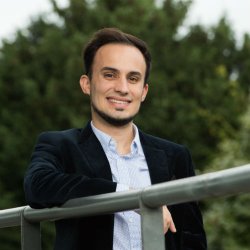
Joseph Gafaranga is a Professor in the Department of Linguistics and English Language at the University of Edinburgh, within the School of Philosophy, Psychology and Language Sciences. He supervises multiple PhD students and teaches undergraduate courses, with office hours on Mondays and Tuesdays from 10:00-11:00. His research interests align with sociolinguistics, language policy, and applied linguistics, reflecting the interdisciplinary focus of his department. He actively participates in research projects, though specific grant details are not disclosed here. His academic contributions include mentoring students engaged in topics such as language endangerment and digital sociolinguistics. While no awards are explicitly listed, his involvement in academic leadership and supervision highlights his scholarly impact. He coordinates academic activities through platforms like the Language in Context seminar series and maintains an online presence at his personal website .
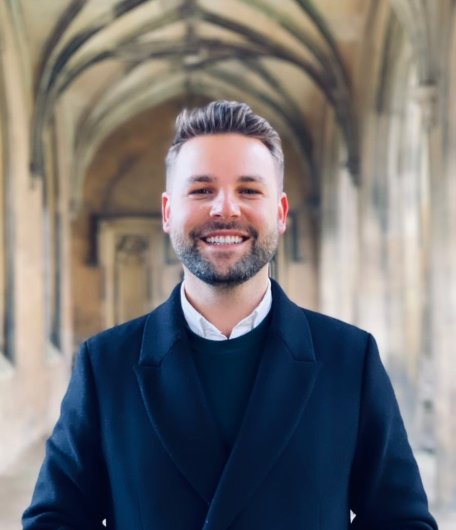
Kristian Roncero is a Researcher in Slavic Philology at Ludwig-Maximilians-Universität München. He holds a BA in Translation and Interpreting, and two MAs in Applied Linguistics and Linguistics. His research focuses on the morphosyntax of understudied Slavic varieties, particularly West Polesian, combining fieldwork and corpus-based approaches. Roncero has conducted extensive linguistic documentation in Belarus, Poland, and Ukraine, emphasizing typological and sociolinguistic aspects of small Slavic languages. Key research interests include inflectional morphology, suppletion patterns, and the grammaticalization of future tense forms in Eastern Slavonic dialects. He has contributed to language documentation projects, such as studies on Gakvarian Chamalal and Fa d'Ambô, and developed methodologies for replicable fieldwork practices. His recent publications address adnumerative forms in Slavic languages, access criteria for linguistic archives, and corpus analyses of suppletion in West Polesian. Roncero’s work bridges theoretical linguistics with applied fieldwork, aiming to preserve endangered language structures and advance comparative Slavic studies. Notably, he has collaborated with institutions like the University of Surrey and conducted fieldwork in remote Polesie regions, engaging with local communities to document endangered dialects. His interdisciplinary approach integrates sociolinguistic insights with morphosyntactic analysis, offering new perspectives on language contact and historical change.
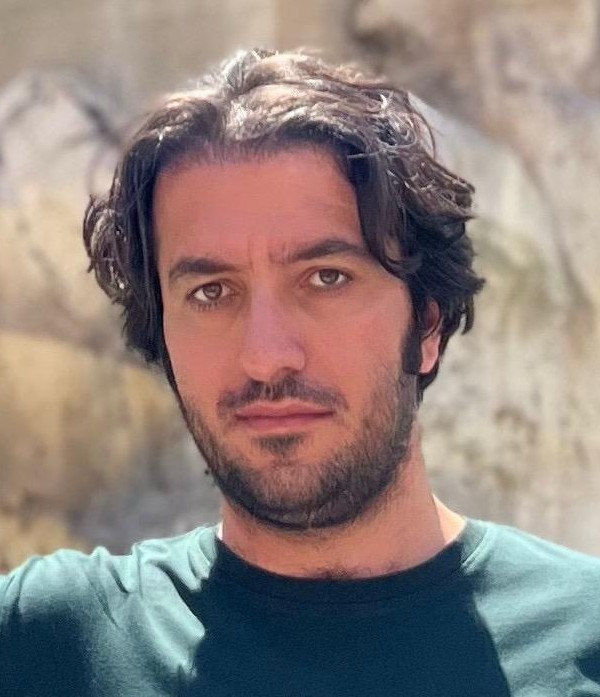
Wiktor Gebski is a College Research Associate and Rothschild Postdoctoral Fellow at the Faculty of Asian and Middle Eastern Studies (FAMES), University of Cambridge. His work focuses on preserving endangered Jewish Arabic dialects through extensive fieldwork and linguistic documentation. PhD in Arabic Dialectology from University of Cambridge (2022) Specializes in Jewish and Muslim varieties of Maghrebi Arabic Recipient of the Oliver Cromwell Prize in Jewish Studies His research spans language endangerment , syntax of spoken Arabic , and language contact between Arabic dialects and Israeli Hebrew . He has conducted fieldwork in Israel, France, and Tunisia, recording the last speakers of the Jewish Dialect of Gabes. Current activities include teaching Modern Hebrew at FAMES and advancing work on Jewish linguistic heritage preservation.
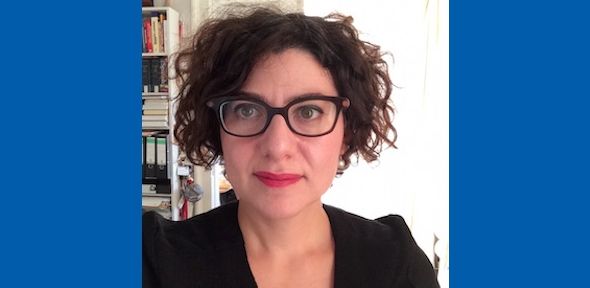
Dr. Pia Tenedero serves as Assistant Professor in the Department of English at the University of Santo Tomas (Manila, Philippines) and holds an Honorary Research Fellowship at Macquarie University (Sydney, Australia), where she completed her PhD. Her dual appointments reflect deep engagement with Philippine linguistic contexts and international academic collaboration. Her educational foundation includes a PhD in Linguistics from Macquarie University, with doctoral research focused on language practices and ideologies among globalized accountants. This work established her trajectory in critical sociolinguistics and professional discourse analysis. Tenedero's research spans English language learning, intercultural communication, multilingualism, and discourse analysis, with particular emphasis on globalization's impact on professional communication and social media. She critically examines linguistic landscapes, language ideologies, and the sociopolitical dimensions of multilingualism, especially within Philippine cultural contexts and transnational professional environments. Her work consistently bridges theoretical rigor with real-world applications in education and global workplaces. Analysis of her 2017-2024 publications reveals a cohesive trajectory examining language at the intersection of globalization, crisis, and professional identity. Early work established foundations in minority language studies, while pandemic-era research pivoted to lockdown communication and remote work discourse. Recent publications increasingly explore water metaphors in language research, faith-based communication, and Philippine linguistic policy, demonstrating methodological consistency in discourse analysis applied to evolving sociolinguistic challenges. No scientific awards were documented in the source materials. While specific student mentorship details are absent, her collaborative output—including co-authorship with Maria Regina P. Arriero and participation in the Next Gen Literacies network—indicates active academic community engagement. Her research networks extend to international collaborations, such as work with Prof Ingrid Gogolin on language perspectives.
Claire Nance is a Professor of Phonetics at Lancaster University's Department of Linguistics and English Language, within the Faculty of Arts and Social Sciences. Her research focuses on sociolinguistics, phonetics, and laboratory phonology, with a specialization in Celtic languages (particularly Scottish Gaelic), bilingualism, minority language revitalization, and ultrasound tongue imaging. She leads projects on North-West English dialects, such as the 'Lancashire Tongues' initiative, and studies intonation patterns in Glasgow Gaelic and Liverpool English. Her academic contributions include work on articulatory phonetics in multilingual contexts, the acoustics of Gaelic sonorants, and the sociolinguistic implications of language contact. She supervises PhD students in sociophonetics, bilingualism, and minority language studies. Nance is affiliated with the Phonetics Lab and collaborates on public engagement initiatives like 'Visible Voices' and 'Linguistics in the City,' bridging academic research with community outreach. Recent research projects include investigations into child language acquisition of Estonian palatalization and the phonetic dynamics of Gaelic-English bilingualism. She actively contributes to revitalization efforts for minority languages through both scholarly work and community-based activities.
Russell Gray is Leon and Anne Goldberg Professor at the Max Planck Institute for Evolutionary Anthropology, where he heads the Department of Linguistic and Cultural Evolution. He holds adjunct positions at the University of Auckland and Australian National University. Gray earned his PhD from the University of Auckland in 1990. His research spans cultural evolution, linguistics, animal cognition, and philosophy of biology. He pioneered computational methods for studying linguistic prehistory, resolving longstanding debates about Indo-European origins and Pacific settlement patterns. His work integrates phylogenetic analysis with cultural anthropology to examine how ritual practices and social structures co-evolve. Gray's publications demonstrate consistent focus on language diversification mechanisms, with recent work emphasizing quantitative database approaches to grammatical diversity. His Indo-European phylogeny research combines linguistic, genetic, and archaeological evidence to model population migrations. Honors include Fellowship in the Royal Society of New Zealand and the inaugural Mason Durie Medal for social science contributions. He has mentored numerous doctoral students in cross-disciplinary evolutionary approaches and leads international research teams studying cultural transmission.
Sonam Wangmo serves as a Newton International Fellow at the University of Oxford's Department of Asian and Middle Eastern Studies. Her academic work bridges Tibetan studies, anthropology, and sociolinguistics with a geographic focus on Eastern Tibet and the Himalayan region, examining how local communities navigate China's development policies and cultural preservation. Her research centers on six interconnected domains: rural transformations under China's urbanization policies; tourism-driven resettlement of Tibetan pastoralists; geopolitical impacts of the Belt and Road Initiative; digital media strategies among ethnic minority influencers; linguistic evolution of Tibetic languages; and cross-border identity formation. This interdisciplinary approach reveals how state narratives interact with local cultural practices, particularly through studies of historical figure appropriation in tourism development and grassroots pandemic responses. Recent publications demonstrate consistent focus on Eastern Tibet's sociocultural dynamics, with increasing attention to digital platforms and contemporary identity politics since 2020. Her work shows methodological rigor through linguistic analysis of minority languages combined with ethnographic documentation of community narratives. Scientific recognition includes: Newton International Fellowship Currently leading a British Academy-funded project on tourism narratives in Eastern Tibet, Dr. Wangmo teaches core Tibetan studies courses at Oxford including History and Civilisation, Classical Texts, and Language Revision. Her supervision emphasizes primary source analysis and fieldwork methodologies relevant to Himalayan ethnography, with particular focus on how traditional knowledge systems interface with modern development frameworks.
Dr. Serge Sagna is Lecturer in Linguistics at the University of Manchester, specializing in African language documentation and multilingualism studies. An ELDP PhD graduate from SOAS, he conducts fieldwork on Atlantic languages of Senegal, particularly Eegimaa, while advocating for mother-tongue education policies. Research Focus: Sagna's work spans noun class systems in Niger-Congo languages, multilingual practices in Casamance communities, child language acquisition in polyadic environments, and linguistic ethnobotany. His documentation efforts include radio programs and educational materials to support Eegimaa vitality. Publication Trends: Recent articles (2020-2022) emphasize acquisition in multilingual contexts, demonstrative systems, and noun-verb categorization in Eegimaa. Earlier work established foundational descriptions of Eegimaa grammar and ethnobiological classification. Community Engagement: Develops numeracy booklets and health materials in Eegimaa; hosts radio programs addressing health, education, and language revitalization in Senegal.
Professor Ioanna Sitaridou is Professor of Spanish and Historical Linguistics at the University of Cambridge's Faculty of Modern and Medieval Languages and Linguistics, where she also serves as Co-Director for the Cambridge Centre for Greek Studies. She is a Fellow, Tutor, and Director of Studies in Linguistics and Modern and Medieval Languages at Queens' College. Previously, she served as Head of the Department of Spanish and Portuguese from 2019-2021 and is Co-Editor-in-Chief for the linguistics journal Glossa Contact. Her educational background includes a PhD in Romance Linguistics from the University of Manchester (2002) under Nigel Vincent, an MA in Linguistics from University College London (1998), and a BA in French Philology from Aristotle University of Thessaloniki (1997), with part of her studies completed at the University of Lisbon through the Erasmus scheme. Sitaridou's research focuses on comparative and diachronic syntax of Romance languages, particularly 13th Century Spanish, dialectal Spanish, and dialectal Greek (especially Pontic Greek/Romeyka). She is renowned for her fieldwork on endangered languages including Romeyka in Turkey, where she documented this previously overlooked Greek variety, challenging established linguistic phylogenies. Her theoretical contributions advocate for a holistic approach to language contact without specialized contact theory, emphasizing the integration of syntactic theory, variation, acquisition, and sociolinguistics. Analysis of her recent publications reveals consistent focus on syntactic micro-variation in Greek and Romance varieties, particularly examining word order phenomena, null subjects, and contact-induced change. Her work often bridges theoretical syntax with sociolinguistic documentation, especially in endangered language contexts. The Romeyka research forms a significant thread, connecting diachronic syntax with language revitalization efforts. AHRC-funded research on Sri Lanka Afro-Portuguese Tübitak-sponsored project on Eastern Black Sea linguistic ecology CNRS-Inalco Paris fellowship Princeton, Harvard, and Oslo fellowships Leverhulme Early Career Fellowship (awarded to supervisee) Extensive media coverage including BBC, The Guardian, Der Spiegel Sitaridou has supervised over 15 PhD students and postdoctoral researchers, including notable scholars now at Oxford, Padua, and Nicosia. Her fieldwork spans Turkey (17 years on Romeyka), Gibraltar (Llanito), Canary Islands (Spanish), and Sri Lanka (Afro-Portuguese). She has delivered over 250 international talks and actively promotes linguistic diversity and heritage language preservation, particularly for female speakers in remote areas.
Li Jia is an Associate Professor in the College of Foreign Languages at Yunnan University, Kunming, China, holding a doctoral degree from Macquarie University (2017). Her academic work centers on advancing language education and research within multilingual and multicultural contexts across Southwest China and Southeast Asia. Her research spans multilingualism, language in education, and intercultural communication with a critical lens on social justice. She investigates language dynamics among minority communities like the Hani ethnic group, explores informal language acquisition through Korean dramas (Hallyu) and esports, and analyzes linguistic diversity challenges within international education frameworks like RCEP. Her work consistently connects language practices to power structures, identity formation, and community empowerment. Analysis of her publications (2014-2023) reveals a cohesive trajectory examining how global cultural phenomena intersect with local language ecologies. Key trends include the impact of digital media on language learning, preservation of endangered minority languages, and linguistic dimensions of cross-border migration. Her scholarship demonstrates particular attention to how marginalized communities navigate language in contexts of globalization and crisis. Professor Li actively collaborates with scholars including HE Bin, LI Yongzhen, and LV Yong on projects addressing minority language empowerment and Chinese dialect revitalization ('fangyan'). While specific grant details and advised students aren't documented in the source material, her regional focus on Yunnan and cross-border Southeast Asian dynamics suggests engagement with community-based language initiatives. Her research context indicates involvement in interdisciplinary teams examining language policy implementation in Southwest China, particularly regarding educational equity for ethnic minorities and linguistic adaptation along new infrastructure corridors like the China-Laos-Thailand railway.
Dr Masoud Mohammadirad is a Researcher in the Faculty of Asian and Middle Eastern Studies at the University of Cambridge, specializing in Iranian linguistics and language documentation. His work focuses on Kurdish and Gorani languages, particularly in areas such as language contact, morphology, and corpus linguistics. Education: PhD in Linguistics (2020), Sorbonne Nouvelle, Paris III M.A. in General Linguistics (2013), Bu-Ali Sina University B.A. in Teaching English as a Foreign Language (2010), Sanandaj University Research Interests: Western Iranian languages (Hewrami, Laki, Kurdish dialects) Language contact phenomena in the Zagros region Historical linguistics and sound change Morphosyntactic typology Projects: ERC-funded project "Echoes of Vanishing Voices" (2021-2025) investigating minority language histories in West Asia Co-authoring A Grammar of Hewramî (forthcoming) Teaching: "Sounds and Words" (Li1) "Historical Linguistics" (Li11)
Dr. Joanna McPake is a Reader in Education at the University of Strathclyde, specializing in bilingual education and language revitalization. Her research focuses on developing transformative language education frameworks, particularly for minority languages. She has led significant projects including the transformative pedagogies for language revitalization initiative and evaluations of Gaelic early years education. Dr. McPake's research interests span: Bilingual education methodologies Heritage language preservation Teacher development for multilingual classrooms Community-based language initiatives Educational policy for minority languages Her recent publications demonstrate a strong focus on practical applications of multilingual pedagogies, community engagement in language preservation, and innovative teacher training approaches. Research consistently addresses linguistic diversity in educational settings.