Payam Barnaghi is a Professor and Chair in Machine Intelligence Applied to Medicine at Imperial College London's Department of Brain Sciences, part of the Faculty of Medicine. He holds multiple leadership roles, including Co-Director of the School of Convergence Science in Human and Artificial Intelligence and Deputy Head of Neurology. His research focuses on AI-driven healthcare solutions, particularly in neurosciences and dementia care. He leads the Translational Machine Intelligence group at the UK Dementia Research Institute (UK DRI) and is a Visiting Professor at University College London's Institute of Child Health. His affiliations include the NVIDIA Deep Learning Institute, the British Heart Foundation Centre for Research Excellence, and the UK DRI Care and Research Technology Centre. He has received awards such as the Wellcome Trust Mental Health Ideathon Award (2023) and the IEEE Outstanding Leadership Award (2017). His work emphasizes remote patient monitoring, digital biomarkers, and explainable AI for early health event detection. Key projects include the TIHM (Technology Integrated Health Management) initiative for dementia care, leveraging wearable sensors and machine learning. He contributes to interdisciplinary efforts in smart care ethics and has published extensively on topics like neural network applications, healthcare data analysis, and clinical decision support systems.
Lillie R. Albert is a Professor and Program Director for Secondary Education at Boston College’s Lynch School of Education, Department of Teaching, Curriculum, and Society. Her work bridges mathematics education, sociocultural contexts, and social justice, focusing on teacher training and equity in high-need schools. Education: Ph.D. (University of Illinois at Urbana-Champaign), M.A. (Xavier University), B.A. (Dillard University) Her research explores the pedagogical implications of writing-to-learn strategies, Vygotskian psychology in mathematical problem-solving, and multicultural education. She leads a $1.78 million NSF-funded project preparing teacher leaders for Boston’s high-need districts and co-authored a book on South Korean elementary math teaching. Recent publications highlight multilingual education, metalinguistic awareness, and textbook analysis. She received the 2023 Drylongso Anti-Racism Leadership Award and has secured multiple NSF and foundation grants for STEM equity initiatives. Scientific Awards: Drylongso Anti-Racism Leadership Award (2023) She has contributed to projects like WGBH Educational Foundation’s Keep Going! Building a Culture of Perseverance in the Math Classroom and developed technology badges for teacher preparation programs.
Richard J. Senghas is a Professor of Anthropology at Sonoma State University . His work bridges linguistic anthropology and Deaf studies , focusing on the evolution of Nicaraguan Sign Language (ISN) and sociocultural dynamics in intentional communities. Education BA, University of Massachusetts (Amherst), 1978 MA, University of Rochester, 1994 PhD, University of Rochester, 1997 His research examines how language emergence intersects with identity formation , community development , and political factors . He has published extensively on ISN’s development, sociolinguistic variation in sign languages, and cybernetic models of language change. Key publications include works in The Routledge Handbook of Linguistic Anthropology (2017), Annual Review of Anthropology (2002), and edited volumes on Deaf communities. His 2017 chapter explores communicative practices in sign languages, while older works analyze ISN’s birth and sociolinguistic diversity in ASL. Scientific Awards Edward Sapir Book Prize, Society for Linguistic Anthropology (2001) As a California State University Academic Senate representative, he advocates for academic governance. Collaboratively, he works with his sister Ann Senghas (Barnard College) and other scholars like Judy Pyers and Lorraine Monaghan .
Fernando Manuel Marques Batista is an Associate Professor at ISCTE – University Institute of Lisbon, Department of Information Science and Technology, and an integrated researcher at INESC-ID Lisbon. He serves as the Executive Coordinator of the Human Language Technologies (HLT) Scientific Area at INESC-ID and is a member of its Scientific Council. He previously held leadership roles including President of the Pedagogical Council of ISCTE-IUL (2017–2019) and member of its Standing Committee (2015–2017). Research Interests: Natural Language Processing Machine Learning Text and Speech Processing Sentiment and Emotion Analysis Hate Speech Detection Social Media Analytics Automatic Speech Recognition and Transcription His recent publications reflect a strong focus on applying NLP and machine learning to social media, with particular emphasis on hate speech detection, sentiment analysis, and user behavior modeling. He has also contributed significantly to speech processing, including punctuation restoration and prosody modeling, and to digital humanities through medieval text analysis. His work spans both technical innovation and real-world applications in tourism, finance, and public discourse. Scientific Recognition: Senior Member of IEEE (since 2016) Member of ISCA (International Speech Communication Association) Fernando Batista actively advises numerous PhD and Master’s students, supervising research in areas such as generative AI, hate speech detection, sentiment analysis, and economic forecasting. He has coordinated research projects like SPEDIAL and AppRecommender and is involved in organizing major conferences including PROPOR, EAMT, IPMU, and the Lisbon Machine Learning Summer School (LxMLS), where he has served in editorial and technical roles. Research Labs and Teams: He is a key member of the HLT@INESC-ID research group, contributing to its leadership and scientific direction. This group focuses on human language technologies, including speech processing, natural language understanding, and multilingual systems.
Tommy Löfstedt is an Associate Professor at Umeå University , affiliated with the Department of Computing Science and the Department of Mathematics and Mathematical Statistics. His research focuses on machine learning , computer vision , and medical image analysis , with applications in life sciences, radiation therapy, and biomedical imaging. He leads multiple research projects, including AI-driven delineation in radiation therapy, quantitative MRI for radiotherapy, and machine learning for plant nutrient uptake. Current research emphasizes structured regularization methods to improve model interpretability and robustness. Key applications include medical image segmentation , Alzheimer's classification , and uncertainty estimation in MRI . Recent publications highlight his work on morphological regularization , adversarial attack mitigation , and multi-task learning in medical imaging contexts. His projects span 2022–2026 with funding for pediatric oncology automation and gynecological cancer staging. Affiliated with both computing and mathematical departments, he bridges algorithm development with applied mathematical frameworks in medical and life science domains.
Yan Chen is an Assistant Professor at the Virginia Tech College of Engineering , where he leads the PRIME Lab (Programming with Intelligent Machines & Environments) . His work focuses on creating interactive Human-AI systems to enhance real-time data analysis and programming education, particularly addressing barriers in collaborative learning environments. University of Toronto (Postdoctoral Fellow) University of Michigan (Ph.D., Information Science) University of Colorado, Boulder (BS/MS in Applied Math & Electrical & Computer Engineering) His research bridges Human-Computer Interaction (HCI) and Computer Science Education , with a focus on real-time data analysis , AI-driven programming assistance , and scalable learning tools . He employs LLMs and human-centered design to simplify complex computational processes, enabling data workers to detect critical patterns efficiently. Recent publications highlight trends in generative AI for education , proactive AI programming support , and collaborative analytics . Key themes include real-time classroom insights , intergenerational smartphone learning , and automated feedback systems . Scientific recognition includes: 🏆 Best Paper at L@S 2024 🏅 Best Paper Honorable Mention at CHI 2023 🏅 Best Paper Honorable Mention at UIST 2022 🏆 Best Short Paper at VL/HCC 2020 He mentors a team of PhD and MS students in projects spanning AI-assisted education, web automation, and collaborative coding tools, with active recruitment for future research directions.
Professor Marilyn A. Walker is a leading academic in Natural Language Processing and Dialogue Systems at the University of California Santa Cruz , with significant contributions to conversational agents, personality modeling, and narrative analysis. She has held visiting roles at Google Research and leadership positions at University of Sheffield and AT&T Labs. Education : Ph.D. in Computer and Information Science (University of Pennsylvania, 1993), M.A. in Linguistics (University of Pennsylvania, 1993), M.S. in Computer Science (Stanford, 1988), B.A. in Computer and Information Science (UC Santa Cruz, 1984). Research Interests include Natural Language Processing , Conversational Agents , Dialogue Systems , and Personality Modeling . Her work bridges machine learning with linguistic theory to enhance dialogue adaptivity and expressive language generation. Scientific Awards include ACL Fellow (2016) Best Paper Awards at SIGDIAL 2016 and 2014 Royal Society Wolfson Research Merit Award (2003-2009) Grants exceed $2.5M, including NSF awards for projects like Interactive Dialog Agents for Social Language Development (2017) and Processing Opinion Sharing Dialog in Social Media (2011). She has also received corporate funding from Amazon , Fujitsu , and Hitachi .
Michele Cagol is a Professor at the Free University of Bozen-Bolzano , Faculty of Educational Sciences. Their work bridges pedagogy, emotional education, and ecological sustainability, with a focus on relational learning frameworks and multisensory educational practices. Research Themes : Emotional education, educational ecology, sustainability pedagogy, media and communication education, teacher training. Projects : Lead participant in the EU Interreg Alpine Space project FRACTAL , promoting green space awareness in the Alpine region. Recent publications emphasize radical relational pedagogy, ecological ethics, and the role of wonder in learning. Notable methodologies include intra-actionist music composition and microteaching for multilingual competencies. Teaching responsibilities span General Pedagogy , Social Education , and teacher training for primary/middle school contexts.
Elif Bilgic is an Assistant Professor and Education Scientist at McMaster University's Department of Pediatrics. Her research program focuses on performance assessment across medical specialties, with an emphasis on optimizing clinical and simulation-based evaluations through technological innovation, interdisciplinary collaboration, and competency-based frameworks. McMaster University, Department of Pediatrics (2025-present) McGill University, Department of Surgery (2018-2025) Research Interests span performance assessment in surgical and pediatric education, virtual reality simulations, and artificial intelligence applications in health sciences training. She investigates: Valid assessment tools for laparoscopic suturing and endoscopic procedures Extended reality (XR) adoption in Canadian medical simulation centers Emotional impacts of competency assessment mandates on trainees and faculty Interdisciplinary AI integration in surgical education Educational analytics for skill acquisition tracking Teaching includes modules like The Fundamentals of Skill Acquisition (HSEDUC 704) and Program Evaluation in Health Sciences Education (HSEDUC 710). Her 2025 publications highlight advancements in simulation platforms for pediatric acute care, AI implications in surgical training, and emotional analysis of assessment systems.
Dr. Richard Segall is a Professor in the Department of Information Systems and Business Analytics at Arkansas State University , affiliated with the Beck College of Sciences & Mathematics . He is also affiliated faculty in the Master of Engineering Management (MEM) Program , the Environmental Sciences Program , and serves on thesis committees at the University of Arkansas at Little Rock (UALR) . Education: Ph.D. in Operations Research, University of Massachusetts at Amherst (1984) M.S. in Operations Research and Statistics, Rensselaer Polytechnic Institute (1975) M.S. in Mathematics, Rensselaer Polytechnic Institute (1973) B.S. in Mathematics, Rensselaer Polytechnic Institute (1971) Dr. Segall's research spans data mining, text mining, web mining, big data analytics, bioinformatics, supercomputing applications, and mathematical modeling . His work bridges business analytics and computational biology , with a focus on transdisciplinary applications in agriculture, healthcare, and space systems. His recent publications emphasize genomic data analysis , plant disease diagnostics , AI-driven healthcare solutions , and space technology forecasting . The integration of machine learning , data visualization , and open-source tools is a recurring theme across domains. Scientific Awards & Grants: Three research awards from the National Research Council (NRC) Software grants from Oracle Corporation and SAS Institute, Inc. Dr. Segall has served on the editorial boards of the International Journal of Data Science , International Journal of Data Mining, Modelling and Management , and International Journal of Fog Computing . He previously contributed to the Arkansas Center for Plant-Powered Production (P3) and currently participates in the Center for No-Boundary Thinking (CNBT) .
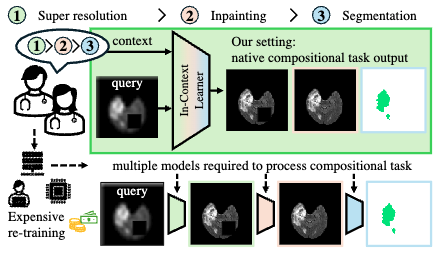
Prof. Dr. Erik Rodner is a faculty member at the University of Applied Sciences Berlin (HTW Berlin), where he serves as a Professor for Machine Learning and Data Science. He also contributes to the School of Engineering Sciences - Technology and Life. His research spans computer vision, machine learning, and biomedical applications, with a focus on learning with limited data, robust visual recognition models, and medical image analysis. He has developed innovative methods for medical diagnostics, industrial classification, and anomaly detection. Recent publications (2025-2016) highlight his expertise in visual in-context learning, semi-weakly segmentation, and active learning frameworks. He has collaborated with institutions such as ZEISS Group, Friedrich Schiller University Jena, and UC Berkeley. Scientific Awards: Award for Excellent Teaching (2023)
Prof. Dr. Poldi Kuhl is a Professor of Educational Psychology at Leuphana University , Lüneburg, since 2021. Affiliated with the Institute of Psychology in Education (IPE) and the Center for Empirical Research on Language and Education (ERLE) , Kuhl specializes in educational psychology, developmental psychology, and inclusive education. Their research focuses on data-driven decision-making, digital learning platforms, academic language demands, and teacher professional development. Education: Diploma in Psychology (2003) and PhD in Philosophy (2008) from Freie Universität Berlin. Kuhl’s recent work examines how academic language features affect learning outcomes, digital data utilization in primary education, and mental health literacy among teachers. Their publications span topics from virtual reality training tools to inclusive teaching strategies in mathematics. Kuhl’s career includes leadership roles at the Research Data Center (FDZ) at the Institute for Quality Improvement in Education (IQB) and a Junior Professorship at Leuphana University. They have collaborated with institutions like the Universitat Oberta de Catalunya and the Max Planck Institute for Human Development .
Professor Trina Myers serves as the Head of School for the School of Information Technology at Deakin University's Faculty of Science Engineering and Built Environment. With extensive experience in academia and research leadership, she plays a pivotal role in shaping IT education and research directions at Deakin. She is also an active member of the Australian Council of Deans of ICT (ACDICT), having served as its immediate past President. Her educational background includes: Doctor of Philosophy in Computer Science from James Cook University Master of Business Administration from James Cook University Master of Information Technology from James Cook University Professor Myers' research focuses on semantic technologies, ontology engineering, Internet of Things, knowledge management, natural language processing, and human-computer interaction . Her work emphasizes interdisciplinary collaboration, bridging technology with fields such as healthcare, marine science, environmental conservation, and business. She has pioneered approaches in academagogy (academic gamification) to enhance online learning engagement, particularly for adult learners. Her IoT research has significant applications in healthcare space optimization, environmental monitoring, and resource management. Her recent publications demonstrate a strong trajectory in applying AI and IoT technologies to solve real-world problems, particularly in healthcare, education, and resource optimization. There's a clear pattern of interdisciplinary work connecting computer science with healthcare, education, and environmental science. Her research increasingly focuses on human-centered technology design, especially for vulnerable populations like adolescents with autism spectrum disorder. Her notable achievements include: Fellow of the Australian Computer Society (2023) Australian Awards for University Teaching (AAUT) Teaching Award (2020) Women in IT Professional Leadership Award Finalist (2020) Asia-Pacific International Triple E Entrepreneurial Educator of the Year Award (1st runner-up, 2020) Australian Computer Society, National Digital Disruptor ICT Educator of the Year (2019) Professor Myers actively supervises doctoral students across diverse research areas including gamification in language learning, brain tumor analysis using deep learning, AI in higher education, AI for refugee resilience, data integrity in edge environments, and quantum-driven satellite networking. She has secured significant research funding, including a recent grant for "Indiginizing ICT Curriculum: A Starter Framework for the Community of Practice" through the Australian Council of Deans of ICT. Her teaching philosophy emphasizes active learning methodologies, Process Oriented Guided Inquiry Learning (POGIL), blended learning, and collective intelligence approaches.
Amber B. Ray, Ph.D. , is an Associate Professor of Special Education at the University of Illinois Urbana-Champaign , where she develops strategy and self-regulation approaches to literacy instruction for students with disabilities and diverse learning needs. Her work emphasizes professional development for educators in writing and reading instruction. Education : Ph.D. in Learning, Literacies, and Technologies with specialization in Special Education from Arizona State University Research Focus : Dr. Ray’s work centers on Self-Regulated Strategy Development (SRSD) for improving writing outcomes across educational levels (elementary to adult learners). She investigates technology integration, professional development models like Practice-Based Professional Development (PBPD) , and equity in teacher preparation programs, particularly for racially/ethnically diverse candidates. Publication Trends : Recent studies (2023-2025) highlight SRSD applications for argumentative/informative writing in K-12 settings, PBPD for teacher training, and addressing systemic barriers like Praxis Core: Writing exam requirements through evidence-based instruction. Instructional Leadership : Dr. Ray teaches advanced courses SPED 440: Instructional Strategies I and SPED 441: Instructional Strategies II , focusing on inclusive pedagogy, legal compliance, and data-driven instructional design.
Michael Henderson serves as a Lecturer at Monash University within the School of Curriculum, Teaching and Inclusive Education. His academic profile reflects deep engagement with contemporary educational challenges through research spanning adult learning, digital technologies, and pedagogical innovation. His research interests encompass: Adult and Vocational Education Higher Education Systems Educational Technology Integration Feedback Literacy and Assessment Practices Digital Literacy for Marginalized Populations Artificial Intelligence in Learning Environments Creativity in Educational Contexts Henderson investigates how generative AI transforms feedback mechanisms, with emphasis on student perceptions of AI-generated versus teacher feedback. His work critically examines digital empowerment frameworks for refugee and migrant learners, addressing systemic barriers in technology access. Recent publications reveal growing focus on decolonizing creativity research, ethical AI implementation in Australian policy contexts, and play-based digital safety education for young children. This trajectory demonstrates consistent attention to equity, cultural responsiveness, and practical applications of emerging technologies in diverse educational settings. His scientific recognition includes: Dean's Award for Programs that Enhance Learning (2019) Henderson currently leads the international research project "Active Learning about Academic Publishing through Collaborative Online International Learning" (2024-2025), examining cross-cultural academic skill development. His upcoming presentation at the 2025 Australian Association for Research in Education Conference will address collaborative learning frameworks. Though specific student mentoring details are unavailable, his project leadership suggests active involvement in guiding emerging researchers through international collaborations focused on educational technology and publishing practices.