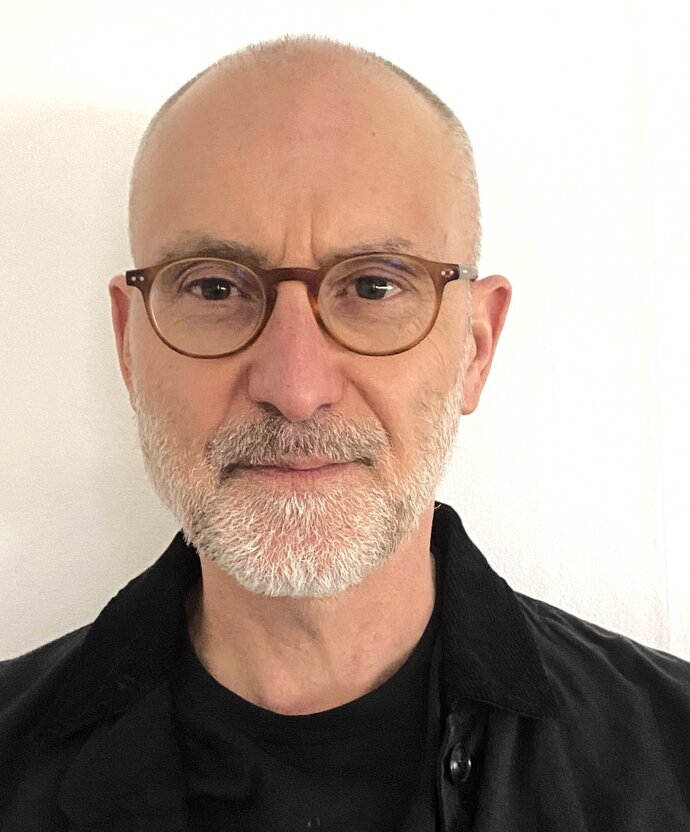
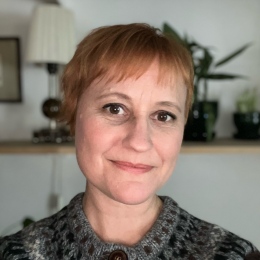
Thomas Hellstrom is a Professor at the Department of Computer Science , Umeå University, Sweden. He leads the Intelligent Robotics group and is affiliated with the Center for Transdisciplinary AI . His research spans human-robot interaction (HRI) , deep learning applications , robot ethics , and field robotics for agricultural and forestry automation. Coordinated EU projects: INTRO (FP7/ITN), SOCRATES (H2020), CROPS, SWEEPER Developed intelligent walker for stroke patients with CMTS/MT-FoU/Umeå Stroke Center Key contributions in robot learning , causal reasoning , and natural language understanding Research Focus : His work emphasizes understandability in robot behavior, including causal modeling , multi-modal communication , and ethical frameworks for autonomous systems. Current project ROCC (Swedish Research Council) explores robot causality, while SOCRATES addressed social robotics in eldercare. Scientific Awards : • Erdös-Bacon-Sabbath number ≤ 13 Grants & Funding : • ROCC (2023, 3.7M SEK, Principal Investigator) • SCAI (2022, 3.7M SEK, Co-Applicant) • VINNOVA (2019, 3.47M SEK, Co-Applicant)
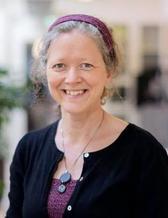
Alastair Henry is a Professor in Language Education at the Centre for Languages and Literature (SOL) , Lund University. His research focuses on the psychology of language learning , particularly motivation, communication behaviors in multilingual contexts, and teacher identity development. Research Focus Motivation in English, Modern Languages, and Swedish as a Second Language Teacher identity and relational practices Multilingualism and post-migration language dynamics Selected Scientific Awards 2024 IAPLL Distinguished Scholar Award 2023 Modern Language Journal Research Article Award 2013 Christopher Brumfit Thesis Award (Runner Up) Supervision & Projects Supervising PhD student Sophia Juul Principal Investigator for Progress in Language Learning (PILL), 2025–2028 (4.5M SEK) Co-PI for Motivation in Modern Languages (MoMS) and Project Leader in TEAM (25.8M SEK)
Thomas Karv is an Associate Professor of Political Science at Mid Sweden University in Sundsvall, where he has served as Senior Lecturer since February 2022 and was promoted to Associate Professor in autumn 2024. He currently holds the position of program manager for the Social Sciences Program and is on research leave throughout 2025. He earned his Doctor of Political Science from Åbo Akademi University in Vaasa, Finland, in 2019, with a dissertation focused on public opinion toward the European Union. Dr. Karv's research centers on political behavior , EU studies , and democratic innovations , with specialized expertise in referendum effects, mandate accumulation among politicians, and Eastern European political attitudes. His work frequently examines how political events shape public trust through survey experiments and comparative analysis, particularly in Nordic and post-communist contexts. Analysis of his 2021-2025 publications reveals consistent focus on local referendum dynamics and multiple-mandate holding, often in collaboration with Fredrik Malmberg. His research demonstrates methodological diversity through survey experiments, case studies, and cross-national comparisons, with geographic emphasis on Finland, Sweden, and EU post-communist states. No scientific awards are documented in the available information. As Social Sciences Program manager, Dr. Karv oversees curriculum development while teaching international politics, social science methods, and EU knowledge courses. His research leave in 2025 suggests active grant-supported projects, though specific funding details aren't provided. He maintains strong institutional engagement through editorial work including the 2022 volume Svenskfinland i Pandemitider . No dedicated laboratory or research team infrastructure is mentioned in the source materials.
Tania Al Saadi is an Associate Professor of Arabic at Stockholm University's Department of Asian and Middle Eastern Studies, where she has taught Arabic language and modern Arabic literature since 2007. She received her PhD in Arabic from Sorbonne-Nouvelle University (Paris III) in 2008. Her primary research focuses on narratology in modern Arabic literature, with particular attention to narrative techniques in Arabic novels. She has conducted extensive research on the beginnings of novels across various 20th century works, examining how narrative openings function within the broader structure. Her scholarly interests also include exile literature, representations of despotic figures, gender and feminism in literature, and contemporary representations of death and cemeteries in Iraqi novels. Dr. Al Saadi's recent publications demonstrate a growing interest in food representation in Arabic literature, culminating in her forthcoming edited volume 'Eating Words: Food in Modern Arabic literature' (2025). Her research shows a consistent pattern of examining how cultural and political realities are reflected through narrative structures and thematic concerns in Arabic fiction, with particular attention to Iraqi and Egyptian literary traditions. Current research project: 'Death in contemporary Iraqi novels' Active contributor to Encyclopaedia of Islam, THREE As an educator, she teaches Arabic language and modern Arabic literature at both undergraduate and advanced levels. Her supervision of student theses demonstrates her commitment to mentoring the next generation of scholars in Arabic studies, with students working on topics ranging from identity in Iraqi literature to food representation in Lebanese young adult fiction.
Tove Nilsson Gerholm serves as Lecturer and Associate Professor (Docent) at Stockholm University's Department of Linguistics within the Faculty of Humanities. She is actively affiliated with the Stockholm Babylab, which studies infant language development through multiple parallel research projects and international collaborations. Her research focuses on child language development, particularly examining how interaction behaviors between children and parents influence language acquisition. She has led longitudinal studies following over 70 children from infancy to age eleven (2013-2024). Her work bridges linguistics, developmental psychology, and cognitive neuroscience, with particular emphasis on educational interventions in preschool settings. Dr. Gerholm's research portfolio includes significant projects such as MINT (investigating interaction's role in language development), Brain Pathways in Preschool, and INVENT (studying children's language ability at school start). Her publication record demonstrates expertise in randomized controlled trials within educational contexts, examining how pedagogical approaches affect language development, executive functions, and socioemotional skills in preschool children. Her scientific contributions include: Designing and implementing large-scale intervention studies across 18 preschools Developing research protocols for longitudinal child language studies Investigating emotive language development in children aged 0;9 to 5;10 Exploring bidirectional collaborations between researchers and educators Dr. Gerholm maintains an active research agenda with recent publications focusing on pedagogical methodologies in Swedish preschools and their effects on multiple developmental domains in young children.
Karl Palmskog is a Lecturer at KTH Royal Institute of Technology in the Division of Theoretical Computer Science and the STEP research group. His work focuses on program verification and proof engineering, with particular emphasis on developing techniques and tools based on proof assistants for constructing functionally correct and secure software systems. Palmskog received his Ph.D. in Computer Science in 2014 from KTH, advised by Mads Dam, and his M.Sc. in Computer Science and Engineering from KTH in 2007. Prior to his current position, he was a postdoc at The University of Texas at Austin and University of Illinois at Urbana-Champaign. His research interests span programming languages, software engineering, and formal verification, with a particular focus on developing techniques and tools based on proof assistants. He is an avid user of the Coq proof assistant for both proving and programming, often complemented by OCaml, and also utilizes HOL4 and other ML family dialects. His work bridges theoretical foundations with practical applications, particularly in the domains of blockchain systems, distributed systems, and automotive software verification. Analysis of his recent publications reveals a strong focus on Coq-based verification, with significant contributions to proof engineering tools and methodologies. His work includes developing tools for regression proving, change impact analysis, mutation testing for Coq projects, and lemma name suggestion using deep learning. There's also a growing trend toward applying formal methods to real-world systems like blockchain protocols and automotive software. Palmskog has been involved in several research projects, including Coq-community Proof Engineering and Distributed Components. His past projects include Trustfull (SSF), Model-based Event Driven Scalable Programming for the Mobile Cloud (NSF), Highly Adaptable and Trustworthy Software (EU FP7), and 4WARD Future Internet (EU FP7). As an educator, Palmskog has served as examiner, course responsible, teacher, and assistant for various courses including Algorithms, Data Structures and Complexity; Degree Projects; Game Theory; Parallel and Distributed Computing; and Programming Paradigms. His work on Chip, a Coq formalization of change impact analysis, demonstrates his commitment to creating practical, certified tools that bridge formal methods with software engineering practice.
Jonatan Pettersson is an Associate Professor in Scandinavian languages at Stockholm University, working within the Department of Swedish Language and Multilingualism. His academic work focuses on medieval textual culture, Scandinavian philology, and historical linguistics, with particular emphasis on Bible translations and the evolution of Old Swedish language. He is actively involved in two key research groups: Scandinavian Philology and Language History, and Network Language and Power. Dr. Pettersson's research interests primarily center on medieval textual culture, with special focus on Bible translations in the Nordic region, vernacularization processes, and manuscript studies. His work examines how language evolved from Old Swedish to Early Modern Swedish, particularly through religious texts. He investigates the relationship between language, power structures, and cultural change in medieval Scandinavia, analyzing how translation practices reflected and shaped societal transformations. His research also explores the literary reception of courtly culture and romance literature in East Scandinavia. His recent publications (2021-2025) demonstrate a consistent focus on change in medieval textual culture, particularly examining how biblical texts were translated and adapted in the Nordic context. His work shows increasing attention to methodological approaches for studying textual change, with publications from 2023-2025 forming a cohesive exploration of models of change. The research spans from specific manuscript analyses to broader theoretical considerations of how we conceptualize textual evolution. Dr. Pettersson is actively involved in the Scandinavian philology and language history research group, which focuses on the study of language and literature from older periods, particularly runic, Old Swedish, Old Icelandic, and Early Modern periods. He also contributes to the Network Language and Power, which examines how language interacts with power structures - a field that has gained relevance with rising populism and societal polarization.
Maria Nilsson is a Lecturer in Language Didactics at Stockholm University's Department of Subject Didactics, specializing in English language education for younger students (grades F-3 and 4-6). With a PhD in language didactics defended in 2020, she has established herself as a researcher in primary language education, foreign language anxiety, and classroom interaction dynamics. Her research interests include: Ways to promote oral classroom interaction Teaching in knowledge-heterogeneous classrooms Literature didactics, particularly picturebook read-alouds Teacher education and VFU (school-based education) Collaboration between school and academia Foreign language anxiety and sense of agency among young learners Numerous presentations at international conferences (Krakow, Oxford, Portland, Rio de Janeiro, Shanghai, Groningen, Copenhagen, Vienna, Kristiansand, Växjö, Bolzano, Vasa) demonstrate her active participation in the global language education research community. Her work consistently addresses the challenges of teaching English in primary schools, with particular attention to anxiety, learner engagement, and effective classroom practices. Her recent publications (2019-2024) reveal a strong focus on: The potential of picturebooks to enhance engagement and language learning The challenges of teaching in heterogeneous language classrooms The complex relationship between foreign language anxiety and classroom participation How young learners perceive their agency in language learning contexts Maria Nilsson has made significant contributions to understanding how to create engaging and effective language learning environments for young students. Her work bridges theory and practice, drawing from her extensive background as a primary school teacher (grades 4-9 in Swedish, English, and Spanish) before transitioning to academia. She has previously held a post-doc position at Uppsala University working on interactive reading aloud of multimodal authentic literature and has taught in various teacher education contexts including Lärarlyftet, övningsskoleprojektet, and mentor training programs.
Frida Rudolphi serves as a Researcher at the Swedish Institute for Social Research (SOFI) at Stockholm University and as an Assistant Professor (lektor) in the Department for Social Work at Umeå University. Her work focuses on understanding inequality in educational systems, particularly examining how social background, ethnic origin, gender, and family structure intersect with schooling outcomes across different educational stages. Her research employs a multidimensional approach to educational inequality, utilizing quantitative data and methods to examine both primary effects (differences in school performance) and secondary effects (differences in educational choices given performance). She investigates how these mechanisms operate across different educational transitions in Sweden and through comparative studies in England, Germany, the Netherlands, and Norway. Her work reveals important insights about immigrant optimism, gender differences in educational outcomes, and how choice-driven education systems affect different student populations. Rudolphi's publication record demonstrates consistent scholarly output spanning from the early 2000s to the present, with a particular focus on educational transitions, social stratification, and immigrant integration. Her research shows evolving patterns of inequality, with declining overall social class inequality in educational transitions since the mid-20th century, though primary effects remain substantial. Her comparative work across Western countries reveals that female educational advantage persists among second-generation immigrants despite varying gender norms in countries of origin. She actively participates in multiple research projects including IntegrateYouth (examining youth integration across five countries), Gender differences in education, Interlocking inequalities (a multidimensional perspective on inequality in Sweden), and YOUNGWORK (studying early labor market outcomes). Her work on computer gaming and educational outcomes represents a more recent expansion of her research interests into understanding contemporary influences on youth development.
Gunilla Gren-Eklund is a Professor in Indology at the Department of Linguistics and Philology, Faculty of Languages, Uppsala University. Her academic career spans several decades with significant contributions to Indology, historical linguistics, and Swedish academic history. Her research interests encompass: Indology and Sanskrit studies Historical linguistics of South Asian languages 17th century European academic history Swedish intellectual history Manuscript studies and lexicography Comparative literary traditions Gren-Eklund's scholarly work demonstrates a consistent focus on the intersection of language, history, and culture across different civilizations. Her publications reveal expertise in both South Asian linguistic traditions and European academic history, particularly from Sweden's 'Great Power Era.' Her recent research continues to explore historical linguistic phenomena while examining early European documentation of South Asian languages. She has made significant contributions to understanding Hindustani grammar, Sanskrit poetics, and the development of academic institutions in early modern Europe. As a long-standing editor of the journal Orientalia Suecana , she has helped shape scholarly discourse in Indology, Iranian, Semitic and Turkic studies. Her editorial work spans multiple decades, with involvement in issues from 2000 through 2020. This journal has served as an important platform for interdisciplinary research connecting European and South Asian academic traditions. Her scholarly trajectory shows a remarkable ability to bridge diverse academic traditions, connecting linguistic analysis with historical context across different cultures and time periods. This interdisciplinary approach has made significant contributions to Scandinavian Oriental studies and the understanding of historical linguistic documentation.
Olaf Hartig is a Senior Associate Professor at Linköping University's Department of Computer and Information Science (IDA), affiliated with the Database and Information Techniques (ADIT) division. He is also an Amazon Scholar collaborating with the Neptune graph database team. His research focuses on data management, semantic web technologies, graph databases, and distributed data systems. Hartig holds a PhD from Humboldt-Universität zu Berlin and is a Docent at Linköping University. He has received numerous awards, including the SWSA Distinguished Dissertation Award and eight best paper awards, and was selected as a Wallenberg Academy Fellow in 2024. Education: PhD in Computer Science (Humboldt-Universität zu Berlin), Docent (Linköping University). Research interests span query processing for Linked Data, federated systems, RDF and GraphQL semantics, and knowledge graph construction. He leads research groups in Database and Web Information Systems and Semantic Web Technologies at IDA. Key achievements include pioneering traversal-based query execution, developing Triple Pattern Fragments, and contributions to standards like RDF* and SPARQL*. His work has been recognized through grants, patents (e.g., on graph acceleration techniques), and leadership roles in conferences like ISWC and ESWC. Teaching: Course leader for database technology courses (TDDD12, TDDD37) and advanced topics like big data analytics and bioinformatics databases. Active in curriculum design and interdisciplinary education. Labs/Teams: Database and Web Information Systems Group, Semantic Web Research Group, Sports Analytics Group (IDA) Grants: Wallenberg Academy Fellowship, Swedish Research Council funding
Cecilia Wallerstedt is a Professor at the University of Gothenburg, affiliated with both the Artistic Faculty at the Academy of Music and Drama and the Department of Education, Communication and Learning. As Pro-Dean of the Artistic Faculty, she bridges artistic and educational research, while leading the FILUR project focused on imagination development in early childhood education. Her research explores teaching and learning in music and other aesthetic subjects across educational levels, emphasizing teacher-child interactions and sociocultural theory. Current projects address play-responsive teaching, intergenerational play dynamics, and digital media integration in preschool settings. She supervises PhD students in the PReCEC graduate school and collaborates with Nordic institutions through networks like the Studies of Artistic Vision and the Network for Internship Development. Recent publications highlight play-responsive didaktik, metacognitive strategies, and cultural historical theory applied to music, narrative play, and multilingual engagement. While no scientific awards are mentioned, her work includes EU-funded research and systematic reviews of music education practices.
Tomas Jungert is an Associate Professor and Senior Lecturer at the Department of Psychology, Lund University. He also serves as Supervisor and Researcher within the department, and is affiliated with LAMiNATE (Language Acquisition, Multilingualism, and Teaching). Dr. Jungert received his PhD from Linköping University in 2009 and completed his postdoc at McGill University in Montreal, Canada. During fall 2019, he was a visiting professor in psychology at the University of Turin in Italy. His research spans work psychology, educational psychology and social psychology with particular focus on motivation and school bullying. He studies psychological mechanisms behind motivation in educational and work environments and factors influencing bullying prevention. His work contributes to UN Sustainable Development Goals related to education and well-being, with research fingerprint showing strong connections to Motivation (100%), Bullying (51%), Students (50%), Teachers (38%), Autonomy (30%), Children (28%), Self-Efficacy (27%), and Adolescents (25%). Analysis of Dr. Jungert's recent publications reveals consistent focus on bullying dynamics, motivation theories, and psychological well-being across educational settings, workplaces, and cross-cultural contexts, with particular attention to bystander reactions, parenting influences, and organizational factors affecting psychological outcomes. Dr. Jungert serves as Principal Investigator for projects including "Hatretorik och unga minoriteter" (2024-2027) examining hate speech rhetoric among young minorities, and participates in research on online hate speech on TikTok and workplace environments for elderly care managers. His academic service includes committee work for the Swedish Research Council and presentations at international conferences including NERA 2024. He is actively affiliated with LAMiNATE research group and maintains international collaborations across multiple countries, reflecting a broad research network focused on psychological aspects of education, work, and social interactions.
Piia Posti is a Senior Lecturer in Literary Studies with a postcolonial focus at Linnaeus University since 2007. She currently serves as Head of the Department of Film and Literature and is a member of the Linnaeus University Centre for Concurrences in Colonial and Postcolonial Studies and the Centre for Childhood Research in Literature, Language and Learning (CHILLL) . PhD in English Literature from Stockholm University (2005) Doctoral thesis: Relationship between landscape, visuality, and exile in Gerald Murnane's writings Research Interests : Postcolonial theory, feelgood literature, children's literature, popular culture, and entrepreneurship in cultural contexts. Her recent work explores Bridgerton as speculative romance, Jane Austen's Mansfield Park through colonial connections, and feelgood literature as a reflection of 21st-century gender dynamics. Publications & Projects : Co-edited the anthology Speglingar av feelgood (2022) and authored the 2024 article Feelgood Literature: Entrepreneurial Robinsonades for the 21st Century Woman . Current projects include postcolonial analysis of Jane Austen and entrepreneurship in feelgood narratives. Teaching Contributions : Developed Sweden's first university course on feelgood literature (2022) and courses on the Nobel Prize, postcolonial studies, and Jane Austen. Her teaching integrates gender studies and cultural sociology perspectives. Leadership Roles : Head of Film and Literature Department (2023-), member of The Cultural University reference group (2024-), and Education Board member (2022).
Yair Sapir is a Senior Lecturer in Swedish at Kristianstad University's Faculty of Teacher Education, Department of Subject Teacher Education. His work focuses on Älvdalian and Sami language revitalization, language policy, and sociolinguistics. Teaching: Grammar, phonetics, language history, second language pedagogy, and language sociology at Kristianstad University; Älvdalen dialect training for Älvdalen Municipality (2022); Old Icelandic and Nordic culture at Ghent University. Research: Älvdalian structure, political status, and revitalization; Icelandic word formation; Sami language revitalization; linguistic purism. Collaboration: Coordinator of Råðdjärum (Älvdal Language Council) since 2004; linguistic advisor for Älvdalen's revitalization project Wilum og bellum (2019-2022). His recent publications, including A Grammar of Elfdalian (2024), emphasize language documentation and revitalization. He actively engages in public lectures and consultations, such as reviewing Sweden's minority language policy (2024-2025). Sapir is a corresponding member of the Royal Gustav Adolf Academy of Swedish Folk Culture.