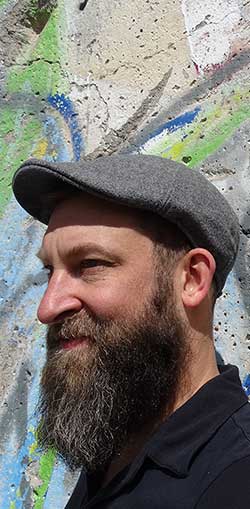
Dr. Vivek Nallur is an Assistant Professor in the School of Computer Science at University College Dublin. His research focuses on Machine Ethics, Multi-Agent Systems, emergence in socio-technical systems, and decentralized adaptation mechanisms. He holds a PhD from the University of Birmingham and advanced certifications in university teaching from UCD. Education: BBS, Delhi University Post-Graduate Diploma in Advanced Software Technology, National Centre for Software Technology MS, Carnegie Mellon University PhD, University of Birmingham Prof Cert University Teaching & Learning, University College Dublin Research Interests: Machine Ethics explores ethical decision-making in autonomous systems, while Multi-Agent Systems (MAS) are his primary tool for studying self-adaptation and emergence. He serves on key committees like IEEE P7008 (Ethically Driven Nudging) and the AAAI 2021 Spring Symposium on AI Ethics. His work bridges computer science with philosophy, law, and social sciences. Advising & Grants: Supervises three PhD students focusing on ethical AI, elder-care robotics, and AI governance. Leads the Machine Ethics Research Group and participates in the ML-Labs SFI grant (2019–2027). Professional Roles: Senior Member of IEEE, organizer for AAAI ethics symposia, and contributor to OpenAAL's ELSI panel. Teaches modules on Machine Learning, Operating Systems, and Web Development.
Dr. Deirdre Nic Mhathúna is a Professor at Dublin City University's Fiontar & Scoil na Gaeilge. Her research focuses on 18th-century Irish poetry, manuscript studies, and the works of Piaras Feiritéar. She holds leadership roles in Studia Hibernica and Chumann Merriman . She earned a BA in Irish and German from Trinity College Dublin and a PhD from University College Cork. Her research explores post-classical Irish manuscript culture, the poetry of Piaras Feiritéar, and the cultural heritage of Corca Dhuibhne. Recent work includes analyses of scribal transmission, accentual verse development, and the influence of place on literary expression. She has contributed to major publications like the Cambridge History of Irish Poetry and edited volumes such as Ar an Imeall i Lár an Domhain . Her articles span topics from Jacobitism to the Great Famine, Peig Sayers' life narratives, and the enduring legacy of Piaras Feiritéar. She frequently presents at international conferences, including the American Conference for Irish Studies and the Ó Thrácht go Twitter seminar series. No scientific awards are listed, but her editorial and collaborative roles highlight her contributions to Irish literary preservation and scholarly networks. Her work bridges historical and modern contexts, emphasizing cultural continuity and the interplay between oral tradition and written text. Her research often intersects with regional identity, religious thought, and transnational literary connections.
Aonghus Lawlor is an Assistant Professor/Lecturer in Computer Science at the School of Computer Science, University College Dublin. His roles include coordinating modules such as Software Engineering, Data Structures, Machine Learning, and Final Year Project Foundations. He holds an Orcid identifier: 0000-0002-6160-4639. His research focuses on machine learning applications in medical imaging (e.g., MRI, CT), sports science, and healthcare systems. Notable areas include AI-driven diagnostics, cybersecurity in radiology, and genomics for agricultural optimization. Recent work explores ChatGPT4-vision in MS progression, knee osteoarthritis grading via anomaly detection, and reinforcement learning in exercise prescriptions. Professional activities include committee roles in ACM Recommender Systems and Intelligent User Interfaces, grant assessments, and peer reviewing. He has published 137+ outputs, emphasizing interdisciplinary AI solutions with clinical and agricultural impact. Teaching responsibilities span foundational CS courses to advanced ML and project modules. No formal awards are listed, but his work demonstrates contributions to AI ethics, health informatics, and agricultural genomics.
Dr. Immo Warntjes is the Ussher Associate Professor in Early Medieval Irish History at Trinity College Dublin's Department of History. His research focuses on early medieval scientific thought, particularly computus (time-reckoning), the transition from Latin to Arabic science, and the role of vernacular languages in monastic education. He also examines Irish kingship, hagiography, and medieval burial practices, including the separate burial of organs in European nobility. Warntjes has held academic positions at the University of Greifswald (2007–2013) and Queen’s University Belfast. He teaches courses on early Irish Christian history, medieval chronology, and palaeography. His edited volumes include key works on computus scholarship and medieval burial practices. His research outputs include monographs and articles analyzing manuscripts like the Munich Computus and Computus Einsidlensis, exploring their impact on Carolingian science and Irish-Frankish intellectual exchanges. He emphasizes the continuity of late antique learning into the early medieval period, particularly through Irish scholarly milieus influencing Bede and the Carolingian Renaissance. Warntjes' work bridges multiple disciplines: history of science, cultural history, and textual analysis. His studies on Visigothic scientifica and the transmission of Easter tables reveal cross-cultural knowledge transfer mechanisms in pre-modern Europe.
Simon Colreavy Donnelly is an Associate Professor in the Department of Computer Science & Information Systems at the University of Limerick. He is a member of the Interaction Design Centre and focuses on interdisciplinary research at the intersection of artificial intelligence, educational technology, and healthcare informatics. His work spans machine learning applications in medical data analysis, virtual reality (VR) and extended reality (XR) for inclusive education, and deep learning techniques in chemical analysis and spectroscopy. Research Interests: His primary areas of investigation include generative AI for education equity, semisupervised learning algorithms, virtual learning environments design, and the ethical deployment of immersive technologies in healthcare and palliative care. He also explores NMR spectroscopy analysis using deep learning and develops tools for nutritional content estimation through image processing. Collaborations: His recent collaborations span international teams addressing challenges in toxicity-free online discourse (PAN 2024), semisupervised learning distribution mismatches, and VR applications for post-pandemic blended learning. His work integrates computational methods with real-world applications in education, healthcare, and chemical analysis. Labs/Teams: Active within the Interaction Design Centre at UL, his research group develops practical solutions for accessibility in digital education and healthcare systems, emphasizing user-centered design principles for extended reality applications.
Ian Pitt is a Lecturer in Usability Engineering and Interactive Media at University College Cork (UCC). He leads the Interaction Design, E-Learning and Speech (IDEAS) Research Group, focusing on multimodal human-computer interaction, auditory interfaces, and accessibility solutions for visually impaired users. Pitt holds a D.Phil from the University of York, followed by research fellowships at Otto-von-Guericke University in Germany before joining UCC in 1997. His research interests include speech-based interfaces, e-learning systems, and accessibility technologies for blind users. Key projects include the EU-funded ENABLE Network (2011–2014) and prototype development for UniWink. He has secured significant grants, including €72,009 from IRCSET for voice analysis research and €19,478 from the EU for ICT-supported learning initiatives. Pitt has advised numerous PhD students, including Flaithri Neff (2011), Emma-Kate Crowley (2014), and current candidates Aine Kearns and Patrick Egan. His publications span journals like International Journal of Game-Based Learning and conferences such as ICCHP and ACM SIGACCESS. He has contributed to committees for conferences like CHI and the Irish HCI conference. Teaching modules include Usability Engineering, Human-Computer Interaction, and Digital Media Development. His work emphasizes inclusive design principles, with projects addressing navigation systems for blind students and adaptive e-learning frameworks. Recent research trends focus on ICT-delivered aphasia rehabilitation, emotional BCI interfaces, and multimodal learning systems. Collaborations include international partners through EU grants, reflecting his global impact in accessibility and educational technology.
Mary Gallagher is Professor of French and Francophone Studies at University College Dublin, affiliated with the School of Languages, Cultures and Linguistics. She has held significant academic appointments at UCD since 1991, progressing from Lecturer to full Professor, and has served as a Visiting Professor in France, China, and Tunisia. Her scholarly leadership includes founding roles in the Association for the Study of Caribbean and African Literature in French (ASCALF) and the Irish Association of French and Francophone Studies (ADEFFI), where she was president from 2006 to 2008. She led the PRTLI-funded 'World Writing in French' research programme and has coordinated multiple Erasmus+ partnerships with institutions in the French Caribbean, Tunisia, and Vietnam. Education: BA in French and German, Trinity College Dublin DEA in French Literature, Université de Paris VII (Denis Diderot) Doctorat ès Lettres, Université de Paris VIII (Vincennes-Saint-Denis), supervised by Henri Meschonnic, viva chaired by Édouard Glissant Higher Diploma in Mediation and Diploma in Arbitration Law and Procedure, University College Dublin Her research focuses on postcolonial Francophone literature, Caribbean studies, Creole identity, migration, and ethical dimensions of writing. She has published extensively on Saint-John Perse, Lafcadio Hearn, and Paul Morand, with a recent emphasis on Holocaust testimony through her critical edition of Paul Léon’s letters from Drancy. Her work bridges literary scholarship, cultural critique, and historical recovery, often engaging with themes of displacement, memory, and transcultural dialogue. The 15 most recent publications illustrate a sustained engagement with global Francophone narratives, from Caribbean poetics and Creole hybridity to Shoah testimony and critiques of academic corporatism. Her scholarship reveals a trajectory from regional Caribbean studies to broader global and ethical concerns, emphasizing literary witness, intercultural translation, and the responsibilities of the intellectual in an age of globalization. Scientific Recognition and Editorial Roles: Editor of 22 issues of the biennial journal of ASCALF Editorial Board member, Journal of French and Francophone Philosophy (US) Editorial Board member, Forum Poetiki (Poland) Editorial committee roles for monograph series at Palgrave, Gallimard, Brill, and Peter Lang As an advisor and grant leader, she has supervised major research programmes and cross-institutional collaborations. She has not advised named students in the provided texts but has mentored through programme leadership and editorial guidance. She convened UCD’s Asia-Pacific Research Forum (2018–2022), now a formal Research Centre. Her work continues to shape interdisciplinary approaches to Francophone and postcolonial studies. Research Groups and Collaborations: Founder, Association of Francophone Postcolonial Studies (formerly ASCALF) President, Irish Association of French and Francophone Studies (ADEFFI, 2006–2008) Convenor, UCD Cross-College Asia-Pacific Research Forum (2018–2022) Initiator of Erasmus+ partnerships with Université des Antilles, Université de Tunis, and Université Nationale du Vietnam Developing an all-island Irish research group on Former French Island Colonies
Dr. Georgiana Ifrim is an Associate Professor at the School of Computer Science, University College Dublin , where she serves as Director of Graduate Research and Co-Lead of the SFI Centre for Research Training in Machine Learning (ML-Labs). She holds concurrent appointments as an SFI Funded Investigator at the Insight Centre for Data Analytics and VistaMilk SFI Research Centre . Her academic journey includes postdoctoral research at Insight Centre, Cork Constraint Computation Centre (4C), and Aarhus University's Bioinformatics Research Centre (BiRC). Education: BSc in Computer Science, University of Bucharest, Romania MSc and PhD in Informatics, Max-Planck Institute for Informatics, Germany Dr. Ifrim specializes in scalable predictive modeling for diverse applications including: Sequence learning (DNA analysis, time series) Real-time prediction for streaming data (news/social media, energy) Interpretable machine learning models Knowledge graph exploitation (WordNet/Yago, Naga) Wearable sensor data analysis (sports science, health monitoring) Energy price forecasting for sustainable systems Her recent publications focus on time series explainability (TSHAP, tsCaptum), multivariate analysis (scalable channel selection), and healthcare applications (fall detection, walking speed estimation). Key contributions include open-source tools like SEQL (sequence learner) and Twitter-Topics (event detection). Scientific Awards: Winner of SNOW@WWW14 Data Challenge As Director of Graduate Research, she oversees advanced academic training while leading funded projects at the intersection of machine learning , real-time analytics , and domain-specific applications in agriculture, healthcare, and digital journalism. Her research group maintains active GitHub repositories with open-source implementations.
Aysegul Liman-Kaban serves as an Assistant Professor in ICT/Digital Learning STEM Education at Maynooth University. Her work focuses on integrating immersive technologies like augmented reality, gamification, and AI into educational practices. She actively supervises PhD students and leads international research projects such as MIXAP-EU and From AI Anxiety to Empowerment. Education: Not explicitly stated in provided text Her research interests span: Immersive learning technologies (AR/XR, digital escape games) AI in education and generative AI applications Teacher digital competencies and professional development Flipped learning and multimedia pedagogy Ethical challenges in AI research Blended learning practices Recent publications demonstrate a focus on gamification, mixed reality, and AI applications in education, with methodological expertise in structural equation modeling, mixed methods research, and task-based learning analysis. She contributes to journals like Smart Learning Environments and Higher Education Quarterly . Key activities include: Organizing international conferences on STEAM education Leading EU-funded research on immersive learning tools Developing open-source educational technologies Pioneering generative AI integration frameworks
Prof Noel O'Connor is a Full Professor at Dublin City University's School of Electronic Engineering, specializing in cutting-edge research at the intersection of artificial intelligence (AI), medical imaging, robotics, and smart city technologies. His work spans applications such as cardiac MRI reconstruction, robotic manipulation using reinforcement learning, and the development of the Smart DCU Digital Twin for autism-friendly university environments. Research interests include AI-driven medical diagnostics, multimodal data fusion, and adaptive systems. His contributions to cardiac MRI reconstruction and transformer-based medical imaging analysis reflect a strong focus on healthcare innovation. He also explores ethical AI practices to reduce social bias in foundation models. Recent work emphasizes smart infrastructure projects, such as optimizing parking recommendations for electric vehicles and enhancing accessibility through digital twin frameworks. His research often integrates real-time sensor data and multi-agent systems to address complex urban challenges. No scientific awards are listed. Collaborations include the ASU-DCU International Research Program on Sensors and Machine Learning. Advising details and grant information are not explicitly provided.
Claire Dunne is a Professor and Head of the Department of English and Irish at Marino Institute of Education since 2022. With 16 years of experience as a lecturer in Irish and translator, she specializes in Irish language education, children’s literature, and literacy. Her research focuses on immersion education, sociolinguistics, and the history of Irish teaching. She holds a PhD in Applied Linguistics from Trinity College Dublin and has authored numerous books, including Irish in Outlook . Notable awards include a Fulbright Scholarship and grants for revitalizing Irish language education. Dunne’s work spans teacher training, curriculum development, and promoting Irish literacy in schools. Education: PhD (2016), MA in Intercultural Studies (2007), BEd (Honors) (2006) Her research explores Irish language policy, teacher proficiency, and children’s literature. Recent projects include studies on bilingual education and revitalizing Irish in English-medium schools. Publications highlight her expertise in CLIL (Content and Language Integrated Learning), teacher education, and language policy. She contributed to national literacy initiatives and served as President of the Literacy Association of Ireland (2022–2023). Awards include grants from Foras na Gaeilge and the Gaeltacht Education Council. Dunne advises on curriculum reforms and has led workshops on fostering Irish literacy in homes and schools.
Audra Mockaitis is a Professor of International Business at Maynooth University's School of Business (Faculty of Social Sciences). She previously held tenured positions at Monash University and Victoria University of Wellington . Her research focuses on: Global (virtual) teams Cross-cultural leadership Cultural values and identity Migration in international business Language impact on multinational operations Key research projects include VALUEHOST (Lithuanian emigrant values) and studies on narcissistic leadership in SMEs. Her recent publications examine: Dark triad personality traits in CEOs Temporal schemata in virtual teams Cultural evolution in Lithuania Psychic distance in firm internationalization Award-winning scholar with 10+ Best Paper/Reviewer awards from AOM, EURAM, and ANZAM. Serves on editorial boards of Journal of World Business and Thunderbird International Business Review . Currently chairs university committees on research, promotions, and international education strategy.
Prof. Dorothy Kenny is a full professor of Translation Studies at Dublin City University, affiliated with the School of Applied Language & Intercultural Studies. She holds a BA in French and German from DCU, an MSc in Machine Translation, and a PhD in Language Engineering from the University of Manchester. Her research focuses on AI in literary translation, corpus linguistics, machine translation ethics, and translation pedagogy. She led the EU-funded MultiTraiNMT project (2019–2022), developing materials for MT education. She co-edits the journal Translation Spaces and is an Honorary Fellow of the Chartered Institute of Linguists (UK). Education: BA in French and German, Dublin City University MSc in Machine Translation, University of Manchester PhD in Language Engineering, University of Manchester Research Interests: Her work bridges theoretical and applied translation studies, emphasizing corpus-based methods, machine translation ethics, and the impact of AI on literary translation. Recent projects explore customization of MT for literary texts and ethical workflows in MT. Awards & Recognition: 2020: Co-edited Fair MT: Towards Ethical, Sustainable Machine Translation 2017: Edited Human Issues in Translation Technology 2020: Honorary Fellowship from the Chartered Institute of Linguists Grants & Projects: Principal Investigator of MultiTraiNMT (EU-funded, 2019–2022) Recipient of Ulysses Travel Grant (2018–2019) for collaboration with Université Grenoble-Alpes Labs & Teams: She directs research at the Centre for Translation and Text Studies (CTTS) , fostering interdisciplinary work on translation technology and corpus linguistics.
Lucy Collins is an Associate Professor in the School of English, Drama and Film at University College Dublin (UCD), where she has been a faculty member since 2008. She previously taught at Trinity College Dublin and the University of Cumbria. Her academic affiliations include the UCD College of Arts and Humanities, where she served as Associate Dean for Graduate Studies from 2020 to 2023. BA (Mod), Trinity College Dublin MRes, History of the Book, University of London PhD, Trinity College Dublin Prof Dip, University Teaching & Learning, University College Dublin Fulbright Postdoctoral Fellow, Harvard University Her research focuses on poetry and poetics, with particular emphasis on Irish, British, and American poetry since 1900. Key areas include ecocriticism, gender studies, the history of the book, and genetic criticism. She has published major works such as Contemporary Irish Women Poets: Memory and Estrangement (2015), Poetry by Women in Ireland 1870–1970 (2012), and The Irish Poet and the Natural World (2014). She is a co-founder of the Irish Poetry Reading Archive and academic lead on the Poetry as Commemoration project. Her recent scholarly output reflects a sustained engagement with environmental themes in poetry, archival practices, and intersections between literature, fashion, and identity. Articles such as 'Poet, Editor, Anarchist: Lola Ridge’s New York Networks' (2023) and 'Hidden Collections: The Value of Irish Literary Archives' (2020) demonstrate her interdisciplinary reach across literary history, cultural studies, and digital humanities. Fulbright Postdoctoral Scholarship MARBL Travelling Fellowship SMC Teaching Fellowship Trinity Award Wake Forest University Archives Travelling Fellowship Lucy Collins has supervised numerous graduate students and coordinated key modules including Dissertation, Irish Literature in English, and Reading Contemporary Poetry. She has received external funding and led research projects related to poetry, commemoration, and archival access. Her professional service includes editorial roles for Irish University Review and Canadian Journal of Irish Studies , and committee membership in IASIL, ASLE-UKI, and the International Yeats Society. She has also served as an external examiner for MA programs at several UK institutions.
Paul Perry is Professor of Creative Writing at University College Dublin, School of English, Drama and Film, where he directs the Creative Writing Programme and teaches across undergraduate, MA, MFA, and PhD levels. He is a practicing poet, novelist, screenwriter, and literary critic, with a significant body of published work in poetry and fiction. BA, Brown University MFA, University of Miami PhD, University of Ulster Prof Cert & Cert of CPD in University Teaching & Learning, University College Dublin Paul Perry's research is practice-led, focusing on Creative Writing, Poetry, Fiction, Creative Non-Fiction, Contemporary Literature, American Poetry, Screenwriting, Genre, and Poetics . He is deeply invested in the pedagogy of Creative Writing, exploring student-centered methods, radical empathy exercises, and innovative workshop models. His teaching emphasizes process over product and fosters a community of practice. His recent publications span poetry, novels, and critical writing, reflecting a sustained engagement with literary form and emotional depth. Themes include identity, memory, trauma, post-conflict Ireland, and the interplay between personal and political. His editorial work, such as Beyond the Workshop , contributes to scholarly discourse on creative writing education. Paul Perry has received numerous accolades, including: Hennessy Prize for Irish Literature Listowel Prize for Poetry Patrick and Katherine Kavanagh Fellowship University Award for Teaching Excellence Shortlisted for the Farmgate National Poetry Book Award (2023) He supervises PhD students, leads creative writing modules, and is actively involved in research grants and editorial projects like the Belfield Literary Review . He is a member of the Royal Irish Academy’s Study of Languages, Literature, Culture and Communication Committee and contributes to public literary culture through podcasts, readings, and community collaborations such as the Poetry Jukebox.