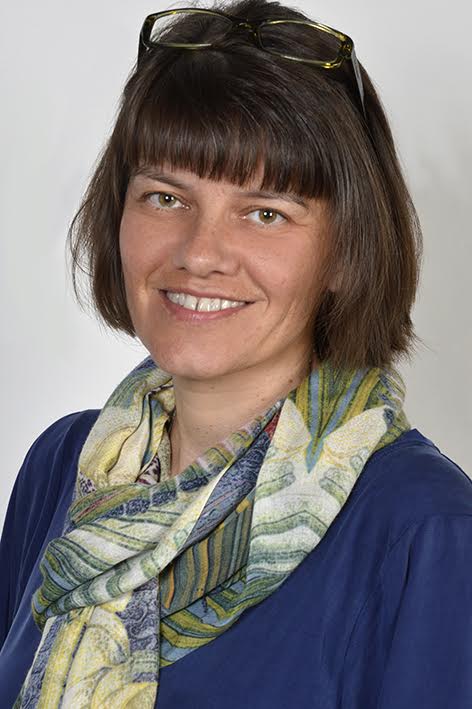
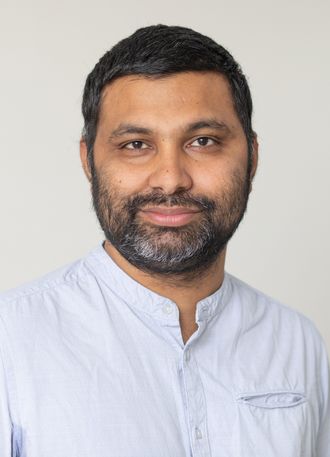
Ana Sokolova is a Professor in the Department of Computer Science at the University of Salzburg. She is affiliated with the Faculty of Digital and Analytical Sciences and actively contributes to research in theoretical computer science. University: University of Salzburg Faculty: Faculty of Digital and Analytical Sciences Department: Computer Science Email: ana.sokolova@plus.ac.at Her research focuses on probabilistic systems , concurrency theory , convex algebras , and formal verification . This work bridges theoretical foundations with practical applications in distributed computing and programming semantics. Recent publications highlight advancements in trace semantics , determinization , probabilistic anonymity , and coalgebraic modeling . Key trends include the integration of Markov chains , nondeterministic systems , and algebraic structures for formal verification.
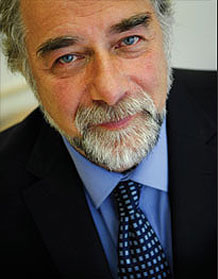
Dr. Maribel Fierro is a distinguished Research Professor at the Institute of Languages and Cultures of the Mediterranean and Near East (ILC) , part of the Spanish National Research Council (CSIC) in Madrid. She has held this prestigious position since 2005 after serving as Scientific Researcher at CSIC's Arabic Studies Department (1992-2005) and previous academic appointments at Universidad Complutense Madrid (1983-1987). Education: Dr. in Semitic Philology (1985), Universidad Complutense Madrid Visiting appointments: Institute for Advanced Study (Princeton), Hebrew University (Jerusalem), École des Hautes Études (Paris) Her scholarly work focuses on Medieval Islamic History with particular emphasis on Al-Andalus, Islamic Law, Heresy and Orthodoxy, Political Legitimacy, and Gender Studies. She directed the European Research Council Advanced Grant project Knowledge, Heresy and Political Culture in the Islamic West (8th-15th centuries) (2009-2014). Notable publications include foundational studies on: Ẓāhirī legal school adoption in Islamic Spain Violence against women in Andalusi legal texts Heretical movements in Islamic political culture Christian-Muslim relations during Almoravid/Almohad periods Manuscript circulation networks in Islamic West Prophetic legitimacy narratives in cross-cultural contexts Scientific honors include: 2014: R. Stephen Humphreys Distinguished Scholar (UC Santa Barbara) 2011: Waldo G. Leland Prize (American Historical Association) Prof. Fierro serves on academic committees including the Italian MIUR evaluation board since 2011, and has held editorial leadership roles in major Islamic studies journals since 1989, currently serving as editor for Der Islam and Intellectual History of the Islamicate World .
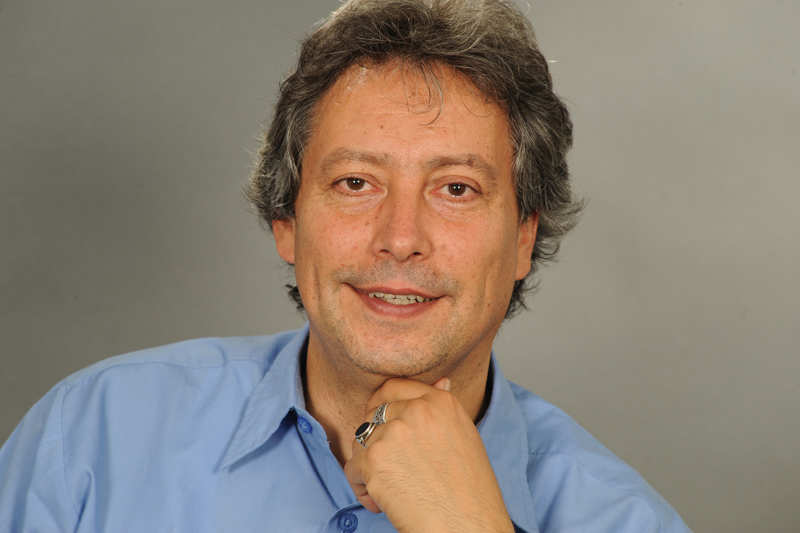
Andreas Lechner is an Associate Professor at Graz University of Technology (TU Graz) , Institute of Building Science. He is also a Visiting Professor at TU Berlin and Politecnico di Milano , indicating an international academic presence. His office hours are available on Tuesdays from 9:00-11:00, with portfolio requirements for diploma inquiries. Research Focus: Lechner's work explores architectural typologies, urban peripheries, and sustainable building practices. His research emphasizes the intersection of theory, design, and practice, particularly through counterintuitive approaches to architectural typologies and their affordances. Publications Trends: Recent work focuses on hybrid architectural practices, typological affordances, and peripheral urbanism. He examines how architectural typologies can be reimagined through the lens of the "Peripherocene," a concept challenging traditional urban center/periphery dichotomies. Design Philosophy: Lechner's "Counterintuitive Typologies" approach challenges conventional design paradigms, particularly in his analysis of urban buildings and their transformative potential. His work on solar energy integration in architecture demonstrates a commitment to sustainable design. Academic Contributions: Through his publications in journals like Journal of Architecture and edited volumes like GAM series, Lechner has been examining architectural theory, material rethinking, and the paradoxes of urban development since at least 2012. Professional Engagements: He has been involved in exhibitions and curation activities, including guest curatorship at Haus der Architektur in Graz. His personal website and social media presence ( @a_alechner ) demonstrate a commitment to public architectural discourse.
Bruce Brown is Pro-Vice-Chancellor for Research at the University of Brighton , overseeing research across life, physical, social sciences, and arts and humanities. He previously served as Dean of the Faculty of Arts and Architecture (1989–2006) and Head of the Department of Design (1984–1989). Administrative Leadership : REF2014/RAE2008 Chair, International Governor at Shenkar College, and advisor to academic bodies in Hong Kong, Portugal, and Italy. Research Interests : Visual memory, arts education, and research leadership, with publications spanning design history, spatial design, and cultural policy. Scientific Awards : 2007 WHO’s WHO (A&C Black) 2005 Honorary Fellow (University for the Creative Arts) 2004 Honorary Fellow (Royal College of Art) 1985 Elected Member (Designers and Art Directors Association) 1978 Sanderson and Herbert Read Awards (Royal College of Art) 1970 Elected Fellow (Royal Society of Arts) Articles focus on visual communication, design policy, and cultural memory, reflecting his expertise in design research and higher education leadership . He is currently an Editor of Design Issues: Research Journal (MIT Press).
Ottmar Ette is Chair of Romance Literature at the University of Potsdam, Germany, where he has held a professorship since 1995. A leading scholar of Alexander von Humboldt and comparative literature, Ette has established himself as a major intellectual figure through his development of TransArea Studies and the conceptual framework of 'Lebenswissenschaft' (science of life). His academic career spans multiple continents with significant contributions to understanding the intersections of literature, globalization, and cross-cultural knowledge. Ette's research interests form a rich interdisciplinary tapestry exploring literary studies as life science , conviviality (living together), and the poetics of movement within TransArea Studies. His work examines how literary knowledge functions as essential repository of human experience, particularly regarding ethically relevant themes such as migration, belonging, and survival. The scholar has pioneered approaches to understanding literature beyond national boundaries, focusing on 'literatures without fixed abode' and the 'vectorial imagination' that transcends traditional dichotomies between national and world literature. His extensive publication record reveals consistent engagement with globalization processes across historical periods, with particular emphasis on the works of Alexander von Humboldt as a lens for understanding interconnected knowledge systems. Ette's scholarship demonstrates remarkable breadth, spanning from 18th century francophone literature to contemporary transareal literary phenomena, while maintaining focus on how literary texts generate knowledge for living in increasingly interconnected worlds. 2014 Research Award Escuela Nacional de Altos Estudios from UNAM 2014 Honorary Member of the Modern Language Association of America 2013 Ordinary Member of the Berlin-Brandenburg Academy of Sciences 2012 Chevalier dans l'Ordre des Palmes Académiques (France) 2010 Ordinary Member of the Academia Europaea 2001 Hugo Friedrich/Erich Köhler Research Award 1991 Young Scholars Award for Romance Literature 1987 Heinz-Maier-Leibnitz Award Ette has directed significant research projects including the 3-year Research Project on Humboldt's American Travel Diaries (2014-2017) and the 18-year project 'Travelling Humboldt - Science on the Move' at the Berlin-Brandenburg Academy of Sciences. He co-founded multiple DFG-funded Research Training Groups including 'lebensformen + lebenswissen' (2006), 'Zwischen Räume' (2009), and 'Sichtbarkeit und Sichtbarmachung' (2011). His editorial work encompasses founding the electronic journal HiN - Alexander von Humboldt in the Net and serving as co-editor of Iberoamericana and Istmo. As co-founder of the ForLaBB (Research Network Latin America Berlin-Brandenburg), Ette has created important institutional frameworks for transnational scholarly exchange. His academic leadership extends through organizing numerous international conferences on topics ranging from 'Caribbean(s) on the Move' to 'Conviviality in Difference,' fostering collaborative research environments that bridge disciplinary and geographical boundaries.
Joanna Jurewicz serves as Professor at the University of Warsaw's Faculty of Oriental Studies within the Department of South Asian Studies. Elected to Academia Europaea in 2002 following her habilitation, she maintains active scholarly engagement in Vedic studies and cognitive linguistics. Her institutional affiliation spans decades, rooted in Warsaw's Indological tradition since her 1990 doctorate. Her research centers on cognitive-linguistic analysis of the Ṛgveda, examining metaphorical structures, conceptual formation in archaic thought, and philosophical continuities into Upaniṣadic literature. Key contributions include deconstructing Vedic concepts of self (ātmán), desire (kāma), and cosmic order through frameworks like "fire cognition" and spatial metaphors. This interdisciplinary approach bridges linguistics, philosophy, and religious studies to reveal systematic cognitive patterns in ancient Indian thought. Jurewicz's publication trajectory shows consistent focus on Ṛgvedic semantics since the 1990s, evolving toward comprehensive analyses of Indian philosophical development. Her work demonstrates methodological innovation through cognitive linguistics applied to classical texts, influencing contemporary Indological scholarship across Central and Eastern Europe. Prime Minister Award for outstanding academic achievements (2010) for 'Fire and Cognition in the Ṛgveda' Member of Academia Europaea (2002) Her editorial leadership includes co-editing significant volumes like 'Symbolism of Meadows and Pastures in Ancient Beliefs' and 'Cultural Conditions of Development in Asia and Africa.' Jurewicz actively participates in commemorative academic projects, such as the 50th Anniversary of Indological Studies at Warsaw University (2003/2004), where she contributed analyses of ritual language and hydraulic metaphors. Her scholarly network extends across European Indological conferences, evidenced by collaborations with institutions like the Polish Semiotic Society and University of Warsaw Press.
Giancarlo Alfano is Full Professor of Italian Literature at the University of Naples Federico II, where he coordinates the Philology Doctorate. He also participates in the Doctoral College in Texts, Traditions and Cultures of the Book at the Scuola Superiore Meridionale (SSM). 2005-2014: Associate Professor at Seconda Università di Napoli 2015-2018: Associate Professor at University of Palermo 2018-present: Full Professor at University of Naples Federico II 2018-2024: Senior Member of ERC Project DISCOMPOSE 2019-2023: President of National Scientific Abilitation Commission His research spans Italian literature , comparative literature , and cultural history , with a focus on disaster narratives, Renaissance poetry, and impostor themes. His 15 most recent articles cover disaster communication in early modern Naples, belatedness in Tasso's Gerusalemme Liberata , and Renaissance hermeneutics. Edinburgh Gadda Prize (2012) Premio Pino Zac per la Satira Politica (2015) Premio Napoli (2017) He leads post-doctoral funding at University of Naples and SSM, contributes to the interdisciplinary project “Renaissances, Mots et usages d'une catégorie historiographique” , and serves on the FNRS (Belgium) Scientific Commission (SHS-3).
Erich Schweighofer serves as Associate Professor at the University of Vienna within the Institute for European, International and Comparative Law, specifically affiliated with the Department of International Law and International Relations. His research activities are centered at the Juridicum building (Schottenbastei 10-16, 1010 Vienna), where he maintains an active office presence with scheduled consultation hours. His scholarly focus spans Legal Informatics , Artificial Intelligence and Law , Data Protection , and Legal Knowledge Representation , with particular emphasis on explainable AI systems for legal contexts and formal methodologies for translating legal norms into computational frameworks. This interdisciplinary work bridges jurisprudence and computer science through projects examining biometric regulation, autonomous vehicle governance, and natural language processing applications in legal domains. Analysis of his 2021-2024 publications reveals consistent thematic progression toward operationalizing legal principles in AI systems, with increasing focus on transparency mechanisms, temporal logic for dynamic regulations, and cross-jurisdictional compliance challenges. His work predominantly appears in the International Legal Informatics Symposium (IRIS) proceedings and JURIX conferences, reflecting deep engagement with the legal informatics community. Professor Schweighofer leads a dedicated research team including project assistants Mag. Jessica Fleisch, Mag. Jonas Pfister, Felix Schmautzer, and Mag. Jakob Zanol, while actively participating in the University of Vienna's Working Group on Legal Informatics (Arbeitsgruppe Rechtsinformatik). His collaborative approach extends to organizing the biennial IRIS symposium, which has established itself as a cornerstone event for European legal informatics scholarship since 1998.
George Karamanolis is a Professor at the Department of Philosophy , University of Vienna, and currently serves as Vice Dean of the Faculty of Philosophy and Education. His research focuses on Ancient Philosophy, particularly Platonism, Neoplatonism, and their intersections with early Christian thought. Email: george.karamanolis@univie.ac.at Office Hours: Tuesday 12:00-13:30 His recent publications analyze Neoplatonic metaphysics, Syriac philosophical traditions, and the reception of Aristotle in late antiquity. Teaching includes courses on Greek terminology, Aristotle's ethics, and the history of philosophy from antiquity to late antiquity.
Igor Yanovich is an Associate Professor in the Department of English and American Studies at the University of Vienna. His contact information includes email (igor.yanovich@univie.ac.at) and phone (+43-1-4277-42402). Office hours are arranged via email appointment at Room 3E-O2-14.A, Spitalgasse 2, 1090 Wien. His research focuses on: Historical Linguistics, particularly the historical development of the English verbal system Language contact phenomena Structural analysis in linguistics Communication, Code and Culture dynamics Professor Yanovich teaches foundational courses like Introduction to English Linguistics alongside specialized seminars on historical linguistics and language contact for MA students. His instruction spans research methods, structural analysis, and thesis supervision, emphasizing both theoretical frameworks and practical linguistic applications across 2024W-2025W semesters.
Maria-Dolores Garcia-Ramon is a Full Professor of Geography at the Universitat Autònoma de Barcelona (UAB), where she held academic leadership roles including Chair of the Department of Geography (1977–78, 1995–97) and Chair of the Doctoral Program in Human Geography (1986–94). She has been a visiting scholar at institutions such as the University of Arizona, Cornell University, and the London School of Economics. Her research focuses on rural geography, gender studies, and colonialism, with a particular emphasis on gendered spatial practices and women’s narratives in colonial contexts. Education: PhD in Geography and History (1975, University of Barcelona), MA in Geography (1970, UC Berkeley), BA in Philosophy and Letters (1966, University of Barcelona). Research Interests: Garcia-Ramon pioneered gender studies in Spanish geography, analyzing women’s roles in agriculture, urban public spaces, and colonial travel narratives. Her work critiques colonial discourses and explores how gender shapes spatial experiences. Key themes include the invisibility of women’s labor in rural economies, postcolonial geographies, and feminist methodologies in geographical research. Publications: Over 90 peer-reviewed articles and 12 authored/edited books, including Mujer y agricultura en España (1994) and Geografía Rural (1992). Recent articles address urban planning’s gendered impacts and colonial travel narratives. Awards: Recipient of the Jan Monk Award (2008), Premi Narcís Monturiol (2003), and membership in prestigious academies like Academia Europaea. She has led 31 funded research projects on gender, rural development, and colonial geographies. Advising & Grants: Supervised 19 PhD theses and secured grants from the European Commission, Spanish Ministry of Science, and Catalan Government. Her work on gendered labor and urban spaces has influenced policy debates on work-life balance and inclusive urban design. Labs/Teams: Active in the UAB’s Gender and Geography Research Group, contributing to international networks like the Association of American Geographers and editorial boards of journals such as Gender, Place & Culture .
Navid Rekab-saz is an Assistant Professor at the Institute of Computational Perception, Johannes Kepler University Linz (JKU), Austria. He is actively involved in research and teaching, offering courses such as Natural Language Processing and Natural Language Processing with Deep Learning . He maintains regular office hours and is accessible via email and a dedicated booking system for meetings. His research focuses on natural language processing , information retrieval , fairness and bias in AI , and recommender systems , with applications in humanitarian action and ethical AI. He employs deep learning and machine learning techniques to address challenges in bias mitigation, explainability, and domain adaptation. His work often bridges technical innovation with societal impact, especially in developing inclusive and fair AI systems. The recent publications of Navid Rekab-saz reflect a strong trend in debiasing strategies , parameter-efficient learning , and evaluation of societal biases in search and recommendation systems. His research spans from foundational work on word embeddings and retrieval models to applied studies in humanitarian NLP and gender bias in user queries. He frequently collaborates with a broad network of researchers and contributes to the development of datasets and benchmarks. Scientific Awards: Best Student Paper Award at ISMIR 2022 for 'Traces of Globalization in Online Music Consumption Patterns and Results of Recommendation Algorithms' Advising and Grants: Navid Rekab-saz has advised and collaborated with numerous students and researchers, many of whom are co-authors on his publications. While specific grant details are not listed in the provided text, his extensive publication record in top-tier venues suggests active involvement in funded research projects, likely supported by national or European funding bodies. He is also engaged in interdisciplinary research, particularly at the intersection of technical AI and legal or social implications. Labs and Teams: He is a core member of the Institute of Computational Perception at JKU, where he contributes to research projects in computational linguistics and AI. He collaborates closely with the team led by Prof. Markus Schedl and participates in initiatives related to music information retrieval, fairness in AI, and humanitarian applications of NLP.
Axel Polleres is a full professor at the Institute for Data, Process and Knowledge Management in Vienna University of Economics and Business (WU Wien). He leads the department of Information Systems and Operations Management while maintaining active research in knowledge graphs, semantic web technologies, and ontology engineering. PhD and Habilitation from Vienna University of Technology Former positions at University of Innsbruck, Universidad Rey Juan Carlos, DERI Ireland, and Siemens AG Co-chair of W3C SPARQL working group Editorial board member for Semantic Web Journal and IJSWIS His research focuses on: Querying and reasoning over ontologies Graph schema languages (SHACL, SPARQL) Wikidata constraint formalization Ontology reuse in collaborative platforms Crisis management knowledge graphs FAIR data principles implementation Recent publications analyze knowledge graph evolution, constraint validation methodologies, and semantic web standardization efforts. Key topics include: OWL/RDF interoperability solutions Unit conversion systems for Wikidata Partition-based query processing frameworks Network resilience analysis for urban planning Open data platform discovery tools Temporal analysis of collaborative knowledge graphs He has co-organized major conferences like ISWC2023 and ESWC workshops while maintaining active roles in European research projects. Current work involves spatiotemporal knowledge graphs for city resilience and semantic web infrastructure development.
Shah Nawaz is an Assistant Professor at the Institute of Computational Perception , Johannes Kepler University Linz. His research focuses on multimodal systems, deep learning applications in healthcare, and cross-modal learning frameworks. He leads projects addressing challenges like missing modalities in machine learning, face-voice association, and medical image analysis. Key research interests include machine learning for medical diagnostics (e.g., breast cancer detection, skin lesion segmentation), speech recognition, and adaptive neural network architectures. He has contributed to frameworks like Chameleon for robust multimodal learning and the FAME challenge for face-voice association in multilingual environments. Publications emphasize practical applications, such as bilingual healthcare chatbots for pregnant women and light-weight speech recognition models for resource-constrained systems. His work bridges theoretical advancements and real-world deployment in healthcare and security domains. Shaw Nawaz actively participates in academic communities through workshops like DaQuaMRec@RecSys2025 and has developed open-source frameworks for image restoration and multimodal fusion. His lab focuses on scalable solutions for multimodal data challenges in both technical and clinical contexts.
Judit Gervain is a Research Fellow at the French National Centre for Scientific Research (CNRS) and has held the position of Director of Research since 2017. She has been associated with institutions including the Basque Center on Cognition, Brain and Language (San Sebastian, Spain) and the University of British Columbia (Vancouver, Canada). Her academic journey includes a PhD in Cognitive Neuroscience from SISSA, Italy, and dual MA degrees in Theoretical Linguistics and English/French Language and Literature from the University of Szeged, Hungary. Research Focus: Developmental cognitive neuroscience, speech perception in newborns, and early language acquisition using near-infrared spectroscopy (NIRS). Grants: ERC Consolidator Grant (2018), ANR grants (2015-2018), HFSP Young Investigator Grant (2014-2018), and others. Scientific Contributions: Her work explores how newborns and infants process speech structure, prosody, and word order, leveraging interdisciplinary methods combining neuroscience and linguistics. She has pioneered the use of NIRS in infant cognitive studies. Key Awards: ERC Consolidator Grant, Lorentz/NIAS Fellowship, Mercator Fellowship, and multiple scholarships including Huygens and Erasmus. Mentoring: Supervised 8 Masters students, 3 PhDs (defended), 3 PhDs (ongoing), and 8 postdocs. Leadership: Deputy Director at the Institute of Neuroscience & Cognition (Paris), Board Member of the International Society for fNIRS, and editorial roles in journals like Neurophotonics and Developmental Science .