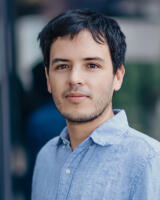
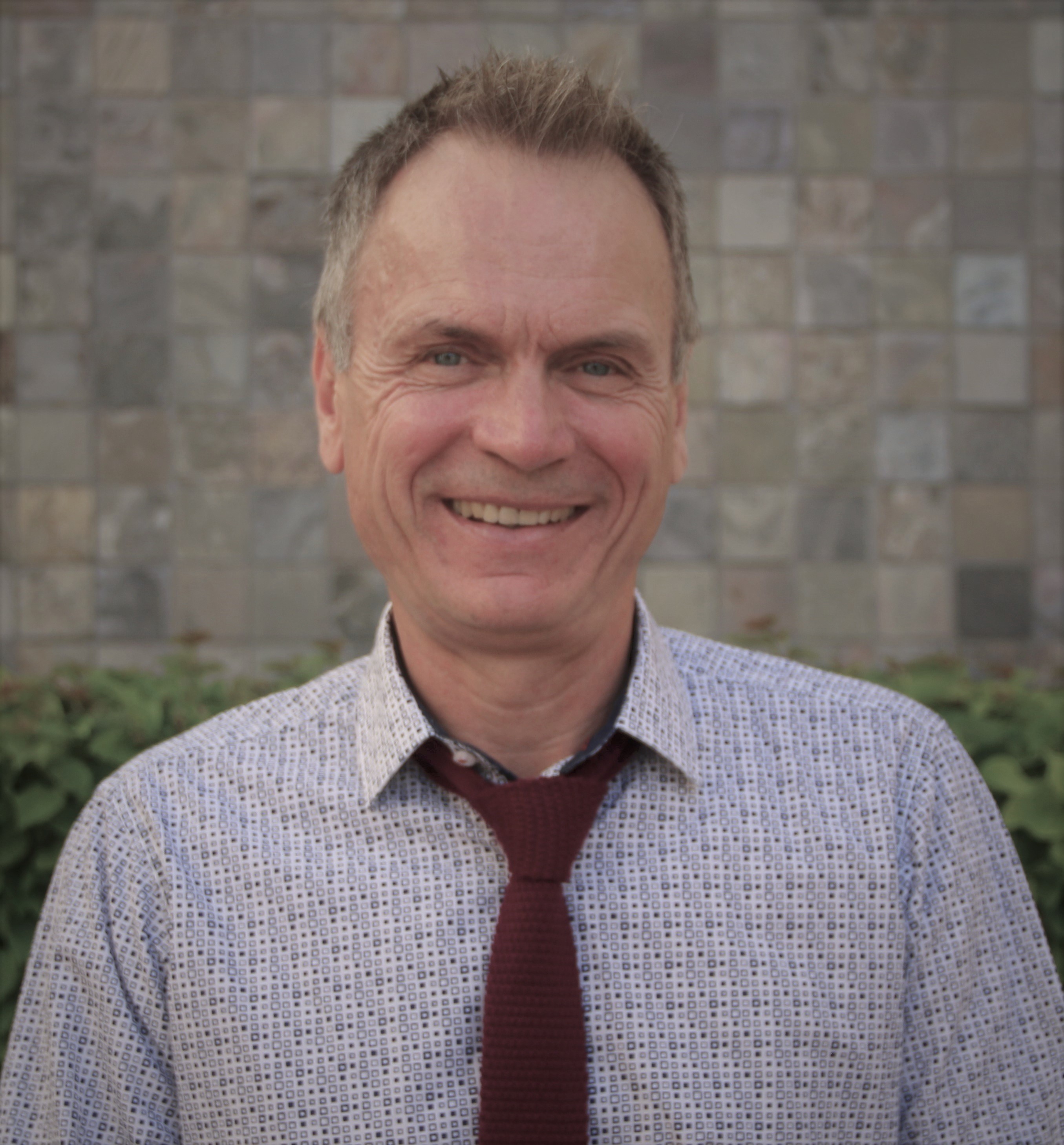
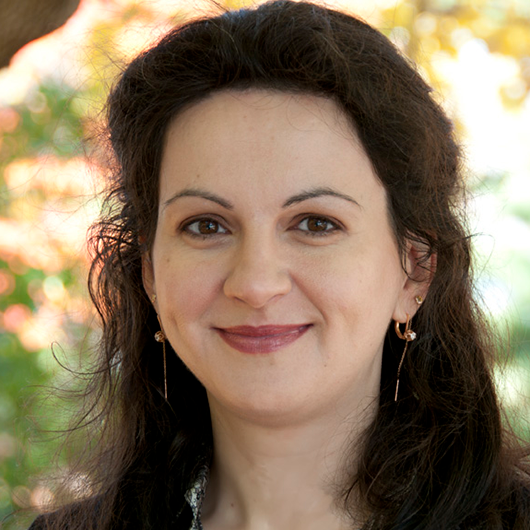
Julian Jara-Ettinger is an Associate Professor of Psychology and Computer Science at Yale University. He holds a Ph.D. from MIT (2016). His research focuses on understanding the cognitive and computational mechanisms underlying human social behavior, including fairness, linguistic communication, gesture, moral reasoning, and pedagogy. He employs interdisciplinary methods such as computational modeling, eye-tracking, cross-cultural studies, and developmental research to bridge psychology and artificial intelligence. Key research areas include the development of social cognition in children, the integration of theory of mind with communication, and the application of cognitive science principles to build socially intelligent machines. His work emphasizes how humans infer others' knowledge, intentions, and desires, with implications for AI safety and ethical systems design. Publications span topics like epistemic inference, moral judgments, and the computational foundations of social interaction. His lab's research often intersects with evolutionary simulations, neural modeling, and cultural psychology. No scientific awards are explicitly mentioned in the provided text. Collaborations involve cross-disciplinary teams addressing challenges in developmental science, AI ethics, and cognitive robotics. His work has practical applications in educational strategies, social policy, and human-AI collaboration frameworks.
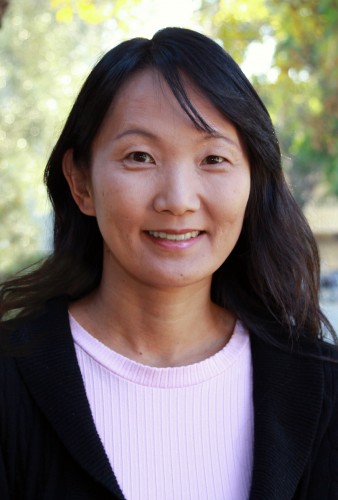
Yuuko Uchikoshi Tonkovich is a Professor at the School of Education, University of California, Davis, where she has served since 2004, advancing from Assistant to Associate and then to full Professor. Her work centers on language and literacy development in young dual language learners, with a focus on bilingualism, early literacy, and the role of family and media in language acquisition. Her research interests include: Early Childhood Development Multilingual Learners and Bilingual Education Language Acquisition and Literacy Parent-Child Interaction and Home Language Environment Quantitative Analysis of Educational Outcomes Educational Television and Multimedia Her recent publications span topics such as cognitive distancing in parent-child reading, morphological awareness in bilingual readers, and the impact of teacher language use in multilingual classrooms. The research consistently emphasizes longitudinal, cross-cultural, and interdisciplinary approaches, particularly focusing on Chinese American and Mexican American immigrant families. Her scientific awards include: AERA Vocabulary SIG Notable Vocabulary Researcher Award (2025) Foundation for Child Development Young Scholars Program Grant International Reading Association Dissertation Fellowship and Finalist Award Harvard Graduate School of Education Fellowships She has advised numerous research projects and secured significant funding from NIH/NICHD, the Foundation for Child Development, and other organizations. She teaches courses such as Language Development, Early Literacy, and Research on Text Comprehension. She is actively involved in national initiatives, serving on the Technical Advisory Group for the First 5 California Dual Language Learner Study and as Associate Editor of Applied Psycholinguistics . She leads the Language & Literacy Development Lab at UC Davis, which investigates the cognitive, linguistic, and socio-emotional development of dual language learners.
Mahzarin R. Banaji is the Richard Clarke Cabot Professor of Social Ethics at Harvard University and a Harvard College Professor. She is affiliated with the Department of Psychology and is a key figure in the Mind, Brain, and Behavior (MBB) Interfaculty Initiative. Her research is centered at the intersection of social cognition, implicit bias, and ethical behavior. Institution: Harvard University School: Harvard College Department: Psychology Email: banaji@fas.harvard.edu Dr. Banaji earned her Ph.D. from Ohio State University and has been a leading scholar in the study of unconscious bias. Her work explores how implicit attitudes shape perception, judgment, and behavior outside conscious awareness. She co-developed the Implicit Association Test (IAT) , a groundbreaking tool for measuring unconscious biases related to race, gender, age, and other social categories. Her research spans social cognition, prejudice, stereotyping, moral psychology, and the neuroscience of social behavior . More recently, she has extended her work into the domain of artificial intelligence, investigating how human-like biases emerge in large language models. The 15 most recent publications reflect a strong trend toward computational social science , combining psychological theory with natural language processing and AI. Her team analyzes bias in digital corpora, studies the transmission of stereotypes in AI systems, and develops tools to measure intersectional and implicit attitudes at scale. These works bridge psychology, ethics, and technology, highlighting the societal implications of implicit cognition. Among her notable scientific honors are: Fellow of the American Academy of Arts and Sciences William James Fellow Guggenheim Fellowship Kurt Lewin Award (SPSSI) Harvard College Professorship Dr. Banaji has advised numerous graduate students, including Tessa Charlesworth and Kerry Morehouse, many of whom are now active researchers in social and cognitive psychology. She has secured major grants through the Mind, Brain, and Behavior Initiative and has led interdisciplinary teams exploring bias in education, law, and technology. She is also the co-creator of OutsmartingHumanMinds.org , a public education platform on implicit bias. Her lab serves as a hub for collaborative research on implicit social cognition, bringing together psychologists, neuroscientists, and computer scientists to understand and mitigate unconscious bias in human and artificial systems.
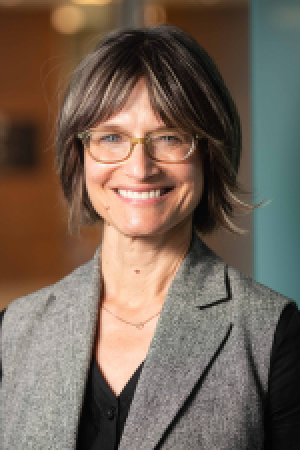
Prof. Dr. Teresa Sansour is a full Professor of Pedagogy and Didactics in Cases of Intellectual Development Impairments with Special Consideration of Inclusive Educational Processes at the Institute for Special and Rehabilitation Education, Carl von Ossietzky University of Oldenburg. She joined the university in April 2020 and has held leadership roles including Vice Director for Teaching at the Center for Teacher Education (since October 2021) and Deputy Institute Director (since April 2025). Her academic affiliations reflect a deep commitment to inclusive and special education. Her research focuses on educational interactions in the context of intellectual disabilities, inclusive subject didactics, the participation of people with complex disabilities, and the professionalization of educators and prospective teachers. Key research areas include inclusive literacy, art education, teacher motivation, and social integration. She leads significant funded projects such as Literary Texts in Simple Language (LiES) and Lighthouses for Participation , both aimed at enhancing inclusion for people with disabilities. The recent publications of Prof. Sansour span topics such as school absenteeism in autism, self-concept in intellectual disabilities, inclusive art education, and participation models. Her work demonstrates a strong interdisciplinary and applied focus, combining qualitative methods with pedagogical innovation. She frequently publishes in peer-reviewed journals and edited volumes on special education, inclusive didactics, and disability studies. Member, German Society for Educational Research (DGFE), Section Special Education Member, Network for Complex Disabilities e.V. Chair, Advisory Board of the Georg-Leffers-Stiftung Chair, Association for the Promotion of Pedagogical Rehabilitation and Social Integration of People in Risk Situations Board Member, German Interdisciplinary Society for Research Promotion for People with Intellectual Disabilities (DIFGB) Prof. Sansour actively contributes to academic leadership and teacher training. She serves as program coordinator for the Bachelor’s in Special Education and accreditation officer for the Special Education/Social Studies cluster. Her work includes advising on inclusive curricula, fostering research collaborations, and securing external funding for inclusive initiatives. She has not received explicitly mentioned scientific awards in the provided text. She is involved in multiple collaborative research teams and projects focused on inclusion, literacy, and disability rights.
Dr Dawn Elizabeth Cavanagh is a Researcher at Manchester Metropolitan University, affiliated with the Faculty of Health and Education. Her work focuses on healthcare equity for individuals with intellectual disabilities and autism, particularly addressing systemic issues like restrictive practices and long-term segregation. She holds a PhD from the University of South Wales, where her research explored annual health checks and self-management for people with learning disabilities. Dr Cavanagh’s research has included NIHR-funded studies on psychotropic medication decision-making and the impact of the pandemic on people with learning disabilities. She is currently evaluating the HOPE(S) Programme to End Long-Term Segregation, focusing on mothers of children detained in secure hospitals. Her advocacy extends to campaigning against institutional segregation through initiatives like Stolen Lives Wales and her role as a trustee of the Paul Ridd Foundation. Her research interests intersect personal advocacy, as she is autistic and the parent of an adult son with multiple disabilities whose experiences informed her work. She co-chaired the 2023 RRN conference and has been recognized with awards for her contributions to restraint reduction and disability advocacy. Education: PhD in Intellectual Disability Healthcare (University of South Wales) Dr Cavanagh’s articles emphasize ethical healthcare practices, policy reform, and co-produced solutions for marginalized groups. Her work bridges academic research with grassroots advocacy, aiming to dismantle systemic barriers in healthcare access and institutional care. Awards: Restraint Reduction Network’s 2024 Outstanding Contribution Award, Cardiff Parents’ Federation 2024 Trustee Award She collaborates with organizations like the Rightful Lives Team and leads Stolen Lives Wales, advocating for systemic change in healthcare provision for vulnerable populations.
Dr. Naseem Choudhury is a Professor of Psychology and Neuroscience at Ramapo College of New Jersey, affiliated with the School of Social Science and Human Services (SSHS). She holds a Ph.D. in Experimental Psychology from the University of Vermont. Her research focuses on the neural basis of infant information processing, particularly how perceptual abilities influence typical and atypical development, with an emphasis on familial and sociocultural factors. Her work spans auditory processing in infants at risk for developmental language disorders, electrophysiological studies in children with autism, and cross-cultural analyses of artistic perception. She directs the Palestroni Integrated Neuroscience Lab, exploring neural mechanisms underlying cognitive development. Dr. Choudhury has published extensively in journals like Journal of Neuroscience and Developmental Cognitive Neuroscience , with over 50 peer-reviewed articles since 2002. Her studies often involve ERP and EEG methodologies to track developmental milestones and intervention efficacy in high-risk populations. Her research demonstrates that early auditory experiences shape prelinguistic acoustic mapping and that neuroplasticity interventions improve outcomes for language-impaired children. She collaborates internationally on projects linking sensory perception to linguistic outcomes, particularly in Italian and bilingual populations. Dr. Choudhury’s contributions bridge basic neuroscience and clinical applications, emphasizing early screening and preventive strategies for developmental disorders.
Melissa Koenig serves as Professor and Director of Graduate Studies at the University of Minnesota's Institute of Child Development (ICD), where her research examines social and testimonial learning mechanisms in children through investigations of trust, cultural learning, memory, language, and cognitive development. As a first-generation college student, she prioritizes supporting students navigating academic systems through collaborative mentorship. Education PhD (2002), University of Texas at Austin Her research program spans cognitive development, cross-cultural studies, early childhood, language acquisition, theory of mind, and social-emotional development across peer, parent, and romantic contexts. The lab employs interdisciplinary, multi-method approaches with explicit cultural analysis to advance developmental science, particularly examining how children evaluate information sources and integrate testimony into moral frameworks. Analysis of her 2021-2024 publications reveals dominant themes in epistemic trust development, including how children assess informant credibility through moral behavior, group affiliation, and cultural context. Key trajectories show increasing sophistication in distinguishing epistemic versus practical reasoning, cross-cultural variations in trust attribution, and the developmental emergence of resistance to power-based corruption like bribery. Advising & Mentorship Accepts new PhD students for Fall 2026 cohort Requires prospective students to contact prior to December 1 application deadline Public advising statement details mutual expectations and support structures Specializes in guiding students through academic navigation and hidden curriculum challenges She directs the Early Language and Experience Lab, which maintains a collaborative research environment focused on uncovering constraints and supports for children's social learning across diverse contexts, with particular attention to cultural and socioeconomic variables in developmental processes.
Peter Gordon is an Associate Professor of Neuroscience and Education and Cognitive Science in Education at Teachers College, Columbia University. He directs the Language and Cognitive Neuroscience Lab and holds affiliations with Biobehavioral Sciences, Human Development, and other departments. His research focuses on language acquisition, developmental neuroscience, cross-cultural numerical cognition, and MRI-based studies of language processing. Dr. Gordon earned a B.A. (Hons) in Psychology from the University of Stirling (Scotland) and a Ph.D. in Psychology from MIT. His fieldwork includes extensive studies with the Piraha in Amazonia, Brazil, and the Kadiweu in Mato Grosso do Sul, Brazil. His research interests span infant event representations, behavioral genetics of language, and the interplay between language structure and cognitive development. Notable contributions include work on anumeric cultures and the linguistic relativity hypothesis. Publications highlight cross-cultural studies, morphological processing, and cognitive neuroscience of language. He has conducted influential research on numerical cognition in Amazonian cultures and the genetic influences on language acquisition. Contact: pg328@tc.columbia.edu | Office: 1152 Building 528 | Lab: [Link Provided].
Miguel Ángel Bernal Merino serves as a Part-Time Lecturer in the Department of Modern Philology, Translation and Interpretation at the University of Las Palmas de Gran Canaria. Concurrently, he acts as convener of the MA in Translation at the University of Roehampton in London, managing its Specialised Translation, Audiovisual Translation, and Intercultural Communication pathways since 2005. His academic profile bridges theoretical research and industry application in localization disciplines. PhD in The Localisation of Video Games, Imperial College London MSc in The Localisation of Multimedia Interactive Entertainment Software, Imperial College London Certificate in Software Localisation, University of Limerick CELTA, University of Cambridge MPhil in Lip-Synched Dubbing, Universidad de Alicante MA in Hispanic Literature, University of Rhode Island BA in English & Spanish Linguistics, Universidad de Alicante Bernal Merino's research pioneers the expansion of Translation Studies into interactive media domains. His work on video game localization examines interactivity, cultural adaptation, glocalisation, and playability, while his audiovisual translation research investigates creativity in lip-synched dubbing, subtitling, and audiodescription. He extends these frameworks into gaming-based language learning through haptic environments and multisensory reinforcement, exploring physiological aspects of multilingual cognition and polysemiotic neural networks. This multidisciplinary approach fundamentally challenges traditional boundaries in translation theory. His publication trajectory reveals evolving industry-academia integration, shifting from foundational game localization frameworks (2008-2015) toward user-centered research and educational applications (2018-2024). Recent work emphasizes measurable business impacts through quality localization, regional market adaptations, and crowd-sourced methodologies, demonstrating consistent influence on professional standards across gaming and translation sectors. Fellow of the Higher Education Academy Bernal Merino supervises doctoral research on mobile game localization, transmedia fan experiences, and historical game content translation while developing industry-academia pipelines through projects like AHRC's Media Across Borders. His funded initiatives—including Maximising ROI through Quality Game Localisation and Video Games for Language Learning—bridge theoretical innovation with commercial implementation, focusing on glocalisation strategies, interactivity metrics, and playability optimization. These collaborations connect European universities, gaming studios, and localization service providers. As chair of the IGDA Localization SIG and member of GIR Discourse, Communication and Society, he directs international forums for game localization discourse. His work with Routes into Languages promotes audiovisual media in language education, while REF-readiness collaborations enhance research excellence across European institutions through his professional network spanning industry conferences like GDC Summit and Game Global.
Brett Laursen is a Professor of Psychology at Florida Atlantic University's Charles E. Schmidt College of Science, with additional Docent Professor appointments in Educational Psychology at the University of Helsinki and in Social Developmental Psychology at the University of Jyväskylä in Finland. His research focuses on developmental psychology, particularly adolescent development, peer relationships, and social dynamics. Dr. Laursen earned his Ph.D. and M.A. in Child Psychology from the Institute of Child Development at the University of Minnesota and his B.A. in Psychology from Nebraska Wesleyan University. He also holds an Honorary Ph.D. from Örebro University in Sweden. His research program examines influence within close relationships, with particular focus on peer relationships during childhood and adolescence. Current projects include longitudinal studies of elementary and middle school children in Florida, Lithuanian youth transitioning from middle to secondary school, and child characteristics affecting parent engagement in literacy activities. His work consistently explores how social dynamics shape development, with special attention to friendship formation, dissolution, and influence processes. Analysis of his recent publications reveals a strong focus on peer relationships, social status, and developmental transitions. His research employs sophisticated longitudinal and genetically informed designs to examine how social contexts shape development across childhood and adolescence, with particular emphasis on the mechanisms through which peer influence operates. Fellow, American Psychological Association (Division 7, Developmental; Division 8, Social) Fellow and Charter Member, Association for Psychological Science Fellow, International Society for the Study of Behavioural Development Distinguished Alumnus, College of Education and Human Development, University of Minnesota Florida Atlantic University Scholar of the Year (2023-24 and 2016-17) Dr. Laursen has mentored numerous doctoral and master's students who have gone on to successful careers in academia and research. His research has been supported by major funding sources including the US National Institute of Child Health and Human Development, the US National Institute of Mental Health, the US National Science Foundation, Trygfonden, the Jacobs Foundation, and the European Social Fund. As Editor-in-Chief of Merrill Palmer Quarterly and Founding Editor of Cambridge Elements in Research Methods for Developmental Science, he plays a significant role in shaping the field's scholarly discourse. The Laursen Lab operates as a collaborative research team involving current students, alumni, and international collaborators including Professors Goda Kaniušonytė and Rita Žukauskienė of Mykolas Romeris University in Lithuania. The lab regularly presents research at major conferences including the Society for Research on Child Development.
Maureen Kendrick is a Professor and Deputy Department Head in the Department of Language & Literacy Education at the University of British Columbia's Faculty of Education. Her research examines literacy and multimodality as integrated communicative practices, addressing social and cultural issues in diverse contexts with particular emphasis on visual communication and refugee/migrant education. Her research interests span digital literacies, multiliteracy and multimodality, and international perspectives on literacy education. She investigates how youth from refugee backgrounds use multimodal approaches to construct identities and engage with learning, often through digital storytelling and visual methodologies. Her work extends to health literacy in Ugandan contexts and the role of play in early childhood literacy development across Canada, Kenya, and Uganda. Analysis of her recent publications reveals consistent focus on refugee/migrant education, digital storytelling, and multimodal literacy. She examines how digital tools empower marginalized youth to express identities while addressing challenges in language learning and cultural integration. Her research also explores HIV/AIDS education through makerspaces and the intersection of arts-based practices with science literacy. Dr. Kendrick's scientific recognition includes: Canadian Committee for Graduate Students in Education (CCGSE) Mentorship Award (2024) Killam Teaching Prize (2012-13) Alan C. Purves Award (2013) She actively supervises graduate students across doctoral and master's programs, with current research focusing on refugee education and multilingual learners. Her SSHRC-funded projects include the 2025-2029 grant 'Digital Multimodal Composing-To-Learn' and the 'Language and Literacy Learning Among Refugee and Migrant Background Children' initiative, involving collaborators from UBC, York, and Western universities. Dr. Kendrick leads international research teams across Canada, Uganda, and Kenya, developing community-engaged approaches to literacy education that bridge academic research and classroom practice.
Soojin Oh Park is an Assistant Professor in the Learning Sciences & Human Development department at the University of Washington College of Education. Her research focuses on equity-driven improvements in early childhood education, family literacy engagement with Dual Language Learners (DLLs), and culturally grounded parenting practices. Ed.D., Human Development and Education, Harvard University M.Ed., Educational Policy and Analysis, Harvard University M.S.Ed., Learning, Teaching, and Literacies, University of Pennsylvania B.A., Psychology, University of Pennsylvania Park’s interdisciplinary work combines qualitative, quantitative, and mixed-methods approaches to address gaps in early childhood education (ECE) and parenting, emphasizing: Family literacy engagement for DLLs’ language and literacy development Culturally sustaining pedagogy to amplify family strengths Equity-oriented reforms in ECE systems and policies Her publications span topics like heritage language maintenance, culturally responsive assessment, and the impact of immigration policy on child development, often utilizing advanced methodologies such as machine learning. Awards include the SRCD Federal Policy Fellowship and Best Article of the Year from the Journal of School Psychology. Outstanding Research Paper Award (Korean American Educational Research Association) Distinguished Paper Award (Washington Educational Research Association) Best Article of the Year Award (Journal of School Psychology) Emerging Scholar Fellowship (National Research Center on Hispanic Children and Families) Park leads projects such as FAMILY (Fathers And Mothers Investing in Learning of Young Children) and BASECAMP (Bolstering Asian Students in Early Childhood by Advancing Multilingual Pedagogies). She teaches courses on language and literacy learning, bilingual development, and parenting impacts on early education.
Viorica Marian is the Ralph and Jean Sundin Endowed Professor of Communication Sciences and Disorders at Northwestern University's School of Communication. Her research focuses on bilingualism/multilingualism, the neurocognitive mechanisms underlying language processing, and the interplay between language, memory, and cultural factors. She holds a PhD in Experimental Psychology from Cornell University, alongside multiple MA and BA degrees in psychology-related fields. Education: PhD (Cornell), MA (Cornell), MA (Emory), BA (University of Alaska). Research Interests: Bilingualism, cognitive neuroscience, language processing, memory, psycholinguistics, and cross-cultural communication. Labs: Bilingualism and Psycholinguistics Research Group. Marian's work bridges behavioral, cognitive, and neurological methodologies. Her studies reveal how bilingualism enhances executive control, influences memory retrieval, and shapes cross-modal perception. Recent research highlights cultural differences in mother-child communication and the cognitive benefits of multilingualism. Her awards include the 2019 JSLHR Editor’s Award and recognition for teaching excellence. She actively contributes to translational research through grants like the NIH-funded Cognitive Architecture of Bilingual Language Processing project. Courses taught include CSD 309: Culture, Language, and Learning, and CSD 551: Topics in Bilingualism. Key Grants: NIH RO1 HD059858 (2022-2027), NIH R21 DC018349 (2021-2023). Prominent Publications: The Power of Language (2023), LEAP-Q methodology (2007), and foundational bilingualism studies in Bilingualism: Language and Cognition .
Suvi Saarikallio is a Professor of Music Education at the University of Jyväskylä, Finland , affiliated with the Faculty of Humanities and Social Sciences and the Department of Music, Art and Culture Studies . She leads interdisciplinary research bridging music psychology, education, and therapy, with a focus on youth development, emotion regulation, and well-being. Research Groups: Centre of Excellence in Music, Mind, Body and Brain (2022-2029), Musiconnect (2022-2027) Key Projects: Music and You, Stress & music listening, MPACT (Music and Sports), Music and Cross-modal Associations, SOSUS (Social Sustainability for Children) Research Trends: Her recent publications explore music's role in emotional regulation, cross-modal perception, health outcomes, and educational applications. Themes include AI's impact on music evaluation, rhythm's connection to cognitive skills, and music's influence on stress and social-emotional development. Contact: suvi.saarikallio@jyu.fi
Jon Brennan is an Assistant Professor in the Department of Linguistics at the University of Michigan, affiliated with the College of Literature, Science, and the Arts (LSA). His research focuses on neurolinguistics, computational linguistics, and psycholinguistics, particularly investigating how the brain processes language structure and meaning. He leads the Computational Neurolinguistics Lab, which develops neurocomputational models to study language comprehension mechanisms. Brennan received an NSF Grant for collaborative research with Christophe Pallier (Paris) on neurocomputational models of natural language processing. His work integrates EEG, fMRI, and MEG techniques to decode linguistic features in neural signals. Key research areas include syntax-semantics interfaces, multilingual processing, and developmental disorders like dyslexia. Notable contributions include studies on hierarchical syntactic structure, minimal pairs in language models, and neural correlates of theory of mind in children. Brennan collaborates internationally, exemplified by the US-French NSF-CRCNS grant. He has published extensively on topics like neural decoding of grammatical features, LLM internal representations, and bilingual processing mechanisms. Scientific awards include the NSF Collaborative Research in Computational Neuroscience (CRCNS) Grant (2016). His research bridges computational modeling and experimental neuroscience, aiming to reveal how language mechanisms are implemented in neural systems.