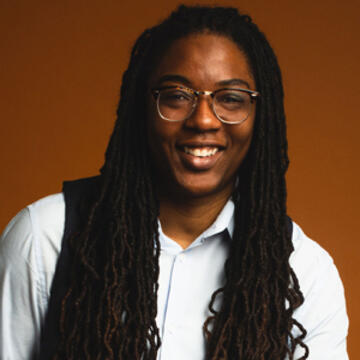
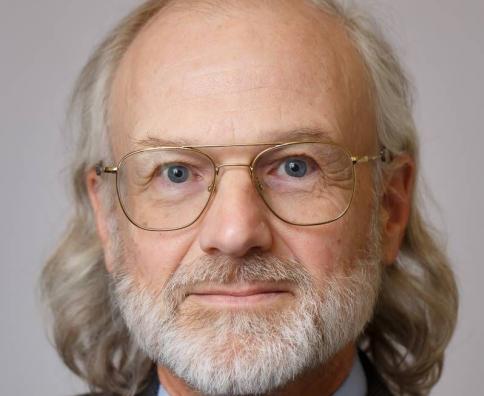
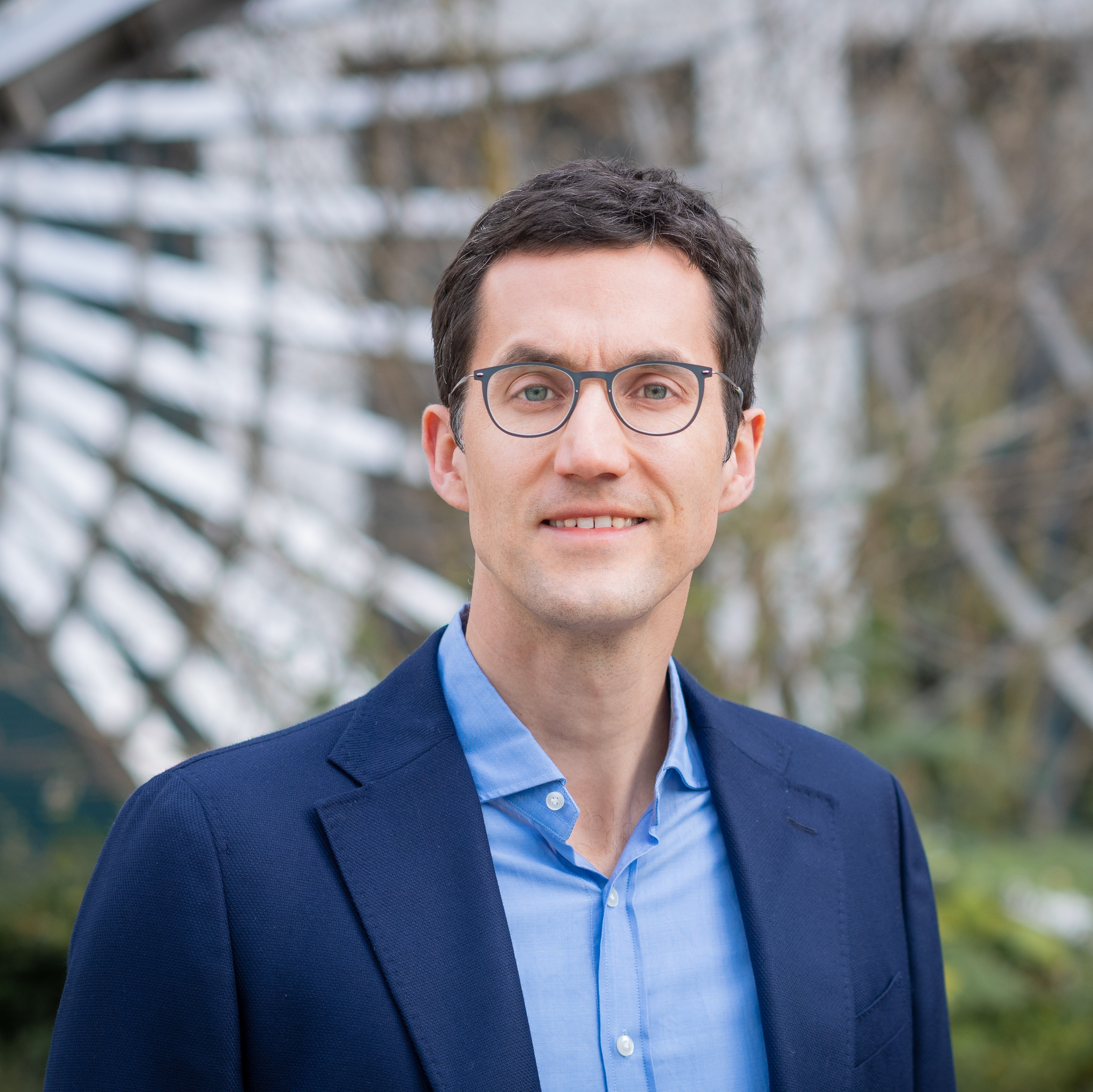
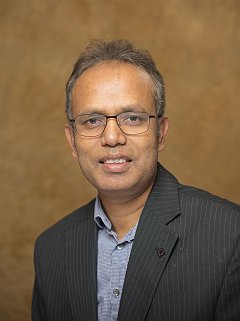
Alexander Summers is an Associate Professor at the Department of Computer Science , University of British Columbia . He joined UBC in March 2020 after serving as a Senior Researcher (Oberassistent) at ETH Zurich from 2014-2020. His research bridges Programming Languages , Formal Methods , and Software Engineering , with a focus on automated verification tools for heap-based and concurrent programs. MSc Joint Mathematics and Computer Science, Imperial College London (2004) PhD Computer Science, Imperial College London (2009) Postdoc, ETH Zurich (2009-2014) Summers leads the Prusti Project , developing deductive verification tools for Rust, and contributes to the Viper Project for intermediate verification languages. His work addresses challenges in: Memory safety and concurrency verification Ownership models and aliasing control Automated reasoning with SMT solvers Resource-oriented programming specifications Debugging verification condition quantifiers Formal validation of verification infrastructure His research has been recognized with a Amazon Research Award and ACM SIGPLAN Distinguished Paper Awards . He teaches courses like Advanced Software Engineering and Program Verifiers and Program Verification , and supervises graduate students in formal verification and Rust-related research.
Niclas Abrahamsson is a Professor of Swedish as a Second Language at Stockholm University, where he also serves as the Director of the Centre for Research on Bilingualism . His research focuses on second language acquisition (SLA) , bilingualism , and phonological/phonetic development , particularly through the lens of age of acquisition and critical periods . He leads the MOB (Meta-research on Bilingualism) group, analyzing trends in bilingualism research and Swedish as a Second Language. PhD in Bilingualism (2001, Stockholm University) BA in Linguistics, Phonetics, and Psychology (1993) His research explores how age of onset and language aptitude influence nativelike attainment in L2 speakers, with a focus on voice onset time (VOT) analysis, neural constraints , and lexical deficits in bilinguals. His recent studies challenge the notion that bilingualism inherently causes linguistic costs, attributing observed deficits instead to second language acquisition processes. Abrahamsson has secured major grants from the Swedish Research Council (VR) , Bank of Sweden Tercentenary Foundation (RJ) , and Byggmästare Olle Engqvists Stiftelse . He supervises PhD students working on topics like Swedish compounding acquisition , language-dependent memory , and foreign accented speech perception . He teaches SLA, bilingual development, and psycholinguistics at all academic levels. Key Awards : VR Grant 2016-01630, RJ Sabbatical Grant SAB16-0051:1, Byggmästare Olle Engqvists Stiftelse Grant 200-0676 Abrahamsson's work frequently employs ERP studies and meta-analyses , emphasizing methodological rigor. He collaborates with institutions like the Multilingualism Lab and has contributed to foundational theories in critical period hypothesis and language aptitude research.
Academic Profile Christina Harrington is an Assistant Professor at Carnegie Mellon University with dual appointments in the School of Computer Science (Human Computer Interaction Institute) and School of Design. She directs the Equity and Health Innovations Design Research Lab , focusing on community-centered technology design. Her work bridges industrial design, interactive systems, and human factors psychology to advance health equity through technology. Research Focus Harrington's research employs participatory and speculative design methods to address systemic inequities in technology. She examines how design can support health autonomy for older adults, people with disabilities, and historically excluded communities (particularly Black and Latinx populations). Her work actively challenges corporate design paradigms through frameworks like design justice and community collectivism , with recent emphasis on ethical AI and conversational technologies. Research methodologies include: Community-based participatory research Speculative co-design Critical race and disability frameworks Intersectional analysis of technology impacts Publications Focus Her recent publications (2023-2025) demonstrate strong focus on equity-centered design with three dominant themes: 1) Health technology disparities affecting Black older adults, 2) Participatory AI and algorithmic justice, and 3) Design justice pedagogy. Over 60% of recent works explicitly examine racial equity in AI systems, health interfaces, and design education. Honors & Recognition Google Award for Inclusive Research (2022) for "Transforming theory into practice: eliciting cultural imaginaries and design thinking to understand Black-Centered Design" Skip Ellis Early Career Award (2022) Data & Society Faculty Fellow (2022-2023) Leadership & Impact As lab director, Harrington leads community-engaged projects that translate design justice principles into practice. She serves on committees for community tech initiatives and has industry experience at Apple, Lenovo, and Motorola. Her work influences both academic discourse (ACM CHI, CSCW, DIS) and industry practices in ethical design.
Henry F. (Hank) Korth is a Professor of Computer Science and Engineering at Lehigh University, with a courtesy appointment in the Department of Decision and Technology Analytics in the College of Business. He serves as Director of the Blockchain Lab in the Center for Financial Services and Co-Director of the Computer Science and Business Program. Korth is a Fellow of the ACM and IEEE, and a recipient of the VLDB 10-Year Award and Bell Labs President's Silver Award for contributions to database technologies. PhD in Computer Science from Princeton University MA, MSE in Computer Science from Princeton University BA in Mathematics from Williams College Korth's research spans database systems, blockchain systems, distributed systems, and real-time systems. He has pioneered transaction management in parallel and distributed systems, query processing, and the impact of modern computing architectures on database performance. His recent work focuses on blockchain applications in enterprise databases, including acceleration of zero-knowledge proofs, benchmarking frameworks, central-bank digital currencies, and private-yet-provable accounting systems. His contributions are rooted in both theoretical advancements and practical implementations, such as the QTM™ aggregation engine and the DataBlitz™ main-memory storage manager. Scientific awards include: ACM Fellow IEEE Fellow 10-Year Award at the VLDB Conference Bell Labs President's Silver Award Korth actively supervises research within the Blockchain Lab and is affiliated with the Scalable Software Systems Research Group at Lehigh. His scholarly output reflects a deep engagement with blockchain benchmarking, concurrency control, verifiable databases, and the evolution of database systems in response to technological shifts.
Minh Hue Nguyen is a Senior Lecturer in EAL/TESOL Teacher Education at Monash University's School of Curriculum, Teaching and Inclusive Education within the Faculty of Education. She holds a PhD in Education (TESOL focused) from Monash University and has taught at Vietnam National University, Deakin University, and the University of Melbourne. Her educational background includes: PhD in Education (TESOL focused), Monash University (2015) MA in Applied Linguistics, Victoria University of Wellington (2008) BA in English Language Teaching, Vietnam National University (2003) Nguyen's research centers on teachers' professional learning, curriculum, and pedagogy in TESOL and EAL contexts, with specific focus on emotional experiences, identity development, mentoring, agency, and collaboration. She explores sociocultural contexts of teacher development through activity theory and sociocultural perspectives, examining how institutions support teachers' learning journeys from preservice to in-service stages. Recent work investigates professional learning for teacher educators and implementation of the Victorian EAL Curriculum. Her 15 most recent publications (2024-2025) reveal a strong thematic focus on language teacher agency, identity negotiation, and multilingual pedagogies. The research increasingly examines emotional dimensions of teaching, cross-cultural identity tensions, and collaborative models between EAL and content teachers, with significant contributions to understanding how teachers navigate complex educational contexts while developing professional identities. Her scientific recognition includes: Penny McKay Award Special Commendation Monash Education Research Community's Publication Award ATEA/Kay Martinez Award for Best Paper Monash Dean of Education’s ECR Project Award Advancing Women's Research Success Grant Vietnamese Government Merit-based Scholarships Nguyen actively supervises PhD research in TESOL teacher professional learning, teacher identity, and curriculum development, though is currently unavailable for new PhD students until 2027. She contributes to editorial boards for Teaching and Teacher Education, Second Language Teacher Education, and System journals, and serves on the Australian Teacher Education Association. Her work supports UN Sustainable Development Goal 4 (Quality Education) through inclusive pedagogical frameworks. She leads research projects including 'Elucidating practices to assist EAL learners to acquire specialised science vocabulary' and 'Establishing an online community-of-practice model for learner agency during work placements,' demonstrating commitment to practical educational innovations.
Daniel Kifer is a Professor in the Computer Science and Engineering department at Pennsylvania State University, with affiliations to the Huck Institutes of the Life Sciences. His work bridges computer science, privacy-preserving machine learning, and geoscience applications. With over 10,000 citations and a high h-index, he focuses on methods to unify theoretical and applied research. Research Interests: Differential Privacy, Privacy-Preserving Machine Learning, Physics-Informed Neural Networks, Landslide Prediction, and Formal Verification of Privacy Systems. Recent projects include grants from the National Science Foundation: SaTC: CORE: Small (2024): privacy-preserving user data embedding in machine learning pipelines. SaTC: CORE: Medium (2017-2023): formal methods for differential privacy and accuracy optimization. His research outputs span domains like geoscience, database systems, and policy analysis, emphasizing precision and scalability of privacy-preserving algorithms.
John Psarras is a Professor at the National Technical University of Athens (NTUA) in the School of Electrical and Computer Engineering, specifically within the Division of Industrial Electric Devices and Decision Systems. He serves as the Director of the Decision Support Systems Laboratory (DSSlab) and the University Research Institute of Communication and Computer Systems. He holds a Diploma in Mechanical Engineering (1982) and a Ph.D. in Electrical and Computer Engineering (1989), both from NTUA. His research specializes in decision support systems with applications in energy management, environmental analysis, and information systems. Key areas include: Multi-criteria analysis for energy policy and renewable integration AI-driven optimization of smart grids and building efficiency Sustainable finance mechanisms for green projects Blockchain applications in education and data security His recent publications (2023–2025) demonstrate a strong focus on AI-enhanced decision tools for energy transitions, smart infrastructure, healthcare diagnostics, and cross-border renewable cooperation, reflecting interdisciplinary innovation. He has supervised 22 PhD theses and coordinates EU-funded projects in energy policy, clean technology, and capacity building. No scientific awards are listed in available sources. He leads the Decision Support Systems Laboratory (DSSlab), advancing research in energy analytics, and directs the University Research Institute of Communication and Computer Systems, facilitating large-scale interdisciplinary collaborations.
Laura Ascenzi-Moreno serves as Professor of Bilingual Education and Bilingual Program Coordinator in the Childhood, Bilingual and Special Education Department at Brooklyn College, City University of New York (CUNY), School of Education. Her academic leadership focuses on developing educators capable of serving linguistically diverse student populations through equity-centered pedagogical frameworks. Her educational foundation includes a B.A. in Anthropology and Education from Swarthmore College (1994), an M.A. in Individualized Studies in Education from Harvard Graduate School of Education (1999), New York State Permanent Certification for PreK-6 (2002), a Bilingual ESL and Teacher Leadership Program from Bank Street College (2004), and a Ph.D. in Urban Education from CUNY Graduate Center (2012). Dr. Ascenzi-Moreno's research pioneers translanguaging applications across literacy instruction, assessment, and computational learning environments. She investigates how emergent bilinguals' linguistic repertoires can transform reading development, teacher knowledge construction, and multimodal assessment practices. Her work consistently centers equity through frameworks like syncretic reasoning and accompáñamiento, challenging deficit ideologies while promoting asset-based approaches to multilingual education. Analysis of her 2020-2024 publications reveals an accelerating interdisciplinary trajectory where translanguaging principles increasingly intersect with computer science education. This evolution demonstrates strategic expansion from foundational literacy research into computational literacies, with growing emphasis on co-design methodologies and teacher agency in developing multilingual CS curricula. Her scientific recognition includes the 2024 NCTE Outstanding Elementary Educator Award, Language Arts Distinguished Article Award, and major NSF grants totaling $1.3 million for computational literacy projects. Additional honors encompass Fulbright Scholarship work in Colombia, PSC-CUNY research awards, and Westinghouse Science Talent Search distinction. As Principal Investigator of NSF-funded PiLa-CS and former CUNY-NYSIEB Associate Investigator, she secures substantial grant support while mentoring teacher candidates. Her service includes NCTE Elementary Steering Committee leadership (2022-2026), journal reviewing, and Brooklyn's New York Teacher Table participation addressing educator recruitment/retention. Dr. Ascenzi-Moreno co-directs the Participating in Literacies in Computer Science project and maintains active collaboration with NYC schools through translanguaging professional development initiatives. Her work with the CUNY-NYSIEB project established foundational frameworks now implemented across New York bilingual programs.
Margaret Maaka is a Professor in Curriculum Studies at the University of Hawaiʻi at Mānoa's College of Education, with a distinguished career spanning Indigenous educational psychology, leadership, and policy development. Her work centers on decolonizing educational frameworks and advancing Indigenous knowledge systems. Her academic credentials include a PhD in Educational Psychology (1992) from the University of Hawaiʻi at Mānoa, a Master of Education (Honors) with English Literature focus (1978) from the University of Waikato, New Zealand, a Diploma of Teaching in Elementary and Secondary Education (1978) from New Zealand's Department of Education, and a Bachelor of Education (Honors) with English Literature specialization (1977) from the University of Waikato. Maaka's research explores Indigenous leadership complexities, multiliteracies, and cognitive development within Māori and Hawaiian contexts. She investigates how language revitalization intersects with educational policy to foster Indigenous advancement, emphasizing place-based pedagogies and self-determination in schooling systems. Her scholarship consistently challenges Western epistemological dominance in education. Her publications since 2009 reveal a trajectory prioritizing Indigenous research sovereignty, with recurring themes of decolonization, community-led leadership models, and culturally grounded curriculum design. Key contributions examine contested spaces in Indigenous schooling and the politics of knowledge production. Her teaching excellence has been recognized through: Board of Regents’ Medal for Excellence in Teaching (1998) Presidential Citation for Meritorious Teaching (1996) Graduate Student Organization Outstanding Graduate Assistant Teaching Award (1991) While specific advising details are not documented, Maaka's mentorship is reflected in her collaborative publications with emerging Indigenous scholars. Her work demonstrates sustained commitment to transforming educational paradigms through Indigenous epistemologies.
Taylor Sparks is a Professor of Materials Science and Engineering at the University of Utah, where he also serves as Director of Graduate Affairs for the John and Marcia Price College of Engineering. He holds a PhD in Applied Physics from Harvard University, an MS in Materials from the University of California, Santa Barbara, and a BS in Materials Science & Engineering from the University of Utah. His research focuses on advancing materials discovery using machine learning to streamline and optimize material design, with applications in energy materials, dental materials, and sustainable engineering. His work integrates big data and materials informatics to explore new synthetic techniques, structure-property relationships, and sustainable materials that balance performance with economic factors. The Sparks Research Group has secured funding from agencies including DOE, NSF, DOD, and various industry partners. Sparks' recent research output demonstrates a strong trend toward leveraging artificial intelligence and machine learning to accelerate materials discovery, with particular emphasis on large language models for materials science, Bayesian optimization for experimental design, and novel approaches to crystal structure prediction. His work bridges the gap between theoretical predictions and experimental validation in materials science. NSF CAREER Award Royal Society Wolfson Visiting Fellow Acta Materialia Outstanding Reviewer Award for 2020 Honorary Outstanding Faculty Teaching Award of 2020-2021 Materials Science & Engineering Department Research Award for 2023 John G. Francis Prize for Undergraduate Student Mentoring Sparks has advised numerous graduate students who have gone on to successful careers in academia and industry. His research has been supported by significant grants from NSF, DOE, DOD, Army Research Office, and industry partners. His group has developed innovative tools including the Materialism Podcast, a materials science YouTube channel, and the Honegumi interface for Bayesian optimization, demonstrating his commitment to both research excellence and science communication. The Sparks Research Group operates multiple laboratories focused on materials characterization, synthesis, and informatics. They collaborate extensively with other institutions globally, host visiting researchers, and run outreach initiatives including the Materialism Podcast and YouTube channel to make materials science more accessible to broader audiences.
Jun-Yan Zhu is an Assistant Professor at Carnegie Mellon University's School of Computer Science, affiliated with the Robotics Institute and Computer Science Department. His research focuses on generative models, computer vision, and graphics. He holds a B.E. from Tsinghua University and a Ph.D. from UC Berkeley, with postdoctoral work at MIT CSAIL. Zhu leads the Generative Intelligence Lab, exploring human-creator collaboration with generative models. Affiliations: Robotics Institute, CMU Graphics Lab, CMU Computer Vision Group Education: B.E. (Tsinghua), Ph.D. (UC Berkeley) Research Interests: Generative AI, image/video synthesis, neural rendering, tactile sensing integration Notable contributions include CycleGAN, pix2pix, and GAN compression techniques. His work has been commercialized in Adobe's Firefly and NVIDIA's Canvas tools. Awards: ACM SIGGRAPH Dissertation Award, David J. Sakrison Prize, CVPR Best Paper Finalist Lab Members: 10+ PhD students and researchers Current projects include LEGO design synthesis, tactile-driven 3D generation, and generative model personalization.
Reinhard Heckel is a Tenured Associate Professor (equivalent to Professor) of Machine Learning at the Department of Computer Engineering, Technical University of Munich (TUM), and Adjunct Faculty in Electrical and Computer Engineering at Rice University. He was previously an Assistant Professor at Rice (2017–2019), a postdoc in the Berkeley Artificial Intelligence Research (BAIR) Lab at UC Berkeley, and a researcher at IBM Research Zurich. Education: PhD, 2014 – ETH Zurich Visiting PhD student – Department of Statistics, Stanford University Research Interests: His work centers on machine learning and information processing with three major thrusts: (1) developing algorithms and theoretical foundations for deep learning, especially for accelerated magnetic resonance imaging ; (2) establishing rigorous mathematical and empirical underpinnings for modern machine-learning systems; and (3) leveraging DNA as a digital information-storage medium , including error-correction coding and system design for DNA-based storage. Across more than 100 peer-reviewed papers since 2017, Heckel’s research exhibits a strong interdisciplinary blend of computational imaging , machine-learning theory , and molecular data storage . Recent 2024–2025 publications show intensive focus on robust MRI reconstruction using diffusion priors, evaluation of bias in large web-text corpora, and state-of-the-art error-correcting codes for DNA storage channels. A forthcoming book, Deep Learning for Computational Imaging (Oxford University Press), consolidates his contributions to the field. Outreach & Media: Keynote and panel talks at DLD, TUM, and major ML conferences Op-eds in Frankfurter Allgemeine on ChatGPT and DNA storage Science features on Netflix, BBC, and German television (Galileo, “Gut zu Wissen”) Research Environment: At TUM he leads a group investigating theoretical and applied aspects of deep learning, compressed sensing, and coding for DNA storage. Open-source repositories on GitHub (e.g., dna_data_storage , supplement_deep_decoder ) provide code and data supplements accompanying his publications.
Olivia Di Matteo serves as an Assistant Professor in the Department of Electrical and Computer Engineering within UBC's Faculty of Applied Science, leading the Quantum Software and Algorithms Research (QSAR) group since her January 2022 appointment. Her academic foundation includes a BSc from Lakehead University and MSc/PhD in Physics (Quantum Information) from the University of Waterloo, completed in 2019. Dr. Di Matteo's research centers on quantum software engineering , with pioneering work in quantum compilation , circuit optimization , and debugging tools . She champions open-source quantum frameworks and develops accessible educational resources to democratize quantum computing. Analysis of her 15 most recent publications (2021-2025) reveals dominant trends in quantum programming infrastructure, particularly circuit analysis (33%), bug classification (20%), and qubit network optimization (15%), with strong emphasis on practical software tooling over theoretical physics. No scientific awards were documented in the source materials. She advises graduate students in the QSAR group while contributing to open-source quantum ecosystems through projects like PennyLane and The Ionizer transpiler, and teaches courses including CPEN 400Q (Gate-model quantum computing) and ELEC 221 (Signals and Systems). The QSAR group operates at the intersection of quantum software development and education, focusing on making quantum programming accessible through visual tools, real-time debugging environments, and hardware-agnostic compilation techniques.
Chanchal K. Roy is Professor of Software Engineering/Computer Science at the University of Saskatchewan and Co-Director of the Software Research Lab. He leads an NSERC CREATE graduate program on Software Analytics Research and co-leads the Data Management group for an NSERC CFREF project on Food Security, with over 170 publications cited 6,000+ times. His research centers on software clone detection using the widely adopted NICAD system, software evolution, empirical studies, and AI-driven software analytics. Recent work integrates large language models for code generation, clone detection in the AI era, and developer interactions with tools like ChatGPT, emphasizing practical applications in maintenance and analytics. Analysis of his 15 most recent publications reveals a strong trend toward AI/ML integration in software engineering: 12 of 15 articles (2025) explore LLMs, quantum computing, or deep learning for tasks like bug localization, code snippet generation, and feature-toggle analysis. Key themes include empirical validation of AI tools, Stack Overflow data mining, and cross-domain frameworks for Society 5.0. His scientific awards include: Most Influential Paper Awards (SANER 2018, ICPC 2018) Outstanding Young Computer Science Researcher Award (CS-Can/Info-Can, 2018) New Researcher Award (University of Saskatchewan, 2019) New Scientist Research Award (College of Arts and Science, 2019) As lead of the NSERC CREATE program and CFREF data group, he mentors graduate students in software analytics while securing major grants. He actively serves on program committees for ASE, ICSE, and FSE, reviewing journals and organizing workshops on clone detection and empirical methods. His lab focuses on real-world applications in food security data management and software evolution. The Software Research Lab, co-directed by Roy, drives projects like NICAD and the NSERC CREATE initiative, emphasizing open-source contributions and industry collaboration. Current efforts include quantum-SE integration and AI-augmented maintenance tools under the CFREF food security mandate.
Yves-Alexandre de Montjoye is an Associate Professor of Applied Mathematics and Computer Science at Imperial College London, where he leads the Computational Privacy Group. He holds a joint affiliation between the Department of Computing and the Data Science Institute. His roles include serving as a Special Adviser on AI and Data Protection to the EC Justice Commissioner Didier Reynders, a Parliament-appointed Commissioner for the Belgian Data Protection Agency, and a Special Adviser to EC Competition Commissioner Margrethe Vestager, co-authoring the 'Competition Policy for the Digital Era' report. He earned his PhD from MIT in 2015 under Alex 'Sandy' Pentland. His master's degrees include an M.Sc. in Applied Mathematics from UCLouvain, an M.Sc. (Centralien) from École Centrale Paris, and an M.Sc. in Mathematical Engineering from KU Leuven. He also holds a B.Sc. in Engineering from UCLouvain. His research interests focus on computational privacy, anonymization techniques, AI safety, and machine learning attacks. He develops methods to 'red team' AI systems and create privacy-preserving mechanisms. His work addresses vulnerabilities such as membership inference, attribute inference, and re-identification risks in datasets, with applications to location tracking, synthetic data, and LLMs. His articles analyze adversarial attacks against privacy systems, emphasizing robustness and practical guarantees. He advocates for privacy-by-design approaches in big data analytics and has explored ethical AI, competition policy in digital markets, and humanitarian uses of mobile data. While no scientific awards are explicitly listed, his contributions have been widely covered in media. He is currently recruiting motivated PhD students for his group at Imperial College. His advising and grants narrative includes work on privacy-preserving technologies and policy implications of AI, with collaborations across academia and public institutions. He is affiliated with the Computational Privacy Group and contributes to platforms like OPAL for privacy analytics. His office is in the ACE Extension building (ACEX 259), accessible via Exhibition Road.