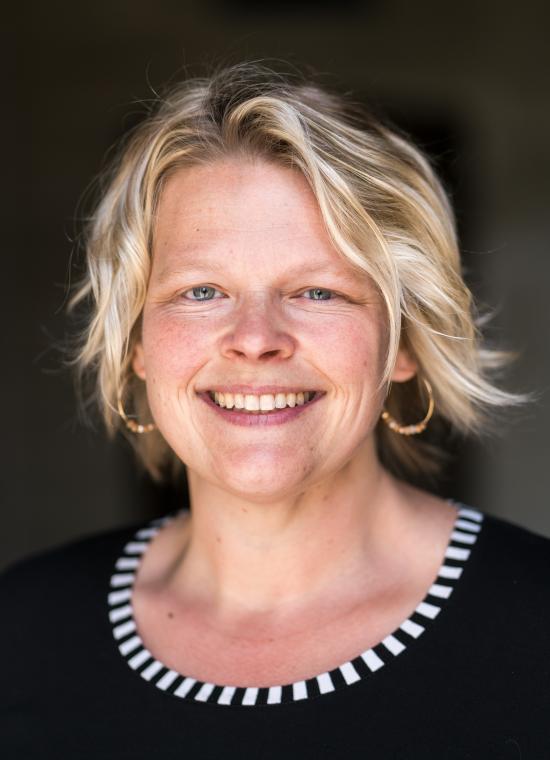
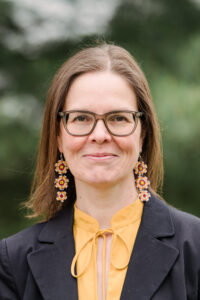
Charlotte Hommerberg is an Associate Professor and researcher in English Linguistics at Linnaeus University, Faculty of Arts and Humanities. She specializes in discourse analysis, metaphor studies, and English for Academic Purposes, with a focus on luxury consumption (wine, perfume, and chocolate reviews) and healthcare communication in palliative cancer care. Her research includes the interdisciplinary Metaphors in Palliative Cancer Care (MEPAC) project (2015–present), funded by the Kamprad Family Foundation, and the PROFiLE project (Swedish Research Council). She leads collaborations between Linnaeus University, Lund University, and Lancaster University. 2023: Published the book Depicting the Consumer of Experiential Luxury (Palgrave Macmillan). 2020: Two high-impact articles on metaphor patterns in cancer blogs (BMC Palliative Care, Medical Humanities). 2016–2017: Key contributions to metaphor analysis in healthcare and education (CADAAD, ASLAS, RaAM). She supervises bachelor, master, and PhD theses and contributes to pedagogical development for English-medium instruction. Awards include the Royal Swedish Academy of Letters, History and Antiquities prize (2013) and the RaAM best poster award (2016).
Johanna Salomonsson is a researcher at Linnaeus University's Department of Swedish, focusing on discourse analysis, systemic-functional grammar, and language education. She is affiliated with the Centre of Language for Specific Purposes (CLSP), the Educational Linguistics research group, and the Nordic Research Network for Educational Linguistics (NordEdLing). Her work examines how language is conceptualized across migration discourses, online communication, and second language acquisition contexts. Key research areas include discourse analysis , systemic-functional grammar , and computer-mediated communication She investigates language's role in integration, migration policies, and political rhetoric Her publications span analyses of prepositional phrases, narrative structures, and language policy Salomonsson has co-authored studies on EU nurses' integration into Swedish healthcare and contributed to understanding misunderstanding strategies in German forums. She teaches grammar, grading, and writing in Swedish as a second language, with a focus on net-based learning and oral task design.
Mary Paster is Professor of Linguistics and Cognitive Science at Pomona College, where she has been a faculty member since 2006. She is currently on leave during Fall 2025. Her work bridges theoretical linguistics with community-based language preservation, with a strong emphasis on phonological theory and fieldwork. Research Interests: Phonology and Morphology, especially their interface Tone systems and vowel harmony in understudied languages Sound change and interspeaker phonological variation Field linguistics and language documentation Language reclamation and revitalization, particularly for African and Indigenous American languages Her research is deeply collaborative, involving direct work with native speaker communities across multiple continents. Though no recent publications are listed in the provided text, her research trajectory centers on descriptive and theoretical phonology within a cognitive science framework, often contributing to the understanding of typologically diverse and endangered languages. Scientific Affiliations and Initiatives: 7 College Native American Indigenous Studies Network Advocates for Indigenous California Language Survival African Linguistics School Association Contemporary African Linguistics CoLang: Institute for Collaborative Language Research Foundation for Endangered Languages Linguistic Variation journal NSF Dynamic Language Infrastructure – Documenting Endangered Languages Program NSF Linguistics Program Pomona College Linguistics and Cognitive Science Department Rumsen Language Reclamation Project Somali Bantu Community of San Diego Survey of California and Other Indian Languages Word Structure journal Yurok Language Project She mentors students in field methods and linguistic theory, and her work is grounded in ethical collaboration with language communities. She acknowledges that Pomona College resides on the traditional, ancestral, and unceded land of the Gabrielino-Tongva people. Education: Ph.D., University of California, Berkeley M.A., University of California, Berkeley B.A., summa cum laude, Ohio State University
Jens Nöpel serves as a researcher at the Department of Security in Information Technology at Technical University of Munich, working under Chair Professor Georg Sigl. His office is located at Theresienstr. 90 in Munich, where he conducts research in hardware security and cryptographic implementations. His primary research interests focus on memory encryption and integrity verification systems , symmetric cipher implementations , and digital hardware design for security applications. Nöpel specializes in developing and evaluating hardware security mechanisms, particularly those implemented on FPGAs for memory protection systems. His work bridges theoretical cryptography with practical hardware implementation challenges. As an active supervisor, Nöpel offers multiple research opportunities for students across various academic levels. He regularly supervises Bachelor's and Master's theses along with research internships focused on hardware security implementations. His student projects typically involve extending or implementing symmetric ciphers, message authentication codes, and error correction functionality for memory encryption systems. Nöpel maintains an active research laboratory environment where students work with hardware description languages to develop security-focused hardware modules. His research group focuses on practical evaluation of security mechanisms through FPGA implementation and performance analysis, particularly examining metrics relevant to memory encryption and integrity verification systems.
Stefano Allegrezza is a Tenured Professor at the Department of Humanities, Languages, Mediation, History, Literature, and Philosophy at the University of Macerata (Italy). He holds the academic rank of Professor Level II and specializes in digital archiving, electronic document management, and preservation of digital records. He directs the Master's program in Formation, Management, and Preservation of Digital Archives (FGCAD) and the Summer School in Web, Social Media, and Instant Messaging Archiving (WEPRES). Research Interests Digital preservation Artificial intelligence applications Format obsolescence Personal digital archives Ecclesiastical archival practices GDPR compliance in archives His recent publications focus on AI-driven archival aggregation, file format standardization, and digital preservation challenges. He coordinates the Interdepartmental Center for Studies on Innovation and Digitization (CEIDIM) and contributes to the Foundation for Digital Sustainability. He is affiliated with international archival organizations including ICA, AIDUSA, ANAI, and AIUCD.
Maria Bidovec serves as an Adjunct Professor of Slovenian Language and Literature at the University of Udine. Affiliated with the Department of Foreign Languages and Literatures' Slavic Studies Section, she teaches Slovenian Language I, II, and III courses during the second semester, with the 2017 session expected to begin in February. Second Semester Courses: Slovenian Language I-III Office Hours: Posted on website in September 2016 Location: Via Zanon, 6 - 33100 Udine Her academic focus centers on Slovenian language instruction and Slavic Studies. No specific research descriptions, grants, or additional professional activities are detailed in the available information.
Dr. Maribel Cedeño is a Lecturer in Romance Studies at the University of Siegen, Germany. She teaches Hispanic language, literature and culture at all levels, coordinates advanced translation and audiovisual courses, and organises international academic events on Spanish-language media. Research interests revolve around audiovisual translation (dubbing, subtitling, audio description), multilingualism in film and streaming platforms, memory cultures in the Spanish-speaking world, and the study of science-fiction, fantasy and horror genres in Hispanic cinema. Her work combines philological analysis with media-practical perspectives, often exploring didactic applications of film in Spanish-as-a-foreign-language classrooms. She has authored two monographs— Saturno, melancolía y “El laberinto del fauno” (2012) and Tools and workflows in translating audiovisual media (2007)—and co-edited several collective volumes, most recently Culturas del streaming a ambos lados del Atlántico (2025). Her essays appear in peer-reviewed journals and handbooks, and she contributes regularly to encyclopaedias and specialist review sections. Dr. Cedeño is an active conference organiser (e.g., “Culturas del streaming”, Siegen 2022) and has delivered invited lectures at universities across Europe and North America. She also produces short films and conducts practical workshops for language teachers on integrating audiovisual materials into the classroom.
Dr. Ece Takmaz is a Researcher at the Department of Languages, Literature and Communication , Utrecht University, affiliated with the Humanities and Institute for Language Sciences . She works in the Language, Logic and Information division under Jakub Dotlacil and Albert Gatt, focusing on Natural Language Processing , Multimodal Dialogue , and Eye-Tracking research. PhD, Institute for Logic, Language and Computation (ILLC), University of Amsterdam (2019-2024) M.Sc., Artificial Intelligence, University of Amsterdam (2017-2019) M.Sc., Cognitive Science, Middle East Technical University B.Sc., Computer Engineering, Bilkent University Her research investigates the intersection of vision and language integration , with a focus on eye-tracking and perception-action dynamics . Her work includes developing multimodal contextual models , analyzing CLIP's cognitive plausibility , and studying human signal variation in visuo-linguistic tasks. She has contributed to frameworks for audience-aware dialogue adaptation and transformer-based reading behavior prediction . Recent publications cover topics like semantic violation analysis (COOCO dataset, 2025), emotion decoding in art (CogSci, 2024), and visuo-linguistic predictability (EACL, 2024). She has received recognition for best shared task paper (CMCL, 2022). Best Shared Task Paper Award, CMCL 2022 Dr. Takmaz actively contributes to academic service as an Area Chair for CoNLL 2025 and reviewer for top NLP/ML conferences. She serves on the organization committee for CMCL 2024-2025 and the EACL Student Board (2020-2022).
Aleksandar Pajkanović is a Senior Lecturer at the Department of Electronics, Faculty of Electrical Engineering, University of Banja Luka. His work bridges microelectronics research with educational innovation. Institution: University of Banja Luka Faculty: Electrical Engineering Department: Electronics Rank: Senior Lecturer (appointed September 21, 2023) Research focuses on microelectronics , low-power IC design , and flexible electronics , with applications in biomedical assistive devices and wireless control systems. Key projects include: Open-Source IC Design Methodology (2023-2024) Smart Vertical Signaling Systems (2021-2024) Public Lighting Management (2020-2024) Air Quality Monitoring (2020-2020) Projects emphasize digital IC design , EDA tools , and educational technology implementation. Collaborations span academic institutions and government partners including the Ministry of Science and Technology.
Gwen Salaün is a Professor of Computer Science at Université Grenoble Alpes, affiliated with the CONVECS and LIG research groups, and Inria Grenoble. She holds a PhD (2003) and HDR in Computer Science. Her research spans formal methods, specification languages, automated verification, concurrent systems, and component/service-based architectures. She contributes to industrial applications, particularly in BPMN processes, IEC 61499, and IoT systems. Recent publications focus on probabilistic model checking, runtime enforcement, resource isolation testing, and automated refactoring of business processes, reflecting collaborations across Europe and funded by Région Auvergne-Rhône-Alpes. She supervises PhD students Ahang Zuo, Philippe Ledent, and Irman Faqrizal, and participates in committees like SAC'25 and FormaliSE'25. Her work emphasizes rigorous modeling, verification, and tool development for complex systems.
Mark Guiberson serves as Professor and Director of the Division of Communication Disorders within the University of Wyoming's College of Health Sciences. His work focuses on enhancing clinical practices for culturally and linguistically diverse (CLD) populations, particularly dual language learners and Indigenous children in rural and underserved communities through evidence-based interventions. His educational background includes: Ph.D. in Communication Disorders, Colorado State University (2006) M.A. in Communication Disorders, University of Colorado (1999) B.A. in Communication Disorders, University of Colorado (1997) Dr. Guiberson's research centers on developing culturally responsive clinical practices in speech-language pathology, with emphasis on early language and literacy development for CLD children. He investigates telehealth solutions to address service disparities, promotes cultural competence in graduate curricula, and conducts systematic reviews to identify best practices for Indigenous communities and dual language learners. His work bridges academic research with practical clinical applications in underserved settings. Analysis of his 15 most recent publications (2020-2024) reveals a cohesive focus on culturally responsive interventions across multiple domains. Key trends include systematic examinations of speech intelligibility in deaf/hard-of-hearing children, development of literacy strategies for Indigenous populations, and exploration of collaborative dynamics in early intervention teams. His research consistently addresses gaps in service delivery for marginalized communities through methodologically diverse approaches including scoping reviews, descriptive studies, and telehealth applications. His scientific awards highlight national recognition: American Speech-Language Hearing Association Certificate of Recognition for Multicultural Affairs (2024) University of Wyoming Diversity, Excellence and Inclusion Award (2024) Language, Speech and Hearing Services in Schools Editor's Award (2024) ASHA Leadership Development Program (2007) University of Wyoming New Investigator Award (2014) Dr. Guiberson has secured significant grant funding from NIH and institutional sources for projects including the Wyoming/Wind River Early Literacy Curriculum Development (2022-2025) and Telehealth Practices for Native American Children (2020). His teaching portfolio encompasses Early Language Intervention, School-age Language Intervention, Stuttering, and Speech Disorders Across the Lifespan, reflecting his clinical expertise and commitment to training future practitioners in culturally responsive care. He maintains active professional engagement through ASHA Special Interest Group 14 (focusing on cultural/linguistic diversity), the Wyoming Speech-Language-Hearing Association, and NIH-funded Mountain West CTR-IN initiatives, demonstrating leadership in advancing equity in communication sciences.
Jana Grusková is an Associate Professor of Classical Philology at the Department of Classical and Semitic Philology , Faculty of Arts, Comenius University . Her research focuses on the textual tradition of ancient Greek authors , particularly Demosthenes and Dexippus, and the study of Greek palimpsests using advanced imaging techniques like X-ray fluorescence. Key projects : Wiener Griechischen Palimpsesten (2012–2015), Scythica Vindobonensia (2015–2020), Fast Scanning X-ray Fluorescence Mapping of Palimpsests (2017–2019, 2024), Vienna Herodian Palimpsest (2019–2024), and Vienna Basilica Palimpsests (2024–2027). Research interests span Greek Philology , manuscript studies , and the reception of Greek literature in Slovakia . Her work bridges classical textual analysis with digital methods for recovering hidden texts. 2023 Award : Grand Commander of the Order of the Phoenix (Hellenic Republic) for promoting Greek language and culture. Teaching includes courses on Greek language, syntax, and historiography. She contributes to editorial work for Graecolatina et Orientalia and has reviewed major philological publications.
Nikolina Zobenica is a full professor at the Department of German Studies, Faculty of Philosophy, University of Novi Sad, where she has been employed since 2002. She previously served as Deputy Head (2010-2012) and Head (2012-2015) of the Department. She was also a visiting professor at the University of Kragujevac (2018-2019). Her educational background includes undergraduate studies in German Language and Literature (1999) and English Language and Literature (2001), followed by master's studies in German Literature (2004), all completed at the Faculty of Philosophy, University of Novi Sad. She earned her doctorate in 2010 with a dissertation on the reception of Günter Grass's novel The Tin Drum in German and Serbian Literature. As a DAAD scholarship holder, she studied at the University of Würzburg, and conducted research at the Universities of Regensburg, Freiburg, and Ludwigsburg. Professor Zobenica's research spans multiple dimensions of German literature, with particular focus on medieval and classical literature, as well as twentieth-century literature. Her work explores fairy tales, myths, and legends across German, European, and world literature, examining intercultural and intertextual connections. She approaches literature through interdisciplinary lenses including cultural studies (memory culture), pedagogy (didactics of teaching German literature), linguistics (linguistics of literary text), philosophy (ethics and aesthetics), and sociology (system theory, socialization). Her translation studies focus on functionalist and descriptive theories and hermeneutics of translation, while her educational research addresses challenges in university teaching innovation and modernization. Analysis of her recent publications reveals a consistent scholarly trajectory focusing on German literary tradition from medieval to contemporary works, with particular emphasis on Günter Grass studies, intertextuality, and translation theory. Her research increasingly incorporates digital pedagogy and innovative teaching methods, reflecting her active participation in higher education reform processes. Award for Excellence of the Western University 'Vasile Goldiš' in Arad Scholarship for gifted students at the University of Novi Sad DAAD scholarship Professor Zobenica actively participates in the process of reforming higher education and has developed innovative teaching models incorporating digital media. While her teaching responsibilities include Introduction to Scientific Work Techniques, German Literature of various periods, Bertolt Brecht studies, Literary Translation, and Methodology of Teaching German Literature, her research contributions extend to literary translation practice and theoretical frameworks for understanding German literature across cultural boundaries.
Dr. Jonni Virtema is a Lecturer in Verification at the School of Computer Science, University of Sheffield, UK, where he has been employed since September 2021. He also serves as the Study Abroad/International Student Exchange Officer for the department. His research is centered within the Foundations of Computation research group, focusing on the theoretical aspects of computer science with particular emphasis on logic and verification. Dr. Virtema earned his MSc (2008) and PhD (2014) in mathematics from the University of Tampere, Finland. In 2020, he was awarded the title of Docent in Mathematical Logic from the University of Helsinki, Finland. Prior to joining the University of Sheffield, he held various research positions funded by prestigious organizations including the German Research Foundation (DFG), the Japan Society for the Promotion of Science (JSPS), the Research Foundation - Flanders (FWO), and the Academy of Finland (AKA). Dr. Virtema's research interests originate from finite model theory and logic in computer science, with specific focus areas including logics for dependence and independence, modal logics, logics for verification, logical foundations of neural networks, logical foundations of quantum information theory, computational complexity, and logics with team semantics. His work bridges theoretical computer science with practical applications in database theory, verification, and artificial intelligence. Recent publications demonstrate his expanding interest in the intersection of logic with neural networks and quantum information. Dr. Virtema has published extensively with 16 journal articles and 40 conference articles, accumulating 791 citations with an h-index of 18 according to Google Scholar. His recent work spans temporal logics, probabilistic team semantics, database repair mechanisms, and neural network theory, showing a clear trajectory toward interdisciplinary research connecting formal methods with emerging technologies. Program Committee Member for KR 2025, NeurIPS 2025, ICML 2025, ICLR 2025 Organizer of Dagstuhl Seminar on Logics for Dependence and Independence (2024) Local Chair for FoIKS 2024 in Sheffield Principal Investigator for DFG project LogQMC (2020-2024) Dr. Virtema maintains an active research presence through international collaborations and has delivered 44 conference talks and 21 seminar presentations worldwide. His work on graph neural networks and arithmetic circuits accepted to NeurIPS 2024 exemplifies his current research direction exploring the logical foundations of machine learning systems.
Renée Lambert-Brétière is an Associate Professor of Linguistics, French, and Intercultural Communication at the University of Maryland, Baltimore County (UMBC). She specializes in documenting endangered languages and cross-linguistic typology, with a focus on Fon (Benin), Kwoma (Papua New Guinea), and Innu (Canada). Education: Bachelor of Arts in Linguistics, Université du Québec à Montréal Master of Arts in Linguistics, Université du Québec à Montréal Master of Advanced Studies in Theoretical, Descriptive, and Computational Linguistics, Université de Paris Doctor of Philosophy, Université de Lyon Her research integrates functional-cognitive linguistics with community-engaged methodologies to analyze typologically diverse languages. She investigates polysynthetic morphology (Innu), serial verb constructions (Fon), and language revitalization strategies, particularly through democratizing digital documentation tools for Indigenous communities. Recent publications and conferences highlight her work on Kwoma identity, Innu clause chaining, and Fon grammaticalization. She collaborates with scholars like Lynn Drapeau and Claire Lefebvre, emphasizing Construction Grammar and typological frameworks. Her projects, such as the Documentation linguistique de l’innu featured in The Academic Minute , address ethical challenges in language documentation and leverage technology to bridge gaps between researchers and Indigenous speakers. Key affiliations include UMBC’s Department of Modern Languages, Linguistics & Intercultural Communication. She teaches courses like Syntax , Linguistic Typology , and Contact Languages , reflecting her expertise in language structure, sociopolitical contexts, and creole genesis.